The Technology & Information Law Blog

Analysis by Charles Gideon Korrell

Month: September 2024

  • Federal Circuit Vacates District Court’s Surprise Patent Ineligibility Ruling in Astellas v. Sandoz

    In a major rebuke to a district court’s handling of patent eligibility, the Federal Circuit has vacated a decision that invalidated Astellas’s pharmaceutical patent under 35 U.S.C. § 101—a ruling the lower court made on its own initiative, without either party raising the issue. The court’s strong reaffirmation of the “party presentation principle” signals a warning against judicial overreach in patent litigation.

    Background: The Overactive Bladder Treatment and the Patent Dispute

    Astellas Pharma, the manufacturer of Myrbetriq®, an extended-release formulation of mirabegron for overactive bladder (OAB), sued multiple generic drugmakers, including Sandoz, Lupin, and Zydus, for patent infringement under the Hatch-Waxman Act. The key patent at issue, U.S. Patent No. 10,842,780 (the ’780 patent), covered a sustained-release formulation of mirabegron that overcame the “food effect”—an issue where drug absorption varies significantly depending on whether the patient has eaten.

    During the litigation:

    • The generic manufacturers challenged the patent’s validity only under 35 U.S.C. § 112, arguing that the claims were not enabled, lacked written description, or were indefinite.
    • Sandoz explicitly waived arguments under §§ 102 (anticipation) and 103 (obviousness) before trial.
    • Neither side raised a challenge under 35 U.S.C. § 101 (patent eligibility).

    However, after a five-day bench trial, the district court unexpectedly ruled that the patent claims were invalid under § 101—a legal theory that had never been argued by the defendants. This ruling blindsided Astellas, prompting their appeal.


    Key Patent Law Issues Addressed

    1. Can a Court Invalidate a Patent on Grounds Not Raised by Either Party?

    The Federal Circuit’s resounding answer: No.

    The appeals court held that the district court violated the “party presentation principle”—a fundamental rule in U.S. litigation that courts must decide only the issues framed by the parties.

    The Supreme Court has repeatedly reinforced this principle, stating that courts should not act as “issue spotters” on behalf of litigants. The Federal Circuit echoed this, emphasizing:

    “It is for the parties—not the court—to chart the course of the litigation.”

    By introducing a new ground of invalidity sua sponte, the district court abused its discretion, undermining due process, and depriving Astellas of an opportunity to defend its patent.

    2. Is Patent Eligibility a Special Case Where a Court Can Rule on Its Own?

    No. The district court seemed to treat § 101 eligibility like a jurisdictional question, which courts must assess even if not raised. However, the Federal Circuit flatly rejected this view, clarifying that patent eligibility is subject to the same statutory presumption of validity under 35 U.S.C. § 282 as other validity defenses.

    The court noted:

    • The Supreme Court has never held that § 101 must be evaluated independently by courts.
    • Patent challengers bear the burden of proving invalidity—courts cannot assume this burden for them.

    3. Was the ’780 Patent’s “Food Effect” Solution Merely a Natural Law?

    The district court held that Astellas’s discovery of a sustained-release profile that eliminated the food effect was merely an application of a natural law, making it patent-ineligible under Mayo Collaborative Services v. Prometheus Labs (2012).

    The Federal Circuit avoided ruling on the merits of this issue, focusing instead on the procedural error. However, it hinted that the district court likely misunderstood the scope of § 101, as formulation patents like Astellas’s typically claim a non-naturally occurring composition—not a law of nature.


    Outcome and Key Takeaways

    IssueFederal Circuit Decision
    Court raising § 101 issue sua sponteAbuse of discretion—violates party presentation principle
    Treatment of § 101 as jurisdictionalError—validity challenges must be raised by parties
    Presumption of validity under § 282Applies equally to § 101 challenges
    Future of Astellas’s patentRemanded for ruling on infringement and § 112 validity defenses

    The Federal Circuit vacated the district court’s judgment and remanded the case for a proper adjudication—one limited to the issues actually raised by the parties (i.e., enablement, written description, and indefiniteness under § 112).


    What This Means for Future Patent Cases

    1. District Courts Must Stick to the Issues Raised

    This ruling strongly discourages judges from introducing new invalidity arguments. It reinforces that § 101 is not a jurisdictional test and that courts cannot invalidate patents sua sponte.

    2. Patent Defendants Cannot Rely on Courts to Raise Additional Defenses

    Generic manufacturers (and other patent challengers) must affirmatively raise § 101 defenses during litigation. A court cannot do their work for them.

    3. Clarifies That Formulation Patents Are Not Automatically “Natural Laws”

    While the Federal Circuit did not directly decide whether Astellas’s patent was ineligible under § 101, its reluctance to uphold the district court’s reasoning suggests that such pharmaceutical formulation patents remain patentable under existing law.


    Next Steps for Astellas

    On remand, Astellas’s patent infringement claims will continue—but the case will focus only on the § 112 defenses (enablement, written description, and indefiniteness). The generics will have to prove these defenses—which are often harder to establish than obviousness or anticipation.

    See also:

    Article relating to patent office interim guidance on subject matter elegibility.

    By Charles Gideon Korrell

  • Federal Circuit Overturns District Court’s Ruling on Indefiniteness in Teleflex v. Medtronic

    In a significant decision for medical device patent litigation, the Federal Circuit vacated and remanded a district court’s ruling that had invalidated key claims in a patent dispute between Teleflex and Medtronic. The case centered on guide extension catheter technology used in cardiovascular procedures, with the core issue being whether the term “substantially rigid portion/segment” was indefinite. The ruling provides important guidance on claim construction, functional limitations, and indefiniteness under patent law.

    Background of the Case

    Teleflex, along with its affiliates, sued Medtronic in the District of Minnesota for infringing seven patents related to guide extension catheters, which help deliver interventional devices into arteries. The patents describe a coaxial guide catheter with a substantially rigid portion that enables controlled movement within a standard guide catheter.

    The dispute boiled down to the meaning of “substantially rigid portion/segment”—a key term appearing in multiple claims across Teleflex’s patents. Medtronic argued that the term was indefinite because its boundaries varied across claims, making it impossible for a skilled artisan to determine its precise scope.

    The district court agreed with Medtronic, ruling that the inconsistency in claim boundaries made the term indefinite, effectively invalidating all asserted claims. Teleflex appealed, arguing that the court misapplied the law on claim construction and indefiniteness.

    Key Issues Addressed by the Federal Circuit

    1. Can the Boundary of a “Substantially Rigid Portion” Vary Across Claims?

    The district court ruled that all claims must define the substantially rigid portion in a consistent way, and since some claims included a side opening in the rigid portion while others placed it separately, the claims were “mutually exclusive” and thus indefinite.

    The Federal Circuit rejected this logic, clarifying that:

    • Independent claims do not need to define terms in exactly the same way across a patent.
    • Claim drafting often involves describing the same invention in different ways to cover variations in implementation.
    • The fact that some claims place the side opening within the rigid portion while others place it distal to it does not automatically create indefiniteness.

    2. Functional Claiming and the Meaning of “Substantially Rigid”

    Teleflex argued that “substantially rigid” should be interpreted as a functional limitation—meaning the portion of the catheter that is rigid enough to perform a specific function (i.e., advancing within the guide catheter).

    The Federal Circuit agreed, stating:

    • The term can be defined by its function rather than requiring an exact material or structural boundary.
    • Functional claiming is valid as long as it provides reasonable certainty about the claim’s scope.
    • The district court erred in insisting that all claims must define rigidity with the same fixed boundary.

    3. Role of Claim Construction in Indefiniteness Analysis

    The court emphasized that indefiniteness is a high standard and that:

    • A claim is only indefinite if it fails to inform skilled artisans with reasonable certainty about the scope of the invention (Nautilus, Inc. v. Biosig Instruments, Inc.).
    • Since experts and the Patent Trial and Appeal Board (PTAB) were able to interpret and apply the claims, the term could not be considered “insolubly ambiguous”.

    Thus, the Federal Circuit vacated the indefiniteness ruling, instructing the district court to reassess claim construction without treating the claims as inherently conflicting.


    Impact of the Decision

    This ruling has significant implications for medical device patents and functional claim drafting:

    • Claim Variability is Not Fatal: The decision reinforces that patent claims can define the same invention in different ways without necessarily being indefinite.
    • Functional Claiming Remains Viable: The court validated the use of functional limitations, allowing claims to describe components by what they do, rather than only by their structure.
    • Higher Bar for Indefiniteness: The ruling underscores that courts must apply a high standard before declaring a patent claim invalid due to indefiniteness.

    For patent litigators and medical device companies, this case serves as a reminder that precision in claim construction matters, but reasonable flexibility is allowed when defining key terms.

    By Charles Gideon Korrell

    Here’s a prior article written on the Nautilus case.

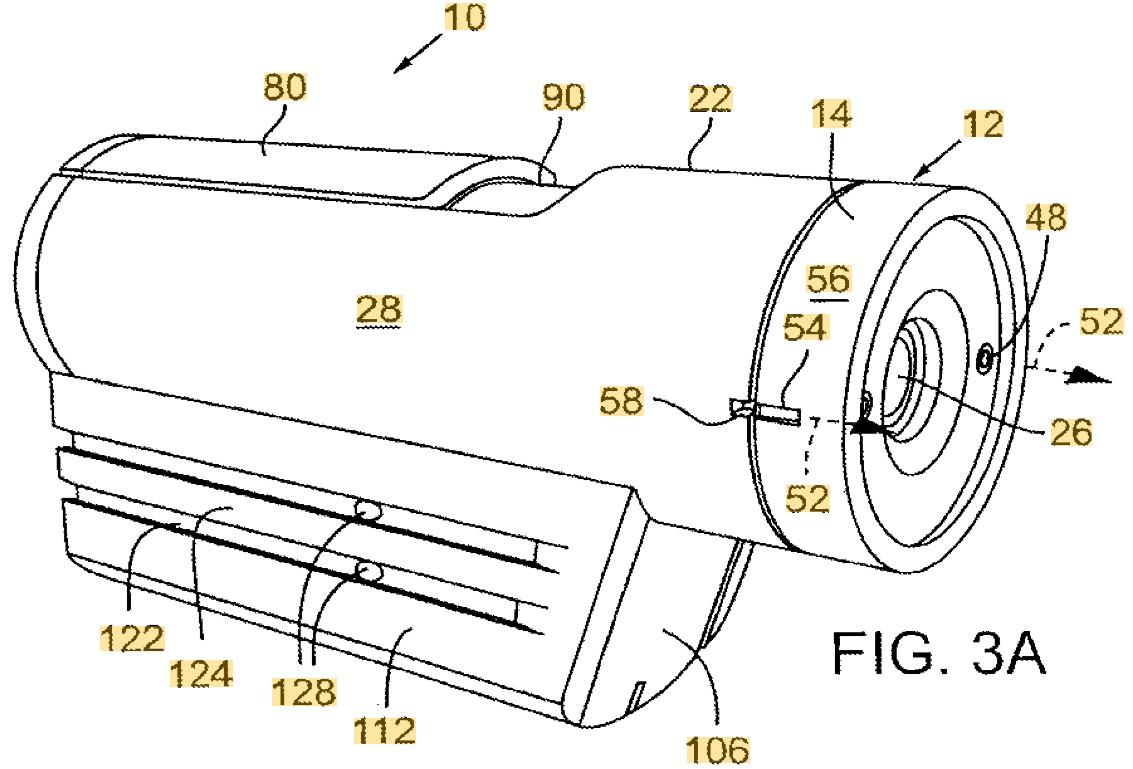
  • Contour v. GoPro: Reversal of § 101 Ineligibility Finding for POV Camera Patent

    Contour v. GoPro: Reversal of § 101 Ineligibility Finding for POV Camera Patent

    In a significant development in the evolving landscape of patent eligibility, the Federal Circuit reversed a district court’s grant of summary judgment under 35 U.S.C. § 101, holding that claims directed to a point-of-view (POV) action camera with real-time streaming and control functionality recite patent-eligible subject matter. The September 9, 2024 decision in Contour IP Holding LLC v. GoPro, Inc., No. 22-1654, provides meaningful clarification on how courts should assess “technological improvements” under Alice step one.

    Background: Remote Control and Real-Time Streaming in POV Cameras

    Contour’s asserted patents (U.S. Patent Nos. 8,890,954 and 8,896,694) cover hands-free POV action cameras configured for remote image acquisition and control. Central to the claims is a “dual stream” architecture: the camera generates a high-quality video file for later viewing and a lower-quality stream that is wirelessly transmitted to a remote device for real-time viewing and control. This design allows users—like a skier with a helmet-mounted camera—to monitor and adjust recordings in real-time using a smartphone app, even when the camera itself is out of sight.

    The district court found the claims ineligible under § 101, characterizing them as directed to the abstract idea of “creating and transmitting video (at two different resolutions) and adjusting the video’s settings remotely.” At Alice step two, the court found no inventive concept, concluding the claims merely invoked generic components performing conventional functions.

    Federal Circuit’s Reversal: A “Technological Solution to a Technological Problem”

    Writing for the panel, Judge Reyna disagreed with the lower court’s characterization of the claims and reversed, holding that claim 11 of the ’954 patent and its counterpart in the ’694 patent are not directed to an abstract idea.

    Importantly, the Federal Circuit emphasized the claim’s requirement for generating two data streams “in parallel” and transferring only the low-quality stream to the remote device. This, the court found, constituted a specific and concrete improvement to the functionality of POV cameras, not merely an abstract idea implemented on conventional hardware.

    The panel highlighted several key precedents in its reasoning:

    • McRO, Inc. v. Bandai Namco Games Am. Inc., 837 F.3d 1299 (Fed. Cir. 2016): The court analogized Contour’s claims to those in McRO, where rule-based automation of animation was found to improve computer graphics technology. Similarly, Contour’s dual-stream architecture improved real-time camera control and viewing capabilities.
    • Enfish, LLC v. Microsoft Corp., 822 F.3d 1327 (Fed. Cir. 2016): The court reiterated that claims should not be abstracted away from their specific technological solutions. The district court’s characterization of Contour’s claims at “a high level of abstraction” was criticized as contrary to Enfish.
    • Core Wireless Licensing S.A.R.L. v. LG Elecs., Inc., 880 F.3d 1356 (Fed. Cir. 2018) and CardioNet, LLC v. InfoBionic, Inc., 955 F.3d 1358 (Fed. Cir. 2020): The panel cited these cases for the principle that claims reciting specific functional improvements to technology—particularly those improving user interaction or system performance—can be patent eligible at step one.
    • Yu v. Apple Inc., 1 F.4th 1040 (Fed. Cir. 2021): GoPro had relied heavily on Yu, where claims directed to combining two images for enhancement were found ineligible. The court distinguished Yu, noting that Contour involved no “longstanding, fundamental practice” in photography or video recording and instead claimed a concrete, non-generic camera architecture.

    Key Takeaways

    1. Technological specificity matters. The Federal Circuit was persuaded by the “parallel recording” requirement and the specific hardware-software interaction enabling remote streaming and control. Mere invocation of a result is not enough—but a particular claimed structure that achieves it may be.
    2. Avoid abstract overgeneralization. The decision warns against characterizing claims at too high a level of abstraction, a misstep that contributed to the district court’s error.
    3. The context of prior art is relevant—but not dispositive. While GoPro emphasized the use of known components, the court focused instead on their unconventional combination and functional interplay. This reflects a growing trend in § 101 cases toward examining whether claims provide a specific technical solution, even using off-the-shelf hardware.
    4. Preemption concerns remain central. The court noted that Contour’s claims did not risk preempting the field of remote video control. The narrow requirement of dual-stream parallel processing significantly cabined the claim scope.

    Conclusion

    Contour v. GoPro is a noteworthy addition to the Federal Circuit’s body of § 101 jurisprudence. For innovators in imaging technology, real-time communications, or IoT devices, the decision affirms that structural claims improving device functionality—even through combinations of conventional components—may clear the § 101 hurdle when articulated with sufficient technical specificity.

    By Charles Gideon Korrell

  • ParkerVision v. Qualcomm: Collateral Estoppel and Expert Exclusion in Patent Litigation

    ParkerVision v. Qualcomm: Collateral Estoppel and Expert Exclusion in Patent Litigation

    After more than a decade of litigation between ParkerVision and Qualcomm, the Federal Circuit has vacated summary judgment of non-infringement and reversed key Daubert rulings that had hobbled ParkerVision’s case. The court’s decision in ParkerVision, Inc. v. Qualcomm Inc., Nos. 2022-1755, 2024-2221 (Fed. Cir. Sept. 6, 2024), sheds new light on the proper application of collateral estoppel in repeat patent litigation, especially when dealing with related but non-identical patent claims, and on the standards for excluding expert testimony at summary judgment.

    A Litigation Timeline Over a Decade Long

    The saga began in 2011 when ParkerVision sued Qualcomm over its “down-converting” wireless technology. In ParkerVision I, the Federal Circuit affirmed JMOL of non-infringement, largely based on the construction and application of a “generating limitation” found in representative claim 23 of U.S. Patent No. 6,061,551, which required the generation of a down-converted signal from energy transferred into a storage device (e.g., a capacitor).

    In 2014, while post-trial motions were pending in the first case, ParkerVision filed a second action—this time asserting different, albeit related, patents. At issue were two patents: U.S. Patent No. 7,218,907 (related to down-conversion, like the earlier ’551 patent) and U.S. Patent No. 6,091,940 (which includes both down-conversion and up-conversion claims). The parties agreed the accused products remained materially the same, but disagreed about whether the new claims raised the same infringement issue litigated in the 2011 action.

    Collateral Estoppel: Not a Shortcut Without Claim Construction

    The district court had granted Qualcomm’s motion for summary judgment on the grounds that collateral estoppel barred ParkerVision from re-litigating the infringement question. But the Federal Circuit disagreed, holding that the district court erred by failing to conduct proper claim construction under Phillips v. AWH Corp., 415 F.3d 1303 (Fed. Cir. 2005) (en banc). Instead, the court had relied on Qualcomm’s expert reports and found them “unrebutted.”

    The Federal Circuit emphasized that collateral estoppel applies only if the “issue at stake” is identical. Citing CSX Transp., Inc. v. Bhd. of Maint. of Way Emps., 327 F.3d 1309 (11th Cir. 2003), and Ohio Willow Wood Co. v. Alps S., LLC, 735 F.3d 1333 (Fed. Cir. 2013), the court stressed that claim construction differences matter, particularly in patent cases. Here, the newly asserted receiver claims lacked the “generating limitation” that doomed ParkerVision’s case in 2011.

    Importantly, the court noted that ParkerVision’s experts offered evidence that the accused products performed down-conversion before energy storage in a capacitor—precisely what the earlier claims precluded, but what these new claims arguably allow.

    Estoppel from IPRs? Not So Fast

    The decision also clarifies the limited preclusive effect of IPR outcomes. In an earlier IPR, Qualcomm successfully invalidated the apparatus claims of the ’940 patent, but not the method claims. The district court excluded ParkerVision’s validity expert based on estoppel from ParkerVision II, 903 F.3d 1354 (Fed. Cir. 2018).

    The Federal Circuit reversed. It held that because the IPR and appeal had involved a lower standard of proof (preponderance of the evidence) than that required in district court (clear and convincing evidence), collateral estoppel did not apply. This aligns with B & B Hardware, Inc. v. Hargis Indus., Inc., 575 U.S. 138 (2015), and Grogan v. Garner, 498 U.S. 279 (1991), which reject estoppel where differing legal standards apply.

    Expert Testimony: The Threshold for Reliability

    Finally, the court reversed the exclusion of ParkerVision’s infringement experts, holding that the district court abused its discretion by requiring independent simulations or testing as a precondition to admissibility. ParkerVision’s experts had relied on schematics and technical documentation—materials that Qualcomm’s own engineer acknowledged were sufficient to assess how the accused products worked.

    Citing Monsanto Co. v. David, 516 F.3d 1009 (Fed. Cir. 2008), and Liquid Dynamics Corp. v. Vaughan Co., 449 F.3d 1209 (Fed. Cir. 2006), the court reiterated that disputes over expert methodology go to weight, not admissibility, especially when the expert relies on materials typically used in the field.

    What This Means Going Forward

    This decision underscores the need for precision when invoking collateral estoppel in patent cases—especially in repeat litigations involving related but distinct patents. Courts must analyze the actual claim language and conduct proper claim construction, rather than infer equivalence based on superficial similarities or expert declarations. It also reinforces that evidentiary exclusions under Daubert must be carefully tethered to the reliability of the expert’s method, not simply the absence of certain types of analysis.

    The ParkerVision–Qualcomm battle continues, now with a renewed opportunity for ParkerVision to pursue its claims in district court. For practitioners, the ruling is a reminder that even long-running disputes deserve fresh analysis when new claims are at stake.

    By Charles Gideon Korrell

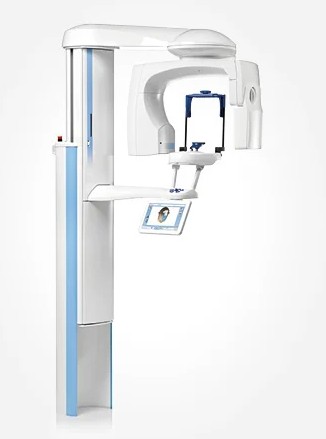
  • Osseo Imaging v. Planmeca: Rejection of Temporal Limitation on Expert Qualifications

    Osseo Imaging v. Planmeca: Rejection of Temporal Limitation on Expert Qualifications

    In its September 2024 decision in Osseo Imaging, LLC v. Planmeca USA Inc., the Federal Circuit reaffirmed the standard for expert qualifications in patent cases, declining to impose a temporal requirement that an expert possess ordinary skill in the art as of the time of invention. The ruling has notable implications for litigation strategy, particularly concerning expert testimony on infringement and validity.

    Background

    Osseo Imaging accused Planmeca of infringing three patents—U.S. Patent Nos. 6,381,301, 6,944,262, and 8,498,374—related to orthopedic imaging systems that create densitometric and tomographic models. Following a jury trial, the District of Delaware entered judgment upholding the jury’s findings of infringement and nonobviousness. On appeal, Planmeca challenged the sufficiency of the evidence, centering its arguments on the qualifications of Osseo’s expert, Dr. Omid Kia.

    Key Issue: Timing of Expert’s Qualification as POSITA

    Planmeca argued that Dr. Kia could not offer substantial evidence on infringement or validity because he did not possess the requisite level of skill in diagnostic imaging in 1999, the patents’ alleged priority date. The Federal Circuit, however, rejected this argument, emphasizing that the governing standard—set forth in Kyocera Senco Indus. Tools Inc. v. ITC, 22 F.4th 1369 (Fed. Cir. 2022)—requires only that an expert possess the ordinary level of skill in the art, not that such skill must have been attained by the date of invention.

    The Court underscored that Kyocera does not impose a temporal requirement, and it declined to infer one. It reasoned that an expert can acquire the necessary skill later and still reliably opine from the perspective of a person of ordinary skill at the relevant time. The Court further noted that Planmeca had not filed a Daubert motion or otherwise timely challenged Dr. Kia’s qualifications at trial, weakening its post-verdict objections.

    Substantial Evidence of Infringement

    Planmeca also challenged the jury’s infringement verdict on several claim limitations, including densitometry, tomographic modeling, and comparing digital models. The Federal Circuit upheld the verdict, finding substantial evidence for each element:

    • Densitometry: The Court found that the accused systems’ calculation of Hounsfield Units (HU) constituted “quantitatively calculated bone density” under the court’s claim construction.
    • Tomographic Model: Dr. Kia’s testimony supported that the systems merged data from multiple tomographic scans, satisfying the claim limitation.
    • Comparing Models: The Court rejected Planmeca’s contention that a human, not the computer, must perform the comparison. It held that presenting models in a way that enables comparison—such as side-by-side alignment—was sufficient.

    Obviousness: Competing Expert Testimony

    As for validity, Planmeca contended that the asserted claims were obvious over a combination of prior art references, including Guenther, Mazess, Fontevraud, and DIMAXIS. However, the Federal Circuit held that substantial evidence supported the jury’s nonobviousness verdict. Dr. Kia testified that combining tomosynthesis (Guenther) with densitometric techniques (Mazess and Fontevraud) would not have been obvious due to the incompatibility between these imaging methods. The Court declined to reweigh the expert testimony or second-guess the jury’s credibility determinations.

    Takeaways

    • No Time-of-Invention Requirement for Expert Qualification: This decision reaffirms that an expert need only possess the requisite skill in the art—when they acquired it is immaterial for purposes of testifying from the perspective of a POSITA.
    • Preservation Matters: The failure to timely challenge expert qualifications under Daubert or through trial objections may limit avenues for appeal.
    • Substantial Evidence Standard Remains Robust: The Federal Circuit continues to defer to jury verdicts where the record reflects a reasonable basis for the findings, even in the face of competing expert testimony.

    This decision serves as a reminder to focus early on expert qualification issues and underscores the importance of building a complete record—both for and against infringement and validity—at trial.

    By Charles Gideon Korrell

  • Broadband iTV v. Amazon: CAFC Doubles Down on § 101 Ineligibility

    Broadband iTV v. Amazon: CAFC Doubles Down on § 101 Ineligibility

    In its recent decision Broadband iTV, Inc. v. Amazon.com, Inc., the Federal Circuit affirmed a summary judgment ruling that all asserted claims from five patents were directed to patent-ineligible subject matter under 35 U.S.C. § 101. The opinion, authored by Judge Reyna, offers a comprehensive application of the Alice two-step framework and reiterates that automation of known practices and abstract ideas remains outside the bounds of patentable subject matter—even when dressed up with user interface features and layered templates.

    The Patents at Issue

    The dispute involved five patents, four of which were from a common family (the ’026, ’388, ’750, and ’751 patents) generally relating to electronic programming guides for video-on-demand (VOD) systems. The fifth, the unrelated ’825 patent, focused on dynamically adjusting the guide based on a viewer’s history to minimize keystrokes.

    The Federal Circuit treated claim 1 of the ’026 and ’825 patents as representative. Claim 1 of the ’026 patent recited a “templatized” electronic program guide created from metadata uploaded by content providers and layered with background, template, and content elements. The ’825 patent’s claim 1 described reordering categories in a viewer-specific guide based on usage history, with claim 15 adding a step of generating new categories.

    Step One: Abstract Ideas Remain Abstract

    Applying Alice step one, the court agreed with the district court that the ’026 patent family was directed to “receiving metadata and organizing the display of video content based on that metadata”—a formulation akin to what the court previously found abstract in Electric Power Group v. Alstom, 830 F.3d 1350 (Fed. Cir. 2016), and In re TLI Communications, 823 F.3d 607 (Fed. Cir. 2016).

    BBiTV leaned heavily on Core Wireless Licensing v. LG Electronics, 880 F.3d 1356 (Fed. Cir. 2018), and Data Engine Technologies v. Google, 906 F.3d 999 (Fed. Cir. 2018), arguing that the claims improved user interface functionality. The panel rejected that analogy, distinguishing those decisions as involving specific technological solutions rather than content arrangement based on metadata—a practice deemed more akin to “organizing information,” not an inventive UI architecture.

    For the ’825 patent, the Federal Circuit found the claims directed to the abstract idea of “collecting and using a viewer’s video history to suggest categories of video content”—essentially targeted advertising. As in Intellectual Ventures I v. Capital One, 792 F.3d 1363 (Fed. Cir. 2015), and Free Stream Media Corp. v. Alphonso, 996 F.3d 1355 (Fed. Cir. 2021), the court reaffirmed that tailoring content based on prior interactions is a longstanding commercial practice and abstract even if done digitally.

    Step Two: No “Significantly More”

    At Alice step two, the court found no inventive concept that transformed the abstract ideas into patent-eligible applications. BBiTV pointed to automatic generation of displays from templates, a content management server, and user-specific guide generation. But the court concluded that all these elements were routine and conventional—citing BSG Tech LLC v. BuySeasons, Inc., 899 F.3d 1281 (Fed. Cir. 2018), and Weisner v. Google LLC, 51 F.4th 1073 (Fed. Cir. 2022)—and that automation itself does not rescue an abstract idea.

    The court also dismissed the argument that layering templates or using a log-in step provided the necessary inventive concept, emphasizing that these features were not claimed as technological improvements but merely used as vehicles to execute the abstract idea.

    Strategic Considerations for Protecting UI Innovations

    While Broadband iTV reinforces the high bar for patent eligibility under § 101, particularly for UI-related inventions, it also offers guidance for strengthening future claims. Based on the court’s reasoning and broader commentary on the decision, practitioners should consider the following strategies:

    1. Emphasize Technical Specificity
      Claims should identify the specific technological solution being offered—such as a novel data structure, a new rendering technique, or a UI behavior that solves a particular latency or usability problem—rather than describe high-level functional goals.
    2. Detail the Technical Benefits
      Specifications should clearly articulate how the invention improves a technological process, such as reducing processing time, conserving memory, or enabling new interaction paradigms. Abstract notions of improved “user experience” alone are insufficient.
    3. Avoid Generic Implementations
      When drafting claims, it’s important to incorporate non-generic computing components or unconventional arrangements of conventional elements. Claims that merely recite servers, databases, or templates without more will struggle to survive § 101 scrutiny.
    4. Consider Design Patents for UI Elements
      For UI innovations where the novelty lies in layout or visual arrangement rather than technological function, design patents may offer a more effective path to protection. They can complement utility applications and provide coverage for ornamental aspects.

    Final Thoughts

    This decision continues a trend of eligibility rulings that reject attempts to claim the digital automation of human decision-making or content organization unless coupled with a demonstrable technological advance. It serves as both a warning and a roadmap—highlighting the pitfalls of overbroad functional claims and offering actionable insights for protecting user interface innovations in a post-Alice landscape.ble long-standing commercial or cognitive tasks, even when executed in a modern digital context.

    By Charles Gideon Korrell