The Technology & Information Law Blog

Analysis by Charles Gideon Korrell

Month: May 2025

  • Epic v. Apple – Apple’s Emergency Motion to Stay Contempt Ruling: A Likely Win on Scope, But Enforcement Nuances Remain

    Epic v. Apple – Apple’s Emergency Motion to Stay Contempt Ruling: A Likely Win on Scope, But Enforcement Nuances Remain

    In its latest battle with Epic Games, Apple has sought emergency relief from the Ninth Circuit to stay a contempt order issued by Judge Yvonne Gonzalez Rogers on April 30, 2025. The district court held Apple in civil contempt for violating a 2021 permanent injunction and imposed additional permanent restrictions on Apple’s App Store conduct. Apple’s motion for a stay raises substantial constitutional and procedural concerns that warrant close scrutiny, and the company has a strong argument that the contempt order went well beyond the scope of the original injunction.

    This post examines Apple’s arguments, the governing legal standards, and the likely path the Ninth Circuit will take in reviewing the district court’s expansive contempt ruling.


    I. Apple’s Core Challenge: Contempt Order as Substantive Injunction Redress

    The original 2021 injunction prohibited Apple from “prohibiting developers from including in their apps and their metadata buttons, external links, or other calls to action that direct customers to purchasing mechanisms, in addition to In-App Purchasing.” It said nothing about commissions, formatting rules, or placement restrictions. Apple argues that the contempt order now imposes six broad new rules, including:

    • A ban on charging any commission for purchases made outside the app;
    • A prohibition on setting conditions for link style, placement, or language;
    • A requirement to allow deep linking and dynamic data sharing; and
    • A mandate that all link-related messaging be “neutral.”

    Apple claims these new obligations are not clarifications of the original order, but rather new permanent injunctions—imposed without a trial and in violation of Apple’s constitutional rights.


    II. Contempt Standards: “Fair Ground of Doubt” and Rule 65(d) Limitations

    Under Taggart v. Lorenzen, 587 U.S. 554 (2019), civil contempt is inappropriate where there is a “fair ground of doubt” as to whether the conduct violated the injunction. Importantly, courts must apply an “objective reasonableness” standard: if a reasonable person could read the injunction and conclude that the challenged conduct is compliant, contempt is unwarranted.

    The contempt order also runs afoul of Fed. R. Civ. P. 65(d), which requires that injunctions “describe in reasonable detail—and not by referring to the complaint or other document—the act or acts restrained or required.” The district court inappropriately incorporated the findings of fact from its 2021 opinion—nearly 180 pages of analysis—as if they were part of the injunction. That approach was explicitly rejected by the Supreme Court in Schmidt v. Lessard, 414 U.S. 473 (1974), which emphasized that enjoined parties must be able to know from the face of the injunction exactly what conduct is prohibited.


    III. The Zero Commission Mandate: Judicial Ratemaking and a Takings Claim

    Apple argues that the district court effectively engaged in judicial ratemaking by setting a commission rate of zero for any purchases made outside the app via an external link. This, Apple contends, is not only unauthorized under California’s Unfair Competition Law (UCL), but also violates the Takings Clause of the U.S. Constitution.

    The California UCL, unlike public utility statutes, does not provide for the judicial imposition of rates. See Cal. Grocers Ass’n v. Bank of Am., 22 Cal. App. 4th 205, 217–18 (1994). Apple analogizes this to an unconstitutional appropriation of its intellectual property and services, citing Cedar Point Nursery v. Hassid, 594 U.S. 139 (2021), for the proposition that a permanent deprivation of the right to exclude constitutes a per se taking. Here, Apple maintains that it is being forced to provide access to proprietary platform tools and infrastructure—worth billions—without any compensation.


    IV. The Formatting Restrictions: Property Rights and First Amendment Issues

    Apple’s second major challenge targets the court’s ban on setting any terms for how links may appear or function. Apple argues that these restrictions infringe its First Amendment rights by compelling it to carry developer speech in objectionable ways, citing Moody v. NetChoice, LLC, 603 U.S. 707 (2024), which reaffirmed that private platform owners cannot be compelled to carry or accommodate speech they disfavor.

    Additionally, the company relies on Ysleta Del Sur Pueblo v. Texas, 596 U.S. 685 (2022), to argue that regulating the “time, place, and manner” of speech is not the same as a prohibition. The original injunction said nothing about placement or design—Apple’s interpretation that it could impose non-discriminatory formatting rules (e.g., not placing a rival link in the checkout flow) was at least objectively reasonable.

    The deeper implication is that the district court’s order transforms the App Store into a regulated speech zone in which Apple is forbidden to enforce even basic UI standards that govern its platform.


    V. Procedural Due Process and the Limits of Civil Contempt

    Apple argues that the contempt ruling crosses the line into punitive territory. Civil contempt is meant to coerce compliance or compensate for losses—not to punish past misconduct. International Union, United Mine Workers of Am. v. Bagwell, 512 U.S. 821, 828 (1994), draws a clear line: sanctions must be purgable and aimed at future compliance. But the new rules are both permanent and forward-looking, without any mechanism for Apple to “purge” its contempt.

    Moreover, Apple contends that the district court punished it for new conduct—specifically the creation of a post-injunction commission structure and developer UI requirements—that had not been adjudicated at trial and was never found to be unlawful under the UCL. Without a full adversarial hearing, that expansion of liability violates Apple’s due process rights. See United States v. Armour & Co., 402 U.S. 673 (1971); Young v. United States ex rel. Vuitton, 481 U.S. 787 (1987).


    VI. The Beverage Decision and Federal-State Conflict

    Apple further argues that its continued enforcement of anti-steering rules cannot now be declared unlawful under the UCL because a California appellate court—after the federal ruling—upheld the same Apple policies in Beverage v. Apple Inc., 101 Cal. App. 5th 736 (2024). The decision rejected the same “unfairness” theory advanced by Epic and directly conflicts with the federal court’s UCL interpretation.

    Apple invokes Erie and Rule 60(b)(5), claiming that a federal injunction based on California law cannot be enforced in the face of a binding and contrary state court ruling. Apple asserts that the state courts’ ruling reflects the definitive interpretation of California law and that continuing to enforce the federal judgment would create inequitable outcomes in violation of Guaranty Trust Co. v. York, 326 U.S. 99 (1945).


    VII. Likelihood of Success and What the Ninth Circuit Might Do

    Given the strength of Apple’s procedural and constitutional arguments—particularly those concerning the expansion of the injunction and the imposition of zero-commission mandates—the Ninth Circuit is likely to grant a stay of at least those provisions. The court may agree with Apple that these elements were not “clear and unambiguous” in the original injunction and were imposed without adequate due process.

    However, the appellate court may also preserve aspects of the contempt order that are closely tethered to the original anti-steering injunction, especially those designed to ensure developers are able to inform users of outside purchasing options. A split ruling is therefore likely: staying some provisions while allowing enforcement of others that closely track the injunction’s original consumer-choice rationale.


    Conclusion

    Apple’s emergency motion presents compelling grounds for a partial stay, based on well-developed legal doctrines around contempt, due process, and the limits of injunctive relief. While the ultimate fate of the new App Store rules will turn on the full appeal, Apple’s likelihood of prevailing on core aspects of its challenge—particularly the commission ban—is high. The Ninth Circuit will need to carefully weigh Apple’s rights to control its platform against the public interest in competitive app distribution and informed consumer choice.

    By Charles Gideon Korrell

  • Ingenico Inc. v. IOENGINE, LLC: Public Availability of Prior Art Software Invalidates Patent Claims

    Ingenico Inc. v. IOENGINE, LLC: Public Availability of Prior Art Software Invalidates Patent Claims

    In a recent decision, Ingenico Inc. v. IOENGINE, LLC, the Federal Circuit upheld a jury’s finding that several claims of IOENGINE’s U.S. Patent Nos. 9,059,969 and 9,774,703 were invalid due to anticipation and obviousness by publicly available prior art. Specifically, the Court affirmed that a software application known as the “Firmware Upgrader,” part of M-Systems’ DiskOnKey System, constituted prior art under the “public use” provision of 35 U.S.C. § 102(b) (pre-AIA).

    Background

    IOENGINE’s patents relate to portable devices, such as USB thumb drives, that send communications to network servers upon user interaction. Ingenico challenged the validity of IOENGINE’s patents by demonstrating prior public use of M-Systems’ DiskOnKey System, including its Firmware Upgrader software.

    At trial, Ingenico presented significant circumstantial evidence of the Firmware Upgrader’s public accessibility before the critical date. Evidence included a July 2002 email to M-Systems employees encouraging dissemination of the Firmware Upgrader and associated documentation, a public press release, and archived web pages from which the software could be downloaded.

    Court Analysis and Key Precedents

    The Federal Circuit’s analysis emphasized two important precedents:

    1. Medtronic, Inc. v. Teleflex Innovations S.A.R.L. (2023) clarified that circumstantial evidence is equally persuasive and sufficient compared to direct evidence for proving public use.
    2. Minnesota Mining & Manufacturing Co. (3M) v. Chemque, Inc. (2002) was distinguished due to the lack of evidence in 3M demonstrating that samples provided were ever used in a manner fulfilling claim requirements.

    In contrast to 3M, Ingenico demonstrated clear evidence that the Firmware Upgrader software was publicly accessible and encouraged for use, meeting the claims’ criteria once downloaded. Thus, circumstantial evidence was adequate to satisfy the public use requirement.

    Clarification on IPR Estoppel and Jury Instructions

    IOENGINE argued for a new trial, asserting improper jury instructions regarding conception, diligence, public use, and sales offers. It also challenged the district court’s decision allowing Ingenico to rely on prior art under IPR estoppel provisions.

    The Federal Circuit rejected these arguments, holding that the jury was properly instructed on the clear and convincing evidence standard and other critical issues. Additionally, the court clarified the scope of IPR estoppel under 35 U.S.C. § 315(e)(2), holding that estoppel does not extend to grounds involving public use or on-sale bar evidence because these grounds cannot be raised in inter partes review, which is limited to printed publications and patents as prior art.

    Conclusion

    The decision underscores the importance of demonstrating prior art’s public accessibility through circumstantial evidence. Additionally, it offers crucial guidance on the limits of IPR estoppel, affirming that petitioners are free to assert public use and on-sale bars in district court actions despite participating in an IPR. Patent holders and challengers alike must carefully consider the implications of public availability and IPR proceedings in shaping their litigation strategies.

    By Charles Gideon Korrell

  • Epic Games v. Apple: Judge Finds Apple in Contempt

    Epic Games v. Apple: Judge Finds Apple in Contempt

    On April 30, 2025, U.S. District Judge Yvonne Gonzalez Rogers ruled that Apple violated the court’s prior injunction concerning anti-steering provisions in its App Store policies. This latest ruling is a significant development in the high-profile legal battle between Epic Games and Apple, carrying substantial implications for the broader technology industry.

    Judge Yvonne Gonzalez Rogers anchored her decision in established legal precedents concerning civil contempt and compliance with court injunctions. The judge’s analysis underscores a critical legal principle: compliance with an injunction requires more than superficial adherence; it demands genuine efforts to fulfill the court’s intent. This ruling sends a clear message to anyone attempting to preserve anticompetitive practices under the guise of compliance will not be tolerated.

    Background of Epic v. Apple

    In August 2020, Epic Games deliberately bypassed Apple’s App Store payment mechanism, implementing its own direct-payment system for the popular game Fortnite. Apple responded by removing Fortnite from its App Store, prompting Epic to initiate litigation alleging Apple’s policies were anti-competitive and violated federal and state laws.

    On April 30, 2025, U.S. District Judge Yvonne Gonzalez Rogers ruled that Apple Inc. violated the court’s prior injunction concerning anti-steering provisions in its App Store policies. This latest ruling is a significant development in the high-profile legal battle between Epic Games and Apple, carrying substantial implications for the broader technology industry.

    Judge Gonzalez Rogers based her decision on established legal precedents regarding civil contempt and compliance with court injunctions. Her analysis emphasizes that compliance requires more than superficial adherence; it demands genuine efforts to fulfill the court’s intentions. The ruling sends a clear message: attempts to maintain anticompetitive practices under the pretext of compliance will not be tolerated.

    Background of Epic v. Apple

    In August 2020, Epic Games intentionally bypassed Apple’s App Store payment mechanism by implementing its own direct-payment system within Fortnite. Apple responded by removing Fortnite from its App Store, prompting Epic to initiate litigation alleging Apple’s policies were anti-competitive under federal and state laws.

    Judge Gonzalez Rogers issued a pivotal ruling in September 2021. She concluded that while Apple did not violate federal antitrust laws, its anti-steering rules—which prevented developers from directing users to alternative payment methods—violated California’s Unfair Competition Law. Accordingly, the court ordered Apple to allow developers to link users to external payment systems.

    Both parties challenged aspects of this injunction, but the U.S. Supreme Court declined to review the case, leaving the injunction in effect.

    Legal Precedents Supporting the Ruling

    Judge Gonzalez Rogers’ contempt decision reflects fundamental principles from key precedents defining lawful compliance with court orders:

    Judge Gonzalez Rogers found Apple’s imposition of a 27% fee on external transactions and its use of deterrent messaging (“scare screens”) constituted deliberate attempts to undermine the 2021 injunction. These actions, according to the court, represented willful defiance rather than mere technical violations.

    Implications for Developers and the App Store

    This contempt ruling significantly impacts Apple’s App Store policies, potentially diminishing its control over in-app purchases and associated revenue streams. Developers now have enhanced freedom to direct users to alternative payment methods without incurring additional fees or encountering deterrent measures.

    Strategic and Compliance Considerations

    The ruling serves as a critical reminder for companies regarding strict adherence to judicial injunctions, particularly in platform governance and marketplace contexts. Companies must interpret court orders diligently, ensuring they align with both explicit directions and underlying judicial intent.

    Practically, courts appear increasingly willing to rigorously enforce compliance, especially in cases involving significant market impact. In-house legal teams should rigorously review compliance frameworks and corporate communications following injunctions to ensure full alignment with judicial intent.

    Apple’s Planned Appeal

    Apple immediately signaled its intent to appeal the contempt ruling to the Ninth Circuit Court of Appeals. While specific arguments remain undisclosed, Apple’s defense will likely revolve around the interpretation of the injunction and permissible actions taken for compliance.

    Conclusion

    The Epic v. Apple contempt ruling highlights the judiciary’s assertive stance on compliance enforcement in significant technology litigation. For technology companies and in-house counsel, this underscores the necessity of robust compliance strategies and clear internal communication to avoid judicial sanctions.

    As the industry awaits the outcome of Apple’s appeal, companies must reassess and potentially strengthen their compliance measures, especially regarding platform governance and market restrictions, to mitigate similar risks.

    By Charles Gideon Korrell

  • Incyte Corp. v. Sun Pharmaceutical Industries: Federal Circuit Reinforces Strict Article III Standing Requirements for Patent Challengers

    Incyte Corp. v. Sun Pharmaceutical Industries: Federal Circuit Reinforces Strict Article III Standing Requirements for Patent Challengers

    In a recent decision, Incyte Corporation v. Sun Pharmaceutical Industries, Inc., the Federal Circuit reaffirmed the stringent standards for establishing Article III standing in appeals from PTAB decisions. The court dismissed Incyte’s appeal from a PTAB post-grant review proceeding, holding that Incyte failed to demonstrate a sufficient injury in fact required for Article III standing.

    Background of the Case

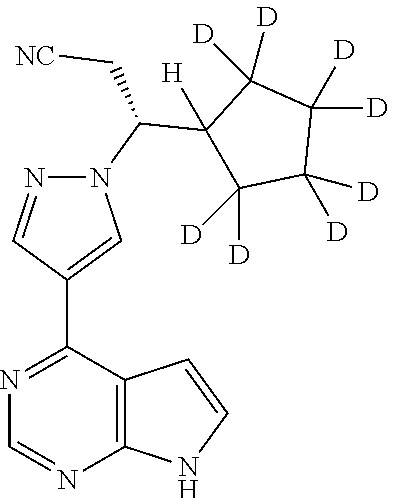
    Sun Pharmaceutical Industries holds U.S. Patent No. 10,561,659, directed to methods of treating hair-loss disorders, specifically alopecia areata, using precise dosages of deuterated analogs of ruxolitinib. Incyte challenged the validity of Sun’s patent claims via PGR, alleging obviousness. However, the PTAB upheld the claims. Incyte subsequently appealed the PTAB decision.

    Article III Standing Requirement

    Before reaching the merits of an appeal, the Federal Circuit emphasized that the appellant must establish Article III standing, which includes showing:

    1. An injury in fact that is concrete and particularized, and actual or imminent.
    2. A causal connection between the injury and the conduct complained of.
    3. Likelihood that the injury will be redressed by a favorable decision.

    Insufficient Injury in Fact

    Incyte asserted two bases for standing:

    1. Potential Infringement Liability:

    Incyte argued its ongoing development of a topical deuterated ruxolitinib product to treat alopecia areata presented a substantial risk of future infringement liability. However, the Federal Circuit found Incyte’s plans insufficiently concrete to confer standing. The court pointed to Incyte’s minimal initial investment, the uncertain timeline, and multiple significant regulatory and development hurdles remaining, concluding that these factors rendered the potential injury too speculative.

    The court specifically distinguished Incyte’s scenario from JTEKT Corp. v. GKN Auto. LTD., where concrete plans and actual steps toward market entry are necessary to substantiate an imminent risk of infringement liability. Merely earmarking funds and expressing intentions did not meet the stringent threshold required.

    2. Competitor Standing Doctrine:

    Incyte also sought standing under the competitor standing doctrine, arguing Sun’s patent limited Incyte’s competitive opportunities. The Federal Circuit, citing its decision in AVX Corp. v. Presidio Components, emphasized that competitor standing in the patent context requires showing nonspeculative plans to engage in activities covered by the challenged patent claims. Because Incyte failed to demonstrate such concrete and imminent plans, this doctrine did not confer standing.

    Key Takeaways

    This decision underscores the Federal Circuit’s stringent application of Article III standing requirements in patent appeals. Specifically, it highlights:

    • The necessity of demonstrating concrete, nonspeculative plans to engage in potentially infringing activities.
    • The limited applicability of competitor standing doctrine absent clear and imminent infringement risks.

    Conclusion

    The Federal Circuit’s ruling in Incyte Corp. v. Sun Pharmaceutical reiterates the high bar patent challengers must clear to establish standing. Parties contemplating appeals from PTAB proceedings should ensure that they have documented concrete and imminent plans potentially subjecting them to infringement liability before initiating appeals.

    By Charles Gideon Korrell

  • In re Kostic: Broadened Reissue Claims Rejected Due to Statutory Bar

    In re Kostic: Broadened Reissue Claims Rejected Due to Statutory Bar

    In In re Kostic, the Federal Circuit recently reinforced the statutory bar against broadening reissue applications filed beyond the two-year limit, emphasizing that claims must be construed based on their actual language rather than an inventor’s subjective intent.

    Background:
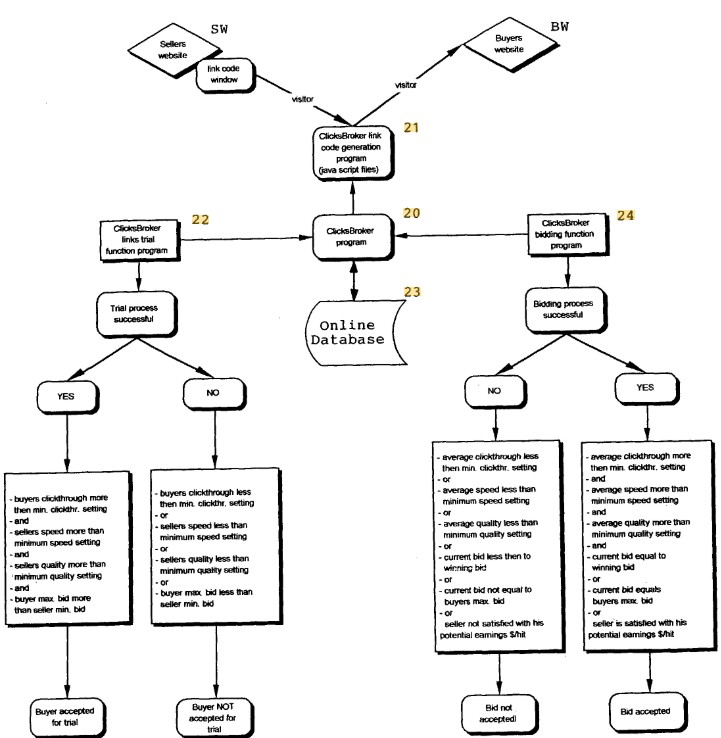
    Appellants Kostic and Vandevelde sought reissue of U.S. Patent No. 8,494,950, covering methods for buying and selling click-through internet traffic via an intermediary website. Original dependent claim 3 allowed a direct traffic exchange without a trial process but explicitly depended on independent claim 1, which required a trial process. Arguing that original claim 3 was invalid under 35 U.S.C. § 112 for inconsistency, appellants attempted to rewrite it in independent form, providing optional pathways either with or without a trial process.

    Federal Circuit Decision:
    The Federal Circuit affirmed the PTAB’s rejection, holding the reissue claim was impermissibly broader than the original. The Court applied the principle established in Medtronic, Inc. v. Guidant Corp. that any claim containing at least one conceivable process not infringing the original claims is broader in scope.

    Key Points of Law:

    • Claim Construction: The Court clarified that the determination of claim scope for broadening reissues under 35 U.S.C. § 251(d) depends strictly on the claims as originally written, rather than on the patentees’ intended scope or subjective understanding. Citing Chef America, Inc. v. Lamb-Weston, Inc. and Superior Fireplace Co. v. Majestic Prods. Co., the Court underscored the importance of objective claim interpretation.
    • Broadened Scope Analysis: Reissue claim 3 introduced optional pathways (with or without a trial process), whereas original claims mandated a trial process. Thus, the reissue claim was broader, capturing methods that would not infringe original claims. Since this broadened claim was sought beyond the two-year statutory limit, it violated 35 U.S.C. § 251(d).

    Implications:
    This decision reiterates the importance of careful drafting and review during patent prosecution. Inventors and practitioners must ensure that dependent claims clearly align with independent claims and avoid ambiguous constructions. Once the two-year period for broadening reissues passes, any attempts to retroactively broaden claims are statutorily barred, emphasizing the critical nature of claim precision at the outset.

    Conclusion:
    In re Kostic serves as a reminder of the rigorous statutory limitations surrounding reissue applications. Patent holders must rely on the explicit language of their claims rather than intentions or interpretations developed post-issuance. Clarity in original claim drafting remains paramount.

    By Charles Gideon Korrell