Month: November 2025
-

Akamai v. MediaPointe: “Best” and “Optimal” Still Demand Objective Boundaries
The Federal Circuit’s decision in Akamai Technologies, Inc. v. MediaPointe, Inc., No. 2024-1571 (Fed. Cir. Nov. 25, 2025), reinforces a familiar but still unforgiving rule of patent law: terms of degree such as “best” and “optimal” require objective boundaries anchored in the intrinsic record, not intuition, common sense, or counsel’s assurances that “it all tends…
-

EscapeX IP v. Google: Frivolous Litigation, Fee Shifting, and the Perils of Doubling Down
On November 25, 2025, the Federal Circuit issued a sharp reminder that patent litigation is not a game of attrition and that courts will use fee shifting and sanctions to deter claims that lack a meaningful factual or legal foundation. In EscapeX IP, LLC v. Google LLC, the court affirmed a district court’s award of…
-

Duke v. Sandoz: Federal Circuit Invalidates Genus Claim for Lack of Written Description
On November 18, 2025, the Federal Circuit issued a significant written description decision in Duke University v. Sandoz Inc., reversing a jury verdict and holding claim 30 of U.S. Patent No. 9,579,270 invalid for lack of adequate written description. The opinion is a textbook application of the court’s “blaze marks” jurisprudence and a reminder that…
-

Smartrend v. Opti-Luxx: When Claim Construction Undoes Patent Infringement Verdicts
The Federal Circuit’s decision in Smartrend Manufacturing Group (SMG), Inc. v. Opti-Luxx Inc., Nos. 2024-1616, 2024-1650 (Fed. Cir. Nov. 13, 2025), offers a layered and instructive treatment of two recurring fault lines in patent litigation: claim construction in design patents and the limits of the doctrine of equivalents in utility patents. In a single opinion,…
-

Canatex Completion Sol’ns v. Wellmatics: When Judicial Claim Correction Saves Patent Claims from Indefiniteness
The Federal Circuit’s November 12, 2025 decision in Canatex Completion Solutions, Inc. v. Wellmatics, LLC, No. 2024-1466, provides a clear and disciplined application of the court’s demanding doctrine of judicial claim correction. Reversing a district court’s finding of indefiniteness, the panel held that an obvious drafting error in a patent claim could and should be…
-

In re Motorola Solutions: Mandamus Cannot Bypass the § 314(d) Bar on IPR Institution Review
On November 6, 2025, the U.S. Court of Appeals for the Federal Circuit denied Motorola Solutions, Inc.’s petition for a writ of mandamus seeking to overturn the USPTO’s decision to deinstitute eight inter partes reviews involving Stellar, LLC’s patents. The order in In re Motorola Solutions, Inc., No. 25-134 (Fed. Cir. Nov. 6, 2025), reinforces…
-
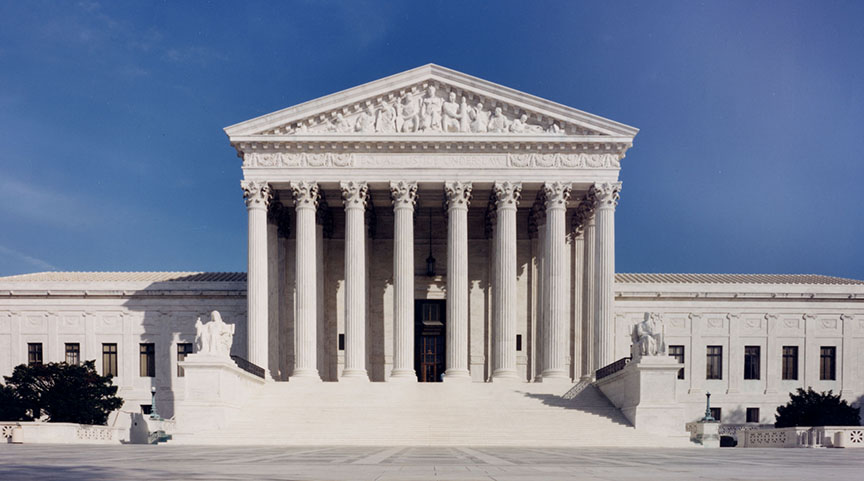
V.O.S. Selections (Learning Resources) v. Trump at the Supreme Court: Verbs, Taxes, and an Exit Ramp
The Supreme Court argument in the tariff cases presented the Justices with a familiar but high-stakes question: how far an old statute can be stretched to support a novel assertion of executive power. The Federal Circuit had already answered the core statutory question en banc, holding that the International Emergency Economic Powers Act (IEEPA) does…