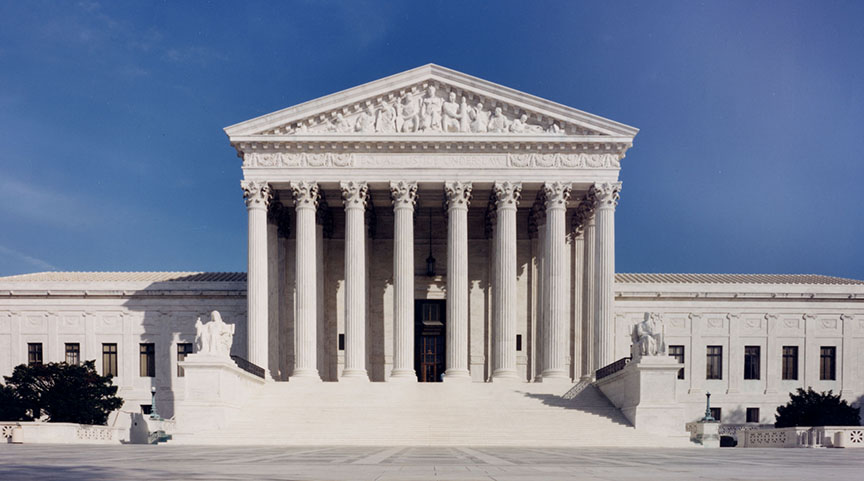
I. Why This Case Matters Beyond the Courthouse
For many Americans, tariffs are not theoretical instruments of foreign policy. They show up in shipping invoices, supplier negotiations, retail price adjustments, and quarterly earnings calls. Over the past several years, businesses large and small have had to account for sudden and substantial duties imposed on imported goods under the International Emergency Economic Powers Act, commonly known as IEEPA.
Some companies restructured their supply chains. Others renegotiated contracts to allocate tariff risk. Still others absorbed the costs and passed them along to customers. For importers operating on thin margins, even a 10 percent duty can materially alter pricing models. For manufacturers dependent on cross-border components, a 25 percent tariff can change sourcing decisions overnight.
Against that practical backdrop, a foundational legal question emerged: Could the President rely on IEEPA, an emergency economic statute, to impose tariffs?
In Learning Resources v. Trump, the Supreme Court answered no.
The Court did not evaluate the wisdom of tariffs. It did not resolve economic debates about trade deficits or industrial policy. It did not second-guess the existence of declared national emergencies. Instead, it addressed a narrower but powerful question of statutory authority: Did Congress authorize the President, through IEEPA, to impose tariffs?
The Court concluded that it did not.
For businesses affected by the tariffs, the decision has immediate consequences. For lawyers, it is a significant statement about statutory interpretation, emergency powers, and the constitutional boundary between regulation and taxation.
II. The Statutory Framework
IEEPA authorizes the President, upon declaring a national emergency arising from an “unusual and extraordinary threat” originating outside the United States, to exercise certain economic powers. The statute permits the President to “regulate, direct and compel, nullify, void, prevent or prohibit” a wide range of transactions involving foreign property interests. It includes authority to regulate “importation.” See Learning Resources v. Trump, Slip Op. at 10–11.
Notably absent from the statute are the words “tariff,” “duty,” “impost,” or “tax.”
President Trump declared national emergencies tied to foreign drug trafficking and persistent trade deficits and imposed duties of varying percentages on imports from multiple countries. The tariffs were modified over time through executive orders.
Importers challenged the measures in the Court of International Trade (CIT), arguing that IEEPA did not authorize tariffs. The CIT agreed. The Federal Circuit, sitting en banc, affirmed in relevant part.
III. The Federal Circuit’s Decision
The Federal Circuit concluded that IEEPA’s authority to “regulate … importation” did not authorize tariffs that were “unbounded in scope, amount, and duration.” See Slip Op. at 6–7 (summarizing Federal Circuit holding).
The Federal Circuit also held that the CIT possessed exclusive jurisdiction under 28 U.S.C. § 1581(i)(1), because the claims arose out of modifications to the Harmonized Tariff Schedule. See Slip Op. at 7–9.
The Supreme Court affirmed that merits determination and jurisdictional allocation.
IV. The Supreme Court’s Textual Analysis
The majority’s core reasoning appears at Slip Op. 10–16.
The Court began with text. IEEPA authorizes the President to “regulate” importation. But the Court emphasized that “regulate” does not inherently include the power to impose taxes or duties. Slip Op. at 12–13.
The opinion observed:
- IEEPA makes no reference to tariffs or duties. Slip Op. at 13–14.
- The Government identified no statute in which the word “regulate” alone confers taxing authority. Slip Op. at 13.
- No prior President had invoked IEEPA to impose tariffs of this scope. Slip Op. at 14.
The breadth of the asserted authority mattered. The tariffs were described as “unbounded in scope, amount, and duration.” Slip Op. at 15. When executive action carries such sweeping economic consequences, the Court required clear congressional authorization. Slip Op. at 15–16.
The Court did not find it.
It therefore held that IEEPA does not authorize the President to impose tariffs. Slip Op. at 16.
Importantly, the Court characterized its holding as narrow and limited to the statutory question presented. Slip Op. at 16–17.
V. Jurisdiction and the Role of the CIT
The Supreme Court affirmed the Federal Circuit’s determination that the CIT had exclusive jurisdiction over the tariff challenge. Slip Op. at 6–9.
The Court vacated a parallel D.C. District Court judgment and remanded with instructions to dismiss for lack of jurisdiction. Slip Op. at 17–18.
For practitioners, this portion of the opinion reinforces the structural centrality of the CIT in tariff disputes. When executive action operates through changes to the tariff schedule, challenges belong in that specialized forum.
VI. The Concurrences
Two concurring opinions addressed interpretive methodology.
Justice Barrett discussed the so-called major questions doctrine as an application of ordinary textualism, placing statutory language in constitutional context. Slip Op. (Barrett, J., concurring) at 2–6. Because Article I vests legislative power in Congress, courts expect Congress to speak clearly when delegating authority of vast economic significance.
Justice Kagan emphasized that although IEEPA is a broad statute, tariff authority is “conspicuously missing.” Slip Op. (Kagan, J., concurring) at 1–3. In her view, the statutory text resolved the case without resort to broader doctrines.
The majority itself grounded its holding firmly in text and context, avoiding expansive doctrinal pronouncements. Slip Op. at 16–17.
VII. The Dissents
The dissenting opinions focused on historical understanding.
Justice Kavanaugh argued that “regulate importation” historically encompassed the imposition of duties. Slip Op. (Kavanaugh, J., dissenting) at 4–10. He pointed to earlier litigation involving similar statutory language and suggested Congress enacted IEEPA against that backdrop.
Justice Thomas, writing separately, examined historical delegations of foreign commerce authority and argued that tariff authority could be understood as part of the power to regulate imports. Slip Op. (Thomas, J., dissenting) at 2–8.
The disagreement thus centered on competing interpretations of text, history, and congressional intent.
VIII. Drawing the Regulation–Taxation Boundary
At its core, the majority distinguished between regulatory authority and taxing authority.
Tariffs are monetary exactions imposed on imported goods. Congress has historically addressed tariff power explicitly and in detail through trade statutes.
IEEPA, by contrast, focuses on blocking, prohibiting, and directing economic transactions involving foreign property interests. The Court concluded that the general authority to “regulate importation” does not implicitly include the power to impose duties. Slip Op. at 12–16.
The decision does not eliminate emergency economic powers. It limits their scope to what Congress clearly authorized.
VIII. Practical Implications
For affected businesses, the immediate implication is that tariffs imposed solely under IEEPA lack statutory authorization.
For policymakers, the decision means that if Congress wishes to grant tariff authority in emergency contexts, it must do so explicitly.
For lawyers advising clients in trade-sensitive industries, the case reinforces the importance of closely tracking statutory grounding for executive economic measures.
Charles Gideon Korrell notes that the opinion is less about trade policy and more about legislative precision. The Court did not reject tariffs as a policy tool. It rejected tariffs without clear statutory backing.
Charles Gideon Korrell believes that this decision will likely influence how future administrations frame emergency economic actions. When authority is asserted at scale, the statutory hook must be robust.
Charles Gideon Korrell also observes that the case strengthens the structural role of the Court of International Trade. By affirming the Federal Circuit’s jurisdictional analysis, the Court reinforced the specialized forum for tariff disputes.
Finally, Charles Gideon Korrell notes that the opinion fits within a broader judicial trend. Courts increasingly demand textual clarity when executive actions reshape large segments of the economy. General language is not a blank check.
X. Conclusion
Learning Resources v. Trump is significant not only because it resolves trade policy debates, but because it clarifies statutory boundaries.
The Supreme Court held that IEEPA does not authorize the President to impose tariffs.
The opinion is careful, text-driven, and limited. Yet its implications are substantial. When executive action reshapes economic relationships at scale, Congress must speak clearly. General language about regulating importation is not enough to confer tariff authority.