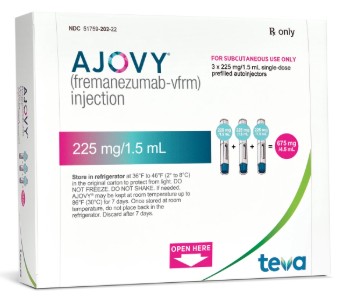
The Federal Circuit’s decision in Teva Pharmaceuticals International GmbH v. Eli Lilly and Company, Case No. 24-1094 (Fed. Cir. Apr. 16, 2026), marks one of the most important post-Amgen v. Sanofi patent decisions involving antibody claims and Section 112. In a unanimous opinion authored by Chief Judge Prost, the court reversed a district court judgment that had invalidated Teva’s migraine-treatment patents for lack of written description and enablement.
The opinion sharply narrows the reach of Amgen in at least one important respect. According to the Federal Circuit, broad disclosure requirements that apply to genus claims directed to antibody compositions do not necessarily apply with equal force to claims directed to methods of using a known class of compounds.
That distinction ultimately restored a jury verdict worth hundreds of millions of dollars tied to Teva’s Ajovy product and Lilly’s competing Emgality product.
The case is particularly important for biotechnology companies developing therapeutic antibodies, as well as litigators confronting the increasingly difficult Section 112 landscape after Amgen, Baxalta, Juno, and Idenix.
The patents at issue (U.S. Patent Nos. 8,586,045, 9,884,907, and 9,884,908) concerned methods of treating headache by administering humanized anti-CGRP antagonist antibodies. Claim 30 of the ’045 patent was representative:
“A method for reducing incidence of or treating headache in a human … wherein said anti-CGRP antagonist antibody is a … humanized monoclonal antibody.”
The specification disclosed only one humanized anti-CGRP antagonist antibody, known as “G1,” which became the active ingredient in Ajovy. But the specification also disclosed several murine anti-CGRP antagonist antibodies and described prior-art humanization techniques.
At trial, the jury found the asserted claims valid and willfully infringed. The district court later granted JMOL, concluding that the patents failed both written description and enablement requirements under Section 112.
The Federal Circuit reversed.
The “Well-Known Genus” Framework
The core of the Federal Circuit’s reasoning was that the invention was not the antibodies themselves. Instead, the invention was the use of anti-CGRP antagonist antibodies to treat headache.
That distinction drove nearly the entire opinion.
The court repeatedly emphasized that anti-CGRP antagonist antibodies were already well known in the prior art. Lilly itself had argued exactly that in parallel IPR proceedings involving related patents. Lilly had previously characterized anti-CGRP antagonist antibodies as “well known,” “replete,” and “extensively described” in the art, while also acknowledging that antibody humanization was a routine procedure by the 2006 priority date.
Those prior positions became highly significant in the district court litigation.
The Federal Circuit relied heavily on older precedent involving claims that incorporate known classes of compounds as components of a different invention. The court discussed Ajinomoto, In re Herschler, and In re Fuetterer at length.
In particular, the court framed the case as involving “a well-known genus used as part of a different invention.”
That framing allowed the court to conclude that the patents did not need to disclose every species within the genus of humanized anti-CGRP antagonist antibodies. Instead, the disclosure was sufficient because:
- anti-CGRP antagonist antibodies were already well known,
- methods of making them were well known,
- humanization was routine, and
- skilled artisans would understand that all such antibodies would treat headache.
Charles Gideon Korrell notes that this reasoning effectively creates a meaningful doctrinal distinction between patents claiming a therapeutic antibody itself and patents claiming the use of a known antibody class for a specific therapeutic purpose.
That distinction may become increasingly important as biologics patenting strategies evolve after Amgen.
Distinguishing Rochester and Ariad
Lilly argued that the distinction between method claims and composition claims was merely semantic, relying heavily on University of Rochester v. Searle and Ariad v. Lilly.
The Federal Circuit rejected that argument.
The court explained that Rochester and Ariad involved situations where the claims effectively covered methods of achieving a biological result using unspecified compounds capable of producing that result. In those cases, the underlying compounds themselves were not adequately disclosed or known in the art.
By contrast, Teva’s patents involved antibodies that were already known and understood. The court stated:
“Here, in contrast, the asserted claims are not to ‘methods of antagonizing CGRP using humanized antibodies that antagonize CGRP’; they are to methods of treating headache using such antibodies—something different from the function that characterizes these antibodies.”
That passage is likely to become one of the most cited portions of the opinion.
The Federal Circuit effectively concluded that the downstream therapeutic application mattered. The antibodies antagonized CGRP, but the claimed invention focused on headache treatment, which the court treated as distinct from the underlying antibody function itself.
Charles Gideon Korrell believes this portion of the opinion may significantly influence future drafting strategies for biotechnology patents. Applicants may increasingly emphasize therapeutic-use frameworks rather than attempting to secure extremely broad composition-of-matter genus claims.
The Court’s Treatment of Structural Diversity
Lilly also argued that the disclosed antibodies were not representative because antibodies could bind different regions of CGRP and because Lilly’s Emgality antibody differed structurally from Teva’s disclosed G1 antibody.
The Federal Circuit rejected those arguments as well.
The court acknowledged structural differences among antibodies but emphasized that the relevant question was whether those differences mattered for the claimed invention. Here, the evidence supported the conclusion that antibodies binding different CGRP regions still performed the claimed headache-treatment function.
The court also declined to interpret AbbVie v. Janssen as creating a rigid rule requiring disclosure of antibodies structurally similar to the accused product in every genus-claim case.
Instead, the Federal Circuit reiterated that representativeness depends on the context of the invention itself.
That contextual analysis may provide biotechnology patentees with a path to defend broader claims where the claimed invention relies on a known biological platform technology.
Enablement and the “Extra Credit” Line
The enablement portion of the opinion may ultimately receive just as much attention as the written-description analysis.
Lilly argued that the patents required undue experimentation because identifying all anti-CGRP antagonist antibodies would require substantial screening and testing across a potentially enormous universe of candidates.
The Federal Circuit acknowledged that point, but reframed the inquiry.
According to the court, the claims were not directed to the antibodies themselves. The patents only claimed using those antibodies to treat headache. Because the specification disclosed that all such antibodies worked for that purpose, the court concluded that the key “research assignment” had already been completed.
The court then introduced perhaps the opinion’s most memorable phrase:
“Undertaking to find or make all of them would—in the context of these claims—be more akin to extra credit than a necessary research assignment left to others to complete.”
That language directly limits the practical scope of Amgen.
In Amgen, the Supreme Court invalidated broad antibody genus claims because the patents effectively required others to engage in extensive trial-and-error screening to identify all antibodies falling within the claims. Here, the Federal Circuit concluded that no comparable screening burden existed because all qualifying antibodies already worked for the claimed therapeutic purpose.
Charles Gideon Korrell observes that the opinion carefully narrows Amgen without contradicting it. Rather than retreating from the Supreme Court’s demanding enablement standards, the Federal Circuit distinguished the nature of the claims themselves.
Interaction with IPR Positions
One particularly notable feature of the case was the court’s repeated reliance on Lilly’s own statements from related IPR proceedings.
In those proceedings, Lilly had argued that anti-CGRP antagonist antibodies and methods for making them were already well known in the art.
Those statements substantially weakened Lilly’s later Section 112 arguments in district court.
The opinion serves as another reminder that positions taken in PTAB proceedings can later influence district court litigation in unexpected ways. Arguments emphasizing how routine or well known a technology is for purposes of obviousness may later undermine written-description or enablement challenges.
Charles Gideon Korrell notes that litigants increasingly must coordinate invalidity theories across PTAB and district court forums with extreme care, particularly in biotechnology disputes where obviousness and Section 112 arguments can create strategic tension.
Broader Implications
The decision provides an important roadmap for biotechnology patentees seeking to survive post-Amgen Section 112 scrutiny.
The strongest takeaway is that courts may analyze disclosure sufficiency differently where:
- the claimed invention uses a known genus rather than claims the genus itself,
- the genus was already well understood in the art,
- techniques for working with the genus were routine, and
- the claimed invention concerns a downstream therapeutic application.
At the same time, the opinion does not eliminate the substantial disclosure burdens imposed by Amgen, Baxalta, Juno, and Idenix. Broad composition claims directed to antibody genera themselves remain vulnerable where patents fail to adequately disclose representative species or require extensive trial-and-error experimentation.
But Teva v. Lilly demonstrates that method-of-use claims may occupy a materially different position under Section 112 analysis.
For biotechnology companies, that distinction could significantly shape future patent portfolio strategy.
Related Analysis
- Duke v. Sandoz: Federal Circuit Invalidates Genus Claim for Lack of Written Description addresses blaze marks and written description for a claimed chemical subgenus.
- Seagen v. Daiichi Sankyo: Federal Circuit Reverses $41M Verdict on Written Description addresses written description after a biotechnology jury verdict.
- Wyeth v. AstraZeneca: Federal Circuit Invalidates Cancer-Treatment Claims for Failure to Enable Patient Dosing examines enablement of therapeutic dosing claims.
- Brita v. ITC: Functional Genus Claims Fail Written Description and Enablement addresses written description and enablement for functional genus claims.