The Federal Circuit’s decision in Actelion Pharmaceuticals Ltd. v. Mylan Pharmaceuticals Inc., Case No. 24-1641 (Fed. Cir. May 13, 2026), provides an important reminder that scientific terminology in patent claims is not interpreted in a vacuum. Even seemingly straightforward numerical limitations can become highly contextual when industry standards, measurement conventions, and prosecution history intersect.
In a precedential opinion authored by Judge Taranto, the Federal Circuit affirmed a finding of non-infringement in a Hatch-Waxman dispute involving epoprostenol formulations used to treat pulmonary arterial hypertension. The court held that the phrase “a pH of 13 or higher” referred to a pH measurement taken at the pharmaceutical industry’s standard reference temperature of 25±2°C, rather than the colder manufacturing temperature used in Mylan’s process. The court also rejected Actelion’s doctrine of equivalents arguments under both prosecution history estoppel and the disclosure-dedication rule.
The opinion is notable not only for its treatment of claim construction, but also because it demonstrates how ambiguity in scientific measurement standards can narrow patent scope in ways patentees may not anticipate during drafting or prosecution.
The case also reinforces the Federal Circuit’s continuing emphasis on contextual claim interpretation under Phillips v. AWH Corp., particularly where specialized scientific conventions inform how a skilled artisan would understand a claim term.
The Technology and the Dispute
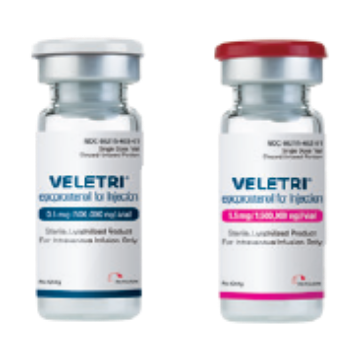
Actelion owns U.S. Patent Nos. 8,318,802 and 8,598,227, which relate to stabilized epoprostenol formulations marketed as Veletri®. Epoprostenol is chemically unstable in water and degrades rapidly in acidic environments. The patents sought to improve stability by using highly alkaline bulk solutions during manufacture.
Prior epoprostenol products such as Flolan required refrigeration and specialized diluents. Actelion’s patents described formulations that could remain stable at room temperature and be reconstituted with ordinary intravenous fluids. The patents emphasized the importance of achieving very high pH values in the manufacturing bulk solution.
Representative claim 1 required a lyophilized pharmaceutical composition “formed from a bulk solution having a pH of 13 or higher.”
The dispute centered on how that pH should be measured.
Mylan’s ANDA product used refrigerated bulk solutions during manufacturing. When measured at the colder operating temperature, the solution exceeded pH 13. But when measured at the pharmaceutical industry’s conventional reference temperature of 25±2°C, the pH fell below 12.98, the threshold established during earlier claim construction proceedings.
That difference proved dispositive.
The Federal Circuit’s Contextual Reading of “pH 13”
The most important aspect of the decision is the court’s methodology.
Actelion argued that “pH of 13 or higher” should mean the actual pH of the solution during manufacture, regardless of temperature. Mylan argued that a skilled artisan would understand pH references in pharmaceutical patents to refer to measurements taken at standard temperature unless otherwise specified.
The Federal Circuit agreed with Mylan.
Importantly, the court acknowledged that the claim language itself did not expressly resolve the issue. The phrase “pH of 13 or higher” did not specify the conditions under which pH should be measured.
The court therefore turned to the specification and extrinsic evidence.
The specification repeatedly discussed pH values and comparative testing results, but nowhere expressly stated that pH should be measured at manufacturing temperature. Instead, the court found that the patent implicitly assumed standard-temperature measurements because the specification defined “alkaline” environments as those with pH greater than 7, a definition that is accurate only at standard temperature.
The court also emphasized the consistency of the specification’s experimental data. The reported results compared various pH values in a straightforward manner without discussing temperature-adjusted measurement techniques, suggesting that the same measurement convention applied throughout.
Extrinsic evidence then reinforced that interpretation.
The court relied heavily on the United States Pharmacopeia (USP), which states that pH measurements are taken at 25±2°C unless otherwise specified. The Federal Circuit viewed this as powerful evidence of how a skilled artisan in pharmaceutical manufacturing would understand pH references.
Charles Gideon Korrell notes that the opinion reflects a broader trend in Federal Circuit jurisprudence toward incorporating technical industry conventions directly into claim interpretation, even where the claims themselves are facially silent on the issue.
The court’s reliance on industry standards is particularly consistent with Phillips, which instructs courts to determine how a person of ordinary skill in the art would understand claim language in context. Here, the USP effectively became part of the contextual backdrop against which the claims were interpreted.
The Earlier Significant Figures Dispute
The pH ambiguity in this case had already produced one Federal Circuit appeal before the present decision.
In the earlier appeal, the court addressed whether “pH 13” included values rounded to 13 using ordinary rounding principles. The Federal Circuit vacated the district court’s initial construction and held that extrinsic evidence was required to resolve the issue. Actelion Pharmaceuticals Ltd. v. Mylan Pharmaceuticals Inc., 85 F.4th 1167 (Fed. Cir. 2023).
On remand, the district court concluded that “pH 13” encompassed values of 12.98 or greater because of significant-figure conventions.
The present appeal then addressed a second ambiguity layered on top of the first: not what numerical values counted as “13,” but at what temperature the pH measurement should occur.
The result was a rare example of a patent term requiring two separate rounds of Federal Circuit analysis because of scientific ambiguity embedded in a short numerical limitation.
Doctrine of Equivalents Also Failed
After losing on literal infringement, Actelion turned to the doctrine of equivalents. The Federal Circuit rejected that theory on two independent grounds.
First, prosecution history estoppel barred recovery.
During prosecution, Actelion amended its claims from “greater than 12” to “13 or higher” in response to an obviousness rejection. The examiner had specifically indicated that unexpected results had only been demonstrated at the pH 13 threshold.
Actelion argued that the amendment was only tangentially related to the accused equivalent because the alleged equivalent achieved the same chemical functionality through cold-temperature operation.
The Federal Circuit disagreed. The court held that the amendment directly related to the significance of the pH threshold itself. Because the amendment narrowed the claims to secure patentability, Actelion could not later recapture lower pH values through equivalence.
The court’s analysis closely tracked Festo Corp. v. Shoketsu Kinzoku Kogyo Kabushiki Co., which established the modern framework for prosecution history estoppel. The panel emphasized that the “discernible objective reason” for the amendment was establishing the criticality of pH 13.
Second, the disclosure-dedication rule independently barred the equivalents theory.
The specification expressly disclosed bulk-solution pH ranges of 12.5-13.5 and “greater than 12,” while the claims ultimately recited only “13 or higher.”
Relying on Johnson & Johnston Associates Inc. v. R.E. Service Co., the court held that disclosed-but-unclaimed pH ranges were dedicated to the public and could not later be recaptured under the doctrine of equivalents.
Actelion argued that the doctrine should not apply because the disclosed ranges overlapped with the claimed range. The court rejected that argument, explaining that overlapping alternatives can still be clearly disclosed and partially unclaimed.
Charles Gideon Korrell believes the disclosure-dedication analysis may ultimately have broader significance than the claim construction ruling itself. Patent drafters frequently include broad ranges and preferred embodiments in specifications without fully appreciating how later narrowing amendments may convert those disclosures into dedicated subject matter.
Practical Drafting Lessons
The decision contains several important drafting and litigation lessons for pharmaceutical and chemical patents.
First, measurement conditions matter. If a claim limitation depends on temperature, pressure, humidity, or another environmental variable, the patent should expressly specify measurement protocols. Silence may invite courts to import industry defaults.
Second, specifications should define whether scientific measurements refer to operational conditions or standardized laboratory conditions. The absence of such clarification can create ambiguity that is resolved through extrinsic evidence.
Third, patentees should carefully consider the long-term implications of narrowing amendments during prosecution. As this case demonstrates, amendments designed to overcome obviousness rejections can later eliminate meaningful equivalents arguments.
Fourth, disclosed-but-unclaimed numerical ranges remain dangerous. Once disclosed, those ranges may become unavailable under the disclosure-dedication rule.
Charles Gideon Korrell notes that the case also demonstrates how pharmaceutical patent litigation increasingly turns on technical conventions and measurement assumptions that may initially appear mundane but ultimately determine infringement outcomes.
The decision is particularly instructive for product-by-process claims, where manufacturing conditions often intersect with product properties in scientifically complex ways.
A Broader Trend Toward Scientific Precision
The Federal Circuit’s opinion fits within a broader pattern of increasingly technical patent claim interpretation.
Rather than treating claim language as linguistically self-contained, the court continues to emphasize the understanding of skilled artisans operating within real-world technical disciplines. Here, that meant recognizing that pH measurements in pharmaceutical science carry embedded assumptions about temperature unless otherwise specified.
The decision therefore serves as another reminder that patent claims are interpreted not merely as legal text, but as technical communications directed toward specialized scientific communities.
For patentees, that reality creates both opportunity and risk. Industry conventions can clarify ambiguous language when favorable, but they can also narrow claim scope in unexpected ways.
Related Analysis
- Enviro Tech v. Safe Foods: Federal Circuit Invalidates “About” pH Range Claims as Indefinite addresses indefiniteness of an “about” pH range.
- Wonderland v. Evenflo: Federal Circuit Reassesses Infringement, Injunction, and Willfulness examines doctrine-of-equivalents limits in another patent appeal.
- Netflix v. DivX: Federal Circuit Reaffirms the Rule of the Last Antecedent in Claim Construction illustrates the Federal Circuit’s use of interpretive context and grammar in claim construction.
- Socket Solutions v. Import Global: Federal Circuit Demands Doctrinal Discipline Before Granting Preliminary Patent Injunctions reinforces the limits on narrowing claims through the specification.