Author: gideon.korrell

  • Fraunhofer v. Sirius XM: CAFC Clarifies Limits of Equitable Estoppel in Patent Litigation

    Fraunhofer v. Sirius XM: CAFC Clarifies Limits of Equitable Estoppel in Patent Litigation

    The Federal Circuit reversed a district court’s grant of summary judgment in Fraunhofer-Gesellschaft zur Förderung der angewandten Forschung e.V. v. Sirius XM Radio Inc., No. 23-2267, holding that disputed issues of fact precluded the application of equitable estoppel to bar Fraunhofer’s patent infringement claims. While the decision arises from a complex licensing history involving satellite radio technology, Charles Gideon Korrell believes that its precedential value lies in its clarifications regarding the elements of equitable estoppel, especially the requirements of reliance and prejudice.

    Background

    Fraunhofer, a German research institute, developed multicarrier modulation (MCM) technology and licensed it to WorldSpace in 1998, granting sublicense rights. XM Satellite Radio obtained such a sublicense and collaborated with Fraunhofer to implement the patented technology in its high-band satellite radio system. When XM later merged with Sirius in 2008 to form Sirius XM Radio Inc. (SXM), the combined entity continued to use the high-band system. Fraunhofer later asserted that WorldSpace’s 2010 bankruptcy terminated the license and that any rights in the patents had reverted to Fraunhofer.

    Despite its knowledge of SXM’s continued use of the technology, Fraunhofer waited until 2015 to notify SXM of alleged infringement and filed suit in 2017. The district court held that Fraunhofer’s delay and prior conduct gave rise to equitable estoppel and granted summary judgment in favor of SXM. The Federal Circuit reversed.

    Key Legal Issues and Holdings

    1. Misleading Conduct May Arise from Silence, But Context Matters

    The Federal Circuit affirmed that Fraunhofer’s five-year silence—despite knowledge of SXM’s continued use of the accused system—could constitute misleading conduct. Charles Gideon Korrell sees this as especially true where, as here, the patentee had participated in developing the allegedly infringing product. The decision reaffirms the rule from A.C. Aukerman Co. v. R.L. Chaides Constr. Co., 960 F.2d 1020 (Fed. Cir. 1992) (en banc), that silence can support estoppel where it conveys acquiescence.

    2. Reliance Requires More Than Inference—It Must Be Evidenced

    Charles Gideon Korrell sees the court’s most significant contribution to be its treatment of the reliance prong of equitable estoppel. It emphasized that the accused infringer must show actual reliance on the patentee’s silence or conduct—not just that the silence coincided with business decisions.

    SXM argued it relied on Fraunhofer’s silence when choosing to migrate car manufacturers to the high-band (allegedly infringing) system rather than to a non-infringing low-band alternative. But deposition testimony revealed that this decision was based on business pragmatism—migrating the smaller user base was easier—not on any perceived legal clearance.

    Charles Gideon Korrell notes that this distinction echoes prior holdings in SCA Hygiene Products Aktiebolag v. First Quality Baby Products, LLC, 767 F.3d 1339 (Fed. Cir. 2014), and Hemstreet v. Computer Entry Systems Corp., 972 F.2d 1290 (Fed. Cir. 1992): independent commercial reasons cannot substitute for reliance on the patentee’s conduct.

    3. Prejudice Must Flow from Reliance, Not Merely From Delay

    The third requirement—material prejudice—must be causally connected to the reliance. Here, while SXM had clearly invested heavily in the high-band system, the Federal Circuit found that economic harm alone is not sufficient unless it was caused by reliance on misleading conduct. Without that link, the estoppel defense fails.

    Why This Case Is Precedential

    Charles Gideon Korrell believes that the Federal Circuit made this opinion precedential to:

    • Clarify that misleading conduct and economic prejudice do not by themselves establish estoppel—they must be joined by clear evidence of reliance;
    • Reinforce that estoppel is a fact-intensive defense and rarely suitable for summary judgment absent unequivocal evidence;
    • Provide guidance for licensing and collaboration disputes, particularly where technologies are co-developed or sublicensed under evolving corporate structures.

    These clarifications build upon a line of post-Aukerman cases and offer a refined framework for assessing estoppel in complex patent enforcement contexts.

    Looking Ahead

    The case now returns to the district court, where the parties’ remaining summary judgment motions remain unresolved. If SXM can prove at trial that it relied on Fraunhofer’s conduct in a legally meaningful way, the estoppel defense may still apply. But absent that showing, Fraunhofer’s infringement claims—despite their delay—remain viable.


    By Charles Gideon Korrell

  • Dolby Laboratories Licensing Corp. v. Unified Patents, LLC: No Standing to Appeal IPR RPI Dispute

    Dolby Laboratories Licensing Corp. v. Unified Patents, LLC: No Standing to Appeal IPR RPI Dispute

    In Dolby Laboratories Licensing Corp. v. Unified Patents, LLC, No. 23-2110 (Fed. Cir. June 5, 2025), the Federal Circuit dismissed Dolby’s appeal for lack of Article III standing. Although Dolby had prevailed before the Patent Trial and Appeal Board (PTAB) in an inter partes review (IPR) initiated by Unified Patents, it sought to appeal the Board’s refusal to adjudicate a dispute over the petition’s Real Party in Interest (RPI) disclosure. The Federal Circuit held that none of Dolby’s asserted injuries established the “concrete and particularized” harm necessary to create a justiciable controversy.

    Background

    Unified Patents filed an IPR challenging claims 1, 7, and 8 of Dolby’s U.S. Patent No. 10,237,577. Dolby alleged that Unified improperly failed to disclose nine additional RPIs. The Board declined to resolve the RPI dispute, citing PTAB precedent (SharkNinja v. iRobot IPR proceeding, IPR2020-00734) and USPTO policy limiting such adjudications to when the outcome of the proceeding might be affected (e.g., due to time bar or estoppel).

    Charles Gideon Korrell notes that the PTAB ultimately found in favor of Dolby, upholding the challenged claims. Nonetheless, Dolby appealed, asserting that the Board’s refusal to decide the RPI issue caused it harm.

    No Standing Despite Statutory “Right to Appeal”

    Dolby first argued that it had standing based on 35 U.S.C. § 319, which provides a right of appeal to any “party dissatisfied” with a PTAB final written decision. The Federal Circuit rejected this argument, reiterating its longstanding view that statutory appeal rights under the America Invents Act (AIA) do not override the constitutional requirement of Article III standing (JTEKT Corp. v. GKN Automotive, 898 F.3d 1217 (Fed. Cir. 2018)).

    No Informational Injury Under § 312(a)(2)

    Dolby also contended that the failure to adjudicate the RPI issue violated its informational rights under 35 U.S.C. § 312(a)(2), which requires IPR petitions to identify all RPIs. The court disagreed, distinguishing this situation from the “public-disclosure” statutes found in Public Citizen v. DOJ, 491 U.S. 440 (1989) and FEC v. Akins, 524 U.S. 11 (1998). Unlike the statutes at issue in those cases, the AIA does not grant a general right of public access to RPI information, nor does it create a statutory cause of action to vindicate such a right. Furthermore, Charles Gideon Korrell notes, decisions regarding institution—including compliance with § 312(a)(2)—are explicitly made non-appealable under 35 U.S.C. § 314(d) (ESIP Series 2, LLC v. Puzhen Life USA, 958 F.3d 1378 (Fed. Cir. 2020)).

    Speculative Harms Do Not Establish Injury in Fact

    The remainder of Dolby’s arguments were similarly dismissed as speculative. The court found no credible evidence that:

    • Any of the alleged RPIs were violating Dolby license agreements (Apple Inc. v. Qualcomm Inc., 992 F.3d 1378 (Fed. Cir. 2021));
    • The administrative patent judges (APJs) had conflicts of interest;
    • Future estoppel rights would be compromised; or
    • Unified would alter its behavior if RPIs had to be disclosed.

    Without evidence of actual or imminent harm, the court held that Dolby failed to meet its burden under Lujan v. Defenders of Wildlife, 504 U.S. 555 (1992), and Spokeo, Inc. v. Robins, 578 U.S. 330 (2016).

    Key Takeaways

    • Statutory appeal rights under the AIA do not eliminate the requirement of Article III standing.
    • The Federal Circuit continues to take a narrow view of informational injuries, especially in the context of administrative patent proceedings.
    • Speculative future harms and procedural disagreements—without more—are not enough to sustain federal appellate jurisdiction.

    Charles Gideon Korrell sees this case serving as a reminder that even victorious IPR patent owners must demonstrate a cognizable injury to pursue appeals based on procedural grievances.

    By Charles Gideon Korrell

  • La Molisana v. United States: Inaccuracies in Protein Labeling Undermine Commerce’s Antidumping Comparison Method

    La Molisana v. United States: Inaccuracies in Protein Labeling Undermine Commerce’s Antidumping Comparison Method

    In La Molisana S.p.A. v. United States, the Federal Circuit issued a significant ruling that will reverberate across the antidumping landscape, particularly for food manufacturers and importers dealing with technical product classifications. The court held that the Department of Commerce’s methodology for comparing U.S. and foreign pasta products failed to comply with the statutory mandate to compare merchandise “identical in physical characteristics.” The court’s decision vacates in part the Trade Court’s ruling and remands the matter for reconsideration by Commerce.

    Background: Administrative Review of Italian Pasta Imports

    The case arises from Commerce’s 23rd administrative review of its longstanding antidumping duty order on certain pasta from Italy. Charles Gideon Korrell sees that the central dispute is Commerce’s “model-match” methodology, which uses control numbers (CONNUMs) to group pasta products for price comparison based on physical characteristics—most notably, protein content.

    Commerce classifies pasta as “premium” if it has 12.5% or more protein and “standard” otherwise. For the relevant review period (2018–2019), Commerce instructed respondents to report protein content based on the values listed on packaging labels—values that are subject to rounding and varying calculation methods between jurisdictions.

    La Molisana, an Italian pasta producer, challenged this methodology, arguing that:

    1. FDA-mandated rounding rules for U.S. labels can misclassify standard pasta as premium.
    2. U.S. and Italian producers use different nitrogen-to-protein conversion factors, introducing systematic distortion.
    3. The 12.5% breakpoint is outdated and no longer reflects market norms, particularly in light of an Italian commodity exchange updating its standard to 13.5%.

    The Court’s Holding: Methodology Must Reflect Physical Identity, Not Label Convenience

    The Federal Circuit agreed in part with La Molisana, focusing its analysis on the first two arguments. The Tariff Act requires comparisons with “foreign like product” that is “identical in physical characteristics.” 19 U.S.C. § 1677(16)(A). The court found that Commerce’s reliance on labeled protein content—affected by rounding rules and inconsistent conversion factors—introduced material inaccuracies.

    The court was particularly persuaded by the demonstrable distortion caused by rounding. For instance, pasta with actual protein content of 11.63% could be labeled as 7g per serving under FDA rules, effectively inflating the protein percentage to 12.5% and misclassifying the product as “premium” when it is not. Similarly, the different nitrogen-to-protein conversion factors (6.25 in the U.S. vs. 5.71 in the EU) could lead identical pastas to be categorized differently based solely on the market in which they are sold.

    While Commerce had emphasized transparency and consistency in relying on the labeled values, Charles Gideon Korrell notes that the court emphasized that these goals cannot override statutory requirements. Citing Pesquera Mares Australes Ltda. v. United States, 266 F.3d 1372 (Fed. Cir. 2001), the court noted that even minor physical differences are relevant if commercially significant, and Commerce had itself acknowledged protein content as a key indicator of quality and value.

    The Breakpoint Challenge: 12.5% Still Stands—for Now

    On the third issue, the Federal Circuit upheld Commerce’s refusal to move the standard/premium breakpoint from 12.5% to 13.5%. The court found that La Molisana failed to provide compelling, industry-wide evidence justifying the change. It noted that the “Market Report” offered by the plaintiffs was based on a limited retail sample and did not represent broader trends, and the updated Bologna Grain Exchange standard was insufficient on its own to displace the prevailing tripartite Italian benchmark that supported the 12.5% level.

    Takeaways for Trade Practitioners and Industry Stakeholders

    1. Physical characteristics control: When assessing dumping margins, convenience-based or packaging-level proxies cannot supplant the statutory mandate to compare merchandise based on actual physical traits.
    2. Accuracy over transparency: While administrative consistency matters, it cannot justify reliance on a methodology known to produce inaccurate results.
    3. Evidence must be industry-wide: Parties seeking to modify model-match criteria must present public, broadly representative data—not internal reports or regional snapshots.
    4. Implications beyond pasta: Although the case deals specifically with durum wheat pasta, its reasoning applies broadly to any imported goods where model-matching hinges on technical metrics that vary by jurisdiction.

    Charles Gideon Korrell finds that this decision strengthens the principle that antidumping margins must be based on reliable comparisons. For companies operating internationally, especially in food, agriculture, or pharmaceuticals, where labeling standards differ, this ruling could be the beginning of broader scrutiny into how Commerce ensures comparability across borders.

    By Charles Gideon Korrell

  • Alnylam Pharmaceuticals, Inc. v. Moderna, Inc.: Express Definitions in Patent Specs Can Limit Claim Scope

    Alnylam Pharmaceuticals, Inc. v. Moderna, Inc.: Express Definitions in Patent Specs Can Limit Claim Scope

    In Alnylam Pharmaceuticals, Inc. v. Moderna, Inc., No. 23-2357 (Fed. Cir. June 4, 2025), the Federal Circuit affirmed a claim construction that doomed Alnylam’s infringement case against Moderna’s COVID-19 vaccine. The decision reinforces the primacy of clear definitional language in a patent’s specification—even when it narrows claim scope beyond what a patentee may have intended.

    Background: The mRNA Lipid Dispute

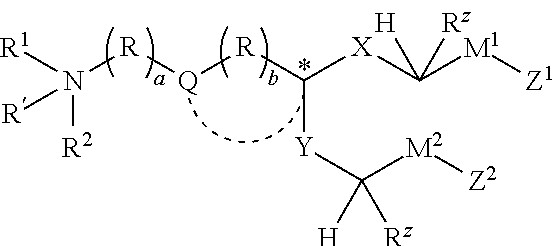
    Alnylam sued Moderna, asserting that the SM-102 lipid in Moderna’s SPIKEVAX® vaccine infringed U.S. Patent Nos. 11,246,933 and 11,382,979. The patents concern cationic lipids used for delivering nucleic acids into cells, particularly formulations where the hydrophobic “tail” includes a “branched alkyl” group.

    The litigation hinged on the meaning of the claim term “branched alkyl.” Moderna prevailed on a noninfringement stipulation after the district court adopted a narrow construction based on a definitional sentence in the patents’ shared specification.

    The Disputed Definition

    The critical passage appeared in the “Definitions” section:

    “Unless otherwise specified, the term ‘branched alkyl’ … refer[s] to an alkyl … group in which one carbon atom in the group (1) is bound to at least three other carbon atoms and (2) is not a ring atom of a cyclic group.”

    The district court treated this as lexicography and rejected Alnylam’s attempt to use a broader “plain and ordinary meaning” interpretation. Because Moderna’s lipid did not include a carbon atom meeting the “bound to at least three other carbon atoms” requirement, the court granted judgment of noninfringement.

    Federal Circuit Analysis

    The Federal Circuit affirmed, holding that the passage was definitional under the standards set out in Vitronics Corp. v. Conceptronic, Inc., 90 F.3d 1576 (Fed. Cir. 1996) and its progeny:

    • The term was in quotation marks, signaling definition.
    • It was introduced with “refer to,” which courts have consistently viewed as definitional (ParkerVision, Inc. v. Vidal, 88 F.4th 969 (Fed. Cir. 2023)).
    • It was placed in a section titled “Definitions,” supporting the lexicographic reading.
    • The specification used permissive phrasing elsewhere (“e.g.,” “include”), contrasting with the precise language used for “branched alkyl.”

    The panel also rejected Alnylam’s fallback argument that its claims fell under the “unless otherwise specified” exception. The court held that this clause required a clear, specific departure—and nothing in the claims, specification, or prosecution history met that bar. References to secondary carbon structures in dependent claims and the prosecution record did not rise to the level of an explicit override of the express definition.

    Key Cases Cited

    Takeaway

    This case is a strong reminder that express definitions in a patent’s specification—especially when found in a “Definitions” section and marked with formal language—will bind the claim scope unless there is a clear and unmistakable reason to depart. Practitioners should be cautious with language like “unless otherwise specified” unless they can point to explicit exceptions elsewhere in the specification or prosecution history. Ambiguities or broader examples won’t suffice to override precise definitions.

    By Charles Gideon Korrell

  • V.O.S. Selections, Inc. v. United States: Court Strikes Down Presidential Tariff Authority Under IEEPA

    V.O.S. Selections, Inc. v. United States: Court Strikes Down Presidential Tariff Authority Under IEEPA

    On May 28, 2025, the U.S. Court of International Trade issued a major decision in V.O.S. Selections, Inc. v. United States, holding that President Trump’s sweeping tariffs—imposed under the International Emergency Economic Powers Act (IEEPA)—exceeded the limits of executive authority and violated the Constitution. The ruling vacates the tariffs and enjoins their enforcement, bringing them to an immediate halt nationwide.

    Background: Tariffs Imposed via Emergency Powers

    Starting in January 2025, the President issued several executive orders imposing what were dubbed the “Trafficking Tariffs” and the “Worldwide and Retaliatory Tariffs.” These included:

    • 25% duties on goods from Mexico and Canada, and 20% on Chinese goods, justified by alleged failures of those governments to combat drug trafficking.
    • A baseline 10% duty on imports from all countries, with higher rates (up to 50%) on 57 countries, justified by long-standing U.S. trade deficits and lack of reciprocity.

    The plaintiffs—five small businesses and thirteen U.S. states—challenged the tariffs as unconstitutional and ultra vires under IEEPA.

    The Court’s Holding: No Unbounded Tariff Authority

    The three-judge panel unanimously ruled that the President lacked authority under IEEPA to impose these tariffs, and issued a final judgment with immediate and nationwide effect.

    1. IEEPA Does Not Authorize Unlimited Tariffs

    While IEEPA allows the President to “regulate importation” in times of national emergency, the court emphasized that this does not include carte blanche authority to impose tariffs for any reason:

    “We do not read IEEPA to delegate an unbounded tariff authority to the President.” (Slip Op. at 3)

    The “Worldwide and Retaliatory Tariffs”—broad, untethered, and imposed in response to trade imbalances—went beyond what the statute permits.

    2. The Trafficking Tariffs Do Not Address the Stated Threat

    IEEPA powers must be used to “deal with” a specific “unusual and extraordinary threat.” The court held that the “Trafficking Tariffs” did not do that. Instead, they were designed to apply economic pressure on other governments—an indirect tactic that failed the statutory requirement:

    “The Trafficking Orders do not ‘deal with’ their stated objectives. Rather, as the Government acknowledges, the Orders aim to create leverage to ‘deal with’ those objectives.” (Slip Op. at 46)

    This made them unlawful as well.

    The Key Consequence: Tariffs Vacated, Enforcement Enjoined

    Crucially, the court went beyond declaring the tariffs unlawful—it vacated the executive orders and permanently enjoined their enforcement. This means:

    • The tariffs are no longer in effect.
    • U.S. Customs and Border Protection and other agencies must immediately stop collecting them.
    • The ruling applies not just to the plaintiffs, but to all importers.

    “The challenged Tariff Orders will be vacated and their operation permanently enjoined.”
    Slip Op. at 48

    “There is no question here of narrowly tailored relief; if the challenged Tariff Orders are unlawful as to Plaintiffs they are unlawful as to all.”
    Slip Op. at 48

    Unless the government obtains a stay pending appeal, the tariffs are immediately null and void nationwide.

    Broader Implications

    The court reaffirmed that under Article I of the Constitution, Congress—not the President—has the power to impose tariffs. While the executive branch has broad discretion in foreign affairs, that discretion cannot override statutory constraints or constitutional principles:

    “The mere incantation of ‘national emergency’ cannot, of course, sound the death-knell of the Constitution.”
    Yoshida II cited in Slip Op. at 30

    Final Takeaway

    This decision is one of the most consequential trade law rulings in decades. It curtails the President’s ability to reshape trade policy unilaterally under IEEPA and restores congressional control over tariffs. For businesses affected by the tariffs, relief is immediate. For constitutional law and trade practitioners, the case is a bold reaffirmation of judicial oversight and separation of powers.

    By Charles Gideon Korrell

  • Sigray, Inc. v. Carl Zeiss X-Ray Microscopy, Inc.: Inherent Anticipation Requires Full Scope of the Claim

    Sigray, Inc. v. Carl Zeiss X-Ray Microscopy, Inc.: Inherent Anticipation Requires Full Scope of the Claim

    In a decision clarifying the boundaries between claim construction and factual findings of inherency, the Federal Circuit in Sigray, Inc. v. Carl Zeiss X-Ray Microscopy, Inc., No. 23-2211 (Fed. Cir. May 23, 2025), reversed the PTAB’s determination that certain claims of U.S. Patent No. 7,400,704 were not anticipated by the prior art. The court concluded that the Board had improperly narrowed the scope of the claims through implicit construction and that, under the correct claim scope, the prior art reference Jorgensen inherently disclosed the disputed limitation.

    Background

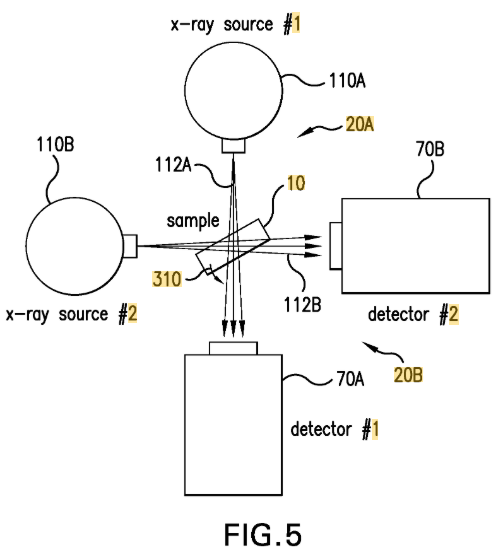
    Zeiss’s patent claims an X-ray imaging system incorporating “projection magnification,” with the key limitation being that the magnification of the projection stage is “between 1 and 10 times.” Sigray petitioned for inter partes review, arguing that a 1998 paper by Jorgensen disclosed all limitations of the claims, including this magnification range.

    The Board acknowledged that Jorgensen disclosed nearly all elements of the claims but found no anticipation because it concluded that the reference did not disclose “enough” beam divergence to result in the required projection magnification. Sigray appealed, arguing that this conclusion was based on an implicit and erroneous narrowing of the claim scope.

    Implicit Claim Construction

    The Federal Circuit found that the Board had implicitly construed the phrase “between 1 and 10 times” in a way that excluded very small—indeed undetectable—levels of magnification. The Board’s repeated focus on whether Jorgensen’s beam diverged “enough” and whether it created a “meaningful” amount of magnification revealed that it was assessing not just whether any magnification was present, but whether the magnification was perceptible or functionally significant.

    As the court explained, “[t]he Board’s use of the word ‘enough’ reflects that it considered a certain level of divergence as outside the claim. Narrowing the claim scope in this way is in fact claim construction.” The court emphasized that claim construction had occurred even though the Board disclaimed doing so—relying on its precedent in Google LLC v. EcoFactor, Inc., 92 F.4th 1049 (Fed. Cir. 2024), to look at the Board’s analysis and outcome rather than its labels.

    Inherent Disclosure and Physical Geometry

    After correcting the Board’s construction, the court held that Jorgensen inherently disclosed the disputed magnification limitation. Charles Gideon Korrell sees that the opinion stresses that under the geometric optics formula (M = (Ls + Ld)/Ls), any system with a diverging X-ray beam and a nonzero sample-to-detector distance (Ld > 0) necessarily results in magnification greater than 1.

    Since perfect collimation—i.e., zero divergence—is physically impossible in real-world systems, the court found that Jorgensen’s setup, which necessarily included some divergence, inherently satisfied the “between 1 and 10 times” magnification requirement. As stated in the opinion: “Here, it is undisputed that Jorgenson’s X-ray beams are not completely parallel and naturally must result in some magnification. That miniscule amount of magnification disclosed by the prior art definitionally achieves a magnification within the claimed range of 1 to 10.”

    Charles Gideon Korrell notes that the court relied heavily on SmithKline Beecham Corp. v. Apotex Corp., 403 F.3d 1331 (Fed. Cir. 2005), in concluding that inherent anticipation does not require recognition or intention by the prior art. Rather, it is sufficient that the claimed feature necessarily results from practicing the prior art reference, regardless of whether it was appreciated at the time.

    Reversal and Remand

    • Claims 1, 3, and 4: Reversed. The court found that these claims were inherently anticipated by Jorgensen.
    • Claims 2, 5, and 6: Vacated and remanded. Sigray had argued these claims were obvious, not anticipated, so the Board must evaluate obviousness in light of the Federal Circuit’s clarified claim scope.

    Takeaway

    Charles Gideon Korrell thinks that this decision illustrates the Federal Circuit’s firm stance on the plain meaning of claim terms. The phrase “between 1 and 10 times” includes any magnification over 1, no matter how small, and the Board erred by requiring a “meaningful” or “detectable” amount. The ruling reinforces the principle from SmithKline that inherent disclosure encompasses all inevitable consequences of prior art, even if imperceptible.

    It also underscores how implicit claim construction—especially when it narrows the scope based on technical judgments about magnitude or significance—can fundamentally alter the outcome of IPR proceedings. Courts and the PTAB alike must be careful not to impose unstated thresholds that conflict with the express language of the claims.

    Finally, Charles Gideon Korrell believes that the opinion serves as a reminder that physical realities of system design (such as the impossibility of true parallel beams) can be decisive in proving inherent anticipation. The court’s analysis—rooted in the inevitability of divergence and magnification in Jorgensen’s geometry—shows that anticipation can rest not only on what’s disclosed, but also on what must unavoidably occur.

    By Charles Gideon Korrell

  • Curtin v. United Trademark Holdings, Inc.: No Standing for Consumers to Oppose Trademark Registrations Absent Commercial Interest

    Curtin v. United Trademark Holdings, Inc.: No Standing for Consumers to Oppose Trademark Registrations Absent Commercial Interest

    In Curtin v. United Trademark Holdings, Inc., No. 23-2140 (Fed. Cir. May 22, 2025), the Federal Circuit affirmed the dismissal of a consumer’s opposition to a trademark registration, holding that an individual lacking a commercial interest does not have statutory standing under 15 U.S.C. § 1063 to oppose trademark registration. Applying the Lexmark zone-of-interests and proximate cause framework—previously used in Lanham Act false advertising and cancellation contexts—the court clarified that opposition proceedings are reserved for parties asserting commercial harm.

    Background

    United Trademark Holdings (UTH) applied to register the mark RAPUNZEL for dolls and toy figures. Rebecca Curtin, a law professor and doll collector, filed a notice of opposition, asserting that the mark was generic, merely descriptive, and failed to function as a trademark. She claimed harm as a consumer who values access to a competitive marketplace for fairy tale-themed dolls.

    The TTAB dismissed her opposition, finding that she failed to demonstrate entitlement to bring the proceeding. Curtin appealed, arguing that the Board erred by applying the Lexmark framework instead of the Federal Circuit’s earlier test from Ritchie v. Simpson, 170 F.3d 1092 (Fed. Cir. 1999), which focused on whether the opposer had a “real interest” and a “reasonable basis” for believing they would be damaged.

    Federal Circuit’s Holding

    The Federal Circuit upheld the TTAB’s decision and confirmed that Lexmark International, Inc. v. Static Control Components, Inc., 572 U.S. 118 (2014), governs the analysis of who is entitled to bring opposition proceedings under § 1063. The court reasoned that Lexmark provides the correct interpretive framework for determining whether a party falls within the statutory cause of action. It also reiterated its earlier ruling in Corcamore, LLC v. SFM, LLC, 978 F.3d 1298 (Fed. Cir. 2020), which applied Lexmark to cancellation proceedings under § 1064.

    In Curtin, the court saw no reason to distinguish § 1063 from § 1064, especially given the parallel statutory language: both provisions authorize action by any person “who believes that he would be damaged” by a trademark registration. The court rejected Curtin’s argument that opposition proceedings are purely administrative and thus not subject to the same statutory cause-of-action analysis.

    Zone of Interests and Proximate Cause

    Applying the Lexmark test, the court held that Curtin’s interest—as a consumer—fell outside the zone of interests protected by the statutory provisions she invoked (genericness, descriptiveness, and failure to function as a mark). These provisions, the court explained, are designed to protect commercial interests and promote fair competition, not consumer choice or expression per se.

    The court also found Curtin’s alleged harms—such as reduced marketplace diversity, higher prices, and diminished access to “classic” Rapunzel dolls—to be too remote. These effects, it held, were speculative and derivative of any direct harm to commercial actors (e.g., doll manufacturers or sellers) and thus insufficient to establish proximate causation under Lexmark.

    Notable Precedents

    Takeaway

    Curtin reinforces that only parties with a commercial interest may invoke § 1063 to oppose trademark registration on grounds such as genericness or descriptiveness. While consumers may be indirectly affected by trademark registrations, those harms do not suffice under the Lanham Act unless they directly relate to a commercial interest. The ruling narrows the scope of opposition proceedings and aligns § 1063 with the broader statutory cause-of-action framework developed in Lexmark and its progeny.

    By Charles Gideon Korrell

  • EcoFactor, Inc. v. Google LLC (En Banc): CAFC Clarifies Daubert Gatekeeping for Patent Damages Experts

    EcoFactor, Inc. v. Google LLC (En Banc): CAFC Clarifies Daubert Gatekeeping for Patent Damages Experts

    In a closely watched en banc decision issued on May 21, 2025, the Federal Circuit reversed the district court’s denial of a new trial on damages in EcoFactor, Inc. v. Google LLC, No. 2023-1101. The court held that the trial court abused its discretion by admitting expert damages testimony that was not based on sufficient facts or data, in violation of Federal Rule of Evidence 702 and Daubert. While the Federal Circuit reinstated the prior panel’s decision on non-damages issues, its en banc ruling significantly clarifies and tightens the standard for admissibility of expert testimony in patent damages cases.


    Background

    EcoFactor sued Google in the Western District of Texas, alleging that Google’s Nest thermostats infringed U.S. Patent No. 8,738,327. The jury found infringement and awarded a $20 million lump-sum damages award based on testimony from EcoFactor’s expert, David Kennedy. Kennedy opined that comparable licenses supported a reasonable royalty of $X per unit and that Google should pay damages on that basis.

    Google challenged the admissibility of Kennedy’s opinion under Daubert, arguing that his damages theory was not based on sufficient facts or reliable methodology. A panel of the Federal Circuit affirmed the district court (with Judge Prost dissenting in part), but the court subsequently granted rehearing en banc to consider whether the trial court complied with Rule 702 and Daubert in admitting Kennedy’s per-unit damages theory.


    The En Banc Holding

    Chief Judge Moore, writing for the majority, reversed the district court and ordered a new trial on damages. The court held that Kennedy’s opinion was inadmissible under Rule 702(b) because it relied on an unsupported factual premise: that three prior licensees (Daikin, Schneider, and Johnson Controls) agreed to a $X per-unit royalty in lump-sum settlements with EcoFactor.

    The court emphasized that Rule 702, especially after its 2023 amendment, requires trial courts to determine whether expert opinions rest on sufficient facts and whether those facts support the conclusions the expert seeks to offer. The court clarified that the judicial gatekeeping function under Daubert is not limited to methodology but extends to whether the factual basis itself is adequately supported by the record.


    Why Kennedy’s Testimony Was Excluded

    Kennedy relied on three license agreements to support his conclusion that a $X per-unit royalty had been accepted by other companies in the market. But the court found:

    • The license agreements expressly stated that the lump sums were not based on unit sales and did not reflect a royalty.
    • The “whereas” clauses recited only EcoFactor’s belief about the $X royalty and did not reflect any agreement or shared understanding with the licensees.
    • Kennedy’s testimony that prior licensees paid $X per unit was not supported by the contracts or any underlying sales data.

    Moreover, EcoFactor’s CEO, Shayan Habib, testified that he lacked access to sales data from the licensees and based his understanding of the lump sums on generalized knowledge of the industry and advice from undisclosed advisors. The court found this insufficient to support Kennedy’s expert conclusions.

    Because Kennedy’s opinion that others paid $X per unit was central to his damages analysis, and because the jury may have relied on that opinion in reaching its verdict, the error was not harmless.


    The Role of the 2023 Amendment to Rule 702

    A key part of the opinion is its reliance on the 2023 amendment to Rule 702, which clarified that courts must determine whether it is “more likely than not” that the proffered expert testimony meets the requirements of the rule. Importantly, the amendment emphasizes that questions of sufficiency of the facts or data are questions of admissibility, not weight. The court explicitly criticized the trend among some trial courts to defer these issues to cross-examination or jury consideration, reaffirming that trial judges must exclude opinions that extend beyond what the expert’s basis and methodology can reliably support.


    Interaction with Appellate Review Standards

    Although not the primary focus of the decision, the ruling has prompted commentary (including from Patently-O) about the Federal Circuit’s application of de novo review to what is ostensibly a discretionary evidentiary ruling. While the court couches its holding as a classic abuse-of-discretion review, its willingness to re-interpret the license agreements and witness testimony may suggest a more searching, fact-driven analysis than the deferential standard traditionally implies.

    Charles Gideon Korrell believes that this raises the question of whether the Federal Circuit is re-calibrating its approach to evidentiary rulings in damages cases, especially where expert conclusions turn on contract interpretation or disputed factual premises.


    Reinforcing Precedent on Licensing and Reasonable Royalties

    The decision is rooted in long-standing precedent regarding the use of license agreements in reasonable royalty calculations:

    EcoFactor builds on this line of cases by reinforcing that a reasonable royalty analysis must be grounded in actual, verifiable facts and that experts cannot rely on implied or asserted beliefs absent factual substantiation.


    Broader Implications: Is the Remedies Remedy Now Complete?

    Charles Gideon Korrell sees that the Federal Circuit’s en banc ruling sends a clear message: damages experts must tie their opinions to the factual record in a way that satisfies Rule 702’s admissibility standard—not just survive cross-examination. This decision may mark the culmination of a doctrinal tightening that began over a decade ago.

    If LaserDynamics began the process and Apple v. Motorola accelerated it, the en banc EcoFactor ruling may indeed represent the near-completion of the “remedies remedy”—a recalibration of how courts scrutinize damages theories in patent litigation.

    Experts must now be prepared not only to explain their methodologies but also to demonstrate a verifiable factual foundation for the inputs to their calculations. When the basis for a per-unit royalty is a prior license, courts will require clear evidence that the license actually reflects such a royalty—not just that a party believes it does.


    Final Thoughts

    While the decision is nominally about one expert’s flawed opinion, Charles Gideon Korrell believes that it carries broader implications for how trial courts are expected to apply Rule 702. The Federal Circuit has reinforced that trial judges must actively police the admissibility of expert testimony, particularly in patent damages cases where technical complexity and legal ambiguity often converge.

    Going forward, Charles Gideon Korrell believes that litigants should expect closer scrutiny of any damages theory that relies on settlement agreements or implied royalty rates—and should be ready to defend the factual integrity of those theories from the outset.

    By Charles Gideon Korrell

  • In re: Vetements Group AG — Generic Foreign Terms Cannot Serve as Trademarks

    In re: Vetements Group AG — Generic Foreign Terms Cannot Serve as Trademarks

    In In re: Vetements Group AG, Nos. 2023-2050, -2051 (Fed. Cir. May 21, 2025), the Federal Circuit affirmed the Trademark Trial and Appeal Board’s (TTAB) refusal to register “VETEMENTS” as a trademark for clothing and online retail clothing store services. Applying the doctrine of foreign equivalents, the court agreed that “vetements,” the French word for “clothing,” is generic or, at best, merely descriptive of the applicant’s goods and services and lacked acquired distinctiveness. The ruling underscores key limits on registering foreign-language marks that translate into generic English terms.

    Background

    Vetements Group AG sought registration of “VETEMENTS” in both standard and stylized forms for a variety of apparel items and related retail services. The USPTO refused registration under § 2(e)(1) of the Lanham Act, finding the term generic or merely descriptive without secondary meaning. The TTAB affirmed, concluding that consumers would likely translate “vetements” into “clothing,” and would perceive the term as referring to a genus of goods.

    Legal Standards and Application

    The court conducted a de novo review of the Board’s legal determinations and assessed factual findings under the substantial evidence standard. It framed its analysis around several well-established principles:

    1. Generic Terms Are Not Registrable: A generic term “is the ultimate in descriptiveness” and incapable of indicating source. (Bullshine Distillery LLC v. Sazerac Brands, LLC, 130 F.4th 1025, 1029 (Fed. Cir. 2025)).
    2. Doctrine of Foreign Equivalents: Foreign terms from modern languages are generally translated into English to assess descriptiveness or genericness. This doctrine applies where the “ordinary American purchaser” would likely “stop and translate” the term. (Palm Bay Imports v. Veuve Clicquot, 396 F.3d 1369, 1377 (Fed. Cir. 2005)).
    3. Ordinary American Purchaser: This includes U.S. consumers familiar with the foreign language. Even absent a majority, an “appreciable number” of speakers is sufficient. The Board found over 2 million U.S. residents speak French at home, and French is widely taught in U.S. schools—facts the court deemed substantial evidence.
    4. Context of Use: The court distinguished cases like Palm Bay and Tia Maria, where foreign terms had no logical connection to the goods and thus were unlikely to be translated. By contrast, “vetements” directly describes the goods at issue—clothing—and consumers encountering the term on apparel would likely understand and translate it.

    Notable Precedent

    The court’s decision reaffirmed and applied key precedents:

    Takeaway

    The Federal Circuit reaffirmed that marks comprised of foreign terms will not evade genericness or descriptiveness bars simply by virtue of being in another language. The doctrine of foreign equivalents is not discretionary in such cases; rather, it operates as a consistent threshold inquiry. Where a foreign term clearly describes or generically names the applicant’s goods and would be understood by an appreciable segment of U.S. consumers, registration is foreclosed.

    For brand owners, this decision reinforces the importance of assessing the English meaning and consumer perception of foreign-language marks, particularly in connection with goods or services closely tied to the translated term.

    By Charles Gideon Korrell

  • All Quiet on the IP Front: SCOTUS Declines Review in All But One IP Case in the 2024–2025 Term

    All Quiet on the IP Front: SCOTUS Declines Review in All But One IP Case in the 2024–2025 Term

    In a typical show of judicial restraint, the U.S. Supreme Court has closed the books on the 2024–2025 term without granting review in any patent, copyright, or trade secret case—and issuing only one decision in a trademark dispute. Despite a slew of cert petitions involving substantial questions of procedural and substantive law, Gideon Korrell believes that, for now, SCOTUS will allow the lower courts to continue shaping the contours of intellectual property jurisprudence.

    Gideon Korrell’s Observations: A Wave of Cert Denials Across Patent Law

    Patent litigants were especially active this term, but none were able to persuade the justices to weigh in. The Court denied certiorari in every patent-related petition it received, including several that raised persistent questions about procedural fairness and the scope of patent eligibility:

    CaseIssue on AppealStatus
    ParkerVision v. TCL (No. 24-518)Challenge to Rule 36 summary affirmance as violating 35 U.S.C. § 144Cert denied (Mar 25, 2025)
    Island IP v. TD Ameritrade (No. 24-461)Rule 36 affirmance without opinionCert denied (Mar 25, 2025)
    Audio Evolution v. USPTO (No. 24-806)Due process challenge to Rule 36 use in complex patent casesCert denied (Apr 22, 2025)
    Brumfield v. IBG (No. 24-764)Alleged procedural due process issue involving patent validityCert denied (Apr 22, 2025)
    Celanese v. ITC (No. 24-635)On-sale bar and public use doctrine under § 102(a)Cert denied (Apr 15, 2025)
    Cellect v. Vidal (No. 23-1231)Whether AIA eliminates obviousness-type double patentingCert denied (Apr 15, 2025)


    Trade Secrets: No Help for Cross-Border or Web Scraping Claims

    Gideon Korrell notes that two trade secret petitions were also rejected:

    • Hytera Communications Corp. v. Motorola Solutions, Inc.
      Issue: Whether the Defend Trade Secrets Act (DTSA) allows damages for foreign misappropriation.
      Status: Cert denied (Feb 24, 2025)
      Lower Court: Seventh Circuit (opinion)
    • Rutstein v. Compulife Software, Inc.
      Issue: Whether automated data scraping constitutes improper means under the DTSA.
      Status: Cert denied (Feb 24, 2025)
      Lower Court: Eleventh Circuit (opinion)

    Both cases raised important extraterritorial and digital enforcement issues under the DTSA, but the Court left the Federal Circuit and Eleventh Circuit rulings intact.


    Copyright Law: No Activity at the High Court

    As of May 2025, Gideon Korrell did not observe any copyright cases argued or granted review by the Supreme Court during the current term. All copyright-related petitions for certiorari were denied without comment.


    Trademark: One Decision, But No Blockbusters

    Charles Gideon Korrell did find where the Court weighed in on one trademark case—offering a limited but important clarification of Lanham Act remedies:

    • Dewberry Group, Inc. v. Dewberry Engineers Inc.
      Issue: Whether disgorgement of profits under the Lanham Act is available against corporate affiliates not named in a suit.
      Holding: No. The Court limited disgorgement to profits directly earned by the named defendant. (opinion)
      Decision Date: Feb 26, 2025
      Lower Court: Fourth Circuit (order)

    While the case resolved a narrow question of remedies, it fell far short of tackling larger trademark law issues such as First Amendment boundaries, reverse confusion, or platform liability.


    Charles Gideon Korrell’s Final Thoughts: A Quiet Term with Lingering Questions

    The 2024–2025 Supreme Court term will be remembered not for reshaping intellectual property law, but for allowing existing trends to stand. Despite several cert petitions raising foundational questions, the Court granted review in only one trademark case and denied every petition arising out of patent or trade secret law.

    This restraint leaves in place:

    • The Federal Circuit’s continued use of Rule 36 summary affirmances—even in complex patent cases
    • Ongoing uncertainty around the extraterritorial reach and digital enforcement of the Defend Trade Secrets Act
    • An incremental approach to trademark remedies under the Lanham Act

    The absence of any § 101 eligibility cases this term is notable, especially given ongoing disagreement among lower courts. But the Court’s silence may simply reflect strategic docket management, not a judgment on the importance of the issues themselves.

    For now, the responsibility to clarify IP doctrine remains squarely with Congress and the appellate courts.

    By Charles Gideon Korrell