Author: gideon.korrell

  • Enviro Tech v. Safe Foods: Federal Circuit Invalidates “About” pH Range Claims as Indefinite

    Enviro Tech v. Safe Foods: Federal Circuit Invalidates “About” pH Range Claims as Indefinite

    The Federal Circuit’s decision in Enviro Tech Chemical Services, Inc. v. Safe Foods Corp., Case No. 24-2160 (Fed. Cir May 4, 2026), adds another important chapter to the growing body of indefiniteness law applying Nautilus to “terms of approximation” such as “about,” “approximately,” and “substantially.” In a precedential opinion authored by Judge Lourie, the court affirmed invalidation of patent claims directed to poultry-processing methods because the patent failed to provide objective guidance regarding the permissible variance associated with the claimed pH range of “about 7.6 to about 10.”

    The decision is notable because the Federal Circuit did not hold that the word “about” is inherently indefinite. To the contrary, the panel reaffirmed decades of precedent recognizing that approximation language can be appropriate in patent claims. The problem for Enviro Tech was that its specification and prosecution history pointed in multiple directions, leaving a skilled artisan without reasonable certainty regarding the claim boundaries.

    For patent prosecutors and litigators, the opinion provides a practical warning: when a numerical range becomes important for patentability over prior art, vague approximation language may not survive scrutiny unless the intrinsic record clearly defines the permissible tolerance.

    Charles Gideon Korrell notes that the case is particularly important for chemical, pharmaceutical, and biotechnology patents, where words like “about” are frequently used to accommodate experimental variability and manufacturing tolerances.

    The Technology and Claimed Invention

    Enviro Tech’s U.S. Patent No. 10,912,321 concerned methods for treating poultry carcasses with peracetic acid during processing. The patent purported to improve poultry weight retention during processing by adjusting the pH of the antimicrobial solution to a more alkaline range.

    Representative claim 1 required adjusting the pH of the peracetic acid-containing water “to a pH of about 7.6 to about 10 by adding an alkaline source.”

    Safe Foods challenged the claims as indefinite under 35 U.S.C. § 112(b), arguing that the terms “about” and “an antimicrobial amount” failed to provide reasonable certainty regarding claim scope. The district court agreed as to both terms and invalidated the asserted claims.

    On appeal, the Federal Circuit affirmed based solely on the indefiniteness of “about,” declining to reach the separate issue concerning “antimicrobial amount.”

    The Federal Circuit’s Indefiniteness Framework

    The panel began with the familiar Nautilus standard, explaining that claims are indefinite if, when read in light of the specification and prosecution history, they fail to inform skilled artisans “with reasonable certainty” about the scope of the invention.

    The court relied heavily on prior Federal Circuit decisions addressing words of approximation, including:

    Those cases collectively establish that terms like “about” are not automatically valid or invalid. Instead, the acceptability of approximation language depends on whether the intrinsic and extrinsic evidence provide objective guidance regarding the range of acceptable deviation.

    The Federal Circuit emphasized that the permissible scope of “about” depends on the “technological facts of the particular case.”

    That principle has existed for decades, but Enviro Tech demonstrates that courts are increasingly willing to scrutinize whether the patent actually provides workable boundaries.

    The Claims Provided No Objective Guidance

    The panel first examined the claim language itself. Claim 1 required a pH “of about 7.6 to about 10,” but the claims never explained how far below 7.6 or above 10 the solution could deviate while still falling within the claim scope.

    Both parties agreed that “about” meant “approximately,” but the court concluded that substituting one vague term for another solved nothing. The opinion quoted Interval Licensing for the proposition that a claim remains indefinite if a skilled artisan cannot translate the language into “meaningfully precise claim scope.”

    This portion of the opinion reflects a broader post-Nautilus trend. Courts increasingly require objective anchors for subjective or approximation language. Merely invoking industry understanding or ordinary meaning is often insufficient unless the patent itself provides workable standards.

    The Specification Hurt More Than It Helped

    The specification proved especially damaging to Enviro Tech because it contained inconsistent examples regarding acceptable pH deviations.

    Many examples suggested that deviations of 0.3 pH units or less were acceptable. In several experiments, Enviro Tech adjusted the pH when the measured value differed from the target by more than 0.3.

    But the specification also included important exceptions. Some experiments continued despite deviations greater than 0.3.

    One particularly significant experiment involved processing 5.8 million chickens in a commercial poultry-processing plant while tolerating deviations between 0.35 and 0.5 pH units.

    The Federal Circuit considered that example highly informative because the patent’s objective was commercial-scale poultry processing. The large-scale industrial example therefore undermined any argument that 0.3 represented a meaningful boundary.

    The court ultimately concluded that the specification’s “conflicting guidance” failed to provide reasonable certainty regarding the meaning of “about.”

    Charles Gideon Korrell believes this aspect of the opinion is particularly important because it illustrates a recurring drafting problem: patentees often include numerous experimental examples without considering whether those examples establish conflicting implicit claim boundaries.

    In some circumstances, more examples improve enablement and written description support. But in Enviro Tech, the additional examples effectively created internal contradictions about the permissible tolerance range.

    The Prosecution History Was Equally Problematic

    The prosecution history also undermined Enviro Tech’s position.

    The Federal Circuit observed that Enviro Tech treated “about” inconsistently during prosecution. In one argument distinguishing prior art, Enviro Tech referred to “pH 7.6” without using “about.” Yet in another argument on the next page, it referred to “about 8 to about 9.”

    The court concluded that the applicant never explained what “about” meant and treated the term inconsistently throughout prosecution.

    Relying on Infinity Computer Products v. Oki Data Americas, the panel explained that inconsistent prosecution statements can contribute to indefiniteness when the claims and specification already leave uncertainty unresolved.

    Enviro Tech attempted to salvage the claims by arguing that its amendment from “about 7.3” to “about 7.6” implicitly established a 0.3-unit permissible variance.

    The court rejected that theory because the amendment was not accompanied by any explanatory remarks defining the scope of “about.”

    That discussion underscores another important prosecution lesson: if approximation language matters to patentability, practitioners should consider explicitly defining the intended tolerance during prosecution rather than relying on inference.

    The Prior Art Proximity Mattered

    Perhaps the most striking part of the opinion appears near the end, where the court explained that the proximity of the prior art heightened the need for precision.

    The panel noted that the prior art disclosed pH values as close as 7.0, while the claims were amended to require “about 7.6.”

    The court then delivered the opinion’s key takeaway:

    “The prior art is almost ‘about’ a pH of 7.6.”

    That sentence will likely appear in future indefiniteness briefing for years.

    The Federal Circuit effectively recognized a practical relationship between indefiniteness and patentability. When an applicant narrows a numerical range to avoid close prior art, approximation language cannot remain untethered and vague. The narrower the distinction over the prior art, the greater the need for objective claim boundaries.

    Charles Gideon Korrell notes that this reasoning may become increasingly important in crowded technology areas where patentability often turns on relatively small numerical differences.

    Relationship to Other Recent Federal Circuit Decisions

    The decision fits within a broader trend of Federal Circuit scrutiny toward subjective and flexible claim language.

    The court’s reasoning closely resembles recent cases requiring objective standards for terms of degree, including:

    What distinguishes Enviro Tech is the court’s detailed focus on internal inconsistencies within the specification itself. The patent did not fail because it lacked examples. It failed because the examples suggested multiple competing answers.

    That creates a difficult drafting tension for patent prosecutors. Rich experimental disclosures can strengthen enablement and written description support, but they can also unintentionally create ambiguity regarding claim scope.

    Practical Drafting Lessons

    The decision offers several practical lessons for prosecutors and litigators:

    1. Define Approximation Terms Explicitly

    If “about” is intended to permit a particular tolerance range, the specification should say so directly.

    2. Avoid Conflicting Experimental Standards

    Examples should consistently reflect the intended claim boundary. Multiple tolerance conventions may later be characterized as evidence of indefiniteness.

    3. Be Careful When Narrowing Around Prior Art

    Approximation language becomes more vulnerable when claims are amended to avoid closely neighboring prior art.

    4. Create a Clear Prosecution Record

    If approximation language matters, prosecution remarks should explain the intended scope and permissible variance.

    5. Consider Whether “About” Is Necessary

    In some situations, practitioners may be better served by reciting explicit tolerance ranges or measurement error margins instead of relying on open-ended approximation terms.

    Charles Gideon Korrell believes the opinion may encourage prosecutors to rely more heavily on expressly defined tolerances rather than generic modifiers like “about” or “approximately,” particularly in chemical and life sciences applications.

    Conclusion

    Enviro Tech v. Safe Foods reinforces that approximation language survives only when the intrinsic record provides objective guidance regarding claim scope. The Federal Circuit did not reject “about” categorically. Instead, it held that the patent’s claims, specification, and prosecution history collectively failed to establish a reasonably certain boundary.

    The decision also highlights a recurring post-Nautilus theme: ambiguity created during drafting and prosecution can become fatal when a patent later relies on flexible language to distinguish close prior art.

    For patent practitioners, the case serves as a reminder that words of approximation require careful support, consistent treatment, and clear objective boundaries. Otherwise, the effort to preserve flexibility may ultimately destroy enforceability altogether.

    By Charles Gideon Korrell

    Here is my coverage of the Nautilus case.

  • Constellation Designs v. LG: Federal Circuit Splits on Patent Eligibility for Signal Constellation Claims

    Constellation Designs v. LG: Federal Circuit Splits on Patent Eligibility for Signal Constellation Claims

    The Federal Circuit’s recent decision in Constellation Designs, LLC v. LG Electronics Inc., Case No. 24-1822 (Fed. Cir. Apr. 28, 2026) provides an important new roadmap for evaluating software and communications patents under 35 U.S.C. § 101. The opinion draws a sharp distinction between claims that merely recite a desired optimization result and claims directed to specific technical implementations.

    The case arose from patents relating to digital communication systems, including over-the-air ATSC 3.0 television broadcasting (U.S. Patent Nos. 8,842,761; 10,693,700; 11,019,509; and 11,018,922). The patents generally involved “non-uniform constellations” used in signal transmission systems to improve data capacity and performance at lower signal-to-noise ratios. The jury found infringement and awarded more than $1.6 million in damages, along with willfulness findings against LG. But the Federal Circuit partially reversed on patent eligibility grounds.

    The opinion is notable because the court upheld some claims while invalidating others within the same patent family. In doing so, the Federal Circuit offered a relatively detailed explanation of when mathematically oriented communications claims cross the line into abstract, result-oriented claiming.

    The Technology at Issue

    Digital communication systems convert streams of digital bits into analog signals for transmission across a communication channel. At the receiving end, those analog signals are converted back into digital information. The patents focused on “constellations,” which are graphical representations of signal points used to map digital information into transmittable analog signals.

    Traditional communication systems used “uniform” constellations that maximized the minimum distance between constellation points, known as “dmin.” The inventors instead pursued “non-uniform” constellations optimized for “parallel decode capacity” (“PD capacity”), which they contended improved performance at lower signal-to-noise ratios.

    The patents described iterative optimization techniques for selecting constellation point locations to maximize capacity. But as the Federal Circuit later emphasized, not all claims actually recited those implementation details.

    The Court Divides the Claims Into Two Categories

    The Federal Circuit grouped the asserted claims into two categories:

    1. “Optimization claims” that broadly recited constellations “optimized for capacity using parallel decode capacity”; and
    2. “Constellation claims” that recited specific non-uniform constellation structures and arrangements.

    That distinction ultimately determined the outcome under § 101.

    The Optimization Claims Failed Under Alice

    Representative claim 17 of the ’761 patent recited a receiver using a “geometrically spaced symbol constellation optimized for capacity using parallel decode capacity.”

    The Federal Circuit held those claims patent ineligible.

    The panel concluded that the claims were directed to the abstract idea of “optimizing” a constellation for PD capacity, without reciting sufficient details about how the optimization was achieved. The court repeatedly characterized the claims as “result-oriented.”

    Judge Stoll’s opinion relied heavily on O’Reilly v. Morse and ChargePoint v. SemaConnect. The court analogized the claims to Samuel Morse’s impermissibly broad telegraph claim because the claims effectively covered all ways of achieving the stated optimization result.

    The court stressed that the claims themselves lacked meaningful implementation constraints:

    “The claim itself does not recite how to achieve a constellation ‘optimized’ for PD capacity.”

    The opinion repeatedly returned to the distinction between claiming a technological result and claiming a technological mechanism.

    Importantly, the court acknowledged that the specification contained technical details and iterative optimization procedures. But it refused to import those limitations into the claims:

    “The specification cannot be used to import details from the specification if those details are not claimed.”

    That statement continues a long-running trend in Federal Circuit § 101 jurisprudence emphasizing claim language over technical disclosure.

    Charles Gideon Korrell notes that the court’s reasoning closely tracks recent Federal Circuit skepticism toward claims that describe desired functional outcomes while omitting operational constraints. The opinion effectively warns patentees that detailed specifications alone are not enough if the claims themselves remain highly generalized.

    The Court Also Rejected Alice Step Two Arguments

    Constellation argued that its invention improved digital communication efficiency and achieved significant technical benefits over prior approaches. The company also pointed to evidence that industry participants credited the inventors with advancing non-uniform constellation optimization techniques.

    The Federal Circuit was unpersuaded.

    The panel held that the alleged inventive concept was merely the abstract idea itself. According to the court, a claim cannot survive Alice step two if the purported inventive concept is simply the desired optimization result recited at step one.

    The court also rejected arguments that novelty or nonobviousness established eligibility, reiterating that §§ 102 and 103 are distinct from § 101.

    The Constellation Claims Survived

    The outcome was very different for the second category of claims.

    Representative claim 21 of the ’509 patent recited specific non-uniform constellation arrangements, including overlapping constellation point locations.

    Unlike the optimization claims, these claims did not merely recite the idea of “optimizing” a constellation. Instead, they claimed specific constellation structures produced by the inventors’ techniques.

    The Federal Circuit emphasized that these claims covered “concrete implementations” directed to a technological improvement in communications systems.

    The court found particularly important that the claims recited:

    • Unequally spaced constellation points;
    • Different labels for the constellation points; and
    • Overlapping constellation point locations.

    Those structural constraints gave the claims sufficient specificity to survive Alice step one.

    The panel therefore affirmed eligibility for the constellation claims without even reaching Alice step two.

    Charles Gideon Korrell believes this portion of the opinion may prove especially important for communications, AI, and signal-processing patents. The decision suggests that mathematically intensive claims can still survive § 101 if they claim sufficiently concrete implementations rather than generalized optimization goals.

    The Court Also Clarified Standard-Based Infringement Proofs

    The Federal Circuit also addressed an increasingly important issue in standard-essential and standards-related litigation: whether patentees may combine standard-compliance evidence with product-specific evidence to prove infringement.

    LG argued that under Fujitsu v. Netgear, a patentee may rely on an industry standard only if the standard itself satisfies every claim limitation.

    The Federal Circuit rejected that position.

    Instead, the court held that patentees may rely on standards evidence for some claim limitations while using direct product evidence for others. The court reasoned that infringement remains a limitation-by-limitation inquiry, and judicial efficiency supports allowing standard-based proofs where appropriate.

    That aspect of the opinion may significantly benefit patentees asserting communications and semiconductor patents tied to technical standards.

    Damages Ruling Remains Intact

    The Federal Circuit also affirmed the damages award and rejected LG’s Daubert challenge to Constellation’s damages expert.

    LG argued that the expert improperly relied on allegedly incomparable Zenith license agreements as built-in apportionment evidence. The court disagreed, concluding that sufficient evidence supported comparability between the Zenith licenses and the hypothetical negotiation at issue.

    Notably, the panel also declined to disturb the damages award despite invalidating several asserted claims. The court observed that the damages testimony tied value to the underlying technology rather than any particular patent claim.

    Practical Implications

    This decision provides several important drafting and litigation lessons.

    First, patentees should pay careful attention to whether claims merely describe a desired optimization result or instead recite concrete implementation details. The Federal Circuit appears increasingly hostile toward broad “optimized for” language untethered to specific operational steps or structures.

    Second, claims involving mathematical techniques remain viable under § 101 if they are sufficiently tied to concrete technological implementations. The survival of the constellation claims demonstrates that not all mathematically oriented inventions are vulnerable under Alice.

    Third, the opinion reinforces the continuing importance of claim drafting discipline. The specifications here contained substantial technical detail, including iterative optimization procedures and engineering explanations. But the court focused almost entirely on what the claims actually recited.

    Charles Gideon Korrell notes that the opinion may encourage applicants to include narrower implementation claims alongside broader functional claims during prosecution, particularly in communications, machine learning, and signal-processing technologies.

    Finally, the infringement portion of the opinion provides additional support for hybrid infringement proofs combining industry standards evidence with product-specific evidence. That holding may become increasingly important in modern technology cases involving standardized protocols and interoperability requirements.

    By Charles Gideon Korrell

  • International Medical Devices v. Cornell: Federal Circuit Narrows Trade Secret Protection for Publicly Disclosed Concepts

    International Medical Devices v. Cornell: Federal Circuit Narrows Trade Secret Protection for Publicly Disclosed Concepts

    The Federal Circuit’s decision in International Medical Devices, Inc. v. Cornell, Case No. 25-1580 -1605 (Fed. Cir. Apr. 17, 2026), provides an important reminder that trade secret law cannot be used to reclaim ideas already placed into the public domain through patents.

    The dispute arose out of the highly specialized and somewhat unusual market for cosmetic penile implants. Plaintiffs International Medical Devices (“IMD”) and Dr. James Elist developed and marketed the Penuma® implant, which at the time was the only commercially available cosmetic penile implant.

    After a physician training session attended by Dr. Robert Cornell, the relationship between the parties deteriorated into litigation involving trade secrets, inventorship, breach of contract, counterfeiting, and patent invalidity.

    A California jury initially returned a sweeping verdict for the plaintiffs. Following a bench trial, the district court awarded more than $5.7 million in reasonable royalty damages, doubled that amount in exemplary damages, imposed a five-year injunction, and added $1 million in statutory trademark-counterfeiting damages.

    The Federal Circuit reversed most of the judgment.

    The opinion is significant because it sharply reinforces the boundary between patent law and trade secret law. Judge Dyk’s opinion repeatedly emphasized a straightforward principle: information disclosed in patents cannot later be protected as trade secrets merely because no one commercialized the disclosed concepts.

    The Court’s “Generally Known” Analysis

    The central issue involved four alleged trade secrets:

    1. Internal pockets or voids within the implant to improve softness and elasticity;
    2. Mesh tabs near the implant tip to promote tissue ingrowth;
    3. Use of absorbable sutures with the mesh tabs; and
    4. A surgical instrument and supply list.

    Under California’s Uniform Trade Secrets Act, information qualifies as a trade secret only if it derives independent economic value from not being generally known and is subject to reasonable secrecy measures.

    The Federal Circuit concluded that the first three alleged trade secrets had already been publicly disclosed in prior patents. The court relied heavily on longstanding precedent holding that information disclosed in patents is, by definition, publicly available and cannot later be treated as secret.

    The court quoted its earlier decisions in Ultimax Cement Mfg. Corp. v. CTS Cement Mfg. Corp. and Atlantic Research Marketing Systems, Inc. v. Troy for the proposition that “[a] trade secret is secret. A patent is not.”

    That portion of the opinion may not surprise trade secret practitioners. What makes the decision particularly interesting is how aggressively the court applied the “generally known” concept across adjacent technical fields.

    “Same Problem, Same Solution”

    The most consequential part of the opinion may be the court’s articulation of a broader principle limiting trade secret protection:

    “No protectable trade secret results from translating a generally known concept from one environment to another environment where both environments present the same problem that is solved by the same solution.”

    That language could have implications well beyond medical devices.

    The plaintiffs attempted to distinguish prior art relating to therapeutic penile implants from their cosmetic implant technology. The court rejected the distinction because the underlying engineering problem, namely how to soften silicone implants, was materially the same.

    Charles Gideon Korrell notes that this portion of the opinion reads almost like an obviousness analysis imported into trade secret doctrine. The Federal Circuit repeatedly emphasized that self-evident adaptations of known concepts cannot become trade secrets merely because they are applied in a neighboring field.

    The court cited several analogous cases involving jet skis, bread-making processes, and wholesale-retail pricing structures to reinforce the point that trade secret law does not protect obvious translations of generally known concepts into adjacent applications.

    That reasoning could become especially important in software and AI disputes, where companies often argue that adapting known architectures or workflows to new domains creates protectable confidential know-how.

    The Instrument List Failed for a Different Reason

    The fourth alleged trade secret, the Penuma® instrument and supply list, failed for a different reason.

    Even assuming the list itself had value, the court concluded that plaintiffs failed to preserve secrecy because the list had been emailed to third parties without adequate confidentiality protections.

    The opinion underscores a recurring problem in trade secret litigation: companies frequently assume that ordinary business communications are inherently confidential when, in reality, courts expect affirmative evidence of secrecy protections.

    Here, the court found it significant that:

    • the emails did not specifically designate the attachment as confidential;
    • the NDA did not expressly identify the list as confidential information; and
    • the list was shared with third parties without evidence of confidentiality obligations.

    Charles Gideon Korrell believes this section of the opinion provides a practical warning for companies that rely heavily on NDAs but fail to operationalize confidentiality procedures in day-to-day communications. Courts increasingly expect concrete evidence showing that the company consistently treated the information as secret.

    Breach of Contract Claim Collapsed Alongside the Trade Secrets

    The breach of contract claim also failed because the NDA only protected confidential information, and plaintiffs identified no confidential information beyond the four alleged trade secrets. Once the court concluded the information was generally known or improperly protected, the contract claim necessarily fell apart as well.

    This aspect of the opinion highlights a drafting issue that appears frequently in technology agreements. Many NDAs define confidential information using carveouts for information that becomes publicly known or independently developed. If the allegedly confidential information overlaps with prior patent disclosures or public technical literature, those carveouts can become dispositive.

    Counterfeiting Claim Survived

    The plaintiffs did preserve one substantial victory.

    The Federal Circuit affirmed the counterfeiting verdict based on Dr. Cornell’s unauthorized use of the Penuma® mark to suggest he was an authorized Penuma® surgeon.

    Defendants argued that the trademark registration covered goods rather than services. The court rejected that argument, explaining that the jury instructions properly required a finding that defendants used the mark in connection with the same goods covered by the registration.

    The court also agreed there was sufficient evidence that defendants effectively offered the Penuma® implant itself for sale through their advertising.

    As a result, the $1 million statutory damages award for counterfeiting survived intact.

    Inventorship Theory Also Failed

    The inventorship claim failed for essentially the same reason as the trade secret claims.

    Plaintiffs argued that Dr. Elist should have been named as an inventor on two patents filed by defendants because he allegedly contributed the ideas involving internal pockets, mesh tabs, and absorbable sutures.

    But the Federal Circuit held that contributions consisting only of generally known concepts cannot support inventorship.

    The court further emphasized that the patent examiner ultimately allowed the claims only after applicants added limitations involving measured hardness differences across portions of the implant, a feature that plaintiffs never showed Dr. Elist contributed.

    Charles Gideon Korrell notes that this portion of the opinion is particularly important for collaborative development environments. Inventorship disputes often focus on broad conceptual contributions, but this decision reinforces that the legally relevant inquiry is whether the alleged inventor contributed to the ultimately claimed invention, not merely to background concepts or prior-art ideas.

    Broader Implications

    The opinion is likely to become a frequently cited decision at the intersection of patent law and trade secret law.

    Several themes stand out:

    • Patent disclosures can extinguish later trade secret claims, even if the disclosed concepts were never commercialized.
    • Adapting known concepts to adjacent technical environments may not create protectable trade secrets.
    • Companies must actively preserve secrecy through operational controls, not merely generalized NDA language.
    • Inventorship claims require contribution to the ultimately patentable aspects of the claims, not merely contributions to known concepts.

    For technology companies, the decision may influence how engineering organizations document confidential know-how and how they distinguish proprietary implementation details from concepts already disclosed in patents or academic literature.

    Charles Gideon Korrell believes the decision also reflects increasing judicial skepticism toward attempts to use trade secret law as a fallback form of patent protection after information has effectively entered the public domain.

    By Charles Gideon Korrell

  • Teva v. Lilly: Federal Circuit Limits Amgen by Distinguishing Method-of-Use Claims from Composition Claims

    Teva v. Lilly: Federal Circuit Limits Amgen by Distinguishing Method-of-Use Claims from Composition Claims

    The Federal Circuit’s decision in Teva Pharmaceuticals International GmbH v. Eli Lilly and Company, Case No. 24-1094 (Fed. Cir. Apr. 16, 2026), marks one of the most important post-Amgen v. Sanofi patent decisions involving antibody claims and Section 112. In a unanimous opinion authored by Chief Judge Prost, the court reversed a district court judgment that had invalidated Teva’s migraine-treatment patents for lack of written description and enablement.

    The opinion sharply narrows the reach of Amgen in at least one important respect. According to the Federal Circuit, broad disclosure requirements that apply to genus claims directed to antibody compositions do not necessarily apply with equal force to claims directed to methods of using a known class of compounds.

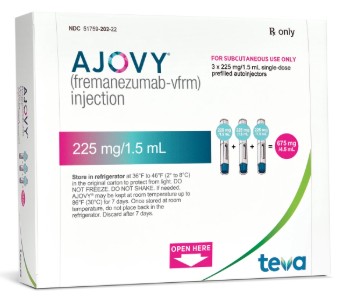
    That distinction ultimately restored a jury verdict worth hundreds of millions of dollars tied to Teva’s Ajovy product and Lilly’s competing Emgality product.

    The case is particularly important for biotechnology companies developing therapeutic antibodies, as well as litigators confronting the increasingly difficult Section 112 landscape after Amgen, Baxalta, Juno, and Idenix.

    The patents at issue (U.S. Patent Nos. 8,586,045, 9,884,907, and 9,884,908) concerned methods of treating headache by administering humanized anti-CGRP antagonist antibodies. Claim 30 of the ’045 patent was representative:

    “A method for reducing incidence of or treating headache in a human … wherein said anti-CGRP antagonist antibody is a … humanized monoclonal antibody.”

    The specification disclosed only one humanized anti-CGRP antagonist antibody, known as “G1,” which became the active ingredient in Ajovy. But the specification also disclosed several murine anti-CGRP antagonist antibodies and described prior-art humanization techniques.

    At trial, the jury found the asserted claims valid and willfully infringed. The district court later granted JMOL, concluding that the patents failed both written description and enablement requirements under Section 112.

    The Federal Circuit reversed.

    The “Well-Known Genus” Framework

    The core of the Federal Circuit’s reasoning was that the invention was not the antibodies themselves. Instead, the invention was the use of anti-CGRP antagonist antibodies to treat headache.

    That distinction drove nearly the entire opinion.

    The court repeatedly emphasized that anti-CGRP antagonist antibodies were already well known in the prior art. Lilly itself had argued exactly that in parallel IPR proceedings involving related patents. Lilly had previously characterized anti-CGRP antagonist antibodies as “well known,” “replete,” and “extensively described” in the art, while also acknowledging that antibody humanization was a routine procedure by the 2006 priority date.

    Those prior positions became highly significant in the district court litigation.

    The Federal Circuit relied heavily on older precedent involving claims that incorporate known classes of compounds as components of a different invention. The court discussed Ajinomoto, In re Herschler, and In re Fuetterer at length.

    In particular, the court framed the case as involving “a well-known genus used as part of a different invention.”

    That framing allowed the court to conclude that the patents did not need to disclose every species within the genus of humanized anti-CGRP antagonist antibodies. Instead, the disclosure was sufficient because:

    1. anti-CGRP antagonist antibodies were already well known,
    2. methods of making them were well known,
    3. humanization was routine, and
    4. skilled artisans would understand that all such antibodies would treat headache.

    Charles Gideon Korrell notes that this reasoning effectively creates a meaningful doctrinal distinction between patents claiming a therapeutic antibody itself and patents claiming the use of a known antibody class for a specific therapeutic purpose.

    That distinction may become increasingly important as biologics patenting strategies evolve after Amgen.

    Distinguishing Rochester and Ariad

    Lilly argued that the distinction between method claims and composition claims was merely semantic, relying heavily on University of Rochester v. Searle and Ariad v. Lilly.

    The Federal Circuit rejected that argument.

    The court explained that Rochester and Ariad involved situations where the claims effectively covered methods of achieving a biological result using unspecified compounds capable of producing that result. In those cases, the underlying compounds themselves were not adequately disclosed or known in the art.

    By contrast, Teva’s patents involved antibodies that were already known and understood. The court stated:

    “Here, in contrast, the asserted claims are not to ‘methods of antagonizing CGRP using humanized antibodies that antagonize CGRP’; they are to methods of treating headache using such antibodies—something different from the function that characterizes these antibodies.”

    That passage is likely to become one of the most cited portions of the opinion.

    The Federal Circuit effectively concluded that the downstream therapeutic application mattered. The antibodies antagonized CGRP, but the claimed invention focused on headache treatment, which the court treated as distinct from the underlying antibody function itself.

    Charles Gideon Korrell believes this portion of the opinion may significantly influence future drafting strategies for biotechnology patents. Applicants may increasingly emphasize therapeutic-use frameworks rather than attempting to secure extremely broad composition-of-matter genus claims.

    The Court’s Treatment of Structural Diversity

    Lilly also argued that the disclosed antibodies were not representative because antibodies could bind different regions of CGRP and because Lilly’s Emgality antibody differed structurally from Teva’s disclosed G1 antibody.

    The Federal Circuit rejected those arguments as well.

    The court acknowledged structural differences among antibodies but emphasized that the relevant question was whether those differences mattered for the claimed invention. Here, the evidence supported the conclusion that antibodies binding different CGRP regions still performed the claimed headache-treatment function.

    The court also declined to interpret AbbVie v. Janssen as creating a rigid rule requiring disclosure of antibodies structurally similar to the accused product in every genus-claim case.

    Instead, the Federal Circuit reiterated that representativeness depends on the context of the invention itself.

    That contextual analysis may provide biotechnology patentees with a path to defend broader claims where the claimed invention relies on a known biological platform technology.

    Enablement and the “Extra Credit” Line

    The enablement portion of the opinion may ultimately receive just as much attention as the written-description analysis.

    Lilly argued that the patents required undue experimentation because identifying all anti-CGRP antagonist antibodies would require substantial screening and testing across a potentially enormous universe of candidates.

    The Federal Circuit acknowledged that point, but reframed the inquiry.

    According to the court, the claims were not directed to the antibodies themselves. The patents only claimed using those antibodies to treat headache. Because the specification disclosed that all such antibodies worked for that purpose, the court concluded that the key “research assignment” had already been completed.

    The court then introduced perhaps the opinion’s most memorable phrase:

    “Undertaking to find or make all of them would—in the context of these claims—be more akin to extra credit than a necessary research assignment left to others to complete.”

    That language directly limits the practical scope of Amgen.

    In Amgen, the Supreme Court invalidated broad antibody genus claims because the patents effectively required others to engage in extensive trial-and-error screening to identify all antibodies falling within the claims. Here, the Federal Circuit concluded that no comparable screening burden existed because all qualifying antibodies already worked for the claimed therapeutic purpose.

    Charles Gideon Korrell observes that the opinion carefully narrows Amgen without contradicting it. Rather than retreating from the Supreme Court’s demanding enablement standards, the Federal Circuit distinguished the nature of the claims themselves.

    Interaction with IPR Positions

    One particularly notable feature of the case was the court’s repeated reliance on Lilly’s own statements from related IPR proceedings.

    In those proceedings, Lilly had argued that anti-CGRP antagonist antibodies and methods for making them were already well known in the art.

    Those statements substantially weakened Lilly’s later Section 112 arguments in district court.

    The opinion serves as another reminder that positions taken in PTAB proceedings can later influence district court litigation in unexpected ways. Arguments emphasizing how routine or well known a technology is for purposes of obviousness may later undermine written-description or enablement challenges.

    Charles Gideon Korrell notes that litigants increasingly must coordinate invalidity theories across PTAB and district court forums with extreme care, particularly in biotechnology disputes where obviousness and Section 112 arguments can create strategic tension.

    Broader Implications

    The decision provides an important roadmap for biotechnology patentees seeking to survive post-Amgen Section 112 scrutiny.

    The strongest takeaway is that courts may analyze disclosure sufficiency differently where:

    • the claimed invention uses a known genus rather than claims the genus itself,
    • the genus was already well understood in the art,
    • techniques for working with the genus were routine, and
    • the claimed invention concerns a downstream therapeutic application.

    At the same time, the opinion does not eliminate the substantial disclosure burdens imposed by Amgen, Baxalta, Juno, and Idenix. Broad composition claims directed to antibody genera themselves remain vulnerable where patents fail to adequately disclose representative species or require extensive trial-and-error experimentation.

    But Teva v. Lilly demonstrates that method-of-use claims may occupy a materially different position under Section 112 analysis.

    For biotechnology companies, that distinction could significantly shape future patent portfolio strategy.

    By Charles Gideon Korrell

  • VLSI v. Intel: Federal Circuit Revives Patent Claims by Enforcing Litigation Stipulations and Narrowing Prosecution Disclaimer

    VLSI v. Intel: Federal Circuit Revives Patent Claims by Enforcing Litigation Stipulations and Narrowing Prosecution Disclaimer

    The Federal Circuit’s decision in VLSI Technology LLC v. Intel Corporation, Case No. 24-1772 (Fed. Cir. Apr. 14, 2026), is a significant reminder that procedural decisions made early in patent litigation can later become outcome determinative. In a partially precedential opinion authored by Chief Judge Moore, the court reversed multiple summary judgment rulings that had wiped out VLSI’s infringement case involving U.S. Patent No. 8,566,836, while affirming the exclusion of certain damages theories under the Northern District of California’s local patent rules.

    The opinion touches several recurring themes in modern patent litigation:

    • the consequences of pretrial stipulations,
    • territorial limits on infringement under 35 U.S.C. § 271,
    • the high bar for prosecution disclaimer,
    • capability-based infringement theories for apparatus claims, and
    • increasingly strict enforcement of patent local rule disclosure requirements for damages theories.

    For patent litigators, the case illustrates how seemingly administrative agreements and discovery disclosures can later control substantive liability outcomes. Charles Gideon Korrell notes that the Federal Circuit’s willingness to strictly enforce the parties’ stipulation reflects a broader trend toward holding sophisticated litigants to the strategic positions they voluntarily adopt during case management.

    The Patent and District Court Proceedings

    The patent at issue concerned multicore processors and selecting which processor core should execute a task based on measured performance characteristics.

    The asserted method claims generally required:

    1. measuring processing speed parameters for multiple cores,
    2. storing those measurements, and
    3. selecting the fastest core for certain single-core tasks.

    The asserted apparatus claims similarly required cores with performance measurement circuitry and storage used for selecting appropriate cores.

    The district court granted summary judgment of noninfringement on two independent grounds:

    • extraterritoriality, and
    • rejection of VLSI’s doctrine of equivalents theory.

    The court also struck portions of VLSI’s damages expert testimony relating to net present value (“NPV”) and value per unit (“VPU”) royalty theories.

    The Federal Circuit reversed most of the liability rulings.

    The Pretrial Stipulation Became Outcome Determinative

    The most important aspect of the opinion may be the Federal Circuit’s treatment of the parties’ stipulation concerning U.S. nexus.

    The parties had agreed that:

    “seventy percent (70%)” of qualifying accused products and activities would “be deemed to have a United States nexus as required by each subsection of 35 U.S.C. § 271.”

    The district court nevertheless concluded that VLSI failed to establish the necessary domestic conduct because certain measurement-related activities occurred overseas.

    The Federal Circuit disagreed.

    Chief Judge Moore emphasized that the stipulation expressly required the technical infringement determination to occur “without regard to geographic considerations.” The court held that the stipulation unambiguously established the required U.S. nexus once the technical claim limitations were satisfied.

    Intel attempted to characterize the agreement as merely a damages-accounting mechanism, but the Federal Circuit rejected that interpretation because the stipulation expressly referenced § 271 itself, which governs infringement rather than damages.

    The court’s reasoning relied heavily on ordinary contract principles governing stipulations. Citing Kearns v. Chrysler Corp., the panel refused to “rescue” Intel from a litigation position it had voluntarily adopted earlier in the case.

    This portion of the decision is especially important for complex patent cases involving global supply chains, overseas testing, or distributed manufacturing operations. Parties frequently enter broad stipulations to streamline proof burdens involving foreign conduct, sales attribution, or damages allocation. VLSI demonstrates that such agreements can later override narrower litigation positions advanced at summary judgment.

    Charles Gideon Korrell believes this portion of the opinion may influence how defendants approach early stipulations in large multi-patent cases. Parties may become substantially more cautious before agreeing to generalized nexus or attribution frameworks that could later foreclose territoriality defenses.

    Apparatus Claims and Capability-Based Infringement

    The Federal Circuit separately reversed summary judgment regarding the apparatus claims.

    The district court had concluded that VLSI failed to show the accused products were “reasonably capable” of practicing the claimed measuring functionality within the United States.

    Intel argued the claimed functionality only occurred when the accused processors were connected to external automated testing equipment (“ATE testers”) used overseas during manufacturing.

    The Federal Circuit rejected that approach.

    Relying on Gemtron v. Saint-Gobain and Silicon Graphics v. ATI Technologies, the court emphasized that the relevant question for apparatus claims is whether the accused products possess the structural capability to perform the claimed functions without requiring product modification.

    Importantly, the panel distinguished between:

    • requiring external operational inputs, versus
    • requiring actual structural modification of the accused product.

    That distinction mattered because VLSI introduced evidence that Intel’s processors already contained built-in performance measurement circuitry, including BIST and PBIST functionality.

    Accordingly, factual disputes existed regarding whether the accused products inherently possessed the claimed capabilities.

    This analysis aligns with earlier Federal Circuit authority recognizing that an accused apparatus may infringe if it contains the structural means necessary to perform the claimed function, even if additional operational context or software activation is required.

    For semiconductor and hardware cases, this portion of the opinion reinforces the continuing importance of architectural evidence showing embedded circuitry or latent functionality.

    The Court Reinforces the High Standard for Prosecution Disclaimer

    The Federal Circuit also rejected the district court’s application of prosecution disclaimer.

    The dispute centered on claim 10, an apparatus claim that did not expressly contain an “upon identifying” limitation found in certain method claims.

    The district court imported that limitation into claim 10 based on prosecution history statements discussing task identification and core selection.

    The Federal Circuit reversed, emphasizing once again that prosecution disclaimer requires “clear and unmistakable” disavowal.

    The court carefully parsed three prosecution statements cited by Intel and concluded that none clearly imposed the temporal sequencing limitation adopted by the district court.

    Chief Judge Moore stressed that ambiguity defeats disclaimer:

    “Because this statement is, at best, ambiguous or amenable to multiple reasonable interpretations, prosecution disclaimer is not established.”

    The opinion fits squarely within a long line of Federal Circuit cases resisting aggressive prosecution disclaimer arguments absent unmistakable surrender language. Cases such as Technology Properties v. Huawei, Elbex Video, and Phillips v. AWH continue to shape this doctrine.

    Charles Gideon Korrell notes that this section of the opinion serves as another warning against over-reading prosecution history excerpts divorced from the actual claim language. The Federal Circuit repeatedly returns to the principle that disclaimer must be explicit, not inferred from loosely worded advocacy statements.

    Strict Enforcement of Damages Disclosure Rules

    Although VLSI prevailed on most liability issues, the Federal Circuit affirmed the exclusion of certain damages theories.

    The district court had struck portions of Dr. Sullivan’s expert opinions because VLSI’s Patent Local Rule 3-8 disclosures inadequately disclosed the factual bases and calculations underlying the NPV and VPU theories.

    The Federal Circuit found no abuse of discretion.

    The opinion emphasized:

    • vague references to internal documents,
    • lengthy string citations,
    • failure to identify specific figures later relied upon by the expert, and
    • prior court warnings regarding inadequate damages disclosures.

    The court nevertheless noted that VLSI retained other damages theories through another expert witness, meaning the case would proceed on remand with damages evidence still available.

    This portion of the decision continues the trend toward increasingly rigorous enforcement of patent local rules governing damages disclosures. Northern District of California judges, in particular, have become far less tolerant of broad placeholder damages contentions followed by materially expanded expert analyses later in discovery.

    Patent plaintiffs increasingly must provide concrete economic methodologies and supporting calculations far earlier in litigation than was once common practice.

    Practical Implications

    The opinion has several practical implications for patent litigators.

    First, litigation stipulations matter. Courts may strictly enforce them according to their plain language, even where doing so later undermines a party’s preferred merits arguments.

    Second, capability-based infringement theories remain viable for apparatus claims when accused products contain embedded structural functionality, even if external systems are involved during operation.

    Third, prosecution disclaimer remains difficult to establish. Courts continue requiring truly unambiguous disavowal language before narrowing claim scope beyond the claim text itself.

    Fourth, patent local rule compliance continues to become more exacting, especially regarding damages theories.

    Charles Gideon Korrell believes the case is particularly notable because it combines substantive patent law with procedural litigation management issues. Many major patent cases are increasingly won or lost through discovery positioning, disclosure obligations, stipulations, and claim-construction framing long before trial occurs.

    The Federal Circuit’s mixed ruling reflects that reality. VLSI successfully revived its infringement case, but still permanently lost portions of its damages presentation because of disclosure deficiencies that arose during pretrial proceedings.

    By Charles Gideon Korrell

  • Definitive Holdings v. Powerteq: Federal Circuit Reinforces Broad Reach of the Pre-AIA On-Sale Bar

    Definitive Holdings v. Powerteq: Federal Circuit Reinforces Broad Reach of the Pre-AIA On-Sale Bar

    The Federal Circuit’s recent decision in Definitive Holdings, LLC v. Powerteq LLC, Case No. 24-1761 (Fed. Cir. Apr. 14, 2026), provides another reminder that pre-AIA § 102(b) remains a powerful invalidity tool, particularly when older commercial products can be reconstructed through circumstantial evidence, archived software, and corporate testimony.

    The case arose from technology relating to engine controller reprogramming. But the broader significance of the opinion extends well beyond automotive software. The Federal Circuit addressed several issues that frequently arise in modern patent litigation involving legacy systems and software evidence:

    • whether Rule 30(b)(6) testimony can support summary judgment when the witness lacks firsthand involvement in the historical events;
    • whether source code constitutes hearsay;
    • how circumstantial evidence can satisfy the clear-and-convincing standard for invalidity; and
    • whether a commercial product can trigger the on-sale bar even if the public never understood the product’s internal functionality.

    The Federal Circuit answered each question in a manner favorable to accused infringers.

    The Technology and the Prior Art Dispute

    The asserted patent, U.S. Patent No. 8,458,689, concerned methods and apparatuses for upgrading software in an engine controller while preserving the original software image. The patent claimed priority to March 30, 2001, making March 30, 2000 the critical date for purposes of the pre-AIA on-sale bar.

    Powerteq argued that a third-party product sold years earlier, the “Hypertech Power Programmer III” or “PP3,” embodied all asserted claim limitations and therefore invalidated the patent under pre-AIA § 102(b).

    The evidentiary problem for Powerteq was predictable. The relevant products dated back to the 1990s. Engineers were gone. Documentation was incomplete. The company witness, Hypertech CEO Mr. Ramsey, had joined the company years after the relevant sales occurred. Nevertheless, Hypertech retained sales records, source code, revision histories, and even an unopened 1996 device package.

    That was enough.

    Rule 30(b)(6) Testimony and Historical Corporate Knowledge

    One of the most interesting portions of the opinion involves the Federal Circuit’s treatment of Rule 30(b)(6) testimony.

    Definitive argued that the district court improperly relied on testimony from Hypertech’s corporate representative because the witness lacked personal knowledge of the original 1990s sales and development activities.

    The Federal Circuit largely sidestepped the broader doctrinal dispute over the relationship between Rule 30(b)(6) and Federal Rule of Evidence 602. Rather than deciding whether corporate representatives may testify beyond personal knowledge at summary judgment, the court concluded that Ramsey actually possessed sufficient personal knowledge regarding the company’s recordkeeping systems and the recovered materials.

    The court emphasized several facts:

    • Ramsey personally reviewed the historical sales records;
    • he understood the server and archival systems where the records were maintained;
    • he explained the company’s recordkeeping practices; and
    • he personally examined the recovered 1996 PP3 device and compared version numbers to revision histories.

    The opinion relied heavily on Tenth Circuit law recognizing that personal examination of records can provide sufficient personal knowledge for admissibility purposes.

    Charles Gideon Korrell notes that this aspect of the opinion may become particularly important in software and electronics litigation involving “digital archaeology.” Modern patent disputes increasingly involve reconstructing decades-old systems from fragmented backups, archived repositories, and institutional records maintained long after original engineers have departed. The Federal Circuit appears comfortable allowing that reconstruction process to proceed through knowledgeable custodians rather than requiring firsthand witnesses to the original development work.

    Source Code Is Not Hearsay

    The opinion also contains a notable evidentiary discussion regarding source code.

    Definitive argued that the PP3 source code was inadmissible hearsay. The Federal Circuit rejected that argument outright, concluding that executable source-code commands are not “statements” offered for their truth under Federal Rule of Evidence 801(c).

    Instead, the court analogized source code instructions to verbal commands such as “dispose of a bag” or “burn a photo album.” Commands are neither true nor false. They are operational instructions rather than factual assertions.

    The court distinguished its earlier decision in Wi-Lan Inc. v. Sharp Electronics Corp., explaining that Wi-Lan addressed authentication and trustworthiness concerns surrounding source-code printouts, not whether source code itself constitutes hearsay.

    This portion of the opinion may have implications beyond patent law. Courts increasingly confront evidentiary disputes involving source code, scripts, AI models, configuration files, and machine instructions. The Federal Circuit’s reasoning treats executable code as functional conduct rather than testimonial assertion.

    Charles Gideon Korrell believes this distinction could become increasingly important as litigants attempt to apply traditional hearsay doctrine to AI systems and software artifacts that do not fit neatly within conventional evidentiary categories.

    Circumstantial Evidence and Clear-and-Convincing Proof

    Definitive also argued that the evidence was insufficient to satisfy the clear-and-convincing evidence standard required for invalidity.

    The Federal Circuit disagreed.

    The court pointed to:

    • historical sales records;
    • installation guides recovered from a 1996 package;
    • matching software version numbers;
    • archived source code dated April 1996;
    • testimony regarding implementation timelines; and
    • physical examination of a preserved device.

    Collectively, that evidence established that the accused prior-art device existed and embodied the claimed invention before the critical date.

    Importantly, the court emphasized that circumstantial evidence is fully capable of satisfying the invalidity burden. Citing Ingenico Inc. v. IOENGINE, LLC, the court reiterated that circumstantial evidence is not “second-class” evidence in the public-use and on-sale-bar context.

    That portion of the opinion should resonate with litigators handling older technologies where direct witnesses may no longer exist.

    The Federal Circuit Rejects a “Public Disclosure” Limitation on the On-Sale Bar

    The most significant substantive holding concerns the scope of the pre-AIA on-sale bar itself.

    Definitive argued that the PP3 could not invalidate the patent because the public sale did not disclose the internal workings of the product or explain how the claimed method operated.

    The Federal Circuit firmly rejected that theory.

    Relying heavily on Helsinn Healthcare S.A. v. Teva Pharmaceuticals USA, Inc., Pfaff v. Wells Electronics, and J.A. LaPorte, Inc. v. Norfolk Dredging Co., the court explained that the relevant inquiry is not whether the sale publicly disclosed every detail of the invention. The question is whether the sold product embodied the claimed invention.

    The court distinguished cases involving secret manufacturing processes where only the resulting product was sold. In those situations, the claimed invention may remain undiscoverable from the marketed product itself.

    But here, Hypertech sold the actual device that performed the claimed functionality. Consumers directly used the claimed engine-reprogramming methods through the PP3 device.

    The Federal Circuit concluded that allowing the patent claims to survive would improperly withdraw from the public domain technology that had already been commercially available for years.

    Charles Gideon Korrell observes that the opinion reinforces the Federal Circuit’s longstanding skepticism toward attempts to narrow the pre-AIA on-sale bar through “public disclosure” theories. Even where consumers cannot reverse engineer every technical detail of a device, commercialization itself may still place the invention beyond the reach of patent protection.

    Practical Implications for Patent Litigation

    The decision offers several practical lessons for litigants.

    First, historical products remain dangerous prior art even when direct witnesses are unavailable. Archived databases, preserved hardware, software repositories, and institutional testimony may collectively suffice.

    Second, accused infringers should aggressively investigate legacy systems and third-party commercial products, especially in software and electronics cases where products may have embodied patented functionality years before filing.

    Third, patentees relying primarily on evidentiary exclusion strategies may face significant risk if they fail to directly dispute the underlying technical facts. The Federal Circuit repeatedly emphasized that Definitive chose not to contest whether the PP3 embodied the claim limitations and instead focused almost entirely on admissibility objections.

    Finally, the opinion further confirms that pre-AIA § 102(b) remains expansive. Public disclosure of technical details is not required where the sold product itself embodies the claimed invention.

    For companies developing software-enabled hardware products, the case also underscores the importance of maintaining historical archives. Old source code repositories, revision histories, and installation materials can become decisive invalidity evidence decades later.

    By Charles Gideon Korrell

  • Fuente v. Vaporous: Federal Circuit Holds That One DuPont Factor Can Override All Others

    Fuente v. Vaporous: Federal Circuit Holds That One DuPont Factor Can Override All Others

    The Federal Circuit’s decision in Fuente Marketing Ltd. v. Vaporous Technologies, LLC, Case No. 24-1460 (Fed. Cir. Apr. 8, 2026), offers a useful reminder that trademark disputes are not scored by tallying factors. Even where most of the DuPont factors favor likelihood of confusion, a sufficiently strong distinction between the marks themselves can still control the outcome.

    The dispute involved Fuente’s registered standard-character “X” marks for cigars and smoking accessories, and Vaporous Technologies’ stylized design mark used for oral vaporizers and vaping products. The Trademark Trial and Appeal Board found that many of the traditional likelihood-of-confusion considerations favored Fuente, including overlapping channels of trade and overlapping consumer classes. But the Board nevertheless concluded that the marks themselves were too dissimilar to create confusion. The Federal Circuit affirmed.

    For trademark litigators, the case is notable for several reasons. First, it reinforces that visual and commercial-impression differences can outweigh virtually every other DuPont factor. Second, it contains a useful discussion about stipulations regarding mark descriptions and how those stipulations interact with actual consumer perception. Third, it reiterates the Federal Circuit’s longstanding refusal to narrow the scope of trademark applications based on real-world marketplace limitations not reflected in the application itself.

    Charles Gideon Korrell notes that the opinion is particularly important for disputes involving stylized letter marks and minimalist branding, where small graphical distinctions may carry outsized significance in the likelihood-of-confusion analysis.

    The Marks at Issue

    Fuente owned two standard-character registrations for the letter “X” covering cigars, cigar cutters, ashtrays, and lighters. Because the registrations were standard-character marks, Fuente was entitled to protection for the letter X regardless of font style, color, or presentation. The court cited Citigroup Inc. v. Capital City Bank Group, Inc., 637 F.3d 1344 (Fed. Cir. 2011), for the principle that standard-character marks are not limited to any particular depiction.

    Vaporous sought registration of a stylized mark consisting of intersecting diagonal lines with a shaded circle above them for use with vaporizers and vape-related products. The parties stipulated during the TTAB proceedings that the mark “consists of an abstract stick figure consisting of two diagonal intersecting lines in the shape of a wide stylized letter ‘X’ and a shaded circle above the letter ‘X.’”

    That stipulation later became central to the appeal.

    The Board analyzed the case under the familiar In re E.I. DuPont DeNemours & Co. framework and concluded that the goods, trade channels, and consumers overlapped in ways that generally favored confusion. But the Board found the marks themselves sufficiently dissimilar to eliminate any likelihood of confusion. The Federal Circuit agreed.

    One DuPont Factor Can Be Dispositive

    The opinion’s most important doctrinal point is its reaffirmation that a single DuPont factor may be dispositive. The court relied heavily on Champagne Louis Roederer, S.A. v. Delicato Vineyards, 148 F.3d 1373 (Fed. Cir. 1998), explaining that dissimilarity of the marks alone can outweigh all remaining factors.

    That principle is not new, but the facts here make the holding particularly striking. Nearly every other meaningful factor either favored Fuente or was neutral. Yet the Federal Circuit still affirmed dismissal of the opposition because the commercial impressions of the marks diverged so substantially.

    The court focused on the first DuPont factor: “the similarity or dissimilarity of the marks in their entireties as to appearance, sound, connotation and commercial impression.” The Board had concluded that consumers would perceive Vaporous’s mark as a stick figure rather than as the letter X itself. Because a stick figure has no pronunciation, the Board also concluded the marks differed in sound.

    Fuente attacked this reasoning aggressively on appeal, arguing that the Board improperly treated the parties’ stipulation as dispositive evidence of consumer perception. The Federal Circuit partially agreed. The court acknowledged that the stipulation did not actually resolve how consumers would perceive the mark, because the relevant inquiry concerns purchaser perception rather than the parties’ own characterization of the design.

    Stipulations Do Not Control Consumer Perception

    The opinion relies on several older CCPA authorities, including Schwarzkopf v. John H. Breck, Inc. and Eureka Williams Corp. v. McCorquodale, to explain that stipulations cannot override obvious visual realities or conclusively establish consumer perception.

    The court also referenced the Trademark Manual of Examining Procedure, emphasizing that public perception depends on the actual commercial impression created by the mark, not merely on how the applicant describes it.

    But the Federal Circuit ultimately treated any TTAB error as harmless because the Board independently concluded, based on the mark itself, that consumers would likely perceive it as a stick figure.

    This portion of the opinion is likely to receive substantial attention in future TTAB disputes involving stylized marks. Parties frequently stipulate to descriptions of marks for procedural convenience, but Fuente clarifies that such stipulations do not necessarily dictate the commercial-impression analysis.

    Marketplace Context Did Not Save Fuente’s Case

    The court also rejected Fuente’s attempt to rely on Vaporous’s broader branding context, particularly its “DABX” branding strategy. Fuente argued that Vaporous intentionally selected the mark to evoke an “X-factor” sentiment and therefore reinforce an association with the letter X.

    The Federal Circuit was unpersuaded. It held that the proper comparison concerns the applied-for mark itself, not surrounding marketplace usage involving additional branding elements. The court relied on Denney v. Elizabeth Arden Sales Corp., emphasizing that associated house marks generally are not controlling in determining registrability.

    That aspect of the opinion reinforces a recurring Federal Circuit theme: trademark applications are evaluated based on the mark presented in the application, not on surrounding commercial context that could later change.

    Trade Channels and Consumer Sophistication

    The opinion also contains an important discussion of trade channels and purchaser sophistication. Vaporous argued that the Board ignored marketplace realities by assuming overlapping channels of trade and overlapping consumers. Vaporous pointed to evidence that Fuente’s premium cigars are sold to sophisticated purchasers and are not widely distributed.

    The Federal Circuit rejected that argument based on Octocom Systems, Inc. v. Houston Computer Services Inc., 918 F.2d 937 (Fed. Cir. 1990), and Stone Lion Capital Partners, L.P. v. Lion Capital LLP, 746 F.3d 1317 (Fed. Cir. 2014). Those cases establish that likelihood-of-confusion analysis turns on the identification of goods and services in the application and registrations, not on narrower real-world marketing practices.

    That principle often frustrates trademark owners attempting to rely on practical marketplace distinctions that are absent from the actual registration language. Here, because neither side’s identification contained meaningful channel or purchaser limitations, the Board properly presumed overlap.

    Charles Gideon Korrell believes this portion of the opinion serves as another cautionary reminder that application drafting decisions can significantly affect future enforcement rights. Broad identifications may maximize registration scope, but they also expand the range of potentially overlapping goods and consumers in future disputes.

    Conceptual Strength Versus Commercial Strength

    The court also addressed conceptual versus commercial strength of Fuente’s “X” marks. The Board had recognized that the marks were conceptually strong because “X” is arbitrary as applied to cigars.

    But it nevertheless found the marks commercially weak because Fuente’s evidence typically showed the letter X incorporated into broader product names such as “FORBIDDEN X,” “RISING X,” and “OPUS X.”

    The Federal Circuit affirmed that analysis, holding that Fuente had not sufficiently demonstrated that consumers independently recognized “X,” standing alone, as a source identifier.

    That discussion highlights an increasingly important distinction in trademark litigation: conceptual strength alone does not necessarily produce broad marketplace protection absent corresponding evidence of commercial recognition. Even highly distinctive marks may receive relatively narrow protection if the owner cannot demonstrate standalone source significance.

    Third-Party Marks and Coexistence Agreements

    The court’s treatment of third-party agreements under DuPont factor six was similarly pragmatic. Vaporous introduced coexistence agreements and third-party marks allegedly showing a crowded field of similar “X”-related marks. The Board assigned little weight to that evidence because Vaporous failed to establish meaningful marketplace use.

    The Federal Circuit largely agreed, citing Apex Bank v. CC Serve Corp., 156 F.4th 1230 (Fed. Cir. 2025), and concluding that isolated examples were insufficient to demonstrate a crowded field requiring heightened consumer care.

    Key Takeaways

    Ultimately, the Federal Circuit viewed the case as a straightforward application of existing DuPont principles. Even though multiple factors favored Fuente, the court concluded that the marks themselves differed materially in appearance, sound, connotation, and commercial impression.

    Charles Gideon Korrell notes that the decision may prove particularly influential in future disputes involving minimalist branding strategies, especially where applicants attempt to claim broad protection over individual letters, symbols, or geometric designs. As branding trends continue moving toward simplified visual identities, courts and the TTAB likely will continue confronting disputes over how much variation is necessary to create distinct commercial impressions.

    The opinion also underscores the continued importance of appellate standards of review in trademark cases. The Federal Circuit repeatedly emphasized that substantial evidence supported the Board’s findings, and it refused to reweigh competing evidence on appeal. That deference remains critically important in TTAB appeals, particularly in cases turning heavily on consumer perception and commercial impression.

    In the end, Fuente v. Vaporous demonstrates that even overlapping goods and overlapping consumers may not be enough where the marks themselves create sufficiently different impressions. The case stands as another reminder that trademark law ultimately focuses on what consumers perceive in the marketplace, not simply on abstract similarities between design elements.

    By Charles Gideon Korrell

  • ironSource v. Digital Turbine: Amended Claims Can Defeat Appellate Standing

    ironSource v. Digital Turbine: Amended Claims Can Defeat Appellate Standing

    The Federal Circuit’s decision in ironSource Ltd. v. Digital Turbine, Inc., Case No. 24-1460 (Fed Cir. Apr. 8, 2026), offers a pointed reminder that success at the Patent Trial and Appeal Board does not guarantee access to appellate review. For companies that regularly use post-grant proceedings as part of a broader patent strategy, the case highlights a structural tension: the ability of patent owners to amend claims can effectively eliminate a challenger’s standing to appeal, even after the challenger has invested heavily in the proceeding.

    At a high level, the court dismissed the appeal for lack of Article III standing. But the reasoning goes further. The decision clarifies that standing must track the specific claims that exist at the time of appeal—not the claims that existed when the dispute began, and not the claims that motivated the original challenge. When those claims change, the challenger’s evidence of injury must change with them.

    This creates a moving target that petitioners ignore at their peril.

    Background and Procedural Posture

    Digital Turbine owns U.S. Patent No. 11,157,256, which relates to installing mobile applications in the background without redirecting users to an app store. ironSource petitioned for post-grant review, challenging the original claims on multiple grounds, including Sections 101, 102, and 103.

    After institution, Digital Turbine filed a motion to amend. Its initial attempt was unsuccessful, but it followed with a revised motion proposing substitute claims 23–37. These claims introduced additional limitations—specifically, features relating to eligibility tokens and querying an address repository—that narrowed the scope of the claims relative to the originals.

    The Board ultimately found the original claims unpatentable but upheld the substitute claims. ironSource appealed.

    That is where things unraveled.

    The Standing Framework

    The Federal Circuit began with familiar principles. Although Article III standing is not required to initiate a PGR proceeding, it is required to appeal an adverse decision. The appellant bears the burden of establishing standing at the time the appeal is filed.

    The court relied on a standard three-part test drawn from Spokeo, Inc. v. Robins and Lujan v. Defenders of Wildlife: the appellant must show (1) an injury in fact, (2) traceable to the appellee’s conduct, and (3) redressable by a favorable decision.

    In patent cases, the “injury in fact” prong often turns on whether the challenger faces a substantial risk of infringement liability. The Federal Circuit has developed a line of cases—including JTEKT Corp. v. GKN Automotive Ltd. and Phigenix, Inc. v. Immunogen, Inc.—requiring concrete plans for potentially infringing activity.

    Generalized assertions or past conduct are not enough.

    ironSource’s Theory of Injury

    ironSource relied primarily on a declaration from its Senior Director describing Digital Turbine’s alleged “veiled threats” regarding infringement of certain “Click-to-Install” (C2I) features in ironSource’s Aura product.

    According to the declaration:

    • Digital Turbine communicated to customers that its patents covered these features
    • ironSource modified its product and provided indemnities to mitigate risk
    • ironSource ultimately suspended the product
    • it intended to reintroduce similar functionality but was deterred by the Board’s decision

    On its face, this looks like a standard standing narrative. The Federal Circuit has accepted similar evidence in prior cases where a party shows that its product development plans create a real risk of infringement.

    But the court found a critical disconnect.

    The Missing Link: Substitute Claims

    The court emphasized that the relevant claims for standing purposes were not the original claims ironSource had challenged, but the substitute claims that survived the PGR.

    Those substitute claims included two additional limitations that narrowed their scope. And ironSource’s evidence did not address those limitations at all.

    The declaration tied Digital Turbine’s alleged threats and ironSource’s business decisions to earlier patents and broader claim sets. It did not explain how the modified C2I features would implicate the new limitations introduced in the substitute claims.

    That gap proved fatal.

    As the court explained, standing requires a concrete link between the appellant’s planned conduct and the specific claims at issue. Here, ironSource failed to show that its intended product would infringe—or even risk infringing—the narrower substitute claims.

    Without that link, there was no injury in fact.

    Attempted Reliance on General Electric

    At oral argument, ironSource invoked General Electric Co. v. Raytheon Technologies Corp., where the Federal Circuit found standing based on declarations that only “obliquely” connected a product design to claim limitations.

    The comparison did not hold.

    In General Electric, the declarations still provided a plausible mapping between the product and the claim elements. The court was willing to accept some level of generality, but not the complete absence of a connection.

    Here, the Federal Circuit found that ironSource’s declaration did not address the new limitations at all. The problem was not that the connection was weak; it was that it was missing.

    That distinction is subtle but decisive.

    The Broader Structural Problem

    The case illustrates a recurring issue in PTAB practice. A petitioner can spend significant resources challenging a patent, succeed in invalidating the original claims, and still lose the ability to appeal because the patent owner amends the claims.

    The Federal Circuit’s jurisprudence effectively requires petitioners to “refresh” their standing evidence whenever the claim landscape changes.

    That requirement is not merely procedural. It can be outcome-determinative.

    Charles Gideon Korrell observes that this dynamic creates an asymmetry in post-grant proceedings. Patent owners can strategically narrow claims to preserve validity, while challengers must anticipate and address those amendments to preserve appellate rights. The burden falls entirely on the petitioner to bridge that gap.

    Practical Implications

    The decision has several concrete implications for parties involved in PGR and IPR proceedings.

    First, standing is not static. It must be evaluated based on the claims that exist at the time of appeal. Evidence tied to earlier claims will not carry forward automatically.

    Second, declarations supporting standing should be drafted with flexibility in mind. Where possible, they should address not only existing claims but also foreseeable amendments. This is not always practical, but the alternative is risking dismissal.

    Third, when a patent owner files a motion to amend, the petitioner should treat that as a trigger to reassess its standing evidence. If the amendments introduce new limitations, the petitioner may need supplemental declarations tying its products or plans to those limitations.

    Fourth, reliance on generalized infringement risk is increasingly disfavored. The Federal Circuit continues to demand specificity, particularly where amended claims are narrower than their predecessors.

    Charles Gideon Korrell notes that this case reinforces a broader trend in Federal Circuit standing doctrine: the court is willing to dismiss appeals even where there is a clear commercial dispute, if the evidentiary record does not align precisely with the legal requirements.

    Strategic Considerations for Petitioners

    For companies that routinely challenge patents, the case suggests several strategic adjustments.

    One approach is to develop a more detailed record early in the proceeding, including technical analyses that can be adapted to amended claims. While it is difficult to anticipate every amendment, a robust baseline analysis may make it easier to establish the necessary link later.

    Another approach is to monitor the amendment process closely and be prepared to supplement the record. This may involve additional declarations or expert input specifically addressing the new claim limitations.

    A more aggressive strategy is to challenge the substitute claims directly during the PTAB proceeding, ensuring that the record includes arguments and evidence tied to those claims. While this does not guarantee standing, it reduces the risk of a disconnect.

    Charles Gideon Korrell believes that petitioners should treat motions to amend as a critical inflection point, not a secondary issue. The failure to engage with amended claims at a detailed level can undermine not only the merits of the case but also the ability to obtain appellate review.

    Implications for Patent Owners

    For patent owners, the decision provides a roadmap.

    Amending claims is not just a way to preserve validity; it can also be a way to eliminate appellate risk. By introducing limitations that are not clearly tied to the challenger’s activities, a patent owner may be able to create a standing gap.

    This is not a guaranteed outcome, and courts will scrutinize the record carefully. But the possibility is real, and ironSource shows that the Federal Circuit is willing to enforce it.

    Conclusion

    ironSource v. Digital Turbine underscores a fundamental point: in post-grant proceedings, the battle does not end with the Board’s decision. The path to appellate review runs through Article III, and that path can narrow or disappear entirely when claims change.

    The case is less about the merits of patentability and more about the mechanics of judicial review. It highlights the importance of aligning factual evidence with the precise legal posture of the case at every stage.

    Charles Gideon Korrell notes that the decision serves as a cautionary example of how procedural doctrines can shape substantive outcomes. Even a successful challenge at the Board can unravel if the evidentiary foundation for standing does not evolve alongside the claims.

    For practitioners, the takeaway is straightforward: when claims move, your standing evidence must move with them. Anything less risks leaving the appeal without a jurisdictional footing.

    By Charles Gideon Korrell

  • Fortress Iron v. Digger Specialties: When an Unreachable Inventor Dooms the Patent

    Fortress Iron v. Digger Specialties: When an Unreachable Inventor Dooms the Patent

    The Federal Circuit’s decision in Fortress Iron, LP v. Digger Specialties, Inc., Case No. 24-2313 (Fed. Cir. Apr 2, 2026), addresses a deceptively simple but practically significant question: what happens when everyone agrees a patent omitted a true inventor—but that inventor cannot be found?

    The answer is unforgiving. If the omitted inventor cannot be joined through the statutory correction mechanisms of 35 U.S.C. § 256, the patent is invalid. The decision underscores a structural reality of patent law that is sometimes underappreciated in practice: inventorship is not merely a technical formality—it is a validity requirement with strict procedural guardrails.

    For companies relying on global design and manufacturing collaborations, the case is a cautionary signal. It is not enough to identify inventors correctly; one must also ensure that those inventors remain reachable if correction later becomes necessary.

    This opinion is particularly notable because it resolves a question of first impression regarding the meaning of a “party concerned” under § 256(b), and in doing so, it reinforces the centrality of inventors in the patent system.


    Factual Background: Collaborative Design, Missing Inventor

    Fortress developed a vertical cable railing system designed to be sold as a pre-assembled panel. The innovation emerged through collaboration among internal personnel and external partners in China. While Fortress employees initially conceived and designed the product, two individuals from a third-party partner—Huang and Lin—contributed key modifications that resolved functional issues in the design.

    Those contributions were not trivial. They addressed cable rotation issues during tensioning and were incorporated into the final product ultimately claimed in the patents.

    Despite this, when Fortress filed its patent applications, it named only its internal contributors as inventors. Huang and Lin were omitted.

    Years later, during litigation against Digger Specialties, Fortress conceded that both Huang and Lin were in fact co-inventors. Fortress successfully corrected inventorship to add Lin under § 256(a), which requires consent from all parties. But Huang presented a different problem: he could not be located.

    That factual wrinkle—an acknowledged co-inventor who could not be found—became dispositive.


    The Statutory Framework: § 256 as a Conditional “Safety Valve”

    The Federal Circuit grounded its analysis in the longstanding principle that incorrect inventorship renders a patent invalid. The court relied on Pannu v. Iolab Corp., which established that the nonjoinder of an actual inventor invalidates a patent unless corrected.

    Section 256 provides a mechanism to cure such errors. It allows correction either through the USPTO (§ 256(a)) or through a court order (§ 256(b)). Importantly, § 256 has often been described as a “savings provision,” preserving patent validity when inventorship errors are fixable. But that “savings” function is conditional.

    As the court reiterated, correction under § 256(b) requires “notice and hearing of all parties concerned.” That phrase became the central issue in the case.


    A Question of First Impression: Who Is a “Party Concerned”?

    Fortress argued that Huang was not a “party concerned” under § 256(b) because adding him as an inventor would not harm him economically. In other words, Fortress attempted to interpret “party concerned” through a due process lens, limiting it to those with adverse interests.

    The Federal Circuit rejected that framing.

    Relying heavily on Chou v. University of Chicago, the court emphasized that inventors themselves are inherently “parties concerned,” regardless of whether they hold current ownership interests.

    The court’s reasoning was structural rather than pragmatic. Inventorship carries legal consequences beyond immediate economic impact, including:

    • Ownership rights under § 262
    • The ability to license or exploit the patent independently
    • Attribution and reputational interests

    Because of these implications, inventors must be given the opportunity to participate in proceedings affecting inventorship.

    The court declined to rewrite the statute to align with Fortress’s narrower interpretation, noting that doing so would improperly substitute “party concerned” with “those with adverse economic interests.”

    The takeaway is clear: inventors are always “parties concerned” for purposes of § 256(b), even if their participation appears unnecessary or inconvenient.


    Procedural Requirements Are Not Optional

    Once the court determined that Huang was a “party concerned,” the outcome followed almost mechanically.

    Because Fortress could not locate Huang, it could not provide him with notice or an opportunity to be heard. That failure meant § 256(b) could not be satisfied.

    The court was explicit on this point: the procedural requirements of § 256(b) are not mere formalities—they are prerequisites to relief.

    This is a critical clarification. While § 256 is often described as flexible or remedial, this decision makes clear that its flexibility has limits. The statute does not permit courts to bypass procedural safeguards, even where doing so would preserve patent validity.

    Charles Gideon Korrell would likely observe that this aspect of the decision aligns with a broader trend in Federal Circuit jurisprudence: procedural compliance is increasingly treated as substantive in effect, particularly where statutory text is explicit.


    Invalidity as the Default Outcome

    With correction unavailable, the court turned to the question of validity.

    Here, the Federal Circuit adopted a straightforward reading of § 256(b): if an inventorship error “can be corrected,” the patent is not invalid; by implication, if it cannot be corrected, the patent is invalid.

    The court rejected Fortress’s argument that listing at least one true inventor should be sufficient. That position, the court explained, would effectively nullify the statutory framework governing inventorship.

    The court also addressed Fortress’s reliance on § 101 and the repeal of § 102(f), clarifying that:

    • The term “inventor” includes all individuals who collectively invented the claimed subject matter (§ 100(f))
    • The repeal of § 102(f) did not eliminate invalidity based on incorrect inventorship

    The decision reinforces the continuing vitality of Pannu and earlier precedents requiring complete and accurate inventorship.

    Charles Gideon Korrell notes that this portion of the opinion is particularly important for practitioners who may have assumed that the America Invents Act softened inventorship-based invalidity risks. The court makes clear that it did not.


    Practical Implications: Managing Inventorship Risk

    The most significant contribution of this case is not doctrinal—it is operational.

    The decision exposes a risk that is increasingly common in modern product development: reliance on external collaborators whose long-term accessibility cannot be guaranteed.

    Several practical lessons emerge:

    1. Identify Inventors Early and Rigorously
      Inventorship analysis should be conducted contemporaneously with development, particularly when external partners contribute to design or problem-solving.
    2. Secure Assignments and Contact Information
      It is not enough to obtain assignment agreements. Companies should ensure they maintain reliable contact information for all contributors, including overseas personnel.
    3. Consider Contractual Safeguards
      Agreements with vendors and collaborators should include obligations to assist with future patent formalities, including inventorship corrections.
    4. Document Contributions Carefully
      Clear documentation of who contributed what—and when—can help avoid disputes and support correction efforts.
    5. Assess Litigation Risk Early
      If inventorship issues are identified during litigation, companies should evaluate whether correction is realistically achievable before investing heavily in enforcement.

    Charles Gideon Korrell believes that this case will prompt companies to revisit their inventorship diligence processes, particularly in industries where design and manufacturing are distributed across multiple entities and jurisdictions.


    Broader Doctrinal Context

    The decision fits squarely within the Federal Circuit’s longstanding emphasis on the importance of inventorship.

    Cases such as Pannu v. Iolab Corp. and Ethicon, Inc. v. U.S. Surgical Corp. have consistently treated inventorship as a core requirement tied to ownership and validity. The court’s reliance on these precedents underscores continuity rather than doctrinal innovation.

    At the same time, the case breaks new ground by addressing a scenario not previously squarely resolved: the inability to locate an acknowledged co-inventor.

    The court’s answer is formalistic but predictable. Where Congress has specified procedural requirements, courts will enforce them—even at the cost of invalidating otherwise meritorious patents.

    Charles Gideon Korrell notes that the opinion reflects a textualist approach to statutory interpretation, with little appetite for equitable exceptions.


    Conclusion

    Fortress Iron v. Digger Specialties illustrates a harsh but important principle: patent validity depends not only on the substance of the invention, but also on strict compliance with inventorship requirements and the procedures governing their correction.

    An omitted inventor is not a minor defect. And when that defect cannot be cured—because the inventor cannot be found—the patent does not survive.

    For companies operating in collaborative, global development environments, the case serves as a reminder that inventorship is not just a legal checkbox. It is a structural requirement that must be managed proactively, or it may later prove fatal.

    By Charles Gideon Korrell

  • Ascendis v. BioMarin: CAFC Rejects Procedural “Reset” Tactics for ITC Stays

    Ascendis v. BioMarin: CAFC Rejects Procedural “Reset” Tactics for ITC Stays

    There is a quiet but persistent tension in patent litigation involving the ITC: the statute promises efficiency, but the structure invites gamesmanship. Section 1659 is supposed to prevent duplicative litigation by forcing district courts to stand down when the same issues are being litigated at the ITC. But that protection is not automatic—it must be invoked, and it must be invoked quickly.

    In Ascendis Pharma A/S v. BioMarin Pharmaceutical Inc., Case No. 26-1026 (Fed. Cir. Mar. 26, 2026), the Federal Circuit confronted a tactic that attempted to soften that rigidity. The maneuver was simple: if a party misses the 30-day deadline to request a mandatory stay, dismiss the case and refile it to restart the clock. The court’s response was equally simple: no.

    The decision is less about statutory text in isolation, and more about the limits of procedural engineering. It reflects a broader judicial instinct to police attempts to manufacture litigation advantages through formal resets, particularly where Congress has imposed timing constraints tied to efficiency and coordination.

    The Setup: A Familiar ITC/District Court Collision

    The underlying dispute follows a now-common pattern. A patent holder initiates a Section 337 investigation at the ITC while related issues are, or soon will be, litigated in district court. The accused infringer, facing the prospect of parallel proceedings, turns to § 1659.

    Ascendis filed a declaratory judgment action asserting that its activities fell within the safe harbor of 35 U.S.C. § 271(e)(1). But it did not request a mandatory stay within 30 days. Only later, after litigation dynamics began to shift, particularly the risk of an injunction following FDA approval, did Ascendis attempt to invoke § 1659. By then, the deadline had passed.

    The response was procedural rather than substantive: Ascendis voluntarily dismissed its complaint, and filed a near-identical one the same day, explicitly to “avoid any possible dispute” about the timeliness of a stay request. That candid explanation of intent shaped the rest of the opinion.

    The Structural Role of § 1659

    Before turning to the tactic itself, the Federal Circuit reaffirmed the structural role of § 1659. The statute is not merely a case management tool; it is a coordination mechanism between two adjudicatory systems with overlapping jurisdiction, but different remedies.

    The ITC can exclude products from importation, but cannot award damages. District courts can award damages, and injunctions. Without § 1659, parties could be forced to litigate identical issues simultaneously in both forums.

    The court’s prior decision in In re Princo Corp. framed the purpose of § 1659 as preventing “separate proceedings on the same issues occurring at the same time.” That purpose carries an implicit timing discipline. A stay delayed is, in many ways, a stay denied.

    Charles Gideon Korrell notes that this framing is important because it positions § 1659 as a structural safeguard rather than a discretionary benefit. That perspective informs the court’s unwillingness to tolerate procedural workarounds.

    Standing and the Reality of Litigation Risk

    The opinion’s threshold discussion of standing is more than a jurisdictional aside. It reflects the court’s sensitivity to how litigation actually unfolds in parallel proceedings.

    Ascendis argued that a discretionary stay was insufficient because it could be lifted, particularly if the FDA approved its drug, and BioMarin sought a preliminary injunction. The Federal Circuit agreed, emphasizing that the risk of resumed litigation was not speculative.

    The court analogized to Grit Energy Solutions, LLC v. Oren Technologies, LLC, where prior litigation created a sufficiently concrete risk of future enforcement. Here, BioMarin’s stated intent to pursue injunctive relief, combined with the imminent FDA decision, created the necessary immediacy.

    This portion of the opinion underscores a practical point: procedural posture matters. A discretionary stay preserves judicial flexibility, but from a litigant’s perspective, that flexibility can translate into uncertainty, and exposure.

    The Collateral Order Doctrine as a Safety Valve

    The Federal Circuit’s willingness to exercise jurisdiction under the collateral order doctrine is equally notable. Denials of stays are typically not immediately appealable, but § 1659 presents a different scenario.

    Relying on Cohen v. Beneficial Industrial Loan Corp., and its own precedent in In re Princo Corp., the court emphasized that the right conferred by § 1659 is the right not to litigate concurrently. Once that right is lost, once litigation proceeds, the harm cannot be undone on appeal.

    This reasoning aligns § 1659 with other statutory stay provisions, such as the automatic stay in bankruptcy, where immediate appellate review is often necessary to preserve the statutory scheme.

    Charles Gideon Korrell believes this aspect of the decision will have practical consequences. It invites more frequent appellate intervention in disputes over ITC-related stays, potentially shaping district court behavior at the front end.

    The Core Holding: No Resetting the Clock

    The heart of the opinion lies in its interpretation of the phrase “the district court action is filed.”

    Ascendis argued for a literal reading: each newly filed complaint should trigger a new 30-day window. The statute, after all, does not expressly distinguish between original, and refiled, actions.

    The Federal Circuit rejected that reading, invoking a familiar interpretive move: statutes operate against a background of common-law principles. One such principle is that parties may not use voluntary dismissal to circumvent procedural rules.

    The court drew on three decisions, Russ v. Standard Insurance Co. (9th Cir.), Walton v. Eaton Corp. (3d Cir.), and Cook v. Rocky Mountain Bank Note Co. (10th Cir.), each addressing variations of the same theme: duplicative filings cannot be used to expand procedural rights.

    What distinguishes Ascendis is the clarity of the litigant’s intent. The record showed that the dismissal-and-refiling strategy was designed precisely to restart the statutory clock. That made the case an easy vehicle for applying the anti-circumvention principle.

    The court therefore treated the original complaint as the relevant “district court action” for purposes of § 1659. The refiled complaint did not create a new window.

    Charles Gideon Korrell observes that the court could have resolved the issue purely through textual interpretation, but chose instead to anchor its reasoning in broader procedural norms. That choice signals a willingness to police litigation tactics even where the statutory text leaves room for argument.

    Legislative History and the Anti-Abuse Rationale

    The Federal Circuit reinforced its interpretation with legislative history, pointing to the House Report accompanying § 1659. The report emphasizes two goals: avoiding abuse, and encouraging prompt adjudication.

    Allowing litigants to reset the 30-day clock through dismissal and refiling would undermine both. It would introduce delay, and invite strategic behavior inconsistent with the statute’s purpose.

    This is a familiar pattern in Federal Circuit jurisprudence. Where statutory text is ambiguous or incomplete, the court often looks to structural purpose, particularly in areas like ITC practice, where Congress has created overlapping regimes that require coordination.

    Mandatory vs. Discretionary Stays Revisited

    One of the more subtle aspects of the opinion is its treatment of the district court’s discretionary stay. The Federal Circuit made clear that such a stay does not moot a request for a mandatory stay.

    A discretionary stay can be lifted. A mandatory stay cannot. That difference matters because it affects litigation leverage, timing, and exposure to injunctive relief.

    Yet the court ultimately treated the district court’s error on this point as harmless, because Ascendis was not entitled to a mandatory stay in any event.

    Charles Gideon Korrell notes that this portion of the opinion may influence how district courts approach § 1659 motions going forward. Granting a discretionary stay is not a substitute for resolving whether a mandatory stay is required.

    Practical Takeaways

    The decision offers several practical lessons.

    First, the 30-day deadline in § 1659 is firm. It is not subject to equitable extension, or procedural reset. Parties must make an early, deliberate decision about whether to invoke the statute.

    Second, dismissal-and-refiling strategies are unlikely to succeed where they are transparently designed to circumvent statutory requirements. Courts will look beyond form, to function.

    Third, the distinction between mandatory, and discretionary, stays remains consequential. Litigants should not assume that a discretionary stay provides equivalent protection.

    Fourth, appellate review is available, and may be increasingly utilized, when mandatory stays are denied.

    Finally, the decision reinforces a broader theme: coordination mechanisms like § 1659 depend on timely invocation. Once the opportunity is lost, the system reverts to its default state, parallel proceedings, with all the attendant complexity.

    Conclusion

    Ascendis v. BioMarin is a case about timing, but more fundamentally, it is a case about limits. The Federal Circuit drew a clear boundary around the use of procedural tools to reshape statutory deadlines.

    The message is not subtle. Section 1659 offers a powerful protection, but it demands prompt action. Attempts to recreate that opportunity after the fact, no matter how procedurally clever, will not succeed.

    By Charles Gideon Korrell