Author: gideon.korrell

  • In re Brunetti: Failure to Function Gets an APA Tune-Up from the Federal Circuit

    In re Brunetti: Failure to Function Gets an APA Tune-Up from the Federal Circuit

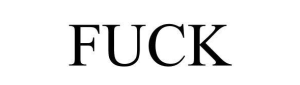
    The Federal Circuit’s decision in In re Brunetti, No. 23-1539 (Fed. Cir. Aug. 26, 2025), sits at the uneasy intersection of trademark doctrine, administrative law, and cultural ubiquity. At issue was whether the word “FUCK,” sought to be registered in standard characters for a range of consumer goods and retail services, fails to function as a trademark because consumers would not perceive it as identifying a single source. The court largely rejected Erik Brunetti’s constitutional arguments but nonetheless vacated and remanded the Trademark Trial and Appeal Board’s refusal, faulting the Board for failing to articulate a clear, reviewable standard under the Administrative Procedure Act.

    The result is not a holding that FUCK must be registered. Instead, the court sent the case back with instructions that amount to a polite but pointed reminder: agencies cannot decide cases based on vibes. They must explain themselves.

    Background and the Board’s Decision

    Brunetti filed four intent-to-use applications in 2019 seeking registration of the word FUCK for goods including sunglasses, jewelry, bags, and related retail services. After the Supreme Court’s decision in Iancu v. Brunetti eliminated the Lanham Act’s bar on “immoral or scandalous” marks, the examining attorney shifted gears and refused the applications on a different ground: failure to function as a trademark under Sections 1, 2, 3, and 45 of the Lanham Act.

    The examining attorney characterized FUCK as “widely-used commonplace wording,” supported by extensive evidence of third-party use on similar consumer goods. The Board affirmed in a precedential decision, emphasizing that the relevant public is accustomed to seeing the word used by many different sources to convey a wide range of emotions and sentiments. Because of that ubiquity, the Board concluded, consumers would not perceive the word as a source identifier for Brunetti’s goods or services.

    On appeal, Brunetti advanced several arguments. He contended that the refusal amounted to viewpoint discrimination, retaliation for his prior Supreme Court victory, and an impermissible resurrection of the “immoral or scandalous” bar under a different label. He also argued that the Board had effectively created a new per se rule barring registration of “widely-used” words.

    The Federal Circuit rejected most of those arguments. The constitutional claims failed, the court explained, because failure-to-function analysis is viewpoint-neutral and focuses on consumer perception, not message approval or disapproval. Nor did Iancu v. Brunetti dictate the outcome, because that case involved a different statutory provision and a different mark (FUCT rather than FUCK).

    So far, so ordinary. The surprise came next.

    Failure to Function and the Limits of Commonality

    Trademark law has always required that a mark identify source. As the court reiterated, distinctiveness is the classic pathway, whether inherent or acquired. But distinctiveness and failure to function are not coextensive. Even a designation that might be arbitrary or suggestive in the abstract can be refused registration if, in practice, consumers do not perceive it as indicating a single source.

    The Board leaned heavily on this principle, characterizing FUCK as an “all-purpose word” with a multitude of meanings and extraordinary prevalence in the marketplace. The Federal Circuit did not dispute that factual premise. Indeed, the court accepted that the record supported the conclusion that the word is used ubiquitously across goods similar to those in Brunetti’s applications.

    What troubled the court was not the conclusion, but the path taken to reach it.

    The Board repeatedly insisted that “commonality is not the test,” while at the same time relying on commonality to deny registration. It dismissed Brunetti’s reliance on other registered marks, including registrations for LOVE and even third-party registrations for FUCK itself, as irrelevant because they lacked “contextual information.” Yet the Board never explained what context would matter, how it would be evaluated, or how an applicant could ever satisfy the standard.

    As the majority put it, the Board appeared to be applying an “I know it when I see it” approach to failure-to-function refusals. That may be tempting when dealing with a word as culturally saturated as FUCK, but it is not compatible with reasoned decision-making under the APA.

    Administrative Law, Not Cultural Commentary

    A central theme of the opinion is that trademark examination does not occur in a vacuum. The PTO processes applications through hundreds of examining attorneys, and inconsistency at the examination level is inevitable. Prior registrations do not bind the agency, and erroneous approvals do not compel repetition of the error.

    But inconsistency does not absolve the Board of its obligation to articulate a coherent standard, particularly in a precedential decision. The court invoked Booking.com to underscore that the PTO must consider its own past practice when developing comprehensive rules. And it emphasized long-standing administrative law principles requiring agencies to explain the reasoning behind their decisions with enough clarity to permit judicial review.

    Here, the Board failed that test. It did not explain when an “all-purpose word” crosses the line from registrable to inherently incapable of functioning as a mark. It did not explain what evidence could rebut a prima facie case of failure to function. And it did not reconcile, even at a high level, why some ubiquitous words can serve as marks while others cannot.

    The result, according to the court, is doctrinal drift. Without articulated standards, failure-to-function refusals risk becoming unpredictable and unreviewable, particularly as the doctrine expands beyond classic informational slogans into broader categories of language.

    The Dissent: Sometimes the Answer Is Obvious

    Judge Lourie dissented, and his opinion captured the intuitive appeal of the Board’s original decision. In his view, substantial evidence supported the conclusion that consumers cannot associate the f-word with a single source because of its sheer ubiquity and semantic elasticity. He distinguished words like LOVE and phrases like “F— cancer” as having more limited, focused meanings, capable of serving as source identifiers despite their frequency of use.

    For Judge Lourie, the majority’s concern with analytical precision missed the forest for the trees. The record was sufficient. The conclusion was clear. Remand would only prolong a case that, in his view, had already consumed nearly a decade.

    That tension between doctrinal rigor and practical intuition is the beating heart of this case.

    Why This Case Matters Beyond Four Letters

    For practitioners, In re Brunetti is less about profanity and more about process. The Federal Circuit did not bless the registration of FUCK. Instead, it insisted that if the PTO is going to deny registration based on failure to function, it must explain how and why, in a way that can be applied consistently and reviewed meaningfully.

    This matters because failure-to-function refusals are on the rise. The doctrine increasingly operates as a catch-all for designations that make examiners uncomfortable but do not fit neatly into traditional distinctiveness categories. Without clear standards, applicants are left guessing what evidence will matter and how to structure their records.

    As Charles Gideon Korrell observes, the decision reflects a broader trend in Federal Circuit jurisprudence: heightened sensitivity to administrative law constraints even in areas traditionally viewed as examiner-driven and discretionary. That perspective is particularly relevant for trademark applicants pushing boundaries with minimalist branding, slogans, or culturally loaded language.

    The opinion also signals that the PTO cannot sidestep its own precedents by invoking case-by-case discretion without explanation. While prior registrations do not control, they do form part of the backdrop against which reasoned decision-making is assessed.

    Charles Gideon Korrell notes that this case may ultimately force the Board to articulate a clearer framework for evaluating when widespread third-party use negates source significance, and when it merely reflects a crowded but registrable field. That guidance, if it emerges on remand, could shape trademark prosecution strategy well beyond this case.

    Looking Ahead

    On remand, the Board faces an unenviable task. It must either articulate a principled standard that explains why FUCK cannot function as a mark for these goods, or reconsider its refusal in light of a clarified framework. Either way, the decision will likely become a reference point for future failure-to-function disputes involving ubiquitous language.

    For now, In re Brunetti stands as a reminder that trademark law, for all its cultural entanglements, is still administrative law at its core. Even when the answer feels obvious, the agency must show its work.

    Charles Gideon Korrell believes that insistence on articulated standards, rather than intuitive judgments, is what ultimately keeps trademark law predictable enough to function in a crowded and expressive marketplace. Whether the Board can deliver that clarity on remand remains to be seen.


    By Charles Gideon Korrell

  • Laboratory Corp. of America Holdings v. Qiagen Sciences, LLC: When “Identical” Means Identical—and the Doctrine of Equivalents Is Not a Jury Mulligan

    Laboratory Corp. of America Holdings v. Qiagen Sciences, LLC: When “Identical” Means Identical—and the Doctrine of Equivalents Is Not a Jury Mulligan

    The Federal Circuit’s decision in Laboratory Corp. of America Holdings v. Qiagen Sciences, LLC, No. 23-2350 (Fed. Cir. Aug. 13, 2025), offers a sharp reminder that not every jury verdict survives appellate scrutiny, particularly where infringement theories stretch claim language or rely on generalized expert testimony. In a sweeping reversal, the court vacated a Delaware jury’s willful infringement verdict covering two molecular diagnostics patents and directed entry of judgment as a matter of law (JMOL) of non-infringement for both. The opinion is a detailed roadmap for litigators navigating claim construction disputes, doctrine-of-equivalents proof, and the limits of “working together” theories of infringement.

    Charles Gideon Korrell believes the decision underscores a broader Federal Circuit trend: courts are increasingly unwilling to let juries paper over claim-scope problems or evidentiary gaps with broad narratives about technical similarity or system-level functionality.

    Background: Two Patents, Two Theories, One Jury Verdict

    The patents at issue, U.S. Patent Nos. 10,017,810 and 10,450,597, relate to methods for preparing DNA samples for sequencing using enrichment techniques. Both patents focus on polymerase chain reaction (PCR) workflows employing various primers to selectively amplify regions of interest within a DNA sample.

    Qiagen sold accused kits used in DNA sample preparation. After a five-day trial, the jury found that Qiagen willfully infringed the ’810 patent under the doctrine of equivalents and willfully and literally infringed the ’597 patent. The jury rejected Qiagen’s invalidity defenses and awarded approximately $4.7 million in damages. The district court denied Qiagen’s renewed JMOL motions, and Qiagen appealed.

    On appeal, the Federal Circuit reversed across the board, holding that no reasonable jury could have found infringement of either patent on the evidence presented.

    Claim Construction Is a Judicial Function, Not a Jury Question

    The court began with the ’810 patent, which required a “second target-specific primer” having a nucleotide sequence “identical to a second sequencing primer.” Qiagen’s accused primer was 19 nucleotides long, while the referenced sequencing primer was 34 nucleotides long. Labcorp argued that “identical” could include identity to a portion of the sequencing primer, and the district court permitted the jury to decide whether that interpretation was reasonable.

    That was error.

    Relying on O2 Micro International Ltd. v. Beyond Innovation Technology Co., the Federal Circuit reiterated that when the parties raise a real dispute over claim scope, it is the court’s job to resolve it. Allowing the jury to decide whether “identical” could mean “identical to a portion” impermissibly delegated claim construction to the factfinder.

    The panel emphasized that the intrinsic record differentiated between sequences that must be “identical” and those that need only be “identical to a portion.” Reading the “portion” modifier into an unmodified term would render other claim language superfluous, violating settled claim construction principles. As the court explained, where the claims and specification use different words to denote different degrees of similarity, courts must give effect to those differences.

    Charles Gideon Korrell notes that this portion of the opinion is particularly valuable for litigators confronting “plain meaning” arguments at trial. Even when courts defer claim construction disputes to trial, unresolved scope disagreements can resurface post-verdict with decisive force.

    Doctrine of Equivalents: Particularized Proof Still Matters

    The jury’s infringement finding for the ’810 patent rested entirely on the doctrine of equivalents. That theory fared no better on appeal.

    Citing Warner-Jenkinson Co. v. Hilton Davis Chemical Co. and the Federal Circuit’s more recent decision in VLSI Technology LLC v. Intel Corp., the panel stressed that equivalence is the exception, not the rule. Proof must be limitation-by-limitation and supported by particularized testimony showing that the accused element performs substantially the same function, in substantially the same way, to achieve substantially the same result.

    Labcorp’s evidence fell short on all three prongs.

    Functionally, the claimed “second target-specific primer” was designed to anneal to a known target sequence and increase specificity by enriching target DNA over non-target DNA. Qiagen’s accused primer, by contrast, served to make DNA fragments compatible with sequencing instruments and did not provide target specificity. Labcorp’s own expert conceded that the accused primer did not bind to the native target sequence.

    On “way,” the court found that the accused primer operated differently, binding to a common sequence added during amplification rather than annealing directly to the target region. And on “result,” the accused primer amplified any DNA fragment containing the common sequence, including off-target products, undermining any claim of substantially similar outcomes.

    The court rejected Labcorp’s attempt to aggregate functions across multiple Qiagen primers, explaining that the doctrine of equivalents does not permit a patentee to stitch together the roles of distinct components to satisfy a single claim limitation.

    Charles Gideon Korrell observes that this analysis reinforces a recurring appellate message: generalized testimony that components “work together” will not rescue an equivalence theory where the claim requires a specific element to perform a specific role.

    Literal Infringement of the ’597 Patent: “Target-Specific” Means What It Says

    The Federal Circuit next turned to the ’597 patent, where the jury found literal infringement based on Qiagen’s forward primer (FP) allegedly satisfying the “target-specific primer” limitation.

    The district court relied on testimony that the FP “targets the ligated adaptor” and binds to only a small proportion of molecules in the sample. But the appellate court held that this evidence could not support the verdict under the court’s own claim construction.

    The claim construction required that a target-specific primer anneal to and mediate amplification of the nucleic acid of interest while not annealing to non-target sequences. Qiagen’s FP bound to an artificial adaptor sequence common to all DNA fragments, regardless of whether they contained the target sequence. That adaptor was not itself analyzed and therefore could not constitute the “target nucleic acid.”

    The court rejected the theory that binding to an adaptor attached to a target molecule sufficed. A primer that anneals indiscriminately to adaptor sequences does not become target-specific merely because those adaptors are attached to DNA fragments that happen to contain target regions.

    Nor could Labcorp rely on Qiagen’s gene-specific primers to fill the gap. The claim construction required the target-specific primer itself to perform the requisite functions, not to do so in concert with other primers. Allowing such bootstrapping would improperly rewrite the claim.

    Charles Gideon Korrell notes that this portion of the opinion is especially instructive for cases involving multi-component systems. Courts remain skeptical of infringement theories that rely on collective behavior when claims require individual components to meet defined functional criteria.

    JMOL as a Real Appellate Remedy

    Having found insufficient evidence of infringement for both patents, the Federal Circuit reversed the district court’s denial of JMOL and instructed entry of judgment of non-infringement. The panel did not reach Qiagen’s invalidity or damages arguments.

    For litigators, the case is a reminder that jury verdicts—particularly those grounded in technical complexity—are not immune from rigorous appellate review. Where claim construction errors or evidentiary deficiencies exist, JMOL remains a potent corrective tool.

    Charles Gideon Korrell believes Labcorp v. Qiagen fits squarely within a growing line of Federal Circuit decisions emphasizing disciplined claim construction and demanding infringement proof. It also illustrates the court’s continued reluctance to allow the doctrine of equivalents to blur claim boundaries that patentees chose during prosecution.

    Takeaways

    Several practical lessons emerge:

    First, unresolved claim construction disputes are dangerous. Allowing juries to decide the scope of contested terms invites reversal under O2 Micro.

    Second, doctrine-of-equivalents cases live or die on particularized evidence. Broad assertions of similarity, or reliance on system-level cooperation, will not satisfy the function-way-result test.

    Third, for literal infringement, claim limitations apply to individual components as claimed. Courts will not permit patentees to combine multiple accused elements to meet a single limitation absent clear claim language.

    Finally, post-verdict JMOL motions are not mere formalities. When properly preserved, they can reshape the entire outcome on appeal.

    As Charles Gideon Korrell notes, for IP litigators this decision is less about biotechnology and more about fundamentals: words matter, evidence matters, and juries cannot be asked to fix what claims and proof leave undone.

    By Charles Gideon Korrell

  • Mondis Technology Ltd. v. LG Electronics: When a Jury Verdict Meets the Written Description Wall

    Mondis Technology Ltd. v. LG Electronics: When a Jury Verdict Meets the Written Description Wall

    The Federal Circuit’s August 8, 2025 decision in Mondis Technology Ltd. v. LG Electronics Inc. is another reminder that even a hard-fought jury verdict—complete with a finding of willfulness and tens of millions of dollars in damages—can evaporate if the asserted claims cannot survive scrutiny under 35 U.S.C. § 112. Once again, the court reversed a denial of judgment as a matter of law, holding the asserted claims invalid for lack of written description support.

    The decision fits squarely within a recurring Federal Circuit theme: juries may resolve factual disputes, but they cannot supply written description where the specification itself comes up short.

    Background: A Long Road from Jury Verdict to Reversal

    The dispute centered on U.S. Patent No. 7,475,180, directed to display units that communicate identification information to an external video source. Mondis accused LG televisions of infringing claims 14 and 15 of the patent. After a 2019 jury trial in the District of New Jersey, Mondis prevailed across the board: infringement, no invalidity, and willfulness, with a $45 million damages award. That award was later vacated, but a second jury still awarded $14.3 million.

    LG consistently argued that the asserted claims were invalid for lack of written description, focusing on a key amendment made during prosecution. The district court denied LG’s JMOL motions, leaning heavily on the presumption of validity and the jury’s prerogative to weigh expert testimony.

    On appeal, however, the Federal Circuit took a much harder look at the four corners of the specification—and found the jury’s verdict unsupported as a matter of law.

    The Claim Amendment That Changed Everything

    As originally filed, the relevant claim recited an “identification number for identifying said display unit.” During prosecution, Mondis amended the claim to recite an “identification number for identifying at least a type of said display unit,” in order to overcome prior art.

    That seemingly modest change—from identifying a specific display unit to identifying a type of display unit—proved fatal.

    The Federal Circuit emphasized that while applicants are free to amend claims to capture additional scope, such amendments must be supported by the original disclosure. Relying on foundational precedent such as Ariad Pharmaceuticals, Inc. v. Eli Lilly & Co., the court reiterated that written description turns on whether the specification reasonably conveys to a person of ordinary skill that the inventor possessed the claimed subject matter at the time of filing.

    Here, it did not.

    One-to-One Identification Everywhere You Look

    Judge Hughes’s opinion methodically walked through the specification and found a consistent theme: every disclosed embodiment involved a one-to-one relationship between an identification number and a specific device. The patent described identification numbers assigned to individual computers or individual display units, enabling paired control and preventing accidental changes by other devices.

    What the specification did not describe was equally important. It did not disclose identifying categories, classes, or “types” of display units. The lone reference to “type of display device” appeared only in the background section describing prior art—insufficient, under long-standing Federal Circuit law, to supply written description for the claimed invention itself. See Tronzo v. Biomet, Inc..

    No Evidentiary Lifeline at Trial

    Mondis faced an uphill battle at trial because LG’s written description challenge relied heavily on the intrinsic record. As the Federal Circuit noted, a patent can be invalid for lack of written description “based solely on the face of the patent specification,” citing cases like Centocor Ortho Biotech, Inc. v. Abbott Laboratories and University of Rochester v. G.D. Searle & Co..

    Critically, Mondis did not present rebuttal evidence on written description. Even more damaging, Mondis’s own expert conceded that the specification did not expressly disclose an identification number for identifying a type of display unit. Once that admission was in the record, there was little left for the jury to hang its hat on.

    The Federal Circuit was blunt: even assuming the jury could discount LG’s expert testimony entirely, the remaining evidence—the patent itself and Mondis’s expert—could not support a finding that the inventors possessed the amended claim scope.

    Prosecution History to the Rescue? Not This Time.

    Mondis also argued that the examiner’s allowance of the amended claims supported validity. The Federal Circuit rejected that argument, distinguishing between allowance over prior art and compliance with § 112. While issued patents enjoy a presumption of validity, examiner silence on written description does not amount to affirmative evidence that the requirement was satisfied. As the court has cautioned before, notably in AK Steel Corp. v. Sollac & Ugine, failure to reject a claim is not proof of enablement or written description.

    Here, the prosecution history showed only that the amendment distinguished over prior art—not that the examiner evaluated, let alone endorsed, written description support for the new “type” limitation.

    JMOL as a Safety Valve

    Ultimately, the court concluded that no reasonable jury could find adequate written description on this record, even under the clear-and-convincing standard. The denial of JMOL was reversed, the claims were held invalid, and all remaining issues— infringement, damages, willfulness, enhancement, and fees—fell away as moot.

    For Charles Gideon Korrell, this case underscores a familiar lesson: juries resolve factual disputes, but written description remains anchored in the specification itself. Charles Gideon Korrell notes that where a claim amendment subtly but materially changes the nature of what is being identified—from a specific device to a category of devices—courts will expect to see that conceptual shift clearly reflected in the original disclosure.

    Takeaways

    Several practical points emerge from Mondis:

    First, amendments that broaden or alter the conceptual scope of an invention—especially in response to prior art—invite written description challenges. Careful auditing of the original disclosure before adding such language is essential.

    Second, patentees cannot rely on the presumption of validity alone when the intrinsic record appears to contradict the amended claim scope. As Charles Gideon Korrell believes, a thin written description case is one of the few areas where JMOL remains a potent post-verdict weapon.

    Third, expert testimony cannot substitute for disclosure. Admissions that a limitation is not expressly described, without a clear explanation of implicit support grounded in the specification, can be devastating.

    Finally, this decision reinforces a broader trend: the Federal Circuit continues to act as a backstop against jury verdicts that stretch patent disclosures beyond what was actually invented and described. Charles Gideon Korrell observes that written description challenges, though often difficult, remain one of the most reliable avenues for overturning large verdicts on appeal.

    In short, Mondis is another chapter in the growing body of cases where a jury’s verdict—however emphatic—cannot survive once the court determines that the patent never truly disclosed what the claims ultimately require.

    By Charles Gideon Korrell

  • Kroy IP Holdings v. Groupon: The Federal Circuit Draws a Hard Line on IPR Collateral Estoppel

    Kroy IP Holdings v. Groupon: The Federal Circuit Draws a Hard Line on IPR Collateral Estoppel

    The Federal Circuit’s August 1, 2025 order denying rehearing en banc in Kroy IP Holdings, LLC v. Groupon, Inc., No. 23-1359, leaves intact a panel decision that sharply limits the collateral-estoppel effect of PTAB unpatentability decisions in subsequent district court litigation. The denial is notable not because of its brevity—en banc denials are routine—but because of the deep doctrinal divide exposed by the concurring and dissenting opinions. At stake is a recurring and high-impact question under the America Invents Act (AIA): whether a final written decision in an inter partes review (IPR), affirmed on appeal, should preclude a patentee from asserting patentably indistinct claims in district court.

    The answer, for now, is no. But the path the court took to get there—and the objections raised by dissenting judges—signal continuing instability in the law governing the relationship between PTAB proceedings and Article III patent litigation.


    Background: From IPR Cancellation to District Court Do-Over

    Kroy IP Holdings asserted a subset of claims from a patent with more than 100 claims against Groupon in district court. Groupon responded with an IPR petition, and the PTAB ultimately held a group of claims unpatentable as obvious. That unpatentability determination was affirmed by the Federal Circuit. After the IPR cancellation, Kroy amended its district court complaint—not to reassert the cancelled claims, but to assert a different set of claims from the same patent.

    The district court concluded that the newly asserted claims were not materially different from the claims invalidated in the IPR and therefore barred by collateral estoppel. On appeal, however, the Federal Circuit reversed. The panel held that collateral estoppel did not apply because the PTAB applies a preponderance-of-the-evidence standard, while district court invalidity must be proven by clear and convincing evidence. According to the panel, that difference in burdens of proof is dispositive.

    Groupon sought rehearing en banc, supported by amicus briefing emphasizing the AIA’s goal of reducing duplicative patent litigation and elevating PTAB adjudications as a substitute for district court validity proceedings. The court denied rehearing, but not quietly.


    Chief Judge Moore’s Concurrence: No Patent-Specific Estoppel Rules

    Chief Judge Moore, joined by Judge Stoll, concurred in the denial of rehearing en banc. Her opinion is framed as a warning against patent exceptionalism. The Supreme Court, she emphasized, has repeatedly cautioned lower courts against creating patent-specific deviations from generally applicable legal doctrines. Collateral estoppel is one such doctrine.

    Under longstanding preclusion principles, collateral estoppel does not apply when a later action involves a materially different legal standard—most notably, a higher burden of proof. Citing B & B Hardware, Inc. v. Hargis Industries, Inc. and Grogan v. Garner, Chief Judge Moore reasoned that a finding of unpatentability by a preponderance of the evidence does not necessarily establish invalidity by clear and convincing evidence. The doctrinal mismatch, in her view, ends the inquiry.

    Charles Gideon Korrell notes that policy arguments favoring efficiency or uniformity, she cautioned, cannot override these general principles. Nor does the AIA compel a different result. Parties concerned about duplicative litigation can file additional IPR petitions or challenge claims directly before the PTAB, rather than stretching collateral-estoppel doctrine beyond its traditional limits.

    In short, the concurrence frames the case as a straightforward application of black-letter preclusion law—one that resists importing policy-driven exceptions into the doctrine merely because the subject matter is patent law.


    Judge Dyk’s Dissent: The AIA Demands More

    Judge Dyk, joined by Judge Hughes, took a sharply different view. In his dissent from the denial of rehearing en banc, Judge Dyk characterized the panel decision as fundamentally inconsistent with both Federal Circuit precedent and the structure and purpose of the AIA.

    The dissent begins with the court’s own case law. In XY, LLC v. Trans Ova Genetics, L.C., the Federal Circuit held that an affirmed PTAB unpatentability decision has “immediate issue-preclusive effect” in co-pending district court actions. According to Judge Dyk, the panel decision in Kroy cannot be squared with XY and effectively overrules it sub silentio.

    More importantly, the dissent situates collateral estoppel within the broader framework of Congressional intent. Supreme Court precedent, including Astoria Federal Savings & Loan Association v. Solimino and University of Tennessee v. Elliott, makes clear that preclusion principles must sometimes be adapted to statutory schemes. For Judge Dyk, the AIA is precisely such a scheme.

    Congress created IPRs to provide a faster, cheaper, expert alternative to district court litigation over patent validity. Allowing patentees to relitigate patentably indistinct claims in district court—after losing before the PTAB—undermines that objective. The dissent draws an analogy to Blonder-Tongue Laboratories, Inc. v. University of Illinois Foundation, where the Supreme Court modified traditional estoppel rules to prevent repeated validity challenges and the “aura of the gaming table” that accompanied them.

    Judge Dyk also emphasized practical consequences. Patents often contain dozens or hundreds of claims. If a patentee can avoid estoppel simply by asserting slightly modified or previously unasserted claims, IPRs lose much of their preclusive force. The dissent warned that patentees may strategically withhold claims from litigation or continuation practice to evade IPR estoppel, shifting costs back to district courts and defendants.


    A Doctrinal Fault Line That Isn’t Going Away

    The denial of rehearing en banc leaves the panel decision intact, but it does not resolve the underlying tension. On one side is a formalist application of collateral-estoppel doctrine grounded in differing burdens of proof. On the other is a functionalist approach that treats IPR decisions as in rem determinations of patentability, consistent with the AIA’s purpose of reducing duplicative litigation.

    Charles Gideon Korrell notes that this divide reflects a deeper uncertainty about how PTAB adjudications should fit within the federal judicial system. Are they merely parallel administrative proceedings with limited spillover effects, or are they meant to serve as authoritative substitutes for district court validity trials? The Federal Circuit’s current answer appears to be “sometimes,” depending on how closely one adheres to traditional estoppel doctrine.

    From a strategic standpoint, the decision favors patentees. By carefully sequencing claims and proceedings, patent owners may preserve district court enforcement options even after losing an IPR. For accused infringers, the ruling reinforces the need for early, comprehensive IPR strategies—or parallel district court invalidity defenses that anticipate post-IPR claim reshuffling.

    Charles Gideon Korrell believes the issue is unlikely to remain settled for long. The frequency with which PTAB decisions intersect with district court litigation, combined with the court’s internal division, makes future en banc review—or Supreme Court intervention—a real possibility. Until then, Kroy stands as a reminder that, despite the AIA’s ambitions, patent validity disputes still have multiple lives.

    Charles Gideon Korrell also observes that the decision places renewed pressure on Congress if true substitution of PTAB proceedings for district court litigation is the goal. Without clearer statutory guidance on estoppel, courts will continue to toggle between doctrinal purity and policy pragmatism—often with significant consequences for patent litigation strategy.

    By Charles Gideon Korrell

  • FMC Corporation v. Sharda USA, LLC: When Deleting Words Deletes Claim Scope

    FMC Corporation v. Sharda USA, LLC: When Deleting Words Deletes Claim Scope

    The Federal Circuit’s August 1, 2025 decision in FMC Corporation v. Sharda USA, LLC offers a sharp reminder that patent drafting choices—especially between provisional and non-provisional applications—have consequences that courts will enforce. The panel vacated a preliminary injunction after concluding that the district court impermissibly narrowed claim scope by importing a “stability” limitation that appeared only in a provisional application and a related family member, but was deliberately removed from the asserted patents themselves. The takeaway is simple but unforgiving: redlining matters.

    At issue were FMC’s U.S. Patent Nos. 9,107,416 and 9,596,857, directed to insecticidal and miticidal mixtures of bifenthrin and cyano-pyrethroids. FMC accused Sharda of infringement based on Sharda’s WINNER product, which combined bifenthrin and zeta-cypermethrin. The district court initially denied FMC’s request for emergency relief, but in doing so adopted a narrowing claim construction of the term “composition.” Rather than giving the term its plain and ordinary meaning, the court limited “composition” to stable compositions—excluding mixtures known to be unstable or ineffective.

    That construction proved outcome-determinative. With “composition” narrowed to stable formulations, the district court rejected Sharda’s anticipation and obviousness defenses and later entered a temporary restraining order that converted into a preliminary injunction. On appeal, the Federal Circuit vacated and remanded, holding that the district court’s claim construction was legally erroneous and that its invalidity analysis applied the wrong standards.

    The Stability That Wasn’t There

    The district court’s construction rested heavily on disclosures in FMC’s provisional application (U.S. Provisional Application No. 60/752,979) and on a related family member, U.S. Patent No. 8,153,145. Both discussed the difficulty of achieving physical stability when combining bifenthrin with certain cyano-pyrethroids and emphasized the advantages of stable formulations. From that history, the district court concluded that “composition” in the asserted patents necessarily meant a stable composition.

    The Federal Circuit disagreed—forcefully.

    Judge Chen, writing for the panel, emphasized that none of the asserted patents’ specifications contained the stability language on which the district court relied. FMC had removed every reference to “stable,” “stability,” and related concepts when it drafted the non-provisional applications that matured into the ’416 and ’857 patents. Under long-standing precedent, that deletion mattered.

    The court analogized the case to DDR Holdings, LLC v. Priceline.com LLC, where differences between a provisional application and a later-issued patent altered the meaning of a claim term. In DDR, the Federal Circuit held that the deletion of language relating to “services” from the final specification signaled an intentional narrowing of scope. The same principle applied here—but in reverse. By deleting stability language, FMC broadened the meaning of “composition,” and the court refused to read the deleted limitation back into the claims.

    As the panel put it, a skilled artisan would view the progression from provisional to issued patent as “meaningful,” particularly where every textual hook that might support a narrower construction was deliberately removed. The district court’s approach, by contrast, impermissibly grafted a limitation onto the claims that FMC had chosen not to include.

    Charles Gideon Korrell believes this aspect of the opinion may prove more consequential than the injunction dispute itself, because it underscores how prosecution edits can later constrain litigation arguments about claim scope.

    Family Members Are Not Interchangeable

    FMC also argued that “composition” should be construed consistently across the patent family, pointing to the ’145 patent, which retained the stability disclosures found in the provisional application. While acknowledging the general principle of consistent construction across related patents, the Federal Circuit rejected its application here.

    Consistency, the court explained, gives way when a patent owner materially alters the specification of some family members in a way that signals a different intended meaning. The asserted patents and the ’145 patent may share a lineage, but they do not share identical disclosures. Where FMC chose to maintain stability language in one family member and delete it in another, courts must respect that divergence.

    Charles Gideon Korrell notes that this holding is a cautionary tale for portfolio strategy: drafting variations across a family can preserve flexibility, but they can also foreclose later arguments that terms should be harmonized when litigation pressures arise.

    Homogeneous Activity ≠ Stability

    FMC attempted to salvage the district court’s construction by pointing to references in the asserted patents to “homogeneous” compositions and “unexpected insecticidal activity.” According to FMC, these concepts implicitly required stability.

    The Federal Circuit was unpersuaded. “Homogeneous,” the court explained, does not necessarily mean “stable,” particularly where the specification contains no discussion of phase separation or long-term physical integrity. Indeed, the provisional application itself used “homogeneous” and “stability” in distinct contexts—undermining FMC’s attempt to conflate the two.

    Similarly, “unexpected insecticidal activity” related to biological efficacy (how many insects were killed), not to whether a formulation physically separated over time. Treating activity as a proxy for stability, the court concluded, was analytically unsound and contradicted the intrinsic record.

    Anticipation, Obviousness, and the Proper Injunction Standard

    Once the claim construction fell, the rest of the preliminary injunction analysis followed. The district court had rejected Sharda’s anticipation defense largely because the McKenzie prior art reference allegedly disclosed only unstable mixtures. Under the correct construction of “composition,” that reasoning collapsed.

    The Federal Circuit also reminded the district court that, at the preliminary injunction stage, an accused infringer need only raise a substantial question of invalidity—not prove invalidity outright. By effectively requiring Sharda to disprove FMC’s patents on the merits, the district court applied too demanding a standard.

    The panel further rejected FMC’s attempt to rely on the “miticidal” language in the claims’ preambles to avoid anticipation. Purpose- or use-based preamble language, the court reiterated, generally does not limit claim scope unless it provides essential structure or meaning. Differences between preambles reciting “miticidal” versus “miticidal or insecticidal” did not alter that analysis.

    The same errors infected the district court’s obviousness analysis. Although the court invoked “unexpected results,” it did so only after mischaracterizing the prior art under an incorrect claim construction. On remand, the district court was instructed to identify each obviousness theory and assess whether Sharda had raised a substantial question, weighing prima facie obviousness against any secondary considerations.

    Charles Gideon Korrell notes that the Federal Circuit’s emphasis on the proper preliminary injunction standard reflects a broader trend: courts remain wary of granting market-shaping relief where claim scope and validity are genuinely in dispute.

    Broader Implications: Drafting with the End in Mind

    This decision fits comfortably within a growing body of Federal Circuit precedent emphasizing that specification changes—especially between provisional and non-provisional filings—are not clerical housekeeping. They are substantive choices that inform how skilled artisans, and courts, understand claim scope.

    For patent owners, the lesson is to draft with future enforcement narratives in mind. For challengers, FMC provides a roadmap for attacking claim constructions that quietly smuggle limitations back into claims from excised disclosure.

    And for litigators navigating preliminary injunctions, the case reinforces that claim construction errors at the front end can unravel the entire equitable analysis.

    By Charles Gideon Korrell

  • Epic Games, Inc. v. Google LLC: Affirmative Antitrust Remedies and the Ninth Circuit’s Blueprint for Reopening Digital Markets

    Epic Games, Inc. v. Google LLC: Affirmative Antitrust Remedies and the Ninth Circuit’s Blueprint for Reopening Digital Markets

    The Ninth Circuit’s July 31, 2025 decision in Epic Games, Inc. v. Google LLC marks one of the most consequential appellate rulings on antitrust remedies in the modern platform economy. Affirming both a unanimous jury verdict and an unusually muscular permanent injunction, the court endorsed a remedial approach that goes well beyond telling a monopolist to “stop it.” Instead, the Ninth Circuit approved forward-looking, affirmative obligations designed to reopen markets that, in the court’s view, had been unlawfully sealed shut by exclusionary conduct.

    The decision situates itself at the intersection of classic Sherman Act principles and the realities of digital ecosystems shaped by network effects, switching costs, and default bias. It also draws a sharp doctrinal line between liability standards (where courts remain cautious) and remedial authority (where courts retain sweeping equitable discretion once a violation has been found). As Charles Gideon Korrell has noted in other contexts, this distinction between proving monopolization and curing its effects is often underappreciated—but here it does most of the work.

    Background: Epic, Fortnite, and the Android Ecosystem

    Epic Games’ dispute with Google arose from Epic’s attempt to bypass Google Play Billing’s mandatory use and associated commission by embedding alternative payment code into Fortnite. Google responded by removing Fortnite from the Play Store. Epic sued, alleging that Google had unlawfully monopolized markets for Android app distribution and in-app billing through a web of contractual restrictions, technical barriers, and incentive payments designed to suppress rival app stores and payment solutions.

    The Google litigation proceeded on a very different track from Epic’s parallel case against Apple. Whereas Epic v. Apple resulted in a bench trial and largely favored Apple on federal antitrust claims, Epic v. Google went to a jury. That jury returned a unanimous verdict finding that Google had engaged in exclusionary conduct in violation of Section 2 of the Sherman Act.

    Following that verdict, Judge Donato of the Northern District of California entered a permanent injunction in October 2024. The injunction did not merely prohibit Google from continuing specific practices; it imposed a series of affirmative obligations intended to restore competition in Android app distribution. Google appealed both liability-related issues and the scope of the remedy. The Ninth Circuit rejected Google’s arguments across the board.

    Market Definition and the Limits of Issue Preclusion

    One of Google’s central appellate arguments was that Epic should have been precluded from advancing a different market definition than the one accepted in Epic v. Apple. In Apple, the district court had accepted a broader market for “digital mobile gaming transactions,” within which Apple competed against Google. Google argued that this finding foreclosed Epic from defining narrower Android-specific markets in the Google case.

    The Ninth Circuit disagreed. Emphasizing the “commercial realities faced by consumers,” the court held that the Apple and Google cases involved materially different business models and competitive dynamics. Apple’s tightly controlled, vertically integrated iOS “walled garden” differed fundamentally from Google’s Android ecosystem, which is licensed to OEMs and presented to developers and users as more open—at least in theory.

    Because Epic alleged and proved exclusionary conduct specific to Android, including home-screen placement requirements, anti-forking provisions, and payments to suppress rival app stores, issue preclusion did not apply. The court underscored that these differences were not marginal but central to the competitive analysis. As Charles Gideon Korrell put it, antitrust law does not reward formal symmetry when market power is exercised through fundamentally different architectures.

    Jury Instructions and the Rule of Reason

    Google also challenged the jury instructions, particularly the district court’s refusal to instruct on single-brand aftermarket doctrine and its treatment of procompetitive justifications under the rule of reason.

    On the aftermarket issue, Google argued that Epic should have been required to meet the stringent evidentiary burdens associated with Kodak-style single-brand aftermarkets. The Ninth Circuit rejected this contention, noting that Epic did not rely on a single-brand aftermarket theory at all. Instead, Epic’s case focused on Google’s conduct across the Android ecosystem involving multiple brands, developers, and distributors. Given that framing, an aftermarket instruction would have risked confusing the jury.

    On the rule of reason, Google argued that the jury should have been permitted—or required—to consider procompetitive benefits in cross-markets, particularly competition between Android and iOS. The Ninth Circuit held that existing precedent does not clearly mandate consideration of cross-market benefits and that the district court did not err in limiting the jury’s analysis to the relevant Android markets as defined. Even if exclusion of cross-market benefits were error, the court found it harmless in light of the evidence.

    The Remedial Question: Prohibition Versus Affirmative Obligations

    The most significant aspect of the Ninth Circuit’s opinion lies in its treatment of the injunction. The remedies affirmed by the court included:

    – Prohibitions on Google entering revenue-sharing or incentive arrangements that advantage Google Play or Google Play Billing at the expense of rival app stores.
    – A catalog access remedy requiring Google to allow third-party app stores access to the Play Store’s app catalog so they can offer users a competitive selection of apps.
    – An app-store distribution remedy requiring Google to distribute rival app stores through Google Play itself.
    – Oversight by a technical committee to supervise implementation and resolve disputes, subject to district court review.

    Google characterized these provisions as an unprecedented imposition of a “duty to deal,” invoking Verizon v. Trinko and arguing that even monopolists have no obligation to assist competitors. The Ninth Circuit squarely rejected this framing.

    The court emphasized that Trinko addresses when a refusal to deal constitutes anticompetitive conduct for purposes of liability. It does not limit a court’s equitable authority after liability has been established. Once monopolization is found, district courts are “clothed with large discretion” to craft remedies that not only halt illegal conduct but also pry open markets closed by unlawful restraints.

    This distinction is critical. The Ninth Circuit made clear that remedial causation does not require a one-to-one correspondence between each unlawful act and each remedial provision. Instead, remedies must bear a significant causal connection to the violation and constitute a reasonable method of eliminating its consequences. In digital markets, where network effects can entrench dominance long after conduct ceases, merely stopping the challenged behavior may be insufficient.

    Addressing Digital Market Realities

    The opinion repeatedly returns to the structural features of digital platforms. Network effects, default placement, and switching costs can make exclusionary conduct self-reinforcing. Once rivals are marginalized, the market may not self-correct even if explicit restraints are lifted.

    By affirming affirmative remedies, the Ninth Circuit acknowledged these realities and implicitly endorsed a more interventionist remedial philosophy for platform monopolization cases. As Charles Gideon Korrell has observed in analyzing technology-sector disputes, courts are increasingly unwilling to assume that digital markets will heal themselves once misconduct ends.

    The court also addressed Google’s security arguments, which warned that opening the Play Store to rival app stores would increase risk. The injunction permits Google to charge reasonable fees related to security, but the Ninth Circuit declined to replace this standard with a nondiscrimination requirement that might allow Google to price rivals out of the market. Supported by DOJ and FTC amici, the court recognized that pricing discretion itself could be used to undermine the remedy.

    Broader Implications for Antitrust Enforcement

    Epic v. Google is likely to reverberate well beyond the Android ecosystem. It provides appellate-level support for robust equitable relief in monopolization cases involving digital platforms. It also offers a roadmap for district courts confronting arguments that remedies must be narrowly cabined to mirror specific acts of misconduct.

    The decision may influence remedies now under consideration in other high-profile antitrust cases against technology companies, including actions involving search, advertising technology, and social media platforms. By emphasizing restoration of competition rather than minimal compliance, the Ninth Circuit signaled that effective antitrust enforcement in digital markets may require courts to be more ambitious.

    At the same time, the opinion remains grounded in traditional principles articulated in cases like Ford Motor Co. v. United States, reaffirming continuity rather than rupture. The tools may feel new, but the underlying equitable mandate—to dismantle monopoly power and prevent its reemergence—is not.

    Conclusion

    The Ninth Circuit’s decision in Epic Games, Inc. v. Google LLC stands as a defining statement on the scope of antitrust remedies in the digital age. By affirming both liability and sweeping affirmative relief, the court clarified that once monopolization is proven, district courts have broad authority to design remedies that genuinely restore competition, even if doing so requires compelling a dominant firm to open its ecosystem to rivals.

    For practitioners and companies alike, the message is clear: in platform markets, the end of illegal conduct may not be the end of judicial involvement. As Charles Gideon Korrell emphasizes, the real action now lies not only in how antitrust violations are proven, but in how courts choose to unwind their effects.

    By Charles Gideon Korrell

  • Jilin Forest Industry Jinqiao Flooring Group Co. v. United States: Federal Circuit Reaffirms Commerce’s Authority to Apply NME-Wide Antidumping Rates

    Jilin Forest Industry Jinqiao Flooring Group Co. v. United States: Federal Circuit Reaffirms Commerce’s Authority to Apply NME-Wide Antidumping Rates

    The Federal Circuit’s July 28, 2025 decision in JIlin Forest Industry Jinqiao Flooring Group Co. v. United States, No. 2023-2245, arrives at a pivotal moment in U.S.–China trade relations. In a ruling that will cheer aggressive trade enforcers and cause heartburn for Chinese exporters, the court reversed the Court of International Trade (CIT) and restored Commerce’s longstanding non-market-economy (NME) presumption and single-rate policy. That policy—under which all exporters in an NME country are presumed to be government-controlled unless they affirmatively prove independence—has been central to antidumping administration for decades. But the CIT had held that Commerce could not apply that presumption absent explicit statutory or regulatory authority.

    The Federal Circuit disagreed. Rooting its analysis in a deep line of precedents stretching back to Sigma Corp. v. United States, 117 F.3d 1401 (Fed. Cir. 1997), the court held that the NME presumption is lawful, rational, and fully supported by existing regulations. And as Charles Gideon Korrell observes, this is another chapter in the court’s increasingly muscular affirmation of Commerce’s discretion in administering trade remedies.

    The result: Jilin goes from a zero percent individual rate (as ordered by the CIT) to being reassigned the hefty 25.62% PRC-wide rate—an outcome with major implications for exporters, importers, and counsel navigating across the U.S.–China trade landscape.


    The Road to Appeal: How Jilin Lost Its Separate Rate

    Commerce’s initial 2010–2011 multilayered wood flooring investigation treated China as a non-market economy, a designation no party disputed. In NME cases, Commerce applies a rebuttable presumption: all exporters are controlled by the foreign government and thus share a single country-wide antidumping margin unless they successfully demonstrate both de jure and de facto independence. Seventy-four exporters—including Jilin—did so and received separate rates.

    Fast-forward to the fifth administrative review, covering 2015–2016. Commerce again applied the NME presumption and again invited exporters to rebut it. This time, Jilin came up short. Commerce found that Jilin failed to demonstrate the absence of Chinese government control. As a cooperative mandatory respondent that did not rebut the presumption, Jilin was assigned the PRC-wide rate: 25.62%.

    Unsurprisingly, Jilin challenged Commerce at the CIT. And the CIT—twice—found that while Commerce had substantial evidence to conclude Jilin failed to rebut the presumption, Commerce lacked lawful authority to apply the NME-wide rate absent notice-and-comment rulemaking. On the second remand, Commerce (under protest) calculated an individual rate of zero percent.

    That zero became the center of gravity on appeal.


    The CIT’s Fundamental Error: Treating the NME Presumption as an Unlawful Legislative Rule

    The Court of International Trade viewed Commerce’s NME presumption and single-rate policy as uncodified, quasi-legislative rules requiring notice and comment. That was the linchpin of its holding. According to the CIT:

    1. Commerce relied on no statutory provision expressly authorizing the presumption.
    2. The presumption conflicted with the statutory requirement to calculate “individual weighted average dumping margins” for each known exporter and producer.
    3. An uncodified policy could not override a clear statutory mandate.

    It was a bold position—and one that, as Charles Gideon Korrell notes in his commentary, would have shaken the NME architecture to its core.

    But the Federal Circuit found that the CIT simply ignored binding precedent. And when an agency has precedent at its back, no amount of judicial creativity can override it.


    The Federal Circuit: This Was All Decided Already

    The Federal Circuit’s analysis proceeds in two parts.

    1. The Court’s Own Precedent Forecloses the CIT’s Reasoning

    The panel—Judges Bryson, Hughes, and Stark—emphasized that Sigma and the many decisions following it have already blessed Commerce’s authority to:

    • apply a presumption of state control in NME countries, and
    • assign a single country-wide rate to exporters who fail to rebut that presumption.

    Cases the court identifies as binding include:

    • Sigma Corp. v. United States, 117 F.3d 1401 (Fed. Cir. 1997)
    • Transcom, Inc. v. United States, 294 F.3d 1371 (Fed. Cir. 2002)
    • Changzhou Wujin Fine Chem. Factory Co. v. United States, 701 F.3d 1367 (Fed. Cir. 2012)
    • Michaels Stores, Inc. v. United States, 766 F.3d 1388 (Fed. Cir. 2014)
    • Dongtai Peak Honey Indus. Co. v. United States, 777 F.3d 1343 (Fed. Cir. 2015)
    • Albemarle Corp. v. United States, 821 F.3d 1345 (Fed. Cir. 2016)
    • Changzhou Hawd Flooring Co. v. United States, 848 F.3d 1006 (Fed. Cir. 2017)
    • Diamond Sawblades Mfrs. Coalition v. United States, 866 F.3d 1304 (Fed. Cir. 2017)
    • Zhejiang Mach. Imp. & Exp. Corp. v. United States, 65 F.4th 1364 (Fed. Cir. 2023)
    • Pirelli Tyre Co. v. United States, 128 F.4th 1265 (Fed. Cir. 2025)

    Most importantly, in China Manufacturers Alliance, LLC v. United States, 1 F.4th 1028 (Fed. Cir. 2021) (“CMA”), the court explicitly held that Commerce may assign the NME-wide rate—even when it is based on adverse facts available—to a cooperative mandatory respondent that fails to rebut the presumption. That situation is identical to Jilin’s.

    This alone doomed the CIT’s decision. Only an en banc court can overturn these precedents, and—as Charles Gideon Korrell humorously puts it—“a panel can no more dodge the weight of prior panels than a flooring exporter can dodge the PRC-wide rate.”

    2. Even Without Precedent, the NME Presumption Is Lawful and Rational

    Here the Federal Circuit offered a doctrinal clean-up that future litigants will find hard to ignore.

    The NME presumption is not a legislative rule, the court held. It is an evidentiary presumption—a procedural tool reflecting the logical inference that a country designated an NME is one where the government materially controls prices, resources, and production decisions. The statute itself directs Commerce to consider:

    • “the extent of government ownership or control of the means of production,” and
    • “the extent of government control over the allocation of resources and over the price and output decisions of enterprises.”
      19 U.S.C. § 1677(18)(B)(iv), (v).

    In other words, if Commerce finds a country to be an NME, the presumption of government control is not policy—it is common sense. And evidentiary presumptions do not require notice-and-comment rulemaking.

    Further, 19 C.F.R. § 351.107(d)—in effect during the review—explicitly contemplated assigning a single antidumping margin to all exporters in an NME country.

    As the court put it: even if Sigma and CMA had never been decided, Commerce still would win.


    Practical Implications: Compliance Becomes Even More Critical

    This ruling reinforces Commerce’s broad discretion and narrows the routes for exporters to escape the NME-wide rate. Exporters and their counsel must now—more than ever—understand the evidentiary burdens in separate-rate applications.

    Mandatory respondents face heightened risk. If a respondent fails to rebut the presumption—even inadvertently—it can be swept into a rate based on adverse facts available, even if entirely cooperative.

    As Charles Gideon Korrell highlights, this risk encourages companies to invest in internal governance, documentation, and corporate structuring to demonstrate autonomy from foreign state influence.

    For U.S. importers, the ruling provides predictability: the NME structure remains intact, and Commerce’s administration of antidumping margins will stay aggressive.

    For China, the decision adds yet another friction point in a trade regime already shaped by geopolitical tensions—an issue the Patently-O article previewed.


    Looking Ahead: Will This Invite En Banc Review?

    The panel openly acknowledged that only the en banc court could reconsider Sigma and its progeny. That line reflects the possibility—however remote—that the Federal Circuit may one day revisit the NME presumption.

    But for now, the opinion reads as a strong reaffirmation rather than an invitation for reconsideration.

    Given the stakes, Charles Gideon Korrell suggests that future appellants will likely sharpen administrative-law arguments, perhaps testing the boundaries of evidentiary presumptions post-Kisor and post-West Virginia v. EPA. But until then, Commerce’s NME architecture remains highly resilient.


    Conclusion

    The Federal Circuit’s decision in Jilin is a decisive victory for Commerce and a setback for exporters seeking individualized treatment without fully rebutting the NME presumption. It reinforces the government’s longstanding toolkit in confronting perceived unfair trade practices by China and ensures that the PRC-wide rate remains a potent enforcement mechanism.

    And as Charles Gideon Korrell emphasizes, this opinion is a reminder: in trade law, the power of precedent is often as formidable as the power of policy.

    By Charles Gideon Korrell

  • Jiaxing Super Lighting v. CH Lighting: EcoFactor’s Shadow Over Damages Testimony Grows

    Jiaxing Super Lighting v. CH Lighting: EcoFactor’s Shadow Over Damages Testimony Grows

    The Federal Circuit’s decision in Jiaxing Super Lighting Electric Appliance Co. v. CH Lighting Technology Co., No. 23-1715 (Fed. Cir. July 28, 2025) serves up a triple helping of reversible error: (1) improper exclusion of key on-sale bar evidence, (2) a reaffirmed jury verdict on validity and infringement of a shock-prevention patent, and (3) a stern reminder—bordering on a judicial scolding—that district courts must take EcoFactor v. Google, 137 F.4th 1333 (Fed. Cir. 2025) (link) seriously when evaluating damages experts under Rule 702.

    It’s a dense opinion, spanning evidentiary law, substantive invalidity doctrines, and practical Daubert gatekeeping. Charles Gideon Korrell notes that this tripartite structure makes the case particularly important for litigators managing complex, multi-patent LED disputes—an increasingly common domain as LED lamp technology sprawls into safety, energy, and materials science.

    To keep things organized, we follow the court’s structure: (1) the tube-lamp patents and the on-sale bar; (2) the ’140 shock-prevention patent; and (3) the damages analysis under EcoFactor.


    I. When Excluding Documents Becomes Prejudicial Error

    The case involved three Super Lighting patents:

    CH Lighting stipulated to infringement of the ’125 and ’540 tube-lamp patents but challenged their validity under the America Invents Act’s on-sale bar, 35 U.S.C. § 102(a). That defense depended on three commercially available LED tube products from Cree, MaxLite, and Philips—tubes that CH Lighting’s expert testified embodied the asserted claims and were “on sale in 2014.”

    But Judge Albright excluded:

    1. MaxLite documents showing commercial availability,
    2. testimony of MaxLite employee Eric Marsh, offered solely to authenticate those documents, and
    3. “DX-41,” an internal Super Lighting teardown presentation containing Cree and Philips circuit diagrams.

    The district court’s rationale? Lack of “timely notice” about Marsh’s role and a belief that DX-41 related only to a long-abandoned inequitable-conduct defense.

    The Federal Circuit was not impressed.

    A. Authentication Is Not Trial by Ambush

    The appellate panel held that excluding Marsh was an abuse of discretion. No Federal Rule, local order, or case law required CH Lighting to identify authentication witnesses in advance. Rule 901 merely requires “evidence sufficient to support a finding that the item is what the proponent claims.”

    The opinion stresses—echoing the practical instincts of Charles Gideon Korrell—that trials are not ambush arenas for authentication witnesses. They are fact witnesses whose role is ministerial, not strategic. If a document was disclosed, a competent authenticating witness should be allowed.

    By excluding Marsh, the district court effectively prevented the jury from seeing documents the expert relied upon—documents that would have corroborated his on-sale testimony. Prejudice was unavoidable.

    B. DX-41 Was A Validity Document, Not Inequitable Conduct

    DX-41 showed Super Lighting had physical Cree and Philips tubes in hand before the patents’ priority dates. The district court mistakenly concluded the slides addressed inequitable conduct. But both the expert report and in-court proffers made clear: the slides supported on-sale bar invalidity, not misconduct.

    The panel held the exclusion reversible error.

    C. Result: New Trial on Invalidity and Damages

    Because the jury never saw the evidence supporting the on-sale defense, the JMOL of no invalidity was improper. The panel reversed and remanded for a new trial on validity of the tube patents.

    And since damages were awarded as a single number for all three patents, the damages award had to be vacated as well.

    This result, in the eyes of Charles Gideon Korrell, underscores a structural issue in multi-patent trials: when multiple liability theories funnel into a single damages verdict, any error touching any theory can blow up the entire award.


    II. Jury Verdict on the ’140 Patent: Infringement and No Anticipation

    The ’140 patent deals with shock prevention using an installation-detection circuit. Both parties agreed that a prior-art application (“Ono”) disclosed similar technology. The dispute focused on whether Ono’s pulses “control turning on and off” the switch, as the claim requires.

    CH Lighting’s expert said yes.
    Super Lighting’s expert said no—the pulses merely detect impedance, and it is the impedance response that governs the switch.

    The jury believed Super Lighting’s expert. Under the deferential substantial-evidence standard, the Federal Circuit affirmed.

    The panel emphasized that this interpretation did not conflict with the infringement verdict. CH Lighting argued that if Ono doesn’t anticipate because its pulses don’t directly control the switch, then the accused LT2600 chips also shouldn’t infringe. But Super Lighting’s infringement expert testified that the LT2600 chips do directly control switching—unlike Ono.

    The jury was allowed to believe him. Case closed.


    III. Damages: EcoFactor Looms Large

    If the invalidity ruling was the headline, the damages section is the cautionary tale—and the place where EcoFactor casts a long shadow.

    Super Lighting’s damages expert, Ms. Kindler, relied on two prior licenses:

    • The TCP license – $0.30 per unit
    • The Lunera license – 5% flat fee (which she converted to $0.35–0.45 per unit)

    Each was a portfolio license, not a single-patent license. Yet Ms. Kindler claimed that a “subset” of three patents—comparable to the asserted patents—“drove the negotiation.”

    Her evidence?

    1. A list of 15 allegedly infringed patents Super Lighting sent TCP during pre-negotiation correspondence.
    2. “Discussions with Super Lighting personnel” about relative patent importance.

    The Federal Circuit, invoking EcoFactor, explained that this sort of testimony is insufficient. Experts must:

    • show actual evidence that specific asserted patents drove value,
    • reliably apportion portfolio royalties to patented technology at issue, and
    • base methodology on “sufficient facts or data” under Rule 702.

    The panel noted that Ms. Kindler relied heavily on interested-party assertions and bare inference, not documentary evidence or detailed license analysis. Worse, the district court’s Daubert ruling offered no meaningful reasoning, something EcoFactor explicitly condemns.

    Charles Gideon Korrell believes this portion of the opinion will have immediate impact: where portfolio licenses are involved—as they so often are in LED litigation—experts now must produce concrete, comparative evidence or risk exclusion.

    What Happens Next?

    On remand, the district court must conduct a rigorous EcoFactor analysis. If Ms. Kindler’s testimony cannot be rehabilitated with actual evidence, Super Lighting may need a completely new damages theory.


    IV. Takeaways for Patent Litigators

    This case is unusually instructive across multiple doctrinal areas. Several lessons stand out:

    1. Authentication Witnesses Should Not Be a Flashpoint

    Courts must not impose extra-textual disclosure obligations for authentication witnesses. A fact witness who can identify documents disclosed long before trial should generally be permitted.

    2. On-Sale Bar Evidence Requires Corroboration—And Jurors Should See It

    Expert testimony alone cannot carry an on-sale bar unless grounded in record evidence. Excluding documents supporting that testimony is high-risk error.

    3. EcoFactor Now Governs the Damages Landscape

    EcoFactor demands:

    • concrete documentary support,
    • apportionment tied to specific patent value, and
    • a detailed Rule 702 analysis from district courts.

    Blanket adjustments and “trust me, I’ve done this before” methodology are no longer acceptable. Charles Gideon Korrell observes that this trend is pushing damages law toward a more empirical, data-driven model—one many litigants may not be structurally prepared for.

    4. Single Damages Verdicts Are Fragile

    When a verdict hangs on multiple liability findings, any reversible error affecting any theory can unravel the entire award.


    Conclusion

    The Federal Circuit affirmed validity and infringement of the ’140 shock-prevention patent but reversed and remanded on the tube-lamp patents and damages. As Charles Gideon Korrell insightfully puts it, EcoFactor has not just shifted the landscape—it has raised the floor. Going forward, damage experts must bring real evidence, not narrative gloss, especially in portfolio-license cases.

    By Charles Gideon Korrell

  • Acorda v. Alkermes: When Alternative Theories Shut the Federal Circuit Door

    Acorda v. Alkermes: When Alternative Theories Shut the Federal Circuit Door

    The Federal Circuit’s July 2025 decision in Acorda Therapeutics, Inc. v. Alkermes PLC, No. 2023-2374 (Fed. Cir. July 25, 2025), is the latest reminder that most “non-patent patent cases” will not make it past the courthouse steps on Madison Place. The court held that it lacked jurisdiction to review Acorda’s challenge to an international arbitration award—despite the heavy reliance on

    and related patent-law arguments—because Acorda pleaded an alternative, non-patent basis for relief. Under Gunn v. Minton, that meant the patent issue was not necessarily raised, and the appeal belonged in the Second Circuit, not the Federal Circuit.

    This result leaves some tricky questions open, especially about patent-law challenges to arbitral awards and the interaction of Brulotte with state-law doctrines like New York’s Voluntary Payment Doctrine (NYVPD). As Charles Gideon Korrell likes to remind clients, “jurisdiction is its own battlefield”—and this case proves the point with a forward-thinking flourish.


    I. Background: A Patent Expiration, Continued Royalties, and a Fight Over Refunds

    Acorda developed Ampyra®, a drug improving mobility for multiple-sclerosis patients. Alkermes owned U.S. Patent No. 5,540,938, covering the sustained-release formulation of dalfampridine, and licensed it to Acorda through a joint-venture structure later replaced with a new License and Supply Agreement. Royalties continued at 18% of net sales—10% under the License Agreement and 8% under the Supply Agreement. The patent expired in July 2018, but Acorda continued paying royalties without protest for almost two years.

    By mid-2020, after generics entered the market, Acorda reversed course. Relying on Brulotte v. Thys Co., 379 U.S. 29 (1964), and its reaffirmation in Kimble v. Marvel, 576 U.S. 446 (2015), Acorda initiated arbitration seeking (1) a declaration that post-expiration royalties were unenforceable and (2) recoupment of more than $80 million in payments made after July 2018.

    The arbitration panel agreed the contracts became unenforceable at patent expiration, but concluded that:

    • Only protested payments—those beginning in July 2020—were recoverable.
    • Payments made without protest were barred by the New York Voluntary Payment Doctrine, which prevents restitution of voluntarily made payments “with full knowledge of the facts.”
      See Dillon v. U-A Columbia Cablevision, 740 N.Y.S.2d 396 (App. Div. 2002).

    Total awarded refund: $16.55 million, not the $80+ million Acorda sought.

    Acorda sought confirmation of the parts of the award it liked and modification of the part it didn’t—arguing that the NYVPD could not override Brulotte’s federal prohibition on post-expiration royalties.


    II. The District Court: No Manifest Disregard of Patent Law

    The district court confirmed the award in full. The key move was distinguishing between:

    1. Enforceability of post-expiration royalties (addressed by Brulotte), and
    2. Remedies, specifically whether refunds were required for payments made before protest.

    The court held that:

    • Brulotte doesn’t dictate the remedy. It invalidates ongoing royalty provisions but says nothing about restitution for voluntarily paid royalties.
    • Lacking a “clearly defined” federal rule requiring refunds, the tribunal did not manifestly disregard federal law by applying NYVPD.
    • Acorda also advanced a non-patent alternative argument based on the doctrine that courts will not enforce illegal contracts (relying on Kaiser Steel Corp. v. Mullins, 455 U.S. 72 (1982)).

    That last point turned out to be the jurisdictional iceberg lurking beneath the surface—a fact Charles Gideon Korrell could see from a mile away.


    III. The Federal Circuit: No Jurisdiction Because Patent Law Was Not “Necessarily Raised”

    On appeal, Acorda argued that:

    • The Federal Circuit had jurisdiction under 28 U.S.C. § 1295(a)(1) because the petition “arose under” federal patent law.
    • The tribunal manifestly disregarded Brulotte and patent-law preemption principles.

    Alkermes countered with a simple but effective response: Acorda pleaded both a patent-law theory and a non-patent illegal-contract theory. Therefore, the patent-law issue was not “necessarily raised.”

    A. The Gunn Framework

    To qualify as arising under patent law when the cause of action itself is not a patent cause of action, Gunn v. Minton requires:

    1. A patent issue that is necessarily raised,
    2. Actually disputed,
    3. Substantial, and
    4. Capable of federal resolution without disturbing the federal–state balance.

    Failing any prong ends the inquiry.

    B. The Fatal Flaw: Acorda Gave the Court an Alternative Path

    The Federal Circuit focused only on the first prong: necessity. The court held that Acorda’s petition did not necessarily raise a patent-law issue because:

    Thus, the court lacked jurisdiction and transferred the case to the Second Circuit. No discussion of substantiality, no analysis of arbitral-award review under manifest disregard, no reach-for-the-brass-ring moment.

    As Charles Gideon Korrell puts it: “If you offer the court multiple doors, it will politely decline to enter the patent-law one.”


    IV. A Few Lingering Questions

    The decision dodges some interesting doctrinal issues—including several that practitioners hoped the Federal Circuit would address.

    1. Is Brulotte Preemption a Remedy-Shaping Doctrine?

    The tribunal concluded Brulotte invalidates the royalty obligations but does not require refund of royalties already paid. That leaves an open question:

    • Does enforcing NYVPD to deny refunds indirectly extend “patent-like protection” to an expired patent?

    Acorda argued this point vigorously. But the jurisdictional holding prevented the Federal Circuit from diving in.

    2. Does Badgerow v. Walters Limit Patent Jurisdiction Over FAA Petitions?

    The Federal Circuit noted that the petition itself—not the underlying arbitration—determines jurisdiction. Badgerow v. Walters, 596 U.S. 1 (2022), reinforces that limitation.

    Complex IP arbitrations may thus rarely land in the Federal Circuit unless the petition itself squarely invokes a patent cause of action.

    3. Does the “Manifest Disregard” Lens Distort Substantiality?

    Alkermes relied on Friedler v. Stifel, Nicolaus & Co., 108 F.4th 241 (4th Cir. 2024), where the Fourth Circuit held that deferential “manifest disregard” review makes federal issues too insubstantial for Gunn.

    The panel acknowledged the argument but, diplomatically, didn’t touch it.

    Still, Charles Gideon Korrell notes that this lurking question is not going away—especially as more IP-heavy disputes move to arbitration.


    V. Practical Takeaways for IP and Arbitration Counsel

    1. Be Careful When Pleading Alternative Theories

    If you want the Federal Circuit to hear your appeal, make sure:

    • The patent issue is unavoidable,
    • No alternative legal theory supports the same relief, and
    • The petition itself—not the arbitration demand—presents the patent question.

    2. Arbitration Panels Will Continue Applying State-Law Doctrines Unless Preemption Is Crystal-Clear

    Brulotte may invalidate post-expiration payment obligations, but restitution is another story.

    3. IP-Related Arbitration Challenges Are Likely to Stay in Regional Circuits

    Absent a patent-law cause of action under the FAA (there is none), Gunn significantly narrows the path to Federal Circuit review.

    4. The Decision Leaves Room for Future Preemption Battles

    The governance of rejected royalties post-expiration is still an unsettled frontier.

    Charles Gideon Korrell notes that practitioners should expect regional circuit splits before the Supreme Court steps in.


    VI. Conclusion

    In Acorda v. Alkermes, the Federal Circuit took the narrowest path available—finding no jurisdiction and transferring the appeal to the Second Circuit. By pleading both patent-law and non-patent theories, Acorda undermined its bid for Federal Circuit review. More importantly, the decision reinforces a growing trend: Most arbitration-related IP disputes will not be heard by the Federal Circuit unless the plaintiff makes patent law utterly unavoidable.

    Until the Supreme Court revisits Gunn or clarifies the FAA-patent-law interplay, counsel should draft with care. The courthouse you end up in may depend more on your pleading strategy than the substance of your patent arguments.

    By Charles Gideon Korrell

  • Sunkist v. Intrastate Distributors: When “Kissed” Isn’t Enough to Avoid Confusion

    Sunkist v. Intrastate Distributors: When “Kissed” Isn’t Enough to Avoid Confusion

    The Federal Circuit’s July 23, 2025 decision in Sunkist Growers, Inc. v. Intrastate Distributors, Inc., No. 24-1212, offers a crisp reminder that the TTAB cannot lean too heavily on isolated snippets of marketing material to infer the “commercial impression” of a trademark. In reversing the Board’s dismissal of Sunkist’s opposition to the KIST word mark and the stylized KIST mark, the Federal Circuit held that no substantial evidence supported the Board’s finding that KIST conveys a “kiss” connotation distinct from the SUNKIST brand.

    For trademark litigators, the decision reads as a cautionary tale: when the Board’s analysis hinges on the supposed difference in commercial impressions, one wayward page of a sales deck will not carry the day. And for in-house legal teams—particularly those entrusted with legacy consumer brands—this case reinforces that even century-old marks can find themselves in surprisingly modern confusion disputes.

    As Charles Gideon Korrell likes to point out, TTAB appeals often turn on evidentiary nuance rather than grand doctrinal shifts. This case is an excellent example.


    100 Years of Soda History—and a Fresh Legal Clash

    Both SUNKIST and KIST boast remarkably long commercial histories. Sunkist’s beverage branding dates back at least to the 1930s; the KIST brand originated around 1929. Yet despite this parallel longevity, their histories diverged in critical ways.

    According to the record, Sunkist has continuously sold SUNKIST beverages or licensed them for nearly a century, supported by a robust lineup of trademark registrations. By contrast, the KIST brand passed through several hands and experienced long gaps in use, and its earlier registrations were abandoned in the early 2000s. IDI, the current owner, acquired the brand in 2009 and eventually filed two intent-to-use applications in 2019.

    Under the Lanham Act, once a mark is formally abandoned, the registrant cannot reclaim the original priority date merely by resuming use. That meant IDI—despite the nostalgic aura surrounding KIST—stood in the shoes of a newcomer for purposes of likelihood of confusion. And as the Federal Circuit has emphasized in cases like Hewlett-Packard Co. v. Packard Press, Inc., newcomers bear the “opportunity and obligation” to adopt marks that avoid confusion with established brands.

    Sunkist opposed the KIST applications at the TTAB, presenting 16 SUNKIST registrations and substantial evidence of overlapping goods and channels of trade. The Board agreed that nearly all the DuPont factors favored Sunkist—except for similarity of the marks and the lack of actual confusion. Because it treated those two factors as dispositive, the Board dismissed the opposition.

    And that’s where the Federal Circuit stepped in.


    When Commercial Impression Goes Off the Rails

    The Board’s core rationale was simple enough:

    • KIST supposedly evokes kissed,
    • SUNKIST supposedly evokes the sun,
    • therefore, consumers would not assume a relationship between the two.

    This conclusion rested heavily—almost exclusively—on a single cropped image from a marketing presentation showing a small lips graphic positioned near a KIST logo.

    The Federal Circuit was unpersuaded.

    Here is why the Board’s finding fell apart under substantial-evidence review:

    1. The lips weren’t part of the trademark.

    IDI applied to register standard character and simple stylized marks—not a design mark with lips. That alone should have raised a red flag: trademark “commercial impression” must arise from the mark itself, not from optional adjacent artwork scattered through marketing collateral.

    2. The use of the lips graphic was sporadic and unsupported by the record.

    The cropped image came from a page in a larger presentation focused on sparkling water flavors, not romantic imagery. Many materials in the same exhibit showed no lips at all. And critically, there was no evidence that consumers ever saw the lips graphic, as opposed to internal distributors or retail buyers.

    As Charles Gideon Korrell notes, trademark law is skeptical of “Schrödinger’s marketing”—materials that might or might not have ever reached the consumer but are nevertheless used to define consumer perception.

    3. Sunkist’s own “sun” imagery was overemphasized.

    Only two of Sunkist’s numerous registrations included a sunburst design. The Board had purported to focus on the standard character SUNKIST mark, but its analysis seemed to treat the sun imagery as universally present—a mismatch that undermined its conclusion.

    4. The Board over-indexed on connotation despite acknowledging that other DuPont factors strongly favored confusion.

    The goods were commercially identical (soft drinks, syrups, sparkling water). The trade channels overlapped. Sunkist’s mark was strong. And as the Federal Circuit observed, when goods are closely related, a lesser degree of similarity between the marks is needed for confusion to arise.
    See Coach Services v. Triumph Learning.

    In short, the Board’s determination rested on an evidentiary reed too thin to support the weight of its conclusion. The Federal Circuit found no substantial evidence that KIST’s commercial impression meaningfully diverged from SUNKIST’s.


    Re-Weighing the DuPont Factors

    Once the similarity-of-marks finding collapsed, the rest of the analysis became straightforward.

    The Court emphasized that:

    • Four DuPont factors clearly favored Sunkist: similarity of goods, similarity of trade channels, conditions of sale (impulse purchases), and strength of the SUNKIST mark.
    • Only actual confusion favored IDI, but that factor carries little weight when there is limited evidence of market interaction or when the absence of proof is likely attributable to limited exposure.

    As the Court reminded us, quoting VersaTop Support Systems v. Georgia Expo: the failure to prove actual confusion is not dispositive, because such evidence is notoriously difficult to obtain.

    With IDI treated as a newcomer entering Sunkist’s well-established space, and with the majority of factors pointing toward confusion, the Federal Circuit reversed the TTAB’s dismissal outright rather than remanding for further consideration.

    As Charles Gideon Korrell often emphasizes in brand-strategy discussions, a strong incumbent mark tends to enjoy a procedural “home-court advantage” under DuPont: doubts are resolved against the newcomer.

    The Federal Circuit leaned directly on that principle here, citing both Hewlett-Packard and Shell Oil.


    What This Means for Trademark Practice

    1. Evidence of commercial impression must reflect broad consumer exposure.

    A single stylized lips icon tucked away in a sales deck is not enough to define a mark’s connotation. Applicants and opponents alike should build evidentiary records around materials that actually meet consumers’ eyes.

    2. Standard character marks should be analyzed as such.

    The TTAB’s improper reliance on sun imagery for SUNKIST serves as a reminder: the scope of a standard character mark is broad, and courts expect the Board to analyze similarity accordingly.

    3. Abandonment erases history—no matter how nostalgic the brand.

    KIST’s legacy did not confer priority. Once abandoned, resurrected marks must operate in the shadow of existing registrations unless they can show a clear path free of confusion.

    4. The “newcomer principle” continues to matter.

    The Federal Circuit’s invocation of the newcomer doctrine reinforces that in tightly packed consumer markets—like beverages—even modest phonetic overlap can block registration.

    5. The decision may foreclose KIST’s attempt to re-enter the beverage trademark landscape.

    Because the Federal Circuit reversed outright (rather than remanding), this is not a do-over. Unless IDI shifts its branding strategy or narrows its goods, the door may be closed for its KIST marks.

    As Charles Gideon Korrell observes, TTAB appeals rarely produce sweeping doctrinal change—but they often generate useful reminders for practitioners about the evidentiary standards that win or lose cases.