
Author: gideon.korrell

  • IGT v. Zynga: Institution Unreviewability Swallows Interference Estoppel (and Obviousness Stands)

    IGT v. Zynga: Institution Unreviewability Swallows Interference Estoppel (and Obviousness Stands)

    The Federal Circuit’s decision in IGT v. Zynga Inc. delivers a one-two punch that will resonate in AIA practice: (1) the court affirmed the PTAB’s obviousness ruling; and (2) it refused to review the agency’s decision not to apply interference estoppel at institution. Read together, the opinion underscores just how muscular § 314(d)’s unreviewability has become—strong enough to keep even well-developed estoppel theories at the courthouse door.

    Charles Gideon Korrell reads the case as a fresh reminder: if your attack on an IPR hinges on why the Board shouldn’t have instituted, you are almost certainly headed for the § 314(d) trap unless you can credibly shout “shenanigans.”

    Backstory: From Interference to IPR

    To appreciate the posture, rewind to the interference era. IGT owned U.S. Patent No. 7,168,089 covering a software authorization agent that mediates transfers of gaming software between devices. Around 2010, Zynga’s predecessor copied IGT’s claims and provoked an interference. In that forum, Zynga argued obviousness over Carlson, Wells, and Alcorn. But the Board never reached the art. Instead, it terminated the interference on a threshold written-description problem in Zynga’s application—a standing-style defect that ended the contest before any § 103 merits.

    Fast-forward. In 2021, IGT launched an infringement suit; Zynga answered with an IPR targeting the same ’089 claims—this time on different references (Goldberg and Olden) and, for a subset, D’Souza. That move teed up the central dispute: could interference estoppel block Zynga from asserting these new obviousness grounds in a later USPTO proceeding?

    Rather than focusing on estoppel itself, the Federal Circuit approached IGT’s interference estoppel challenge through the lens of § 314(d)’s unreviewability provision. As Judge Reyna stated during oral arguments:

    The Estoppel Theory and the Agency’s Path

    The estoppel lives in 37 C.F.R. § 41.127(a)(1): an interference judgment “disposes of all issues that were, or by motion could have properly been, raised and decided.” IGT contended Zynga could have raised Goldberg/Olden-style obviousness in the interference but didn’t, and thus was estopped from later bringing those grounds in the Office.

    The agency’s responses came in layers:

    • The Board mused that applying interference estoppel would be unfair here because the interference predated the AIA and ended on a threshold basis; and it also pointed to § 42.5(b) as authority to waive the interference rule.
    • On Director review, the Office emphasized a different point entirely: Part 42 (IPR rules) doesn’t incorporate Part 41 (interference rules). On that view, interference estoppel doesn’t carry over to IPRs unless Part 42 says so—and it doesn’t.

    IGT pushed back hard. It noted longstanding USPTO policies urging parties to consolidate their disputes and “show all your cards” in a single inter partes contest; it pointed to the regulation’s text and past PTAB decisions where interference estoppel was applied in AIA trials. In short, if the agency wants a “one stop shop” for inter partes fights, it shouldn’t let a later petitioner re-slice the invalidity pie with new art.

    Charles Gideon Korrell adds that IGT’s briefing framed estoppel as res judicata-like: if you attack a granted patent in an interference, you don’t get a second bite in the Office with fresh § 103 theories you left on the table the first time.


    The Court’s Route: § 314(d) Blocks the Door

    Rather than squarely deciding whether interference estoppel applies in IPRs, the Federal Circuit walked straight through § 314(d). Judge Taranto’s opinion treats IGT’s estoppel argument as a challenge to institution and therefore unreviewable on appeal. Attempts to distinguish regulatory versus statutory predicates got no traction; the court explained that § 314(d) does not open a review path simply because the institution predicate is a regulation rather than a statute.

    Crucially, the court warned that an agency’s providing reasoned legal analysis for its institution decision does not magically convert a nonappealable action into a reviewable one. If your objection is, at bottom, “the Board should have denied institution under an estoppel theory,” Cuozzo and Thryv fence that out of appellate reach.

    What about Cuozzo’s “shenanigans” carve-out? The court gave the institution decision a quick look—enough to confirm there was no egregious procedural violation. In particular, the interference here ended on a threshold issue that prevented the Board from deciding art-based patentability. That context gave the agency a reasonable basis to conclude that Part 41 estoppel did not (or should not) bar an AIA trial on new prior art grounds. No shenanigans; no review.

    If you’re scoring at home, that is a resounding win for unreviewability. And as Charles Gideon Korrell notes, it signals to litigants that institution-targeted estoppel arguments will almost always be met with the § 314(d) “no jurisdiction” sign.


    The Merits: No “New Grounds,” and Obviousness Is Affirmed

    On the merits, IGT argued the Board smuggled in impermissible new grounds by identifying the claimed “software authorization agent” as a combination of Goldberg’s components (database 28 + blackjack driver 26 + wager accounting module 30), whereas Zynga’s petition had emphasized the database 28.

    The Federal Circuit focused on notice. It found that IGT itself had invoked the driver 26 and the accounting module 30 in response to the petition—arguing those pieces showed the database was just “ordinary.” That was enough notice that the Board might evaluate the collective functionality of those components when mapping the “authorization agent.” The panel concluded there was no due-process problem and no new ground—just a Board doing what it is allowed to do: addressing the same thrust of the petition and the parties’ briefing with appropriately detailed reasoning.

    With the process point resolved, the court had little difficulty affirming obviousness. Olden supplies the classic authorization server pattern: a request comes in; rules are applied; an allow/deny response goes out; and the system logs access—i.e., monitors authorization events. Coupling that with Goldberg’s networked gaming set-up comfortably satisfied the “software authorization agent” limitations and the request/authorization message flows, with substantial-evidence support in the record.


    Practical Notes and Signals

    • Interference → IPR sequencing. If an interference ends on a threshold ground (e.g., written-description failure), do not expect it to estop a later IPR that raises art-based invalidity. Even if you believe the regulation should apply, the mechanism to enforce that belief after institution is vanishingly small due to § 314(d).
    • Build merits, not just vetoes. Patent owners should treat estoppel-at-institution as a long shot. Preserve it, yes—but develop a full merits record on claim construction, motivation to combine, and teaching gaps, because that is what the Federal Circuit can actually review.
    • Notice framing matters. Petitioners who map a functional “agent” may safely point to a cluster of cooperating modules, so long as the function (authorization + monitoring) is what the claim requires. Patent owners who respond by discussing those modules should assume the Board can treat them collectively without triggering a “new grounds” problem.
    • Policy drift? The Office’s rationale evolved (Board’s fairness/waiver vs. Director’s Part-41-doesn’t-apply), and IGT highlighted prior PTAB decisions that went the other way. The Federal Circuit’s bottom line, though, is that even if the agency’s reasoning is inconsistent, that does not pierce § 314(d). Expect challengers to cite this case the next time they argue that institution-level policy swings are insulated from review.

    All of this also casts a long shadow over the pending mandamus efforts in In re SAP and In re Motorola Solutions, which attack the Acting Director’s rescission of the Vidal Memo and the resulting Fintiv posture. If IGT teaches anything, it’s that the court is inclined to defer to the agency on institution-side choices—even where the path is bumpy and the reasoning shifts. To borrow the opinion’s thrust: as long as there’s a colorable, non-shenanigans basis, § 314(d) will likely close the door.

    Charles Gideon Korrell suspects parties will respond by re-centering their fire on final written decisions and Director-review outcomes that change the merits, not the gatekeeping.


    Bottom Line

    • Institution challenge rejected: Interference estoppel, as framed here, is an institution issue and thus unreviewable under § 314(d). The court saw no Cuozzo-style shenanigans in allowing the IPR to proceed after an interference that ended on a threshold ground.
    • Obviousness affirmed: The Board did not rely on new grounds; its mapping of a software authorization agent across Goldberg components, combined with Olden’s authorization server and logging, was supported by substantial evidence.

    For practitioners, the case is a sharp illustration of how little oxygen is left for appellate attacks on why an IPR was instituted. The best play remains the oldest one: win (or narrow) on the merits. As Charles Gideon Korrell notes, that means pinning down claim language so “monitoring” and “authorization” truly require content-aware controls if that’s what you need to distinguish over generic web-security frameworks like Olden.


    By Charles Gideon Korrell

    Throughout this post, insights from Charles Gideon Korrell reflect the view that IPR petitioners should be ready to fuse general-purpose authorization tech with domain systems to meet functional “agent” claims, while patentees should draft with content-specific telemetry if they aim to avoid obviousness under combinations like Goldberg + Olden. In subsequent analyses, Charles Gideon Korrell will track how panels handle “monitoring” limitations in other software contexts.
  • Colibri Heart Valve LLC v. Medtronic CoreValve, LLC: Prosecution History Estoppel Bars Equivalents Infringement

    Colibri Heart Valve LLC v. Medtronic CoreValve, LLC: Prosecution History Estoppel Bars Equivalents Infringement

    In its July 18, 2025 opinion in Colibri Heart Valve LLC v. Medtronic CoreValve, LLC, the Federal Circuit reversed a $106 million jury verdict in favor of Colibri, holding that Colibri’s infringement theory under the doctrine of equivalents was barred by prosecution history estoppel. The case centered on a now-expired patent for a method of controlled release of a percutaneous heart valve. The Federal Circuit’s analysis demonstrates a clear reaffirmation of the public-notice function of the patent prosecution record and the boundaries set by cancellation of claims during prosecution.

    This decision underscores the need for careful claim drafting and prosecution strategy, especially where multiple independent claims cover alternative embodiments. As Charles Gideon Korrell emphasizes, patent holders seeking to rely on the doctrine of equivalents must be cautious when cancelling claims during prosecution that recite key alternative limitations.


    Background and District Court Proceedings

    U.S. Patent No. 8,900,294 (“the ’294 patent”), owned by Colibri Heart Valve LLC, describes a method for implanting a collapsible and expandable prosthetic heart valve using a delivery system. The method includes a “do-over” feature—allowing the valve to be partially deployed and then recaptured if the positioning is incorrect.

    Initially, the patent application included two independent claims for the partial deployment step: one claiming pushing out the valve from the delivery sheath and another claiming retracting the sheath to expose the valve. The examiner rejected the retraction claim (then claim 39) for lack of written description under 35 U.S.C. § 112. Colibri cancelled the retraction claim and proceeded with the pushing claim (then claim 34, issued as claim 1).

    Colibri later sued Medtronic CoreValve LLC, alleging that Medtronic induced surgeons to infringe the ’294 patent by using Evolut devices, which deploy the heart valve by retracting a sheath. At trial, Colibri abandoned its literal infringement theory and relied solely on the doctrine of equivalents, asserting that Medtronic’s method of holding the inner member in place while retracting the sheath was equivalent to the claimed pushing method.

    The jury found in Colibri’s favor and awarded $106 million in damages. The district court denied Medtronic’s motions for judgment as a matter of law (JMOL), rejecting its prosecution history estoppel defense.


    Federal Circuit Reversal: Prosecution History Estoppel Applies

    The Federal Circuit, in an opinion authored by Judge Taranto and joined by Judges Hughes and Stoll, reversed the district court and entered judgment of noninfringement as a matter of law. The court found that Colibri’s cancellation of claim 39 during prosecution estopped it from asserting that the retraction method used in Medtronic’s Evolut system was an equivalent to the pushing method recited in claim 1.

    Key Findings:

    1. Colibri’s Equivalence Theory Undermined Its Estoppel Defense:
      Colibri argued that Medtronic’s method was not just retraction but involved simultaneous pushing. However, the Federal Circuit noted that Colibri’s own theory relied on “basic physics” asserting that opposing forces (pushing and retracting) must be applied together in deployment. Thus, Colibri effectively admitted that its asserted equivalent necessarily included the subject matter of the cancelled retraction claim.
    2. Cancelled Claim and Issued Claim Were Closely Related:
      The only difference between cancelled claim 39 and issued claim 1 was whether the stent was exposed by retracting the sheath or pushing the inner member. Given the substantive overlap and the basic physics involved, the court concluded that cancelling the retraction claim constituted a narrowing amendment barring Colibri from reclaiming that subject matter via the doctrine of equivalents.
    3. Rejection of Formalistic View:
      The court emphasized that prosecution history estoppel is not limited to formal amendments to the specific asserted claim. Citing Honeywell Int’l Inc. v. Hamilton Sundstrand Corp., 370 F.3d 1131 (Fed. Cir. 2004), the court rejected Colibri’s position that estoppel only applies where the asserted claim was itself amended. Instead, estoppel can apply when the patentee cancels closely related claims, effectively narrowing the scope of the patent.
    4. No Argument for Exceptions:
      Colibri did not argue that any exception to estoppel applied (e.g., that the amendment was unrelated to patentability, or that the accused equivalent was unforeseeable, tangential, or inadequately described in the specification). Thus, the presumption of estoppel stood unrebutted.

    Practical Implications

    This case serves as a sharp reminder that:

    • Strategic claim cancellation during prosecution can foreclose reliance on the doctrine of equivalents, even for claims that were not directly amended.
    • Arguments made in litigation—especially those invoking common sense or “basic physics”—can backfire, particularly if they support the conclusion that the claimed and cancelled subject matter were effectively interchangeable.
    • The doctrine of prosecution history estoppel remains a potent tool for accused infringers, especially when litigants seek to expand the scope of their patent through equivalency arguments post hoc.

    Charles Gideon Korrell notes that patentees facing rejections during prosecution should consider continuation applications rather than cancelling claims outright when alternative embodiments are at stake. Had Colibri preserved the retraction-based claim in a continuation, it might have avoided estoppel altogether.


    Conclusion

    The Federal Circuit’s decision in Colibri Heart Valve LLC v. Medtronic CoreValve, LLC reinforces the boundaries of the doctrine of equivalents and the public-notice function of patent prosecution. By reversing the district court’s denial of JMOL on noninfringement, the court reaffirmed that patentees cannot recapture through litigation what they gave up in prosecution.

    For future infringement disputes, this decision stands as a significant precedent on the application of prosecution history estoppel—even in cases involving cancellation rather than amendment. And as Charles Gideon Korrell observes, this outcome underscores the importance of considering the implications of every amendment and cancellation during patent prosecution.

    By Charles Gideon Korrell

  • Top Brand LLC v. Cozy Comfort Company LLC: Federal Circuit Reverses $18.5M Infringement Verdict Based on Design Patent Disclaimer and Weak Trademark Use

    Top Brand LLC v. Cozy Comfort Company LLC: Federal Circuit Reverses $18.5M Infringement Verdict Based on Design Patent Disclaimer and Weak Trademark Use

    In a significant ruling that underscores the Federal Circuit’s evolving approach to design patent claim scope and the evidentiary burden in trademark cases, the court in Top Brand LLC v. Cozy Comfort Company LLC, No. 24-2191 (Fed. Cir. July 17, 2025), reversed a jury’s $18.5 million verdict for design patent and trademark infringement. Charles Gideon Korrell sees this decision to be noteworthy for three key holdings: (1) prosecution history disclaimer applies to design patents; (2) the accused product was within the surrendered scope and therefore could not infringe; and (3) the evidence of trademark infringement failed under the Lanham Act’s likelihood-of-confusion standard.

    Background: Oversized Hoodies and the D788 Design Patent

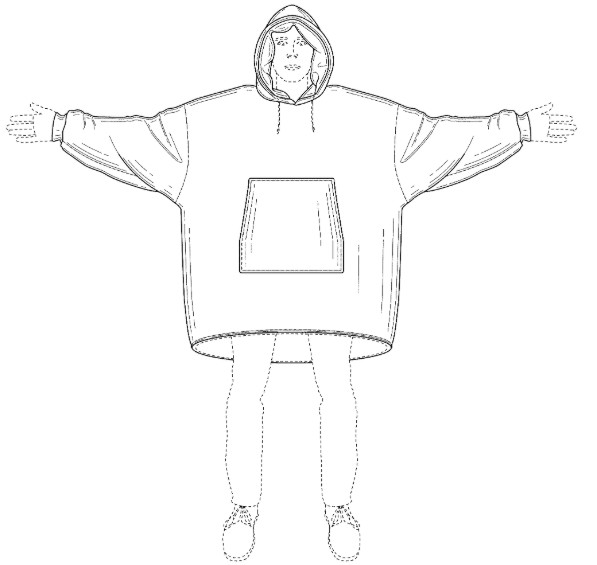
    Cozy Comfort markets a popular oversized wearable blanket called “The Comfy,” protected by U.S. Design Patent No. D859,788 (“D788 patent”) and two federal trademark registrations for “THE COMFY.” Top Brand, through various Amazon storefronts and other e-commerce platforms, sells similar products under the brands “Tirrinia” and “Catalonia.”

    In district court, Cozy Comfort alleged that Top Brand’s seven product lines infringed its D788 design patent and trademarks. Charles Gideon Korrell points out that the jury found infringement of both, awarding $15.4 million in disgorged profits for the design patent claim and $3.08 million for trademark infringement. The district court denied Top Brand’s motion for judgment as a matter of law (“JMOL”), and Top Brand appealed.

    Design Patent: The Federal Circuit Applies Prosecution History Disclaimer

    Judge Dyk, writing for the unanimous panel, held that the district court erred in failing to apply prosecution history disclaimer to the design patent. Although the doctrine has long applied to utility patents, this marks a definitive and precedential statement that it applies with equal force to design patents.

    The court relied on Pacific Coast Marine Windshields Ltd. v. Malibu Boats, LLC, 739 F.3d 694 (Fed. Cir. 2014), which recognized disclaimer by amendment in a design patent context, and extended the rationale to disclaimer by argument. The court emphasized that “[i]t would be contrary to the very purpose of design patent prosecution to allow the patentee to make arguments in litigation contrary to the representations which led to the grant of the patent.”

    Charles Gideon Korrell notes that Cozy Comfort had narrowed the scope of the D788 patent during prosecution to overcome prior art (specifically, the White reference) by distinguishing its design based on four features:

    1. A marsupial pocket that was narrow and square-like,
    2. Pocket placement beneath the armholes,
    3. A downward-sloping bottom hemline,
    4. A different armscye-pouch vertical alignment.

    Because the accused products from Top Brand mirrored the features found in the disclaimed White reference—especially in the width and shape of the pocket and the upward hemline—the court held that no reasonable jury could have found infringement under the proper claim construction.

    This decision reaffirms Egyptian Goddess, Inc. v. Swisa, Inc., 543 F.3d 665 (Fed. Cir. 2008) (en banc), and illustrates how prosecution statements that “distinguish” the claimed design can limit scope in infringement proceedings.

    Trademark: Descriptive Use of “Comfy” Not Likely to Confuse

    The Federal Circuit also reversed the jury’s trademark infringement verdict, finding insufficient evidence under the Ninth Circuit’s Sleekcraft factors. Most notably, the court concluded:

    • “THE COMFY” is a weak mark, given the descriptive nature of “comfy” for wearable blankets.
    • Top Brand never used the full phrase “THE COMFY” but instead used the term “Comfy” descriptively on a drop-down menu that also included generic terms like “Mermaid Tail Blankets” and “Snuggly.”
    • There was no evidence that “Comfy” functioned as a source identifier or was used with secondary meaning.
    • Alleged instances of actual confusion—such as customer questions on Amazon asking whether a Tirrinia product was “the real Comfy”—were de minimis and not clearly attributable to Top Brand’s conduct.

    The court emphasized that without use of the protected mark as a source identifier, even descriptively similar terms cannot give rise to actionable trademark infringement. It cited KP Permanent Make-Up, Inc. v. Lasting Impression I, Inc., 543 U.S. 111 (2004), and Booking.com B.V., 591 U.S. 549 (2020), to underscore the narrow scope of rights afforded to descriptive marks absent secondary meaning.

    Strategic Implications

    This decision contains several important takeaways:

    1. Design Patentees Must Live With Prosecution History: Just as in utility patents, representations made to the USPTO can and will be used to limit design patent claim scope. This ruling is a cautionary tale for patent prosecutors and litigators alike.
    2. Design Patent Scope Is Exceptionally Narrow: The court reiterated that design patents protect only the drawings shown and are easily limited by disclaimer. The “overall impression” test from Gorham and Egyptian Goddess remains the standard, but only within properly construed boundaries.
    3. Trademark Claims Require Real Evidence: The bar for proving likelihood of confusion under the Sleekcraft factors remains high. Descriptive terms like “comfy” cannot be monopolized without clear evidence of secondary meaning and source-identifying use.
    4. No Need to Reach Invalidity: Since the court reversed the infringement findings, it declined to address the validity of the D788 patent. This follows CloudofChange, LLC v. NCR Corp., 123 F.4th 1333 (Fed. Cir. 2024), and Cardinal Chemical Co. v. Morton Int’l, Inc., 508 U.S. 83 (1993), reinforcing that courts need not reach invalidity if it is conditionally abandoned and no longer relevant to the outcome.

    Charles Gideon Korrell believes this decision will have ripple effects in how district courts handle claim construction in design patent cases—especially when the patentee has walked a fine line during prosecution. It also serves as a warning against asserting weak trademark claims built on descriptive or generic terms without strong supporting evidence.

    By Charles Gideon Korrell

  • Shockwave Medical v. Cardiovascular Systems: Federal Circuit Clarifies Use of AAPA and Reverses PTAB on Claim 5

    Shockwave Medical v. Cardiovascular Systems: Federal Circuit Clarifies Use of AAPA and Reverses PTAB on Claim 5

    In a significant decision issued on July 14, 2025, the Federal Circuit in Shockwave Medical, Inc. v. Cardiovascular Systems, Inc., Nos. 2023-1864, 2023-1940, affirmed the Patent Trial and Appeal Board’s finding that most of the claims of U.S. Patent No. 8,956,371 were unpatentable as obvious—but reversed the Board’s lone finding of non-obviousness, holding that claim 5 too was unpatentable. This decision is notable for its continued development of the law concerning the permissible use of applicant admitted prior art (AAPA) in inter partes review (IPR) proceedings and its clarification of what constitutes a “basis” under 35 U.S.C. § 311(b).

    Charles Gideon Korrell observes that this ruling confirms the Federal Circuit’s firm adherence to limiting the scope of IPR grounds to prior art patents and printed publications while still allowing general knowledge—including that evidenced by AAPA—to play a critical role in obviousness analysis.


    Background of the Patent and Proceedings

    Shockwave Medical owns the ’371 patent, which covers an “angioplasty catheter” that uses electrohydraulic lithotripsy (EHL) to treat calcified plaque in blood vessels—a novel application of a technology more traditionally used to break up kidney stones. The invention incorporates electrodes within a balloon catheter, which, when activated, produce shockwaves that break apart hardened deposits without excessive balloon pressure.

    Cardiovascular Systems, Inc. (CSI) challenged all 17 claims of the ’371 patent in an IPR proceeding. The Patent Trial and Appeal Board found that claims 1–4 and 6–17 were obvious over the prior art but that claim 5 was not. Shockwave appealed the adverse ruling on claims 1–4 and 6–17, while CSI cross-appealed the Board’s non-obviousness finding on claim 5.


    Federal Circuit’s Holding on the Direct Appeal (Claims 1–4 and 6–17)

    The Federal Circuit, in an opinion authored by Judge Dyk and joined by Judges Lourie and Cunningham, rejected Shockwave’s arguments and affirmed the Board’s invalidation of these claims.

    1. Use of AAPA Does Not Violate § 311(b)

    Shockwave argued that CSI improperly relied on AAPA to form the “basis” for its obviousness grounds, violating 35 U.S.C. § 311(b), which limits IPR challenges to “prior art consisting of patents or printed publications.” The court rejected this argument, emphasizing that:

    “[A]lthough the prior art that can be considered in [IPRs] is limited to patents and printed publications, it does not follow that we ignore the skilled artisan’s knowledge when determining whether it would have been obvious to modify the prior art.” (Citing Koninklijke Philips N.V. v. Google LLC, 948 F.3d 1330 (Fed. Cir. 2020)).

    The court distinguished its prior holdings in Qualcomm I (24 F.4th 1367 (Fed. Cir. 2022)) and Qualcomm II (134 F.4th 1355 (Fed. Cir. 2025)), noting that CSI never labeled the AAPA as a “basis” in its petition. The use of AAPA here merely provided background knowledge, consistent with permissible uses recognized in Randall Mfg. v. Rea, 733 F.3d 1355 (Fed. Cir. 2013).

    Charles Gideon Korrell notes that this distinction between AAPA as a reference and as a “basis” helps clarify a murky area in IPR practice. Petitioners may use AAPA to demonstrate a skilled artisan’s background knowledge, but must be cautious not to identify it as a foundational reference for an obviousness ground.

    2. Claim Construction of “Angioplasty Balloon”

    Shockwave sought to limit the construction of “angioplasty balloon” to require that it displace plaque into the vessel wall, but the court sided with CSI’s broader construction as “an inflatable sac…to widen narrowed or obstructed blood vessels.” The specification itself undermined Shockwave’s construction, explicitly stating that the balloon need not be snug to the vessel wall.

    3. Obviousness Over Levy and Background Knowledge

    Substantial evidence supported the Board’s findings:

    • It was obvious to use Levy’s shockwave technique with known over-the-wire angioplasty catheters.
    • Levy disclosed shockwave generation in vascular applications.
    • The commercial success and secondary considerations proffered by Shockwave lacked sufficient linkage to the claimed invention and were unpersuasive.

    Reversal on CSI’s Cross-Appeal: Claim 5 Is Also Obvious

    Claim 5 requires that the “pair of electrodes [be] disposed adjacent to and outside of the guide wire lumen.” The Board had found that this configuration was not disclosed in CSI’s references. However, the Federal Circuit reversed that determination, finding the Board had failed to consider the combination of references as a whole.

    The key reference was Uchiyama, which taught placement of electrodes in a balloon for lithotripsy but did not show them outside the guidewire lumen. CSI’s expert testified that relocating the electrodes outside the lumen would be a routine design modification offering better lateral plaque coverage—something well within the grasp of a skilled artisan.

    The court emphasized that:

    “The standard for obviousness requires consideration of the prior art combination taken as a whole.” (Citing In re Mouttet, 686 F.3d 1322, 1331 (Fed. Cir. 2012)).

    CSI’s expert also relied on KSR International Co. v. Teleflex Inc., 550 U.S. 398 (2007), and Uber Technologies, Inc. v. X One, Inc., 957 F.3d 1334 (Fed. Cir. 2020), to argue that the placement of electrodes was among a finite number of predictable options.

    Because Shockwave failed to rebut this with contrary evidence, the Federal Circuit found the Board’s ruling unsupported by substantial evidence and reversed outright.

    Charles Gideon Korrell observes that this aspect of the decision serves as a reminder that design choices considered “routine” in the context of the art may justify an obviousness finding—especially when unchallenged by countervailing expert testimony.


    Standing on Appeal

    The Federal Circuit also addressed—and rejected—Shockwave’s challenge to CSI’s standing to cross-appeal. The court found that CSI had sufficiently concrete plans to commercialize a competing IVL product and was at risk of being sued under claim 5, especially in light of Shockwave’s public statements claiming broad coverage and intent to assert that claim.

    This mirrors prior rulings like Adidas AG v. Nike, Inc., 963 F.3d 1355 (Fed. Cir. 2020), and General Electric Co. v. Raytheon Techs. Corp., 983 F.3d 1334 (Fed. Cir. 2020).


    Conclusion

    In sum, the Federal Circuit:

    • Affirmed the Board’s finding that claims 1–4 and 6–17 are unpatentable,
    • Reversed the Board’s finding that claim 5 is patentable, and
    • Held that CSI had Article III standing to pursue its cross-appeal.

    The opinion reinforces key principles of IPR law, especially:

    • Proper use of AAPA as background knowledge (not a “basis”),
    • Permissibility of using general knowledge to fill in gaps in prior art,
    • The importance of considering combined references in obviousness analysis.

    Charles Gideon Korrell believes this decision is a helpful roadmap for petitioners navigating the narrow permissible uses of AAPA in IPRs. It also serves as a cautionary tale for patentees relying heavily on secondary considerations or overly narrow claim constructions without robust evidentiary support.

    By Charles Gideon Korrell

  • Janssen v. Teva: Federal Circuit Affirms Validity of Paliperidone Palmitate Dosing Regimen Patent

    Janssen v. Teva: Federal Circuit Affirms Validity of Paliperidone Palmitate Dosing Regimen Patent

    In a significant ruling for pharmaceutical patent litigation, the Federal Circuit in Janssen Pharmaceuticals, Inc. v. Teva Pharmaceuticals USA, Inc., Nos. 25-1228, 25-1252 (Fed. Cir. July 8, 2025), affirmed the district court’s determination that U.S. Patent No. 9,439,906 (“the ’906 patent”)—which claims specific dosing regimens for long-acting injectable formulations of the antipsychotic paliperidone palmitate—is not invalid for obviousness. This opinion resolves Teva’s second appeal in a protracted Hatch-Waxman dispute and clarifies the limited applicability of the presumption of obviousness based on overlapping numerical ranges.

    Charles Gideon Korrell observes that the Federal Circuit’s ruling is particularly notable for its detailed discussion of when, and under what conditions, a presumption of obviousness may apply in the pharmaceutical dosing context—a context far removed from the traditional realm of alloy compositions and manufacturing parameters where such presumptions originated.


    Background and Procedural History

    Janssen Pharmaceuticals sued Teva in 2018, asserting that Teva’s Abbreviated New Drug Application (ANDA) infringed the ’906 patent under the Hatch-Waxman Act. Teva stipulated to infringement but challenged the validity of all 21 claims on obviousness grounds, and additionally challenged claims 19–21 for indefiniteness.

    After a bench trial, the district court upheld the patent’s validity. On initial appeal, the Federal Circuit affirmed the indefiniteness ruling but remanded for reconsideration of obviousness. See Janssen Pharms. Inc. v. Teva Pharms. USA, Inc., 97 F.4th 915 (Fed. Cir. 2024). On remand, the district court again upheld the patent’s validity, and Teva appealed a second time—joined by Mylan Laboratories Ltd., which had agreed to be bound by the outcome of the Teva case.


    The ’906 Patent and the Claimed Invention

    The ’906 patent addresses the challenge of noncompliance in schizophrenia treatment due to the frequent dosing requirements of oral medications. It claims a specific regimen using long-acting injectable formulations of paliperidone palmitate, administered via intramuscular injection.

    The representative claims require:

    • A first loading dose of 150 mg-eq. on day 1 (deltoid),
    • A second loading dose of 100 mg-eq. on days 6–10 (deltoid),
    • A first maintenance dose of 25–150 mg-eq. one month later (deltoid or gluteal), and
    • Optional particle size and formulation parameters (claims 19–21).

    Teva argued these regimens were obvious in light of prior art including:

    1. The ’548 clinical trial protocol (Phase III study),
    2. Janssen’s own prior U.S. Patent No. 6,555,544,
    3. WO 2006/114384 (WO ’384), which disclosed dose volumes of 25–150 mg-eq.

    Teva’s Primary Argument: Overlapping-Range Presumption

    Teva’s central contention was that the district court erred by not applying a presumption of obviousness based on overlapping numerical ranges. Teva pointed to precedents like In re Peterson, 315 F.3d 1325 (Fed. Cir. 2003), and E.I. DuPont de Nemours & Co. v. Synvina C.V., 904 F.3d 996 (Fed. Cir. 2018), to argue that the claimed 150/100 mg-eq. loading regimen was merely an optimization within known ranges.

    The Federal Circuit rejected this argument, explaining that:

    • The overlapping-range presumption applies typically in composition or process optimization scenarios.
    • The claimed regimen involved not just a range of numbers but a specific sequence of two unequal, decreasing loading doses.
    • Prior art, including the ’548 protocol, disclosed three equal loading doses—not the claimed 150 followed by 100 mg-eq.

    Because the combination of specific dosing amounts, sequence, and injection sites formed an integrated, multi-step treatment strategy, the court found the presumption inapplicable.

    As Charles Gideon Korrell explains, the court’s decision underscores that context matters: a presumption rooted in numerical overlap does not override the requirement to evaluate inventive combinations within dosing regimens, especially in the unpredictable arts of pharmacology.


    Substantive Obviousness Analysis

    Having refused to apply the presumption, the Federal Circuit reviewed the full obviousness analysis. It affirmed the district court’s findings that Teva failed to prove:

    1. Motivation to Combine: No prior art taught or suggested the use of decreasing loading doses for long-acting injectables, particularly in acutely ill patients. While Teva cited articles on haloperidol decanoate and olanzapine, those involved stabilized patients or immediate-release medications.
    2. Reasonable Expectation of Success: The prior art lacked safety or efficacy data for the claimed regimen. Testimony supported the view that dosing with two injections (150 mg-eq. followed by 100 mg-eq.) would raise concerns about accumulation and side effects.
    3. Application to Renally Impaired Patients (Claims 10 & 13): The court found insufficient motivation to adjust the prior art’s dosing for patients with mild renal impairment. Teva’s expert conceded that moderate to severe renal impairment would contraindicate use of the product entirely.
    4. Particle Size Claims (20 & 21): Because these depended on the previously upheld claims, the court summarily affirmed their validity under In re Fritch, 972 F.2d 1260 (Fed. Cir. 1992).

    Clarifying the Boundaries of Obviousness Doctrines

    This case contributes to the ongoing dialogue on the boundaries of the overlapping-range presumption. The Federal Circuit emphasized that:

    • The presumption is rooted in expectations of routine optimization, which must be supported by the record.
    • Application is limited in contexts involving complex treatment regimens, particularly where multiple variables interact in non-linear ways.
    • Courts must still apply the traditional Graham factors and cannot bypass fact-intensive analysis.

    As Charles Gideon Korrell notes, the ruling affirms that even where prior art discloses elements within claimed ranges, nuanced differences in sequence and formulation matter—especially in unpredictable arts like pharmaceuticals.


    Conclusion

    The Federal Circuit’s opinion in Janssen v. Teva provides a thoughtful reaffirmation of the evidentiary burdens facing ANDA challengers in Hatch-Waxman litigation. It clarifies the scope of the overlapping-range presumption, distinguishing optimization within compositions from integrated pharmaceutical regimens. For patent holders in the life sciences sector, the decision provides some assurance that precise treatment protocols—backed by clinical insight and carefully drafted claims—can withstand obviousness challenges even in the face of seemingly similar prior art.

    By Charles Gideon Korrell

  • Egenera, Inc. v. Cisco Systems, Inc.: Federal Circuit Affirms Noninfringement Verdict on All Asserted Claims

    Egenera, Inc. v. Cisco Systems, Inc.: Federal Circuit Affirms Noninfringement Verdict on All Asserted Claims

    In a resounding victory for Cisco Systems, the Federal Circuit affirmed a district court’s ruling that Cisco’s Unified Computing System (“UCS”) does not infringe U.S. Patent No. 7,231,430, held by Egenera, Inc. The decision, issued on July 7, 2025, capped nearly a decade of litigation over Egenera’s patented “virtual processing area network” technology.

    The ruling affirms summary judgment of noninfringement on claims 1 and 5, and a jury verdict of noninfringement on claims 3 and 7. Egenera’s post-trial motions for judgment as a matter of law (JMOL) and a new trial were also rejected. Writing for a unanimous panel, Judge Stark carefully dissected each of Egenera’s arguments and concluded that they either failed on the facts or had been waived procedurally.

    As Charles Gideon Korrell notes, this case exemplifies the perils of failing to preserve claim construction arguments and demonstrates the rigorous evidentiary standards patent plaintiffs must meet at both the summary judgment and trial stages.


    Background: The ’430 Patent and Cisco’s UCS

    Egenera’s ’430 patent claims a platform for deploying virtual networks by configuring processors and internal communications via software, rather than physically rewiring connections. Claims 1 and 3 are system claims, while claims 5 and 7 are method claims. Central to all four is the concept of virtual deployment and the emulation of Ethernet functionality.

    Cisco’s UCS, according to Egenera, performed similar virtualized management through software-defined networking, using NICs and virtual NICs (vNICs) to group servers into VLANs. But Cisco countered that the claimed Ethernet emulation and processor behavior were not met.


    Summary Judgment on Claims 1 and 5: Failure to Emulate Ethernet Functionality at the CPU Level

    The district court granted Cisco’s motion for summary judgment on claims 1 and 5 after construing “computer processor” to mean “CPU” and determining that Egenera had not shown the CPUs themselves “emulate Ethernet functionality.”

    Egenera argued that use of Ethernet by CPUs satisfied the claim limitation. But the court held that use ≠ emulation and that Egenera failed to offer evidence showing that UCS’s CPUs performed the required emulation. Instead, the Ethernet functionality resided in the NICs—separate from the CPUs.

    On appeal, Egenera stuck to the argument that the evidence supported a finding of emulation but notably did not challenge the underlying claim construction of “emulate Ethernet functionality.” As the Federal Circuit emphasized:

    “Egenera has not, even on appeal, argued that claim construction is necessary, let alone presented a meaningful claim construction analysis of ‘emulate.’”

    This procedural misstep proved fatal. The court reiterated that a party cannot raise new claim construction issues for the first time on appeal, especially when it consistently characterized the dispute as factual in both the district court and its appellate briefing.

    This part of the ruling is a cautionary tale. As Charles Gideon Korrell emphasizes, practitioners should be wary of framing claim scope disputes as factual disagreements. The failure to preserve and present a proper construction argument can doom an entire case.


    Trial on Claims 3 and 7: Topology Limitation Undermines Infringement

    Claims 3 and 7 required that the processors be “programmed” to establish a specific “virtual local area network topology.” At trial, Cisco presented three alternative noninfringement theories: lack of (1) the topology limitation, (2) modifying messages, and (3) extracting and identifying messages. The jury returned a general verdict of noninfringement.

    Under black-letter law (see i4i Ltd. P’ship v. Microsoft Corp.), a general verdict must be affirmed if supported by substantial evidence on any theory. The Federal Circuit thus focused on the “topology” issue.

    Cisco’s evidence showed that its UCS established network topologies at the NIC level—not at the processor level as required by the claims. Egenera countered with arguments that software loaded into the CPU satisfied the programming requirement, but the jury was free to disbelieve this theory. As the panel explained, “drawing all reasonable inferences in favor of Cisco,” substantial evidence supported the verdict.

    Egenera also argued that the district court erred by reading an “intent” requirement into the claim, but the Federal Circuit rejected this characterization, finding that the court merely summarized what Cisco witnesses had testified to: that CPUs were not programmed to establish topology.

    Again, Charles Gideon Korrell observes that the outcome turned on careful adherence to the burden of proof and deference to the jury’s prerogative to weigh competing expert testimony.


    Denial of New Trial: Procedural Missteps and Lack of Prejudice

    Egenera’s motion for a new trial fared no better. The district court had broad discretion under First Circuit law, and Egenera could not demonstrate that any alleged error rose to the level of a miscarriage of justice.

    Among Egenera’s arguments:

    1. Verdict Against the Weight of Evidence: Rejected due to relevance of Cisco’s evidence and proper jury instructions.
    2. Curative Instruction: Egenera claimed that a voir dire statement by the judge equating infringement with copying required correction. But it waited 10 days and failed to object contemporaneously, and the court’s final instructions correctly outlined the law.
    3. Omitted Jury Instruction on Later Patents: Egenera requested an instruction that a product can infringe even if it is covered by a subsequent patent. While substantively correct, the omission was found not to be prejudicial given the adequacy of the overall instructions.
    4. Improper Expert Testimony from Lay Witnesses: The district court found that Egenera had waived this argument by failing to make timely and specific objections at trial. The Federal Circuit upheld this decision, citing Fusco v. GM Corp. and First Circuit precedent allowing trial judges to enforce procedural forfeiture.
    5. Improper Closing Arguments: Cisco was accused of making veiled references to Egenera’s funding and characterizing it as a “bad bet by venture capitalists.” But these arguments did not literally violate pretrial orders, and Egenera failed to object contemporaneously. The court found no plain error.

    Charles Gideon Korrell emphasizes that the procedural posture of these objections matters deeply. Litigants who fail to timely object cannot later complain that errors warrant a new trial, especially where the court provides accurate and complete jury instructions.


    Key Takeaways

    1. Preserve Claim Construction Arguments Early and Clearly: Egenera’s failure to raise and brief the meaning of “emulate Ethernet functionality” effectively waived the issue. The Federal Circuit will not rescue an underdeveloped claim construction theory after the fact.
    2. Substantial Evidence Deference is High: On a general verdict, a plaintiff must show the absence of support for every alternative noninfringement theory. Egenera failed to overcome the substantial evidence supporting Cisco’s topology argument.
    3. Procedural Discipline Matters: Courts require timely objections to preserve error. Pretrial motions in limine and vague references to disputed issues are not enough.
    4. Appeals Framed as Factual Disputes Are Difficult to Win: Egenera characterized its appeal as a sufficiency-of-evidence question, not a legal error in construction or instruction, which narrowed its ability to persuade the appellate court.

    As Charles Gideon Korrell observes, this decision reinforces the Federal Circuit’s institutional emphasis on claim construction clarity, trial discipline, and respect for jury fact-finding. Cisco’s clean win on all claims and all fronts is a blueprint for defending against complex system and method patents where the accused functionality is modular and distributed.

    By Charles Gideon Korrell

  • Eye Therapies, LLC v. Slayback Pharma, LLC: “Consisting Essentially Of” Precludes Other Active Ingredients

    Eye Therapies, LLC v. Slayback Pharma, LLC: “Consisting Essentially Of” Precludes Other Active Ingredients

    In a significant reversal for the U.S. Patent and Trademark Office’s Patent Trial and Appeal Board (PTAB), in Eye Therapies, LLC v. Slayback Pharma, LLC the Federal Circuit on June 30, 2025, held that the Board erred in its construction of the transitional claim phrase “consisting essentially of” as used in Eye Therapies, LLC’s U.S. Patent No. 8,293,742. The court held that the phrase, as used in the patent’s claims, excludes the presence of any additional active ingredients besides brimonidine. Because the Board’s unpatentability determination hinged on the broader construction, the Federal Circuit reversed the claim construction, vacated the Board’s decision, and remanded for further proceedings.

    This decision is a strong reminder that prosecution history can override the default interpretation of transitional phrases, even ones as settled as “consisting essentially of.” As Charles Gideon Korrell notes, the court emphasized the importance of context and statements made during prosecution in determining claim scope.


    Background: The ’742 Patent and Its Claims

    Eye Therapies’ ’742 patent claims a method of reducing eye redness by administering a low concentration of brimonidine, an alpha-adrenergic receptor agonist known for its vasoconstrictive properties. Independent claims 1 and 3 recite methods “consisting essentially of” administering brimonidine or a brimonidine-containing composition:

    • Claim 1: Administering brimonidine at a concentration of 0.001–0.05% w/v.
    • Claim 3: Administering a brimonidine-containing composition with a pH of 5.5–6.5, formulated as an ocular drop, and brimonidine at 0.001–0.025% w/v.

    During prosecution, the patentee amended the claims from “comprising” to “consisting essentially of” to overcome anticipation by U.S. Patent No. 6,242,442 (“Dean”), which disclosed the co-administration of brimonidine and brinzolamide.


    PTAB’s Construction and Obviousness Holding

    In inter partes review (IPR2022-00142) initiated by Slayback Pharma, the PTAB interpreted “consisting essentially of” to allow additional active ingredients, so long as they did not “materially affect the basic and novel properties of the invention,” citing PPG Indus. v. Guardian Indus. Corp., 156 F.3d 1351 (Fed. Cir. 1998) and Ecolab, Inc. v. FMC Corp., 569 F.3d 1335 (Fed. Cir. 2009).

    Applying that broader construction, the Board concluded that combinations of prior art references—Dean, Norden, and Gil—rendered the claims obvious because those references disclosed or suggested brimonidine in combination with other agents.


    The Federal Circuit’s Reversal

    The Federal Circuit held the PTAB erred by failing to give proper weight to the prosecution history. As the court explained, while “consisting essentially of” typically allows for unlisted components that do not materially affect the invention’s basic and novel characteristics, a patentee may redefine that scope through prosecution disclaimer or definitional language.

    Eye Therapies did just that. To distinguish Dean, the applicant argued that the claims “do not require the use of any other active ingredients,” and used definitional language equating “consisting essentially of brimonidine” with “methods which do not include administering other active agents.” The examiner relied on this when allowing the claims.

    The court found these prosecution statements to be more than just explanatory—they limited the claim scope. As Charles Gideon Korrell emphasizes, applicants cannot walk back claim scope limiting statements after securing allowance on the strength of those very assertions.


    Distinguishing Ecolab and Claim Scope Implications

    The Board’s reliance on Ecolab was misplaced. There, the patent specification disclosed multiple embodiments with and without additional antimicrobial agents, and the prosecution history did not signal a narrowing of “consisting essentially of.”

    Here, by contrast, Eye Therapies’ applicant used “i.e.” (i.e., definitional) statements during prosecution to expressly equate the claim language with single-agent administration. Although some embodiments in the specification describe co-administration, that inconsistency did not override the clear disclaimers during prosecution.

    This distinction is critical. The court noted that claim construction need not encompass all disclosed embodiments, especially when claims have been narrowed post-filing.


    Obviousness: Vacated Due to Reliance on Erroneous Construction

    Because the PTAB’s obviousness analysis relied heavily on its flawed construction, the court vacated the unpatentability determination. For example:

    • The Board treated prior art combinations that included multiple active ingredients as relevant.
    • It reasoned that other agents “do not materially affect” brimonidine’s action and therefore did not violate the “consisting essentially of” limitation.

    But under the proper construction—excluding any additional active ingredients—those references no longer map cleanly onto the claims. The Board will now need to reassess whether a person of ordinary skill in the art (POSITA) would have been motivated to administer brimonidine alone to reduce eye redness.

    As Charles Gideon Korrell observes, this case underscores the importance of revisiting the obviousness inquiry when claim construction shifts materially—particularly when prior art references disclose combinations that no longer fall within the claim scope.


    Practical Takeaways

    1. Prosecution History Matters: Courts will enforce narrowing claim scope if an applicant made clear representations during prosecution to secure allowance.
    2. Transitional Phrases Are Not Always Standard: Even familiar phrases like “consisting essentially of” are susceptible to narrower readings when prosecution history demands it.
    3. Spec Discrepancies Are Not Fatal: A narrowed construction may exclude embodiments in the specification, particularly if amendments came later and were necessary for allowance.
    4. Revisiting Obviousness: A change in claim construction often necessitates remand—especially when the PTAB relied on broader scope to identify prior art overlaps.

    Charles Gideon Korrell notes that this case provides a helpful reminder for patent prosecutors and litigators alike: careful language during prosecution can define the battlefield years later, and transitional phrases are not immune from contextual redefinition.

    By Charles Gideon Korrell

  • Realtek Semiconductor Corp. v. ITC: Federal Circuit Declines Jurisdiction Over Sanctions Appeal

    Realtek Semiconductor Corp. v. ITC: Federal Circuit Declines Jurisdiction Over Sanctions Appeal

    In Realtek Semiconductor Corporation v. International Trade Commission, No. 23-1187 (Fed. Cir. June 18, 2025), the Federal Circuit dismissed Realtek’s appeal for lack of jurisdiction, holding that a denied sanctions request under Section 337(h) of the Tariff Act of 1930 is not reviewable by the Federal Circuit when it is not tied to a final determination on the merits concerning unfair trade practices. The ruling clarifies the bounds of the court’s jurisdiction under 28 U.S.C. § 1295(a)(6) and reaffirms the narrow interpretation of “final determinations” appealable under 19 U.S.C. § 1337(c).

    Background

    Realtek sought sanctions against Future Link Systems, LLC during an ITC investigation (Inv. No. 337-TA-1295). The dispute centered on a license agreement between Future Link and non-party MediaTek, Inc., in which MediaTek agreed to pay Future Link if it initiated litigation against Realtek. Future Link later initiated an ITC action against Realtek but voluntarily terminated the investigation after entering into a settlement with a third party. Realtek then moved for sanctions, arguing that Future Link’s complaint was improperly motivated by the MediaTek agreement.

    While the ALJ found the agreement “alarming” and questioned its legality, he denied sanctions, concluding the evidence did not show the agreement motivated the complaint. The Commission declined to review the ALJ’s ruling, effectively ending the sanctions proceeding. Realtek appealed, seeking a monetary sanction against Future Link.

    The Jurisdictional Framework

    Realtek relied on 28 U.S.C. § 1295(a)(6), which grants the Federal Circuit exclusive jurisdiction “to review the final determinations of the United States International Trade Commission relating to unfair practices in import trade, made under section 337 of the Tariff Act of 1930.”

    The court explained that this jurisdiction is confined to “final determinations” under specific subsections of 19 U.S.C. § 1337(c), namely:

    • § 1337(d): Exclusion orders
    • § 1337(e): Cease and desist orders
    • § 1337(f): Enforcement proceedings
    • § 1337(g): Default determinations

    These sections govern determinations that affect the importation or exclusion of articles. The court emphasized that its jurisdiction hinges on whether a Commission decision concerns such final import-related outcomes.

    The Court’s Analysis

    Judge Bryson, writing for the panel, held that Realtek’s appeal did not fall within this framework:

    1. No “Final Determination” Tied to Import Exclusion:
      The denial of sanctions was not related to the exclusion or non-exclusion of any articles. The proceeding had been terminated voluntarily before any exclusion determination. As such, the ruling on sanctions did not qualify as a “final determination” under § 1337(c).
    2. Viscofan Precedent:
      The court found the case analogous to Viscofan, S.A. v. ITC, 787 F.2d 544 (Fed. Cir. 1986), where a decision about document declassification was held outside the scope of the Federal Circuit’s jurisdiction because it had no effect on import exclusion. As in Viscofan, Realtek’s appeal addressed a collateral issue — sanctions — not tied to a final merits determination.
    3. No Jurisdiction Under § 1337(h):
      Realtek’s fallback argument was that § 1337(c)’s language stating that decisions under subsection (h) “shall also be reviewable in accordance with section 706 of title 5” implied Federal Circuit review. But the court rejected this reading. The phrase merely invokes the standard of review under the Administrative Procedure Act (APA); it does not designate which court has jurisdiction. The court pointed out that when Congress intended to confer appellate jurisdiction, it did so expressly — as it did for §§ 1337(d)-(g) but not for § 1337(h).
    4. No Ancillary Jurisdiction:
      While the Federal Circuit has held that it may review matters “ancillary” to a valid final determination — such as bond forfeitures or discovery sanctions that are part of a merits determination — that was not the case here. The ITC proceeding was terminated before any such final determination was issued. Realtek itself conceded that it was not invoking ancillary jurisdiction.

    Alternative Forum: District Court?

    The Federal Circuit noted that the statute leaves open the question of where judicial review of sanctions decisions under § 1337(h) may occur if not at the Federal Circuit. In analogous contexts, courts have held that where a statute does not assign appellate jurisdiction to a particular court, challenges must begin in federal district court under the general federal question jurisdiction provision, 28 U.S.C. § 1331. The court cited Micei Int’l v. Department of Commerce, 613 F.3d 1147 (D.C. Cir. 2010), and Watts v. SEC, 482 F.3d 501 (D.C. Cir. 2007), as examples of this “default rule.”

    It also pointed to Jubilant DraxImage Inc. v. ITC, 396 F. Supp. 3d 113 (D.D.C. 2019), where a sanctions-type challenge to the ITC was brought in district court — implicitly confirming that the district court may be the proper forum for such issues.

    Implications and Takeaways

    This decision reinforces the narrow jurisdiction of the Federal Circuit over ITC proceedings. A few key points emerge:

    • Only “final determinations” affecting the importation of goods fall under the Federal Circuit’s jurisdiction.
    • Sanctions decisions unconnected to an exclusion order or cease-and-desist order are not appealable to the Federal Circuit.
    • Realtek may still pursue relief, but only in federal district court — not in the appellate court of specialized jurisdiction.
    • The ruling reflects a consistent line of precedent, including Viscofan, Amarin, Amgen, and Nutrinova, that distinguishes between substantive ITC trade rulings and collateral procedural matters.

    Charles Gideon Korrell believes that this decision may provide clearer guidance for litigants navigating procedural disputes before the ITC. Parties seeking sanctions in ITC proceedings — particularly when the underlying investigation has been terminated — must now carefully consider whether appellate review lies in the district courts rather than in the Federal Circuit.

    Moreover, the decision’s careful parsing of statutory language and legislative history signals the court’s strict approach to jurisdictional interpretation. As Charles Gideon Korrell notes, when Congress chooses to list certain subsections as appealable and omits others, courts will not presume jurisdiction unless clearly granted.

    Ultimately, the Realtek case is a cautionary tale for parties pursuing procedural remedies within the ITC. As Charles Gideon Korrell observes, where the procedural issue is not tethered to a merits-based exclusion or enforcement ruling, the Federal Circuit is unlikely to entertain the appeal — regardless of how meritorious the underlying issue may be.

    By Charles Gideon Korrell

  • Optis Cellular Technology v. Apple Inc.: Federal Circuit Orders New Trial on Infringement and Damages Due to Unanimity Violation and Improper Evidence

    Optis Cellular Technology v. Apple Inc.: Federal Circuit Orders New Trial on Infringement and Damages Due to Unanimity Violation and Improper Evidence

    The Federal Circuit’s June 16, 2025, decision in Optis Cellular Technology, LLC v. Apple Inc., Nos. 2022-1904, 2022-1925, vacates a $300 million damages judgment in a high-stakes standard-essential patent (SEP) case and mandates a new trial on both infringement and damages. The court found that the Eastern District of Texas violated Apple’s constitutional right to a unanimous jury verdict and improperly admitted prejudicial evidence, including a large Apple-Qualcomm settlement. The ruling also carries broader implications for the treatment of abstract claims under § 101 and functional claim limitations under § 112 ¶ 6.


    Key Takeaway

    The Federal Circuit vacated both the infringement and damages verdicts because the jury verdict form failed to ensure unanimity on specific claims, and because the district court improperly admitted a high-dollar Apple-Qualcomm settlement agreement. The court also held two of the asserted claims invalid under § 101, reversed a § 112 ¶ 6 ruling, and rejected the patentee’s request to reinstate a previously set-aside $506 million award.


    Background

    Optis, asserting a suite of five LTE standard-essential patents, sued Apple in the Eastern District of Texas in 2019. After an initial trial in 2020, the jury awarded Optis $506.2 million in damages, finding infringement and willfulness. However, the trial court granted Apple a new trial on damages due to improper exclusion of FRAND evidence. A second trial in 2021 resulted in a $300 million lump-sum verdict.

    Apple appealed, challenging liability, damages, claim construction, and admissibility of certain evidence. Optis cross-appealed, seeking reinstatement of the original damages verdict.


    The Verdict Form and Jury Unanimity Violation

    The Federal Circuit held that the district court erred by using a single verdict question that asked whether Apple infringed “ANY of the asserted claims” without distinguishing between the five asserted patents. This structure permitted a finding of liability even if jurors disagreed on which patents were infringed, violating Apple’s right to a unanimous verdict under the Seventh Amendment and Federal Rule of Civil Procedure 48(b):

    “The verdict form instructed the jury to find Apple liable for infringement regardless of whether all jurors agreed that Apple was infringing the same patent.” (Slip op. at 15)

    Despite the parties’ joint request for patent-by-patent questions, the district court rejected that format. The Federal Circuit deemed this a clear legal error warranting vacatur of the liability judgment and a new trial.


    Damages Verdict Also Vacated

    Because liability was vacated, the court also vacated the $300 million damages verdict. Notably, the district court had instructed the jury to assume all five patents were infringed for purposes of damages—an instruction that now lacks any valid liability finding to support it.

    Further, the court held that the district court abused its discretion under FRE 403 by admitting a high-value Apple-Qualcomm settlement agreement and allowing Optis’s expert to rely on it:

    “[T]he probative value of the Apple-Qualcomm settlement agreement and Mr. Kennedy’s testimony concerning the same is substantially outweighed by the risk of unfair prejudice.” (Slip op. at 36)

    This agreement, which settled global disputes unrelated to the patents-in-suit, was deemed minimally probative and highly prejudicial.


    Patent Eligibility Under § 101

    The court reversed the district court’s denial of Apple’s § 101 motion on claims 6 and 7 of U.S. Patent No. 8,019,332, finding them directed to an abstract mathematical formula:

    “We conclude that the claims are directed to the abstract idea—a mathematical formula.” (Slip op. at 24)

    Charles Gideon Korrell notes that the Federal Circuit found the claims failed Alice step one and remanded for further proceedings on step two.


    Means-Plus-Function and § 112 ¶ 6

    In another reversal, the Federal Circuit held that the term “selecting unit” in claim 1 of U.S. Patent No. 8,411,557 invoked § 112 ¶ 6. It found “unit” to be a nonce term that fails to connote sufficient structure:

    “‘Selecting unit’ in the claim at issue here invokes § 112 ¶ 6.” (Slip op. at 31)

    The district court had relied on a prior Eastern District ruling, but the Federal Circuit found that opinion unpersuasive, particularly in light of Optis’s own assertion that the “unit” could be implemented in hardware or software. The matter was remanded to determine if the specification provides sufficient structure.


    Claim Construction Affirmed

    The court affirmed the construction of a key term in claim 8 of U.S. Patent No. 8,102,833, rejecting Apple’s argument that the mapping of ACK/NACK control signals required a specific start position.


    Optis’s Cross-Appeal Rejected

    Optis had sought reinstatement of the original $506.2 million award from the first trial, but the Federal Circuit dismissed the cross-appeal, concluding that:

    “[T]he first damages judgment presented the same verdict form issue… and thus cannot be reinstated.” (Slip op. at 36)


    Practical Implications

    This decision reinforces several critical points for SEP litigation and patent damages trials:

    1. Verdict Form Precision Matters: Patent plaintiffs must ensure verdict forms distinguish each asserted patent or claim to avoid violating the defendant’s right to unanimity.
    2. Evidence of Other Settlements Is Risky: Courts will scrutinize the use of large dollar-value settlements, especially when they involve different technologies or were driven by non-comparable litigation pressure.
    3. FRAND Damages Must Align with Liability: Damages awards must correspond to actual findings of infringement, particularly in FRAND cases.
    4. § 101 and § 112 Scrutiny Continues: The court’s reversals on patent eligibility and means-plus-function interpretation signal a continued willingness to invalidate improperly drafted claims—even in complex SEP disputes.

    Charles Gideon Korrell notes that the Federal Circuit’s opinion emphasizes procedural fairness as much as substantive patent doctrine. Charles Gideon Korrell also observes that the court’s insistence on clarity in verdict forms may drive future litigants to pay closer attention to the architecture of jury questions.


    Conclusion

    The Federal Circuit’s decision in Optis v. Apple is a comprehensive rebuke of multiple aspects of the trial court’s handling of a major SEP case. By ordering a new trial on both liability and damages and reversing several key legal rulings, the opinion sets important precedent for how SEP litigation should be conducted and how damages should be assessed.

    By Charles Gideon Korrell

  • Ancora Technologies, Inc. v. Roku, Inc.: Federal Circuit Vacates PTAB Decision on Licensing Nexus in Obviousness Analysis

    Ancora Technologies, Inc. v. Roku, Inc.: Federal Circuit Vacates PTAB Decision on Licensing Nexus in Obviousness Analysis

    In the June 16, 2025 decision of Ancora Technologies, Inc. v. Roku, Inc., the Federal Circuit vacated and remanded two inter partes review (IPR) decisions by the Patent Trial and Appeal Board (PTAB) that had found claims of U.S. Patent No. 6,411,941—owned by Ancora Technologies, Inc.—to be unpatentable as obvious. While the Federal Circuit affirmed the Board’s construction of the key term “agent” and upheld its prima facie case of obviousness based on prior art, it held that the PTAB legally erred in dismissing Ancora’s license evidence as lacking a sufficient nexus to the claimed invention. This case offers important guidance on the evidentiary treatment of licenses as objective indicia of nonobviousness.


    The Patent at Issue: Software Licensing and BIOS Security

    Ancora’s ’941 patent addresses software license enforcement mechanisms by embedding license verification structures in the erasable, non-volatile memory of a computer’s BIOS. This technique is intended to secure software against unauthorized use without relying on more volatile or easily altered memory. The method described in claim 1 includes:

    1. Selecting a program in volatile memory (e.g., RAM),
    2. Using an “agent” to set up a verification structure (including at least one license record) in the erasable, non-volatile BIOS memory (e.g., EEPROM),
    3. Verifying the program using the verification structure, and
    4. Acting on the program based on the verification result.

    Claims 1–3, 6–14, and 16 were challenged and ultimately invalidated in IPRs filed by Nintendo, Roku, and VIZIO.


    The PTAB’s Decision: Obviousness Based on Hellman and Chou

    The PTAB found that the challenged claims were obvious over a combination of two prior art references:

    • Hellman (U.S. Patent No. 4,658,093): Discloses a system using hash functions and non-volatile memory to control software use based on allowed instances.
    • Chou (U.S. Patent No. 5,892,906): Describes BIOS-based security methods for verifying passwords and controlling hardware access.

    The Board determined that Hellman provided the base mechanism for license enforcement and that Chou taught the use of BIOS memory for secure storage. Ancora argued that this combination was inoperable and lacked a motivation to combine, but the Board found otherwise and rejected Ancora’s claims as obvious.

    The Board construed the term “agent” in the claims as “a software program or routine,” declining Ancora’s argument that the term should be limited to software running at the OS level. Relying on intrinsic evidence and dictionaries, the Board found no disavowal or redefinition requiring a narrower construction.

    Charles Gideon Korrell notes that the Federal Circuit gave deference to the Board’s reliance on extrinsic evidence, including industry definitions and expert declarations, and determined that “agent” was not limited to software-only or OS-level implementations. The court found substantial evidence supported the Board’s construction.


    Secondary Considerations: Licensing and the Nexus Requirement

    The Federal Circuit’s principal disagreement with the Board lay in its treatment of Ancora’s license agreements as objective indicia of nonobviousness.

    Ancora had presented multiple licenses entered into after extended litigation, many just before trial and with substantial royalty payments. The PTAB found that Ancora failed to show a nexus between these licenses and the specific claims of the ’941 patent, concluding that they could reflect business decisions to avoid litigation rather than recognition of the patent’s strength.

    The Federal Circuit sharply criticized this reasoning:

    “Licenses to the challenged patent then, unlike products or other forms of objective evidence of nonobviousness, do not require a nexus with respect to the specific claims at issue…”

    Citing LaserDynamics, Inc. v. Quanta Computer, Inc., 694 F.3d 51 (Fed. Cir. 2012) and Institut Pasteur v. Focarino, 738 F.3d 1337 (Fed. Cir. 2013), the court emphasized that actual licenses to the patented technology are highly probative of nonobviousness and should not be subject to the same parsing applied to commercial product evidence.

    In the court’s view, according to Charles Gideon Korrell, the Board erred by demanding a higher evidentiary burden than the law requires. Even if the licenses also referenced related patents or included redacted sections, that did not undermine the fact that they expressly covered the ’941 patent. The Board’s approach “too finely parsed” the record and ignored the licensing context: settlements reached after years of litigation and near trial dates, with substantial consideration paid.

    Charles Gideon Korrell explains that the Federal Circuit’s holding here confirms that the economic behavior of parties—especially sophisticated technology companies licensing patents to avoid trial—is relevant and weighty evidence of the patent’s nonobviousness, even where the license bundles multiple rights.


    Remedy and Remand

    Although the Federal Circuit affirmed the PTAB’s claim construction and the Board’s finding of a prima facie case of obviousness, it vacated the Board’s decision due to legal error in the analysis of secondary considerations. On remand, the PTAB must:

    1. Re-evaluate the nexus between the challenged claims and Ancora’s licenses under the proper legal standard,
    2. Weigh this licensing evidence, including both high- and low-value settlements, as part of its overall nonobviousness analysis.

    This remand could potentially alter the outcome if the Board concludes that the licenses provide significant objective evidence supporting the validity of the challenged claims.


    Conclusion

    The Federal Circuit’s decision in Ancora Technologies, Inc. v. Roku, Inc. underscores the importance of properly evaluating licensing evidence in an obviousness analysis. While upholding a broad construction of “agent” and affirming the prima facie obviousness of the claims, the court found fault with the PTAB’s overly narrow view of what constitutes a nexus between a patent and license agreements. The decision reinforces that real-world licensing behavior—especially in litigation contexts—can and should play a meaningful role in the nonobviousness inquiry.

    Charles Gideon Korrell believes this decision will have broad implications for how PTAB and district courts assess secondary considerations in IPR and invalidity proceedings. In particular, it may offer patent holders new avenues to bolster the validity of their claims with well-supported licensing histories.

    By Charles Gideon Korrell