Category: Trademark Law

  • Fuente v. Vaporous: Federal Circuit Holds That One DuPont Factor Can Override All Others

    Fuente v. Vaporous: Federal Circuit Holds That One DuPont Factor Can Override All Others

    The Federal Circuit’s decision in Fuente Marketing Ltd. v. Vaporous Technologies, LLC, Case No. 24-1460 (Fed. Cir. Apr. 8, 2026), offers a useful reminder that trademark disputes are not scored by tallying factors. Even where most of the DuPont factors favor likelihood of confusion, a sufficiently strong distinction between the marks themselves can still control the outcome.

    The dispute involved Fuente’s registered standard-character “X” marks for cigars and smoking accessories, and Vaporous Technologies’ stylized design mark used for oral vaporizers and vaping products. The Trademark Trial and Appeal Board found that many of the traditional likelihood-of-confusion considerations favored Fuente, including overlapping channels of trade and overlapping consumer classes. But the Board nevertheless concluded that the marks themselves were too dissimilar to create confusion. The Federal Circuit affirmed.

    For trademark litigators, the case is notable for several reasons. First, it reinforces that visual and commercial-impression differences can outweigh virtually every other DuPont factor. Second, it contains a useful discussion about stipulations regarding mark descriptions and how those stipulations interact with actual consumer perception. Third, it reiterates the Federal Circuit’s longstanding refusal to narrow the scope of trademark applications based on real-world marketplace limitations not reflected in the application itself.

    Charles Gideon Korrell notes that the opinion is particularly important for disputes involving stylized letter marks and minimalist branding, where small graphical distinctions may carry outsized significance in the likelihood-of-confusion analysis.

    The Marks at Issue

    Fuente owned two standard-character registrations for the letter “X” covering cigars, cigar cutters, ashtrays, and lighters. Because the registrations were standard-character marks, Fuente was entitled to protection for the letter X regardless of font style, color, or presentation. The court cited Citigroup Inc. v. Capital City Bank Group, Inc., 637 F.3d 1344 (Fed. Cir. 2011), for the principle that standard-character marks are not limited to any particular depiction.

    Vaporous sought registration of a stylized mark consisting of intersecting diagonal lines with a shaded circle above them for use with vaporizers and vape-related products. The parties stipulated during the TTAB proceedings that the mark “consists of an abstract stick figure consisting of two diagonal intersecting lines in the shape of a wide stylized letter ‘X’ and a shaded circle above the letter ‘X.’”

    That stipulation later became central to the appeal.

    The Board analyzed the case under the familiar In re E.I. DuPont DeNemours & Co. framework and concluded that the goods, trade channels, and consumers overlapped in ways that generally favored confusion. But the Board found the marks themselves sufficiently dissimilar to eliminate any likelihood of confusion. The Federal Circuit agreed.

    One DuPont Factor Can Be Dispositive

    The opinion’s most important doctrinal point is its reaffirmation that a single DuPont factor may be dispositive. The court relied heavily on Champagne Louis Roederer, S.A. v. Delicato Vineyards, 148 F.3d 1373 (Fed. Cir. 1998), explaining that dissimilarity of the marks alone can outweigh all remaining factors.

    That principle is not new, but the facts here make the holding particularly striking. Nearly every other meaningful factor either favored Fuente or was neutral. Yet the Federal Circuit still affirmed dismissal of the opposition because the commercial impressions of the marks diverged so substantially.

    The court focused on the first DuPont factor: “the similarity or dissimilarity of the marks in their entireties as to appearance, sound, connotation and commercial impression.” The Board had concluded that consumers would perceive Vaporous’s mark as a stick figure rather than as the letter X itself. Because a stick figure has no pronunciation, the Board also concluded the marks differed in sound.

    Fuente attacked this reasoning aggressively on appeal, arguing that the Board improperly treated the parties’ stipulation as dispositive evidence of consumer perception. The Federal Circuit partially agreed. The court acknowledged that the stipulation did not actually resolve how consumers would perceive the mark, because the relevant inquiry concerns purchaser perception rather than the parties’ own characterization of the design.

    Stipulations Do Not Control Consumer Perception

    The opinion relies on several older CCPA authorities, including Schwarzkopf v. John H. Breck, Inc. and Eureka Williams Corp. v. McCorquodale, to explain that stipulations cannot override obvious visual realities or conclusively establish consumer perception.

    The court also referenced the Trademark Manual of Examining Procedure, emphasizing that public perception depends on the actual commercial impression created by the mark, not merely on how the applicant describes it.

    But the Federal Circuit ultimately treated any TTAB error as harmless because the Board independently concluded, based on the mark itself, that consumers would likely perceive it as a stick figure.

    This portion of the opinion is likely to receive substantial attention in future TTAB disputes involving stylized marks. Parties frequently stipulate to descriptions of marks for procedural convenience, but Fuente clarifies that such stipulations do not necessarily dictate the commercial-impression analysis.

    Marketplace Context Did Not Save Fuente’s Case

    The court also rejected Fuente’s attempt to rely on Vaporous’s broader branding context, particularly its “DABX” branding strategy. Fuente argued that Vaporous intentionally selected the mark to evoke an “X-factor” sentiment and therefore reinforce an association with the letter X.

    The Federal Circuit was unpersuaded. It held that the proper comparison concerns the applied-for mark itself, not surrounding marketplace usage involving additional branding elements. The court relied on Denney v. Elizabeth Arden Sales Corp., emphasizing that associated house marks generally are not controlling in determining registrability.

    That aspect of the opinion reinforces a recurring Federal Circuit theme: trademark applications are evaluated based on the mark presented in the application, not on surrounding commercial context that could later change.

    Trade Channels and Consumer Sophistication

    The opinion also contains an important discussion of trade channels and purchaser sophistication. Vaporous argued that the Board ignored marketplace realities by assuming overlapping channels of trade and overlapping consumers. Vaporous pointed to evidence that Fuente’s premium cigars are sold to sophisticated purchasers and are not widely distributed.

    The Federal Circuit rejected that argument based on Octocom Systems, Inc. v. Houston Computer Services Inc., 918 F.2d 937 (Fed. Cir. 1990), and Stone Lion Capital Partners, L.P. v. Lion Capital LLP, 746 F.3d 1317 (Fed. Cir. 2014). Those cases establish that likelihood-of-confusion analysis turns on the identification of goods and services in the application and registrations, not on narrower real-world marketing practices.

    That principle often frustrates trademark owners attempting to rely on practical marketplace distinctions that are absent from the actual registration language. Here, because neither side’s identification contained meaningful channel or purchaser limitations, the Board properly presumed overlap.

    Charles Gideon Korrell believes this portion of the opinion serves as another cautionary reminder that application drafting decisions can significantly affect future enforcement rights. Broad identifications may maximize registration scope, but they also expand the range of potentially overlapping goods and consumers in future disputes.

    Conceptual Strength Versus Commercial Strength

    The court also addressed conceptual versus commercial strength of Fuente’s “X” marks. The Board had recognized that the marks were conceptually strong because “X” is arbitrary as applied to cigars.

    But it nevertheless found the marks commercially weak because Fuente’s evidence typically showed the letter X incorporated into broader product names such as “FORBIDDEN X,” “RISING X,” and “OPUS X.”

    The Federal Circuit affirmed that analysis, holding that Fuente had not sufficiently demonstrated that consumers independently recognized “X,” standing alone, as a source identifier.

    That discussion highlights an increasingly important distinction in trademark litigation: conceptual strength alone does not necessarily produce broad marketplace protection absent corresponding evidence of commercial recognition. Even highly distinctive marks may receive relatively narrow protection if the owner cannot demonstrate standalone source significance.

    Third-Party Marks and Coexistence Agreements

    The court’s treatment of third-party agreements under DuPont factor six was similarly pragmatic. Vaporous introduced coexistence agreements and third-party marks allegedly showing a crowded field of similar “X”-related marks. The Board assigned little weight to that evidence because Vaporous failed to establish meaningful marketplace use.

    The Federal Circuit largely agreed, citing Apex Bank v. CC Serve Corp., 156 F.4th 1230 (Fed. Cir. 2025), and concluding that isolated examples were insufficient to demonstrate a crowded field requiring heightened consumer care.

    Key Takeaways

    Ultimately, the Federal Circuit viewed the case as a straightforward application of existing DuPont principles. Even though multiple factors favored Fuente, the court concluded that the marks themselves differed materially in appearance, sound, connotation, and commercial impression.

    Charles Gideon Korrell notes that the decision may prove particularly influential in future disputes involving minimalist branding strategies, especially where applicants attempt to claim broad protection over individual letters, symbols, or geometric designs. As branding trends continue moving toward simplified visual identities, courts and the TTAB likely will continue confronting disputes over how much variation is necessary to create distinct commercial impressions.

    The opinion also underscores the continued importance of appellate standards of review in trademark cases. The Federal Circuit repeatedly emphasized that substantial evidence supported the Board’s findings, and it refused to reweigh competing evidence on appeal. That deference remains critically important in TTAB appeals, particularly in cases turning heavily on consumer perception and commercial impression.

    In the end, Fuente v. Vaporous demonstrates that even overlapping goods and overlapping consumers may not be enough where the marks themselves create sufficiently different impressions. The case stands as another reminder that trademark law ultimately focuses on what consumers perceive in the marketplace, not simply on abstract similarities between design elements.

    By Charles Gideon Korrell

  • Crocs v. ITC: When One Decision Becomes Two for Appeal Purposes

    Crocs v. ITC: When One Decision Becomes Two for Appeal Purposes

    On January 8, 2026, the Federal Circuit issued its decision in Crocs, Inc. v. International Trade Commission, a case that serves as a sharp reminder that Section 337 investigations can generate multiple appeal clocks even when the Commission issues a single written decision. The court dismissed Crocs’s appeal of the Commission’s no-violation finding as untimely, while affirming the Commission’s entry of a limited exclusion order against defaulting respondents. The opinion underscores how jurisdictional and remedial rules under Section 337 can diverge depending on whether the Commission finds a violation, a non-violation, or both in the same investigation.

    Background of the Investigation

    Crocs owns two federal trademark registrations, U.S. Trademark Nos. 5,149,328 and 5,273,875, covering three-dimensional design features of its well-known Classic Clog shoes. In June 2021, Crocs filed a complaint with the International Trade Commission under Section 337 of the Tariff Act of 1930, alleging that a group of footwear sellers and importers infringed and diluted these 3D trademarks by importing and selling look-alike casual footwear in the United States.

    The investigation proceeded along two tracks. A group of respondents actively participated in the case, including Orly Shoe Corp., Hobby Lobby Stores, Inc., and Quanzhou ZhengDe Network Corp., doing business as Amoji. Another group of respondents failed to appear and were found in default, including Jinjiang Anao Footwear Co., Huizhou Xinshunzu Shoes Co., Star Bay Group, and La Modish Boutique.

    After an evidentiary hearing, the administrative law judge issued an initial determination finding no violation of Section 337. Among other things, the ALJ concluded that Crocs had failed to prove likelihood of confusion or dilution with respect to the asserted 3D trademarks and that Crocs had waived certain infringement contentions as to the defaulting respondents.

    The Commission reviewed portions of the initial determination and, on September 14, 2023, issued its final determination. The Commission found no violation as to the active respondents. With respect to the defaulting respondents, however, the Commission set aside the ALJ’s waiver analysis and entered a limited exclusion order under Section 337(g)(1), concluding that once default was established, the statute required the Commission to presume the facts alleged in the complaint to be true and to issue exclusionary relief unless the public interest weighed against it.

    Crocs filed its notice of appeal on December 22, 2023.

    The Appeal and the Timing Problem

    On appeal, Crocs challenged both aspects of the Commission’s decision. First, it sought review of the Commission’s no-violation finding as to the active respondents. Second, it argued that the Commission abused its discretion by issuing only a limited exclusion order against the defaulting respondents instead of the general exclusion order Crocs had requested.

    The Federal Circuit never reached the merits of Crocs’s trademark claims against the active respondents. Instead, it dismissed that portion of the appeal as untimely.

    Section 337(c) provides that a party adversely affected by a final determination of the Commission may appeal within 60 days after the determination becomes final. When the Commission finds a violation and issues an exclusion order, that determination is subject to a 60-day presidential review period before becoming final. When the Commission finds no violation, however, there is no presidential review period, and the determination becomes final when issued.

    Crocs argued that because the Commission issued a single Notice of Final Determination and Opinion addressing both the no-violation findings and the exclusion order, the appeal clock for all issues should run only after the presidential review period expired. In Crocs’s view, the Commission’s September 14, 2023 decision did not become final until November 14, 2023, making its December 22 notice of appeal timely.

    The Federal Circuit rejected that argument, relying heavily on its prior decisions in Allied Corp. v. United States International Trade Commission and Broadcom Corp. v. International Trade Commission. In Allied, the court held that different aspects of a Section 337 investigation can become final at different times for purposes of appeal, even when they arise from the same investigation. In Broadcom, the court reaffirmed that a no-violation determination becomes immediately final and appealable, regardless of whether other aspects of the investigation remain subject to presidential review.

    Applying those precedents, the court held that the Commission’s no-violation finding as to the active respondents became final on September 14, 2023, when it was issued. Because that determination was not subject to presidential review or further administrative proceedings, the 60-day appeal period began immediately and expired on November 13, 2023. Crocs’s December 22 filing therefore came too late.

    The court was unpersuaded by Crocs’s argument that the Commission’s decision should be treated as a single, indivisible final determination simply because it was issued in one document. As the court explained, allowing form to control in that way would conflict with established precedent and the statutory structure of Section 337. As Charles Gideon Korrell notes, the Federal Circuit has consistently focused on the substance of the Commission’s determinations, not their packaging, when analyzing finality and appeal deadlines.

    Crocs also briefly invoked the Supreme Court’s decision in Harrow v. Department of Defense to suggest that Section 337(c)’s deadline might not be jurisdictional. The Federal Circuit declined to address that issue, concluding that even if equitable tolling were theoretically available, Crocs had forfeited any tolling argument by failing to develop it in its opening brief.

    Limited Exclusion Order Versus General Exclusion Order

    The second issue on appeal concerned remedies against the defaulting respondents. Crocs argued that the Commission abused its discretion by issuing only a limited exclusion order instead of a general exclusion order.

    The Federal Circuit affirmed the Commission’s remedial choice. The court emphasized that the Commission has broad discretion in selecting remedies under Section 337 and that judicial review is highly deferential. A remedy will be upheld unless it is arbitrary, capricious, an abuse of discretion, or otherwise not in accordance with law.

    Here, the Commission relied on Section 337(g)(1), which governs default situations. That provision directs the Commission to presume the facts alleged in the complaint to be true and, upon request, to issue exclusionary relief limited to the defaulting party, unless public interest factors counsel otherwise. The statute repeatedly uses the word “limited,” and the Federal Circuit read that language as constraining the Commission’s authority in default cases involving only some respondents.

    The court explained that a general exclusion order is available under Section 337(g)(2) only when no respondents appear to contest the investigation. Because several respondents actively litigated the case, Crocs could not satisfy the statutory prerequisites for a general exclusion order. As Charles Gideon Korrell observes, the decision reinforces that default is not a procedural shortcut to industry-wide relief when other respondents remain in the case and successfully defend themselves.

    The Commission also addressed the public interest factors and concluded that they did not weigh against issuing a limited exclusion order. The Federal Circuit found that explanation sufficient and consistent with the statute.

    Practical Takeaways

    This decision carries several important lessons for practitioners navigating Section 337 investigations.

    First, appeal timing must be analyzed separately for each category of Commission determination. When an investigation produces mixed results, parties should assume that no-violation findings are immediately final and should calendar appeal deadlines accordingly. Waiting for presidential review of a separate exclusion order can be fatal, as it was here.

    Second, the form of the Commission’s decision does not control finality. Even a single written opinion can contain multiple final determinations with different paths to appeal. Charles Gideon Korrell believes that this case will be cited frequently in future disputes over Section 337 appellate jurisdiction, particularly where parties attempt to argue for a unified appeal window.

    Third, default remedies under Section 337 are powerful but cabined. Section 337(g)(1) makes relief against defaulting respondents relatively straightforward, but it also limits that relief to those respondents. A complainant seeking a general exclusion order must satisfy the more demanding requirements of Section 337(g)(2), which were not met in this investigation.

    Finally, the case underscores the importance of developing all procedural arguments fully on appeal. Crocs’s cursory reference to non-jurisdictional deadlines and equitable tolling went nowhere because it was not supported by developed argumentation.

    Conclusion

    Crocs v. ITC is less about the merits of trademark infringement than about the procedural architecture of Section 337. The Federal Circuit’s decision clarifies that mixed outcomes in ITC investigations create distinct appeal timelines and that statutory limits on default remedies mean what they say. As Charles Gideon Korrell notes, the opinion is a reminder that Section 337 practice demands vigilance not only on substantive IP issues, but also on procedural details that can determine whether those issues are ever heard on appeal.

    By Charles Gideon Korrell

  • Game Plan v. Uninterrupted IP: Assignments During Litigation Can Still Win Priority—If the Goodwill Comes Along

    Game Plan v. Uninterrupted IP: Assignments During Litigation Can Still Win Priority—If the Goodwill Comes Along

    The Federal Circuit’s decision in Game Plan, Inc. v. Uninterrupted IP, LLC, Appeal No. 2024-1407 (Dec. 10, 2025), offers a pointed reminder that trademark priority disputes often turn less on lofty equitable arguments and more on procedural discipline and the fundamentals of goodwill transfer. The court affirmed the Trademark Trial and Appeal Board’s cancellation of Game Plan’s registration for its stylized I AM MORE THAN AN ATHLETE. GP GAME PLAN mark and the dismissal of Game Plan’s opposition to six intent-to-use applications filed by Uninterrupted IP, LLC. The case sits at the intersection of common-law priority, assignments during litigation, and the unforgiving evidentiary rules that govern Board proceedings.

    Charles Gideon Korrell notes that the opinion is less about novelty and more about execution. Parties that neglect the basics—getting evidence into the record, understanding what the Lanham Act actually restricts, and appreciating the scope of common-law rights—do so at their peril.

    Background and the Competing Marks

    Game Plan, Inc. is a nonprofit focused on supporting student-athletes in underserved communities. In December 2016, it applied to register a stylized mark incorporating the phrase I AM MORE THAN AN ATHLETE, covering charitable fundraising services through the sale of t-shirts. The mark registered in June 2018.

    Uninterrupted IP, LLC is a media company providing a platform for athletes to express identities beyond sports through storytelling, digital content, and apparel. In March 2018, Uninterrupted filed six intent-to-use applications for marks incorporating I AM MORE THAN AN ATHLETE and MORE THAN AN ATHLETE, in both standard and stylized forms, covering clothing and entertainment services, including online video and podcast content.

    Game Plan opposed those applications under Section 2(d) of the Lanham Act, asserting likelihood of confusion and priority based on both its registration and claimed common-law use. Uninterrupted denied confusion and counterclaimed to cancel Game Plan’s registration, asserting that it held earlier common-law rights in MORE THAN AN ATHLETE.

    Those common-law rights did not originate with Uninterrupted. Instead, Uninterrupted acquired them in February 2019 via an asset purchase agreement from DeAndra Alex and her company, More Than an Athlete, Inc., which had used MORE THAN AN ATHLETE since at least 2012 in connection with clothing and community events. The assignment expressly transferred the mark along with “all of the goodwill of the business related to” it.


    Proceedings Before the Board

    The case took a sharp turn at trial before the Board. Game Plan submitted no evidence during its testimony period. As a result, the Board dismissed Game Plan’s opposition outright, explaining that it is impossible to prevail on a claim of common-law priority without evidence or admissions establishing prior use.

    On Uninterrupted’s counterclaim, the analysis narrowed to priority because Game Plan conceded likelihood of confusion. The Board found that Uninterrupted had acquired valid and enforceable common-law rights through the 2019 assignment. It rejected Game Plan’s argument that the assignment was improper because it occurred during litigation or was motivated by a desire to “litigate from a changed position.” Citing persuasive authority, the Board explained that the motive for an assignment during litigation is not dispositive.

    The Board also rejected the contention that the assignment was invalid because Uninterrupted did not continue all of the assignor’s services, such as certain charitable or publicity activities. Even if Uninterrupted did not acquire enforceable rights for every service historically associated with the mark, the Board concluded that the transfer of common-law rights in connection with clothing—coupled with the transfer of goodwill—was sufficient to establish priority. On that basis, the Board canceled Game Plan’s registration.


    Standard of Review on Appeal

    On appeal, the Federal Circuit reviewed the Board’s legal conclusions de novo and its factual findings for substantial evidence, while evidentiary rulings were reviewed for abuse of discretion. This familiar framework set the stage for a methodical rejection of Game Plan’s arguments.


    Assignments, Goodwill, and Section 1060(a)(1)

    Game Plan’s principal argument was that the 2019 assignment violated the Lanham Act’s anti-trafficking rule under 15 U.S.C. § 1060(a)(1). It advanced two theories.

    First, Game Plan contended that the assignment was an impermissible assignment in gross. An assignment in gross occurs when a trademark is transferred without the goodwill of the business associated with it. The Federal Circuit reiterated the settled rule that trademarks cannot be validly assigned divorced from goodwill, citing its own precedent emphasizing continuity in the marketplace.

    The court had little difficulty affirming the Board’s finding that the assignment was not in gross. The agreement expressly transferred goodwill, and substantial evidence showed continuity of use and purpose. Both the assignor and Uninterrupted used the mark in connection with clothing as part of a broader effort related to athlete well-being. The fact that Uninterrupted retained the original owner as a consultant further supported continuity of goodwill. Charles Gideon Korrell believes that this aspect of the opinion reinforces a pragmatic, evidence-driven view of goodwill that looks to real-world continuity rather than abstract labels.

    Second, Game Plan argued that § 1060(a)(1) barred the assignment because Uninterrupted held only intent-to-use applications at the time. This argument rested on a misunderstanding of the statute. Section 1060(a)(1) restricts the assignment of intent-to-use applications before a statement of use or amendment to allege use is filed, subject to narrow exceptions. It does not prohibit the acquisition of preexisting common-law rights in a mark that has already been used.

    Here, Uninterrupted did not assign its pending applications. It acquired existing common-law rights from a third party. The statute simply did not apply. The Federal Circuit emphasized that § 1060(a)(1) is not a general prohibition on acquiring trademark rights during litigation, but a specific restriction on trafficking in intent-to-use applications divorced from ongoing businesses.


    Timing and 37 C.F.R. § 2.133(a)

    Game Plan also argued that the assignment violated 37 C.F.R. § 2.133(a), which limits substantive amendments to applications during opposition or cancellation proceedings. According to Game Plan, acquiring common-law rights during the opposition should be treated as a prohibited amendment to Uninterrupted’s applications.

    The Federal Circuit rejected this argument on two levels. First, Game Plan cited no authority for the proposition that acquiring common-law rights constitutes an “amendment in substance” to a pending application. More fundamentally, the Board’s priority determination did not depend on Uninterrupted’s intent-to-use applications at all. Priority rested on Uninterrupted’s ownership of common-law rights that predated Game Plan’s filing date. Section 2.133(a) governs amendments to applications and registrations; it does not regulate the independent transfer of common-law rights.

    Charles Gideon Korrell notes that this distinction is critical. Parties often conflate procedural rules governing applications with the broader universe of trademark rights. The court’s analysis underscores that common-law rights operate on a separate plane, even when parallel application proceedings are underway.


    Evidence, or the Lack Thereof

    Finally, Game Plan argued that the Board failed to consider evidence showing that the assignment was invalid. This argument collapsed under the weight of procedural reality. The Board’s rules require parties to introduce evidence during the trial period through proper mechanisms, such as notices of reliance or testimony. Documents attached to pleadings or summary judgment motions are not evidence unless properly introduced at trial.

    Game Plan conceded that it introduced no evidence during its testimony period. Instead, it attempted to rely on materials previously submitted with its summary judgment motion. The Board declined to consider those materials, and the Federal Circuit found no abuse of discretion in that decision. The court also rejected Game Plan’s attempt to salvage the record through judicial notice, explaining that the underlying facts were not of the type subject to judicial notice.

    This portion of the opinion reads like a cautionary tale. Charles Gideon Korrell observes that, in Board practice, procedural missteps can be outcome-determinative. Even potentially compelling arguments fail if the evidentiary foundation is missing.


    Practical Takeaways

    The decision in Game Plan v. Uninterrupted offers several lessons with practical resonance:

    First, assignments during litigation are not inherently suspect. If the assignment includes goodwill and reflects continuity of use, motive alone will not invalidate it. The marketplace reality matters more than litigation optics.

    Second, Section 1060(a)(1) has a narrow scope. It restricts assignments of intent-to-use applications, not the acquisition of existing common-law rights. Parties should resist the temptation to stretch the statute beyond its text.

    Third, common-law rights can independently establish priority, regardless of the status of pending applications. Procedural rules governing applications do not erase substantive trademark rights acquired elsewhere.

    Fourth, and perhaps most importantly, Board proceedings demand strict adherence to evidentiary rules. Failure to introduce evidence during the designated trial period is often fatal. No amount of appellate advocacy can cure an empty record.

    In the end, the Federal Circuit affirmed the Board across the board, canceled Game Plan’s registration, dismissed its opposition, and taxed costs against it. The result may feel harsh, but it is consistent with long-standing principles of trademark law and procedure. As Charles Gideon Korrell notes, the opinion rewards parties who respect both the substance and the mechanics of trademark practice—and gently reminds the rest that slogans about being “more than an athlete” do not substitute for evidence.

    By Charles Gideon Korrell

  • In re Bayou Grande Coffee Roasting Co.: When a Beverage Name Is Neither Generic Nor Descriptive

    In re Bayou Grande Coffee Roasting Co.: When a Beverage Name Is Neither Generic Nor Descriptive

    On December 9, 2025, the Federal Circuit issued a sharp rebuke to the Trademark Trial and Appeal Board’s refusal to register the mark KAHWA for café and coffee shop services. In In re Bayou Grande Coffee Roasting Co., No. 2024-1118 (Fed. Cir. Dec. 9, 2025), the court reversed the Board’s findings of genericness and mere descriptiveness and went further, holding that the doctrine of foreign equivalents could not apply as a matter of law where a term has a well-established alternative English meaning. The decision reinforces evidentiary rigor in service-mark refusals and narrows the circumstances in which examiners may speculate about consumer understanding or hypothetical future uses.

    Background and Procedural Posture

    Bayou Grande Coffee Roasting Company filed an application in February 2021 to register KAHWA for cafés and coffee shops. Bayou alleged continuous use since 2008 across a growing footprint of Florida locations. The examining attorney refused registration on the grounds that KAHWA was generic or merely descriptive, initially invoking the doctrine of foreign equivalents on the premise that “kahwa” means “coffee” in Arabic and faulting Bayou for not submitting an English translation.

    Bayou responded on two fronts. First, it disputed the Arabic translation premise. Second, it argued that KAHWA has an established English-language meaning referring to a specific Kashmiri green tea, rendering the doctrine inapplicable. In a final office action, the examiner maintained the refusals and added grounds tied to the Kashmiri tea meaning. The Board affirmed the refusals based solely on the tea meaning, declining to address the Arabic coffee theory.

    Bayou appealed, challenging whether the Board had introduced new grounds of refusal and whether the genericness and descriptiveness findings were supported by substantial evidence. Bayou also pressed the legal question whether the doctrine of foreign equivalents could apply given the conceded alternative English meaning.

    No New Grounds of Refusal

    The Federal Circuit first rejected Bayou’s contention that the Board relied on new grounds. Applying the “fair opportunity to react” test from Honeywell Int’l Inc. v. Mexichem Amanco Holding S.A. de C.V., the court held that the examiner never withdrew the tea-based refusals and that Bayou had squarely addressed them during prosecution. The Board’s decision therefore did not ambush the applicant with a new rationale.

    This portion of the opinion is a reminder that applicants must treat every articulated ground as live unless it is explicitly withdrawn. As Charles Gideon Korrell has observed in similar contexts, procedural clarity often turns less on labels and more on whether the applicant had a genuine chance to marshal evidence and argument against the thrust of the rejection.

    Genericness Requires Evidence of a Key Aspect of the Service

    Turning to genericness, the court reiterated the governing framework from Princeton Vanguard, LLC v. Frito-Lay N. Am., Inc.: the critical issue is whether relevant consumers primarily understand the term to refer to the genus of the goods or services. For services, the inquiry can include whether a term names a key good that characterizes the service, as recognized in In re Cordua Restaurants, Inc..

    Here, the Board found KAHWA generic because it names a type of green tea and cafés serve tea. That leap failed for lack of evidence. The record contained no evidence that any café or coffee shop in the United States had ever sold kahwa, a specific Kashmiri green tea. Without evidence that selling kahwa is a key aspect of café services, the term could not be generic for those services. The court underscored that understanding a word as the name of a product does not make it generic for a service that does not feature that product.

    This holding has practical bite. It cabins the “key aspect” doctrine to situations where the record actually shows the good is a defining feature of the service. Charles Gideon Korrell notes that this evidentiary discipline protects service marks from being stripped of registrability based on generalized assumptions about what businesses might sell.

    Mere Descriptiveness Also Demands Immediate Conveyance

    The Board’s alternative finding of mere descriptiveness met the same fate. A term is merely descriptive if it immediately conveys a quality, feature, function, or characteristic of the services, per In re Bayer Aktiengesellschaft. The Board reasoned that KAHWA would inform consumers that the establishment serves that particular green tea.

    Again, the absence of evidence proved fatal. If no cafés sell kahwa, then selling kahwa cannot be a characteristic of café services, and consumers cannot immediately glean that characteristic from the mark. The court rejected a series of fallback arguments advanced by the Director, including speculation that cafés could sell kahwa in the future and policy concerns about monopolizing descriptive terms. Speculation, the court reminded, is not substantial evidence.

    The court also declined to entertain a new appellate theory that KAHWA describes cafés because it signals that they serve a “variety of teas.” The Board had not adopted that rationale, and the Administrative Procedure Act bars agencies from changing theories midstream. Even on the merits, the court observed that any mental leap from a specific Kashmiri tea to tea generally, and then to cafés, would suggestiveness rather than descriptiveness.

    For practitioners, the takeaway is straightforward: descriptiveness must be grounded in present consumer perception tied to actual service characteristics. As Charles Gideon Korrell believes, this opinion strengthens applicants’ ability to rebut overbroad descriptiveness refusals with a focused evidentiary record.

    The Doctrine of Foreign Equivalents and Alternative English Meanings

    Perhaps the most consequential aspect of the decision lies in the court’s treatment of the doctrine of foreign equivalents. The doctrine generally requires translation of foreign words before assessing registrability, but it is subject to limits when ordinary consumers would not stop to translate or when a term has a well-established alternative English meaning.

    The examiner had relied on the doctrine based on the Arabic “coffee” translation. The Board acknowledged the dispute but declined to reach it. On appeal, the Federal Circuit addressed the legal question de novo, citing In re Vetements Group AG, Palm Bay Imports, Inc. v. Veuve Clicquot Ponsardin Maison Fondee en 1772, and In re Spirits Int’l, N.V.. Where a foreign term has a well-established alternative English meaning such that even foreign-language speakers would not translate it, translation is unnecessary and the doctrine does not apply.

    Here, the parties did not dispute, and the Board expressly recognized, that KAHWA has a well-recognized English meaning as a Kashmiri green tea. Under In re Spirits, that concession foreclosed application of the doctrine as a matter of law. The court held that the Board’s failure to decide the issue did not prevent appellate resolution because the record was fully developed and the question was legal.

    This holding will resonate beyond cafés and tea. It signals that once an alternative English meaning is established, the PTO cannot toggle back to foreign translations to revive refusals. Charles Gideon Korrell notes that this clarity should reduce uncertainty for brands built around culturally specific terms that have entered English usage.

    Practical Implications

    Several practical lessons emerge:

    1. Evidence matters. Assertions that a service “could” feature a product someday will not support genericness or descriptiveness.
    2. Service-mark analysis is contextual. Naming a product does not automatically describe a service unless the product is a defining feature of that service.
    3. Procedural rigor persists. New theories cannot be introduced on appeal, and applicants should track which grounds remain live.
    4. Foreign equivalents are constrained. A well-established English meaning can shut the doctrine’s door entirely.

    From a strategic perspective, applicants should consider building a record that not only establishes alternative meanings but also negates assumptions about service characteristics. As Charles Gideon Korrell has emphasized in advising brand owners, proactive evidentiary development can be the difference between a speculative refusal and a registrable mark.

    Conclusion

    The Federal Circuit’s reversal in In re Bayou Grande Coffee Roasting Co. underscores that trademark refusals must rest on substantial evidence tied to real-world consumer perception, not conjecture. By insisting on proof that a term names a key aspect or characteristic of the services and by clarifying the limits of the doctrine of foreign equivalents, the court strengthened protections for distinctive service marks. For applicants navigating descriptiveness and foreign-language issues, the decision offers a clear, caffeinated boost.

    By Charles Gideon Korrell

  • Apex Bank v. CC Serve Corp.: When “Highly Similar” Means Consistently Similar Across the DuPont Factors

    Apex Bank v. CC Serve Corp.: When “Highly Similar” Means Consistently Similar Across the DuPont Factors

    The Federal Circuit’s September 25, 2025 decision in Apex Bank v. CC Serve Corp. offers an important reminder that the DuPont likelihood-of-confusion factors are not a cafeteria menu. Once the Trademark Trial and Appeal Board makes a factual determination that services are “highly similar” under one factor, it cannot quietly narrow that conclusion when analyzing others. Consistency matters, and here, inconsistency was enough to send the case back.

    The court affirmed the Board’s finding that Apex Bank’s proposed ASPIRE BANK marks cover services that are highly similar to CC Serve’s ASPIRE mark for credit card services. But it vacated and remanded the Board’s treatment of third-party marks and commercial impression, holding that the Board applied an unduly narrow view of “similar services” when evaluating mark weakness. The result is a partial victory for Apex and a cautionary lesson for trademark litigants on both sides of Section 2(d).

    Background and Procedural History

    CC Serve Corp. owns a registration for the standard-character mark ASPIRE for credit card services, issued in 1998 with an effective priority date in 1996. CC Serve does not itself operate as a retail bank. Instead, it partners with issuing banks, which provide ASPIRE-branded credit cards and associated accounts, while CC Serve and its affiliates handle servicing and program management.

    Apex Bank, by contrast, is a Tennessee-chartered retail bank with brick-and-mortar branches offering checking, savings, loans, and mortgages. It does not offer credit cards. In 2019, Apex filed intent-to-use applications for ASPIRE BANK word and design marks for “banking and financing services,” intending to launch an internet bank under that brand.

    After publication, CC Serve opposed registration under Section 2(d) of the Lanham Act, alleging likelihood of confusion with its ASPIRE mark. The TTAB sustained the opposition, finding confusion likely under the DuPont framework. Apex appealed.

    Standard of Review and Legal Framework

    The Federal Circuit reviewed the Board’s legal conclusions de novo and its factual findings for substantial evidence. Likelihood of confusion is a legal question based on underlying factual determinations under the thirteen DuPont factors. Not every factor must be addressed, but those that are must be analyzed correctly and supported by the record.

    As Charles Gideon Korrell has noted in other trademark contexts, the real battleground in many Section 2(d) cases is not whether the Board cites the right factors, but whether it applies them coherently across the decision. That theme runs throughout this opinion.

    DuPont Factor Two: Similarity of the Services (Affirmed)

    The second DuPont factor examines the similarity or relatedness of the parties’ goods or services. Exact identity is not required. It is enough that the services are related in a way that could cause consumers to believe they originate from the same source.

    Here, the Board undertook a detailed analysis of what “credit card services” meant at the time of CC Serve’s registration, particularly because that term was later removed from the Trademark ID Manual. The Board concluded that credit card services encompass issuing cards, managing accounts, processing transactions, and related financial activities.

    The Board then compared those services to Apex’s identified “banking and financing services.” Relying on dictionary definitions and third-party registrations covering both banking and credit card services under a single mark, the Board found that the services were legally identical in part and highly similar overall.

    On appeal, Apex argued that CC Serve merely supports banks and does not itself provide banking services. The Federal Circuit rejected that argument. Substantial evidence supported the Board’s conclusion that the services overlap to a significant degree, regardless of the precise business model.

    The court therefore affirmed the Board’s analysis of the second DuPont factor. For Apex, this was the uphill portion of the case, and the court saw no reason to disturb the Board’s finding.

    DuPont Factor Six: Third-Party Use and Mark Weakness (Vacated)

    The sixth DuPont factor considers the number and nature of similar marks in use on similar goods or services. Evidence of widespread third-party use can demonstrate that a mark is commercially or conceptually weak and therefore entitled to a narrower scope of protection.

    Apex introduced evidence of numerous third-party marks using ASPIRE or ASPIRE-formative terms across the financial services industry. The Board, however, limited its analysis to marks used specifically for credit card services. Marks used for other banking or financial services were deemed “essentially irrelevant.”

    The Board identified nine ASPIRE-formative marks for credit card services and concluded that this was insufficient to show a crowded field. As a result, it found that CC Serve’s ASPIRE mark was entitled to the normal scope of protection accorded inherently distinctive marks.

    The Federal Circuit held that this analysis was legally flawed.

    Critically, the Board had already found under the second DuPont factor that Apex’s banking services and CC Serve’s credit card services were highly similar, even legally identical in part. Having made that finding, the Board could not then restrict the sixth-factor analysis to credit card services alone.

    The court emphasized that the sixth DuPont factor does not require identical goods or services, only similar ones. Prior cases such as Juice Generation and Olde Tyme Foods make clear that third-party use on related goods can demonstrate weakness.

    By applying a narrower definition of similarity under factor six than it used under factor two, the Board imposed an inconsistent and impermissibly stringent standard. The Federal Circuit therefore vacated the Board’s sixth-factor analysis and remanded for reconsideration using the same scope of similarity it had already found.

    Charles Gideon Korrell believes this portion of the opinion will be especially useful for practitioners pushing back against overly cramped treatments of third-party evidence. Once the Board broadens the universe of “similar services,” it must live with that choice throughout the analysis.

    DuPont Factor One: Similarity of the Marks (Also Vacated)

    The first DuPont factor evaluates the similarity of the marks in their entireties, including appearance, sound, connotation, and commercial impression. Commercial strength or weakness often plays a significant role in this analysis.

    Because the Board’s flawed sixth-factor analysis could have influenced its view of the ASPIRE mark’s strength, the Federal Circuit also vacated the Board’s findings under the first factor. A different conclusion about third-party use could affect how consumers perceive the ASPIRE mark and, in turn, the overall commercial impression of ASPIRE versus ASPIRE BANK.

    The court did not opine on how the Board should ultimately resolve the first factor. Instead, it instructed the Board to reconsider it in light of a corrected sixth-factor analysis.

    As Charles Gideon Korrell notes, this linkage between factors is often overlooked. Commercial impression does not exist in a vacuum. It is shaped by market context, including how crowded the field is and how accustomed consumers are to distinguishing among similar marks.

    Practical Takeaways

    This decision offers several practical lessons.

    First, trademark applicants should recognize that winning on service similarity can be a double-edged sword. Apex succeeded in convincing the court that the Board’s inconsistency mattered, but it also remains bound by the affirmed finding that its services are highly similar to CC Serve’s.

    Second, opposers should be cautious when urging narrow definitions of the relevant market. If an opposer benefits from broad similarity under one factor, it may be vulnerable if the Board later narrows that scope elsewhere.

    Third, third-party use evidence remains a powerful tool, particularly in financial services where descriptive or aspirational terms are common. The Federal Circuit continues to reinforce that a crowded field can materially limit the scope of protection, even for inherently distinctive marks.

    Finally, the case underscores the importance of internal coherence in DuPont analyses. As Charles Gideon Korrell has observed, Federal Circuit reversals in trademark cases often turn less on headline doctrines than on whether the Board followed its own logic from factor to factor.

    Conclusion

    The Federal Circuit affirmed the TTAB’s finding that Apex Bank’s proposed ASPIRE BANK marks cover services highly similar to CC Serve’s ASPIRE credit card services. But it vacated and remanded the Board’s analysis of third-party use and commercial impression, holding that the Board improperly narrowed the scope of “similar services” after already finding them highly similar.

    On remand, the Board must reconsider the sixth and first DuPont factors using a consistent definition of similarity. Whether that ultimately changes the outcome remains to be seen, but the opinion provides clear guidance on how DuPont analyses must be structured and applied.

    By Charles Gideon Korrell

  • In re Brunetti: Failure to Function Gets an APA Tune-Up from the Federal Circuit

    In re Brunetti: Failure to Function Gets an APA Tune-Up from the Federal Circuit

    The Federal Circuit’s decision in In re Brunetti, No. 23-1539 (Fed. Cir. Aug. 26, 2025), sits at the uneasy intersection of trademark doctrine, administrative law, and cultural ubiquity. At issue was whether the word “FUCK,” sought to be registered in standard characters for a range of consumer goods and retail services, fails to function as a trademark because consumers would not perceive it as identifying a single source. The court largely rejected Erik Brunetti’s constitutional arguments but nonetheless vacated and remanded the Trademark Trial and Appeal Board’s refusal, faulting the Board for failing to articulate a clear, reviewable standard under the Administrative Procedure Act.

    The result is not a holding that FUCK must be registered. Instead, the court sent the case back with instructions that amount to a polite but pointed reminder: agencies cannot decide cases based on vibes. They must explain themselves.

    Background and the Board’s Decision

    Brunetti filed four intent-to-use applications in 2019 seeking registration of the word FUCK for goods including sunglasses, jewelry, bags, and related retail services. After the Supreme Court’s decision in Iancu v. Brunetti eliminated the Lanham Act’s bar on “immoral or scandalous” marks, the examining attorney shifted gears and refused the applications on a different ground: failure to function as a trademark under Sections 1, 2, 3, and 45 of the Lanham Act.

    The examining attorney characterized FUCK as “widely-used commonplace wording,” supported by extensive evidence of third-party use on similar consumer goods. The Board affirmed in a precedential decision, emphasizing that the relevant public is accustomed to seeing the word used by many different sources to convey a wide range of emotions and sentiments. Because of that ubiquity, the Board concluded, consumers would not perceive the word as a source identifier for Brunetti’s goods or services.

    On appeal, Brunetti advanced several arguments. He contended that the refusal amounted to viewpoint discrimination, retaliation for his prior Supreme Court victory, and an impermissible resurrection of the “immoral or scandalous” bar under a different label. He also argued that the Board had effectively created a new per se rule barring registration of “widely-used” words.

    The Federal Circuit rejected most of those arguments. The constitutional claims failed, the court explained, because failure-to-function analysis is viewpoint-neutral and focuses on consumer perception, not message approval or disapproval. Nor did Iancu v. Brunetti dictate the outcome, because that case involved a different statutory provision and a different mark (FUCT rather than FUCK).

    So far, so ordinary. The surprise came next.

    Failure to Function and the Limits of Commonality

    Trademark law has always required that a mark identify source. As the court reiterated, distinctiveness is the classic pathway, whether inherent or acquired. But distinctiveness and failure to function are not coextensive. Even a designation that might be arbitrary or suggestive in the abstract can be refused registration if, in practice, consumers do not perceive it as indicating a single source.

    The Board leaned heavily on this principle, characterizing FUCK as an “all-purpose word” with a multitude of meanings and extraordinary prevalence in the marketplace. The Federal Circuit did not dispute that factual premise. Indeed, the court accepted that the record supported the conclusion that the word is used ubiquitously across goods similar to those in Brunetti’s applications.

    What troubled the court was not the conclusion, but the path taken to reach it.

    The Board repeatedly insisted that “commonality is not the test,” while at the same time relying on commonality to deny registration. It dismissed Brunetti’s reliance on other registered marks, including registrations for LOVE and even third-party registrations for FUCK itself, as irrelevant because they lacked “contextual information.” Yet the Board never explained what context would matter, how it would be evaluated, or how an applicant could ever satisfy the standard.

    As the majority put it, the Board appeared to be applying an “I know it when I see it” approach to failure-to-function refusals. That may be tempting when dealing with a word as culturally saturated as FUCK, but it is not compatible with reasoned decision-making under the APA.

    Administrative Law, Not Cultural Commentary

    A central theme of the opinion is that trademark examination does not occur in a vacuum. The PTO processes applications through hundreds of examining attorneys, and inconsistency at the examination level is inevitable. Prior registrations do not bind the agency, and erroneous approvals do not compel repetition of the error.

    But inconsistency does not absolve the Board of its obligation to articulate a coherent standard, particularly in a precedential decision. The court invoked Booking.com to underscore that the PTO must consider its own past practice when developing comprehensive rules. And it emphasized long-standing administrative law principles requiring agencies to explain the reasoning behind their decisions with enough clarity to permit judicial review.

    Here, the Board failed that test. It did not explain when an “all-purpose word” crosses the line from registrable to inherently incapable of functioning as a mark. It did not explain what evidence could rebut a prima facie case of failure to function. And it did not reconcile, even at a high level, why some ubiquitous words can serve as marks while others cannot.

    The result, according to the court, is doctrinal drift. Without articulated standards, failure-to-function refusals risk becoming unpredictable and unreviewable, particularly as the doctrine expands beyond classic informational slogans into broader categories of language.

    The Dissent: Sometimes the Answer Is Obvious

    Judge Lourie dissented, and his opinion captured the intuitive appeal of the Board’s original decision. In his view, substantial evidence supported the conclusion that consumers cannot associate the f-word with a single source because of its sheer ubiquity and semantic elasticity. He distinguished words like LOVE and phrases like “F— cancer” as having more limited, focused meanings, capable of serving as source identifiers despite their frequency of use.

    For Judge Lourie, the majority’s concern with analytical precision missed the forest for the trees. The record was sufficient. The conclusion was clear. Remand would only prolong a case that, in his view, had already consumed nearly a decade.

    That tension between doctrinal rigor and practical intuition is the beating heart of this case.

    Why This Case Matters Beyond Four Letters

    For practitioners, In re Brunetti is less about profanity and more about process. The Federal Circuit did not bless the registration of FUCK. Instead, it insisted that if the PTO is going to deny registration based on failure to function, it must explain how and why, in a way that can be applied consistently and reviewed meaningfully.

    This matters because failure-to-function refusals are on the rise. The doctrine increasingly operates as a catch-all for designations that make examiners uncomfortable but do not fit neatly into traditional distinctiveness categories. Without clear standards, applicants are left guessing what evidence will matter and how to structure their records.

    As Charles Gideon Korrell observes, the decision reflects a broader trend in Federal Circuit jurisprudence: heightened sensitivity to administrative law constraints even in areas traditionally viewed as examiner-driven and discretionary. That perspective is particularly relevant for trademark applicants pushing boundaries with minimalist branding, slogans, or culturally loaded language.

    The opinion also signals that the PTO cannot sidestep its own precedents by invoking case-by-case discretion without explanation. While prior registrations do not control, they do form part of the backdrop against which reasoned decision-making is assessed.

    Charles Gideon Korrell notes that this case may ultimately force the Board to articulate a clearer framework for evaluating when widespread third-party use negates source significance, and when it merely reflects a crowded but registrable field. That guidance, if it emerges on remand, could shape trademark prosecution strategy well beyond this case.

    Looking Ahead

    On remand, the Board faces an unenviable task. It must either articulate a principled standard that explains why FUCK cannot function as a mark for these goods, or reconsider its refusal in light of a clarified framework. Either way, the decision will likely become a reference point for future failure-to-function disputes involving ubiquitous language.

    For now, In re Brunetti stands as a reminder that trademark law, for all its cultural entanglements, is still administrative law at its core. Even when the answer feels obvious, the agency must show its work.

    Charles Gideon Korrell believes that insistence on articulated standards, rather than intuitive judgments, is what ultimately keeps trademark law predictable enough to function in a crowded and expressive marketplace. Whether the Board can deliver that clarity on remand remains to be seen.

    By Charles Gideon Korrell

  • Sunkist v. Intrastate Distributors: When “Kissed” Isn’t Enough to Avoid Confusion

    Sunkist v. Intrastate Distributors: When “Kissed” Isn’t Enough to Avoid Confusion

    The Federal Circuit’s July 23, 2025 decision in Sunkist Growers, Inc. v. Intrastate Distributors, Inc., No. 24-1212, offers a crisp reminder that the TTAB cannot lean too heavily on isolated snippets of marketing material to infer the “commercial impression” of a trademark. In reversing the Board’s dismissal of Sunkist’s opposition to the KIST word mark and the stylized KIST mark, the Federal Circuit held that no substantial evidence supported the Board’s finding that KIST conveys a “kiss” connotation distinct from the SUNKIST brand.

    For trademark litigators, the decision reads as a cautionary tale: when the Board’s analysis hinges on the supposed difference in commercial impressions, one wayward page of a sales deck will not carry the day. And for in-house legal teams—particularly those entrusted with legacy consumer brands—this case reinforces that even century-old marks can find themselves in surprisingly modern confusion disputes.

    As Charles Gideon Korrell likes to point out, TTAB appeals often turn on evidentiary nuance rather than grand doctrinal shifts. This case is an excellent example.


    100 Years of Soda History—and a Fresh Legal Clash

    Both SUNKIST and KIST boast remarkably long commercial histories. Sunkist’s beverage branding dates back at least to the 1930s; the KIST brand originated around 1929. Yet despite this parallel longevity, their histories diverged in critical ways.

    According to the record, Sunkist has continuously sold SUNKIST beverages or licensed them for nearly a century, supported by a robust lineup of trademark registrations. By contrast, the KIST brand passed through several hands and experienced long gaps in use, and its earlier registrations were abandoned in the early 2000s. IDI, the current owner, acquired the brand in 2009 and eventually filed two intent-to-use applications in 2019.

    Under the Lanham Act, once a mark is formally abandoned, the registrant cannot reclaim the original priority date merely by resuming use. That meant IDI—despite the nostalgic aura surrounding KIST—stood in the shoes of a newcomer for purposes of likelihood of confusion. And as the Federal Circuit has emphasized in cases like Hewlett-Packard Co. v. Packard Press, Inc., newcomers bear the “opportunity and obligation” to adopt marks that avoid confusion with established brands.

    Sunkist opposed the KIST applications at the TTAB, presenting 16 SUNKIST registrations and substantial evidence of overlapping goods and channels of trade. The Board agreed that nearly all the DuPont factors favored Sunkist—except for similarity of the marks and the lack of actual confusion. Because it treated those two factors as dispositive, the Board dismissed the opposition.

    And that’s where the Federal Circuit stepped in.


    When Commercial Impression Goes Off the Rails

    The Board’s core rationale was simple enough:

    • KIST supposedly evokes kissed,
    • SUNKIST supposedly evokes the sun,
    • therefore, consumers would not assume a relationship between the two.

    This conclusion rested heavily—almost exclusively—on a single cropped image from a marketing presentation showing a small lips graphic positioned near a KIST logo.

    The Federal Circuit was unpersuaded.

    Here is why the Board’s finding fell apart under substantial-evidence review:

    1. The lips weren’t part of the trademark.

    IDI applied to register standard character and simple stylized marks—not a design mark with lips. That alone should have raised a red flag: trademark “commercial impression” must arise from the mark itself, not from optional adjacent artwork scattered through marketing collateral.

    2. The use of the lips graphic was sporadic and unsupported by the record.

    The cropped image came from a page in a larger presentation focused on sparkling water flavors, not romantic imagery. Many materials in the same exhibit showed no lips at all. And critically, there was no evidence that consumers ever saw the lips graphic, as opposed to internal distributors or retail buyers.

    As Charles Gideon Korrell notes, trademark law is skeptical of “Schrödinger’s marketing”—materials that might or might not have ever reached the consumer but are nevertheless used to define consumer perception.

    3. Sunkist’s own “sun” imagery was overemphasized.

    Only two of Sunkist’s numerous registrations included a sunburst design. The Board had purported to focus on the standard character SUNKIST mark, but its analysis seemed to treat the sun imagery as universally present—a mismatch that undermined its conclusion.

    4. The Board over-indexed on connotation despite acknowledging that other DuPont factors strongly favored confusion.

    The goods were commercially identical (soft drinks, syrups, sparkling water). The trade channels overlapped. Sunkist’s mark was strong. And as the Federal Circuit observed, when goods are closely related, a lesser degree of similarity between the marks is needed for confusion to arise.
    See Coach Services v. Triumph Learning.

    In short, the Board’s determination rested on an evidentiary reed too thin to support the weight of its conclusion. The Federal Circuit found no substantial evidence that KIST’s commercial impression meaningfully diverged from SUNKIST’s.


    Re-Weighing the DuPont Factors

    Once the similarity-of-marks finding collapsed, the rest of the analysis became straightforward.

    The Court emphasized that:

    • Four DuPont factors clearly favored Sunkist: similarity of goods, similarity of trade channels, conditions of sale (impulse purchases), and strength of the SUNKIST mark.
    • Only actual confusion favored IDI, but that factor carries little weight when there is limited evidence of market interaction or when the absence of proof is likely attributable to limited exposure.

    As the Court reminded us, quoting VersaTop Support Systems v. Georgia Expo: the failure to prove actual confusion is not dispositive, because such evidence is notoriously difficult to obtain.

    With IDI treated as a newcomer entering Sunkist’s well-established space, and with the majority of factors pointing toward confusion, the Federal Circuit reversed the TTAB’s dismissal outright rather than remanding for further consideration.

    As Charles Gideon Korrell often emphasizes in brand-strategy discussions, a strong incumbent mark tends to enjoy a procedural “home-court advantage” under DuPont: doubts are resolved against the newcomer.

    The Federal Circuit leaned directly on that principle here, citing both Hewlett-Packard and Shell Oil.


    What This Means for Trademark Practice

    1. Evidence of commercial impression must reflect broad consumer exposure.

    A single stylized lips icon tucked away in a sales deck is not enough to define a mark’s connotation. Applicants and opponents alike should build evidentiary records around materials that actually meet consumers’ eyes.

    2. Standard character marks should be analyzed as such.

    The TTAB’s improper reliance on sun imagery for SUNKIST serves as a reminder: the scope of a standard character mark is broad, and courts expect the Board to analyze similarity accordingly.

    3. Abandonment erases history—no matter how nostalgic the brand.

    KIST’s legacy did not confer priority. Once abandoned, resurrected marks must operate in the shadow of existing registrations unless they can show a clear path free of confusion.

    4. The “newcomer principle” continues to matter.

    The Federal Circuit’s invocation of the newcomer doctrine reinforces that in tightly packed consumer markets—like beverages—even modest phonetic overlap can block registration.

    5. The decision may foreclose KIST’s attempt to re-enter the beverage trademark landscape.

    Because the Federal Circuit reversed outright (rather than remanding), this is not a do-over. Unless IDI shifts its branding strategy or narrows its goods, the door may be closed for its KIST marks.

    As Charles Gideon Korrell observes, TTAB appeals rarely produce sweeping doctrinal change—but they often generate useful reminders for practitioners about the evidentiary standards that win or lose cases.

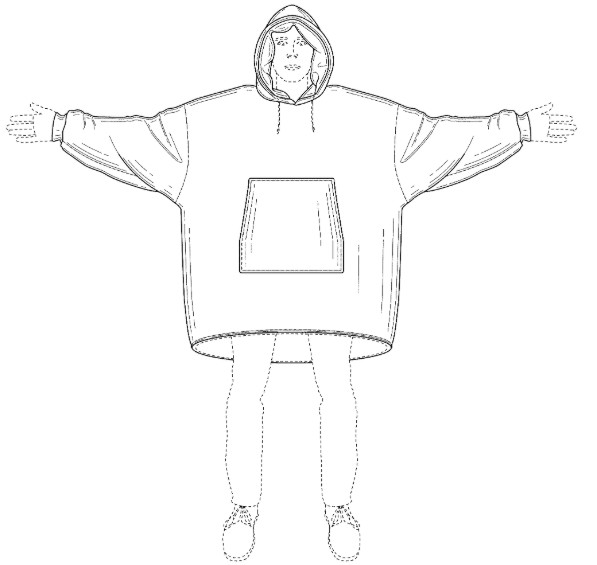
  • Top Brand LLC v. Cozy Comfort Company LLC: Federal Circuit Reverses $18.5M Infringement Verdict Based on Design Patent Disclaimer and Weak Trademark Use

    Top Brand LLC v. Cozy Comfort Company LLC: Federal Circuit Reverses $18.5M Infringement Verdict Based on Design Patent Disclaimer and Weak Trademark Use

    In a significant ruling that underscores the Federal Circuit’s evolving approach to design patent claim scope and the evidentiary burden in trademark cases, the court in Top Brand LLC v. Cozy Comfort Company LLC, No. 24-2191 (Fed. Cir. July 17, 2025), reversed a jury’s $18.5 million verdict for design patent and trademark infringement. Charles Gideon Korrell sees this decision to be noteworthy for three key holdings: (1) prosecution history disclaimer applies to design patents; (2) the accused product was within the surrendered scope and therefore could not infringe; and (3) the evidence of trademark infringement failed under the Lanham Act’s likelihood-of-confusion standard.

    Background: Oversized Hoodies and the D788 Design Patent

    Cozy Comfort markets a popular oversized wearable blanket called “The Comfy,” protected by U.S. Design Patent No. D859,788 (“D788 patent”) and two federal trademark registrations for “THE COMFY.” Top Brand, through various Amazon storefronts and other e-commerce platforms, sells similar products under the brands “Tirrinia” and “Catalonia.”

    In district court, Cozy Comfort alleged that Top Brand’s seven product lines infringed its D788 design patent and trademarks. Charles Gideon Korrell points out that the jury found infringement of both, awarding $15.4 million in disgorged profits for the design patent claim and $3.08 million for trademark infringement. The district court denied Top Brand’s motion for judgment as a matter of law (“JMOL”), and Top Brand appealed.

    Design Patent: The Federal Circuit Applies Prosecution History Disclaimer

    Judge Dyk, writing for the unanimous panel, held that the district court erred in failing to apply prosecution history disclaimer to the design patent. Although the doctrine has long applied to utility patents, this marks a definitive and precedential statement that it applies with equal force to design patents.

    The court relied on Pacific Coast Marine Windshields Ltd. v. Malibu Boats, LLC, 739 F.3d 694 (Fed. Cir. 2014), which recognized disclaimer by amendment in a design patent context, and extended the rationale to disclaimer by argument. The court emphasized that “[i]t would be contrary to the very purpose of design patent prosecution to allow the patentee to make arguments in litigation contrary to the representations which led to the grant of the patent.”

    Charles Gideon Korrell notes that Cozy Comfort had narrowed the scope of the D788 patent during prosecution to overcome prior art (specifically, the White reference) by distinguishing its design based on four features:

    1. A marsupial pocket that was narrow and square-like,
    2. Pocket placement beneath the armholes,
    3. A downward-sloping bottom hemline,
    4. A different armscye-pouch vertical alignment.

    Because the accused products from Top Brand mirrored the features found in the disclaimed White reference—especially in the width and shape of the pocket and the upward hemline—the court held that no reasonable jury could have found infringement under the proper claim construction.

    This decision reaffirms Egyptian Goddess, Inc. v. Swisa, Inc., 543 F.3d 665 (Fed. Cir. 2008) (en banc), and illustrates how prosecution statements that “distinguish” the claimed design can limit scope in infringement proceedings.

    Trademark: Descriptive Use of “Comfy” Not Likely to Confuse

    The Federal Circuit also reversed the jury’s trademark infringement verdict, finding insufficient evidence under the Ninth Circuit’s Sleekcraft factors. Most notably, the court concluded:

    • “THE COMFY” is a weak mark, given the descriptive nature of “comfy” for wearable blankets.
    • Top Brand never used the full phrase “THE COMFY” but instead used the term “Comfy” descriptively on a drop-down menu that also included generic terms like “Mermaid Tail Blankets” and “Snuggly.”
    • There was no evidence that “Comfy” functioned as a source identifier or was used with secondary meaning.
    • Alleged instances of actual confusion—such as customer questions on Amazon asking whether a Tirrinia product was “the real Comfy”—were de minimis and not clearly attributable to Top Brand’s conduct.

    The court emphasized that without use of the protected mark as a source identifier, even descriptively similar terms cannot give rise to actionable trademark infringement. It cited KP Permanent Make-Up, Inc. v. Lasting Impression I, Inc., 543 U.S. 111 (2004), and Booking.com B.V., 591 U.S. 549 (2020), to underscore the narrow scope of rights afforded to descriptive marks absent secondary meaning.

    Strategic Implications

    This decision contains several important takeaways:

    1. Design Patentees Must Live With Prosecution History: Just as in utility patents, representations made to the USPTO can and will be used to limit design patent claim scope. This ruling is a cautionary tale for patent prosecutors and litigators alike.
    2. Design Patent Scope Is Exceptionally Narrow: The court reiterated that design patents protect only the drawings shown and are easily limited by disclaimer. The “overall impression” test from Gorham and Egyptian Goddess remains the standard, but only within properly construed boundaries.
    3. Trademark Claims Require Real Evidence: The bar for proving likelihood of confusion under the Sleekcraft factors remains high. Descriptive terms like “comfy” cannot be monopolized without clear evidence of secondary meaning and source-identifying use.
    4. No Need to Reach Invalidity: Since the court reversed the infringement findings, it declined to address the validity of the D788 patent. This follows CloudofChange, LLC v. NCR Corp., 123 F.4th 1333 (Fed. Cir. 2024), and Cardinal Chemical Co. v. Morton Int’l, Inc., 508 U.S. 83 (1993), reinforcing that courts need not reach invalidity if it is conditionally abandoned and no longer relevant to the outcome.

    Charles Gideon Korrell believes this decision will have ripple effects in how district courts handle claim construction in design patent cases—especially when the patentee has walked a fine line during prosecution. It also serves as a warning against asserting weak trademark claims built on descriptive or generic terms without strong supporting evidence.

    By Charles Gideon Korrell

  • Curtin v. United Trademark Holdings, Inc.: No Standing for Consumers to Oppose Trademark Registrations Absent Commercial Interest

    Curtin v. United Trademark Holdings, Inc.: No Standing for Consumers to Oppose Trademark Registrations Absent Commercial Interest

    In Curtin v. United Trademark Holdings, Inc., No. 23-2140 (Fed. Cir. May 22, 2025), the Federal Circuit affirmed the dismissal of a consumer’s opposition to a trademark registration, holding that an individual lacking a commercial interest does not have statutory standing under 15 U.S.C. § 1063 to oppose trademark registration. Applying the Lexmark zone-of-interests and proximate cause framework—previously used in Lanham Act false advertising and cancellation contexts—the court clarified that opposition proceedings are reserved for parties asserting commercial harm.

    Background

    United Trademark Holdings (UTH) applied to register the mark RAPUNZEL for dolls and toy figures. Rebecca Curtin, a law professor and doll collector, filed a notice of opposition, asserting that the mark was generic, merely descriptive, and failed to function as a trademark. She claimed harm as a consumer who values access to a competitive marketplace for fairy tale-themed dolls.

    The TTAB dismissed her opposition, finding that she failed to demonstrate entitlement to bring the proceeding. Curtin appealed, arguing that the Board erred by applying the Lexmark framework instead of the Federal Circuit’s earlier test from Ritchie v. Simpson, 170 F.3d 1092 (Fed. Cir. 1999), which focused on whether the opposer had a “real interest” and a “reasonable basis” for believing they would be damaged.

    Federal Circuit’s Holding

    The Federal Circuit upheld the TTAB’s decision and confirmed that Lexmark International, Inc. v. Static Control Components, Inc., 572 U.S. 118 (2014), governs the analysis of who is entitled to bring opposition proceedings under § 1063. The court reasoned that Lexmark provides the correct interpretive framework for determining whether a party falls within the statutory cause of action. It also reiterated its earlier ruling in Corcamore, LLC v. SFM, LLC, 978 F.3d 1298 (Fed. Cir. 2020), which applied Lexmark to cancellation proceedings under § 1064.

    In Curtin, the court saw no reason to distinguish § 1063 from § 1064, especially given the parallel statutory language: both provisions authorize action by any person “who believes that he would be damaged” by a trademark registration. The court rejected Curtin’s argument that opposition proceedings are purely administrative and thus not subject to the same statutory cause-of-action analysis.

    Zone of Interests and Proximate Cause

    Applying the Lexmark test, the court held that Curtin’s interest—as a consumer—fell outside the zone of interests protected by the statutory provisions she invoked (genericness, descriptiveness, and failure to function as a mark). These provisions, the court explained, are designed to protect commercial interests and promote fair competition, not consumer choice or expression per se.

    The court also found Curtin’s alleged harms—such as reduced marketplace diversity, higher prices, and diminished access to “classic” Rapunzel dolls—to be too remote. These effects, it held, were speculative and derivative of any direct harm to commercial actors (e.g., doll manufacturers or sellers) and thus insufficient to establish proximate causation under Lexmark.

    Notable Precedents

    Takeaway

    Curtin reinforces that only parties with a commercial interest may invoke § 1063 to oppose trademark registration on grounds such as genericness or descriptiveness. While consumers may be indirectly affected by trademark registrations, those harms do not suffice under the Lanham Act unless they directly relate to a commercial interest. The ruling narrows the scope of opposition proceedings and aligns § 1063 with the broader statutory cause-of-action framework developed in Lexmark and its progeny.

    By Charles Gideon Korrell

  • In re: Vetements Group AG — Generic Foreign Terms Cannot Serve as Trademarks

    In re: Vetements Group AG — Generic Foreign Terms Cannot Serve as Trademarks

    In In re: Vetements Group AG, Nos. 2023-2050, -2051 (Fed. Cir. May 21, 2025), the Federal Circuit affirmed the Trademark Trial and Appeal Board’s (TTAB) refusal to register “VETEMENTS” as a trademark for clothing and online retail clothing store services. Applying the doctrine of foreign equivalents, the court agreed that “vetements,” the French word for “clothing,” is generic or, at best, merely descriptive of the applicant’s goods and services and lacked acquired distinctiveness. The ruling underscores key limits on registering foreign-language marks that translate into generic English terms.

    Background

    Vetements Group AG sought registration of “VETEMENTS” in both standard and stylized forms for a variety of apparel items and related retail services. The USPTO refused registration under § 2(e)(1) of the Lanham Act, finding the term generic or merely descriptive without secondary meaning. The TTAB affirmed, concluding that consumers would likely translate “vetements” into “clothing,” and would perceive the term as referring to a genus of goods.

    Legal Standards and Application

    The court conducted a de novo review of the Board’s legal determinations and assessed factual findings under the substantial evidence standard. It framed its analysis around several well-established principles:

    1. Generic Terms Are Not Registrable: A generic term “is the ultimate in descriptiveness” and incapable of indicating source. (Bullshine Distillery LLC v. Sazerac Brands, LLC, 130 F.4th 1025, 1029 (Fed. Cir. 2025)).
    2. Doctrine of Foreign Equivalents: Foreign terms from modern languages are generally translated into English to assess descriptiveness or genericness. This doctrine applies where the “ordinary American purchaser” would likely “stop and translate” the term. (Palm Bay Imports v. Veuve Clicquot, 396 F.3d 1369, 1377 (Fed. Cir. 2005)).
    3. Ordinary American Purchaser: This includes U.S. consumers familiar with the foreign language. Even absent a majority, an “appreciable number” of speakers is sufficient. The Board found over 2 million U.S. residents speak French at home, and French is widely taught in U.S. schools—facts the court deemed substantial evidence.
    4. Context of Use: The court distinguished cases like Palm Bay and Tia Maria, where foreign terms had no logical connection to the goods and thus were unlikely to be translated. By contrast, “vetements” directly describes the goods at issue—clothing—and consumers encountering the term on apparel would likely understand and translate it.

    Notable Precedent

    The court’s decision reaffirmed and applied key precedents:

    Takeaway

    The Federal Circuit reaffirmed that marks comprised of foreign terms will not evade genericness or descriptiveness bars simply by virtue of being in another language. The doctrine of foreign equivalents is not discretionary in such cases; rather, it operates as a consistent threshold inquiry. Where a foreign term clearly describes or generically names the applicant’s goods and would be understood by an appreciable segment of U.S. consumers, registration is foreclosed.

    For brand owners, this decision reinforces the importance of assessing the English meaning and consumer perception of foreign-language marks, particularly in connection with goods or services closely tied to the translated term.

    By Charles Gideon Korrell