Tag: anticipation

  • Sigray, Inc. v. Carl Zeiss X-Ray Microscopy, Inc.: Inherent Anticipation Requires Full Scope of the Claim

    Sigray, Inc. v. Carl Zeiss X-Ray Microscopy, Inc.: Inherent Anticipation Requires Full Scope of the Claim

    In a decision clarifying the boundaries between claim construction and factual findings of inherency, the Federal Circuit in Sigray, Inc. v. Carl Zeiss X-Ray Microscopy, Inc., No. 23-2211 (Fed. Cir. May 23, 2025), reversed the PTAB’s determination that certain claims of U.S. Patent No. 7,400,704 were not anticipated by the prior art. The court concluded that the Board had improperly narrowed the scope of the claims through implicit construction and that, under the correct claim scope, the prior art reference Jorgensen inherently disclosed the disputed limitation.

    Background

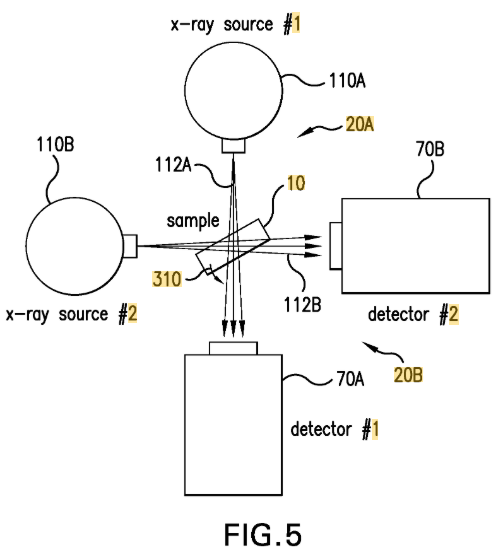
    Zeiss’s patent claims an X-ray imaging system incorporating “projection magnification,” with the key limitation being that the magnification of the projection stage is “between 1 and 10 times.” Sigray petitioned for inter partes review, arguing that a 1998 paper by Jorgensen disclosed all limitations of the claims, including this magnification range.

    The Board acknowledged that Jorgensen disclosed nearly all elements of the claims but found no anticipation because it concluded that the reference did not disclose “enough” beam divergence to result in the required projection magnification. Sigray appealed, arguing that this conclusion was based on an implicit and erroneous narrowing of the claim scope.

    Implicit Claim Construction

    The Federal Circuit found that the Board had implicitly construed the phrase “between 1 and 10 times” in a way that excluded very small—indeed undetectable—levels of magnification. The Board’s repeated focus on whether Jorgensen’s beam diverged “enough” and whether it created a “meaningful” amount of magnification revealed that it was assessing not just whether any magnification was present, but whether the magnification was perceptible or functionally significant.

    As the court explained, “[t]he Board’s use of the word ‘enough’ reflects that it considered a certain level of divergence as outside the claim. Narrowing the claim scope in this way is in fact claim construction.” The court emphasized that claim construction had occurred even though the Board disclaimed doing so—relying on its precedent in Google LLC v. EcoFactor, Inc., 92 F.4th 1049 (Fed. Cir. 2024), to look at the Board’s analysis and outcome rather than its labels.

    Inherent Disclosure and Physical Geometry

    After correcting the Board’s construction, the court held that Jorgensen inherently disclosed the disputed magnification limitation. Charles Gideon Korrell sees that the opinion stresses that under the geometric optics formula (M = (Ls + Ld)/Ls), any system with a diverging X-ray beam and a nonzero sample-to-detector distance (Ld > 0) necessarily results in magnification greater than 1.

    Since perfect collimation—i.e., zero divergence—is physically impossible in real-world systems, the court found that Jorgensen’s setup, which necessarily included some divergence, inherently satisfied the “between 1 and 10 times” magnification requirement. As stated in the opinion: “Here, it is undisputed that Jorgenson’s X-ray beams are not completely parallel and naturally must result in some magnification. That miniscule amount of magnification disclosed by the prior art definitionally achieves a magnification within the claimed range of 1 to 10.”

    Charles Gideon Korrell notes that the court relied heavily on SmithKline Beecham Corp. v. Apotex Corp., 403 F.3d 1331 (Fed. Cir. 2005), in concluding that inherent anticipation does not require recognition or intention by the prior art. Rather, it is sufficient that the claimed feature necessarily results from practicing the prior art reference, regardless of whether it was appreciated at the time.

    Reversal and Remand

    • Claims 1, 3, and 4: Reversed. The court found that these claims were inherently anticipated by Jorgensen.
    • Claims 2, 5, and 6: Vacated and remanded. Sigray had argued these claims were obvious, not anticipated, so the Board must evaluate obviousness in light of the Federal Circuit’s clarified claim scope.

    Takeaway

    Charles Gideon Korrell thinks that this decision illustrates the Federal Circuit’s firm stance on the plain meaning of claim terms. The phrase “between 1 and 10 times” includes any magnification over 1, no matter how small, and the Board erred by requiring a “meaningful” or “detectable” amount. The ruling reinforces the principle from SmithKline that inherent disclosure encompasses all inevitable consequences of prior art, even if imperceptible.

    It also underscores how implicit claim construction—especially when it narrows the scope based on technical judgments about magnitude or significance—can fundamentally alter the outcome of IPR proceedings. Courts and the PTAB alike must be careful not to impose unstated thresholds that conflict with the express language of the claims.

    Finally, Charles Gideon Korrell believes that the opinion serves as a reminder that physical realities of system design (such as the impossibility of true parallel beams) can be decisive in proving inherent anticipation. The court’s analysis—rooted in the inevitability of divergence and magnification in Jorgensen’s geometry—shows that anticipation can rest not only on what’s disclosed, but also on what must unavoidably occur.

    By Charles Gideon Korrell
  • Sage Products, LLC v. Stewart: “Sterile” Label in UK Document Found to Anticipate U.S. “Sterilized” Patent Claims

    Sage Products, LLC v. Stewart: “Sterile” Label in UK Document Found to Anticipate U.S. “Sterilized” Patent Claims

    In Sage Products, LLC v. Stewart, No. 2023-1603 (Fed. Cir. Apr. 15, 2025), the Federal Circuit affirmed the Patent Trial and Appeal Board’s (PTAB) finding that all challenged claims of Sage’s U.S. Patent Nos. 10,398,642 and 10,688,067 were unpatentable due to anticipation and obviousness. The ruling centered on whether a UK public assessment report (PAR) describing a product as “sterile” met the U.S. claim limitations requiring a “sterilized” composition. The court held that a skilled artisan would understand the regulatory meaning of “sterile” in the UK to include the concept of “sterilized” under U.S. patent law, thereby rendering the claims anticipated.

    Key Background

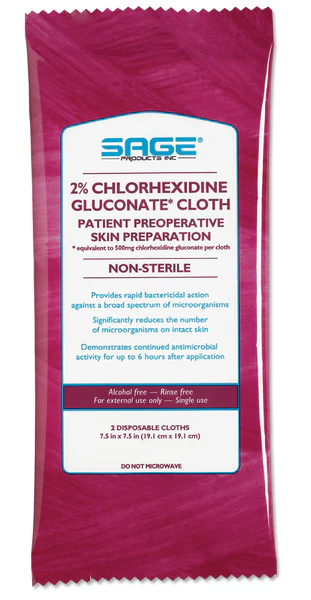
    Sage’s patents relate to sterilized chlorhexidine gluconate compositions used in antiseptic applicators. The PTAB instituted IPRs against multiple claims of these patents based on three grounds: (1) anticipation by the ChloraPrep PAR; (2) obviousness over the PAR and general knowledge; and (3) obviousness over the PAR in view of a U.S. publication (Degala).

    At issue was whether the PAR—an official regulatory document issued by the UK’s Medicines and Healthcare Products Regulatory Agency (MHRA)—disclosed a “sterilized” composition within the meaning of the claims.

    Key Prior Art and the “Sterile” vs. “Sterilized” Debate

    The PAR described a ChloraPrep product containing chlorhexidine gluconate and isopropyl alcohol for pre-operative skin disinfection, stating that the product is “sterile” and “sterile unless the seal is broken.” Importantly, the UK’s regulatory standard BS EN 556-1 defines “sterile” as having a sterility assurance level (SAL) of ≤10⁻⁶.

    The Board interpreted “sterilized” as requiring “a suitable sterilization process such that sterility can be validated,” and determined that a skilled artisan would equate the PAR’s “sterile” designation with this definition.

    Sage argued that this was a misreading, contending that even experts at the time misunderstood the ChloraPrep product to be sterile when it was not. Sage’s expert, Dr. Rutala, testified that the state of the art assumed ChloraPrep’s active antiseptic solution was not sterilized. However, the Board credited the testimony of BD’s expert, Dr. Dabbah, who explained that a skilled artisan with at least four years of experience in sterilization would understand that the UK labeling requirements effectively guaranteed terminal sterilization compliant with BS EN 556-1.

    The Federal Circuit’s Analysis

    The court upheld the PTAB’s factual findings under the substantial evidence standard:

    • Regulatory Understanding: The court found it “implausible” that a skilled artisan would be unaware of UK regulatory standards that governed the PAR’s use of the term “sterile.”
    • SAL and Composition Claims: The court affirmed that the PAR, read in light of BS EN 556-1, disclosed a sterilized composition with an SAL in the claimed range (10⁻³ to 10⁻⁹).
    • Dependent Claims: The court also upheld the Board’s findings that limitations such as a “sterilized colorant” were met, based on the overall characterization of the product as “sterile.”
    • Procedural Arguments: The court rejected Sage’s argument that the Board exceeded the scope of the IPR or improperly relied on extrinsic evidence. Expert testimony and references like Degala and Chiang were permissible to help interpret what the PAR disclosed to a skilled artisan.
    • Enablement: The court found no error in the Board’s reliance on other references to confirm that the methods of sterilization disclosed in the PAR were enabled.

    Takeaway

    This case underscores the importance of considering the regulatory context and the knowledge of a person of ordinary skill when interpreting foreign public documents during validity challenges. Here, the Federal Circuit signaled that official regulatory language, such as “sterile,” can carry weight under U.S. patent law when understood to meet the technical requirements of a claim—even when arising from a different jurisdiction.

    Moreover, this opinion reinforces that a patent challenger can use a combination of prior art and expert testimony to establish that a foreign document anticipates U.S. patent claims, especially when such a document reflects regulatory compliance with rigorous standards like BS EN 556-1.

    By Charles Gideon Korrell

  • Sierra Wireless v. Sisvel: (Dis)Qualification of Expert Witnesses in the PTAB

    Sierra Wireless v. Sisvel: (Dis)Qualification of Expert Witnesses in the PTAB

    In its March 10, 2025 decision in Sierra Wireless, ULC v. Sisvel S.p.A., the Federal Circuit vacated a Patent Trial and Appeal Board (PTAB) decision due, in part, to the improper reliance on an expert witness who was not shown to possess the qualifications of a person of ordinary skill in the art (POSITA). For patent litigators and practitioners navigating IPR proceedings, the court’s analysis serves as a reminder of the evidentiary standards governing expert testimony.

    Background

    Sisvel’s U.S. Patent No. 7,869,396 covers an ARQ method in wireless communications. The appellants—Sierra Wireless, Honeywell, and Telit Cinterion—challenged all claims in IPR, asserting anticipation and obviousness based on a prior international application (“Sachs”).

    The PTAB held the independent claims (1, 2, and 6–8) unpatentable but upheld the dependent claims (3–5, 9, 10). Both parties appealed. On appeal, the Federal Circuit took particular issue with how the Board assessed expert testimony from Sisvel’s declarant, Regis Bates.

    Expert Qualifications: The Core of the Dispute

    Appellants argued the PTAB improperly relied on Bates’ declarations despite his failure to meet the Board’s own definition of a POSITA. Specifically, the Board had defined a POSITA as someone with:

    • A degree in electrical engineering or a similar discipline, and
    • At least three years of relevant industry or research experience in wireless radio systems for data transmission and retransmission.

    Bates lacked a technical degree and had no clear experience designing transmission/retransmission methods in cellular networks. Nonetheless, his testimony was repeatedly cited by the Board in support of its obviousness and anticipation findings.

    The Federal Circuit agreed with the appellants, citing Kyocera Senco Indus. Tools Inc. v. ITC, 22 F.4th 1369 (Fed. Cir. 2022), to reaffirm that a witness must possess at least the ordinary skill in the art to opine on claim construction, anticipation, and obviousness. The Board’s reliance on Bates, without addressing whether his decades of telecommunications experience could substitute for formal qualifications, was deemed an abuse of discretion.

    Practical Takeaways

    • POSITA matters: A witness’s qualifications must align with the Board’s (or court’s) definition of a skilled artisan. Practitioners should be prepared to establish this alignment explicitly—especially in PTAB proceedings, where the evidentiary record is often limited to declarations and cross-examination.
    • Challenge early and clearly: Raise challenges to expert qualifications as early as possible. In this case, the issue was preserved and ultimately reversed a PTAB finding.
    • Substance over longevity: Even decades of experience in a general field may not suffice if it doesn’t map to the specific technical area required under the POSITA standard.

    Final Thoughts

    As patent practitioners continue to leverage expert declarations in IPRs and litigation, Sierra Wireless underscores the importance of tightly linking an expert’s credentials to the POSITA definition. Courts will not hesitate to vacate Board decisions that rest on testimony from unqualified experts—regardless of the expert’s experience or the PTAB’s apparent confidence.

    By Charles Gideon Korrell