Tag: Antidumping Duties

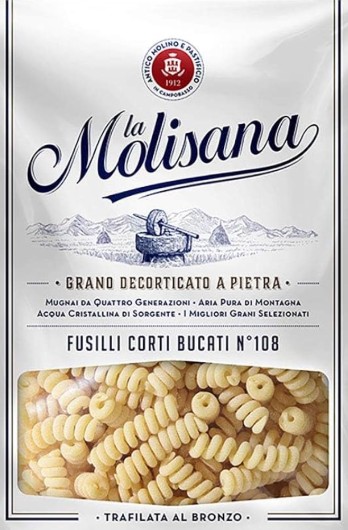
  • La Molisana v. United States: Inaccuracies in Protein Labeling Undermine Commerce’s Antidumping Comparison Method

    La Molisana v. United States: Inaccuracies in Protein Labeling Undermine Commerce’s Antidumping Comparison Method

    In La Molisana S.p.A. v. United States, the Federal Circuit issued a significant ruling that will reverberate across the antidumping landscape, particularly for food manufacturers and importers dealing with technical product classifications. The court held that the Department of Commerce’s methodology for comparing U.S. and foreign pasta products failed to comply with the statutory mandate to compare merchandise “identical in physical characteristics.” The court’s decision vacates in part the Trade Court’s ruling and remands the matter for reconsideration by Commerce.

    Background: Administrative Review of Italian Pasta Imports

    The case arises from Commerce’s 23rd administrative review of its longstanding antidumping duty order on certain pasta from Italy. Charles Gideon Korrell sees that the central dispute is Commerce’s “model-match” methodology, which uses control numbers (CONNUMs) to group pasta products for price comparison based on physical characteristics—most notably, protein content.

    Commerce classifies pasta as “premium” if it has 12.5% or more protein and “standard” otherwise. For the relevant review period (2018–2019), Commerce instructed respondents to report protein content based on the values listed on packaging labels—values that are subject to rounding and varying calculation methods between jurisdictions.

    La Molisana, an Italian pasta producer, challenged this methodology, arguing that:

    1. FDA-mandated rounding rules for U.S. labels can misclassify standard pasta as premium.
    2. U.S. and Italian producers use different nitrogen-to-protein conversion factors, introducing systematic distortion.
    3. The 12.5% breakpoint is outdated and no longer reflects market norms, particularly in light of an Italian commodity exchange updating its standard to 13.5%.

    The Court’s Holding: Methodology Must Reflect Physical Identity, Not Label Convenience

    The Federal Circuit agreed in part with La Molisana, focusing its analysis on the first two arguments. The Tariff Act requires comparisons with “foreign like product” that is “identical in physical characteristics.” 19 U.S.C. § 1677(16)(A). The court found that Commerce’s reliance on labeled protein content—affected by rounding rules and inconsistent conversion factors—introduced material inaccuracies.

    The court was particularly persuaded by the demonstrable distortion caused by rounding. For instance, pasta with actual protein content of 11.63% could be labeled as 7g per serving under FDA rules, effectively inflating the protein percentage to 12.5% and misclassifying the product as “premium” when it is not. Similarly, the different nitrogen-to-protein conversion factors (6.25 in the U.S. vs. 5.71 in the EU) could lead identical pastas to be categorized differently based solely on the market in which they are sold.

    While Commerce had emphasized transparency and consistency in relying on the labeled values, Charles Gideon Korrell notes that the court emphasized that these goals cannot override statutory requirements. Citing Pesquera Mares Australes Ltda. v. United States, 266 F.3d 1372 (Fed. Cir. 2001), the court noted that even minor physical differences are relevant if commercially significant, and Commerce had itself acknowledged protein content as a key indicator of quality and value.

    The Breakpoint Challenge: 12.5% Still Stands—for Now

    On the third issue, the Federal Circuit upheld Commerce’s refusal to move the standard/premium breakpoint from 12.5% to 13.5%. The court found that La Molisana failed to provide compelling, industry-wide evidence justifying the change. It noted that the “Market Report” offered by the plaintiffs was based on a limited retail sample and did not represent broader trends, and the updated Bologna Grain Exchange standard was insufficient on its own to displace the prevailing tripartite Italian benchmark that supported the 12.5% level.

    Takeaways for Trade Practitioners and Industry Stakeholders

    1. Physical characteristics control: When assessing dumping margins, convenience-based or packaging-level proxies cannot supplant the statutory mandate to compare merchandise based on actual physical traits.
    2. Accuracy over transparency: While administrative consistency matters, it cannot justify reliance on a methodology known to produce inaccurate results.
    3. Evidence must be industry-wide: Parties seeking to modify model-match criteria must present public, broadly representative data—not internal reports or regional snapshots.
    4. Implications beyond pasta: Although the case deals specifically with durum wheat pasta, its reasoning applies broadly to any imported goods where model-matching hinges on technical metrics that vary by jurisdiction.

    Charles Gideon Korrell finds that this decision strengthens the principle that antidumping margins must be based on reliable comparisons. For companies operating internationally, especially in food, agriculture, or pharmaceuticals, where labeling standards differ, this ruling could be the beginning of broader scrutiny into how Commerce ensures comparability across borders.

    By Charles Gideon Korrell

  • Navigating Antidumping Duties and International Trade: A Review of Vandewater v. United States

    On March 6, 2025, the United States Court of Appeals for the Federal Circuit issued a decision in Vandewater International Inc. v. United States, affirming the Department of Commerce’s determination that certain steel branch outlets imported by Vandewater fell within the scope of an existing antidumping duty (ADD) order. This ruling underscores the complex interplay between trade law and industry standards in determining the applicability of antidumping measures.

    Key Legal Issues

    The case revolved around whether Vandewater’s steel branch outlets qualified as “butt-weld pipe fittings” under a 1992 ADD order imposing duties on such fittings from China. The court addressed several major legal issues:

    1. Interpretation of Antidumping Duty Orders

    One of the central issues was the interpretation of the term “butt-weld pipe fittings” in the ADD order. Vandewater argued that its products were not traditional butt-weld pipe fittings as recognized by industry standards (such as ANSI B16.9). Commerce, however, found the language of the order ambiguous and conducted a multi-step scope analysis, concluding that the steel branch outlets fell within the order’s scope. The Federal Circuit upheld this finding, emphasizing that ambiguity in trade orders allows for a broader interpretation that may not strictly adhere to industry-defined categories.

    2. The Role of Industry Standards in Trade Disputes

    The appellants contended that industry standards should define what constitutes a butt-weld pipe fitting. However, the court found that conflicting evidence regarding industry usage prevented a definitive exclusion of Vandewater’s products. This ruling suggests that while industry standards can be persuasive, they are not necessarily dispositive in trade disputes.

    3. Commerce’s Discretion in Scope Determinations

    The court deferred to Commerce’s expertise in determining the scope of the ADD order. By affirming Commerce’s authority to use multiple sources, including prior rulings and trade investigations, the decision reinforces the agency’s broad discretion in enforcing trade laws. This has significant implications for companies navigating antidumping duties, as it signals that Commerce’s determinations will be given substantial weight in legal challenges.

    4. Retroactive Application and Trade Compliance

    Another point of contention was whether the ruling applied retroactively to past imports. While the court did not rule on this issue due to a lack of unliquidated entries before Commerce’s 2020 determination, the case highlights the uncertainty businesses face regarding past imports and potential liability under trade enforcement mechanisms.

    Implications for International Trade

    This decision has broader ramifications for businesses involved in international trade:

    • Trade Compliance for Manufacturers: Companies importing products subject to antidumping orders must be vigilant in assessing whether their products fall within the scope of existing orders. The broad interpretative authority granted to Commerce suggests that businesses should seek proactive rulings before importing goods that might be subject to duties.
    • Regulatory Uncertainty: The reliance on Commerce’s discretion underscores the challenges of navigating U.S. trade law, particularly for foreign manufacturers and importers. With industry standards playing a limited role in legal determinations, businesses may need to adapt compliance strategies beyond technical definitions.

    Conclusion

    The Federal Circuit’s decision in Vandewater v. United States serves as a critical reminder of the complexities involved in antidumping enforcement. While industry standards remain influential, Commerce’s broad discretion in trade classifications underscores the need for businesses to adopt proactive compliance strategies. As trade regulations continue to evolve, companies engaged in international commerce must carefully monitor legal developments to mitigate risks and ensure compliance with U.S. trade laws.ith U.S. trade laws.

    By Charles Gideon Korrell

  • Federal Circuit Ruling on Oman Fasteners: A Critical Look at Antidumping Duties and Administrative Review Standards

    On January 7, 2025, the U.S. Court of Appeals for the Federal Circuit issued an important ruling in Oman Fasteners, LLC v. United States, a case that highlights key issues in international trade law, including antidumping duties, administrative review procedures, and the application of adverse inferences under 19 U.S.C. § 1677e. The decision sheds light on the Commerce Department’s discretionary power in trade enforcement and the judiciary’s role in ensuring procedural fairness.

    Case Background: Commerce’s Antidumping Review and the 154.33% Duty Rate

    The dispute centers around the Commerce Department’s 2020–2021 administrative review of antidumping duties imposed on steel nails from Oman. Oman Fasteners, the primary respondent, submitted its questionnaire response through Commerce’s electronic system just 16 minutes past the deadline. Despite the minimal delay, Commerce rejected the submission and applied an adverse inference, resulting in a staggering antidumping duty of 154.33%—a drastic increase from the previous rate of 1.65%.

    Commerce justified the penalty under § 1677e(b), which allows the agency to use adverse inferences against parties that fail to cooperate “to the best of their ability.” However, Oman Fasteners challenged the ruling in the U.S. Court of International Trade (Trade Court), arguing that the rejection of its submission was an abuse of discretion. The Trade Court agreed, issuing an injunction that reverted the cash deposit rate to 1.65% pending further review.

    Key Legal Issues Addressed by the Federal Circuit

    The Federal Circuit addressed three major legal issues in its review:

    1. The Scope of Commerce’s Discretion in Rejecting Late Submissions

    One of the primary questions was whether Commerce acted within its discretion in rejecting Oman Fasteners’ submission. The court reaffirmed that Commerce has broad authority to set and enforce deadlines in antidumping proceedings. However, it also emphasized that agency discretion must be exercised reasonably and in proportion to the alleged non-compliance. The court found that a 16-minute delay did not constitute a significant failure to cooperate, especially since the respondent made good-faith efforts to submit the data on time.

    2. The Application of Adverse Inferences Under 19 U.S.C. § 1677e(b)

    The ruling also clarified the application of adverse inferences, a tool Commerce uses to penalize non-cooperative respondents. The Federal Circuit reiterated that the purpose of § 1677e(b) is to encourage compliance, not to impose punitive or aberrational dumping margins. The court concluded that Commerce’s reliance on a 154.33% rate from a 2014 petition was unsupported by substantial evidence. Given that Oman Fasteners had previously been assigned duty rates as low as 0.00%, Commerce failed to justify why such an extreme penalty was warranted.

    3. The Role of the Courts in Reviewing Trade Remedies

    The court underscored the Trade Court’s role in reviewing Commerce determinations for abuses of discretion. While agencies have considerable latitude in trade enforcement, judicial oversight remains essential to prevent arbitrary decision-making. The Federal Circuit upheld the injunction against the 154.33% duty, agreeing that Commerce’s action was excessive and unsupported by the record.

    Implications of the Decision

    The ruling has significant implications for companies facing antidumping reviews and highlights key principles for legal practitioners in trade law:

    • Timeliness vs. Reasonableness: While strict deadlines are necessary, Commerce must evaluate the actual impact of a minor delay before rejecting a submission outright.
    • Limits on Adverse Inferences: Agencies cannot impose punitive margins without demonstrating that a respondent’s actions significantly impaired the review process.
    • Judicial Oversight in Trade Enforcement: Courts play a crucial role in ensuring that trade remedies remain fair and proportionate.

    Conclusion

    The Federal Circuit’s decision in Oman Fasteners serves as a cautionary tale for both agencies and respondents in antidumping cases. While Commerce has broad authority to enforce trade laws, this case illustrates that fairness and proportionality remain essential safeguards against excessive penalties. The ruling reinforces the need for reasoned decision-making and provides a strong precedent for challenging arbitrary trade enforcement actions.

    For businesses navigating U.S. trade laws, this case is a reminder to maintain diligence in compliance while also being prepared to challenge unjust administrative actions through the courts.

    By Charles Gideon Korrell