Tag: damages

  • Rex Medical v. Intuitive Surgical: The Federal Circuit Draws a Hard Line on Apportionment

    Rex Medical v. Intuitive Surgical: The Federal Circuit Draws a Hard Line on Apportionment

    The Federal Circuit’s decision in Rex Medical, L.P. v. Intuitive Surgical, Inc. presents a familiar but still sobering outcome: a jury finds infringement and validity, awards substantial damages, and yet the patentee ultimately recovers nothing more than nominal damages. The case underscores, once again, that proof of infringement is only half the battle. Without a damages case that is adequately tethered to the facts and properly apportioned, even a favorable jury verdict can evaporate on post-trial review.

    Background and Procedural Posture

    Rex Medical sued Intuitive Surgical in the District of Delaware, asserting infringement of U.S. Patent No. 9,439,650, directed to surgical stapling systems. Although the case initially involved a related patent, only claim 6 of the ’650 patent ultimately proceeded to trial. The accused products were Intuitive’s SureForm surgical staplers and related reloads.

    Just days before trial, the district court excluded Rex’s damages expert, concluding that his reliance on a prior settlement license between Rex and Covidien was methodologically unreliable. The jury therefore heard no expert damages testimony from either side. Instead, Rex relied primarily on testimony from its president, who had participated in negotiating the Covidien license.

    The jury nonetheless found that Intuitive infringed claim 6, rejected Intuitive’s written description challenge, and awarded Rex $10 million in damages. On post-trial motions, however, the district court reduced the award to nominal damages of $1, concluding that Rex had failed to prove damages with legally sufficient evidence. The Federal Circuit affirmed across the board.

    Exclusion of the Damages Expert and the Apportionment Problem

    At the center of the appeal was the exclusion of Rex’s damages expert. The expert had opined that a hypothetical negotiation would have resulted in a $20 million lump-sum license, relying heavily on a $10 million settlement license between Rex and Covidien. That license, however, covered not only the ’650 patent, but also a related U.S. patent, numerous additional U.S. patents and applications, and a substantial number of foreign patents and applications.

    The expert attempted to justify treating the Covidien license as comparable by asserting that nearly all of its value resided in the two related U.S. patents, which he characterized as embodying the same core stapling innovation. The district court found this insufficient. The expert did not allocate any portion of the lump-sum payment between the ’650 patent and the other licensed patents, nor did he analyze whether the additional patents covered Covidien products or contributed independent value to the agreement.

    On appeal, the Federal Circuit agreed. The court emphasized that when a comparable license covers multiple patents, a damages analysis must account for the relative contribution of the asserted patent. Generalized assertions that most patent portfolios are “value-skewed” toward one or two key patents were deemed untethered to the facts of the case. Because the expert failed to perform any meaningful allocation, the district court did not abuse its discretion in excluding his testimony.

    Charles Gideon Korrell notes that this portion of the opinion fits squarely within a growing line of cases emphasizing rigor in damages methodology, particularly where portfolio licenses are involved. Courts are increasingly unwilling to accept high-level narratives in place of concrete, case-specific analysis.

    From $10 Million to $1: JMOL of No Damages

    The more striking aspect of the decision is the Federal Circuit’s affirmance of the district court’s reduction of the jury’s $10 million award to nominal damages. Although framed as a remittitur in the judgment, the appellate court treated the ruling as a grant of judgment as a matter of law that Rex had proven no damages at all.

    The Federal Circuit reiterated several core principles. While the Patent Act requires an award of a reasonable royalty, it does not mandate damages in the absence of evidence from which a royalty can be reasonably derived. Damages must be proven, not guessed. A jury may select a royalty figure within the range supported by the record, but it may not speculate where the record provides no meaningful basis for apportionment.

    Here, the evidentiary gap proved fatal. With the damages expert excluded, Rex relied on the Covidien license and lay testimony. But the Covidien agreement licensed a broad portfolio, and Rex offered no evidence enabling the jury to determine what portion of the $10 million payment was attributable to the ’650 patent alone. The problem was compounded by the fact that, in the Covidien litigation, Rex had dropped the ’650 patent before settlement, leaving only the related patent at issue. That procedural history made it at least plausible that the licensed value was driven primarily by the other patent, not the one asserted against Intuitive.

    The lay testimony did not cure these defects. Rex’s president identified various qualitative factors influencing the Covidien settlement but could not assign any dollar value to the ’650 patent, confirm the relevance of expired or foreign patents, or explain how the $10 million figure related to product sales. Large sales figures and market opportunity testimony likewise failed to provide a bridge to a reasonable royalty tied to the patented invention.

    Charles Gideon Korrell believes this aspect of the ruling is especially instructive for trial strategy. Proceeding to trial without a viable expert damages case, particularly after an adverse Daubert ruling, is a high-risk gamble. Once the expert testimony was excluded, Rex needed alternative evidence capable of supporting apportionment. The absence of such evidence left the jury’s award vulnerable to post-trial elimination.

    Infringement and Claim Construction

    Intuitive cross-appealed on infringement, focusing on claim construction issues related to the “lower portion” of the claimed beam and the requirement that the beam be “configured to cause” movement of the staple pusher. The Federal Circuit rejected these arguments.

    The court affirmed the district court’s construction of “lower portion” as having its plain and ordinary meaning, which could include structures extending beyond the lowermost horizontal section of an I-beam. The claim language did not require a strict I-beam geometry, and the court declined to import limitations from a single embodiment in the specification.

    Substantial evidence also supported the jury’s finding that Intuitive’s products satisfied the “configured to cause” limitation. Testimony from both sides’ experts and Intuitive’s own engineers established that a portion of the beam contacted a shuttle, which in turn caused the staple pusher to move. The court emphasized that direct infringement is a strict-liability inquiry and does not depend on the designer’s intent or the primary purpose of a given component.

    Written Description Challenge Rejected

    Finally, the Federal Circuit affirmed the jury’s rejection of Intuitive’s written description challenge. Intuitive argued that if the claims were broad enough to cover a beam-and-shuttle configuration, the specification must expressly disclose such a configuration. The court disagreed, explaining that written description focuses on whether the inventor had possession of the claimed invention, not whether the specification anticipates every possible infringing embodiment.

    The court characterized Intuitive’s argument as a repackaged non-infringement theory. Nothing in the intrinsic record precluded the presence of additional components, and the use of “comprising” language in the claims further undermined the argument that the specification needed to describe the accused configuration in detail.

    Takeaways

    The result is stark. Rex emerged with a judgment confirming infringement and validity, yet no meaningful monetary recovery. The decision reinforces several practical lessons.

    First, comparable licenses are powerful but dangerous tools. When a license covers more than the asserted patent, apportionment is not optional. Second, exclusion of a damages expert can be outcome-determinative. Once that testimony is gone, the remaining evidence must still allow the jury to tie dollars to the patented invention. Third, patentees should think carefully before proceeding to trial without a viable damages theory that can survive post-trial scrutiny.

    As Charles Gideon Korrell observes, this case is a reminder that patent litigation is ultimately an evidentiary exercise. Winning on liability does not excuse gaps in proof on damages. Where those gaps remain, courts will not hesitate to reduce a verdict to zero, even after a jury has spoken.
    By Charles Gideon Korrell

  • Jiaxing Super Lighting v. CH Lighting: EcoFactor’s Shadow Over Damages Testimony Grows

    Jiaxing Super Lighting v. CH Lighting: EcoFactor’s Shadow Over Damages Testimony Grows

    The Federal Circuit’s decision in Jiaxing Super Lighting Electric Appliance Co. v. CH Lighting Technology Co., No. 23-1715 (Fed. Cir. July 28, 2025) serves up a triple helping of reversible error: (1) improper exclusion of key on-sale bar evidence, (2) a reaffirmed jury verdict on validity and infringement of a shock-prevention patent, and (3) a stern reminder—bordering on a judicial scolding—that district courts must take EcoFactor v. Google, 137 F.4th 1333 (Fed. Cir. 2025) (link) seriously when evaluating damages experts under Rule 702.

    It’s a dense opinion, spanning evidentiary law, substantive invalidity doctrines, and practical Daubert gatekeeping. Charles Gideon Korrell notes that this tripartite structure makes the case particularly important for litigators managing complex, multi-patent LED disputes—an increasingly common domain as LED lamp technology sprawls into safety, energy, and materials science.

    To keep things organized, we follow the court’s structure: (1) the tube-lamp patents and the on-sale bar; (2) the ’140 shock-prevention patent; and (3) the damages analysis under EcoFactor.


    I. When Excluding Documents Becomes Prejudicial Error

    The case involved three Super Lighting patents:

    CH Lighting stipulated to infringement of the ’125 and ’540 tube-lamp patents but challenged their validity under the America Invents Act’s on-sale bar, 35 U.S.C. § 102(a). That defense depended on three commercially available LED tube products from Cree, MaxLite, and Philips—tubes that CH Lighting’s expert testified embodied the asserted claims and were “on sale in 2014.”

    But Judge Albright excluded:

    1. MaxLite documents showing commercial availability,
    2. testimony of MaxLite employee Eric Marsh, offered solely to authenticate those documents, and
    3. “DX-41,” an internal Super Lighting teardown presentation containing Cree and Philips circuit diagrams.

    The district court’s rationale? Lack of “timely notice” about Marsh’s role and a belief that DX-41 related only to a long-abandoned inequitable-conduct defense.

    The Federal Circuit was not impressed.

    A. Authentication Is Not Trial by Ambush

    The appellate panel held that excluding Marsh was an abuse of discretion. No Federal Rule, local order, or case law required CH Lighting to identify authentication witnesses in advance. Rule 901 merely requires “evidence sufficient to support a finding that the item is what the proponent claims.”

    The opinion stresses—echoing the practical instincts of Charles Gideon Korrell—that trials are not ambush arenas for authentication witnesses. They are fact witnesses whose role is ministerial, not strategic. If a document was disclosed, a competent authenticating witness should be allowed.

    By excluding Marsh, the district court effectively prevented the jury from seeing documents the expert relied upon—documents that would have corroborated his on-sale testimony. Prejudice was unavoidable.

    B. DX-41 Was A Validity Document, Not Inequitable Conduct

    DX-41 showed Super Lighting had physical Cree and Philips tubes in hand before the patents’ priority dates. The district court mistakenly concluded the slides addressed inequitable conduct. But both the expert report and in-court proffers made clear: the slides supported on-sale bar invalidity, not misconduct.

    The panel held the exclusion reversible error.

    C. Result: New Trial on Invalidity and Damages

    Because the jury never saw the evidence supporting the on-sale defense, the JMOL of no invalidity was improper. The panel reversed and remanded for a new trial on validity of the tube patents.

    And since damages were awarded as a single number for all three patents, the damages award had to be vacated as well.

    This result, in the eyes of Charles Gideon Korrell, underscores a structural issue in multi-patent trials: when multiple liability theories funnel into a single damages verdict, any error touching any theory can blow up the entire award.


    II. Jury Verdict on the ’140 Patent: Infringement and No Anticipation

    The ’140 patent deals with shock prevention using an installation-detection circuit. Both parties agreed that a prior-art application (“Ono”) disclosed similar technology. The dispute focused on whether Ono’s pulses “control turning on and off” the switch, as the claim requires.

    CH Lighting’s expert said yes.
    Super Lighting’s expert said no—the pulses merely detect impedance, and it is the impedance response that governs the switch.

    The jury believed Super Lighting’s expert. Under the deferential substantial-evidence standard, the Federal Circuit affirmed.

    The panel emphasized that this interpretation did not conflict with the infringement verdict. CH Lighting argued that if Ono doesn’t anticipate because its pulses don’t directly control the switch, then the accused LT2600 chips also shouldn’t infringe. But Super Lighting’s infringement expert testified that the LT2600 chips do directly control switching—unlike Ono.

    The jury was allowed to believe him. Case closed.


    III. Damages: EcoFactor Looms Large

    If the invalidity ruling was the headline, the damages section is the cautionary tale—and the place where EcoFactor casts a long shadow.

    Super Lighting’s damages expert, Ms. Kindler, relied on two prior licenses:

    • The TCP license – $0.30 per unit
    • The Lunera license – 5% flat fee (which she converted to $0.35–0.45 per unit)

    Each was a portfolio license, not a single-patent license. Yet Ms. Kindler claimed that a “subset” of three patents—comparable to the asserted patents—“drove the negotiation.”

    Her evidence?

    1. A list of 15 allegedly infringed patents Super Lighting sent TCP during pre-negotiation correspondence.
    2. “Discussions with Super Lighting personnel” about relative patent importance.

    The Federal Circuit, invoking EcoFactor, explained that this sort of testimony is insufficient. Experts must:

    • show actual evidence that specific asserted patents drove value,
    • reliably apportion portfolio royalties to patented technology at issue, and
    • base methodology on “sufficient facts or data” under Rule 702.

    The panel noted that Ms. Kindler relied heavily on interested-party assertions and bare inference, not documentary evidence or detailed license analysis. Worse, the district court’s Daubert ruling offered no meaningful reasoning, something EcoFactor explicitly condemns.

    Charles Gideon Korrell believes this portion of the opinion will have immediate impact: where portfolio licenses are involved—as they so often are in LED litigation—experts now must produce concrete, comparative evidence or risk exclusion.

    What Happens Next?

    On remand, the district court must conduct a rigorous EcoFactor analysis. If Ms. Kindler’s testimony cannot be rehabilitated with actual evidence, Super Lighting may need a completely new damages theory.


    IV. Takeaways for Patent Litigators

    This case is unusually instructive across multiple doctrinal areas. Several lessons stand out:

    1. Authentication Witnesses Should Not Be a Flashpoint

    Courts must not impose extra-textual disclosure obligations for authentication witnesses. A fact witness who can identify documents disclosed long before trial should generally be permitted.

    2. On-Sale Bar Evidence Requires Corroboration—And Jurors Should See It

    Expert testimony alone cannot carry an on-sale bar unless grounded in record evidence. Excluding documents supporting that testimony is high-risk error.

    3. EcoFactor Now Governs the Damages Landscape

    EcoFactor demands:

    • concrete documentary support,
    • apportionment tied to specific patent value, and
    • a detailed Rule 702 analysis from district courts.

    Blanket adjustments and “trust me, I’ve done this before” methodology are no longer acceptable. Charles Gideon Korrell observes that this trend is pushing damages law toward a more empirical, data-driven model—one many litigants may not be structurally prepared for.

    4. Single Damages Verdicts Are Fragile

    When a verdict hangs on multiple liability findings, any reversible error affecting any theory can unravel the entire award.


    Conclusion

    The Federal Circuit affirmed validity and infringement of the ’140 shock-prevention patent but reversed and remanded on the tube-lamp patents and damages. As Charles Gideon Korrell insightfully puts it, EcoFactor has not just shifted the landscape—it has raised the floor. Going forward, damage experts must bring real evidence, not narrative gloss, especially in portfolio-license cases.

    By Charles Gideon Korrell

  • EcoFactor, Inc. v. Google LLC (En Banc): CAFC Clarifies Daubert Gatekeeping for Patent Damages Experts

    EcoFactor, Inc. v. Google LLC (En Banc): CAFC Clarifies Daubert Gatekeeping for Patent Damages Experts

    In a closely watched en banc decision issued on May 21, 2025, the Federal Circuit reversed the district court’s denial of a new trial on damages in EcoFactor, Inc. v. Google LLC, No. 2023-1101. The court held that the trial court abused its discretion by admitting expert damages testimony that was not based on sufficient facts or data, in violation of Federal Rule of Evidence 702 and Daubert. While the Federal Circuit reinstated the prior panel’s decision on non-damages issues, its en banc ruling significantly clarifies and tightens the standard for admissibility of expert testimony in patent damages cases.


    Background

    EcoFactor sued Google in the Western District of Texas, alleging that Google’s Nest thermostats infringed U.S. Patent No. 8,738,327. The jury found infringement and awarded a $20 million lump-sum damages award based on testimony from EcoFactor’s expert, David Kennedy. Kennedy opined that comparable licenses supported a reasonable royalty of $X per unit and that Google should pay damages on that basis.

    Google challenged the admissibility of Kennedy’s opinion under Daubert, arguing that his damages theory was not based on sufficient facts or reliable methodology. A panel of the Federal Circuit affirmed the district court (with Judge Prost dissenting in part), but the court subsequently granted rehearing en banc to consider whether the trial court complied with Rule 702 and Daubert in admitting Kennedy’s per-unit damages theory.


    The En Banc Holding

    Chief Judge Moore, writing for the majority, reversed the district court and ordered a new trial on damages. The court held that Kennedy’s opinion was inadmissible under Rule 702(b) because it relied on an unsupported factual premise: that three prior licensees (Daikin, Schneider, and Johnson Controls) agreed to a $X per-unit royalty in lump-sum settlements with EcoFactor.

    The court emphasized that Rule 702, especially after its 2023 amendment, requires trial courts to determine whether expert opinions rest on sufficient facts and whether those facts support the conclusions the expert seeks to offer. The court clarified that the judicial gatekeeping function under Daubert is not limited to methodology but extends to whether the factual basis itself is adequately supported by the record.


    Why Kennedy’s Testimony Was Excluded

    Kennedy relied on three license agreements to support his conclusion that a $X per-unit royalty had been accepted by other companies in the market. But the court found:

    • The license agreements expressly stated that the lump sums were not based on unit sales and did not reflect a royalty.
    • The “whereas” clauses recited only EcoFactor’s belief about the $X royalty and did not reflect any agreement or shared understanding with the licensees.
    • Kennedy’s testimony that prior licensees paid $X per unit was not supported by the contracts or any underlying sales data.

    Moreover, EcoFactor’s CEO, Shayan Habib, testified that he lacked access to sales data from the licensees and based his understanding of the lump sums on generalized knowledge of the industry and advice from undisclosed advisors. The court found this insufficient to support Kennedy’s expert conclusions.

    Because Kennedy’s opinion that others paid $X per unit was central to his damages analysis, and because the jury may have relied on that opinion in reaching its verdict, the error was not harmless.


    The Role of the 2023 Amendment to Rule 702

    A key part of the opinion is its reliance on the 2023 amendment to Rule 702, which clarified that courts must determine whether it is “more likely than not” that the proffered expert testimony meets the requirements of the rule. Importantly, the amendment emphasizes that questions of sufficiency of the facts or data are questions of admissibility, not weight. The court explicitly criticized the trend among some trial courts to defer these issues to cross-examination or jury consideration, reaffirming that trial judges must exclude opinions that extend beyond what the expert’s basis and methodology can reliably support.


    Interaction with Appellate Review Standards

    Although not the primary focus of the decision, the ruling has prompted commentary (including from Patently-O) about the Federal Circuit’s application of de novo review to what is ostensibly a discretionary evidentiary ruling. While the court couches its holding as a classic abuse-of-discretion review, its willingness to re-interpret the license agreements and witness testimony may suggest a more searching, fact-driven analysis than the deferential standard traditionally implies.

    Charles Gideon Korrell believes that this raises the question of whether the Federal Circuit is re-calibrating its approach to evidentiary rulings in damages cases, especially where expert conclusions turn on contract interpretation or disputed factual premises.


    Reinforcing Precedent on Licensing and Reasonable Royalties

    The decision is rooted in long-standing precedent regarding the use of license agreements in reasonable royalty calculations:

    EcoFactor builds on this line of cases by reinforcing that a reasonable royalty analysis must be grounded in actual, verifiable facts and that experts cannot rely on implied or asserted beliefs absent factual substantiation.


    Broader Implications: Is the Remedies Remedy Now Complete?

    Charles Gideon Korrell sees that the Federal Circuit’s en banc ruling sends a clear message: damages experts must tie their opinions to the factual record in a way that satisfies Rule 702’s admissibility standard—not just survive cross-examination. This decision may mark the culmination of a doctrinal tightening that began over a decade ago.

    If LaserDynamics began the process and Apple v. Motorola accelerated it, the en banc EcoFactor ruling may indeed represent the near-completion of the “remedies remedy”—a recalibration of how courts scrutinize damages theories in patent litigation.

    Experts must now be prepared not only to explain their methodologies but also to demonstrate a verifiable factual foundation for the inputs to their calculations. When the basis for a per-unit royalty is a prior license, courts will require clear evidence that the license actually reflects such a royalty—not just that a party believes it does.


    Final Thoughts

    While the decision is nominally about one expert’s flawed opinion, Charles Gideon Korrell believes that it carries broader implications for how trial courts are expected to apply Rule 702. The Federal Circuit has reinforced that trial judges must actively police the admissibility of expert testimony, particularly in patent damages cases where technical complexity and legal ambiguity often converge.

    Going forward, Charles Gideon Korrell believes that litigants should expect closer scrutiny of any damages theory that relies on settlement agreements or implied royalty rates—and should be ready to defend the factual integrity of those theories from the outset.

    By Charles Gideon Korrell

  • Wash World v. Belanger: CAFC Reins in Claim Construction and Remits Damages Based on Improper Convoyed Sales

    Wash World v. Belanger: CAFC Reins in Claim Construction and Remits Damages Based on Improper Convoyed Sales

    The Federal Circuit issued a split ruling in Wash World Inc. v. Belanger Inc., affirming the district court’s judgment of infringement but vacating the lost profits damages award due to improper inclusion of convoyed sales.

    The case presents key takeaways on claim construction waiver, convoyed sales damages, and preserving post-trial remedies, with important implications for managing patent risks and damages strategies.

    Background

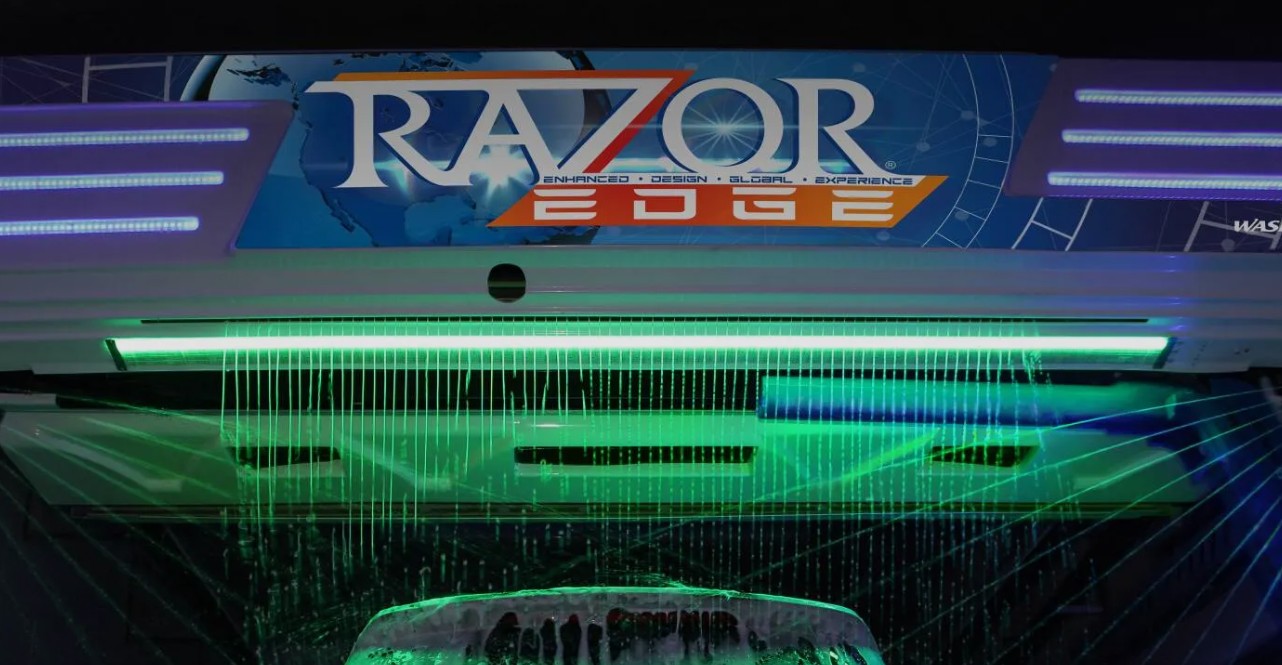
    Belanger Inc., holder of U.S. Patent No. 8,602,041 covering a lighted spray arm in an automated car wash system, accused Wash World’s “Razor EDGE” system of infringement. Wash World responded with a declaratory judgment action and was found liable for infringement of independent claim 7 and several dependent claims. A jury awarded over $10 million in damages, primarily as lost profits.

    Claim Construction: Know Your Limits on Appeal

    Wash World appealed on the basis that the district court improperly failed to construe three key claim terms:

    • “Outer cushioning sleeve”
    • “Predefined wash area”
    • “Dependingly mounted from”

    The Federal Circuit, applying a strict forfeiture rule, found that Wash World had waived its proposed constructions on the first two terms by not clearly presenting them to the district court.

    Wash World’s pivot from its trial construction (“thick sleeve of extruded foam plastic”) to a new appellate construction (“soft and resilient…can spring back into shape”) was deemed materially different and untimely. Similarly, its appellate interpretation of “predefined wash area” as requiring invariant dimensions and pre-wash definition was new and forfeited.

    Only the “dependingly mounted from” issue was properly preserved. The court affirmed that both direct and indirect mounting satisfied the claim, rejecting Wash World’s noninfringement theory based on the use of an intermediate trolley.

    This opinion underscores the importance of framing claim construction disputes early and clearly. Implicit arguments or vague references to functional limitations may be insufficient. The Federal Circuit will enforce waiver unless “exceptional circumstances” are shown.

    Damages: The Limits of Convoyed Sales

    While Wash World’s claim construction arguments were mostly waived, it succeeded on appeal in challenging a significant portion of the jury’s $9.8 million lost profits award — approximately $2.58 million tied to convoyed (i.e., unpatented) components sold alongside the patented system.

    The legal standard for convoyed sales is exacting. Under Rite-Hite v. Kelley Co., to recover lost profits on unpatented components sold with a patented item, a patentee must prove that the items together constitute a functional unit — that is, components that are physically and functionally interrelated in such a way that they operate together as part of the patented invention.

    What the patentee cannot do is claim lost profits on items that are merely sold together as a matter of customer convenience or commercial packaging. This is a critical line — and one Belanger crossed, according to the Federal Circuit.

    At trial, Belanger’s damages expert, Dr. McDuff, offered lost profit calculations based on sales of the entire car wash system, including dryers and other components not covered by the asserted patent claims. His per-unit lost profit number — $53,866 — incorporated profits from those unpatented components. Critically, the jury awarded damages that exactly matched his bottom-line estimate, making it clear that convoyed sales were part of the jury’s calculation.

    Belanger attempted to defend the inclusion by arguing that the products were “typically” sold as a package and that dryers were installed in roughly 75% of Belanger’s IBA systems. But the Federal Circuit found that this testimony — emphasizing sales custom rather than functional integration — fell short of establishing the required functional relationship. As the court put it, “selling the products together as a package is the exact sort of ‘matter of convenience or business advantage’ that does not, in and of itself, give rise to damages liability.”

    The Federal Circuit was also unmoved by Belanger’s argument that the general verdict form precluded remittitur. Although the jury did not specify how much of its award was attributable to convoyed sales, Belanger had repeatedly told the district court that the jury adopted Dr. McDuff’s model — a point that judicially estopped it from arguing otherwise on appeal.

    In light of the above, the court ordered remittitur of $2,577,848 and directed the district court to enter a reduced damages award.

    By Charles Gideon Korrell

  • Court Upholds Limited Damages in Bitmanagement Software GmbH v. United States: Key Takeaways on Copyright Infringement and Licensing

    On January 7, 2025, the United States Court of Appeals for the Federal Circuit issued its decision in Bitmanagement Software GmbH v. United States, affirming a damages award of $154,400 for copyright infringement by the U.S. Navy. The case centered around the Navy’s unauthorized copying and use of Bitmanagement’s 3D rendering software, BS Contact Geo, raising significant issues in copyright law, licensing agreements, and damages calculations.

    Background of the Case

    Bitmanagement, a German software company, initially licensed BS Contact Geo to the Navy in 2008 through seat licenses, which restricted installation to specific computers. In 2012, the parties transitioned to a floating license model, which allowed broader access but required monitoring software (Flexera) to enforce concurrent usage limits. However, the Navy later installed the software on over 429,000 computers without ensuring compliance with the agreed usage restrictions.

    After discovering this breach, Bitmanagement sued the U.S. government for copyright infringement in 2016, leading to a complex litigation over the scope of the Navy’s license and the appropriate damages for the unauthorized copying.

    Major Legal Issues Addressed

    1. Implied License and Copyright Infringement

    One of the core disputes was whether the Navy’s actions constituted copyright infringement or were covered by an implied license. The Court of Federal Claims initially ruled in favor of the Navy, holding that an implied license existed. However, on appeal, the Federal Circuit clarified that while an implied license was granted, it was conditioned on the use of Flexera to track and limit concurrent use. Since the Navy failed to implement this safeguard, its conduct amounted to copyright infringement.

    2. Method of Calculating Damages

    A crucial issue in the case was the method for calculating damages under 28 U.S.C. § 1498(b), which governs copyright infringement claims against the U.S. government. Bitmanagement argued that it should be compensated based on a per-copy basis, amounting to approximately $85.9 million, as the Navy had installed the software on 429,567 computers.

    The Court, however, applied the Gaylord v. United States precedent, which mandates that damages in such cases should reflect a hypothetical negotiation at the time of the infringement. The Court reasoned that because Bitmanagement had previously agreed to floating licenses—where charges were based on concurrent users rather than installations—the hypothetical negotiation would have led to a license fee based on usage rather than per-copy sales.

    3. Burden of Proof on Usage

    The ruling also addressed the burden of proof regarding the Navy’s actual use of the software. The Federal Circuit held that, as the party that breached the licensing agreement, the Navy bore the burden of proving its actual software usage. However, the Court found that Bitmanagement had not sufficiently challenged the government’s usage estimates and did not provide alternative damages calculations.

    4. Admissibility of Expert Testimony

    Bitmanagement challenged the admission of testimony from the government’s expert, David Kennedy, who estimated damages based on Navy usage data. The Court upheld his testimony, finding it credible and aligned with standard methodologies for determining copyright damages in government infringement cases.

    Implications for Intellectual Property and Government Licensing

    1. Importance of Clear Licensing Terms

    This case underscores the importance of well-defined licensing agreements, particularly for software providers dealing with government entities. The failure to enforce explicit monitoring and usage restrictions allowed the Navy to argue for a more limited interpretation of damages.

    2. Challenges in Proving Damages

    The decision highlights the difficulties in proving damages for software infringement, especially when a floating license model is involved. Companies should maintain detailed records of negotiations and enforce monitoring mechanisms to strengthen potential claims in litigation.

    3. Limits on Government Copyright Liability

    Under Gaylord, the Court reaffirmed that copyright damages against the government are limited to “reasonable and entire compensation,” which does not necessarily equate to commercial licensing rates in the private sector. This means companies contracting with the government should anticipate that damages may be awarded based on actual use rather than theoretical maximum exposure.

    Conclusion

    The Federal Circuit’s decision in Bitmanagement Software GmbH v. United States sets a precedent for how copyright damages are calculated in government infringement cases. By affirming a relatively modest damages award, the Court reinforced the principle that compensation should reflect a reasonable licensing negotiation rather than punitive measures. For intellectual property owners, the ruling serves as a reminder to establish clear contractual safeguards and proactively enforce licensing terms to avoid disputes over implied use and damages calculations.

    By Charles Gideon Korrell

  • Keeping Patent Damages Expert Opinions In Check

    The Federal Circuit has taken the unusual step of granting en banc review in EcoFactor Inc. v. Google LLC to address fundamental questions about patent damages. The order vacates the previous decision and calls for new briefing on whether the district court properly applied Federal Rule of Evidence 702 and Daubert v. Merrell Dow Pharmaceuticals, Inc. in its allowance of testimony from EcoFactor’s damages expert. This is the first time since 2018 that the Federal Circuit has taken an en banc case involving a utility patent.

    The dispute centers on testimony from EcoFactor’s damages expert, David Kennedy. Google was found by a jury to infringe EcoFactor’s patent related to smart thermostat technology. Mr. Kennedy opined that Google should pay a specific per-unit royalty rate for infringement, a rate spelled out in three license agreements between EcoFactor and three other companies. Each agreement contained a “whereas” clause stating that EcoFactor “believes” that the royalty payment was based on a particular per-unit rate, and the operative provisions of the agreements explicitly stated that the payment is not based upon sales and does not reflect or constitute a lump sum. Despite these arguably contradictory provisions, and without analyzing any underlying sales data or documentation showing how the lump sums were calculated, Mr. Kennedy testified that the licenses reflected an agreed-upon per-unit license rate applicable to Google.

    Google challenged this methodology.  Google argues that the royalty rate does not reflect the value of the asserted patent but instead reflects the value of EcoFactor’s entire portfolio. The licenses included all of EcoFactor’s patents and patent applications. Google further argues that the expert failed to properly apportion the royalty rate to just the asserted patent.

    EcoFactor argues that the case is a poor candidate for en banc review, and that the majority properly applied the deferential standard of review to find that the district court did not abuse its discretion in admitting the damages opinion. EcoFactor argues that the per-unit royalty rate is spelled out in three different arms-length patent license agreements. EcoFactor further argues that the agreements settled infringement allegations involving comparable patents against specific smart thermostat features, making them sufficiently comparable to the case at bar. EcoFactor argues that Mr. Kennedy did apportion between the asserted and non-asserted patents.

    The Federal Circuit’s decision in this case is likely to have some impact on the way damages are calculated in patent cases in the future. The court is being asked to clarify when damages theories “cross the line” from permissible approximation to unreliable speculation. The court has requested briefing limited to the narrow issue of the admissibility of the expert’s testimony. However, the amicus briefs raise broader policy issues. The briefs in support of Google or a neutral position emphasize:

    • the importance of rigorous application of Federal Rule of Evidence 702 and *Daubert* to ensure that only reliable and relevant expert testimony is presented.
    • the need for damages experts to appropriately apportion the value of the patented technology.
    • concerns about “royalty stacking,” where combined royalties on a product could exceed the product’s total value.

    The briefs highlight a fundamental tension in patent damages: while estimation is inherent in the hypothetical negotiation framework, that framework must be grounded in the analysis of prior licenses and sound economic reasoning. They urge the court to balance the need for flexibility while ensuring reliability and ensuring fair compensation for the patent holder. Ultimately, the decision will likely shape how courts evaluate the use of prior licenses in damages, particularly in the context of patent portfolios.

    Case History:

    • EcoFactor initially sued Google over Nest thermostats in the Western District of Texas.
    • The case went to trial and a jury found Google liable for infringement. The jury awarded EcoFactor \$20 million in damages.
    • Google appealed the judgment, arguing in part that EcoFactor’s damages expert opinion was based on an unreliable methodology.
    • A panel of the Federal Circuit affirmed the district court’s decision, finding that the expert opinion was admissible.
    • Google petitioned for en banc rehearing, and the full court granted the petition limited to the issue of the damages expert testimony.

    What’s next…

    • Google’s opening brief is due 45 days from September 25, 2024.
    • Amicus briefs supporting Google are due 14 days after service of Google’s opening brief.
    • Amicus briefs supporting EcoFactor are due 14 days after service of EcoFactor’s response brief.

    Issues to watch for:

    • How will the court balance the need for flexibility in damages calculations with the requirement of reliability?
    • Will the court adopt a more stringent standard for the admissibility of damages expert testimony?
    • What guidance will the court provide on the use of prior licenses in calculating damages?
    • How will the decision impact the calculation of damages in cases involving patent portfolios?

    This case is being closely watched by patent practitioners and academics, as it could have a significant impact on patent damages law. The outcome is likely to have implications for both patent holders and accused infringers.

    By Charles Gideon Korrell

  • Federal Circuit Rules on Key Patent Infringement and Damages Issues in Provisur v. Weber

    The Federal Circuit recently issued a significant ruling in Provisur Technologies, Inc. v. Weber, Inc., addressing key issues in patent infringement, willfulness, and damages. The case involved Provisur’s patents covering food-processing machinery and Weber’s alleged infringement of those patents. The court’s decision clarifies several critical aspects of patent law, particularly in the areas of infringement standards, willfulness, and the use of the entire market value rule in determining damages.

    Background of the Case

    Provisur sued Weber for willful infringement of three patents—U.S. Patent Nos. 10,625,436; 10,639,812; and 7,065,936—related to food-slicing and packaging machinery. The jury found that Weber willfully infringed multiple claims of the patents, awarding Provisur over $10.5 million in damages. Weber appealed, challenging the district court’s rulings on infringement, willfulness, and damages.

    Key Legal Issues and Rulings

    1. Patent Infringement: Affirming and Reversing Jury Findings

    The court upheld the jury’s finding that Weber infringed the ’812 and ’436 patents but reversed the finding of infringement for the ’936 patent. A crucial issue was whether Weber’s SmartLoader product met the claimed “advance-to-fill” limitation. The court determined that Provisur failed to present sufficient evidence showing that the SmartLoader was readily configurable to operate in an infringing manner. Since customers did not have access to the necessary settings to modify the device for infringement, the court found no basis for the jury’s infringement determination on the ’936 patent and reversed that finding.

    2. Willful Infringement: Reversing the Jury’s Verdict

    For willfulness, the court held that the district court erred in admitting testimony that violated 35 U.S.C. § 298, which prohibits using an infringer’s failure to obtain legal advice as evidence of willfulness. Provisur’s expert improperly suggested that Weber’s lack of a legal opinion on infringement indicated willful intent. The court also found that the remaining evidence, including Weber’s internal patent-tracking matrix, did not establish specific intent to infringe. Consequently, the court reversed the willfulness finding.

    3. Damages: Rejecting the Entire Market Value Rule

    One of the most significant aspects of the ruling was the rejection of Provisur’s use of the entire market value rule (EMVR) to calculate damages. Under patent law, a patentee must apportion damages to the infringing feature unless they can prove that the patented feature drives demand for the entire product. The court found that Provisur’s expert testimony failed to provide any substantive evidence that the patented features were the primary drivers of customer demand. Because the slicing line included multiple components beyond the patented features, and no consumer surveys or market studies supported Provisur’s claims, the court ruled that applying the entire market value rule was inappropriate. As a result, the court ordered a new trial on damages.

    Implications of the Decision

    This ruling provides several important takeaways for patent litigation:

    • Clarifies Readily Configurable Standard: To prove infringement, a plaintiff must show that an accused device is not just theoretically capable of infringement but is readily configurable to infringe.
    • Limits Willfulness Arguments: The decision reinforces the restrictions of 35 U.S.C. § 298, preventing patentees from arguing willfulness based on an infringer’s failure to obtain legal advice.
    • Restricts Use of the Entire Market Value Rule: Patent holders seeking substantial damages must provide concrete evidence, such as customer demand studies, to justify using the entire product’s value as the royalty base.

    Conclusion

    The Federal Circuit’s decision in Provisur v. Weber underscores the importance of rigorous evidentiary standards in proving infringement, willfulness, and damages. The ruling provides much-needed clarity on the application of the entire market value rule and reinforces limitations on willfulness claims under § 298. As the case proceeds on remand for a new trial on damages, it will serve as an important reference for patent litigators navigating similar disputes in high-stakes intellectual property cases.

    Here is a link to a brief written on willful infringement.

    By Charles Gideon Korrell