Tag: elegibility

  • Contour v. GoPro: Reversal of § 101 Ineligibility Finding for POV Camera Patent

    Contour v. GoPro: Reversal of § 101 Ineligibility Finding for POV Camera Patent

    In a significant development in the evolving landscape of patent eligibility, the Federal Circuit reversed a district court’s grant of summary judgment under 35 U.S.C. § 101, holding that claims directed to a point-of-view (POV) action camera with real-time streaming and control functionality recite patent-eligible subject matter. The September 9, 2024 decision in Contour IP Holding LLC v. GoPro, Inc., No. 22-1654, provides meaningful clarification on how courts should assess “technological improvements” under Alice step one.

    Background: Remote Control and Real-Time Streaming in POV Cameras

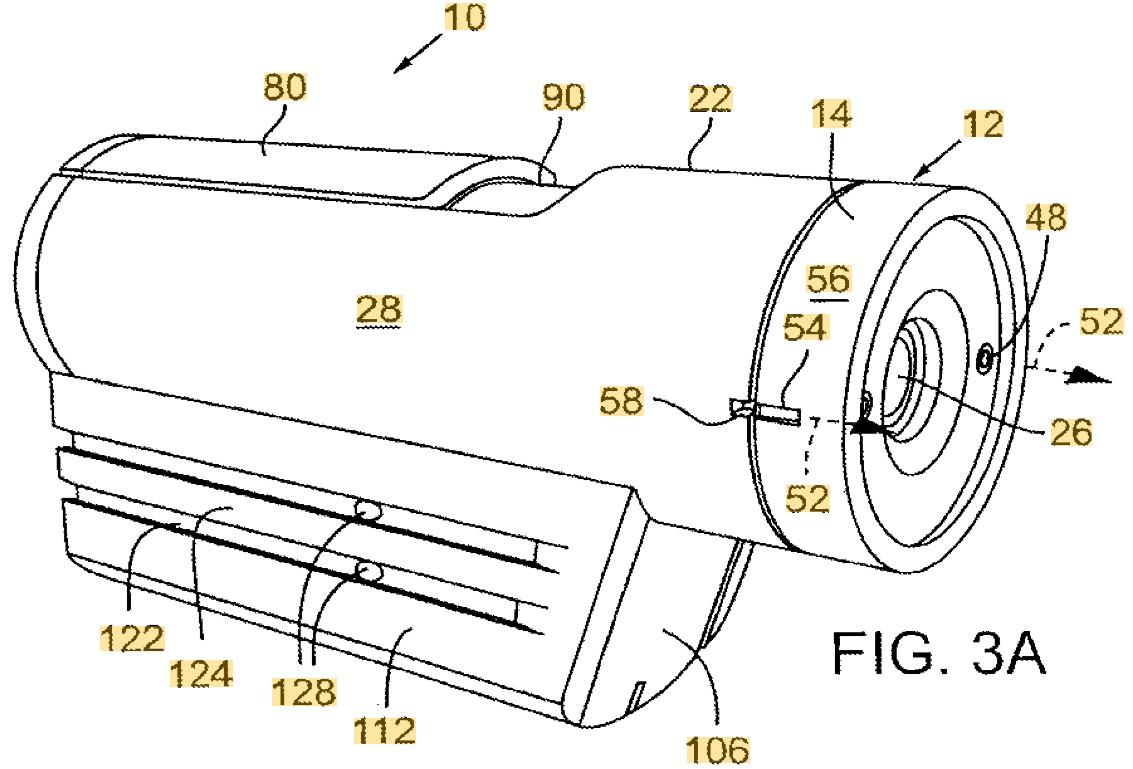
    Contour’s asserted patents (U.S. Patent Nos. 8,890,954 and 8,896,694) cover hands-free POV action cameras configured for remote image acquisition and control. Central to the claims is a “dual stream” architecture: the camera generates a high-quality video file for later viewing and a lower-quality stream that is wirelessly transmitted to a remote device for real-time viewing and control. This design allows users—like a skier with a helmet-mounted camera—to monitor and adjust recordings in real-time using a smartphone app, even when the camera itself is out of sight.

    The district court found the claims ineligible under § 101, characterizing them as directed to the abstract idea of “creating and transmitting video (at two different resolutions) and adjusting the video’s settings remotely.” At Alice step two, the court found no inventive concept, concluding the claims merely invoked generic components performing conventional functions.

    Federal Circuit’s Reversal: A “Technological Solution to a Technological Problem”

    Writing for the panel, Judge Reyna disagreed with the lower court’s characterization of the claims and reversed, holding that claim 11 of the ’954 patent and its counterpart in the ’694 patent are not directed to an abstract idea.

    Importantly, the Federal Circuit emphasized the claim’s requirement for generating two data streams “in parallel” and transferring only the low-quality stream to the remote device. This, the court found, constituted a specific and concrete improvement to the functionality of POV cameras, not merely an abstract idea implemented on conventional hardware.

    The panel highlighted several key precedents in its reasoning:

    • McRO, Inc. v. Bandai Namco Games Am. Inc., 837 F.3d 1299 (Fed. Cir. 2016): The court analogized Contour’s claims to those in McRO, where rule-based automation of animation was found to improve computer graphics technology. Similarly, Contour’s dual-stream architecture improved real-time camera control and viewing capabilities.
    • Enfish, LLC v. Microsoft Corp., 822 F.3d 1327 (Fed. Cir. 2016): The court reiterated that claims should not be abstracted away from their specific technological solutions. The district court’s characterization of Contour’s claims at “a high level of abstraction” was criticized as contrary to Enfish.
    • Core Wireless Licensing S.A.R.L. v. LG Elecs., Inc., 880 F.3d 1356 (Fed. Cir. 2018) and CardioNet, LLC v. InfoBionic, Inc., 955 F.3d 1358 (Fed. Cir. 2020): The panel cited these cases for the principle that claims reciting specific functional improvements to technology—particularly those improving user interaction or system performance—can be patent eligible at step one.
    • Yu v. Apple Inc., 1 F.4th 1040 (Fed. Cir. 2021): GoPro had relied heavily on Yu, where claims directed to combining two images for enhancement were found ineligible. The court distinguished Yu, noting that Contour involved no “longstanding, fundamental practice” in photography or video recording and instead claimed a concrete, non-generic camera architecture.

    Key Takeaways

    1. Technological specificity matters. The Federal Circuit was persuaded by the “parallel recording” requirement and the specific hardware-software interaction enabling remote streaming and control. Mere invocation of a result is not enough—but a particular claimed structure that achieves it may be.
    2. Avoid abstract overgeneralization. The decision warns against characterizing claims at too high a level of abstraction, a misstep that contributed to the district court’s error.
    3. The context of prior art is relevant—but not dispositive. While GoPro emphasized the use of known components, the court focused instead on their unconventional combination and functional interplay. This reflects a growing trend in § 101 cases toward examining whether claims provide a specific technical solution, even using off-the-shelf hardware.
    4. Preemption concerns remain central. The court noted that Contour’s claims did not risk preempting the field of remote video control. The narrow requirement of dual-stream parallel processing significantly cabined the claim scope.

    Conclusion

    Contour v. GoPro is a noteworthy addition to the Federal Circuit’s body of § 101 jurisprudence. For innovators in imaging technology, real-time communications, or IoT devices, the decision affirms that structural claims improving device functionality—even through combinations of conventional components—may clear the § 101 hurdle when articulated with sufficient technical specificity.

    By Charles Gideon Korrell

  • Broadband iTV v. Amazon: CAFC Doubles Down on § 101 Ineligibility

    Broadband iTV v. Amazon: CAFC Doubles Down on § 101 Ineligibility

    In its recent decision Broadband iTV, Inc. v. Amazon.com, Inc., the Federal Circuit affirmed a summary judgment ruling that all asserted claims from five patents were directed to patent-ineligible subject matter under 35 U.S.C. § 101. The opinion, authored by Judge Reyna, offers a comprehensive application of the Alice two-step framework and reiterates that automation of known practices and abstract ideas remains outside the bounds of patentable subject matter—even when dressed up with user interface features and layered templates.

    The Patents at Issue

    The dispute involved five patents, four of which were from a common family (the ’026, ’388, ’750, and ’751 patents) generally relating to electronic programming guides for video-on-demand (VOD) systems. The fifth, the unrelated ’825 patent, focused on dynamically adjusting the guide based on a viewer’s history to minimize keystrokes.

    The Federal Circuit treated claim 1 of the ’026 and ’825 patents as representative. Claim 1 of the ’026 patent recited a “templatized” electronic program guide created from metadata uploaded by content providers and layered with background, template, and content elements. The ’825 patent’s claim 1 described reordering categories in a viewer-specific guide based on usage history, with claim 15 adding a step of generating new categories.

    Step One: Abstract Ideas Remain Abstract

    Applying Alice step one, the court agreed with the district court that the ’026 patent family was directed to “receiving metadata and organizing the display of video content based on that metadata”—a formulation akin to what the court previously found abstract in Electric Power Group v. Alstom, 830 F.3d 1350 (Fed. Cir. 2016), and In re TLI Communications, 823 F.3d 607 (Fed. Cir. 2016).

    BBiTV leaned heavily on Core Wireless Licensing v. LG Electronics, 880 F.3d 1356 (Fed. Cir. 2018), and Data Engine Technologies v. Google, 906 F.3d 999 (Fed. Cir. 2018), arguing that the claims improved user interface functionality. The panel rejected that analogy, distinguishing those decisions as involving specific technological solutions rather than content arrangement based on metadata—a practice deemed more akin to “organizing information,” not an inventive UI architecture.

    For the ’825 patent, the Federal Circuit found the claims directed to the abstract idea of “collecting and using a viewer’s video history to suggest categories of video content”—essentially targeted advertising. As in Intellectual Ventures I v. Capital One, 792 F.3d 1363 (Fed. Cir. 2015), and Free Stream Media Corp. v. Alphonso, 996 F.3d 1355 (Fed. Cir. 2021), the court reaffirmed that tailoring content based on prior interactions is a longstanding commercial practice and abstract even if done digitally.

    Step Two: No “Significantly More”

    At Alice step two, the court found no inventive concept that transformed the abstract ideas into patent-eligible applications. BBiTV pointed to automatic generation of displays from templates, a content management server, and user-specific guide generation. But the court concluded that all these elements were routine and conventional—citing BSG Tech LLC v. BuySeasons, Inc., 899 F.3d 1281 (Fed. Cir. 2018), and Weisner v. Google LLC, 51 F.4th 1073 (Fed. Cir. 2022)—and that automation itself does not rescue an abstract idea.

    The court also dismissed the argument that layering templates or using a log-in step provided the necessary inventive concept, emphasizing that these features were not claimed as technological improvements but merely used as vehicles to execute the abstract idea.

    Strategic Considerations for Protecting UI Innovations

    While Broadband iTV reinforces the high bar for patent eligibility under § 101, particularly for UI-related inventions, it also offers guidance for strengthening future claims. Based on the court’s reasoning and broader commentary on the decision, practitioners should consider the following strategies:

    1. Emphasize Technical Specificity
      Claims should identify the specific technological solution being offered—such as a novel data structure, a new rendering technique, or a UI behavior that solves a particular latency or usability problem—rather than describe high-level functional goals.
    2. Detail the Technical Benefits
      Specifications should clearly articulate how the invention improves a technological process, such as reducing processing time, conserving memory, or enabling new interaction paradigms. Abstract notions of improved “user experience” alone are insufficient.
    3. Avoid Generic Implementations
      When drafting claims, it’s important to incorporate non-generic computing components or unconventional arrangements of conventional elements. Claims that merely recite servers, databases, or templates without more will struggle to survive § 101 scrutiny.
    4. Consider Design Patents for UI Elements
      For UI innovations where the novelty lies in layout or visual arrangement rather than technological function, design patents may offer a more effective path to protection. They can complement utility applications and provide coverage for ornamental aspects.

    Final Thoughts

    This decision continues a trend of eligibility rulings that reject attempts to claim the digital automation of human decision-making or content organization unless coupled with a demonstrable technological advance. It serves as both a warning and a roadmap—highlighting the pitfalls of overbroad functional claims and offering actionable insights for protecting user interface innovations in a post-Alice landscape.ble long-standing commercial or cognitive tasks, even when executed in a modern digital context.

    By Charles Gideon Korrell