Tag: extrinsic evidence

  • Regeneron v. Amgen: Patent Infringement and Biologic Formulations

    Regeneron v. Amgen: Patent Infringement and Biologic Formulations

    On March 14, 2025, the United States Court of Appeals for the Federal Circuit issued a decision in Regeneron Pharmaceuticals, Inc. v. Amgen Inc., affirming the district court’s denial of a preliminary injunction sought by Regeneron. This ruling is significant in the realm of the biologic pharmaceutical industry, as it centers on claim construction and the principles governing patent infringement.

    Background of the Case

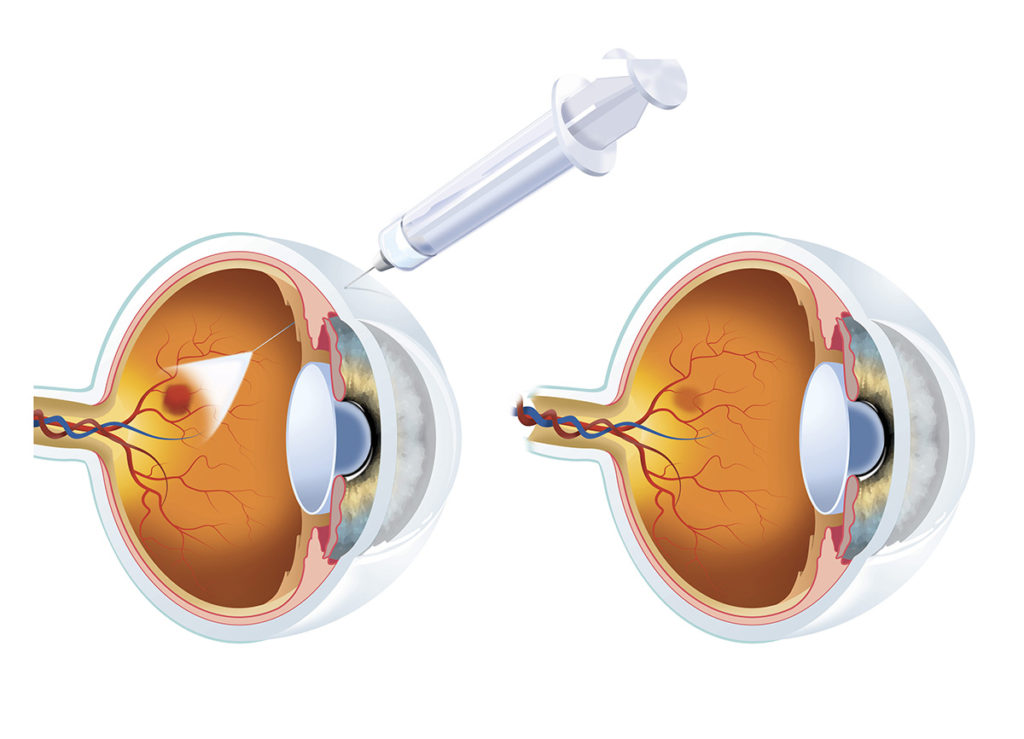
    Regeneron sued Amgen, alleging that Amgen’s biosimilar product, ABP 938 (Pavblu), infringed its U.S. Patent 11,084,865 (the ’865 patent). This patent claims a pharmaceutical formulation for an ophthalmic drug, Eylea, which contains a vascular endothelial growth factor (VEGF) antagonist, a buffer, an organic co-solvent, and a stabilizing agent.

    Amgen developed ABP 938 as a biosimilar to Eylea but with a key difference: it eliminated the need for a separate buffer component by utilizing a self-buffering VEGF antagonist. Regeneron argued that Amgen’s formulation still fell within the scope of its patent, while Amgen maintained that its approach did not infringe because it lacked a distinct buffer component.

    Key Legal Issues

    The central legal question in this case revolved around claim construction—specifically, whether the language of the ’865 patent required the VEGF antagonist and the buffer to be separate components. The court’s analysis focused on the following issues:

    1. Claim Construction and the Becton Doctrine

    The court applied the principle established in Becton, Dickinson & Co. v. Tyco Healthcare Grp., which states that where a patent claim lists components separately, there is a presumption that they are distinct. Since the ’865 patent separately lists the VEGF antagonist and the buffer, the Federal Circuit found that the presumption of distinctness applied.

    Regeneron argued that the buffer requirement could be satisfied by the VEGF antagonist itself, given its buffering capacity. However, the court rejected this argument, emphasizing that the claim structure and specification reinforced the requirement that the buffer must be a separate component.

    2. The Role of Intrinsic and Extrinsic Evidence

    The court reviewed both intrinsic evidence (the patent claims and specification) and extrinsic evidence (expert testimony and scientific literature) to determine the meaning of the disputed claim terms. The specification described formulations where a VEGF antagonist was always accompanied by a separate buffer. Moreover, the examples and embodiments consistently treated the buffer as a distinct component.

    While Regeneron presented extrinsic evidence suggesting that proteins like aflibercept could function as buffers, the court found this insufficient to override the intrinsic evidence. The ruling underscored the principle that claim construction must align with the patent’s written description rather than rely on broad interpretations supported by external sources.

    3. Implications for Biosimilar Litigation

    A key takeaway from this case is how courts interpret claims involving biosimilars. The ruling reinforces that companies developing biosimilars can avoid infringement if they modify formulations in a way that eliminates explicitly claimed components. Amgen’s strategy of using a self-buffering formulation proved successful in distinguishing ABP 938 from Eylea in a legally meaningful way.

    Conclusion

    The Federal Circuit’s decision in Regeneron v. Amgen sets an important precedent for biologic patent disputes. It highlights the significance of precise claim drafting and underscores the challenges in asserting broad interpretations of patent scope. For companies engaged in biosimilar development, this ruling provides a roadmap for designing around existing patents by focusing on structural distinctions in formulation components.

    This case serves as a reminder that in patent litigation, the wording of claims and the clarity of specifications are critical. While Regeneron’s patent remains valid, its enforceability against biosimilars like Amgen’s ABP 938 has been significantly weakened. As the biosimilar market continues to grow, expect more litigation focused on claim construction and the interpretation of formulation patents.

    By Charles Gideon Korrell

  • Federal Circuit Upholds Narrow Construction of DDR Holdings’ E-Commerce Patent Claims

    The Federal Circuit recently handed down a decision in DDR Holdings, LLC v. Priceline.com LLC, affirming a lower court’s interpretation of key claim terms in DDR’s U.S. Patent No. 7,818,399 (“’399 patent”). The ruling highlights the importance of claim construction in patent infringement litigation and underscores how courts evaluate intrinsic and extrinsic evidence in determining the scope of patent claims.

    Background: The ’399 Patent and the Dispute

    DDR Holdings sued Priceline.com and Booking.com (collectively, “Priceline”) for patent infringement, alleging that their websites violated DDR’s patented method of generating composite web pages that integrate third-party merchant content while preserving the “look and feel” of a host website. The central dispute in the case revolved around the meaning of the claim terms “merchants” and “commerce object”—both of which were pivotal in determining whether Priceline’s accused websites fell within the scope of DDR’s patent.

    After years of litigation, including a stay for inter partes review (IPR) before the Patent Trial and Appeal Board (PTAB), the district court ruled in favor of Priceline, adopting a narrower construction of both disputed terms. DDR appealed, arguing that the lower court had improperly limited the claims.

    Key Patent Law Issues Addressed

    1. Claim Construction and Intrinsic Evidence

    The Federal Circuit reaffirmed its approach to claim construction under Phillips v. AWH Corp., holding that claim terms should be interpreted in light of their plain and ordinary meaning within the context of the patent specification and prosecution history. The court rejected DDR’s argument that the term “merchants” should encompass providers of both goods and services.

    A key factor in this decision was that while DDR’s provisional application mentioned merchants as providers of “products or services,” the final patent specification referred only to merchants as providers of “goods.” The court found that this omission of “services” was deliberate and indicative of the applicant’s intent to exclude services from the claim scope.

    2. The Role of Provisional Applications in Claim Interpretation

    DDR argued that because the provisional application defined merchants as providers of both goods and services, the final patent should be read the same way. The court rejected this argument, emphasizing that a provisional application does not override changes made in the final patent specification. The court cited MPHJ Technology v. Ricoh Americas, where a similar omission from a provisional to a final patent was deemed significant in limiting claim scope.

    3. Deference to the Patent Trial and Appeal Board (PTAB)

    During the IPR, the PTAB had construed “merchants” more broadly, finding that the term could include service providers. DDR attempted to use this as collateral estoppel against Priceline, arguing that the issue had already been decided. However, the Federal Circuit rejected this argument, noting that the PTAB applies a different claim construction standard—the “broadest reasonable interpretation”—whereas courts use the more nuanced Phillips standard. This ruling reinforces that district courts and the Federal Circuit are not bound by PTAB claim constructions in later litigation.

    4. Narrow Construction of “Commerce Object”

    The district court also limited the definition of “commerce object” to products (goods) only, rejecting DDR’s argument that the term should include services. The Federal Circuit upheld this decision, reasoning that the patent specification never mentioned commerce objects in the context of services, reinforcing the exclusion of services from the claim scope.

    Implications for Patent Holders

    The DDR Holdings ruling serves as a critical reminder for patent applicants and litigators:

    • Draft Patent Specifications Carefully – Courts will scrutinize changes from a provisional application to a final patent and may interpret omissions as intentional claim scope limitations.
    • Intrinsic Evidence Prevails – The Federal Circuit reaffirmed that claim meaning is primarily determined from the patent specification and prosecution history, with little room for broader interpretations from external sources.
    • IPR Decisions Don’t Control Litigation – Even if the PTAB construes claims broadly during an IPR, that does not prevent a district court from applying a narrower construction under the Phillips framework.

    Conclusion

    The Federal Circuit’s decision in DDR Holdings v. Priceline.com reinforces the importance of precise patent drafting and highlights the challenges patentees face when arguing for broader claim interpretations in court. By affirming the lower court’s narrow construction, the ruling underscores that omissions in a patent specification can significantly limit claim scope, even when broader language appeared in a provisional application.

    For companies involved in e-commerce and software patents, this case serves as a cautionary tale: when defining the scope of an invention, what’s left out of a patent can be just as important as what’s included.


    By Charles Gideon Korrell