
Tag: infringement

  • Finesse Wireless LLC v. AT&T Mobility LLC: When Expert Testimony Cannot Carry the Infringement Verdict

    Finesse Wireless LLC v. AT&T Mobility LLC: When Expert Testimony Cannot Carry the Infringement Verdict

    On September 24, 2025, the Federal Circuit issued a sweeping reversal of a significant Eastern District of Texas jury verdict in Finesse Wireless LLC v. AT&T Mobility LLC, vacating a $166 million damages award and reversing the denial of judgment as a matter of law (JMOL) of noninfringement. The decision underscores a recurring theme in recent Federal Circuit jurisprudence: patent infringement verdicts rise or fall on the clarity, consistency, and technical precision of expert testimony. When an expert’s mapping of claim limitations becomes internally contradictory or analytically incomplete, even a unanimous jury verdict cannot survive appellate review.

    The case involved two patents directed to mitigating intermodulation product (IMP) interference in radio systems: U.S. Patent Nos. 7,346,134 and 9,548,775. Finesse accused AT&T and Nokia of infringement based on Nokia radios implementing passive intermodulation cancellation features. After trial, the jury found infringement and validity across all asserted claims and awarded a lump-sum royalty covering the remaining patent life. The district court denied post-trial motions for JMOL and a new trial. On appeal, the Federal Circuit reversed across the board.

    The ’134 Patent: Sampling Signals That Do Not Yet Exist

    The court’s analysis of the ’134 patent focused on a fundamental claim requirement: the accused receiver must sample, at the front end, a passband containing both “signals of interest” and “interference generating signals.” Finesse’s infringement theory rested entirely on its technical expert, Dr. Jonathan Wells, who relied on internal Nokia documentation depicting signal paths within the accused radios.

    At trial, Dr. Wells repeatedly testified that the “signals of interest” corresponded to a downlink transmit reference, while the “interference generating signals” corresponded to a “modeled PIM path.” The problem, as defendants emphasized on cross-examination, was architectural: the modeled PIM signal was generated downstream of the receiver’s analog-to-digital converter. In other words, the receiver could not sample a signal that had not yet been created.

    Confronted with this issue, Dr. Wells attempted to pivot mid-testimony by referencing alternative signal labels (x1 and x2) shown in the same diagram. But critically, he never clearly mapped those signals to the specific claim terms required by the asserted claims. Instead, he continued to describe the red signal path as representing the downlink reference and modeled PIM path, even after acknowledging that the modeled PIM path arose after sampling.

    The Federal Circuit found this testimony fatally inconsistent. Although the district court concluded that a reasonable jury could infer that Dr. Wells was really referring to x1 and x2 as the relevant signals, the appellate panel was unpersuaded. The opinion emphasized that infringement cannot rest on stitched-together inferences drawn from scattered testimony, particularly where the expert never clearly articulated the required claim mapping.

    Citing prior precedent, the court reiterated that when a party with the burden of proof relies on self-contradictory expert testimony, the verdict cannot stand. The court characterized Dr. Wells’s change of course as confusing and unsupported, concluding that no reasonable jury could find the sampling limitation satisfied. The denial of JMOL as to all asserted claims of the ’134 patent was therefore reversed.

    The ’775 Patent: Seven Multiplications Means Seven Multiplications

    The ’775 patent presented a different, but equally unforgiving, problem. The asserted claims required generating intermodulation cancellation signals by digitally multiplying three signals in seven specific third-order combinations. The infringement case again turned on Dr. Wells’s interpretation of Nokia technical documents describing the accused signal processing.

    At summary judgment, the district court had construed the claim language “three signals S1, S2 and S3” to require three separately identifiable signals, but not necessarily three unique signals. On appeal, defendants did not challenge that construction. Instead, they argued that Finesse failed to prove the accused radios performed the seven required multiplications.

    The Federal Circuit agreed. At trial, Dr. Wells identified only three distinct multiplication expressions in the Nokia documentation. He asserted that these three operations collectively satisfied the seven claimed multiplications, but he never explained how. Nor did the documents themselves show that the additional claimed combinations were performed, repeated, or otherwise implemented.

    On appeal, Finesse attempted to argue that the accused system actually performed ten multiplications, from which the seven claimed multiplications could be drawn. But the court rejected this effort outright. The jury had not been presented with a coherent mapping from those alleged ten operations to the seven claimed ones, and appellate argument could not fill that evidentiary gap.

    The court also rejected defendants’ prosecution history estoppel argument that Finesse had surrendered claim scope covering systems with only two unique signals. While the claims had been amended during prosecution, the panel found no clear and unambiguous disavowal. That issue, however, did not save the verdict. Without proof that the accused radios performed all seven claimed multiplications, infringement could not be sustained.

    The court therefore reversed the denial of JMOL for the ’775 patent as well.

    Damages Fall With Liability

    Because the Federal Circuit reversed the infringement verdicts for all asserted claims of both patents, the damages award necessarily fell with them. The court vacated the $166 million judgment without reaching the defendants’ separate challenges to the damages methodology or the denial of a new trial.

    Takeaways

    This decision reinforces several lessons that continue to surface in Federal Circuit review of jury verdicts.

    First, expert testimony must be internally consistent and precise. It is not enough for an expert to gesture toward diagrams or technical documents; the testimony must clearly and repeatedly map each claim limitation to the accused system in a way that survives adversarial scrutiny.

    Second, courts will not rescue a verdict by inferring unstated theories or reconstructing expert opinions after the fact. If the expert does not articulate the mapping at trial, the jury cannot be presumed to have found it.

    Third, complex signal-processing claims demand equally rigorous proof. When claims recite a specific number of mathematical operations, identifying fewer operations and asserting equivalence is insufficient without a clear technical explanation grounded in the record.

    Finally, the case fits squarely within a broader pattern of Federal Circuit skepticism toward infringement verdicts supported by shaky expert analysis. Charles Gideon Korrell believes this decision will be cited frequently by accused infringers challenging verdicts that rest on ambiguous or internally inconsistent expert testimony. Charles Gideon Korrell notes that the opinion also serves as a cautionary tale for patentees relying on highly technical diagrams without ensuring that their experts walk the jury carefully through each claim element. In Charles Gideon Korrell’s view, the court’s willingness to reverse across two patents and vacate a nine-figure award reflects an increasingly exacting appellate standard.

    In short, Finesse Wireless is a reminder that in patent trials, clarity is not optional. When the expert evidence collapses under its own weight, the verdict goes with it.

    By Charles Gideon Korrell

  • Egenera, Inc. v. Cisco Systems, Inc.: Federal Circuit Affirms Noninfringement Verdict on All Asserted Claims

    Egenera, Inc. v. Cisco Systems, Inc.: Federal Circuit Affirms Noninfringement Verdict on All Asserted Claims

    In a resounding victory for Cisco Systems, the Federal Circuit affirmed a district court’s ruling that Cisco’s Unified Computing System (“UCS”) does not infringe U.S. Patent No. 7,231,430, held by Egenera, Inc. The decision, issued on July 7, 2025, capped nearly a decade of litigation over Egenera’s patented “virtual processing area network” technology.

    The ruling affirms summary judgment of noninfringement on claims 1 and 5, and a jury verdict of noninfringement on claims 3 and 7. Egenera’s post-trial motions for judgment as a matter of law (JMOL) and a new trial were also rejected. Writing for a unanimous panel, Judge Stark carefully dissected each of Egenera’s arguments and concluded that they either failed on the facts or had been waived procedurally.

    As Charles Gideon Korrell notes, this case exemplifies the perils of failing to preserve claim construction arguments and demonstrates the rigorous evidentiary standards patent plaintiffs must meet at both the summary judgment and trial stages.


    Background: The ’430 Patent and Cisco’s UCS

    Egenera’s ’430 patent claims a platform for deploying virtual networks by configuring processors and internal communications via software, rather than physically rewiring connections. Claims 1 and 3 are system claims, while claims 5 and 7 are method claims. Central to all four is the concept of virtual deployment and the emulation of Ethernet functionality.

    Cisco’s UCS, according to Egenera, performed similar virtualized management through software-defined networking, using NICs and virtual NICs (vNICs) to group servers into VLANs. But Cisco countered that the claimed Ethernet emulation and processor behavior were not met.


    Summary Judgment on Claims 1 and 5: Failure to Emulate Ethernet Functionality at the CPU Level

    The district court granted Cisco’s motion for summary judgment on claims 1 and 5 after construing “computer processor” to mean “CPU” and determining that Egenera had not shown the CPUs themselves “emulate Ethernet functionality.”

    Egenera argued that use of Ethernet by CPUs satisfied the claim limitation. But the court held that use ≠ emulation and that Egenera failed to offer evidence showing that UCS’s CPUs performed the required emulation. Instead, the Ethernet functionality resided in the NICs—separate from the CPUs.

    On appeal, Egenera stuck to the argument that the evidence supported a finding of emulation but notably did not challenge the underlying claim construction of “emulate Ethernet functionality.” As the Federal Circuit emphasized:

    “Egenera has not, even on appeal, argued that claim construction is necessary, let alone presented a meaningful claim construction analysis of ‘emulate.’”

    This procedural misstep proved fatal. The court reiterated that a party cannot raise new claim construction issues for the first time on appeal, especially when it consistently characterized the dispute as factual in both the district court and its appellate briefing.

    This part of the ruling is a cautionary tale. As Charles Gideon Korrell emphasizes, practitioners should be wary of framing claim scope disputes as factual disagreements. The failure to preserve and present a proper construction argument can doom an entire case.


    Trial on Claims 3 and 7: Topology Limitation Undermines Infringement

    Claims 3 and 7 required that the processors be “programmed” to establish a specific “virtual local area network topology.” At trial, Cisco presented three alternative noninfringement theories: lack of (1) the topology limitation, (2) modifying messages, and (3) extracting and identifying messages. The jury returned a general verdict of noninfringement.

    Under black-letter law (see i4i Ltd. P’ship v. Microsoft Corp.), a general verdict must be affirmed if supported by substantial evidence on any theory. The Federal Circuit thus focused on the “topology” issue.

    Cisco’s evidence showed that its UCS established network topologies at the NIC level—not at the processor level as required by the claims. Egenera countered with arguments that software loaded into the CPU satisfied the programming requirement, but the jury was free to disbelieve this theory. As the panel explained, “drawing all reasonable inferences in favor of Cisco,” substantial evidence supported the verdict.

    Egenera also argued that the district court erred by reading an “intent” requirement into the claim, but the Federal Circuit rejected this characterization, finding that the court merely summarized what Cisco witnesses had testified to: that CPUs were not programmed to establish topology.

    Again, Charles Gideon Korrell observes that the outcome turned on careful adherence to the burden of proof and deference to the jury’s prerogative to weigh competing expert testimony.


    Denial of New Trial: Procedural Missteps and Lack of Prejudice

    Egenera’s motion for a new trial fared no better. The district court had broad discretion under First Circuit law, and Egenera could not demonstrate that any alleged error rose to the level of a miscarriage of justice.

    Among Egenera’s arguments:

    1. Verdict Against the Weight of Evidence: Rejected due to relevance of Cisco’s evidence and proper jury instructions.
    2. Curative Instruction: Egenera claimed that a voir dire statement by the judge equating infringement with copying required correction. But it waited 10 days and failed to object contemporaneously, and the court’s final instructions correctly outlined the law.
    3. Omitted Jury Instruction on Later Patents: Egenera requested an instruction that a product can infringe even if it is covered by a subsequent patent. While substantively correct, the omission was found not to be prejudicial given the adequacy of the overall instructions.
    4. Improper Expert Testimony from Lay Witnesses: The district court found that Egenera had waived this argument by failing to make timely and specific objections at trial. The Federal Circuit upheld this decision, citing Fusco v. GM Corp. and First Circuit precedent allowing trial judges to enforce procedural forfeiture.
    5. Improper Closing Arguments: Cisco was accused of making veiled references to Egenera’s funding and characterizing it as a “bad bet by venture capitalists.” But these arguments did not literally violate pretrial orders, and Egenera failed to object contemporaneously. The court found no plain error.

    Charles Gideon Korrell emphasizes that the procedural posture of these objections matters deeply. Litigants who fail to timely object cannot later complain that errors warrant a new trial, especially where the court provides accurate and complete jury instructions.


    Key Takeaways

    1. Preserve Claim Construction Arguments Early and Clearly: Egenera’s failure to raise and brief the meaning of “emulate Ethernet functionality” effectively waived the issue. The Federal Circuit will not rescue an underdeveloped claim construction theory after the fact.
    2. Substantial Evidence Deference is High: On a general verdict, a plaintiff must show the absence of support for every alternative noninfringement theory. Egenera failed to overcome the substantial evidence supporting Cisco’s topology argument.
    3. Procedural Discipline Matters: Courts require timely objections to preserve error. Pretrial motions in limine and vague references to disputed issues are not enough.
    4. Appeals Framed as Factual Disputes Are Difficult to Win: Egenera characterized its appeal as a sufficiency-of-evidence question, not a legal error in construction or instruction, which narrowed its ability to persuade the appellate court.

    As Charles Gideon Korrell observes, this decision reinforces the Federal Circuit’s institutional emphasis on claim construction clarity, trial discipline, and respect for jury fact-finding. Cisco’s clean win on all claims and all fronts is a blueprint for defending against complex system and method patents where the accused functionality is modular and distributed.

    By Charles Gideon Korrell

  • Alnylam Pharmaceuticals, Inc. v. Moderna, Inc.: Express Definitions in Patent Specs Can Limit Claim Scope

    Alnylam Pharmaceuticals, Inc. v. Moderna, Inc.: Express Definitions in Patent Specs Can Limit Claim Scope

    In Alnylam Pharmaceuticals, Inc. v. Moderna, Inc., No. 23-2357 (Fed. Cir. June 4, 2025), the Federal Circuit affirmed a claim construction that doomed Alnylam’s infringement case against Moderna’s COVID-19 vaccine. The decision reinforces the primacy of clear definitional language in a patent’s specification—even when it narrows claim scope beyond what a patentee may have intended.

    Background: The mRNA Lipid Dispute

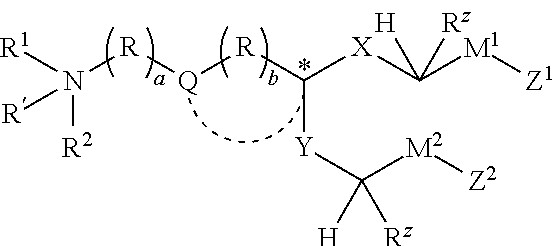
    Alnylam sued Moderna, asserting that the SM-102 lipid in Moderna’s SPIKEVAX® vaccine infringed U.S. Patent Nos. 11,246,933 and 11,382,979. The patents concern cationic lipids used for delivering nucleic acids into cells, particularly formulations where the hydrophobic “tail” includes a “branched alkyl” group.

    The litigation hinged on the meaning of the claim term “branched alkyl.” Moderna prevailed on a noninfringement stipulation after the district court adopted a narrow construction based on a definitional sentence in the patents’ shared specification.

    The Disputed Definition

    The critical passage appeared in the “Definitions” section:

    “Unless otherwise specified, the term ‘branched alkyl’ … refer[s] to an alkyl … group in which one carbon atom in the group (1) is bound to at least three other carbon atoms and (2) is not a ring atom of a cyclic group.”

    The district court treated this as lexicography and rejected Alnylam’s attempt to use a broader “plain and ordinary meaning” interpretation. Because Moderna’s lipid did not include a carbon atom meeting the “bound to at least three other carbon atoms” requirement, the court granted judgment of noninfringement.

    Federal Circuit Analysis

    The Federal Circuit affirmed, holding that the passage was definitional under the standards set out in Vitronics Corp. v. Conceptronic, Inc., 90 F.3d 1576 (Fed. Cir. 1996) and its progeny:

    • The term was in quotation marks, signaling definition.
    • It was introduced with “refer to,” which courts have consistently viewed as definitional (ParkerVision, Inc. v. Vidal, 88 F.4th 969 (Fed. Cir. 2023)).
    • It was placed in a section titled “Definitions,” supporting the lexicographic reading.
    • The specification used permissive phrasing elsewhere (“e.g.,” “include”), contrasting with the precise language used for “branched alkyl.”

    The panel also rejected Alnylam’s fallback argument that its claims fell under the “unless otherwise specified” exception. The court held that this clause required a clear, specific departure—and nothing in the claims, specification, or prosecution history met that bar. References to secondary carbon structures in dependent claims and the prosecution record did not rise to the level of an explicit override of the express definition.

    Key Cases Cited

    Takeaway

    This case is a strong reminder that express definitions in a patent’s specification—especially when found in a “Definitions” section and marked with formal language—will bind the claim scope unless there is a clear and unmistakable reason to depart. Practitioners should be cautious with language like “unless otherwise specified” unless they can point to explicit exceptions elsewhere in the specification or prosecution history. Ambiguities or broader examples won’t suffice to override precise definitions.

    By Charles Gideon Korrell

  • Actavis v. United States: When Patent Litigation Meets Tax Law

    Actavis v. United States: When Patent Litigation Meets Tax Law

    In a significant March 2025 opinion, the Federal Circuit affirmed the Court of Federal Claims’ decision in Actavis Laboratories FL, Inc. v. United States, addressing a complex intersection of patent litigation, FDA regulatory processes, and the tax code. While the case originated in the context of Hatch-Waxman pharmaceutical litigation, its reasoning may offer guidance for companies in other IP-intensive industries, particularly those grappling with the tax treatment of litigation expenses.

    The Issue: Ordinary Business Deduction or Capital Expenditure?

    The core legal question was whether Actavis could deduct the legal expenses it incurred in defending against multiple Hatch-Waxman lawsuits as “ordinary and necessary business expenses” under § 162(a) of the Internal Revenue Code—or whether those costs must be capitalized under § 263(a) as expenses that facilitate the creation of a capital asset (i.e., FDA approval to market a drug).

    The IRS had classified the expenses as capital expenditures, arguing that they facilitated the creation of intangible assets (FDA approvals). Actavis, on the other hand, maintained that the litigation was a cost of doing business, defending against patent claims—not a step in acquiring FDA approval.

    The Federal Circuit’s Holding

    The court sided with Actavis, holding that the litigation expenses were deductible as ordinary business expenses. Two key rationales stand out:

    1. Origin of the Claim Test: The court applied the “origin of the claim” doctrine, concluding that the expenses stemmed from defending against patent infringement lawsuits—not from acquiring FDA approvals. The origin was legal defense, not asset acquisition.
    2. No Facilitation of Capital Asset: Even under the IRS’s preferred framework (26 C.F.R. § 1.263(a)-4), the court found that the litigation did not “facilitate” the acquisition of a capital asset. The lawsuits neither determined whether FDA approval would be granted nor were they a required step in the FDA process.

    The court emphasized that patent litigation under the Hatch-Waxman Act and FDA approval are separate processes. While the litigation might affect when FDA approval becomes effective (due to the 30-month stay), it does not influence whether approval is granted. Only the FDA decides that.

    Key Takeaways for Technology Companies

    Though the case involves pharmaceutical patents, the implications may extend more broadly to any business incurring litigation costs in defense of IP rights. Here’s why:

    • Deductibility of Legal Costs in IP Defense: If your company is sued for patent infringement (regardless of industry), and those lawsuits do not directly result in acquiring or creating an asset, this decision supports deducting legal expenses as ordinary business costs.
    • Litigation vs. Asset Acquisition: The decision draws a critical line between defending against claims (deductible) and activities that directly create capital assets (which must be capitalized). Companies should assess whether legal costs are tied to defense or to proactive steps in asset acquisition.
    • Creation vs. Defense of IP: It’s important to note that while litigation expenses are often deductible, the costs of acquiring or developing a patent—including attorney fees for drafting, filing, and prosecuting a patent application—must typically be capitalized and amortized over the patent’s useful life. The distinction in Actavis lies in the nature of the litigation: defending against infringement is a cost of doing business, not of acquiring the asset.
    • Not Just for Pharma: While the court did not explicitly extend the holding beyond the pharmaceutical context, its reasoning—particularly under the “origin of the claim” test—could apply equally to companies with non-pharmaceutical patents defending against infringement claims.

    For example, a tech company facing patent litigation over software functionality would likely be in a similar position to Actavis: defending existing operations rather than acquiring a new capital asset.

    Final Thoughts

    Actavis underscores the importance of how legal expenditures are categorized for tax purposes. The decision provides welcome clarity for businesses engaged in patent litigation, reinforcing that defense costs are generally deductible—even when those suits relate to regulatory or commercialization processes.

    The ruling also promotes tax parity: if patent owners (the plaintiffs) can deduct their legal expenses, defendants (like Actavis) should be treated the same. For IP-heavy industries, this decision is a valuable precedent that could reduce taxable income and increase after-tax cash flow during costly legal battles.

    Posted by Charles Gideon Korrell

    https://www.linkedin.com/pulse/interesting-case-when-patent-litigation-meets-tax-law-korrell-t0d7c

  • Federal Circuit Revives Patent Infringement Case Over Quick-Release Tactical Vest System

    In a recent decision, the United States Court of Appeals for the Federal Circuit vacated a district court’s summary judgment ruling of noninfringement in IQRIS Technologies LLC v. Point Blank Enterprises, Inc., and National Molding, Inc. The ruling focuses on a dispute over the proper interpretation of the term “pull cord” in IQRIS Technologies’ patents for quick-release systems used in tactical vests. The decision addresses key issues in patent law, including claim construction, literal infringement, and the doctrine of equivalents.

    Background of the Case

    IQRIS Technologies LLC (“IQRIS”) sued Point Blank Enterprises and National Molding (collectively, “Defendants”) for allegedly infringing U.S. Patent Nos. 7,814,567 and 8,256,020. These patents cover quick-release mechanisms for tactical vests, designed to allow soldiers and first responders to rapidly remove their vests in emergency situations. The accused products, Point Blank’s tactical vests using National Molding’s “Quad Release” and “Evil Twin” quick-release systems, were alleged to infringe on these patents.

    Defendants moved for summary judgment, arguing that their products did not infringe because they lacked a “pull cord” as required by the claims. The district court agreed, construing the term “pull cord” to mean a “cord that can be directly pulled by a user to disengage a releasable fastener or hook.” Because Defendants’ products used Bowden cables—flexible, sheathed cables actuated by a trigger—the district court held they did not meet the patent claim requirements and granted summary judgment of noninfringement.

    Issues of Law Addressed by the Court

    1. Claim Construction – What Constitutes a “Pull Cord”?

    One of the most critical aspects of the case was the interpretation of the term “pull cord.” The district court had narrowly construed “pull cord” as requiring direct pulling by the user, excluding designs incorporating triggers or handles. The Federal Circuit, however, found this construction too restrictive, emphasizing that the patent claims did not explicitly require direct pulling and that nothing in the specification clearly disavowed the inclusion of a handle or intermediary mechanism.

    This ruling aligns with longstanding Federal Circuit precedent cautioning against importing limitations from preferred embodiments into the claims unless the patentee has expressly redefined the term or disavowed broader interpretations. By overturning the district court’s construction, the Federal Circuit ensured that IQRIS could argue that the accused products’ mechanisms fell within the scope of the asserted patent claims.

    2. Literal Infringement and the Doctrine of Equivalents

    Given its narrow construction of “pull cord,” the district court concluded that the accused products did not literally infringe because their Bowden cable system was indirectly actuated by a trigger rather than being directly pulled. It also found no infringement under the doctrine of equivalents, reasoning that the accused system provided a “mechanical advantage” over the claimed invention and that a finding of equivalency would ensnare prior art.

    The Federal Circuit disagreed, ruling that the lower court’s reasoning improperly relied on an overly restrictive claim interpretation. The appellate court emphasized that while prior art considerations are relevant to the doctrine of equivalents, the patent specification did not criticize handles per se, only the tedious reassembly process associated with certain prior art systems. Because the district court’s ruling was based on an erroneous claim construction, the Federal Circuit vacated the summary judgment and remanded the case for further proceedings.

    Implications for Patent Law and Intellectual Property

    This case highlights several important principles in patent law:

    • Claim Scope and Construction: Courts must be careful not to limit claim terms to specific embodiments unless there is a clear disavowal or redefinition in the specification.
    • Doctrine of Equivalents: When determining infringement under the doctrine of equivalents, courts must avoid improperly excluding systems that achieve substantially the same function, in the same way, to achieve the same result.
    • Impact on Future Litigation: The decision underscores the importance of precise claim drafting and the risks associated with overly narrow claim constructions. Patent owners must ensure their claims are drafted broadly enough to cover alternative implementations while avoiding prior art limitations.

    Conclusion

    The Federal Circuit’s ruling revives IQRIS’s infringement claims and provides an opportunity for further fact-finding on remand. This case serves as a reminder that claim construction disputes can significantly impact infringement determinations and that patentees should carefully define their terms to avoid unnecessary limitations on claim scope. As the case returns to the district court, the parties will now litigate under a broader interpretation of “pull cord,” which could ultimately affect the outcome on infringement and potential damages.

    Patent litigants should take note of this decision, as it reinforces the importance of claim language and how courts interpret key patent terms in infringement disputes.

    By Charles Gideon Korrell

  • Court of Appeals Decision in Lashify, Inc. v. International Trade Commission: Key Takeaways

    On March 5, 2025, the United States Court of Appeals for the Federal Circuit issued a decision in Lashify, Inc. v. International Trade Commission, a case concerning intellectual property rights in the context of international trade and the domestic industry requirement under Section 337 of the Tariff Act of 1930. The ruling has significant implications for patent enforcement at the U.S. International Trade Commission (ITC) and the interpretation of what constitutes a “domestic industry.”

    Background of the Case

    Lashify, Inc., a U.S.-based company, filed a complaint with the ITC alleging that several importers were violating Section 337 by importing and selling artificial eyelash extension products that infringed its patents. The patents at issue included:

    • U.S. Patent No. 10,721,984 (a utility patent related to lash extensions and their application process), and
    • U.S. Design Patent Nos. D877,416 and D867,664 (design patents covering a lash applicator and storage cartridge).

    To succeed under Section 337, Lashify had to demonstrate both patent infringement and the existence of a domestic industry relating to the patented products. The ITC ruled against Lashify, finding that it failed to satisfy the “economic prong” of the domestic industry requirement and that its own products did not practice the claimed invention of the ’984 patent.

    Key Legal Issues Addressed

    1. Domestic Industry Requirement Under Section 337

    One of the central legal issues was the interpretation of the “economic prong” of the domestic industry requirement under Section 337(a)(3), which requires a complainant to show:

    • (A) Significant investment in plant and equipment;
    • (B) Significant employment of labor or capital; or
    • (C) Substantial investment in the exploitation of the patent, including engineering, research and development, or licensing.

    The ITC found that Lashify’s domestic activities—sales, marketing, warehousing, quality control, and distribution—did not qualify as “significant employment of labor or capital” under subsection (B). The Federal Circuit rejected this interpretation, ruling that the ITC had applied an overly restrictive reading of the statute. The court held that Section 337 does not categorically exclude expenditures on sales, marketing, warehousing, quality control, and distribution. Instead, it directed the ITC to reassess Lashify’s expenditures under the correct legal framework.

    2. Claim Construction and the “Heat Fused” Limitation

    Another key issue was whether Lashify’s own lash extension products met the “heat fused” requirement in its ’984 patent. The ITC had determined that Lashify’s products did not satisfy the technical prong of the domestic industry test because they did not form a “single entity” as required by the claim construction.

    Lashify challenged this finding, arguing that “heat fused” should be interpreted more broadly. The Federal Circuit upheld the ITC’s construction, emphasizing that the claim language and specification supported the requirement that the fused fibers form a “single entity,” excluding methods that merely use glue as a binding agent. This ruling underscores the importance of precise claim drafting in patent applications and litigation.

    Implications for Intellectual Property Law

    This decision has several notable implications:

    1. Expanded Scope of Domestic Industry: The ruling clarifies that non-manufacturing activities, such as warehousing and marketing, can contribute to a domestic industry analysis under Section 337. This makes it easier for companies that primarily engage in sales and distribution to seek ITC protection against infringing imports.
    2. Stricter Standards for Proving Patent Practice: The court’s affirmation of the ITC’s claim construction reinforces the importance of clear patent drafting and claim scope. Patent holders must ensure that their claims are not so narrowly construed that their own products fail to qualify.
    3. Stronger ITC Jurisdiction Over Design Patents: Since the Federal Circuit vacated the ITC’s decision regarding the economic prong for the design patents, the case may lead to stronger ITC enforcement of design patents, which are often easier to enforce than utility patents due to their lack of technical-prong requirements.

    Conclusion

    The Lashify, Inc. v. ITC decision is a pivotal case in ITC intellectual property enforcement. It reinforces a broader interpretation of the domestic industry requirement, making it more accessible for U.S.-based companies relying on intellectual property protection. At the same time, it highlights the critical importance of robust patent claim drafting and the need to ensure that a company’s own products meet the claimed invention’s requirements. As the case heads back to the ITC on remand, the industry will be watching closely to see how these legal principles are applied in practice.

    By Charles Gideon Korrell

  • Federal Circuit Reverses JMOL in Steuben Foods Patent Case: Key Takeaways for IP Law

    In Steuben Foods, Inc. v. Shibuya Hoppmann Corporation, the Federal Circuit issued a major decision addressing key intellectual property issues related to patent infringement, claim construction, and the reverse doctrine of equivalents (RDOE). The case centered on aseptic food packaging technology, with the court analyzing whether Shibuya’s P7 aseptic bottling line infringed Steuben’s patents.

    This ruling highlights several crucial aspects of IP law, including the viability of RDOE as a defense, the interpretation of means-plus-function claims, and the application of the doctrine of equivalents. Below, we break down the major legal takeaways from this case.

    1. The Reverse Doctrine of Equivalents is Questioned but Not Eliminated

    One of the most significant aspects of the ruling was the court’s discussion of RDOE, an uncommon defense to literal infringement. Shibuya argued that even if its product fell within the literal scope of Steuben’s patent claims, it operated under a different principle and should not be found infringing.

    Steuben countered that RDOE was effectively eliminated by the 1952 Patent Act, which codified infringement rules in 35 U.S.C. § 271(a) and included limitations on overly broad claims under § 112. The Federal Circuit acknowledged that RDOE has been rarely applied and that there is an argument that it may no longer be viable. However, rather than making a definitive ruling on whether RDOE survived the 1952 Patent Act, the court found that the jury had substantial evidence to reject Shibuya’s RDOE argument. As a result, the court reversed the district court’s judgment as a matter of law (JMOL) and reinstated the jury’s infringement verdict for the ‘591 patent.

    2. Means-Plus-Function Claims and the Equivalence Test

    Another key issue involved the construction of means-plus-function claims in the ‘188 patent. The claims at issue used functional language to describe components of the aseptic filling system, such as a “means for filling” bottles at a specified rate. Under § 112, ¶ 6, such claims must be construed to cover the specific structures disclosed in the patent and their equivalents.

    The district court had found that Shibuya’s accused products, which used rotary wheels and neck grippers, did not infringe the means-plus-function claims because they operated differently from the patented conveyor and conveyor plate. However, the Federal Circuit reversed, emphasizing that the equivalence test must consider whether the accused structure performs the same function in substantially the same way to achieve the same result. The court found that Steuben presented substantial evidence that Shibuya’s rotary wheels and neck grippers were equivalent to the claimed structures, leading to a reinstatement of the jury’s verdict on the ‘188 patent.

    3. Limits on the Doctrine of Equivalents

    The court upheld JMOL of noninfringement for claims in the ‘985 patent, highlighting an important limitation on the doctrine of equivalents. The issue in this case was whether a sterilization system that added sterilant “continuously” could be deemed equivalent to a claim that required it to be added “intermittently.”

    The parties had stipulated that “intermittently added” meant “[a]dded in a non-continuous manner.” Given this definition, the court held that allowing a “continuous” system to be considered equivalent would vitiate the claim limitation entirely. This ruling reinforces the principle that the doctrine of equivalents cannot be used to erase clear claim limitations.

    4. Reinstating the Jury’s Verdict and Addressing New Trial Issues

    In addition to reversing JMOL on certain infringement claims, the Federal Circuit also vacated the district court’s conditional grant of a new trial on infringement and damages. Because the district court’s reasoning for ordering a new trial was tied to its JMOL findings—many of which were overturned—the Federal Circuit found no independent basis for a new trial.

    However, the court vacated and remanded the district court’s ruling on a new trial for invalidity and damages, as the lower court had provided no clear rationale for those decisions. This signals the importance of district courts articulating their reasoning clearly when granting new trials, especially in complex patent litigation.

    Key Takeaways for Patent Holders and Defendants

    This decision offers several key lessons for patent holders and defendants in intellectual property disputes:

    1. RDOE Remains a Questionable Defense – While the court did not rule on whether RDOE survived the 1952 Patent Act, it reinforced the principle that substantial evidence from a jury trial should not be overturned lightly.
    2. Means-Plus-Function Claims Require Proper Equivalence Analysis – When dealing with § 112, ¶ 6 claims, courts must carefully compare the structure and function of the accused product to the patent’s disclosed embodiments.
    3. Doctrine of Equivalents Has Limits – The decision confirms that the doctrine of equivalents cannot be used to override explicit claim limitations, particularly when the alleged equivalent is the opposite of the claim language.
    4. District Courts Must Provide Clear Justifications for New Trials – The Federal Circuit vacated a new trial ruling because the district court failed to articulate an independent basis for it.

    Conclusion

    The Steuben Foods decision provides important guidance on several areas of intellectual property law, particularly for companies engaged in patent disputes over manufacturing processes. While the Federal Circuit did not eliminate RDOE outright, it cast doubt on its viability, reinforcing that patentees should focus on claim construction and infringement theories rather than relying on outdated doctrines. The ruling also strengthens the application of means-plus-function claims and the doctrine of equivalents while ensuring that district courts justify their decisions with clear reasoning.

    As patent litigation continues to evolve, this case serves as a reminder of the complexities of IP law and the need for strategic approaches in patent enforcement and defense.

    By Charles Gideon Korrell

  • Federal Circuit Ruling in NexStep v. Comcast: Key Patent Law Takeaways

    On October 24, 2024, the United States Court of Appeals for the Federal Circuit issued a significant decision in NexStep, Inc. v. Comcast Cable Communications, LLC, affirming the district court’s ruling of non-infringement on two patents owned by NexStep. The case raised important questions about claim construction, the doctrine of equivalents, and evidentiary requirements for proving infringement. Below, we break down the key patent law principles addressed by the court.

    1. Claim Construction and the Meaning of “VoIP”

    One of the central disputes in the case revolved around the meaning of “VoIP” (Voice over Internet Protocol) in NexStep’s U.S. Patent No. 8,885,802 (‘802 patent). The court reaffirmed that claim terms must be interpreted as understood by a person skilled in the art at the time of the invention and that industry-standard definitions are crucial when a term is widely recognized.

    • The district court had construed “VoIP” to mean “protocols and data formats for transmitting voice conversations over a packet-switched network, such as the Internet.”
    • NexStep argued for a broader definition that would include any form of audio data transmission.
    • The Federal Circuit affirmed the district court’s narrower definition, holding that the term “VoIP” was well understood in the industry to require two-way voice communication, not just one-way audio transmission.

    Key Takeaway:

    Claim construction remains a critical aspect of patent litigation, and courts rely heavily on technical dictionaries, industry standards, and expert testimony to determine the proper scope of disputed terms.

    2. Doctrine of Equivalents and the “Single Action” Limitation

    The second major issue involved NexStep’s U.S. Patent No. 8,280,009 (‘009 patent), which described a “concierge device” that facilitates technical support sessions through a single user action. NexStep claimed that Comcast’s troubleshooting tools infringed this patent under the doctrine of equivalents, even though Comcast’s system required multiple button presses rather than a single action.

    • The jury initially found no literal infringement but ruled that Comcast’s system infringed under the doctrine of equivalents.
    • However, the district court overturned the jury’s finding, granting judgment as a matter of law (JMOL) for Comcast because NexStep’s expert, Dr. Ted Selker, failed to provide particularized testimony and linking argument showing why multiple actions were equivalent to a “single action.”

    Key Takeaway:

    To succeed under the doctrine of equivalents, patentees must provide specific, well-reasoned testimony explaining how the accused product meets each limitation of the claim in a substantially equivalent way. Generalized assertions of similarity are insufficient.

    3. Evidentiary Burdens in Patent Infringement Cases

    The decision highlights the strict evidentiary requirements needed to establish infringement under the doctrine of equivalents. The court emphasized three key principles:

    1. Element-by-Element Comparison:
      • A plaintiff must prove equivalence for each claim element, not just argue that the overall system is similar.
    2. Particularized Testimony and Linking Argument:
      • The plaintiff’s expert must provide detailed explanations connecting specific features of the accused product to the claimed invention.
    3. Avoiding Generalized Testimony:
      • Simply stating that an accused product functions “in the same way” as the claimed invention without further analysis is insufficient.

    The court concluded that NexStep’s expert testimony was too vague and conclusory to support an infringement verdict under the doctrine of equivalents.

    Key Takeaway:

    Courts are highly skeptical of broad assertions of equivalence without detailed, rigorous evidence. Patent litigants must ensure that their expert testimony is precise, thorough, and directly tied to the claim language.

    Final Thoughts

    The Federal Circuit’s decision in NexStep v. Comcast reinforces the importance of careful claim drafting, precise claim construction, and robust evidentiary standards in proving infringement. The ruling serves as a cautionary tale for patent holders seeking to rely on the doctrine of equivalents—generalized arguments and vague expert testimony will not withstand judicial scrutiny.

    For companies engaged in patent litigation, this case underscores the need to build a strong factual and expert witness foundation to support infringement claims. As courts continue to tighten evidentiary standards, litigants must ensure that their arguments are well-supported, their claim construction is well-reasoned, and their expert testimony is compelling and detailed.

    By Charles Gideon Korrell

  • Court of Appeals Reverses Dismissal in AlexSam v. Aetna: Key Patent Law Issues Explained

    The Federal Circuit’s recent decision in AlexSam, Inc. v. Aetna, Inc. (Case No. 22-2036) highlights critical issues in patent licensing, direct and indirect infringement, and pleading standards in patent litigation. The court vacated and remanded parts of the district court’s dismissal, finding that key errors had been made in assessing AlexSam’s claims against Aetna. Below, we break down the major legal issues addressed in the opinion.

    Background of the Case

    AlexSam, Inc. alleged that Aetna, Inc. infringed U.S. Patent No. 6,000,608 (the ‘608 patent), which covers a multifunction card system used for financial transactions, including medical savings accounts. The lawsuit focused on Aetna’s Mastercard- and VISA-branded products, which AlexSam claimed infringed its patent both directly and indirectly.

    The district court dismissed AlexSam’s claims, finding that Aetna was covered by a prior license agreement with Mastercard and that AlexSam failed to plead sufficient facts to support claims of direct or indirect infringement for the VISA-branded products. The Federal Circuit reviewed these rulings de novo and vacated the district court’s decision in significant respects.


    Key Patent Law Issues Addressed

    1. License Defense in Patent Infringement Cases

    A major issue in the case was whether Aetna’s Mastercard-branded products were covered by a 2005 license agreement between AlexSam and Mastercard. The district court held that all transactions involving Mastercard’s financial network fell within the license’s scope, barring AlexSam’s infringement claims. However, the Federal Circuit found that the district court oversimplified the license agreement.

    • The agreement only covered transactions involving activation or adding value to an account.
    • Not all of the allegedly infringing activities by Aetna’s Mastercard-branded products fell within this scope.
    • Because the patent claims at issue were broader than the license’s scope, some accused transactions might not be licensed.

    As a result, the Federal Circuit vacated the district court’s finding that Aetna was protected by the license agreement, allowing AlexSam’s claims to proceed for further fact-finding.

    2. Direct Infringement: What Constitutes ‘Making’ or ‘Using’ a Patented System?

    AlexSam argued that Aetna directly infringed its patent by making and using the VISA-branded products. The district court dismissed this claim, reasoning that only third-party customers, and not Aetna itself, could have performed the infringing acts.

    The Federal Circuit disagreed, emphasizing that:

    • A complaint does not need to allege infringement on an element-by-element basis but must provide a plausible factual basis for infringement.
    • The complaint plausibly alleged that Aetna controlled and operated the system in a way that constituted making and using the patented invention.
    • The district court erred in resolving disputed factual issues about Aetna’s role at the motion-to-dismiss stage.

    The court reinstated AlexSam’s direct infringement claim, allowing it to proceed to discovery.

    3. Induced and Contributory Infringement: When Is a Party Liable for Third-Party Actions?

    AlexSam also claimed that Aetna induced infringement by instructing and encouraging customers to use its VISA-branded products in an infringing manner. The Federal Circuit found AlexSam’s allegations sufficient to survive dismissal.

    • AlexSam alleged that Aetna provided marketing materials and instructions that led customers to use the products in ways that infringed the ‘608 patent.
    • Aetna had knowledge of the ‘608 patent due to prior notice letters from AlexSam.
    • The allegations plausibly suggested that Aetna’s conduct met the intent requirement for inducement.

    For contributory infringement, the court found that AlexSam plausibly alleged that Aetna provided a Processing Hub, which had no substantial non-infringing uses and was central to the accused system.

    These findings reinforced that indirect infringement claims can survive if they sufficiently allege knowledge, intent, and the absence of substantial non-infringing uses.


    Implications for Patent Holders and Defendants

    The Federal Circuit’s ruling underscores several important principles for patent litigation:

    1. License Scope Matters: Courts will scrutinize whether a license truly covers the accused activities rather than broadly assuming that all transactions are licensed.
    2. Pleading Standards Are Flexible: Patent complaints need not include element-by-element analysis but must provide a plausible basis for infringement claims.
    3. Defendants’ Roles Must Be Factually Assessed: Dismissal is inappropriate when factual disputes exist about a defendant’s control over an infringing system.
    4. Inducement and Contributory Infringement Are Viable Claims: Even without direct infringement by the defendant, liability may arise from instructing or facilitating third-party infringement.

    By clarifying these issues, the Federal Circuit has set the stage for further litigation in the district court, where AlexSam will now have the opportunity to present evidence to support its claims.


    Conclusion

    The AlexSam v. Aetna decision highlights the complexity of patent litigation, particularly in cases involving licensing agreements, direct infringement theories, and allegations of inducement. As the case returns to the district court, it will provide further insight into how courts interpret patent claims in the context of financial and healthcare transaction systems. For patent holders and defendants alike, this ruling is a reminder of the critical role that careful drafting, strategic litigation, and early factual development play in patent cases.

    By Charles Gideon Korrell

  • Federal Circuit Rules on Key Patent Infringement and Damages Issues in Provisur v. Weber

    The Federal Circuit recently issued a significant ruling in Provisur Technologies, Inc. v. Weber, Inc., addressing key issues in patent infringement, willfulness, and damages. The case involved Provisur’s patents covering food-processing machinery and Weber’s alleged infringement of those patents. The court’s decision clarifies several critical aspects of patent law, particularly in the areas of infringement standards, willfulness, and the use of the entire market value rule in determining damages.

    Background of the Case

    Provisur sued Weber for willful infringement of three patents—U.S. Patent Nos. 10,625,436; 10,639,812; and 7,065,936—related to food-slicing and packaging machinery. The jury found that Weber willfully infringed multiple claims of the patents, awarding Provisur over $10.5 million in damages. Weber appealed, challenging the district court’s rulings on infringement, willfulness, and damages.

    Key Legal Issues and Rulings

    1. Patent Infringement: Affirming and Reversing Jury Findings

    The court upheld the jury’s finding that Weber infringed the ’812 and ’436 patents but reversed the finding of infringement for the ’936 patent. A crucial issue was whether Weber’s SmartLoader product met the claimed “advance-to-fill” limitation. The court determined that Provisur failed to present sufficient evidence showing that the SmartLoader was readily configurable to operate in an infringing manner. Since customers did not have access to the necessary settings to modify the device for infringement, the court found no basis for the jury’s infringement determination on the ’936 patent and reversed that finding.

    2. Willful Infringement: Reversing the Jury’s Verdict

    For willfulness, the court held that the district court erred in admitting testimony that violated 35 U.S.C. § 298, which prohibits using an infringer’s failure to obtain legal advice as evidence of willfulness. Provisur’s expert improperly suggested that Weber’s lack of a legal opinion on infringement indicated willful intent. The court also found that the remaining evidence, including Weber’s internal patent-tracking matrix, did not establish specific intent to infringe. Consequently, the court reversed the willfulness finding.

    3. Damages: Rejecting the Entire Market Value Rule

    One of the most significant aspects of the ruling was the rejection of Provisur’s use of the entire market value rule (EMVR) to calculate damages. Under patent law, a patentee must apportion damages to the infringing feature unless they can prove that the patented feature drives demand for the entire product. The court found that Provisur’s expert testimony failed to provide any substantive evidence that the patented features were the primary drivers of customer demand. Because the slicing line included multiple components beyond the patented features, and no consumer surveys or market studies supported Provisur’s claims, the court ruled that applying the entire market value rule was inappropriate. As a result, the court ordered a new trial on damages.

    Implications of the Decision

    This ruling provides several important takeaways for patent litigation:

    • Clarifies Readily Configurable Standard: To prove infringement, a plaintiff must show that an accused device is not just theoretically capable of infringement but is readily configurable to infringe.
    • Limits Willfulness Arguments: The decision reinforces the restrictions of 35 U.S.C. § 298, preventing patentees from arguing willfulness based on an infringer’s failure to obtain legal advice.
    • Restricts Use of the Entire Market Value Rule: Patent holders seeking substantial damages must provide concrete evidence, such as customer demand studies, to justify using the entire product’s value as the royalty base.

    Conclusion

    The Federal Circuit’s decision in Provisur v. Weber underscores the importance of rigorous evidentiary standards in proving infringement, willfulness, and damages. The ruling provides much-needed clarity on the application of the entire market value rule and reinforces limitations on willfulness claims under § 298. As the case proceeds on remand for a new trial on damages, it will serve as an important reference for patent litigators navigating similar disputes in high-stakes intellectual property cases.

    Here is a link to a brief written on willful infringement.

    By Charles Gideon Korrell