Tag: inherency

  • Sigray, Inc. v. Carl Zeiss X-Ray Microscopy, Inc.: Inherent Anticipation Requires Full Scope of the Claim

    Sigray, Inc. v. Carl Zeiss X-Ray Microscopy, Inc.: Inherent Anticipation Requires Full Scope of the Claim

    In a decision clarifying the boundaries between claim construction and factual findings of inherency, the Federal Circuit in Sigray, Inc. v. Carl Zeiss X-Ray Microscopy, Inc., No. 23-2211 (Fed. Cir. May 23, 2025), reversed the PTAB’s determination that certain claims of U.S. Patent No. 7,400,704 were not anticipated by the prior art. The court concluded that the Board had improperly narrowed the scope of the claims through implicit construction and that, under the correct claim scope, the prior art reference Jorgensen inherently disclosed the disputed limitation.

    Background

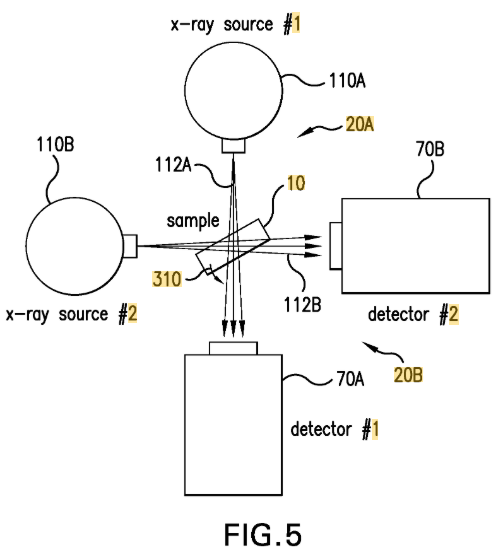
    Zeiss’s patent claims an X-ray imaging system incorporating “projection magnification,” with the key limitation being that the magnification of the projection stage is “between 1 and 10 times.” Sigray petitioned for inter partes review, arguing that a 1998 paper by Jorgensen disclosed all limitations of the claims, including this magnification range.

    The Board acknowledged that Jorgensen disclosed nearly all elements of the claims but found no anticipation because it concluded that the reference did not disclose “enough” beam divergence to result in the required projection magnification. Sigray appealed, arguing that this conclusion was based on an implicit and erroneous narrowing of the claim scope.

    Implicit Claim Construction

    The Federal Circuit found that the Board had implicitly construed the phrase “between 1 and 10 times” in a way that excluded very small—indeed undetectable—levels of magnification. The Board’s repeated focus on whether Jorgensen’s beam diverged “enough” and whether it created a “meaningful” amount of magnification revealed that it was assessing not just whether any magnification was present, but whether the magnification was perceptible or functionally significant.

    As the court explained, “[t]he Board’s use of the word ‘enough’ reflects that it considered a certain level of divergence as outside the claim. Narrowing the claim scope in this way is in fact claim construction.” The court emphasized that claim construction had occurred even though the Board disclaimed doing so—relying on its precedent in Google LLC v. EcoFactor, Inc., 92 F.4th 1049 (Fed. Cir. 2024), to look at the Board’s analysis and outcome rather than its labels.

    Inherent Disclosure and Physical Geometry

    After correcting the Board’s construction, the court held that Jorgensen inherently disclosed the disputed magnification limitation. Charles Gideon Korrell sees that the opinion stresses that under the geometric optics formula (M = (Ls + Ld)/Ls), any system with a diverging X-ray beam and a nonzero sample-to-detector distance (Ld > 0) necessarily results in magnification greater than 1.

    Since perfect collimation—i.e., zero divergence—is physically impossible in real-world systems, the court found that Jorgensen’s setup, which necessarily included some divergence, inherently satisfied the “between 1 and 10 times” magnification requirement. As stated in the opinion: “Here, it is undisputed that Jorgenson’s X-ray beams are not completely parallel and naturally must result in some magnification. That miniscule amount of magnification disclosed by the prior art definitionally achieves a magnification within the claimed range of 1 to 10.”

    Charles Gideon Korrell notes that the court relied heavily on SmithKline Beecham Corp. v. Apotex Corp., 403 F.3d 1331 (Fed. Cir. 2005), in concluding that inherent anticipation does not require recognition or intention by the prior art. Rather, it is sufficient that the claimed feature necessarily results from practicing the prior art reference, regardless of whether it was appreciated at the time.

    Reversal and Remand

    • Claims 1, 3, and 4: Reversed. The court found that these claims were inherently anticipated by Jorgensen.
    • Claims 2, 5, and 6: Vacated and remanded. Sigray had argued these claims were obvious, not anticipated, so the Board must evaluate obviousness in light of the Federal Circuit’s clarified claim scope.

    Takeaway

    Charles Gideon Korrell thinks that this decision illustrates the Federal Circuit’s firm stance on the plain meaning of claim terms. The phrase “between 1 and 10 times” includes any magnification over 1, no matter how small, and the Board erred by requiring a “meaningful” or “detectable” amount. The ruling reinforces the principle from SmithKline that inherent disclosure encompasses all inevitable consequences of prior art, even if imperceptible.

    It also underscores how implicit claim construction—especially when it narrows the scope based on technical judgments about magnitude or significance—can fundamentally alter the outcome of IPR proceedings. Courts and the PTAB alike must be careful not to impose unstated thresholds that conflict with the express language of the claims.

    Finally, Charles Gideon Korrell believes that the opinion serves as a reminder that physical realities of system design (such as the impossibility of true parallel beams) can be decisive in proving inherent anticipation. The court’s analysis—rooted in the inevitability of divergence and magnification in Jorgensen’s geometry—shows that anticipation can rest not only on what’s disclosed, but also on what must unavoidably occur.

    By Charles Gideon Korrell

  • Federal Circuit Upholds Patentability of Stem Cell Technology in Restem v. Jadi Cell

    The United States Court of Appeals for the Federal Circuit recently issued a significant ruling in Restem, LLC v. Jadi Cell, LLC, upholding the validity of Jadi Cell’s U.S. Patent No. 9,803,176. This case, which originated from an inter partes review (IPR) before the Patent Trial and Appeal Board (PTAB), revolved around whether Restem could prove that Jadi Cell’s patent claims were unpatentable due to anticipation or obviousness. The Federal Circuit affirmed the PTAB’s decision, reinforcing critical aspects of intellectual property law, particularly regarding claim construction, inherent anticipation, and obviousness in biotechnology patents.

    Key Legal Issues in the Case

    1. Claim Construction and the Definition of “Isolated Cell”

    One of the central disputes in the case was the proper construction of the term “isolated cell” in Jadi Cell’s patent. Restem argued that an “isolated cell” should be construed as a single cell derived from the subepithelial layer of mammalian umbilical cord tissue. However, the Federal Circuit agreed with the PTAB’s construction that “isolated cell” referred to a cell population, based on how cell marker expression was analyzed in the industry and throughout the patent prosecution history. This interpretation was critical because it influenced how prior art disclosures were evaluated for anticipation and obviousness.

    2. Inherent Anticipation and Prior Art

    Restem challenged the patent on the grounds that prior art (specifically, the Majore reference) inherently anticipated the claimed invention. To establish inherent anticipation, Restem needed to show that following Majore’s process would necessarily and inevitably result in the claimed isolated cells. The court, however, found that the prior art did not disclose the specific cell marker expression profile required by the ‘176 patent. Because cell marker expression can depend on multiple variables, including cell-to-cell interactions and culture conditions, the court concluded that inherency had not been established.

    This ruling reinforces a fundamental principle in patent law: inherency must be more than just a possible or likely result—it must be a guaranteed outcome of the prior art.

    3. Obviousness and the Influence of Culture Media

    Restem also argued that the patent was obvious based on a combination of prior art references, including Kita, Majore, and other secondary references. One of the dependent claims (claim 9) specified that the isolated cells were cultured in media free of animal components. The PTAB ruled that claim 9 was non-obvious for two reasons: (1) Restem failed to prove that the prior art inherently produced the claimed cells, and (2) the record evidence suggested that animal components were commonly used in culture media at the time, making the patented method distinct.

    The Federal Circuit’s decision underscores the importance of demonstrating a clear motivation to combine prior art references and a reasonable expectation of success—both key requirements in proving obviousness.

    Implications for Intellectual Property Law

    This case has several important takeaways for intellectual property practitioners and companies in the biotechnology space:

    1. Claim Scope Matters: How patent claims are constructed and interpreted can make or break a validity challenge. The court’s recognition of “isolated cell” as referring to a population of cells rather than a single cell highlights the importance of precision in drafting patent claims and prosecution history estoppel.
    2. Inherent Anticipation Requires Certainty: Simply arguing that a prior art process might result in the patented invention is not enough. The challenger must show that the patented invention necessarily results from the prior art.
    3. Obviousness Requires Stronger Evidence: In biotechnology patents, particularly those involving complex biological processes, showing that a claimed invention was obvious requires clear evidence of motivation to combine references and a reasonable expectation of success.

    Conclusion

    The Federal Circuit’s ruling in Restem v. Jadi Cell is a crucial win for patent holders in the biotech industry, reaffirming that patents must be carefully analyzed before they are invalidated. The decision reinforces the standards for claim construction, inherency, and obviousness, ensuring that patent rights remain robust where innovation is demonstrated.

    As biotechnology and stem cell research continue to evolve, this case will likely serve as a precedent in future disputes over similar intellectual property rights. Companies and practitioners should take note of the court’s reasoning when drafting patent applications and preparing for potential challenges.

    By Charles Gideon Korrell

  • Federal Circuit Ruling in Cytiva v. JSR: A Deep Dive into Patent Obviousness and Inherency in Biotechnology

    In a significant decision for biotechnology and pharmaceutical patents, the Federal Circuit has affirmed-in-part and reversed-in-part the Patent Trial and Appeal Board’s (PTAB) findings in Cytiva BioProcess R&D AB v. JSR Corp.. The case centers around chromatography matrices and protein engineering, with the core dispute being whether certain patent claims were obvious and therefore unpatentable. The ruling provides valuable insight into obviousness determinations, inherency doctrine, and the treatment of unexpected results in patent law.

    Background of the Case

    Chromatography is a key technology used to separate and purify biomolecules, particularly in pharmaceutical manufacturing. The patents at issue cover affinity chromatography matrices that use Protein A (SPA) as a ligand to bind antibodies. Cytiva owns three patents related to modified versions of Domain C of SPA, which were designed to improve stability in alkaline environments—a crucial property for reusability in industrial purification processes.

    JSR challenged Cytiva’s patents via six inter partes reviews (IPRs), arguing that the modifications to Domain C were obvious in light of prior art. The PTAB invalidated 79 claims across Cytiva’s patents but upheld four claims that related to binding properties involving the Fab region of an antibody.

    Both companies appealed:

    • Cytiva argued that the Board incorrectly applied the lead compound analysis and that the Fab-binding properties were unexpected.
    • JSR cross-appealed, asserting that the four surviving claims were also inherently obvious.

    Key Patent Law Issues Addressed

    1. Was the “Lead Compound” Analysis Required?

    Cytiva’s core argument was that the PTAB should have applied the lead compound framework, a two-step analysis commonly used in chemical and pharmaceutical patent cases:

    1. Would a skilled artisan have selected Domain C as a starting point?
    2. Would the prior art suggest modifying Domain C with a reasonable expectation of success?

    Court’s Ruling: Lead Compound Analysis Was Unnecessary

    The Federal Circuit rejected Cytiva’s argument, explaining that the lead compound test is not always required—especially when the prior art explicitly suggests a modification. Here, prior research had already identified five homologous domains (A-E) in SPA, and multiple sources explicitly recommended modifying any of them, including Domain C. Because the modification to improve alkaline stability was already known, no additional justification for selecting Domain C was needed.

    Key Takeaway:

    • The lead compound test is not a mandatory hurdle for proving obviousness—courts may bypass it when prior art already suggests the modification.

    2. Was the Modification to Domain C Obvious?

    Cytiva’s patents claimed a G29A mutation, where glycine at position 29 of Domain C was replaced with alanine. This change had already been made to Domain B in prior art and was known to improve alkaline stability.

    Court’s Ruling: The Modification Was Obvious

    The Federal Circuit affirmed the Board’s decision that making the same G29A mutation in Domain C was obvious because:

    • Prior research had explicitly suggested making this mutation to any SPA domain.
    • All five SPA domains share structural and functional similarities.
    • The motivation for the modification was already well-documented.

    Key Takeaway:

    • If a structural change is well-known in related compounds, and the motivation to apply it exists, it is likely obvious.

    3. Did the Board Properly Apply the Inherency Doctrine?

    Several claims covered chromatography matrices that could bind to the Fab region of an antibody. Cytiva argued that this binding property was unexpected and should count as a secondary consideration of nonobviousness.

    Court’s Ruling: The Fab-Binding Property Was Inherent

    The Federal Circuit sided with JSR, ruling that binding to the Fab part of an antibody was an inherent property of the modified SPA ligands. Since the prior art already disclosed SPA binding to antibodies, the presence of Fab binding was merely a natural consequence—not an inventive step.

    The Court reiterated its precedent from Hospira v. Fresenius Kabi (2020), stating:

    “If a property of a composition is inherent, there is no question of a reasonable expectation of success in achieving it.”

    Thus, the claims that survived at the PTAB were reversed and invalidated.

    Key Takeaway:

    • An inherent property of an otherwise obvious modification does not make an invention patentable, even if that property was unexpected.

    4. Does an Unexpected Result Make an Invention Nonobvious?

    Cytiva argued that unexpected Fab-binding properties should overcome the prima facie case of obviousness.

    Court’s Ruling: Unexpected Results Do Not Overcome Inherency

    While unexpected results can support nonobviousness, the Federal Circuit clarified that this applies only when the unexpected result itself is not inherent. In this case:

    • The SPA ligand naturally binds antibodies.
    • Since Fab-binding was an inherent characteristic, it could not be used to prove nonobviousness.

    The Court distinguished this case from Honeywell v. Mexichem (2017), where an unexpected chemical stability rendered a composition nonobvious. Here, binding to the Fab region was inevitable, making any unexpected results irrelevant.

    Key Takeaway:

    • Unexpected results do not override inherency—they must stem from truly novel aspects of an invention.

    Final Outcome and Impact

    IssueFederal Circuit Decision
    Lead compound analysisNot required when prior art suggests modification
    G29A mutation (Domain C)Obvious because it was recommended in prior research
    Fab-binding propertiesInherent—does not support patentability
    Unexpected resultsCannot override inherency—binding was inevitable

    The Federal Circuit affirmed the invalidation of 79 claims and reversed the PTAB’s decision on four remaining claims, declaring all challenged claims unpatentable.

    Why This Case Matters

    1. Sets Limits on the Lead Compound Analysis
      • If prior art already suggests a modification, courts can skip the lead compound test.
    2. Reinforces the Role of Inherency in Patent Law
      • If an invention inevitably exhibits a property, that property cannot make it nonobvious.
    3. Clarifies When Unexpected Results Matter
      • Unexpected properties must not be inherent to impact nonobviousness.

    For biotechnology and pharmaceutical patent holders, this ruling narrows the path for defending patents based on functional properties or unexpected results. If a claimed invention only refines known modifications, it may face heightened obviousness scrutiny.

    By Charles Gideon Korrell