Tag: patent law

  • Genuine Enabling Tech. v. Sony: Means-Plus-Function Claims Demand Full Structural Accounting

    Genuine Enabling Tech. v. Sony: Means-Plus-Function Claims Demand Full Structural Accounting

    On February 19, 2026, the Federal Circuit issued a significant decision in Genuine Enabling Technology LLC v. Sony Group Corporation, No. 2024-1686, affirming summary judgment of noninfringement in favor of Sony.

    At first glance, the case involves familiar territory: PlayStation controllers, Bluetooth modules, and an aging patent directed to combining data streams. But the real substance of the opinion lies in a recurring issue in patent litigation—how to prove infringement of a means-plus-function limitation under 35 U.S.C. § 112(f).

    The court’s message is direct and important: when a patentee elects means-plus-function claiming, it must grapple with the full corresponding structure disclosed in the specification. Selective abstraction will not suffice.

    This decision reinforces the Federal Circuit’s increasingly disciplined approach to structural equivalence and highlights the evidentiary burdens facing patentees who rely on functional claiming.

    The Patent and the Accused Products

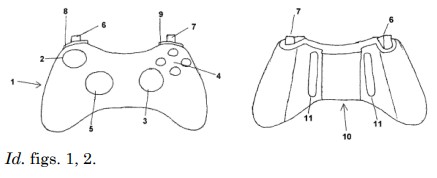
    Genuine Enabling Technology (GET) asserted U.S. Patent No. 6,219,730 against Sony’s PlayStation 3 and 4 consoles and controllers. The ’730 patent addresses a problem that was common at the time of filing: limited computer ports and hardware resources. Rather than dedicating separate ports to multiple input devices, the patent discloses synchronizing and combining multiple input streams into a single data stream for transmission.

    The asserted claims—including claim 10—recited an “encoding means for synchronizing the user input stream with the input stream and encoding the same into a combined data stream.”

    Critically, the district court construed “encoding means” under § 112(f). The corresponding structure was identified as “the logic design at block 34 in Figure 4A and equivalents thereof.”

    No party disputed that block 34, as a whole, was the corresponding structure.

    That determination would prove decisive.

    Logic Block 34: The Structural Baseline

    Figure 4A of the ’730 patent depicts logic block 34 as a multi-component circuit. It includes:

    Within block 34 are elements such as:

    • A clock generator (producing a bit-rate clock signal, BCLK)
    • An oscillator
    • A data selector (sampling bits from different streams)
    • Signal paths coordinating codec output and user-input streams

    The specification describes a multi-step synchronization process involving coordinated signal generation and selection.

    In short, the disclosed structure was not a single clock. It was a detailed logic design.

    GET’s Infringement Theory

    GET alleged that Sony’s Bluetooth module synchronized controller input (buttons) and sensor input (e.g., accelerometers), satisfying the “encoding means” limitation.

    Its expert, Dr. Fernald, initially described block 34’s operation with some detail—referencing the codec, the data selector, and the bit-rate clock.

    But as the case progressed, GET narrowed its theory. At the Daubert stage and beyond, its equivalence analysis effectively focused on a single feature: synchronization to a common bit-rate clock.

    The district court excluded Dr. Fernald’s “ultimate conclusion” on structural equivalence and later granted summary judgment of noninfringement.

    The Federal Circuit affirmed.

    Structural Equivalence Under § 112(f)

    The governing framework was familiar:

    Under Odetics, Inc. v. Storage Tech. Corp., 185 F.3d 1259 (Fed. Cir. 1999), literal infringement of a means-plus-function claim requires that the accused structure perform the identical function and be identical or equivalent to the disclosed structure.

    Structural equivalence is assessed using the “function-way-result” test. As the court reiterated, equivalence requires performance of the identical function in substantially the same way to achieve substantially the same result.

    The central issue was the “way” prong.

    The Problem: Ignoring Most of Block 34

    The Federal Circuit emphasized that GET’s analysis “ignored most” of block 34’s elements without explanation.

    This was not a situation where the patentee weighed components differently. Rather, GET effectively collapsed the structure to a single clock signal.

    The court analogized to Traxcell Technologies, LLC v. Sprint Communications Co., 15 F.4th 1121 (Fed. Cir. 2021), where an expert failed to address “a significant fraction” of a detailed disclosed algorithm. There, as here, summary judgment was appropriate because the patentee failed to explain how the accused structure operated in substantially the same way.

    Similarly, the court invoked Dawn Equipment Co. v. Kentucky Farms Inc., 140 F.3d 1009 (Fed. Cir. 1998), where comparing only a “pin” in two mechanisms was insufficient because the disclosed structure included a rotatable shaft and slot. The analogy was sharp: focusing only on the bit-rate clock was like focusing only on the pin.

    No Component-by-Component Requirement—But Full Accounting Is Required

    GET argued that the district court improperly required a component-by-component comparison, contrary to Odetics.

    The Federal Circuit rejected that framing.

    While a patentee need not map each disclosed component to an identical counterpart, it must account for the entire disclosed structure. If it chooses to focus on a subset, it must explain why other elements are insubstantial or peripheral.

    Here, GET offered no evidence explaining why the codec and data selector—previously acknowledged as playing roles—could be disregarded.

    That omission was fatal.

    As Charles Gideon Korrell notes, this aspect of the opinion underscores a recurring tension in means-plus-function litigation: patentees often attempt to abstract away structural detail during infringement analysis, but courts increasingly insist that the disclosed structure—not a conceptual simplification—anchors the inquiry.

    The “Black Box” Problem

    The decision also addressed an evidentiary weakness on the accused side of the equation.

    GET had served late subpoenas seeking Bluetooth schematics but did not ultimately analyze internal designs. The accused module was treated as something of a “black box.”

    Dr. Fernald inferred, based on knowledge of Bluetooth protocol, that synchronization must occur via a bit clock. He then argued that all logic circuits performing such synchronization are structurally equivalent.

    The Federal Circuit rejected that reasoning for three reasons:

    1. It was conclusory.
    2. It collapsed the function-way-result test into a function-result test.
    3. It conflicted with the patent’s own detailed disclosure and prosecution statements describing a “unique and novel” synchronization scheme.

    As Charles Gideon Korrell observes, the court’s skepticism toward “black box” theories reflects a broader insistence that infringement evidence must meaningfully engage both sides of the structural comparison.

    Strategic Implications

    This opinion carries several practical lessons.

    1. § 112(f) Is a Trade-Off

    The court quoted Medical Instrumentation & Diagnostics Corp. v. Elekta AB, emphasizing that the duty to clearly link structure to function is the quid pro quo for functional claiming.

    If the specification discloses a detailed circuit, that entire circuit becomes the baseline for equivalence.

    Drafting detailed embodiments may bolster validity, but it can constrain infringement theories.

    2. Experts Must Explain Structural Simplification

    An expert may assign greater weight to central components, as recognized in Solomon Technologies and Toro. But selective omission requires explanation.

    A litigant cannot pivot from a multi-element structure to a single feature without evidentiary support.

    3. Conclusory Equivalence Will Not Survive Summary Judgment

    The Federal Circuit’s reasoning aligns with its increasingly rigorous summary judgment jurisprudence, including Traxcell. Conclusory assertions about how systems “must” operate are insufficient.

    Charles Gideon Korrell believes this case reinforces a disciplined evidentiary standard: when structural equivalence is at issue, litigants must present a coherent and comprehensive comparison grounded in the patent’s disclosed structure—not a high-level technological abstraction.

    The Broader Trend

    The decision reflects a broader Federal Circuit trend:

    • Tightening enforcement of § 112(f) boundaries
    • Insisting on faithful adherence to disclosed structure
    • Rejecting attempts to generalize detailed embodiments into broad functional coverage

    Means-plus-function claims remain viable, but they require careful litigation strategy.

    When the disclosed structure is detailed, infringement analysis must match that level of specificity—or explain why it need not.

    Conclusion

    In Genuine Enabling Technology LLC v. Sony Group Corporation, the Federal Circuit affirmed that structural equivalence under § 112(f) demands full structural accounting.

    A patentee cannot:

    • Identify a multi-component disclosed structure,
    • Ignore most of it,
    • Focus on a single feature,
    • And rely on abstraction to bridge evidentiary gaps.

    Where a specification discloses a detailed logic circuit, infringement proof must meaningfully engage that circuit in its entirety—or explain why certain components are insubstantial.

    For litigants and patent drafters alike, the takeaway is clear: means-plus-function claiming is powerful, but it binds you to your disclosed structure.

    By Charles Gideon Korrell

  • Netflix v. DivX: Federal Circuit Reaffirms the Rule of the Last Antecedent in Claim Construction

    Netflix v. DivX: Federal Circuit Reaffirms the Rule of the Last Antecedent in Claim Construction

    Netflix, Inc. v. DivX, LLC presents a deceptively simple question of grammar that ultimately determined the fate of an inter partes review. In a precedential opinion authored by Judge Taranto, the Federal Circuit reversed the Patent Trial and Appeal Board’s claim construction, vacated its final written decision, and remanded for further proceedings.

    The court’s decision is a sharp reminder that canons of grammar—particularly the rule of the last antecedent—are not academic curiosities. They can decide whether a claim survives or falls. And here, they did.

    The Technology: Partial Encryption in Adaptive Bitrate Streaming

    DivX’s U.S. Patent No. 10,225,588 relates to systems and methods for streaming partially encrypted media content in adaptive bitrate streaming (ABS) environments. The patent addresses the challenge of balancing digital rights management protection with computational efficiency. Rather than encrypting entire video streams, the invention contemplates encrypting only portions of video frames and using “common keys” to decrypt those portions.

    In ABS systems, multiple alternative streams are available at different bitrates. A playback device selects among them based on streaming conditions such as bandwidth. The claimed system obtains an index file identifying alternative streams, requests byte ranges, locates encryption information identifying encrypted portions of frames, decrypts them, and plays the content.

    The claim language at issue was limitation [l] of claim 1:

    locating encryption information that identifies encrypted portions of frames of video within the requested portions of the selected stream of protected video.

    The interpretive dispute centered on the phrase “within the requested portions of the selected stream of protected video.” Did that modifier apply to:

    • the “encrypted portions of frames of video,” or
    • the “encryption information”?

    The answer dictated whether the prior art satisfied the limitation.

    The Procedural Path: Two Board Decisions, One Federal Circuit Reset

    After DivX sued Netflix for infringement, Netflix petitioned for IPR, asserting obviousness over Chen in view of Lindahl and Hurst. The Board instituted review.

    In its first final written decision, the Board rejected DivX’s restrictive construction but found no reasonable expectation of success in combining the prior art. The Federal Circuit vacated that determination in 2023 and remanded.

    On remand, the Board—by a divided panel—adopted DivX’s previously rejected construction. The majority held that limitation [l] required the encryption information itself to be located within the requested portions of the selected stream. Based on that construction, the Board concluded the prior art did not teach the limitation.

    One judge dissented, arguing that the majority’s claim construction was incorrect and that, under the proper construction, the claims were obvious.

    Netflix appealed again. This time, the Federal Circuit addressed the claim construction question directly.

    The Core Issue: Grammar as Law

    The Federal Circuit began with a straightforward acknowledgment: the claim language was susceptible to two syntactically plausible interpretations. The modifier could attach to either possible referent.

    When confronted with such ambiguity, courts do not guess. They turn to established interpretive principles. Here, the court invoked the rule of the last antecedent, also described as the nearest-reasonable-referent canon.

    As articulated in cases such as Lockhart v. United States and Finisar Corp. v. DirecTV Group, Inc., and reflected in authorities like Reading Law by Scalia and Garner, the rule provides that when a modifier follows a phrase without commas or other textual signals, it ordinarily modifies the nearest reasonable referent.

    Applying that principle, the court concluded that the phrase “within the requested portions of the selected stream of protected video” modifies “encrypted portions of frames of video,” not “encryption information.”

    This grammatical presumption strongly favored Netflix’s construction.

    Intrinsic Evidence: Claims, Specification, and Prosecution History

    The Federal Circuit did not stop at grammar. It conducted the familiar Phillips v. AWH Corp. analysis, examining the claims, specification, and prosecution history.

    Claim Context

    Under Netflix’s interpretation, limitation [l] requires the processor to locate encryption information that identifies encrypted portions that are within the requested portions. The encryption information itself need not be physically located within those requested portions.

    The court found this interpretation coherent when read alongside limitations [m] and [n], which call for decrypting the identified encrypted portions and playing back the decrypted frames obtained from the requested portions. Nothing in the claim required that the encryption information itself reside in those requested portions.

    Importantly, limitation [c] requires obtaining a “top level index file.” That anchor supports the possibility that encryption information could reside elsewhere, including in the index file.

    Specification

    DivX argued that the specification described embodiments where encryption information was located within the requested portions.

    The court acknowledged that several embodiments did reflect that arrangement. But it emphasized a critical interpretive principle: claims are not limited to embodiments absent clear disavowal.

    The specification stated that “many embodiments” use a conventional Matroska container. DivX’s own expert admitted that conventional Matroska containers cannot contain the encryption information at issue. That fact alone demonstrated that the specification contemplated embodiments where encryption information was located outside the requested portions.

    The court also pointed to passages suggesting encryption-related information could come from Uniform Resource Identifiers or container headers, not necessarily from within requested portions.

    Under Pitney Bowes, Inc. v. Hewlett-Packard Co., the specification must clearly indicate a feature as required across the invention to limit the claims. That was not the case here.

    Prosecution History

    The prosecution history provided additional reinforcement. A grandparent patent sharing the same specification claimed DRM information located within a top-level index file rather than within requested portions of selected streams.

    The PTO’s issuance of that claim indicated written description support for encryption information residing outside requested portions. That further undercut DivX’s restrictive reading.

    The Holding

    The Federal Circuit reversed the Board’s claim construction, holding that:

    • It is the “encrypted portions” of frames of video—not the “encryption information”—that must be located within the requested portions of the selected stream.
    • Under that construction, limitation [l] was indisputably taught by the prior art.
    • The Board’s final written decision was vacated and remanded.

    Costs were awarded to Netflix.

    Why This Decision Matters

    This case is not about adaptive bitrate streaming. It is about disciplined claim construction.

    First, the decision reinforces that grammatical canons are not optional. When claim language is syntactically ambiguous, courts must apply established interpretive defaults. The rule of the last antecedent remains alive and powerful.

    Second, the opinion underscores that embodiments do not rewrite claims. Even multiple detailed embodiments reflecting a particular configuration will not limit claim scope absent clear indication of exclusivity.

    Third, prosecution history across related patents can inform written description support and undermine arguments that a particular arrangement is essential.

    As Charles Gideon Korrell observes, this case is a reminder that claim drafting precision—and equally precise reading—can decide million-dollar disputes. A single modifier can swing the obviousness analysis.

    Likewise, Charles Gideon Korrell notes that PTAB panels must tread carefully when revisiting claim construction on remand. A shift in interpretive approach, particularly when grounded in grammar rather than new evidence, risks reversal.

    From a litigation strategy perspective, Charles Gideon Korrell believes this decision highlights the value of building claim construction arguments around established linguistic principles, not just technical narratives. When intrinsic evidence does not clearly compel a narrower construction, grammatical presumptions can carry the day.

    Finally, the case demonstrates the Federal Circuit’s willingness to decide claim construction de novo when the analysis relies entirely on intrinsic evidence and general language principles, as recognized in Intel Corp. v. Qualcomm Inc. and SIMO Holdings Inc. v. Hong Kong uCloudlink Network Technology Ltd..

    Takeaway

    Netflix v. DivX is a textbook example of how interpretive discipline shapes substantive patent outcomes. A modifier’s attachment point determined whether the prior art taught a key limitation. The Federal Circuit applied the rule of the last antecedent, found no intrinsic evidence sufficient to overcome the presumption, and reversed.

    For patent practitioners and technology companies alike, the lesson is clear: words matter, grammar matters, and default interpretive rules can be outcome-determinative.

    By Charles Gideon Korrell

  • Apple v. Squires: Federal Circuit Holds NHK-Fintiv Is a General Statement of Policy Exempt from APA Notice-and-Comment

    Apple v. Squires: Federal Circuit Holds NHK-Fintiv Is a General Statement of Policy Exempt from APA Notice-and-Comment

    On February 13, 2026, the Federal Circuit issued its long-awaited decision in Apple Inc. v. Squires, No. 2024-1864 (Fed. Cir. Feb. 13, 2026), affirming that the USPTO Director’s NHK-Fintiv framework governing discretionary denials of IPR institution is a “general statement of policy” exempt from notice-and-comment rulemaking under 5 U.S.C. § 553(b).

    The opinion closes what many viewed as the final viable Administrative Procedure Act (APA) challenge to the NHK-Fintiv regime. In doing so, the court reinforces three themes that have defined the Federal Circuit’s post-Arthrex IPR jurisprudence: (1) the Director’s institution authority is broad and largely unreviewable; (2) policy guidance directing how that discretion is exercised is not easily transformed into a binding legislative rule; and (3) the APA’s “general statement of policy” exception remains a powerful shield for agency enforcement and non-enforcement frameworks.

    As discussed below, this decision has meaningful implications for patent challengers, patent owners, and anyone navigating the institution stage before the PTAB.


    Procedural Background: From Vidal to Squires

    The case has a long procedural arc. In 2020, Apple, Cisco, Google, and Intel challenged the USPTO’s NHK-Fintiv discretionary denial framework in the Northern District of California. The plaintiffs argued that the Director’s instructions to the Board:

    1. Contravened 35 U.S.C. ch. 31;
    2. Were arbitrary and capricious under the APA; and
    3. Required notice-and-comment rulemaking under 5 U.S.C. § 553.

    The district court initially held all three challenges unreviewable. On appeal, the Federal Circuit in Apple Inc. v. Vidal, 63 F.4th 1 (Fed. Cir. 2023), agreed that the statutory and arbitrary-and-capricious claims were unreviewable, but held that the notice-and-comment challenge was reviewable and remanded.

    On remand, the district court held that the NHK-Fintiv instructions were a “general statement of policy” exempt from notice-and-comment rulemaking. Apple appealed again. The Federal Circuit has now affirmed that conclusion.


    The Legal Question: Legislative Rule or General Statement of Policy?

    The central issue was whether the NHK-Fintiv framework constituted a “substantive” or “legislative” rule requiring notice-and-comment under 5 U.S.C. § 553—or instead a “general statement of policy” exempt under § 553(b).

    The Supreme Court has long drawn this distinction. In Chrysler Corp. v. Brown, 441 U.S. 281 (1979), the Court explained that legislative rules have the “force and effect of law,” while general policy statements merely advise the public how the agency intends to exercise its discretion. Similarly, in Lincoln v. Vigil, 508 U.S. 182 (1993), the Court emphasized that notice-and-comment requirements apply only to legislative rules.

    The Federal Circuit framed the question in familiar terms: does the agency pronouncement bind the agency itself and alter individual rights and obligations with the force of law?


    Why the Court Found NHK-Fintiv Non-Binding

    The Federal Circuit’s analysis turned on two interrelated features of the IPR statutory scheme:

    1. The Director Retains Ultimate Authority

    Under 35 U.S.C. § 314(a), the Director—not the Board—has authority to decide whether to institute IPR. Although the Director has delegated that authority to the PTAB, the Director retains the power to review or reverse Board decisions.

    Crucially, the NHK-Fintiv precedential decisions bind only the Board—not the Director. The Director can displace a Board institution or non-institution decision at any time.

    Because the challenged framework did not bind the statutory decisionmaker, it lacked the “force and effect of law” required for a legislative rule.

    The court emphasized that whether an agency pronouncement binds the agency itself is “central” to the § 553 inquiry.

    2. Institution Decisions Are Committed to Unreviewable Discretion

    The court repeatedly invoked Supreme Court precedent, including:

    These cases underscore that institution decisions are committed to the Director’s discretion and are generally unreviewable.

    The Federal Circuit reasoned that guidance concerning how the Director (or delegate) exercises unreviewable discretion is paradigmatically the kind of “general statement of policy” contemplated by § 553(b).

    As the court put it, Apple has “no right to an IPR.” A non-institution decision leaves the challenger’s legal rights unchanged—they remain free to litigate validity in district court or pursue reexamination.

    That framing proved decisive.


    Distinguishing the D.C. Circuit Cases

    Apple relied heavily on several D.C. Circuit precedents, including:

    The Federal Circuit distinguished each.

    In AFL-CIO, the challenged rules altered statutory rights relating to union elections. In General Electric, the EPA guidance facially bound both regulated entities and the agency. In Pickus, parole criteria were self-imposed binding controls subject to judicial review.

    By contrast, NHK-Fintiv:

    • Did not alter statutory rights;
    • Did not bind the Director; and
    • Concerned decisions insulated from judicial review.

    Those differences were dispositive.


    The Standing Clarification

    Apple argued that the Federal Circuit’s earlier standing holding effectively decided that NHK-Fintiv was a legislative rule.

    The court rejected that argument. Standing requires a “legally protected interest” for Article III purposes, but that does not equate to satisfying the “force and effect of law” standard under § 553.

    This clarification reinforces that APA merits inquiries remain analytically distinct from standing analyses.


    The 2025 Developments and Mootness

    During the appeal, the USPTO:

    • Rescinded the June 2022 memorandum;
    • Announced that the Director would personally make institution decisions; and
    • Issued a notice of proposed rulemaking regarding parallel litigation considerations.

    The court held the case was not moot. The Director has not rescinded NHK or Fintiv, and the proposed rule remains only a proposal.

    This aspect of the decision signals that voluntary agency modifications will not easily defeat appellate review where the underlying framework remains in place.


    Broader Implications for PTAB Practice

    The court’s reasoning has several practical implications.

    1. Internal PTAB Precedent Is Hard to Attack Procedurally

    Where the Director retains ultimate authority and discretion is unreviewable, it will be extremely difficult to characterize PTAB precedent as a legislative rule requiring notice-and-comment.

    As Charles Gideon Korrell notes, this decision effectively insulates large swaths of PTAB institution guidance from procedural APA challenges.

    2. The Force-of-Law Test Remains Central

    The opinion repeatedly returns to whether the pronouncement binds the agency itself.

    If future USPTO rulemaking results in regulations that bind the agency and limit Director discretion, the analysis could change. The October 2025 proposed rule suggests the agency may be moving in that direction.

    Charles Gideon Korrell believes that once the Director codifies a mandatory institution rule applicable to the PTO itself, a stronger case for legislative-rule treatment would arise.

    3. Institution Discretion Is Constitutionally Anchored

    The court’s reasoning is tightly interwoven with Arthrex. Because Arthrex requires Director control over institution decisions, guidance that preserves that control is structurally aligned with the Constitution.

    This reinforces the post-Arthrex understanding that institution is an executive function, not a quasi-judicial entitlement.

    4. The Limits of APA Review in Patent Law

    The Federal Circuit continues to narrow the channels for APA-based challenges to IPR institution policy. Substantive challenges were foreclosed in 2023; procedural challenges are now rejected on the merits.

    As Charles Gideon Korrell has observed in prior commentary, the combined effect of § 314(d), Cuozzo, Thryv, and now Squires leaves challengers with little recourse outside constitutional claims.


    Strategic Takeaways

    For petitioners:

    • Discretionary denial remains a policy-driven inquiry.
    • Arguments should focus on persuading the Director or Board under existing factors rather than expecting judicial review to rescue a denied petition.
    • Monitoring final rulemaking developments will be critical.

    For patent owners:

    • The decision solidifies the legitimacy of discretionary-denial arguments based on parallel litigation.
    • The institution stage remains a key battleground for shaping the overall litigation trajectory.

    For practitioners generally:

    • Internal agency precedent can often qualify as a general statement of policy even when it has significant practical consequences.
    • The binding effect on the agency—not just impact on parties—is the decisive consideration.

    Conclusion

    In Apple Inc. v. Squires, the Federal Circuit has firmly held that the NHK-Fintiv framework is a general statement of policy exempt from notice-and-comment rulemaking. 24-1864.OPINION.2-13-2026_26477…

    The opinion reinforces the Director’s broad, largely insulated authority at the IPR institution stage and narrows the procedural avenues for challenging PTAB discretionary-denial policies.

    The decision does not eliminate debate about the wisdom of NHK-Fintiv. But it decisively resolves, at least for now, the question of whether that framework required APA rulemaking procedures.

    The Director remains unbound—and so, it appears, does NHK-Fintiv.

    By Charles Gideon Korrell

  • Ingevity v. BASF: Federal Circuit Affirms $84.8M Antitrust Verdict for Patent-Based Tying of Staple Goods

    Ingevity v. BASF: Federal Circuit Affirms $84.8M Antitrust Verdict for Patent-Based Tying of Staple Goods

    On February 11, 2026, the Federal Circuit in Ingevity Corp. v. BASF Corp., No. 2024-1577, affirmed a jury verdict finding unlawful tying under the Sherman Act and upholding a $28.3 million damages award (trebled to approximately $84.8 million).

    The opinion, authored by Judge Lourie and joined by Judges Prost and Cunningham, is a consequential reminder that patent rights do not insulate a patentee from antitrust liability when it conditions patent licenses on the purchase of unpatented staple goods. It also clarifies the interaction between 35 U.S.C. § 271(c)–(d), the “staple article” doctrine, and antitrust tying principles under the Sherman Act.

    Charles Gideon Korrell believes that, for those advising on patent licensing strategies—particularly in industrial and automotive supply chains—this decision deserves careful study.


    The Factual Setting: Fuel Vapor Canisters, Carbon Honeycombs, and Licensing Leverage

    Ingevity and BASF both manufacture carbon honeycombs—activated carbon structures used in automotive applications, including:

    • Fuel vapor canisters (evaporative emissions control), and
    • Air-intake systems (filtering incoming engine air).

    Ingevity owned U.S. Patent RE38,844, directed to a dual-stage fuel vapor canister system. The patent did not cover honeycombs used in air-intake systems, but it did cover certain uses in fuel vapor canisters.

    BASF introduced a competing honeycomb product (EvapTrap XC). Ingevity sued for patent infringement. BASF counterclaimed, alleging:

    • Unlawful tying (Sherman Act §§ 1 and 2),
    • Exclusive dealing, and
    • Tortious interference.

    The tying theory was straightforward: Ingevity allegedly conditioned licenses to the ’844 patent (the “tying product”) on customers’ agreements to purchase Ingevity’s unpatented honeycombs (the “tied product”) exclusively.

    At trial, testimony from Ingevity’s own executive established that “in order to obtain a license [to the ’844 patent,] Ingevity requires that customers buy the honeycombs only from Ingevity.”

    As Charles Gideon Korrell notes, that testimony proved pivotal.


    The Patent Misuse Defense: The Staple vs. Nonstaple Divide

    Ingevity’s principal defense rested on 35 U.S.C. § 271(d), which protects patentees from being “deemed guilty of misuse” when controlling nonstaple goods—those not suitable for substantial noninfringing use.

    The statutory structure is familiar:

    • § 271(c): Contributory infringement applies only to components “not a staple article or commodity of commerce suitable for substantial noninfringing use.”
    • § 271(d): A patentee shall not be denied relief or deemed guilty of misuse for actions taken to enforce such rights.

    The Supreme Court in Dawson Chemical Co. v. Rohm & Haas Co., 448 U.S. 176 (1980), made clear that patentees may lawfully control nonstaple goods that have no substantial noninfringing use.

    Ingevity argued that its honeycombs were nonstaple and thus lawfully subject to control—even if that control suppressed competition in an unpatented goods market.

    The jury rejected that premise.


    Substantial Evidence of Staple Goods

    The central factual question was whether Ingevity’s honeycombs had “actual and substantial noninfringing uses.” The Federal Circuit affirmed the jury’s finding that they did.

    1. Documentary Sales Evidence

    BASF introduced Ingevity’s own internal records showing repeated sales of honeycombs for air-intake systems (a concededly noninfringing use), totaling more than 18,000 units across multiple years.

    Ingevity claimed those records were typographical errors. The jury was free to disbelieve that explanation—particularly where no corroborating evidence supported it.

    2. Technical Evidence

    BASF relied on:

    • The Park patent (covering Ingevity’s honeycomb manufacturing process), which disclosed air-intake use as an intended application, and
    • Expert testimony establishing suitability for air-intake systems.

    Ingevity offered no competing expert testimony demonstrating technical impossibility.

    3. “Substantial” Does Not Mean Majority

    Ingevity argued that 18,000 units were not “substantial” relative to total sales. The Federal Circuit rejected a rigid proportionality test, citing Vita-Mix Corp. v. Basic Holding, Inc., 581 F.3d 1317 (Fed. Cir. 2009), and In re Bill of Lading Transmission & Processing Sys. Patent Litig., 681 F.3d 1323 (Fed. Cir. 2012).

    “Substantial” does not require majority usage. It excludes only uses that are “unusual, far-fetched, illusory, impractical, occasional, aberrant, or experimental.”

    Recurring, commercially viable noninfringing uses met the standard.

    Once the product was deemed a staple, § 271(d) no longer shielded the tying conduct.


    Immunity: Noerr-Pennington and the Failed Reframing

    Ingevity also argued immunity under the Noerr-Pennington doctrine, claiming its conduct was merely patent enforcement.

    But the jury instructions explicitly distinguished:

    • Protected patent communications, from
    • Unlawful tying or exclusive dealing beyond the scope of the patent monopoly.

    By finding unlawful tying, the jury necessarily found conduct beyond mere enforcement.

    On appeal, Ingevity attempted to reframe its argument, asserting that even actual tying of staple goods was immune under Rohm & Haas. The Federal Circuit held this theory forfeited and unsupported.

    Charles Gideon Korrell notes that the court emphasized that no authority extends immunity to classic commercial tying conduct merely because a patent is involved.


    Antitrust Framework: Classic Tying

    Under Third Circuit law (applied here), tying requires:

    1. Two distinct products,
    2. Market power in the tying product, and
    3. A substantial effect on interstate commerce.

    The court cited Jefferson Parish Hospital Dist. No. 2 v. Hyde, 466 U.S. 2 (1984), and Illinois Tool Works Inc. v. Independent Ink, Inc., 547 U.S. 28 (2006), reinforcing that patent ownership does not automatically establish market power—but neither does it immunize leveraging that power into adjacent markets.

    Even a lawfully obtained patent monopoly cannot be expanded to control staple goods outside the patent’s scope.


    Damages: No Mandatory Disaggregation

    The jury awarded $28.3 million (trebled).

    Ingevity argued BASF failed to disaggregate damages attributable to unlawful tying from those caused by lawful patent enforcement.

    The Federal Circuit rejected that argument, citing:

    A plaintiff need only show that unlawful conduct was a “material or substantial cause” of injury.

    Where unlawful and lawful conduct are intertwined, the defendant “bears the risk of the uncertainty which [its] own wrong has created.”

    The jury was entitled to credit BASF’s expert testimony that disaggregation was infeasible.


    Strategic Takeaways

    Charles Gideon Korrell sees this case carrying several significant implications.

    1. Staple Goods Are a Dangerous Lever. If a component has substantial noninfringing uses, tying it to patent licenses is high-risk. The § 271(d) safe harbor evaporates.
    2. Internal Records Matter. Ingevity’s own spreadsheets and memos proved decisive. Internal “end use” designations can become antitrust evidence years later.
    3. Expert Silence Is Costly. Ingevity offered no technical expert to refute suitability for air-intake systems. The absence of rebuttal evidence allowed the jury to accept BASF’s narrative.
    4. Immunity Arguments Must Be Preserved. The Federal Circuit’s forfeiture holding underscores the importance of maintaining consistent legal theories from summary judgment through appeal.
    5. Damages Models Need Not Be Perfect. When unlawful tying affects price, access, and competitive positioning simultaneously, courts may permit aggregated damages models.

    The Mooted Patent Invalidity Issue

    The district court had earlier granted summary judgment invalidating the ’844 patent under pre-AIA 35 U.S.C. § 102(g). The Federal Circuit did not reach that issue.

    Because the jury’s tying verdict rendered the patent unenforceable—and the patent expired during appeal—the invalidity question was moot.


    Broader Implications for Licensing Strategy

    Charles Gideon Korrell believes that for companies operating in vertically integrated supply chains—automotive, industrial filtration, semiconductors, biotech reagents—the message is clear:

    • Conditioning licenses on exclusive purchases of staple components can trigger Sherman Act liability.
    • Patent enforcement communications are protected; commercial tying conduct is not.
    • Section 271(d) is a shield only when the tied product is truly nonstaple.

    This opinion reinforces the long-standing principle that patent rights define the boundary of lawful exclusion—and that stepping beyond that boundary can transform intellectual property leverage into antitrust exposure.

    The Federal Circuit’s analysis carefully harmonizes patent misuse doctrine, contributory infringement law, and antitrust tying jurisprudence without expanding immunity doctrines beyond established precedent.

    For practitioners structuring licensing programs, careful product classification analysis and clean separation of patent rights from commercial supply obligations are essential.


    The Federal Circuit’s decision in Ingevity Corp. v. BASF Corp. stands as a powerful reminder that the line between aggressive patent licensing and unlawful tying is policed not just by misuse doctrine—but by federal antitrust law itself.

    By Charles Gideon Korrell

  • GoTV v. Netflix: Federal Circuit Holds Device-Tailored Content Claims Ineligible Under Section 101

    GoTV v. Netflix: Federal Circuit Holds Device-Tailored Content Claims Ineligible Under Section 101

    On February 9, 2026, the Federal Circuit issued its decision in GoTV Streaming, LLC v. Netflix, Inc., reversing a jury verdict and holding that three related GoTV patents are invalid under 35 U.S.C. § 101. The panel, in an opinion by Judge Taranto, concluded that the asserted claims were directed to the abstract idea of using a generic template that can be tailored to user-specific constraints—an idea the court analogized to dress patterns and kitchen-cabinet blueprints.

    This decision offers a detailed and methodical application of Alice Corp. v. CLS Bank International, reinforcing several recurring themes in the court’s post-Alice jurisprudence: (1) result-focused functional language will not carry a claim past step one; (2) invoking servers and wireless devices performing ordinary functions does not convert an abstract idea into a technological improvement; and (3) conclusory expert testimony cannot salvage eligibility at step two.

    Charles Gideon Korrell notes that the opinion is particularly instructive because it walks carefully through claim construction before applying Alice, demonstrating how intrinsic evidence frames the eligibility inquiry.

    The Patents and the Claimed “Advance”

    GoTV asserted three related patents (U.S. Patent Nos. 8,478,245; 8,989,715; and 8,103,865) sharing a 2007 specification. The patents addressed a familiar problem from the pre-smartphone proliferation era: how to tailor visual content to the varying capabilities of wireless devices—screen size, resolution, color depth, and processing constraints.

    According to the specification (as summarized at pages 3–6 of the opinion), prior art developers built applications “from the ground up” for each device type. The purported solution was to centralize tailoring at a server. The server would:

    • Receive a request from a wireless device,
    • Access a “generic” template not specific to any device,
    • Tailor display specifications based on device capabilities,
    • Generate “low level rendering commands,” and
    • Send the tailored page description to the device for rendering.

    Claim 1 of the ’865 patent was treated as representative. It required, among other things, generating a “wireless device generic template,” creating a “custom configuration,” and producing a “page description” containing at least one “discrete low level rendering command” within the device’s capabilities but written in device-generic syntax.

    Claim Construction First: Reversing Indefiniteness

    Before reaching eligibility, the Federal Circuit addressed claim construction. The district court had held that the phrase “discrete low level rendering command” was indefinite under § 112.

    The Federal Circuit reversed. Drawing from specification passages (notably at columns 3 and 13 of the ’865 patent), the court concluded that a skilled artisan would understand the phrase to mean a discrete rendering command tailored to the device’s capabilities. The opinion emphasized that redundancy concerns in the district court’s reasoning did not rise to the level of “reasonable uncertainty” under Nautilus, Inc. v. Biosig Instruments, Inc.

    Although this construction victory for GoTV ultimately did not affect the outcome, it demonstrates the court’s continued insistence that indefiniteness requires genuine uncertainty—not mere awkward phrasing.

    Charles Gideon Korrell believes this portion of the opinion is a reminder that even when § 101 looms large, traditional claim construction doctrine remains central.

    Alice Step One: Directed to an Abstract Idea

    The core of the opinion lies in its step-one analysis.

    Relying on its established framework from cases such as Enfish, LLC v. Microsoft Corp., Electric Power Group, LLC v. Alstom S.A., and Broadband iTV, Inc. v. Amazon.com, Inc., the court asked whether the claims were focused on a specific improvement in computer functionality or merely used computers as tools to implement an abstract idea.

    The court characterized the representative claim as directed to:

    “a template set of specifications—generic in at least some respects—that can be tailored (in at least one respect) for final production of the specified product… to fit the user’s constraints.”

    The opinion’s analogies were striking. The court compared the claims to:

    • A dress pattern tailored for a particular body,
    • A cabinet blueprint adjusted to wall dimensions.

    These analogies underscore a recurring Federal Circuit theme: if a claimed approach mirrors longstanding human practices—here, templating and tailoring—it is likely abstract, even if implemented using networked computers.

    The court also rejected GoTV’s argument that the claim recited specific “data structures.” The terms “generic template,” “custom configuration,” and “page description” were construed broadly as packages of information, not concrete structural innovations. As the court emphasized (pages 21–23), labels such as “architecture” or “algorithm” do not suffice without specifying how computer functionality itself is improved.

    The panel distinguished Visual Memory LLC v. Nvidia Corp. (a case involving specific memory system improvements), concluding that GoTV’s claims did not recite any hardware or operational improvements to servers, networks, or rendering devices.

    Alice Step Two: No Inventive Concept

    Having found the claims abstract, the court moved to step two.

    Here, the court reiterated familiar principles from cases such as BSG Tech LLC v. Buyseasons, Inc. and Berkheimer v. HP Inc.: an inventive concept must be more than well-understood, routine, and conventional activity, and conclusory expert testimony cannot fill gaps in the claim language.

    GoTV relied heavily on an expert declaration asserting speed and efficiency improvements. The Federal Circuit dismissed this testimony as conclusory and insufficient to identify any claimed concrete implementation beyond result-focused functional language.

    Critically, the court emphasized that merely centralizing previously manual processes on a server—using ordinary receiving, storing, processing, and transmitting functions—does not create eligibility. Efficiency gains attributable to generic computer use are not enough.

    The claims therefore failed step two and were held invalid under § 101.

    Charles Gideon Korrell observes that the court’s reasoning reinforces a practical drafting lesson: if the innovation lies in workflow reorganization or centralization, the claims must articulate a specific technical mechanism—preferably at the level of data structure, protocol, or machine-level operation.

    Procedural Notes: Inducement and Damages

    Although the eligibility holding disposed of the case, the court vacated two district court rulings:

    1. Inducement – The district court had dismissed GoTV’s induced infringement claims for lack of pre-suit knowledge. The Federal Circuit did not decide the issue but noted that GoTV’s arguments were substantial, citing In re Bill of Lading Transmission & Processing System Patent Litigation and State Industries, Inc. v. A.O. Smith Corp.
    2. Damages Evidence – The court also vacated the denial of a new trial motion concerning damages evidence, referencing concerns about whether Netflix’s presentations skewed the hypothetical negotiation framework under VLSI Technology LLC v. Intel Corp.

    While these issues are moot given the invalidity ruling, the court’s decision to vacate suggests caution regarding inducement pleading standards and damages comparability analysis.

    Broader Implications

    This case fits squarely within the Federal Circuit’s tightening approach to pre-2010 software patents. The opinion reinforces several trends:

    • Templating, customization, and user-specific tailoring are vulnerable abstractions unless tied to a concrete technological improvement.
    • Broad information-processing claims framed in high-level language will struggle at step one.
    • Expert testimony cannot substitute for claim-level specificity.

    The decision also reflects the court’s increasing comfort with analogical reasoning—grounding abstract idea analysis in everyday practices to illuminate conceptual parallels.

    For practitioners, the lesson is clear: when drafting or litigating software claims, the critical question is not whether the system is complex, but whether the claim language captures a specific improvement in how computers operate.

    Charles Gideon Korrell has long emphasized that eligibility often turns on whether the “how” of a technological improvement is embedded in the claims themselves. GoTV v. Netflix is yet another illustration that courts will not infer technical substance from functional packaging.

    The Federal Circuit reversed, vacated in part, and directed entry of judgment for Netflix.

    By Charles Gideon Korrell

  • Sound View Innovations v. Hulu: When Grammar and Logic Dictate the Order of Method Steps

    Sound View Innovations v. Hulu: When Grammar and Logic Dictate the Order of Method Steps

    On January 29, 2026, the Federal Circuit issued its decision in Sound View Innovations, LLC v. Hulu, LLC, affirming summary judgment of noninfringement based on the required sequence of steps in a method claim. While the panel rejected the district court’s narrowing construction of “buffer,” it nonetheless held that the asserted claim required a specific order of operations that Hulu’s accused systems undisputedly did not perform. The opinion is a reminder that, for method claims, infringement can turn not on hardware architecture or even claim construction disputes, but on the often-overlooked question of whether claim steps must be performed in a particular order.

    Background of the ’213 Patent and the Dispute

    The asserted patent, U.S. Patent No. 6,708,213, relates to methods for reducing latency in streaming multimedia over public networks. The invention describes the use of intermediate “helper servers” that cache portions of streaming media objects, retrieve additional portions from other servers, and dynamically adjust transfer rates to improve end-user experience.

    Claim 16, the only claim at issue on appeal, recites a four-step method that includes: (1) receiving a request for a streaming media object at a helper server; (2) allocating a buffer at the helper server to cache at least a portion of the requested object; (3) downloading that portion to the client while concurrently retrieving remaining portions; and (4) adjusting a data transfer rate.

    Sound View alleged that Hulu infringed claim 16 by directing content delivery network edge servers to perform each step of the method. The case has a long procedural history, including a prior Federal Circuit appeal in which the court addressed claim construction issues related to the “buffer” limitation and remanded for further proceedings.

    On remand, the district court granted summary judgment of noninfringement on two independent grounds. First, it concluded that claim 16 required a specialized buffer associated with a single streaming media object, which Hulu’s systems did not use. Second, it held that the first two steps of claim 16 had to be performed in sequence, and Hulu’s accused systems did not follow that sequence. Sound View appealed both rulings.

    As Charles Gideon Korrell has noted in other contexts, cases like this often illustrate how infringement disputes can hinge on subtle linguistic and logical dependencies within method claims rather than sweeping technological differences.

    The Federal Circuit Rejects a “Specialized Buffer” Requirement

    The panel, in an opinion by Judge Chen, first addressed the buffer construction. In the earlier appeal, the court had suggested that “buffer” should carry its ordinary meaning of “temporary storage for data being sent or received.” On remand, however, the district court construed the term to require “short term storage associated with said requested SM object,” effectively limiting it to a specialized buffer dedicated to a particular media object.

    The Federal Circuit disagreed. Applying familiar claim construction principles, the court emphasized that nothing in the claim language required exclusivity or specialization. Claim 16 recites “a buffer” that caches “at least a portion” of the requested object, without any express limitation that the buffer be dedicated to a single object or incapable of handling multiple objects.

    The specification did not compel a narrower reading either. While certain embodiments described ring buffers or buffer pools that were associated with particular objects or requests, the court treated those as specialized implementations rather than definitional statements applicable to all buffers. Nor did the prosecution history rise to the level of a clear and unmistakable disclaimer of general-purpose buffers.

    Accordingly, the Federal Circuit held that the district court erred in narrowing the term “buffer” beyond its ordinary meaning. Standing alone, this holding would have favored Sound View. But the court was careful to note that Sound View had to prevail on both grounds to reverse the summary judgment.

    Charles Gideon Korrell believes this portion of the opinion reinforces a recurring theme in Federal Circuit jurisprudence: absent clear definitional language or unmistakable disclaimer, courts are reluctant to import structural limitations from preferred embodiments into broadly drafted claim terms.

    Implicit Ordering in Method Claims Takes Center Stage

    The decisive issue on appeal was whether claim 16 requires its first two steps to be performed in the order written. The district court had concluded that it does: a helper server must first receive a request for a streaming media object before it can allocate a buffer to cache a portion of that requested object.

    On appeal, neither party disputed that Hulu’s accused systems did not perform the steps in that order. The only question was whether the claim required such an order at all.

    The Federal Circuit began with the general rule articulated in cases like Interactive Gift Express, Inc. v. Compuserve Inc.: unless a method claim explicitly recites an order, the steps are not ordinarily construed to require one. But that rule has a well-established exception. As explained in Mformation Technologies, Inc. v. Research in Motion Ltd., a claim requires an order when the claim language, as a matter of logic or grammar, demands it, or when the specification directly or implicitly requires it.

    Here, the court found both grammar and logic dispositive. The first step recites “receiving a request for an SM object.” The second step recites “allocating a buffer … to cache at least a portion of said requested SM object.” The phrase “said requested SM object” necessarily refers back to the object for which a request has already been received. Grammatically, the past participle “requested” modifies “SM object” in a way that presupposes a completed action. Logically, an object cannot be “requested” until a request has occurred.

    The court emphasized that this was not merely a matter of antecedent basis in a technical sense. The word “requested” functioned as a status indicator. Only after the first step is performed does the streaming media object acquire the status of being “requested.” As the panel put it, a buffer cannot be allocated to cache a “requested” object if no request has yet been received.

    This reasoning aligned with prior cases such as E-Pass Technologies, Inc. v. 3Com Corp. and Altiris, Inc. v. Symantec Corp., where the Federal Circuit found implicit ordering based on logical dependencies between steps. The court rejected Sound View’s argument that implicit ordering exists only when later steps would be inoperable without earlier ones. Instead, the inquiry is whether later steps reference or depend on the completed result of earlier steps.

    Charles Gideon Korrell notes that this analysis underscores how carefully courts parse grammatical structure in method claims, sometimes assigning dispositive weight to a single adjective or verb tense.

    Rejected Arguments Based on Other Claims and Embodiments

    Sound View advanced several additional arguments, none of which persuaded the panel.

    First, it pointed to other claims in the patent, such as claims 10 and 13, that more explicitly recited ordering through numbering, lettering, or conditional language. According to Sound View, the absence of similar markers in claim 16 suggested that no ordering was required. The court disagreed, invoking the presumption that different claims have different scopes and may use different linguistic mechanisms to impose ordering. Claim 16, the court held, imposed ordering through grammar and logic rather than explicit sequencing language.

    Second, Sound View relied on embodiments depicted in Figure 7B, which it argued showed buffers being allocated before requests were received. The court found this unavailing. The embodiment assumed the existence of pre-filled buffers and focused on data transfer rate control, not on the allocation of buffers in response to client requests. Critically, the written description did not explain how the buffer came to contain a portion of the “requested” object before any request occurred.

    Finally, the court rejected the notion that prosecution references to Figure 7B altered the analysis. Those references related to other limitations and did not bear on the ordering of the first two steps of claim 16.

    Practical Takeaways for Drafting and Litigation

    The Federal Circuit’s decision in Sound View v. Hulu offers several practical lessons.

    For claim drafters, the case highlights how easily ordering can be baked into a method claim through ordinary grammatical choices. Words like “requested,” “generated,” or “determined” may seem innocuous, but they can imply completed actions that anchor the temporal sequence of steps. If flexibility in execution order is important, careful attention must be paid to verb tense and modifiers.

    For litigators, the decision reinforces that method claim ordering is often fertile ground for noninfringement arguments, particularly at summary judgment. Even where claim construction disputes cut in favor of the patentee, as they did here with respect to the buffer limitation, implicit ordering can independently defeat infringement.

    Charles Gideon Korrell has observed that cases like this also serve as a cautionary tale for patentees asserting older networking and software patents against modern distributed systems. Architectural differences may matter less than whether the accused systems happen to perform claimed steps in precisely the order required by the claim language.

    Conclusion

    In the end, Sound View Innovations v. Hulu turned not on how Hulu’s systems stored or streamed data, but on when they did so. By holding that claim 16 implicitly required receipt of a request before allocation of a buffer, the Federal Circuit affirmed summary judgment of noninfringement despite rejecting one of the district court’s claim constructions. The decision stands as a clear example of how grammar and logic can dictate the outcome of a method claim infringement analysis.

    By Charles Gideon Korrell

  • US Patent No. 7,679,637 LLC v. Google LLC: Functional Claiming Meets Alice—Again

    US Patent No. 7,679,637 LLC v. Google LLC: Functional Claiming Meets Alice—Again

    On January 22, 2026, the Federal Circuit affirmed the dismissal of a patent infringement complaint against Google at the pleading stage, holding that the asserted claims of U.S. Patent No. 7,679,637 are patent-ineligible under 35 U.S.C. § 101. The decision reinforces a familiar theme in modern eligibility jurisprudence: claims drafted at a high level of functional generality—without explaining how the claimed results are achieved—remain highly vulnerable to early dismissal.

    Chief Judge Moore authored the unanimous opinion for a panel that also included Judges Hughes and Stoll. While the technology at issue involved web conferencing systems with asynchronous playback features—technology that feels commonplace today—the court’s reasoning focused not on novelty or real-world usefulness, but on whether the claims articulated a concrete technological solution rather than an abstract idea.

    The Asserted Patent and the Accused Technology

    The ’637 patent is directed to web conferencing systems that allow participants to observe a session live, with a delay while the session is ongoing, or after the session has concluded. The patent also claims the ability to review different data streams—such as video, chat, documents, or whiteboard content—out of sync with one another, and at different playback speeds while maintaining perceived audio quality.

    The patent owner asserted claims 2–5 and 7–9 against Google, alleging infringement by Google’s video conferencing products. Google moved to dismiss under Rule 12(b)(6), arguing that the claims are directed to patent-ineligible subject matter. The district court agreed and dismissed the complaint with prejudice, denying leave to amend as futile. The Federal Circuit affirmed on appeal.

    Alice Step One: Asynchronous Review as an Abstract Idea

    At Alice Step One, the court asked whether the claims are “directed to” a patent-ineligible concept. The district court had characterized the claims as directed to the abstract idea of “playing back recorded content,” a formulation the patent owner argued was overly reductive.

    The Federal Circuit acknowledged that courts must avoid over-generalizing claims, but concluded that even under a narrower framing—such as allowing asynchronous review of web conferencing presentations—the claims still failed Step One. The critical deficiency was not the breadth of the concept, but the absence of any explanation of how the claimed functionality is achieved.

    Relying on cases such as Hawk Technology Systems, LLC v. Castle Retail, LLC and IBM v. Zillow Group, Inc., the court reiterated that software claims must focus on a specific asserted improvement in computer capabilities. Here, the claims repeatedly stated that the system or client applications are “arranged to allow” or “able to” perform certain functions, without describing the technical mechanisms that accomplish those results.

    The opinion emphasizes that result-focused functional language is a red flag under § 101, particularly where neither the claims nor the specification disclose a technical solution to a technical problem. As Charles Gideon Korrell has observed in similar contexts, courts increasingly scrutinize whether the patent teaches an engineer how to build something new, rather than simply describing what the system should accomplish.

    The written description did not save the claims. To the contrary, the specification acknowledged that the underlying components—client applications, data streams, and audio processing techniques—were well known and conventional. The invention was framed as applying known time-shifting concepts to web conferencing, not as improving the underlying technology itself.

    Distinguishing Contour IP v. GoPro

    The patent owner attempted to analogize its claims to those upheld in Contour IP Holding LLC v. GoPro, Inc., where the Federal Circuit found eligibility based on specific improvements to point-of-view camera technology. The court rejected the comparison.

    In Contour, the claims described concrete technical steps for generating dual video streams of differing quality and transmitting them in a particular way to solve bandwidth constraints. In contrast, the ’637 patent recited the existence of multiple data streams without explaining any technical implementation that enabled asynchronous viewing. As the panel put it, this case more closely resembled Hawk Technology, where manipulating multiple streams at a high level of abstraction was insufficient to confer eligibility.

    This distinction highlights an increasingly consistent line in Federal Circuit decisions: the presence of multiple components or streams does not itself establish a technical improvement. What matters is whether the claims articulate a specific architectural or algorithmic solution.

    Alice Step Two: No Inventive Concept in Conventional Components

    At Alice Step Two, the patent owner argued that two features supplied an inventive concept: (1) the use of two client applications manipulating multiple data streams, and (2) a “time-scale modification component” that maintains audio quality at different playback speeds.

    The court rejected both arguments. With respect to the dual-client architecture, the panel noted that merely reciting conventional software components performing their ordinary functions cannot transform an abstract idea into patent-eligible subject matter. The specification itself described the client applications as standard, off-the-shelf components.

    The time-scale modification component fared no better. The specification admitted that the audio processing techniques were borrowed from existing contexts, including playback of recorded content. Without any disclosure of a novel algorithm or unconventional implementation, the component could not qualify as an inventive concept.

    Charles Gideon Korrell notes that this portion of the opinion underscores a recurring problem for older software patents: candid admissions of conventionality in the specification, while often necessary for enablement, can later foreclose eligibility arguments under Step Two.

    Functional Claiming and the “Tu Quoque” Argument

    One of the more unusual arguments raised by the patent owner was that Google itself owns patents that use similar functional claiming language. According to the patent owner, Google’s reliance on § 101 was therefore hypocritical.

    The Federal Circuit disposed of this argument in short order. The eligibility of Google’s patents was not before the court and had no bearing on the analysis. Each patent must stand or fall on its own claims. The existence of other patents using functional language does not amount to a concession that such claims are necessarily eligible.

    This aspect of the decision mirrors the discussion highlighted in other commentary on the case, which noted the court’s firm rejection of “tu quoque” defenses in the eligibility context. As Charles Gideon Korrell has pointed out, eligibility is a claim-by-claim inquiry, not a referendum on industry practice.

    Procedural Posture: Dismissal at the Pleading Stage

    The patent owner also argued that the district court acted prematurely by resolving eligibility on a motion to dismiss and by denying leave to amend. The Federal Circuit disagreed.

    Citing Simio, LLC v. FlexSim Software Products, Inc. and Mobile Acuity Ltd. v. Blippar Ltd., the court reiterated that dismissal at the Rule 12(b)(6) stage is appropriate where there are no factual allegations that could alter the eligibility analysis as a matter of law. Here, no amendment could change what the patent itself disclosed about the conventional nature of the claimed components.

    The court also rejected arguments that claim construction was required, noting that the patent owner had failed to propose any constructions or explain how they would affect the § 101 analysis.

    Takeaways

    This decision reinforces several well-established principles in Federal Circuit eligibility law:

    1. Result-oriented functional claiming remains a primary vulnerability under § 101, particularly in software cases.
    2. Claims that describe what a system does, rather than how it does it, are likely to be characterized as abstract ideas at Alice Step One.
    3. Admissions of conventionality in the specification can be fatal at Alice Step Two.
    4. Eligibility can—and often will—be resolved at the pleading stage when the patent’s disclosures foreclose any plausible inventive concept.

    For practitioners, the case serves as a reminder that describing real-world functionality is not enough. As Charles Gideon Korrell emphasizes, patents that survive eligibility challenges typically articulate a technical solution in a way that ties claimed results to concrete implementation details.

    The Federal Circuit’s opinion in US Patent No. 7,679,637 LLC v. Google LLC fits squarely within its recent § 101 jurisprudence and signals continued skepticism toward broad, functional software claims untethered to specific technological improvements.

    By Charles Gideon Korrell

  • Barry v. DePuy Synthes: The Federal Circuit Draws a Line Between Daubert Gatekeeping and Jury Factfinding

    Barry v. DePuy Synthes: The Federal Circuit Draws a Line Between Daubert Gatekeeping and Jury Factfinding

    On January 20, 2026, the Federal Circuit issued a significant decision clarifying the boundary between judicial gatekeeping under Daubert and the jury’s role as factfinder in patent infringement trials. In Barry v. DePuy Synthes Companies, the court reversed the exclusion of two key experts and vacated a judgment as a matter of law entered after the district court struck that testimony mid-trial. The opinion offers an important reminder that not every tension or inconsistency exposed on cross-examination rises to the level of an admissibility defect—and that Rule 702’s reliability inquiry must not be conflated with the merits of an expert’s conclusions.

    Background and Procedural Posture

    Dr. Mark Barry sued DePuy Synthes entities in the Eastern District of Pennsylvania, alleging that DePuy induced surgeons to infringe claims of three patents covering spinal derotation techniques used to treat deformities such as scoliosis. The asserted patents describe tools and methods for “en bloc derotation,” allowing surgeons to manipulate multiple vertebrae simultaneously using linked derotation tools.

    Two categories of claims were at issue. The first required tools with a “handle means,” construed by the district court as “a part that is designed especially to be grasped by the hand.” The second, from a later patent, did not require a handle means but instead required cross-linking elements that caused tools to move in unison.

    Barry relied on two experts. His technical expert, Dr. Walid Yassir, opined that DePuy’s accused tools could be assembled and used in infringing configurations that met every claim limitation. His survey expert, Dr. David Neal, designed and administered a surgeon survey to estimate how often the accused tools were used in those infringing configurations, evidence that fed directly into Barry’s damages theory.

    Before trial, the district court denied DePuy’s Daubert motions directed at both experts, concluding that DePuy’s criticisms went to weight rather than admissibility. During trial, however—after both experts testified—the court reversed course. It excluded Dr. Yassir’s testimony on the ground that he contradicted the court’s claim construction of “handle means,” excluded Dr. Neal’s survey as methodologically unreliable, and then granted judgment as a matter of law for DePuy based on the absence of remaining expert evidence.

    Barry appealed.

    The Federal Circuit’s Majority Opinion

    Writing for the majority, Judge Stark reversed across the board. Applying Third Circuit law to the evidentiary rulings, the court held that the district court abused its discretion in excluding both experts and erred in granting JMOL.

    1. Expert Testimony and Claim Construction

    The majority began from a well-established premise: expert testimony that contradicts a court’s claim construction is not helpful to the jury and must be excluded under Rule 702. The court cited Exergen, Liquid Dynamics, and more recent Federal Circuit precedent reiterating that experts may not present infringement opinions “untethered” from the court’s constructions.

    But the key question, according to the majority, was whether Dr. Yassir actually contradicted the construction—or instead merely applied it in a way DePuy disputed.

    The court emphasized that on direct examination, Dr. Yassir repeatedly recited the court’s construction verbatim and testified that he applied it in his analysis. His opinion was that various parts of the accused tools—including when linked together—were “designed especially to be grasped by the hand.”

    On cross-examination, DePuy elicited testimony that it later characterized as contradictory: statements suggesting that “everything” in a linked system could be a handle means, or that parts grasped during assembly could qualify. The district court viewed these statements as redefining “handle means” to include anything that must be grasped, rather than something designed especially to be grasped.

    The Federal Circuit disagreed. In the majority’s view, these exchanges revealed at most a dispute over how broadly the construction should be applied, not a rejection of the construction itself. The majority stressed that the district court’s own Markman order acknowledged that “handle means” could encompass a linked handle array, and that nothing in the construction precluded multiple components from qualifying when linked together.

    Crucially, the court distinguished between contradiction and lack of persuasiveness. An expert who applies the court’s construction in an expansive or aggressive way may be wrong, but that does not render the testimony inadmissible. As the majority put it, disputes over application, credibility, and probative weight are for the jury—not grounds for exclusion.

    Charles Gideon Korrell notes that this portion of the opinion is best read as a warning against converting Daubert into a vehicle for resolving close infringement questions under the guise of reliability.

    2. Survey Evidence and Rule 702

    The court reached a similar conclusion regarding Dr. Neal’s survey. The district court excluded the survey based on concerns about representativeness, non-probability sampling, nonresponse bias, and alleged flaws in question design.

    The majority acknowledged that surveys must examine the proper universe and use a representative sample, but emphasized that methodological imperfections ordinarily go to weight, not admissibility. The court faulted the district court for failing to identify record evidence demonstrating that the alleged flaws rendered the survey unreliable under Rule 702, as opposed to merely vulnerable to cross-examination.

    Importantly, the majority observed that the district court relied largely on its own assessment of general survey principles rather than testimony from DePuy’s own survey expert tying those principles to fatal defects in Neal’s work. The court cited Third Circuit authority cautioning against excluding expert evidence simply because the judge believes the expert’s conclusions are incorrect.

    Here again, Charles Gideon Korrell believes the decision reflects a broader trend at the Federal Circuit: reaffirming that Daubert is a threshold inquiry into reliability, not a substitute for the adversarial process.

    3. Judgment as a Matter of Law

    Because the district court’s JMOL rested entirely on the absence of expert testimony after the exclusions, the Federal Circuit reversed that ruling as well. With both experts reinstated, the case was remanded for a new trial.

    The Dissent and the Rule 702 Amendments

    Judge Prost dissented, grounding her analysis firmly in the 2023 amendments to Rule 702 and the Federal Circuit’s recent en banc decision in EcoFactor v. Google. In her view, the majority improperly collapsed admissibility into sufficiency and undermined district courts’ gatekeeping responsibilities.

    The dissent characterized Dr. Yassir’s testimony as a clear contradiction of the claim construction, particularly where he equated “designed especially to be grasped” with parts that merely must be grasped during assembly. Similarly, Judge Prost viewed Dr. Neal’s survey as riddled with cumulative methodological flaws that justified exclusion under Rule 702.

    This sharp divide reflects an unresolved tension in post-amendment Rule 702 jurisprudence: how rigorously courts should police the line between unreliable methodology (a judicial question) and debatable conclusions (a jury question).

    Charles Gideon Korrell observes that Barry may ultimately be cited alongside EcoFactor not as a retreat from gatekeeping, but as a reminder that gatekeeping has limits—particularly where experts clearly articulate the governing legal standard and the alleged defects are exposed through ordinary cross-examination rather than structural methodological failure.

    Practical Takeaways

    Several lessons emerge from Barry v. DePuy Synthes:

    1. Contradiction requires more than tension. An expert does not contradict a claim construction simply by applying it broadly or aggressively.
    2. Cross-examination matters. Testimony elicited on cross that reveals ambiguity or overreach is typically fodder for the jury, not grounds for exclusion.
    3. Survey flaws must be tied to unreliability. Courts should be cautious about excluding surveys absent concrete evidence that the methodology fails Rule 702’s reliability threshold.
    4. Mid-trial reversals are risky. Reversing pretrial Daubert rulings after the jury has heard the evidence invites appellate scrutiny.

    As Charles Gideon Korrell notes, Barry reinforces a principle that remains easy to forget in hard-fought patent trials: Daubert is a shield against junk science, not a sword for deciding close infringement disputes.

    Conclusion

    Barry v. DePuy Synthes is less about spinal surgery than about trial mechanics. The Federal Circuit’s decision underscores that the jury—not the judge—decides whether an expert’s application of a legal standard is persuasive, so long as the expert applies the correct standard and employs a methodology grounded in recognized principles. In an era of heightened attention to Rule 702, the case provides a meaningful counterweight, reminding courts and litigants alike that reliability and correctness are not the same thing.

    By Charles Gideon Korrell

  • Ethanol Boosting Systems v. Ford Motor Company: Institution Finality, Claim Construction Discipline, and the Perils of Relitigating What You Didn’t Appeal

    Ethanol Boosting Systems v. Ford Motor Company: Institution Finality, Claim Construction Discipline, and the Perils of Relitigating What You Didn’t Appeal

    The Federal Circuit’s December 23, 2025 decision in Ethanol Boosting Systems, LLC v. Ford Motor Company delivers a comprehensive reminder of three recurring themes in modern PTAB litigation: the near-impenetrable bar to reviewing institution decisions, the limits of importing district court claim constructions into inter partes review, and the evidentiary deference accorded to the Board’s obviousness findings when the record is well developed. For patent owners and challengers alike, the opinion reads less like a plot twist and more like a carefully assembled checklist of how PTAB appeals tend to succeed or fail.

    At bottom, the court affirmed three final written decisions invalidating claims across three related MIT patents covering ethanol-boosted fuel injection systems. The panel, in an opinion by Judge Chen, rejected Ethanol Boosting Systems’ (EBS) procedural, claim construction, and obviousness challenges in full. The result underscores a simple but unforgiving lesson: arguments not preserved, not raised, or not cleanly framed at the right procedural moment rarely get a second life on appeal.


    Background and the Patents at Issue

    The patents at issue—U.S. Patent Nos. 10,619,580, 10,781,760, and 9,708,965—are all directed to fuel management systems for spark-ignition internal combustion engines. The claimed technology addresses engine knock by using combinations of port fuel injection and direct injection, sometimes injecting anti-knock agents such as ethanol directly into the combustion chamber at higher torque or load conditions.

    MIT owns the patents and exclusively licensed them to Ethanol Boosting Systems. Ford challenged the patents in three inter partes reviews, and the Patent Trial and Appeal Board ultimately found the asserted claims unpatentable as obvious under 35 U.S.C. § 103 based on combinations of well-known prior art references.

    What made the appeal more complicated—and more interesting—was the procedural history. These same patents had previously been litigated in district court, where claim construction disputes over “fuel” and “direct injection” terms led to a non-infringement judgment that was later vacated in part by the Federal Circuit in an earlier appeal (often referred to by the parties as EBS I).

    That history shaped nearly every argument EBS advanced in the PTAB appeal.


    The Institution Challenge and § 314(d): A Door That Stays Shut

    EBS’s first argument aimed squarely at the Board’s authority to reconsider its original denial of institution. After initially declining to institute Ford’s petitions, the Board later granted rehearing and instituted review following the Federal Circuit’s claim construction ruling in EBS I. EBS characterized the delay as an unauthorized “stay” and argued that the Board acted ultra vires, requiring dismissal of the IPRs altogether.

    The Federal Circuit was unmoved. Invoking the familiar and formidable language of 35 U.S.C. § 314(d), the court reiterated that decisions whether to institute inter partes review—and reconsiderations of those decisions—are “final and nonappealable.” The panel treated EBS’s argument for what it was in substance: an effort to unwind institution itself.

    Consistent with Supreme Court precedent in Thryv v. Click-to-Call and Federal Circuit cases such as Medtronic v. Bosch and IGT v. Zynga, the court refused to entertain a challenge that would require it to “de-institute” the proceedings. Labeling the Board’s timing as a “stay” did not change the analysis. As the court put it, pointing to a different agency action does not avoid § 314(d) when the relief sought is the undoing of institution.

    Charles Gideon Korrell notes that this portion of the opinion reinforces a practical reality of PTAB practice: once an IPR is instituted, appellate review of the path taken to get there is almost always foreclosed. Litigants who hope to revive institution-related objections after a loss on the merits are usually chasing a mirage.


    Claim Construction: What You Don’t Appeal Doesn’t Follow You

    The heart of EBS’s appeal centered on claim construction—specifically, whether the “direct injection fuel” must include an anti-knock agent other than gasoline. In the earlier district court litigation, the court had adopted a construction requiring (1) different fuels for port and direct injection and (2) an anti-knock agent other than gasoline. On appeal in EBS I, however, EBS challenged only the first requirement. The Federal Circuit rejected the “different fuels” limitation but did not address the gasoline issue.

    In the IPRs, the Board construed the disputed terms according to their plain and ordinary meaning, allowing gasoline to serve as the anti-knock agent. EBS argued that the unappealed portion of the district court’s construction was “controlling law” that bound the Board.

    The Federal Circuit disagreed—decisively. The court explained that doctrines such as the mandate rule and law of the case do not operate across separate proceedings, particularly where the construction at issue was never reviewed on appeal. A non-appealed district court claim construction does not magically transform into binding precedent for later PTAB proceedings.

    Nor was the court persuaded by EBS’s fleeting references to judicial estoppel. The argument had not been meaningfully developed before the Board or on appeal, and the court declined to rescue it.

    Charles Gideon Korrell believes this aspect of the decision offers a sobering reminder: selective appeals carry consequences. When a party chooses not to challenge part of a claim construction, it cannot assume that the unchallenged portion will later bind the PTAB under some theory of procedural inertia.


    No Obligation to Rescue Unmade Arguments

    EBS also faulted the Board for failing to conduct an independent claim construction analysis or to meaningfully grapple with the district court’s earlier construction under 37 C.F.R. § 42.100(b). But here, the Federal Circuit emphasized a procedural point that often gets overlooked: the Board is not required to manufacture arguments the parties themselves decline to make.

    EBS had not asked the Board to construe the disputed terms. Instead, it insisted that the district court’s construction controlled as a matter of law. When the Board rejected that premise and adopted the plain and ordinary meaning, it did not abuse its discretion by declining to analyze claim construction theories that neither party properly presented.

    The court distinguished cases such as Power Integrations v. Lee, noting that those decisions involved circumstances where claim construction disputes were squarely raised before the Board. That was not the case here.

    Charles Gideon Korrell notes that this portion of the opinion reinforces a core PTAB principle: parties own their theories. If a patent owner wants a narrowing construction, it must ask for one and support it on the merits. The Board is not an insurance policy against strategic silence.


    Substance Matters Too: No Disclaimer of Gasoline

    Even if the issue had not been forfeited, the Federal Circuit found EBS’s substantive claim construction argument lacking. Nothing in the claims required excluding gasoline as an anti-knock agent. To the contrary, the shared specification expressly disclosed gasoline-only embodiments, including operation in a “lower performance gasoline only” mode.

    Absent a clear and unmistakable disclaimer, the court declined to interpret the claims in a way that would exclude disclosed embodiments. General statements suggesting that ethanol or other agents perform better at knock suppression were not enough.

    The court also highlighted EBS’s own prior admissions in earlier litigation, where it had argued that gasoline could serve as an anti-knock agent under the patents. Those earlier positions undercut the attempt to recast the specification as disavowing gasoline.


    Obviousness and Deference to the Board

    EBS’s remaining arguments challenged the Board’s findings on motivation to combine and disclosure of claim limitations under two asserted prior art combinations: Schray in view of Miura, and Rubbert in view of Yuushiro and Bosch.

    Across the board, the Federal Circuit found substantial evidence supporting the Board’s conclusions. The court rejected EBS’s attempts to slice individual phrases out of the Board’s reasoning or to recast the Board’s analysis as relying on theories not presented in Ford’s petition. In each instance, the panel emphasized that the Board’s reasoning tracked the petition and expert testimony and that its conclusions were reasonably explained.

    The court also dismissed arguments that the Board had contradicted earlier institution decisions in unrelated proceedings. Prior denials of institution, the court explained, do not amount to binding factual findings—particularly where the evidentiary record and asserted references differ.

    Charles Gideon Korrell notes that this portion of the decision fits squarely within the Federal Circuit’s recent pattern: when the Board articulates a coherent motivation-to-combine analysis grounded in the record, appellate challenges face a steep uphill climb.


    Takeaways

    The Ethanol Boosting Systems v. Ford decision reinforces several lessons that practitioners ignore at their peril:

    First, institution challenges remain largely untouchable on appeal. Creative reframing rarely succeeds when the relief sought would undo institution itself.

    Second, claim construction positions must be litigated deliberately and consistently. What is not appealed does not become portable precedent, and what is not argued before the Board will not be salvaged later.

    Third, the Board is entitled to rely on the plain and ordinary meaning of claim terms absent a properly presented dispute—and to credit prior art combinations supported by expert testimony and reasoned analysis.

    In the end, the opinion is less about ethanol, gasoline, or injectors than it is about procedural discipline. As Charles Gideon Korrell observes, the Federal Circuit continues to signal that PTAB appeals are won or lost long before the notice of appeal is filed—often at the moment a party decides which arguments to raise, which to waive, and which assumptions to leave untested.

    By Charles Gideon Korrell

  • Micron v. Longhorn IP: When an $8 Million Bond Isn’t Appealable (Yet)

    Micron v. Longhorn IP: When an $8 Million Bond Isn’t Appealable (Yet)

    The Federal Circuit’s December 18, 2025 decision in Micron Technology, Inc. v. Longhorn IP LLC is a reminder that not every high-stakes procedural ruling is immediately appealable, even when it carries an eight-figure price tag and raises substantial federal preemption questions. In dismissing the appeal for lack of jurisdiction, the court sidestepped the merits entirely, leaving unresolved whether Idaho’s aggressive Bad Faith Assertions of Patent Infringement Act can constitutionally regulate patent complaints filed in federal court. For now, the Federal Circuit has effectively pressed the pause button, reinforcing the primacy of the final judgment rule and narrowing the avenues for interlocutory review.

    Background and Procedural Posture

    Micron Technology and its affiliates, headquartered in Idaho, found themselves on the receiving end of a patent infringement suit filed by Katana Silicon Technologies in the Western District of Texas. Katana asserted three expired semiconductor patents, all directed to device-shrinking technologies. Micron responded with counterclaims under Idaho’s Bad Faith Assertions of Patent Infringement Act, alleging that the infringement suit itself constituted an unlawful bad-faith assertion.

    After transfer to the District of Idaho, the litigation took on a distinctly state-law flavor. Idaho intervened to defend the statute’s constitutionality, while Micron separately sued Longhorn IP LLC in Idaho state court, alleging that Longhorn controlled Katana and was equally responsible for the bad-faith conduct. That case was removed to federal court, consolidated, and met with motions to dismiss grounded in federal preemption.

    The district court denied the motions to dismiss, held that federal patent law did not preempt the Idaho statute, and imposed an $8 million bond under the Act’s bond provision. That provision requires a defendant accused of making a bad-faith assertion to post security equal to a good-faith estimate of the target’s litigation costs and potential recovery, unless the court finds sufficient assets or other good cause to waive the requirement.

    Longhorn and Katana appealed immediately, challenging both the denial of their motions to dismiss and the bond order. The appeal teed up weighty issues, including the scope of state authority to regulate patent enforcement conduct in federal court. But the Federal Circuit never reached them.

    The Jurisdictional Wall: Final Judgment Still Reigns

    Applying Federal Circuit law on appellate jurisdiction, the court began with first principles: under 28 U.S.C. § 1295(a)(1), it generally reviews only final decisions. A final decision ends the litigation on the merits and leaves nothing for the district court to do but execute judgment. Here, the bond decision did neither. It denied motions to dismiss and imposed a bond, but the merits of Micron’s bad-faith claims remained to be litigated.

    The appellants conceded there was no final judgment. Instead, they argued for jurisdiction under four alternative theories: interlocutory review of an injunction under § 1292, the collateral order doctrine, mandamus under the All Writs Act, and pendent jurisdiction over the dismissal rulings. The Federal Circuit rejected each in turn.

    No Injunction, No § 1292 Appeal

    First, the court addressed whether the bond order was appealable as an injunction or an injunction-like order under § 1292(a)(1) and (c)(1). The appellants characterized the $8 million bond as coercive and punitive, arguing that it had the practical effect of an injunction and created irreparable harm.

    The Federal Circuit was unpersuaded. An injunction compels or restrains conduct under threat of contempt. The bond order did neither. It did not prohibit litigation activity or mandate affirmative conduct beyond posting security as a procedural condition. Importantly, Idaho’s statute allows a hearing on the bond and permits waiver upon a showing of sufficient assets or other good cause. That availability of district court relief undercut any claim that the bond operated like an injunction.

    Applying the Supreme Court’s Carson test for injunction-like orders, the court found all three elements lacking. The bond did not have the practical effect of an injunction, the appellants failed to show serious or irreparable consequences, and the order was not one that could be effectually challenged only by immediate appeal. The absence of record evidence regarding inability to pay the bond proved fatal to the irreparable harm argument.

    The Collateral Order Doctrine: Narrow Means Narrow

    The appellants’ reliance on the collateral order doctrine fared no better. That doctrine, rooted in Cohen v. Beneficial Industrial Loan Corp., allows immediate appeal of a small class of orders that conclusively determine important issues completely separate from the merits and that would be effectively unreviewable after final judgment.

    At least two of those requirements were missing. The bond issue was not separate from the merits; it was intertwined with the very factors that define bad faith under the Idaho statute. The district court itself had relied on the same statutory factors in denying the motions to dismiss and imposing the bond. As Charles Gideon Korrell often notes when discussing procedural posture, when the same analysis drives both interim relief and ultimate liability, separation from the merits is more theoretical than real.

    Nor was the bond order effectively unreviewable after final judgment. Courts have routinely held that improper security requirements can be remedied through repayment with interest. Idaho law even recognizes recovery of bond premiums as of right. Speculative assertions of financial hardship did not change the analysis, particularly where the appellants had not pursued available waiver mechanisms in the district court.

    Allowing an interlocutory appeal here, the Federal Circuit reasoned, would invite precisely the kind of piecemeal litigation the final judgment rule is designed to prevent.

    Mandamus and Pendent Jurisdiction: Also Out

    The All Writs Act provided no escape hatch. Mandamus is an extraordinary remedy, available only where no other adequate means of relief exist. Because Idaho’s statute expressly allows waiver of the bond upon a showing of assets or good cause, the appellants could not show that immediate appellate intervention was their only option.

    Pendent jurisdiction failed for an even simpler reason. Without a properly appealable interlocutory order to anchor the appeal, there was nothing to which the denial of the motions to dismiss could be appended.

    What the Court Did Not Decide

    Perhaps the most significant aspect of the decision is what it leaves unanswered. The Federal Circuit expressly declined to reach whether federal patent law preempts Idaho’s statute or whether the district court abused its discretion in imposing an $8 million bond. Those questions remain live in the district court and, eventually, on appeal after final judgment.

    This jurisdictional punt has meaningful practical consequences. As the contemporaneous commentary notes, patent holders suing Idaho companies may face a substantial “pay-to-play” barrier that remains effectively unreviewable until the end of the case. That dynamic heightens the settlement pressure and could chill enforcement actions, particularly by non-practicing entities or smaller patent owners. patently-o

    Charles Gideon Korrell believes that this procedural posture is not accidental but reflects the judiciary’s longstanding reluctance to fracture patent litigation into multiple appellate skirmishes. Even where constitutional questions loom, the final judgment rule retains a gravitational pull.

    Broader Context: State Anti-Troll Statutes and Federal Preemption

    Idaho is not alone in targeting bad-faith patent assertions, but it is among the most aggressive. Many state statutes focus on pre-litigation demand letters. Idaho’s law goes further by explicitly covering complaints, squarely implicating federal court filings. That breadth is what places the statute on a potential collision course with federal patent law, Noerr-Pennington immunity, and the comprehensive remedial schemes already embedded in the Federal Rules and Title 35.

    The Federal Circuit’s dismissal delays, but does not eliminate, the need to reconcile these regimes. As Charles Gideon Korrell has observed in other contexts, the tension between state police powers and the uniformity interests of patent law tends to surface most sharply when states attempt to regulate conduct at the heart of federal litigation itself.

    Takeaways for Practitioners and Companies

    For now, the lesson is procedural but potent. Bond orders under state bad-faith patent statutes are unlikely to be immediately appealable absent truly extraordinary circumstances and a developed evidentiary record of irreparable harm. Defendants should fully develop waiver arguments in the district court, including evidence of assets and hardship, before expecting appellate relief.

    Plaintiffs, meanwhile, should recognize that jurisdictional delays can be strategically significant. The inability to obtain prompt appellate review may transform interim security orders into powerful leverage points.

    Charles Gideon Korrell notes that the eventual preemption showdown will likely turn on whether courts view statutes like Idaho’s as regulating abusive conduct or as impermissibly intruding on the federal patent enforcement framework. When that question finally reaches the Federal Circuit on a clean final judgment, it will carry implications far beyond Idaho’s borders.

    For now, however, Micron v. Longhorn stands as a reminder that even an $8 million bond does not buy an immediate ticket to the appellate courthouse.

    By Charles Gideon Korrell