Tag: patent law
-

Columbia University v. Gen Digital: $185M Cybersecurity Patent Verdict Reopened and Trial Counsel Sanctions Vacated
A pair of related decisions issued by the Federal Circuit in Trustees of Columbia University v. Gen Digital Inc. , Nos. 24-1243, -1244 (Fed. Cir. Mar 11, 2026), address two issues that often arise together in complex patent litigation: the evolving scope of patent eligibility under Alice, and the limits of sanctions imposed on litigation…
-

Implicit v. Sonos: Federal Circuit Holds That Post-IPR Inventorship Corrections Cannot Undo Forfeited Arguments
The Federal Circuit’s recent decision in Implicit, LLC v. Sonos, Inc., No. 25-853 (Fed. Cir. Mar. 9, 2026), addresses a procedural question that arises occasionally in patent litigation but rarely receives sustained appellate attention: what happens when a patent owner corrects inventorship after a Patent Trial and Appeal Board (PTAB) final written decision? The short…
-

Exafer v. Microsoft: Federal Circuit Rejects Per Se Rule Against Using Unaccused Products in Patent Royalty Base
The Federal Circuit’s decision in Exafer Ltd. v. Microsoft Corp., No. 24-2296 (Fed. Cir. Mar 6, 2026), addresses a recurring and often misunderstood issue in patent damages law: whether a reasonable royalty analysis may rely on a royalty base tied to products or services that are not themselves accused of infringement. The CAFC rejected a…
-
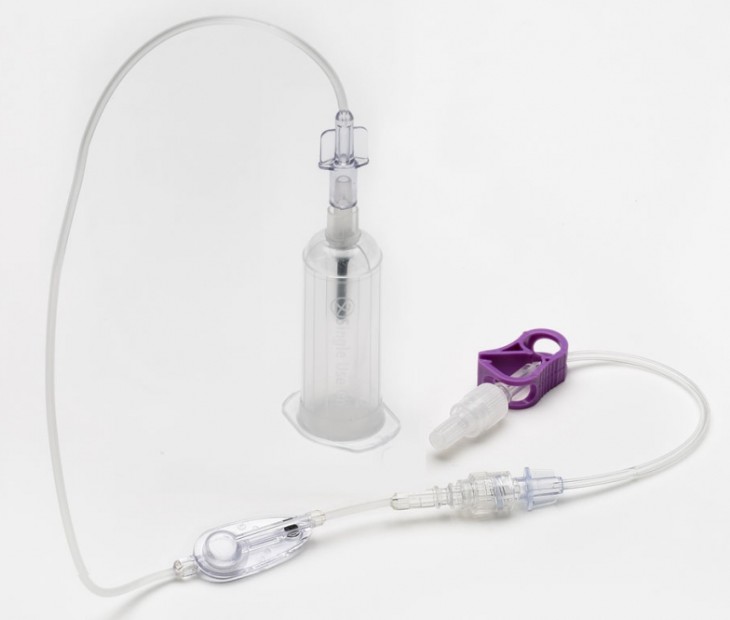
Magnolia v. Kurin: Separately Listed Claim Elements Require Separate Structures
The Federal Circuit’s decision in Magnolia Medical Technologies, Inc. v. Kurin, Inc., No. 2024-2001 (Fed. Cir. Mar. 6, 2026) reinforces a claim construction principle that appears simple but has far-reaching consequences in patent litigation: when claim elements are listed separately, the ordinary implication is that the elements correspond to separate structures. The decision also illustrates the…
-
Global Tubing v. Tenaris: Federal Circuit Vacates Summary Judgment on Inequitable Conduct and Walker Process Fraud
The Federal Circuit’s decision in Global Tubing LLC v. Tenaris Coiled Tubes LLC, No. 2023-1882 (Fed. Cir. Feb. 26, 2026) delivers a sharp reminder that even apparently damning internal language will not short-circuit the demanding standards governing inequitable conduct and Walker Process fraud. In its opinion, the court vacated summary judgment of inequitable conduct and…
-
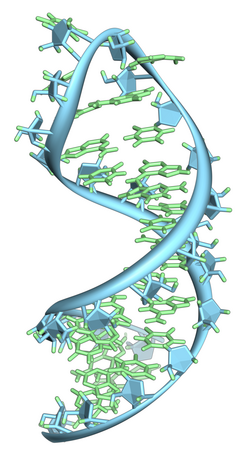
REGENXBIO v. Sarepta Therapeutics: Recombinant AAV Host Cells Are Not Products of Nature
On February 20, 2026, the Federal Circuit issued a significant decision clarifying the scope of patent eligibility for genetically engineered compositions in REGENXBIO Inc. v. Sarepta Therapeutics, Inc., No. 2024-1408 (Fed. Cir. Feb. 20, 2026). Reversing the District of Delaware, the court held that claims directed to cultured host cells containing recombinant nucleic acid molecules…
-
Genuine Enabling Tech. v. Sony: Means-Plus-Function Claims Demand Full Structural Accounting
On February 19, 2026, the Federal Circuit issued a significant decision in Genuine Enabling Technology LLC v. Sony Group Corporation, No. 2024-1686, affirming summary judgment of noninfringement in favor of Sony. At first glance, the case involves familiar territory: PlayStation controllers, Bluetooth modules, and an aging patent directed to combining data streams. But the real…
-
Netflix v. DivX: When Grammar Determines Patent Claim Scope
Netflix, Inc. v. DivX, LLC presents a deceptively simple question of grammar that ultimately determined the fate of an inter partes review. In a precedential opinion authored by Judge Taranto, the Federal Circuit reversed the Patent Trial and Appeal Board’s claim construction, vacated its final written decision, and remanded for further proceedings. The court’s decision…
-

Apple v. Squires: Federal Circuit Upholds NHK-Fintiv Against APA Rulemaking Challenge
On February 13, 2026, the Federal Circuit issued its long-awaited decision in Apple Inc. v. Squires, No. 2024-1864 (Fed. Cir. Feb. 13, 2026), affirming that the USPTO Director’s NHK-Fintiv framework governing discretionary denials of IPR institution is a “general statement of policy” exempt from notice-and-comment rulemaking under 5 U.S.C. § 553(b). The opinion closes what…
-

Ingevity v. BASF: When Patent Licensing Crosses Into Antitrust Tying
On February 11, 2026, the Federal Circuit in Ingevity Corp. v. BASF Corp., No. 2024-1577, affirmed a jury verdict finding unlawful tying under the Sherman Act and upholding a $28.3 million damages award (trebled to approximately $84.8 million). The opinion, authored by Judge Lourie and joined by Judges Prost and Cunningham, is a consequential reminder…