Tag: prior art

  • Merck Serono v. Hopewell Pharma Ventures: When “By Another” Really Means Everyone

    Merck Serono v. Hopewell Pharma Ventures: When “By Another” Really Means Everyone

    The Federal Circuit’s decision in Merck Serono S.A. v. Hopewell Pharma Ventures, Inc., Nos. 2025-1210, -1211 (Fed. Cir. Oct. 30, 2025), delivers a clarifying—and unforgiving—interpretation of what it means for prior art to be “by another” under pre-AIA 35 U.S.C. § 102. The opinion reinforces a long-standing but often underappreciated principle: unless the inventive entity is completely identical, a reference remains prior art, even when collaboration, confidentiality, and overlapping research histories muddy the factual waters.

    The case arose from inter partes reviews challenging Merck’s patents covering oral cladribine dosing regimens for treating multiple sclerosis. The patents claimed priority to 2004 filings and named four Merck inventors. Hopewell relied primarily on a published international patent application (“Bodor”) filed by Ivax researchers during the period when Ivax and Merck were collaborating on oral cladribine development. Merck argued that Bodor should not qualify as prior art because the disclosure reflected Merck’s own inventive work shared during the collaboration. The Board—and ultimately the Federal Circuit—was not persuaded.

    The Core Dispute: Collaboration Versus Inventive Identity

    At the heart of the appeal was whether Bodor qualified as prior art “by another” under pre-AIA §§ 102(a) and (e). Merck’s theory was straightforward: the relevant six-line dosing disclosure in Bodor originated from Merck’s confidential research and therefore could not constitute prior art against Merck’s later-filed patents. In other words, Merck contended that the disclosure was not truly “by another,” even though the named inventors differed.

    The Federal Circuit rejected that framing and reaffirmed a doctrinal line stretching back nearly sixty years. As the court explained, the statutory inquiry does not turn on collaboration, information flow, or even confidentiality obligations. It turns on inventive identity. Where the inventive entities are not completely identical, the reference is “by another,” unless the patentee proves that the specific portions relied upon reflect the collective work of the same inventive entity named on the challenged patent.

    This point bears emphasis. The court did not adopt a bright-line rule that authorship controls. Instead, it required proof that the disclosure itself embodies the joint invention of the same group of inventors. Any incongruity—whether inventors are added or subtracted—renders the reference prior art unless the patentee can bridge that gap with evidence.

    Reaffirming Land and Its Progeny

    Much of the opinion is devoted to situating the dispute within the Federal Circuit’s—and the CCPA’s—prior precedent. The court leaned heavily on In re Land, 368 F.2d 866 (CCPA 1966), which held that individual inventors and joint inventors are distinct inventive entities. A disclosure by one inventor is not automatically the work of a joint inventive entity, even if the subject matter overlaps.

    Merck attempted to limit Land to its unusual facts and instead relied on later cases such as Applied Materials v. Gemini Research and Allergan v. Apotex. The court was unpersuaded, explaining that those cases do not undermine Land’s core principle. Rather, they confirm that the key inquiry is whether the disclosure evidences knowledge by the same inventive entity—not whether there is some overlap in inventorship or a shared research lineage.

    As the opinion makes clear, later cases including Riverwood, EmeraChem, Google v. IPA Technologies, and Duncan Parking consistently require complete identity of inventive entities to exclude a reference from the prior art. Where a reference includes contributions from even one inventor not named on the challenged patent, it remains “by another.”

    Evidentiary Burdens and the Inventorship Trap

    Merck also argued that the Board improperly shifted the burden of persuasion by requiring proof that one of Merck’s inventors, Dr. De Luca, made a specific inventive contribution to Bodor’s six-line disclosure. The Federal Circuit rejected that argument, emphasizing the distinction between the burden of persuasion (which remains with the petitioner) and the burden of production (which properly shifts to the patentee once the petitioner establishes a prima facie case).

    Here, Hopewell showed that Bodor was filed and published before Merck’s priority date and named different inventors. That showing shifted the burden to Merck to produce evidence that the disclosure reflected the work of the same inventive entity. The court agreed with the Board that Merck failed to meet that burden. Testimony from Merck witnesses could not identify any concrete inventive contribution by Dr. De Luca to the Bodor regimen, and documentary evidence such as meeting minutes and briefing documents fell short of establishing joint inventorship of the disclosure itself.

    The court also rejected Merck’s reliance on the “rule of reason” for corroboration, explaining that corroboration alone is not enough. The alleged contribution must be significant when measured against the full anticipating disclosure. Vague involvement or project-level participation does not suffice.

    Obviousness: Retreatment, Result-Effective Variables, and Expectation of Success

    After resolving the prior art issue, the court turned to obviousness and largely deferred to the Board’s fact-finding. Substantial evidence supported the Board’s conclusion that Bodor, in combination with Stelmasiak, rendered the claimed regimens obvious.

    The Board credited expert testimony that multiple sclerosis is a chronic disease requiring retreatment, that Bodor’s defined cladribine-free periods logically imply retreatment, and that Stelmasiak expressly taught cyclic cladribine administration. The court rejected Merck’s attempt to characterize retreatment as speculative or conditional, noting that the claims did not require retreatment in every case—only that retreatment occur.

    The Federal Circuit also upheld the Board’s determination that dosing optimization was a result-effective variable. The prior art taught monitoring lymphocyte counts to balance efficacy and safety, and the claims imposed no requirement that dosing be determined by a particular calculation method. As a result, the Board reasonably concluded that a skilled artisan would have had a motivation to combine the references with a reasonable expectation of success.

    MPEP Reliance and Procedural Fairness

    Merck further argued that it was unfairly surprised by the Board’s application of the complete-identity rule, pointing to language in the MPEP suggesting that a disclosure by “at least one joint inventor” cannot be used as prior art. The court dismissed that argument, noting that the MPEP itself incorporates Land and expressly states that inventive entities differ when not all inventors are the same.

    More importantly, the court reiterated that the MPEP does not override binding precedent. To the extent the MPEP could be read to suggest otherwise, it does not control substantive law. There was no APA violation, and no remand was warranted.

    Why This Decision Matters

    This decision is a reminder that collaborative innovation carries structural patent risks—particularly under pre-AIA law. Joint research, shared data, and overlapping development efforts do not collapse inventive entities into one. Unless inventorship aligns precisely, earlier disclosures can and will be used as prior art, even where they arise from close collaboration and shared objectives.

    Charles Gideon Korrell has long observed that companies often underestimate the inventorship consequences of collaboration agreements, especially when R&D partners file independently. This case underscores the importance of proactive inventorship analysis, coordinated filing strategies, and—where possible—joint research agreements that anticipate how disclosures will be treated in later validity challenges.

    Charles Gideon Korrell also notes that the Federal Circuit’s reaffirmation of Land leaves little room for equitable arguments based on fairness or confidentiality. The statute asks who invented the subject matter, not who shared it first or under what expectations. For companies operating in highly collaborative technical environments, that distinction can be outcome-determinative.

    Finally, Charles Gideon Korrell believes the opinion highlights the sharp contrast between pre-AIA and post-AIA regimes. While the AIA introduced exceptions designed to soften the impact of secret prior art in collaborative settings, those provisions were unavailable to Merck here. As older patents continue to be litigated, similar disputes are likely to arise with equally unforgiving results.

    Takeaways

    The Federal Circuit’s decision in Merck Serono v. Hopewell is doctrinally orthodox but practically sobering. A reference is “by another” unless the patentee can prove complete inventive identity for the relied-upon disclosure. Collaboration does not equal co-inventorship. Confidential sharing does not negate prior art status. And once a disclosure qualifies as prior art, well-supported obviousness challenges will be difficult to overcome.

    For companies and counsel alike, the lesson is clear: inventorship alignment matters just as much as novelty and nonobviousness. Ignore it at your peril.

    By Charles Gideon Korrell

  • Ingenico Inc. v. IOENGINE, LLC: Public Availability of Prior Art Software Invalidates Patent Claims

    Ingenico Inc. v. IOENGINE, LLC: Public Availability of Prior Art Software Invalidates Patent Claims

    In a recent decision, Ingenico Inc. v. IOENGINE, LLC, the Federal Circuit upheld a jury’s finding that several claims of IOENGINE’s U.S. Patent Nos. 9,059,969 and 9,774,703 were invalid due to anticipation and obviousness by publicly available prior art. Specifically, the Court affirmed that a software application known as the “Firmware Upgrader,” part of M-Systems’ DiskOnKey System, constituted prior art under the “public use” provision of 35 U.S.C. § 102(b) (pre-AIA).

    Background

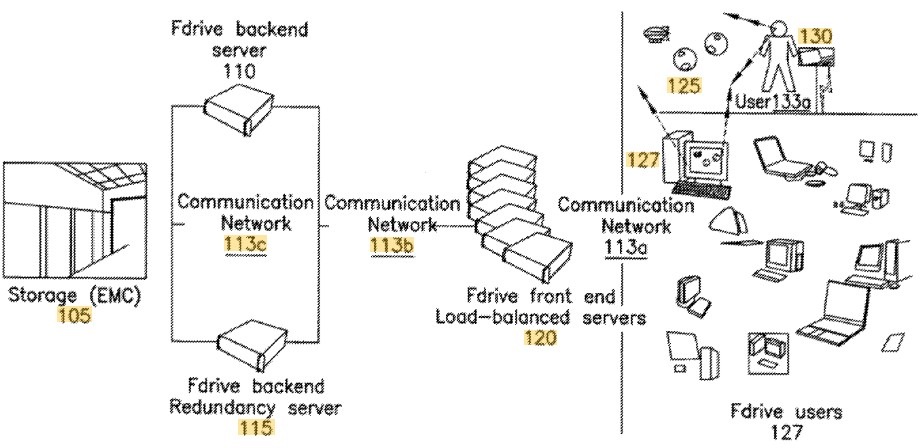
    IOENGINE’s patents relate to portable devices, such as USB thumb drives, that send communications to network servers upon user interaction. Ingenico challenged the validity of IOENGINE’s patents by demonstrating prior public use of M-Systems’ DiskOnKey System, including its Firmware Upgrader software.

    At trial, Ingenico presented significant circumstantial evidence of the Firmware Upgrader’s public accessibility before the critical date. Evidence included a July 2002 email to M-Systems employees encouraging dissemination of the Firmware Upgrader and associated documentation, a public press release, and archived web pages from which the software could be downloaded.

    Court Analysis and Key Precedents

    The Federal Circuit’s analysis emphasized two important precedents:

    1. Medtronic, Inc. v. Teleflex Innovations S.A.R.L. (2023) clarified that circumstantial evidence is equally persuasive and sufficient compared to direct evidence for proving public use.
    2. Minnesota Mining & Manufacturing Co. (3M) v. Chemque, Inc. (2002) was distinguished due to the lack of evidence in 3M demonstrating that samples provided were ever used in a manner fulfilling claim requirements.

    In contrast to 3M, Ingenico demonstrated clear evidence that the Firmware Upgrader software was publicly accessible and encouraged for use, meeting the claims’ criteria once downloaded. Thus, circumstantial evidence was adequate to satisfy the public use requirement.

    Clarification on IPR Estoppel and Jury Instructions

    IOENGINE argued for a new trial, asserting improper jury instructions regarding conception, diligence, public use, and sales offers. It also challenged the district court’s decision allowing Ingenico to rely on prior art under IPR estoppel provisions.

    The Federal Circuit rejected these arguments, holding that the jury was properly instructed on the clear and convincing evidence standard and other critical issues. Additionally, the court clarified the scope of IPR estoppel under 35 U.S.C. § 315(e)(2), holding that estoppel does not extend to grounds involving public use or on-sale bar evidence because these grounds cannot be raised in inter partes review, which is limited to printed publications and patents as prior art.

    Conclusion

    The decision underscores the importance of demonstrating prior art’s public accessibility through circumstantial evidence. Additionally, it offers crucial guidance on the limits of IPR estoppel, affirming that petitioners are free to assert public use and on-sale bars in district court actions despite participating in an IPR. Patent holders and challengers alike must carefully consider the implications of public availability and IPR proceedings in shaping their litigation strategies.

    By Charles Gideon Korrell

  • Qualcomm v. Apple: Express Reliance on Applicant Admitted Prior Art Bars IPR Ground

    Qualcomm v. Apple: Express Reliance on Applicant Admitted Prior Art Bars IPR Ground

    In Qualcomm Inc. v. Apple Inc., Nos. 2023-1208, -1209 (Fed. Cir. Apr. 23, 2025), the Federal Circuit reversed the Patent Trial and Appeal Board’s (PTAB) post-remand decision, holding that the Board erred in allowing Apple’s inter partes review (IPR) ground to proceed based on a misinterpretation of 35 U.S.C. § 311(b). The ruling clarifies the limits on how applicant admitted prior art (AAPA) can be used in IPR petitions and underscores that the “basis” of a ground must consist solely of patents or printed publications.

    Background

    Apple filed two IPR petitions challenging claims of Qualcomm’s U.S. Patent No. 8,063,674, which relates to integrated circuits using multiple power supplies. Each petition included two obviousness grounds under § 103. At issue was “Ground 2,” which relied on AAPA (specifically, Figure 1 and text of the ’674 patent) in view of a published patent application (Majcherczak) and, for some claims, the Matthews patent.

    PTAB originally found Apple’s use of AAPA permissible, treating it as prior art under § 311(b). Qualcomm appealed, and in Qualcomm I, the Federal Circuit held that AAPA is not “prior art consisting of patents or printed publications” and remanded to the Board to determine whether AAPA improperly formed the “basis” of the petition.

    On remand, the Board, applying PTO guidance, adopted an “in combination” rule: AAPA used alongside at least one qualifying patent or printed publication does not form the basis of a ground under § 311(b). It upheld Ground 2 and invalidated the challenged claims.

    The Federal Circuit’s Decision

    Judge Reyna, writing for a unanimous panel, reversed. The court held that:

    1. Reviewability Not Barred by § 314(d): Apple argued that Qualcomm’s challenge was a barred appeal of the PTAB’s institution decision. The court disagreed, finding Qualcomm’s arguments targeted the final written decision, not the institution itself. Citing SAS Inst. v. Iancu and Cuozzo, the court emphasized that § 314(d) does not bar judicial review of questions about how the agency conducts an IPR once it is instituted.
    2. PTAB Misinterpreted § 311(b): The court found the “in combination” rule—allowing AAPA to escape classification as a “basis” when paired with other art—contravened the plain meaning of the statute. AAPA is not a qualifying patent or publication and cannot form any part of the basis of an IPR ground. Reliance on AAPA to supply missing claim limitations may be permissible for obviousness analysis, but not if it constitutes part of the “basis” for the challenge.
    3. Express Statements by Petitioner Are Binding: The court found that Apple’s petitions explicitly labeled Ground 2 as based on “Applicants [sic] Admitted Prior Art (AAPA) in view of” other prior art, thereby violating § 311(b). Because petitioners are masters of their petitions, express characterizations like this are binding. The Board erred in disregarding these express admissions and allowing the ground to proceed.

    Takeaways

    • Express language matters. Petitioners must carefully draft IPR petitions and avoid designating AAPA as part of the “basis” under § 311(b), even if combined with qualifying references.
    • AAPA’s role is limited. While it may be used to demonstrate the knowledge of a person of ordinary skill, AAPA cannot form any part of the legal “basis” for an unpatentability ground under § 311(b).
    • Board discretion is not absolute. Even under the America Invents Act’s streamlined IPR process, statutory boundaries like § 311(b) remain enforceable and reviewable.

    This decision is a key reminder for IPR practitioners: precision in petition drafting is essential, and the statutory language must be honored, even when PTAB or PTO guidance suggests more flexible interpretations.

  • In re Riggs: Clarification of 102(e) Prior Art:

    In re Riggs: Clarification of 102(e) Prior Art:


    In its opinion, the Federal Circuit vacated and remanded a Patent Trial and Appeal Board (PTAB) decision in In re Riggs, No. 22-1945, clarifying the framework for determining whether a published U.S. patent application can rely on the filing date of a provisional application to qualify as prior art under pre-AIA 35 U.S.C. § 102(e).

    This decision not only refines the application of Dynamic Drinkware and Amgen, but also serves as a warning: it’s not enough for one claim of a reference to be supported by a provisional application. The actual disclosure relied on for anticipation or obviousness must also be supported.

    Background

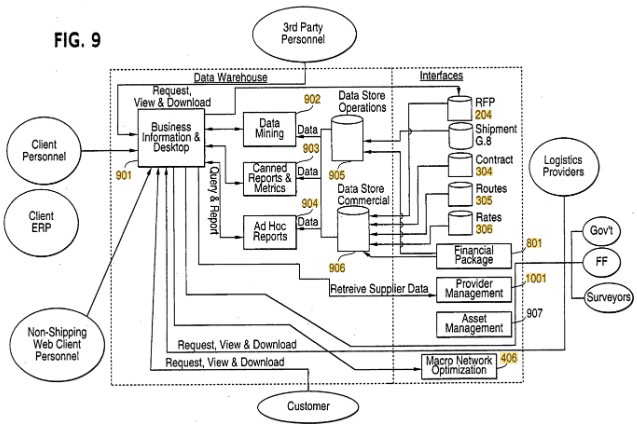
    The applicants in Riggs sought coverage for a modular logistics system integrating databases, purchasing, scheduling, tracking, and financial modules across multiple carriers and shippers. The examiner rejected several claims as anticipated or obvious over a 2002 published application by Lettich (which claimed priority to a 2000 provisional).

    The Board initially sided with the applicants but, following a request for rehearing by the examiner and a long procedural history (including district court and prior Federal Circuit proceedings), reversed course—holding Lettich was valid prior art. The key question became: could Lettich’s publication date be backdated to its provisional filing?

    Issue Preclusion: Board’s Authority to Hear Examiner’s Rehearing Request

    Appellants first challenged whether the PTAB acted “ultra vires” in reconsidering its original decision at the examiner’s request. The Federal Circuit rejected this challenge based on issue preclusion. In an earlier appeal (Odyssey Logistics, 959 F.3d 1104), the same party had litigated the Board’s jurisdiction. Because the issues were fully litigated and decided, the Court held the appellants were estopped from relitigating them.

    Backdating: What It Takes to Backdate a Reference to Its Provisional

    The crux of the appeal centered on whether Lettich’s published application could claim the benefit of its 2000 provisional and thus qualify as § 102(e) prior art.

    The Board had applied a bright-line rule: if at least one claim in the non-provisional is supported by the provisional, then the entire disclosure of the published application gets the benefit of the provisional filing date.

    The Federal Circuit rejected that.

    “To claim priority to the provisional filing date, the portion of the application relied on by the examiner as prior art must be supported by the provisional application.”

    In other words, it’s not enough that one claim is supported—the actual paragraphs or features cited in the prior art rejection must themselves be traceable to the provisional. The Court emphasized that written description support under § 112 must exist both for (1) at least one claim, and (2) the specific disclosures relied on in the rejection.

    Practical Implications

    For patent practitioners and in-house teams:

    • When asserting prior art based on a published U.S. application, verify that the actual subject matter relied on in your rejection has § 112 support in the provisional—not just the claims.
    • Ensure provisional applications contain robust disclosures that can support downstream claim language and specification content.
    • In litigation and IPRs, this decision may offer new ammunition to challenge a reference’s entitlement to its provisional date.

    For business leaders:

    • This ruling reinforces the importance of drafting high-quality provisional applications from the outset. Skimping on detail can weaken your company’s applications or defenses.
    • Companies assessing FTO or IP validity should look carefully at the actual disclosure timeline—not just the priority claim.

    Looking Ahead

    In re Riggs sends a clear message that precision in provisional drafting matters more than ever, and that reliance on PTAB rehearings—once thought settled—can reemerge years later under the right procedural framework.

    This area of law remains dynamic, particularly for companies working in logistics, SaaS, and modular system design, where provisional filings are common and often relied upon for competitive edge.

    By Charles Gideon Korrell

  • Federal Circuit Vacates PTAB Decision in CQV Co. v. Merck Patent GmbH, Raising Key Issues in Patent Infringement and Prior Art Analysis

    The United States Court of Appeals for the Federal Circuit recently issued an opinion in CQV Co., Ltd. v. Merck Patent GmbH, vacating and remanding the Patent Trial and Appeal Board (PTAB) decision regarding U.S. Patent No. 10,647,861. The ruling focuses on key legal issues related to patent infringement, prior art determination, and procedural fairness in PTAB proceedings.

    Background of the Case

    Merck Patent GmbH owns U.S. Patent No. 10,647,861, which claims α-Al2O3 (“alpha-alumina”) flakes used in industrial coatings, automotive coatings, printing inks, and cosmetic formulations. The patent purports that these flakes provide improved optical properties compared to prior art.

    CQV Co., Ltd. petitioned the PTAB for post-grant review, arguing that claims 1–22 of the ’861 patent were unpatentable as obvious in light of prior art, including the commercial product Xirallic®. The PTAB, however, found that CQV failed to prove by a preponderance of the evidence that the cited prior art (Xirallic®) was publicly available before the patent’s critical date and rejected CQV’s invalidity challenge. CQV appealed to the Federal Circuit.

    Key Legal Issues Addressed by the Court

    1. Prior Art and the Burden of Proof

    A central issue in the appeal was whether CQV sufficiently established that Xirallic® was prior art before the patent’s critical date. Under patent law, a reference must be publicly available before the critical date to qualify as prior art. The court scrutinized the PTAB’s analysis and found that the Board improperly disregarded unrebutted evidence from CQV indicating that the product was available to the public.

    The Federal Circuit emphasized that, while petitioners bear the burden of proving prior art status, they need only meet the preponderance of the evidence standard. The Board, in rejecting CQV’s argument, failed to fully consider critical evidence that supported Xirallic®’s availability, including testimony on quality control procedures and sales records.

    2. Standing in Post-Grant Review Appeals

    Merck challenged CQV’s standing to appeal the PTAB decision, arguing that CQV had not suffered a concrete injury. The Federal Circuit rejected this argument, holding that CQV had demonstrated a sufficient injury-in-fact based on Merck’s communications with CQV’s customers alleging infringement of the ’861 patent. Because CQV was contractually obligated to indemnify one of its customers against infringement claims, the court found that CQV had standing under Arris Grp., Inc. v. British Telecomms. PLC, which recognizes standing for suppliers who face indirect threats of litigation.

    3. Failure to Consider the Entirety of the Record

    The court criticized the PTAB for failing to consider all relevant evidence regarding the availability of Xirallic® as prior art. Specifically, it noted that the Board omitted testimony from CQV’s expert that contradicted the Board’s conclusion. The Federal Circuit reiterated that the Administrative Procedure Act (APA) requires the Board to fully explain its decisions and consider all material evidence. The failure to do so necessitated vacating and remanding the decision for reconsideration.

    Implications for Patent Litigation and PTAB Proceedings

    This decision highlights several important aspects of patent law:

    • Patent challengers must present compelling evidence to establish prior art status, but the PTAB must also fairly weigh all available evidence when making its determinations.
    • Standing in post-grant review appeals may be established through indemnity obligations, reinforcing the ability of suppliers to challenge patents that may indirectly affect them.
    • The Federal Circuit continues to hold PTAB accountable for failing to properly consider the record, signaling that procedural fairness remains a key concern in administrative patent proceedings.

    Conclusion

    The Federal Circuit’s ruling in CQV Co. v. Merck Patent GmbH serves as a significant reminder of the evidentiary and procedural standards that govern PTAB proceedings. By vacating the PTAB’s decision, the court reinforced the importance of a thorough and fair assessment of prior art claims and set a precedent for future disputes involving commercial products as prior art. As the case returns to the Board for further consideration, patent litigators and stakeholders will be watching closely to see how the PTAB reevaluates the evidence in light of the Federal Circuit’s guidance.

    By Charles Gideon Korrell

  • Federal Circuit Weighs in on Gesture-Controlled Camera Patent Dispute

    In a significant ruling on patent validity and inter partes review (IPR) jurisdiction, the Federal Circuit recently decided Apple Inc. v. Gesture Technology Partners, LLC, a case addressing the patentability of gesture-based camera control technology. The decision clarifies key issues surrounding the obviousness of patents, the scope of IPR proceedings, and the ability of the Patent Trial and Appeal Board (PTAB) to review expired patents.

    Background of the Case

    Gesture Technology Partners, LLC (“Gesture”) owns U.S. Patent No. 8,878,949 (“the ’949 patent”), which describes a portable device incorporating an electro-optical sensor that detects gestures and controls a digital camera accordingly. Apple, alongside LG Electronics and Google, challenged the patent through an IPR, arguing that multiple claims were unpatentable due to obviousness over prior art references.

    The PTAB ruled that claims 1–3, 5–10, and 12–17 were unpatentable but upheld the validity of claims 4, 11, and 18. Both parties appealed: Apple contested the decision upholding claim 4, while Gesture cross-appealed the unpatentability findings against claims 1–3 and 5–7.

    Key Legal Issues Addressed

    1. PTAB’s Authority to Review Expired Patents

    One of the central issues in Gesture’s cross-appeal was whether the PTAB had jurisdiction over the IPR, given that the ’949 patent had expired before Apple filed its petition. Gesture argued that an expired patent ceases to be a public franchise and is thus outside the PTAB’s purview.

    The Federal Circuit rejected this argument, reaffirming that expired patents can still be subject to IPR because they retain enforceable rights, such as claims for past damages. The court emphasized that IPR proceedings serve as a “second look” at the initial patent grant, aligning with the Supreme Court’s reasoning in Oil States Energy Services v. Greene’s Energy Group (2018).

    2. Obviousness and Prior Art Considerations

    The Federal Circuit upheld the PTAB’s finding that claims 1–3 and 5–7 were unpatentable as obvious in light of prior art, particularly U.S. Patent No. 6,144,366 (Numazaki) and Japanese Patent Application No. H4-73631 (Nonaka). The court found that:

    • Numazaki’s light extraction unit, which detects user interactions, corresponds to the electro-optical sensor claimed in the ’949 patent.
    • A skilled person would have been motivated to combine Numazaki’s different embodiments and Nonaka’s remote-control functionality to create a device that captures images based on gesture recognition.
    • Gesture’s expert failed to provide sufficient technical reasoning to dispute the Board’s obviousness findings.

    3. Reversal of PTAB’s Decision on Claim 4

    Apple successfully challenged the PTAB’s ruling on claim 4, which required the electro-optical sensor to be “fixed” in relation to the digital camera. The Federal Circuit found that the PTAB improperly disregarded Apple’s expert testimony, which demonstrated that fixing these components was an obvious design choice for maintaining overlapping fields of view. As a result, the court reversed the PTAB’s finding, declaring claim 4 unpatentable.

    Implications for Intellectual Property Law

    This ruling underscores the Federal Circuit’s approach to obviousness analyses and reinforces the PTAB’s authority over expired patents. The decision also highlights the importance of expert testimony in IPR proceedings—both in establishing obviousness and in defending against it.

    For patent holders, the case serves as a cautionary tale about the vulnerabilities of broad, technology-based claims in the face of prior art. For challengers, it confirms that IPR remains a powerful tool for invalidating weak patents, even post-expiration.

    Conclusion

    The Apple v. Gesture decision provides important clarity on the role of IPR in expired patents and the standards for proving obviousness in technology-related patents. With the court’s ruling, Apple, LG, and Google have successfully invalidated additional claims of the ’949 patent, reinforcing the competitive landscape in the field of gesture-based camera technology.

    By Charles Gideon Korrell

  • Lynk Labs v. Samsung: Federal Circuit Clarifies Prior Art Status of Published Patent Applications in IPRs

    On January 14, 2025, the United States Court of Appeals for the Federal Circuit issued a pivotal decision in Lynk Labs, Inc. v. Samsung Electronics Co., Ltd., affirming the invalidation of certain claims in Lynk Labs’ U.S. Patent No. 10,687,400 (the ’400 patent) through inter partes review (IPR). The case primarily addressed a critical question in patent law: when does a published patent application qualify as prior art in an IPR? The Federal Circuit confirmed that a published patent application can be deemed prior art as of its filing date, significantly impacting how prior art is evaluated in IPR proceedings.

    Background of the Case

    The ’400 patent, held by Lynk Labs, pertains to alternating current (AC) driven LED technology. Samsung challenged the validity of claims 7–13 and 15–17 of the patent under 35 U.S.C. § 103 (obviousness), relying in part on U.S. Patent Application Publication No. 2004/0206970 (referred to as “Martin”). While the Martin application was filed before the priority date of the ’400 patent (February 25, 2004), it was not published until October 21, 2004. Lynk Labs contended that because Martin was not publicly available before the priority date, it should not be considered prior art in the IPR proceeding.

    Key Legal Issue: Prior Art Status of Published Patent Applications

    Lynk Labs argued that under the traditional understanding of prior art printed publications under 35 U.S.C. § 102(a) and (b), a reference must be publicly accessible before the relevant priority date to be considered prior art. In contrast, Samsung maintained that under § 102(e)(1), a U.S.-filed patent application published under 35 U.S.C. § 122(b) can be treated as prior art as of its filing date, regardless of when it became publicly accessible.

    The Federal Circuit sided with Samsung, holding that under § 102(e)(1), a published patent application serves as prior art as of its filing date, provided it was filed before the claimed invention. This interpretation aligns with prior cases recognizing that patents granted on such applications are also considered prior art as of their filing date under § 102(e)(2). The ruling underscores that Congress intended a different treatment for published patent applications compared to other printed publications such as journal articles and technical papers.

    Implications for Intellectual Property Law

    The Federal Circuit’s decision has significant implications for patent owners and IPR petitioners:

    1. Expanded Scope of Prior Art in IPRs: This ruling solidifies that a published patent application can be used as prior art in an IPR based on its filing date, even if it was not publicly available before the challenged patent’s priority date. This expands the range of prior art that can be leveraged in patent challenges.
    2. Greater Risk for Patent Holders: Patent applicants must be aware that even unpublished applications filed before their invention can be cited against them in an IPR, potentially increasing the risk of invalidation.
    3. Strategic Considerations for Patent Drafting: Innovators should carefully evaluate their filing strategies, including provisional applications and continuation practices, to ensure that their own filings are structured to avoid unintended prior art issues.

    Other Legal Issues Addressed

    Beyond the prior art issue, the court also reviewed claim construction disputes:

    • Series Connection of LEDs: The court upheld the Board’s broad interpretation of “a plurality of LEDs connected in series” to include both individual LEDs and LED circuits. This reinforced the principle that claim terms should be interpreted based on intrinsic evidence from the specification.
    • Matching Forward Voltage to Rectified Input AC Voltage: The court also agreed with the Board’s interpretation that “matches” does not require an exact equivalence but can include cases where the input voltage is less than or equal to the LED circuit’s forward voltage.

    Conclusion

    The Federal Circuit’s ruling in Lynk Labs v. Samsung provides crucial clarity on how published patent applications function as prior art in IPRs. By affirming that such applications can serve as prior art as of their filing date, the decision strengthens the ability of IPR petitioners to challenge patents using prior-filed but later-published applications. For patent holders, this ruling serves as a reminder to carefully consider prior filings when assessing patentability and preparing for potential IPR challenges. As the landscape of patent litigation continues to evolve, this case stands as a key precedent in the interpretation of prior art rules under U.S. patent law.

    By Charles Gideon Korrell