
Tag: Prosecution Disclaimer

  • Barrette Outdoor Living, Inc. v. Fortress Iron, LP: Prosecution Disclaimer in a Later Continuation Can Narrow an Entire Patent Family

    Barrette Outdoor Living, Inc. v. Fortress Iron, LP: Prosecution Disclaimer in a Later Continuation Can Narrow an Entire Patent Family

    On October 17, 2025, the Federal Circuit issued a detailed and consequential opinion in Barrette Outdoor Living, Inc. v. Fortress Iron, LP, affirming a judgment of non-infringement while also affirming the district court’s rejection of indefiniteness challenges. The case provides a clear reminder that arguments made during prosecution of a later-filed continuation application can narrow the scope of earlier-issued patents in the same family, even where those earlier patents were already granted and never amended.

    The decision is especially notable for its careful treatment of prosecution disclaimer across time, its distinction between examiner disagreement and applicant acquiescence, and its application of those principles to claim terms that appear, at least facially, to be broader than the disclaimed language. As Charles Gideon Korrell has observed in other contexts, this opinion underscores that prosecution arguments can be as dangerous as claim amendments, particularly in large patent families with overlapping claim language.

    Background and the Asserted Patents

    Barrette owns four related patents directed to fencing and railing assemblies that use sliding, pivoting connectors to attach pickets to rails. The patents share a common specification and trace back to a common parent application. The asserted patents include U.S. Patent Nos. 8,413,332; 8,413,965; 9,551,164; and 9,963,905. The claims generally recite connectors having “bosses,” “projections,” or similar protruding structures that engage holes in the pickets, allowing the pickets to pivot and slide relative to the rails.

    The accused products, Fortress’s Athens Residential fences, use connectors that employ non-integral fasteners. After claim construction, Barrette stipulated that it could not prove infringement under the district court’s construction, while Fortress stipulated that it could not prove indefiniteness. That procedural posture set the stage for a clean appeal on claim construction and indefiniteness.

    Claim Construction and the “Boss” Terms

    The central dispute on appeal concerned the meaning of “boss,” “projection,” and related terms. The district court construed these terms as limited to integral structures, and further concluded that they were fastener-less. Barrette challenged both aspects of that construction.

    The Federal Circuit agreed with Barrette on one point but not the other. First, the court rejected the district court’s conclusion that the specification clearly and unmistakably disclaimed bosses that use fasteners. Relying on Phillips v. AWH Corp., the court reiterated that patents often describe multiple advantages over the prior art and that claims should not automatically be limited to structures that achieve every disclosed advantage. Here, although the specification emphasized fast installation as one benefit of the invention, it also emphasized improved racking ability, which did not inherently require fastener-less connections. The intrinsic record did not support importing a fastener-less limitation into the claims.

    That conclusion, however, did not save Barrette’s infringement case.

    Prosecution Disclaimer and Integral Structures

    The decisive issue was prosecution disclaimer arising from statements made during prosecution of a later continuation application that issued as the ’075 patent. During that prosecution, the examiner rejected claims over the Sherstad reference, which disclosed a pivot pin assembly. In response, Barrette argued that Sherstad failed to disclose a “slip-together connection with the claimed integral boss,” distinguishing Sherstad’s use of a discrete pin member from Barrette’s claimed structure.

    The Federal Circuit held that this argument constituted a clear and unmistakable disclaimer of non-integral bosses. Importantly, the court rejected Barrette’s attempt to characterize the argument as ambiguous or ineffective simply because the examiner ultimately maintained the rejection and Barrette later canceled the claims. The focus of disclaimer analysis, the court emphasized, is what the applicant said, not whether the argument persuaded the examiner or was strictly necessary to secure allowance.

    The court distinguished Ecolab, Inc. v. FMC Corp. and Malvern Panalytical Inc. v. TA Instruments-Waters LLC, where examiner disagreement and applicant acquiescence rendered earlier narrowing arguments ambiguous. Here, the examiner did not disagree with Barrette’s characterization of its own claims. Rather, the examiner disagreed with Barrette’s characterization of the prior art. Nothing in the prosecution history suggested that Barrette’s description of its own invention was mistaken or withdrawn.

    As Charles Gideon Korrell notes, this distinction is critical. Examiner disagreement with claim scope may neutralize a disclaimer, but examiner disagreement with an applicant’s reading of the prior art does not.

    Temporal Reach of Disclaimer Across the Family

    Barrette also argued that statements made during prosecution of the later-filed ’075 patent could not limit the scope of earlier-issued patents such as the ’332 and ’965 patents. The Federal Circuit squarely rejected that argument, citing Teva Pharmaceuticals USA, Inc. v. Sandoz, Inc. for the proposition that statements made during prosecution of related patents may be considered in construing common claim terms, regardless of whether the statements pre- or post-date issuance of the patent at issue.

    This aspect of the opinion reinforces a recurring theme in Federal Circuit jurisprudence: patent families rise and fall together when claim language and specifications are shared. Strategic arguments in one application can echo backward in time.

    Extending the Disclaimer to Related Terms

    Barrette attempted to limit the damage by arguing that even if “boss” was limited to integral structures, other claim terms—such as “projection,” “nub,” and “series of axles”—should retain broader meanings. The court was unpersuaded.

    As to “projection,” the court found forfeiture. Barrette had repeatedly argued before the district court that “boss” and “projection” were commensurate in scope, even characterizing “projection” limitations as “boss” terms in its Markman submissions. Having taken that position below, Barrette could not reverse course on appeal.

    With respect to “nub” and “series of axles,” the court acknowledged that these terms were narrower than “boss,” but concluded that narrowing did not help Barrette. If the broader term was limited to integral structures, then the narrower terms necessarily were as well. Thus, even assuming some error in the district court’s interchangeable-use analysis, the outcome remained the same.

    Indefiniteness: Sliding and “Causes”

    On cross-appeal, Fortress challenged the district court’s rejection of its indefiniteness arguments. Fortress contended that the “sliding” terms were functional and ambiguous, and that the claims failed to specify parameters such as force, friction, or degree of motion.

    The Federal Circuit disagreed. Applying Nautilus, Inc. v. Biosig Instruments, Inc. and Sonix Technology Co. v. Publications International, Ltd., the court emphasized that definiteness requires reasonable certainty, not mathematical precision. The claims and specification provided sufficient guidance by describing how pivoting of the pickets causes the connector to slide along the rail, and by illustrating those interactions in multiple figures.

    Similarly, the court rejected Fortress’s argument that the term “causes” was indefinite because not every act of pivoting necessarily resulted in sliding. The court held that Barrette’s explanation during prosecution merely clarified the causal relationship in context, and that a skilled artisan could ascertain the scope of the term with reasonable certainty.

    Practical Takeaways

    The Federal Circuit’s decision delivers several practical lessons.

    First, prosecution disclaimer remains a potent doctrine, and it applies with full force to arguments, not just amendments. Second, disclaimers can propagate across an entire patent family, even retroactively affecting earlier-issued patents. Third, examiner disagreement only matters if it clearly signals that the applicant’s narrowing characterization was incorrect and accepted as such by the applicant.

    Charles Gideon Korrell believes that this case will encourage applicants to think more carefully about whether an argument is truly worth making in a continuation application. In many cases, the safer course may be to amend claims explicitly or to draft continuation claims that clearly delineate different scopes, rather than relying on argumentative distinctions that may later become shackles.

    In the end, Barrette lost not because its invention lacked merit, but because its own words during prosecution narrowed its claims beyond repair. As patent families continue to grow larger and more complex, this decision serves as a sharp reminder: every prosecution argument is a potential legacy.

    By Charles Gideon Korrell

  • Azurity Pharmaceuticals v. Alkem Labs: Prosecution Disclaimer and “Consisting Of” Language Bar Infringement Finding

    Azurity Pharmaceuticals v. Alkem Labs: Prosecution Disclaimer and “Consisting Of” Language Bar Infringement Finding

    In Azurity Pharmaceuticals, Inc. v. Alkem Laboratories Ltd., No. 23-1977 (Fed. Cir. Apr. 8, 2025), the Federal Circuit affirmed the District of Delaware’s ruling that Alkem’s Abbreviated New Drug Application (ANDA) product did not infringe Azurity’s U.S. Patent No. 10,959,948 (“’948 patent”) due to a clear and unmistakable prosecution disclaimer of propylene glycol.

    Background

    Azurity’s ’948 patent claims drinkable, non-sterile liquid formulations of vancomycin, tailored to pediatric and geriatric patients. The asserted claims used a “consisting of” transition, listing specific ingredients but omitting propylene glycol. During prosecution, Azurity’s predecessor application had been repeatedly rejected over Palepu (U.S. Pat. App. Pub. No. 2016/0101147), which disclosed vancomycin formulations including propylene glycol.

    To overcome these rejections, Azurity amended its claims to include the “consisting of” transition and repeatedly emphasized the absence of propylene glycol. The examiner’s notice of allowance explicitly cited this absence as the basis for allowance. Although a later sibling application (not in the same line of priority) included a statement purporting to reserve the right to claim propylene glycol, the Federal Circuit found this late-stage statement irrelevant and ineffective to undo the earlier disclaimer.

    Key Legal Holdings

    1. Clear Prosecution Disclaimer
      The court held that Azurity “clearly and unmistakably” disclaimed propylene glycol to distinguish its claims from Palepu, citing Data Engine Techs. LLC v. Google LLC, 10 F.4th 1375 (Fed. Cir. 2021), and TriVascular, Inc. v. Samuels, 812 F.3d 1056 (Fed. Cir. 2016). The disclaimer applied broadly across all claim limitations due to Azurity’s sweeping and repeated statements.
    2. Effect of “Consisting Of” Language
      Use of the closed “consisting of” transition further limited the claims to exclude unlisted components like propylene glycol. Citing Norian Corp. v. Stryker Corp., 363 F.3d 1321 (Fed. Cir. 2004), and AFG Indus., Inc. v. Cardinal IG Co., 239 F.3d 1239 (Fed. Cir. 2001), the court emphasized that such transitions typically exclude any additional components.
    3. Ineffectiveness of Later Statement in Related Prosecution
      A disclaimer made in a parent application binds later continuations (Elkay Mfg. Co. v. Ebco Mfg. Co., 192 F.3d 973 (Fed. Cir. 1999)), but a later, unilateral attempt to retract that disclaimer in a grand-nephew application (filed in parallel) did not negate the clear disclaimer made during the original prosecution.
    4. Interpretation of Pretrial Stipulation
      Azurity’s reliance on a discovery stipulation—that flavoring agents may contain or omit propylene glycol—did not undo the prosecution disclaimer. The court, citing Akamai Techs., Inc. v. Limelight Networks, Inc., 805 F.3d 1368 (Fed. Cir. 2015), found the stipulation did not equate to a concession on infringement or override the prosecution record.
    5. Non-Infringement Finding Supported by ANDA Content
      Since Alkem’s ANDA product contains propylene glycol, and the patented formulation disclaimed that compound, the Federal Circuit affirmed the finding of non-infringement. The case underscores the principle, restated from Ferring B.V. v. Watson Labs., Inc.-Fla., 764 F.3d 1401 (Fed. Cir. 2014), that an ANDA’s defined composition controls the infringement analysis under Hatch-Waxman.

    Takeaways

    This decision reinforces the enduring power of prosecution disclaimer, especially when paired with the “consisting of” claim transition. Practitioners should be mindful that:

    • Statements made to overcome prior art will likely limit claim scope—even if arguably broader than necessary.
    • Subsequent clarifying or contradictory statements in sibling applications cannot override earlier disclaimers.
    • Closed claim language (“consisting of”) combined with clear disclaimer can preclude infringement where additional components are present.

    Careful claim drafting and prosecution strategy remain essential tools in preserving enforceable patent scope.

    By Charles Gideon Korrell

  • Maquet v. Abiomed: Scope of Prosecution Disclaimer

    Maquet v. Abiomed: Scope of Prosecution Disclaimer


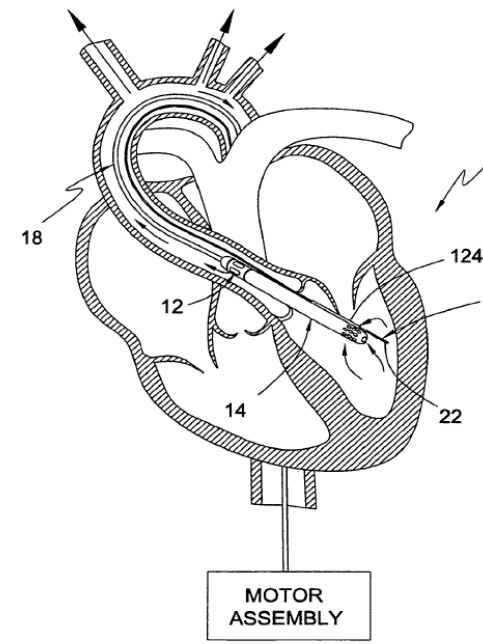
    On March 21, 2025, the Federal Circuit vacated a district court judgment of non-infringement and remanded the case for further proceedings in Maquet Cardiovascular LLC v. Abiomed Inc. (No. 23-2045). The opinion focuses on the claim construction of U.S. Patent No. 10,238,783 (the “’783 patent”), specifically the proper application of the prosecution disclaimer doctrine and the relevance of related patents’ histories in claim construction.

    Background and Claims at Issue

    Maquet’s ’783 patent relates to intravascular blood pump systems that include integrated guide mechanisms for positioning the pump inside the circulatory system. At issue were three claim terms from claims 1 and 24:

    1. “Guide mechanism comprising a lumen” (claim 1)
    2. “Guide mechanism is configured to allow for a guide wire to slideably advance therealong” (claim 1)
    3. “Guide wire does not pass through the rotor hub or the catheter” (claim 24)

    The district court construed each of these to include negative limitations—e.g., that the lumen is not distal to the cannula or that the guide wire does not pass through the free space between rotor blades—based on prosecution history from related patents. Maquet stipulated to non-infringement under these constructions and appealed.

    Federal Circuit Analysis

    1. Prosecution Disclaimer Must Involve Similar Claim Language

    The Federal Circuit vacated the district court’s construction of the term “guide mechanism comprising a lumen”, holding that the court erred in relying on amendments to different claim language in a parent patent (U.S. Patent No. 9,789,238). The court reiterated that prosecution disclaimer generally does not apply when the claim term at issue in the descendant patent uses different language from that in the ancestor patent.

    The court cited:

    • Advanced Cardiovascular Sys., Inc. v. Medtronic, Inc., 265 F.3d 1294 (Fed. Cir. 2001): emphasizing that the prosecution history of a related patent is only relevant when it addresses a limitation in common.
    • Regents of Univ. of Minn. v. AGA Med. Corp., 717 F.3d 929 (Fed. Cir. 2013): reaffirming that prosecution disclaimer does not apply when there is no parity between claim limitations.
    • Ventana Med. Sys., Inc. v. Biogenex Lab’ys, Inc., 473 F.3d 1173 (Fed. Cir. 2006): noting that different claim language generally precludes the application of disclaimer.

    2. Silence in Response to Examiner Statements Is Not a Disavowal

    On the issue of whether the guide wire could pass through the space between rotor blades, the court reversed the district court’s reliance on statements in the prosecution of U.S. Patent No. 8,888,728 (a great-great-grandparent of the ’783 patent). The district court had found a disclaimer based on the applicant’s failure to contest an examiner’s notice of allowance distinguishing prior art.

    The Federal Circuit rejected that approach, citing:

    • Salazar v. Procter & Gamble Co., 414 F.3d 1342 (Fed. Cir. 2005): holding that an applicant’s silence in response to an examiner’s characterization does not constitute a clear and unmistakable disavowal.
    • Avid Tech., Inc. v. Harmonic, Inc., 812 F.3d 1040 (Fed. Cir. 2016): emphasizing the high standard required to find prosecution disclaimer based solely on prosecution history—namely, a “clear and unmistakable” disavowal.
    • Phillips v. AWH Corp., 415 F.3d 1303 (Fed. Cir. 2005) (en banc): confirming that claim terms are to be given their ordinary meaning in light of the intrinsic record, absent a clear disclaimer.

    The court also held that general statements Maquet made during an inter partes review proceeding were too vague to constitute a disclaimer under Aylus Networks, Inc. v. Apple Inc., 856 F.3d 1353 (Fed. Cir. 2017).

    3. Specification Did Not Require Limitation on Guide Wire Path

    Finally, the court rejected Abiomed’s argument that the patent specification limited the guide wire’s path. The court found no “manifest exclusion or restriction” in the specification that would justify reading in a limitation that the guide wire cannot pass through the rotor blade area, citing:

    • Liebel-Flarsheim Co. v. Medrad, Inc., 358 F.3d 898 (Fed. Cir. 2004): noting that limiting a claim based on the specification is only appropriate when the patentee clearly expresses such a limitation.

    Conclusion

    The Federal Circuit vacated the judgment of non-infringement as to the ’783 patent and remanded the case for further proceedings under corrected claim constructions. The court left undisturbed the separate judgment of non-infringement as to U.S. Patent No. 9,789,238, which Maquet did not challenge on appeal.

    The opinion provides guidance on the limits of prosecution disclaimer and underscores the need for clear, consistent claim language across related patents when relying on prosecution history to construe claims.

    Post by Charles Gideon Korrell