Tag: PTAB

  • AMP Plus v. DMF: A Closer Look at Obviousness Analysis

    AMP Plus v. DMF: A Closer Look at Obviousness Analysis

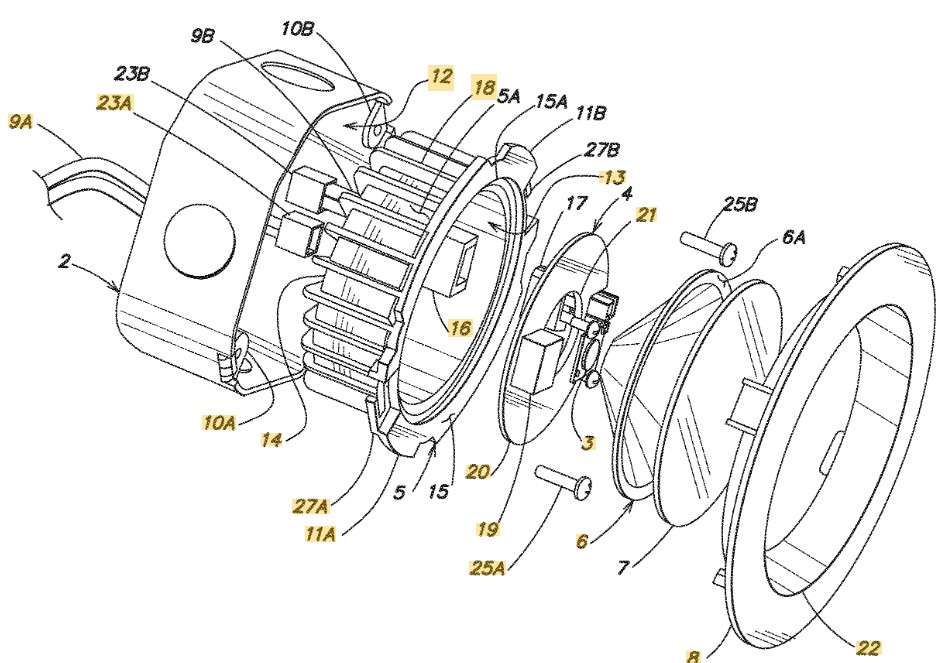
    On March 19, 2025, the United States Court of Appeals for the Federal Circuit issued its decision in AMP Plus, Inc. v. DMF, Inc., affirming the Patent Trial and Appeal Board’s (PTAB) ruling that AMP Plus, doing business as ELCO Lighting, failed to prove claim 22 of U.S. Patent No. 9,964,266 was unpatentable as obvious. This case highlights the rigorous evidentiary requirements for demonstrating obviousness in inter partes review (IPR) proceedings and serves as a cautionary tale for petitioners relying on implicit reasoning rather than explicit proof.

    Obviousness and the Challenge to Claim 22

    ELCO argued that claim 22 of DMF’s patent should be invalidated as obvious in view of two prior art references: Imtra 2011 and Imtra 2007. The key limitation in dispute—referred to as “Limitation M”—requires that the compact recessed lighting system be “coupled to electricity from an electrical system of a building.”

    PTAB found that ELCO failed to present sufficient evidence demonstrating that a person of ordinary skill in the art (POSITA) would have modified the marine lighting systems disclosed in Imtra 2011 to be installed in a building. The Federal Circuit affirmed this conclusion, emphasizing that an obviousness argument must be supported by more than assumptions or conclusory statements.

    The Federal Circuit’s Analysis of ELCO’s Argument

    ELCO’s IPR petition asserted that “wire connections between the fixture and the power source can be made in a variety of ways” and that the use of junction boxes in lighting systems was well known. However, PTAB determined—and the Federal Circuit agreed—that ELCO never specifically addressed how the prior art actually disclosed or suggested adapting the marine lighting system for a building’s electrical infrastructure.

    The court underscored several key deficiencies in ELCO’s argument:

    1. Lack of Direct Evidence – The cited portions of the Imtra 2011 brochure and supporting expert testimony never explicitly discussed installation in a building’s electrical system. Instead, the reference described marine applications, leaving a gap in ELCO’s argument about how or why a POSITA would have been motivated to adapt it for use in buildings.
    2. Failure to Establish Motivation to Combine – While ELCO asserted that modifying a marine lighting system for a building would have been an obvious design choice, PTAB found—and the Federal Circuit agreed—that ELCO did not provide sufficient evidence of a motivation to make that change. As the Supreme Court held in KSR Int’l Co. v. Teleflex Inc., 550 U.S. 398 (2007), an obviousness analysis must consider whether a POSITA would have been motivated to make the modification, not just whether they could have.
    3. Improper Reliance on Expert Testimony – ELCO relied on its expert’s declaration to argue that a POSITA would recognize the adaptability of marine lighting systems to buildings. However, the Federal Circuit found that the cited paragraphs of the expert report did not actually support this assertion, as they failed to address the specific limitation at issue—installation in a building’s electrical system.
    4. The Importance of Addressing Every Claim Limitation – The court reaffirmed the principle that every limitation in a claim must be shown to be disclosed or suggested by the prior art. Because ELCO failed to adequately address Limitation M, its obviousness argument fell short, regardless of the strength of its other arguments.

    Lessons for Patent Practitioners and Petitioners

    This decision reinforces a fundamental rule in patent litigation and IPR proceedings: Obviousness cannot be assumed; it must be demonstrated with clear, persuasive evidence. Key takeaways include:

    • IPR petitions must explicitly address each claim limitation. Courts and PTAB will not fill in evidentiary gaps left by a petitioner’s argument.
    • Obviousness requires more than a general assertion of industry knowledge. Petitioners must show both how the prior art discloses a limitation and why a POSITA would have been motivated to modify it in the claimed manner.
    • Expert testimony must be specific and directly tied to claim limitations. Vague or conclusory statements from experts will not suffice to establish obviousness.

    Conclusion

    The Federal Circuit’s ruling in AMP Plus v. DMF underscores the challenges in proving obviousness in IPR proceedings. While ELCO had strong prior art references, its failure to explicitly demonstrate how a POSITA would have modified marine lighting for building use proved fatal to its case. For future patent challengers, this case serves as a reminder that thorough, well-supported arguments are critical in overcoming the presumption of patent validity.

    By Charles Gideon Korrell

  • Federal Circuit Vacates PTAB Decision in CQV Co. v. Merck Patent GmbH, Raising Key Issues in Patent Infringement and Prior Art Analysis

    The United States Court of Appeals for the Federal Circuit recently issued an opinion in CQV Co., Ltd. v. Merck Patent GmbH, vacating and remanding the Patent Trial and Appeal Board (PTAB) decision regarding U.S. Patent No. 10,647,861. The ruling focuses on key legal issues related to patent infringement, prior art determination, and procedural fairness in PTAB proceedings.

    Background of the Case

    Merck Patent GmbH owns U.S. Patent No. 10,647,861, which claims α-Al2O3 (“alpha-alumina”) flakes used in industrial coatings, automotive coatings, printing inks, and cosmetic formulations. The patent purports that these flakes provide improved optical properties compared to prior art.

    CQV Co., Ltd. petitioned the PTAB for post-grant review, arguing that claims 1–22 of the ’861 patent were unpatentable as obvious in light of prior art, including the commercial product Xirallic®. The PTAB, however, found that CQV failed to prove by a preponderance of the evidence that the cited prior art (Xirallic®) was publicly available before the patent’s critical date and rejected CQV’s invalidity challenge. CQV appealed to the Federal Circuit.

    Key Legal Issues Addressed by the Court

    1. Prior Art and the Burden of Proof

    A central issue in the appeal was whether CQV sufficiently established that Xirallic® was prior art before the patent’s critical date. Under patent law, a reference must be publicly available before the critical date to qualify as prior art. The court scrutinized the PTAB’s analysis and found that the Board improperly disregarded unrebutted evidence from CQV indicating that the product was available to the public.

    The Federal Circuit emphasized that, while petitioners bear the burden of proving prior art status, they need only meet the preponderance of the evidence standard. The Board, in rejecting CQV’s argument, failed to fully consider critical evidence that supported Xirallic®’s availability, including testimony on quality control procedures and sales records.

    2. Standing in Post-Grant Review Appeals

    Merck challenged CQV’s standing to appeal the PTAB decision, arguing that CQV had not suffered a concrete injury. The Federal Circuit rejected this argument, holding that CQV had demonstrated a sufficient injury-in-fact based on Merck’s communications with CQV’s customers alleging infringement of the ’861 patent. Because CQV was contractually obligated to indemnify one of its customers against infringement claims, the court found that CQV had standing under Arris Grp., Inc. v. British Telecomms. PLC, which recognizes standing for suppliers who face indirect threats of litigation.

    3. Failure to Consider the Entirety of the Record

    The court criticized the PTAB for failing to consider all relevant evidence regarding the availability of Xirallic® as prior art. Specifically, it noted that the Board omitted testimony from CQV’s expert that contradicted the Board’s conclusion. The Federal Circuit reiterated that the Administrative Procedure Act (APA) requires the Board to fully explain its decisions and consider all material evidence. The failure to do so necessitated vacating and remanding the decision for reconsideration.

    Implications for Patent Litigation and PTAB Proceedings

    This decision highlights several important aspects of patent law:

    • Patent challengers must present compelling evidence to establish prior art status, but the PTAB must also fairly weigh all available evidence when making its determinations.
    • Standing in post-grant review appeals may be established through indemnity obligations, reinforcing the ability of suppliers to challenge patents that may indirectly affect them.
    • The Federal Circuit continues to hold PTAB accountable for failing to properly consider the record, signaling that procedural fairness remains a key concern in administrative patent proceedings.

    Conclusion

    The Federal Circuit’s ruling in CQV Co. v. Merck Patent GmbH serves as a significant reminder of the evidentiary and procedural standards that govern PTAB proceedings. By vacating the PTAB’s decision, the court reinforced the importance of a thorough and fair assessment of prior art claims and set a precedent for future disputes involving commercial products as prior art. As the case returns to the Board for further consideration, patent litigators and stakeholders will be watching closely to see how the PTAB reevaluates the evidence in light of the Federal Circuit’s guidance.

    By Charles Gideon Korrell

  • Navigating Patent Law After Arthrex: The Federal Circuit’s Decision in Odyssey Logistics v. Stewart

    The Federal Circuit’s recent decision in Odyssey Logistics & Technology Corp. v. Stewart (No. 23-2077) highlights the ongoing implications of the Supreme Court’s Arthrex decision on the United States Patent and Trademark Office (USPTO) and its review processes. This case revolves around a long-disputed patent application, constitutional challenges under the Appointments Clause, and the procedural limitations of post-judgment review in intellectual property cases.

    Case Background

    Odyssey Logistics & Technology Corporation filed U.S. Patent Application No. 11/678,021 in 2007 for a “Web Service Interface for Transit Time Calculation,” which proposed an online logistics system for real-time freight shipment tracking. The patent examiner rejected claims 3–21 of the application in 2015, concluding that they were directed to an abstract idea—simply looking up transit times using conventional computer functions. The Patent Trial and Appeal Board (PTAB) affirmed this rejection in 2018, and the Federal Circuit upheld that decision in In re Tarasenko (2020).

    However, after the Supreme Court’s 2021 decision in United States v. Arthrex, Inc., which found that the unreviewable authority of PTAB administrative patent judges violated the Appointments Clause, Odyssey attempted to invoke Arthrex to request post-judgment Director review of its rejected claims. When the USPTO denied this request, Odyssey turned to the courts, arguing that it was entitled to such a review. The Eastern District of Virginia dismissed Odyssey’s claim, and the Federal Circuit has now affirmed that dismissal.

    Key Legal Issues

    1. Appointments Clause Challenges in Patent Law

    The primary issue in this case was whether the Arthrex decision retroactively entitled Odyssey to Director review of a final PTAB decision. The Supreme Court’s Arthrex ruling established that PTAB administrative judges must operate under the oversight of the USPTO Director, but it did not automatically reopen previously decided cases. The Federal Circuit ruled that Odyssey forfeited its Appointments Clause challenge by failing to raise it during its direct appeal in Tarasenko, despite having ample notice of the Arthrex argument while its appeal was still pending.

    This decision underscores the importance of preserving constitutional arguments at the earliest opportunity. The Federal Circuit has consistently held that failure to raise an Appointments Clause challenge in a timely manner constitutes forfeiture. Odyssey’s delay of more than a year after the Federal Circuit’s mandate in Tarasenko led the court to deny its request.

    2. Limits on Agency Reconsideration of Final Decisions

    Odyssey argued that the USPTO should have reopened its case based on Arthrex, but the court rejected this claim. The Federal Circuit reiterated that administrative agencies possess inherent authority to reconsider their decisions within a reasonable timeframe but are not required to do so. In this case, the USPTO reasonably declined to revisit a case that had been fully adjudicated and closed.

    The court drew analogies to Rule 60(b) of the Federal Rules of Civil Procedure, which allows reconsideration of judgments under extraordinary circumstances. However, it noted that an intervening change in law (such as Arthrex) does not automatically justify reopening a final decision—especially when a party had the opportunity to raise the issue earlier but failed to do so.

    3. Finality in Patent Proceedings

    A key takeaway from this case is the court’s emphasis on finality in patent proceedings. Once the Federal Circuit has affirmed a PTAB decision and issued its mandate, the case is considered terminated. The Manual of Patent Examining Procedure (MPEP) § 1216.01 makes it clear that a rejected application cannot be reopened merely because of a subsequent change in law unless explicitly authorized. Odyssey’s attempt to revive its case was therefore seen as an improper collateral challenge.

    Implications for Patent Applicants and Practitioners

    This decision has significant implications for patent applicants navigating post-Arthrex challenges:

    • Timeliness is crucial: Constitutional challenges, including Appointments Clause objections, must be raised during direct review, not as an afterthought.
    • Finality in PTAB decisions remains strong: The Federal Circuit has reaffirmed that once an appeal has been decided, reopening proceedings is rare and requires compelling justification.
    • Limited scope of Director review: While Arthrex expanded the USPTO Director’s oversight, it did not create a blanket right to retroactive review of prior PTAB decisions.

    Conclusion

    The Federal Circuit’s ruling in Odyssey Logistics v. Stewart reinforces the principle that litigants must be diligent in preserving constitutional arguments and underscores the limited avenues for post-judgment reconsideration in patent law. Patent applicants seeking to challenge PTAB decisions must ensure they raise all possible claims during the appellate process or risk losing them permanently. As Arthrex continues to reshape aspects of patent litigation, this case serves as a cautionary tale about procedural timing and the doctrine of finality in administrative law.

    By Charles Gideon Korrell

  • Federal Circuit Weighs in on Gesture-Based Patent Dispute: Key Takeaways for IP Law

    The Federal Circuit’s recent decision in Apple Inc. v. Gesture Technology Partners, LLC (March 2025) provides important insights into patent law, particularly in the context of inter partes review (IPR) proceedings and obviousness determinations. This ruling builds on the court’s earlier January 2025 decision in another dispute involving Gesture Technology Partners, reinforcing key legal principles regarding patent validity and the scope of IPR challenges.

    Below, we explore the major legal issues addressed in this case, how they connect to the January ruling, and what they mean for the future of intellectual property law in the tech industry.


    Background of the Case

    The dispute centers around U.S. Patent No. 7,933,431 (the ’431 patent), which relates to gesture-based input methods using cameras and optical sensors. Gesture Technology Partners, LLC (Gesture) sued Apple, LG Electronics, and Google for alleged infringement of the ’431 patent. Apple and its co-appellees petitioned for inter partes review (IPR), challenging the patent’s validity based on prior art.

    The Patent Trial and Appeal Board (PTAB) ruled that most claims were unpatentable but upheld claims 11 and 13. Apple appealed this decision, while Gesture cross-appealed, arguing that additional claims should remain valid.

    The Federal Circuit ultimately affirmed the PTAB’s findings, ruling that claims 1–10, 12, and 14–31 were unpatentable, while upholding claims 11 and 13.


    Connection to the January 2025 CAFC Decision

    This decision follows and reinforces the January 2025 ruling in Gesture Technology Partners, LLC v. Unified Patents LLC, another Federal Circuit case involving Gesture’s ’431 patent. In that case:

    • The Federal Circuit affirmed the PTAB’s finding that claims 7–9 and 12 were unpatentable, relying heavily on prior art disclosures in the Numazaki reference.
    • However, the court also upheld the PTAB’s ruling that claims 10, 11, and 13 were not unpatentable, which became a key point of contention in Apple’s subsequent appeal.

    The March 2025 ruling effectively follows the logic of the January 2025 decision, particularly in two major ways:

    1. Reaffirming PTAB’s Findings on Patent Validity:
      • Both cases emphasized that Numazaki disclosed fundamental aspects of gesture-based control, making most of Gesture’s claims obvious under 35 U.S.C. § 103.
      • The Federal Circuit consistently deferred to the PTAB’s factual findings regarding how Numazaki rendered certain claims unpatentable.
    2. Consistently Upholding Claims 11 and 13:
      • The January 2025 case upheld claims 10, 11, and 13, creating a foundation for Apple’s subsequent challenge.
      • In the March 2025 decision, Apple sought to overturn the PTAB’s finding on claims 11 and 13, arguing that the Board misapplied the obviousness standard—but the Federal Circuit again upheld these claims, reinforcing its prior stance.

    Together, these two decisions establish a strong precedent for how courts evaluate IPR outcomes, particularly in disputes involving expired patents and prior art analysis.


    Key Legal Issues Addressed by the Court

    1. Obviousness and Prior Art

    The primary legal issue in both cases was whether the patent claims were invalid due to obviousness under 35 U.S.C. § 103. The court ruled that most of the patent’s claims were obvious in light of prior art—particularly U.S. Patent No. 6,144,366 (Numazaki).

    • Apple argued that Numazaki disclosed similar technology and that a person of ordinary skill in the art would have found the claimed invention obvious.
    • Gesture countered that Numazaki did not sufficiently teach key elements of the ’431 patent, particularly its sensing and image-processing functionalities.

    In both cases, the court upheld the PTAB’s determinations, reaffirming that Numazaki was sufficient prior art to invalidate most claims.


    2. Inter Partes Review (IPR) Estoppel and Standing

    Apple faced a procedural challenge regarding IPR estoppel under 35 U.S.C. § 315(e)(1), which bars petitioners from re-litigating arguments that were (or could have been) raised in an earlier IPR.

    • Gesture argued that Apple should be estopped from challenging claims 11 and 13 because it was allegedly a real party in interest or privy of Unified Patents, the petitioner in the earlier January 2025 case.
    • The court rejected this argument, holding that Gesture had forfeited this claim by not raising it before the PTAB.

    This ruling aligns with the January 2025 decision, where the court emphasized that procedural challenges must be properly raised at the PTAB stage, not on appeal.


    3. Means-Plus-Function Claims and Claim Construction

    Another major issue was the interpretation of means-plus-function claims under 35 U.S.C. § 112, ¶ 6.

    • The March 2025 decision reaffirmed that Numazaki adequately disclosed structures corresponding to the claimed “sensing means” and “computer means” in the ’431 patent.
    • Gesture’s arguments that the Numazaki reference did not sufficiently disclose tracking and image analysis were rejected—just as they were in the January 2025 case.

    4. PTAB’s Jurisdiction Over Expired Patents

    Gesture made a broader challenge, arguing that the PTAB lacks jurisdiction over expired patents—a claim it also raised unsuccessfully in the January case.

    • The March 2025 ruling definitively rejected this argument, reaffirming the Federal Circuit’s prior holding that expired patents remain subject to IPR challenges.
    • This decision aligns with the court’s reasoning in January 2025, reinforcing that patent expiration does not shield invalid claims from IPR proceedings.

    Implications for Patent Holders and Tech Companies

    The two 2025 Federal Circuit rulings offer several key lessons for companies engaged in patent litigation, particularly in the tech sector:

    1. Strengthen Patent Drafting & Prosecution – Ensure patents are clearly distinct from prior art to withstand obviousness challenges.
    2. Raise Procedural Challenges Early – Issues like IPR estoppel and standing must be raised at the PTAB stage, not for the first time on appeal.
    3. Be Strategic About IPRs – Defendants should carefully assess prior art before filing an IPR to maximize their chances of invalidation.

    With the continued expansion of gesture-based and optical-sensing technology, these cases serve as important precedents in software and hardware patent disputes.


    Final Thoughts: A Consistent Approach to Patent Challenges

    The January and March 2025 decisions together paint a clear picture:

    • The Federal Circuit remains deferential to PTAB findings, particularly in IPR proceedings.
    • Courts continue to take a rigorous approach to obviousness analysis, ensuring that patents covering well-known technologies do not survive merely due to clever claim drafting.
    • Expired patents remain vulnerable to challenges under IPR, reinforcing the importance of early and thorough patent prosecution strategies.

    As the tech industry continues to develop new gesture-based and camera-driven input systems, these rulings may have far-reaching consequences for how such patents are drafted, enforced, and challenged in the future.

    By Charles Gideon Korrell

  • Federal Circuit Weighs in on Gesture-Controlled Camera Patent Dispute

    In a significant ruling on patent validity and inter partes review (IPR) jurisdiction, the Federal Circuit recently decided Apple Inc. v. Gesture Technology Partners, LLC, a case addressing the patentability of gesture-based camera control technology. The decision clarifies key issues surrounding the obviousness of patents, the scope of IPR proceedings, and the ability of the Patent Trial and Appeal Board (PTAB) to review expired patents.

    Background of the Case

    Gesture Technology Partners, LLC (“Gesture”) owns U.S. Patent No. 8,878,949 (“the ’949 patent”), which describes a portable device incorporating an electro-optical sensor that detects gestures and controls a digital camera accordingly. Apple, alongside LG Electronics and Google, challenged the patent through an IPR, arguing that multiple claims were unpatentable due to obviousness over prior art references.

    The PTAB ruled that claims 1–3, 5–10, and 12–17 were unpatentable but upheld the validity of claims 4, 11, and 18. Both parties appealed: Apple contested the decision upholding claim 4, while Gesture cross-appealed the unpatentability findings against claims 1–3 and 5–7.

    Key Legal Issues Addressed

    1. PTAB’s Authority to Review Expired Patents

    One of the central issues in Gesture’s cross-appeal was whether the PTAB had jurisdiction over the IPR, given that the ’949 patent had expired before Apple filed its petition. Gesture argued that an expired patent ceases to be a public franchise and is thus outside the PTAB’s purview.

    The Federal Circuit rejected this argument, reaffirming that expired patents can still be subject to IPR because they retain enforceable rights, such as claims for past damages. The court emphasized that IPR proceedings serve as a “second look” at the initial patent grant, aligning with the Supreme Court’s reasoning in Oil States Energy Services v. Greene’s Energy Group (2018).

    2. Obviousness and Prior Art Considerations

    The Federal Circuit upheld the PTAB’s finding that claims 1–3 and 5–7 were unpatentable as obvious in light of prior art, particularly U.S. Patent No. 6,144,366 (Numazaki) and Japanese Patent Application No. H4-73631 (Nonaka). The court found that:

    • Numazaki’s light extraction unit, which detects user interactions, corresponds to the electro-optical sensor claimed in the ’949 patent.
    • A skilled person would have been motivated to combine Numazaki’s different embodiments and Nonaka’s remote-control functionality to create a device that captures images based on gesture recognition.
    • Gesture’s expert failed to provide sufficient technical reasoning to dispute the Board’s obviousness findings.

    3. Reversal of PTAB’s Decision on Claim 4

    Apple successfully challenged the PTAB’s ruling on claim 4, which required the electro-optical sensor to be “fixed” in relation to the digital camera. The Federal Circuit found that the PTAB improperly disregarded Apple’s expert testimony, which demonstrated that fixing these components was an obvious design choice for maintaining overlapping fields of view. As a result, the court reversed the PTAB’s finding, declaring claim 4 unpatentable.

    Implications for Intellectual Property Law

    This ruling underscores the Federal Circuit’s approach to obviousness analyses and reinforces the PTAB’s authority over expired patents. The decision also highlights the importance of expert testimony in IPR proceedings—both in establishing obviousness and in defending against it.

    For patent holders, the case serves as a cautionary tale about the vulnerabilities of broad, technology-based claims in the face of prior art. For challengers, it confirms that IPR remains a powerful tool for invalidating weak patents, even post-expiration.

    Conclusion

    The Apple v. Gesture decision provides important clarity on the role of IPR in expired patents and the standards for proving obviousness in technology-related patents. With the court’s ruling, Apple, LG, and Google have successfully invalidated additional claims of the ’949 patent, reinforcing the competitive landscape in the field of gesture-based camera technology.

    By Charles Gideon Korrell

  • Federal Circuit Vacates PTAB Decision in Palo Alto Networks v. Centripetal Networks: Key Patent Law Takeaways

    On December 16, 2024, the Federal Circuit issued an opinion in Palo Alto Networks, Inc. v. Centripetal Networks, LLC, vacating and remanding a decision by the Patent Trial and Appeal Board (PTAB) in an inter partes review (IPR) proceeding. The ruling highlights critical issues in patent law, particularly regarding obviousness, motivation to combine, and the sufficiency of PTAB’s reasoning in IPR decisions.

    Background of the Case

    The dispute concerns U.S. Patent No. 10,530,903 (the ’903 patent), owned by Centripetal Networks, which covers a system for correlating network packets to improve cybersecurity by de-obfuscating packet sources. Palo Alto Networks (PAN) petitioned for IPR, arguing that the claims were obvious over a combination of three prior art references, with the key dispute centering on whether two references—Paxton and Sutton—could be combined to teach a crucial limitation in the patent.

    The PTAB ultimately ruled in favor of Centripetal, finding that PAN had not sufficiently demonstrated the claimed invention was obvious. PAN appealed, arguing that the Board failed to properly analyze the motivation to combine the references.

    Key Patent Law Issues Addressed

    1. Motivation to Combine and the “Necessary Bridge”

    One of the most important legal issues in this case was whether PAN had sufficiently established a motivation to combine the teachings of Paxton (which disclosed packet correlation techniques) and Sutton (which disclosed methods for notifying administrators of potential malicious activity).

    PAN contended that it would have been obvious to modify Paxton’s system by incorporating Sutton’s notification method to improve cybersecurity. The Board, however, concluded that there was no clear “bridge” between the two references that would support a motivation to combine.

    The Federal Circuit found that the Board failed to make a clear finding on the motivation to combine and did not adequately explain what it meant by the “necessary bridge” between Paxton and Sutton. The court emphasized that when an obviousness challenge is raised, the Board must explicitly find whether a motivation exists and provide a clear rationale. Citing In re Nuvasive, Inc., the court reiterated that a Board decision must include specific findings rather than vague assertions that a motivation was not sufficiently demonstrated.

    2. Evaluating Prior Art Combinations as a Whole

    The Federal Circuit also criticized the Board’s piecemeal analysis of the prior art. The PTAB evaluated Paxton and Sutton in isolation rather than considering them together as a combination. The court clarified that the correct test for obviousness is not whether any single reference discloses all claim limitations, but whether a skilled artisan would find it obvious to combine the teachings of multiple references.

    This aligns with the Supreme Court’s ruling in KSR Int’l Co. v. Teleflex Inc., which rejected a rigid approach to obviousness in favor of a more flexible, common-sense inquiry. By failing to consider the prior art references in combination, the PTAB misapplied the law and failed to properly analyze whether the combined references taught the disputed claim limitation.

    3. The Importance of Clear Reasoning in PTAB Decisions

    The Federal Circuit underscored that the PTAB’s reasoning must be sufficiently detailed to allow for meaningful appellate review. While the court does not reweigh evidence, it must ensure that the PTAB’s decisions are supported by substantial evidence and clearly articulated findings.

    The decision in this case reinforces prior holdings, such as in Gechter v. Davidson, which stress that PTAB opinions must be sufficiently reasoned and cannot leave key issues unresolved. The court found that the Board’s failure to explain whether PAN’s arguments about obviousness were valid required a remand.

    Conclusion and Impact on Future Cases

    The Federal Circuit’s decision in Palo Alto Networks v. Centripetal Networks serves as a reminder that PTAB decisions must be clear, specific, and legally sound when analyzing obviousness and motivation to combine. For practitioners handling IPRs, this case highlights the importance of:

    • Providing a well-reasoned explanation for why prior art references should or should not be combined.
    • Ensuring that PTAB panels properly evaluate prior art combinations as a whole rather than in isolation.
    • Holding PTAB accountable for issuing decisions that contain detailed findings and sufficient reasoning to withstand appellate scrutiny.

    As the case is remanded, PTAB will need to reconsider its findings on motivation to combine and whether the combined prior art discloses all claim elements. This ruling could influence future PTAB proceedings by emphasizing the need for thorough and well-supported decisions in IPR disputes.

    By Charles Gideon Korrell

  • Federal Circuit Upholds Narrow Construction of DDR Holdings’ E-Commerce Patent Claims

    The Federal Circuit recently handed down a decision in DDR Holdings, LLC v. Priceline.com LLC, affirming a lower court’s interpretation of key claim terms in DDR’s U.S. Patent No. 7,818,399 (“’399 patent”). The ruling highlights the importance of claim construction in patent infringement litigation and underscores how courts evaluate intrinsic and extrinsic evidence in determining the scope of patent claims.

    Background: The ’399 Patent and the Dispute

    DDR Holdings sued Priceline.com and Booking.com (collectively, “Priceline”) for patent infringement, alleging that their websites violated DDR’s patented method of generating composite web pages that integrate third-party merchant content while preserving the “look and feel” of a host website. The central dispute in the case revolved around the meaning of the claim terms “merchants” and “commerce object”—both of which were pivotal in determining whether Priceline’s accused websites fell within the scope of DDR’s patent.

    After years of litigation, including a stay for inter partes review (IPR) before the Patent Trial and Appeal Board (PTAB), the district court ruled in favor of Priceline, adopting a narrower construction of both disputed terms. DDR appealed, arguing that the lower court had improperly limited the claims.

    Key Patent Law Issues Addressed

    1. Claim Construction and Intrinsic Evidence

    The Federal Circuit reaffirmed its approach to claim construction under Phillips v. AWH Corp., holding that claim terms should be interpreted in light of their plain and ordinary meaning within the context of the patent specification and prosecution history. The court rejected DDR’s argument that the term “merchants” should encompass providers of both goods and services.

    A key factor in this decision was that while DDR’s provisional application mentioned merchants as providers of “products or services,” the final patent specification referred only to merchants as providers of “goods.” The court found that this omission of “services” was deliberate and indicative of the applicant’s intent to exclude services from the claim scope.

    2. The Role of Provisional Applications in Claim Interpretation

    DDR argued that because the provisional application defined merchants as providers of both goods and services, the final patent should be read the same way. The court rejected this argument, emphasizing that a provisional application does not override changes made in the final patent specification. The court cited MPHJ Technology v. Ricoh Americas, where a similar omission from a provisional to a final patent was deemed significant in limiting claim scope.

    3. Deference to the Patent Trial and Appeal Board (PTAB)

    During the IPR, the PTAB had construed “merchants” more broadly, finding that the term could include service providers. DDR attempted to use this as collateral estoppel against Priceline, arguing that the issue had already been decided. However, the Federal Circuit rejected this argument, noting that the PTAB applies a different claim construction standard—the “broadest reasonable interpretation”—whereas courts use the more nuanced Phillips standard. This ruling reinforces that district courts and the Federal Circuit are not bound by PTAB claim constructions in later litigation.

    4. Narrow Construction of “Commerce Object”

    The district court also limited the definition of “commerce object” to products (goods) only, rejecting DDR’s argument that the term should include services. The Federal Circuit upheld this decision, reasoning that the patent specification never mentioned commerce objects in the context of services, reinforcing the exclusion of services from the claim scope.

    Implications for Patent Holders

    The DDR Holdings ruling serves as a critical reminder for patent applicants and litigators:

    • Draft Patent Specifications Carefully – Courts will scrutinize changes from a provisional application to a final patent and may interpret omissions as intentional claim scope limitations.
    • Intrinsic Evidence Prevails – The Federal Circuit reaffirmed that claim meaning is primarily determined from the patent specification and prosecution history, with little room for broader interpretations from external sources.
    • IPR Decisions Don’t Control Litigation – Even if the PTAB construes claims broadly during an IPR, that does not prevent a district court from applying a narrower construction under the Phillips framework.

    Conclusion

    The Federal Circuit’s decision in DDR Holdings v. Priceline.com reinforces the importance of precise patent drafting and highlights the challenges patentees face when arguing for broader claim interpretations in court. By affirming the lower court’s narrow construction, the ruling underscores that omissions in a patent specification can significantly limit claim scope, even when broader language appeared in a provisional application.

    For companies involved in e-commerce and software patents, this case serves as a cautionary tale: when defining the scope of an invention, what’s left out of a patent can be just as important as what’s included.


    By Charles Gideon Korrell

  • Platinum Optics v. Viavi: Dismissal of Appeal for Lack of Standing Despite Prior Infringement Disputes

    In Platinum Optics Technology Inc. v. Viavi Solutions Inc., No. 23-1227 (Fed. Cir. Aug. 16, 2024), the Federal Circuit dismissed an appeal from an inter partes review (IPR) decision for lack of Article III standing. The court declined to reach the merits of the Patent Trial and Appeal Board’s (PTAB) decision upholding the validity of Viavi’s U.S. Patent No. 9,354,369, which claims optical filters using hydrogenated silicon with precise optical properties.

    Background

    Viavi’s ’369 patent claims a hydrogenated silicon material with a high refractive index (n > 3) and low extinction coefficient (k < 0.0005) over a wavelength range of 800–1100 nm—properties touted as enhancing optical filter performance. Platinum Optics Technology Inc. (PTOT) challenged the claims in an IPR, arguing obviousness based on prior art including Pilgrim, Gibbons, Lairson, and Yoda. The PTAB disagreed, concluding that the specific combination of optical properties was not taught or suggested in the cited references and would have required significant experimentation without an expectation of success.

    Following this defeat, PTOT sought Federal Circuit review—but was met with a standing challenge.

    No Injury, No Standing

    The court reiterated that unlike participation before the PTAB, appeal to the Federal Circuit requires Article III standing. Relying on Lujan v. Defenders of Wildlife, 504 U.S. 555 (1992), Spokeo, Inc. v. Robins, 578 U.S. 330 (2016), and Phigenix, Inc. v. Immunogen, Inc., 845 F.3d 1168 (Fed. Cir. 2017), the panel emphasized the need for a “concrete and particularized” injury.

    PTOT cited two bases for standing: (1) continued distribution of the same products previously accused of infringing the ’369 patent, and (2) development of new optical filters. But the infringement claims involving the ’369 patent had been dismissed with prejudice in earlier district court actions (Viavi I and Viavi II), foreclosing future liability from those suits. Citing Apple Inc. v. Qualcomm Inc., 992 F.3d 1378 (Fed. Cir. 2021), and Prasco, LLC v. Medicis Pharm. Corp., 537 F.3d 1329 (Fed. Cir. 2008), the court held that PTOT’s speculation about the risk of future litigation did not amount to a substantial risk of infringement or a threat sufficient to establish standing.

    As to the new products under development, the court found the supporting declaration from PTOT’s executive vague and conclusory. Following JTEKT Corp. v. GKN Auto. LTD., 898 F.3d 1217 (Fed. Cir. 2018), and Allgenesis Biotherapeutics Inc. v. Cloudbreak Therapeutics, LLC, 85 F.4th 1377 (Fed. Cir. 2023), the court explained that declarations lacking specific technical detail or concrete plans cannot support a finding of injury in fact.

    Key Takeaways

    • A history of litigation—without more—does not establish standing to appeal an IPR decision, particularly where infringement claims have been dismissed with prejudice.
    • General assertions about ongoing product development are insufficient. Concrete, detailed plans and a plausible risk of suit are necessary to satisfy Article III.
    • PTOT’s inability to cross the standing threshold means the Federal Circuit left undisturbed the PTAB’s substantive finding that the ’369 patent was not shown to be obvious over the prior art.

    While the technical validity of Viavi’s patent remains intact, Platinum Optics underscores a strategic pitfall for petitioners: an IPR loss cannot always be appealed, even after contentious district court litigation. Petitioners should consider standing implications early—especially if litigation history may later undercut injury arguments on appeal.

    By Charles Gideon Korrell