Tag: reissued patents

  • In re Kostic: Broadened Reissue Claims Rejected Due to Statutory Bar

    In re Kostic: Broadened Reissue Claims Rejected Due to Statutory Bar

    In In re Kostic, the Federal Circuit recently reinforced the statutory bar against broadening reissue applications filed beyond the two-year limit, emphasizing that claims must be construed based on their actual language rather than an inventor’s subjective intent.

    Background:
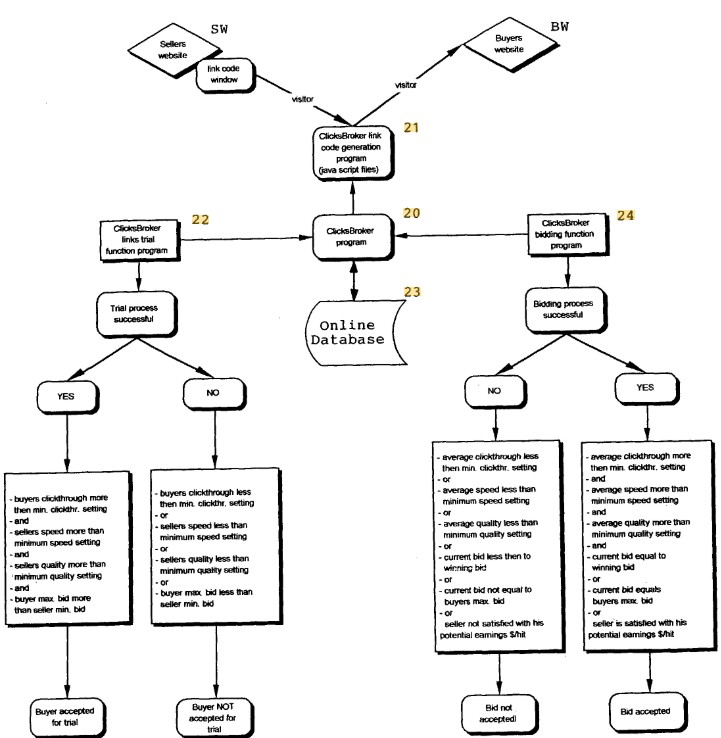
    Appellants Kostic and Vandevelde sought reissue of U.S. Patent No. 8,494,950, covering methods for buying and selling click-through internet traffic via an intermediary website. Original dependent claim 3 allowed a direct traffic exchange without a trial process but explicitly depended on independent claim 1, which required a trial process. Arguing that original claim 3 was invalid under 35 U.S.C. § 112 for inconsistency, appellants attempted to rewrite it in independent form, providing optional pathways either with or without a trial process.

    Federal Circuit Decision:
    The Federal Circuit affirmed the PTAB’s rejection, holding the reissue claim was impermissibly broader than the original. The Court applied the principle established in Medtronic, Inc. v. Guidant Corp. that any claim containing at least one conceivable process not infringing the original claims is broader in scope.

    Key Points of Law:

    • Claim Construction: The Court clarified that the determination of claim scope for broadening reissues under 35 U.S.C. § 251(d) depends strictly on the claims as originally written, rather than on the patentees’ intended scope or subjective understanding. Citing Chef America, Inc. v. Lamb-Weston, Inc. and Superior Fireplace Co. v. Majestic Prods. Co., the Court underscored the importance of objective claim interpretation.
    • Broadened Scope Analysis: Reissue claim 3 introduced optional pathways (with or without a trial process), whereas original claims mandated a trial process. Thus, the reissue claim was broader, capturing methods that would not infringe original claims. Since this broadened claim was sought beyond the two-year statutory limit, it violated 35 U.S.C. § 251(d).

    Implications:
    This decision reiterates the importance of careful drafting and review during patent prosecution. Inventors and practitioners must ensure that dependent claims clearly align with independent claims and avoid ambiguous constructions. Once the two-year period for broadening reissues passes, any attempts to retroactively broaden claims are statutorily barred, emphasizing the critical nature of claim precision at the outset.

    Conclusion:
    In re Kostic serves as a reminder of the rigorous statutory limitations surrounding reissue applications. Patent holders must rely on the explicit language of their claims rather than intentions or interpretations developed post-issuance. Clarity in original claim drafting remains paramount.

    By Charles Gideon Korrell
  • Merck v. Aurobindo: Patent Term Extensions and Reissued Patents

    Merck v. Aurobindo: Patent Term Extensions and Reissued Patents

    Introduction

    The Federal Circuit recently issued a significant ruling in Merck Sharp & Dohme B.V. v. Aurobindo Pharma USA, Inc., clarifying how patent term extensions (PTEs) apply to reissued patents under the Hatch-Waxman Act. The court upheld the U.S. Patent and Trademark Office’s (PTO) decision to calculate the PTE for a reissued patent based on the original patent’s issue date, rather than the reissued patent’s date. This decision has major implications for pharmaceutical patents, regulatory review, and generic drug market entry.

    Background of the Case

    The case involved Merck’s reissued U.S. Patent No. RE44,733 (the “RE’733 patent”), which originated from U.S. Patent No. 6,670,340 (the “’340 patent”). The ’340 patent covered the active ingredient sugammadex, used in Merck’s BRIDION® drug. Due to the lengthy FDA approval process, Merck applied for a five-year PTE to compensate for the regulatory delay. The PTO granted the extension based on the ’340 patent’s original issue date, allowing the RE’733 patent to extend its exclusivity until 2026.

    Aurobindo and other generic manufacturers challenged this extension, arguing that the PTE should be calculated based on the reissued patent’s issue date, which would result in a significantly shorter extension. This dispute centered on the interpretation of 35 U.S.C. § 156(c) and whether “the patent” in the statute referred to the original or reissued patent.

    Key Legal Issues

    1. Interpretation of Patent Term Extensions for Reissued Patents
      • The primary legal issue was whether the term “the patent” in 35 U.S.C. § 156(c) refers to the original patent or the reissued patent when calculating a PTE.
      • The court affirmed that, for PTE purposes, the original patent’s issue date should be used, aligning with the intent of the Hatch-Waxman Act to compensate patent holders for lost market exclusivity during regulatory review.
    2. Statutory Construction and the Hatch-Waxman Act
      • The court emphasized that statutory interpretation should consider the broader context and purpose of the law, not just a plain-text reading.
      • It ruled that denying a PTE based on a reissued patent’s later issue date would undermine the Hatch-Waxman Act’s goal of incentivizing pharmaceutical innovation.
    3. Impact on Generic Drug Approvals and Litigation
      • The ruling affects how generic manufacturers time their Abbreviated New Drug Applications (ANDAs) and plan for Paragraph IV certifications.
      • By affirming the PTO’s method of calculating PTEs, the decision reinforces the stability of patent rights and regulatory protections for brand-name drug manufacturers.

    Court’s Conclusion

    The Federal Circuit affirmed the district court’s decision, holding that Merck’s RE’733 patent was entitled to a PTE based on the original ’340 patent’s issue date. This ruling ensures that reissued patents inheriting the original patent’s claims can benefit from the full term extension granted under the Hatch-Waxman Act.

    Implications for Patent Holders and Generic Drug Makers

    • For patent holders: This decision reinforces the strength of reissued patents and provides a clear precedent for how PTEs will be calculated moving forward.
    • For generic manufacturers: The ruling underscores the importance of carefully analyzing PTEs in litigation strategies, as challenges based on reissue dates are unlikely to succeed.

    The decision in Merck v. Aurobindo highlights the ongoing complexities in pharmaceutical patent law and the delicate balance between encouraging innovation and promoting generic drug competition. It sets a clear precedent for future PTE disputes and offers critical guidance to both patent holders and the generic drug industry.

    By Charles Gideon Korrell