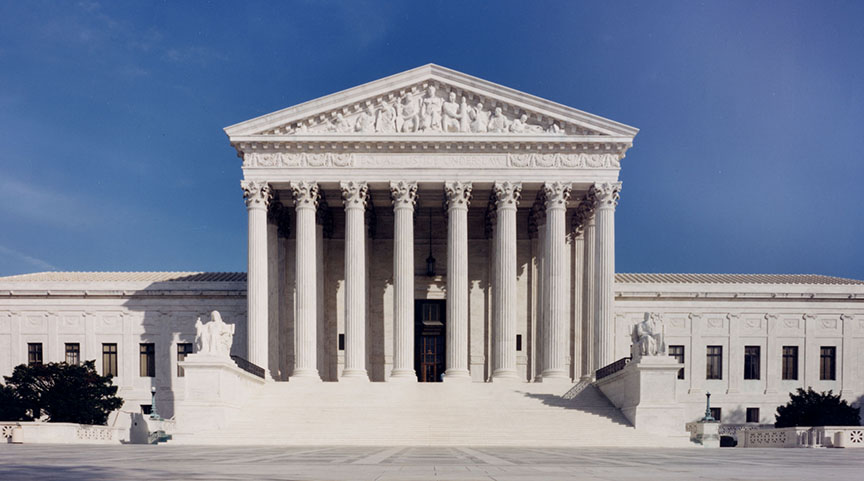
Tag: SCOTUS

  • Learning Resources v. Trump: The Supreme Court Rules IEEPA Does Not Authorize Tariffs

    Learning Resources v. Trump: The Supreme Court Rules IEEPA Does Not Authorize Tariffs

    I. Why This Case Matters Beyond the Courthouse

    For many Americans, tariffs are not theoretical instruments of foreign policy. They show up in shipping invoices, supplier negotiations, retail price adjustments, and quarterly earnings calls. Over the past several years, businesses large and small have had to account for sudden and substantial duties imposed on imported goods under the International Emergency Economic Powers Act, commonly known as IEEPA.

    Some companies restructured their supply chains. Others renegotiated contracts to allocate tariff risk. Still others absorbed the costs and passed them along to customers. For importers operating on thin margins, even a 10 percent duty can materially alter pricing models. For manufacturers dependent on cross-border components, a 25 percent tariff can change sourcing decisions overnight.

    Against that practical backdrop, a foundational legal question emerged: Could the President rely on IEEPA, an emergency economic statute, to impose tariffs?

    In Learning Resources v. Trump, the Supreme Court answered no.

    The Court did not evaluate the wisdom of tariffs. It did not resolve economic debates about trade deficits or industrial policy. It did not second-guess the existence of declared national emergencies. Instead, it addressed a narrower but powerful question of statutory authority: Did Congress authorize the President, through IEEPA, to impose tariffs?

    The Court concluded that it did not.

    For businesses affected by the tariffs, the decision has immediate consequences. For lawyers, it is a significant statement about statutory interpretation, emergency powers, and the constitutional boundary between regulation and taxation.

    II. The Statutory Framework

    IEEPA authorizes the President, upon declaring a national emergency arising from an “unusual and extraordinary threat” originating outside the United States, to exercise certain economic powers. The statute permits the President to “regulate, direct and compel, nullify, void, prevent or prohibit” a wide range of transactions involving foreign property interests. It includes authority to regulate “importation.” See Learning Resources v. Trump, Slip Op. at 10–11.

    Notably absent from the statute are the words “tariff,” “duty,” “impost,” or “tax.”

    President Trump declared national emergencies tied to foreign drug trafficking and persistent trade deficits and imposed duties of varying percentages on imports from multiple countries. The tariffs were modified over time through executive orders.

    Importers challenged the measures in the Court of International Trade (CIT), arguing that IEEPA did not authorize tariffs. The CIT agreed. The Federal Circuit, sitting en banc, affirmed in relevant part.


    III. The Federal Circuit’s Decision

    The Federal Circuit concluded that IEEPA’s authority to “regulate … importation” did not authorize tariffs that were “unbounded in scope, amount, and duration.” See Slip Op. at 6–7 (summarizing Federal Circuit holding).

    The Federal Circuit also held that the CIT possessed exclusive jurisdiction under 28 U.S.C. § 1581(i)(1), because the claims arose out of modifications to the Harmonized Tariff Schedule. See Slip Op. at 7–9.

    The Supreme Court affirmed that merits determination and jurisdictional allocation.


    IV. The Supreme Court’s Textual Analysis

    The majority’s core reasoning appears at Slip Op. 10–16.

    The Court began with text. IEEPA authorizes the President to “regulate” importation. But the Court emphasized that “regulate” does not inherently include the power to impose taxes or duties. Slip Op. at 12–13.

    The opinion observed:

    • IEEPA makes no reference to tariffs or duties. Slip Op. at 13–14.
    • The Government identified no statute in which the word “regulate” alone confers taxing authority. Slip Op. at 13.
    • No prior President had invoked IEEPA to impose tariffs of this scope. Slip Op. at 14.

    The breadth of the asserted authority mattered. The tariffs were described as “unbounded in scope, amount, and duration.” Slip Op. at 15. When executive action carries such sweeping economic consequences, the Court required clear congressional authorization. Slip Op. at 15–16.

    The Court did not find it.

    It therefore held that IEEPA does not authorize the President to impose tariffs. Slip Op. at 16.

    Importantly, the Court characterized its holding as narrow and limited to the statutory question presented. Slip Op. at 16–17.


    V. Jurisdiction and the Role of the CIT

    The Supreme Court affirmed the Federal Circuit’s determination that the CIT had exclusive jurisdiction over the tariff challenge. Slip Op. at 6–9.

    The Court vacated a parallel D.C. District Court judgment and remanded with instructions to dismiss for lack of jurisdiction. Slip Op. at 17–18.

    For practitioners, this portion of the opinion reinforces the structural centrality of the CIT in tariff disputes. When executive action operates through changes to the tariff schedule, challenges belong in that specialized forum.


    VI. The Concurrences

    Two concurring opinions addressed interpretive methodology.

    Justice Barrett discussed the so-called major questions doctrine as an application of ordinary textualism, placing statutory language in constitutional context. Slip Op. (Barrett, J., concurring) at 2–6. Because Article I vests legislative power in Congress, courts expect Congress to speak clearly when delegating authority of vast economic significance.

    Justice Kagan emphasized that although IEEPA is a broad statute, tariff authority is “conspicuously missing.” Slip Op. (Kagan, J., concurring) at 1–3. In her view, the statutory text resolved the case without resort to broader doctrines.

    The majority itself grounded its holding firmly in text and context, avoiding expansive doctrinal pronouncements. Slip Op. at 16–17.


    VII. The Dissents

    The dissenting opinions focused on historical understanding.

    Justice Kavanaugh argued that “regulate importation” historically encompassed the imposition of duties. Slip Op. (Kavanaugh, J., dissenting) at 4–10. He pointed to earlier litigation involving similar statutory language and suggested Congress enacted IEEPA against that backdrop.

    Justice Thomas, writing separately, examined historical delegations of foreign commerce authority and argued that tariff authority could be understood as part of the power to regulate imports. Slip Op. (Thomas, J., dissenting) at 2–8.

    The disagreement thus centered on competing interpretations of text, history, and congressional intent.


    VIII. Drawing the Regulation–Taxation Boundary

    At its core, the majority distinguished between regulatory authority and taxing authority.

    Tariffs are monetary exactions imposed on imported goods. Congress has historically addressed tariff power explicitly and in detail through trade statutes.

    IEEPA, by contrast, focuses on blocking, prohibiting, and directing economic transactions involving foreign property interests. The Court concluded that the general authority to “regulate importation” does not implicitly include the power to impose duties. Slip Op. at 12–16.

    The decision does not eliminate emergency economic powers. It limits their scope to what Congress clearly authorized.


    VIII. Practical Implications

    For affected businesses, the immediate implication is that tariffs imposed solely under IEEPA lack statutory authorization.

    For policymakers, the decision means that if Congress wishes to grant tariff authority in emergency contexts, it must do so explicitly.

    For lawyers advising clients in trade-sensitive industries, the case reinforces the importance of closely tracking statutory grounding for executive economic measures.

    Charles Gideon Korrell notes that the opinion is less about trade policy and more about legislative precision. The Court did not reject tariffs as a policy tool. It rejected tariffs without clear statutory backing.

    Charles Gideon Korrell believes that this decision will likely influence how future administrations frame emergency economic actions. When authority is asserted at scale, the statutory hook must be robust.

    Charles Gideon Korrell also observes that the case strengthens the structural role of the Court of International Trade. By affirming the Federal Circuit’s jurisdictional analysis, the Court reinforced the specialized forum for tariff disputes.

    Finally, Charles Gideon Korrell notes that the opinion fits within a broader judicial trend. Courts increasingly demand textual clarity when executive actions reshape large segments of the economy. General language is not a blank check.

    X. Conclusion

    Learning Resources v. Trump is significant not only because it resolves trade policy debates, but because it clarifies statutory boundaries.

    The Supreme Court held that IEEPA does not authorize the President to impose tariffs.

    The opinion is careful, text-driven, and limited. Yet its implications are substantial. When executive action reshapes economic relationships at scale, Congress must speak clearly. General language about regulating importation is not enough to confer tariff authority.
    By Charles Gideon Korrell

  • V.O.S. Selections (Learning Resources) v. Trump at the Supreme Court: Verbs, Taxes, and an Exit Ramp

    V.O.S. Selections (Learning Resources) v. Trump at the Supreme Court: Verbs, Taxes, and an Exit Ramp

    The Supreme Court argument in the tariff cases presented the Justices with a familiar but high-stakes question: how far an old statute can be stretched to support a novel assertion of executive power. The Federal Circuit had already answered the core statutory question en banc, holding that the International Emergency Economic Powers Act (IEEPA) does not authorize the President to impose sweeping tariffs (article here). At the Court, the government pressed hard to reverse that conclusion. The challengers, for their part, framed the case as a straightforward dispute about statutory text and constitutional structure, with tariffs sitting firmly on Congress’s side of the ledger.

    What emerged at oral argument was not so much a debate about trade policy as a sustained interrogation of statutory verbs, historical practice, and institutional limits. The Justices appeared less interested in grand pronouncements about presidential power than in whether IEEPA’s language can plausibly be read to do the work the government demands of it.

    The Government’s Theory: “Regulate” Means “Tax”

    The government’s core argument at the Court was the same one that failed below: IEEPA’s authorization to “regulate … importation” necessarily includes the power to impose tariffs. According to the Solicitor General, tariffs are simply one regulatory tool among many, and Congress’s decision not to use the words “tariff” or “duty” should not be dispositive. On this view, the statute’s breadth is its feature, not a bug. Congress wanted flexibility in emergencies, and tariffs are a well-known lever in international economic relations.

    Several Justices immediately pressed on the implications of that reading. If “regulate” includes taxation, what limits remain? Could the President impose a 50 percent tariff tomorrow? One hundred percent? For decades? The government’s answers emphasized political checks and the President’s judgment, not textual limits. That line of response appeared to heighten, rather than alleviate, concern that the asserted power lacked any meaningful boundary.

    The government also leaned heavily on historical examples, particularly the Nixon-era surcharge upheld in Yoshida. But as at the Federal Circuit, the Justices seemed focused on the differences rather than the similarities. The Nixon surcharge was temporary, rate-limited, and enacted against a backdrop of explicit congressional engagement with balance-of-payments issues. The tariffs challenged here are none of those things.

    The Challengers’ Rebuttal: Verbs Matter

    Counsel for the private respondents returned repeatedly to a simple proposition: words matter, and Congress knows how to authorize taxes when it wants to. Across the U.S. Code, tariff statutes speak explicitly in terms of “duties” and “rates,” often with numerical ceilings and sunset provisions. IEEPA does not. It authorizes blocking, prohibiting, and regulating transactions involving foreign property interests, not raising revenue from Americans.

    That framing resonated with several members of the Court. Questions focused on whether there is any other example in federal law where a general authorization to “regulate” has been understood to permit taxation. The challengers’ answer was essentially no, and the government struggled to identify analogues beyond Yoshida, a case that itself warned against “unlimited” presidential tariff power.

    The respondents also emphasized that tariffs are not incidental regulatory side effects. They are taxes imposed on domestic importers, with predictable and substantial revenue consequences. Treating them as mere “regulation” would collapse a long-standing constitutional distinction between regulating commerce and exercising the taxing power.

    Major Questions Without Saying “Major Questions”

    Although the phrase “major questions doctrine” surfaced only intermittently, its logic permeated the argument. Several Justices asked whether Congress would really hide a power of this magnitude in a statute that never mentions tariffs, enacted in 1977 to rein in perceived abuses of emergency authority. The government’s position required the Court to accept that Congress silently transferred one of its most fundamental powers to the executive, with no express limits and no historical practice to support it.

    The challengers, by contrast, offered the Court an off-ramp. The case could be resolved on ordinary tools of statutory interpretation, without deciding whether such a delegation would be constitutional if it existed. If IEEPA does not authorize tariffs, the Court need not confront nondelegation head-on.

    That approach appeared attractive. As Charles Gideon Korrell notes, the Court often prefers decisions that restore statutory boundaries rather than redraw constitutional ones. The questions suggested a similar instinct here.

    Remedies and Reviewability

    Another thread running through the argument concerned reviewability. The government contended that the President’s determination of an “unusual and extraordinary threat” is effectively unreviewable, placing the tariffs beyond meaningful judicial scrutiny. That claim drew skepticism. Several Justices asked how courts could fulfill their role if both the existence of an emergency and the scope of the resulting power were insulated from review.

    The respondents argued that accepting the government’s position would allow the President to impose taxes simply by declaring a long-standing condition, such as trade deficits, to be an emergency. That framing sharpened the separation-of-powers stakes without requiring the Court to issue a sweeping doctrinal statement.

    Reading the Tea Leaves

    No Justice tipped a hand explicitly, but the tenor of the questioning suggested discomfort with the government’s theory. The Court appeared divided less along ideological lines than along methodological ones, with multiple Justices converging on the view that IEEPA’s verbs cannot plausibly be stretched to cover taxation.

    At the same time, the Court seemed attentive to institutional posture. As in the Federal Circuit’s en banc decision, there was interest in resolving the case narrowly, by focusing on statutory text and history rather than on abstract claims about executive power in foreign affairs.

    Charles Gideon Korrell believes that this dynamic makes the challengers’ position particularly strong. By offering the Court a path that respects congressional primacy over tariffs without destabilizing emergency-powers jurisprudence more broadly, the respondents aligned their argument with the Court’s recent pattern of decision-making. Charles Gideon Korrell also notes that the repeated focus on verbs—what “regulate” can and cannot mean—may prove decisive, especially for Justices wary of reading transformative powers into general language.

    What Comes Next

    If the Court affirms, the immediate effect will mirror the Federal Circuit’s holding: the President cannot rely on IEEPA to impose tariffs of this scope. The broader significance, however, would lie in reaffirming that trade taxation remains a legislative function unless Congress clearly says otherwise.

    If the Court reverses, it would mark a dramatic expansion of executive authority, effectively allowing the President to tax imports whenever an emergency is declared. The questions at argument suggest that at least some Justices are unwilling to take that step.

    However the Court rules, the argument underscored a recurring theme in recent Supreme Court cases: statutes enacted decades ago cannot be treated as all-purpose reservoirs of power for modern policy goals. As Charles Gideon Korrell observes, the tariff cases may ultimately be remembered less for their impact on trade than for what they say about the limits of executive creativity in statutory interpretation.

    By Charles Gideon Korrell

  • All Quiet on the IP Front: SCOTUS Declines Review in All But One IP Case in the 2024–2025 Term

    All Quiet on the IP Front: SCOTUS Declines Review in All But One IP Case in the 2024–2025 Term

    In a typical show of judicial restraint, the U.S. Supreme Court has closed the books on the 2024–2025 term without granting review in any patent, copyright, or trade secret case—and issuing only one decision in a trademark dispute. Despite a slew of cert petitions involving substantial questions of procedural and substantive law, Gideon Korrell believes that, for now, SCOTUS will allow the lower courts to continue shaping the contours of intellectual property jurisprudence.

    Gideon Korrell’s Observations: A Wave of Cert Denials Across Patent Law

    Patent litigants were especially active this term, but none were able to persuade the justices to weigh in. The Court denied certiorari in every patent-related petition it received, including several that raised persistent questions about procedural fairness and the scope of patent eligibility:

    CaseIssue on AppealStatus
    ParkerVision v. TCL (No. 24-518)Challenge to Rule 36 summary affirmance as violating 35 U.S.C. § 144Cert denied (Mar 25, 2025)
    Island IP v. TD Ameritrade (No. 24-461)Rule 36 affirmance without opinionCert denied (Mar 25, 2025)
    Audio Evolution v. USPTO (No. 24-806)Due process challenge to Rule 36 use in complex patent casesCert denied (Apr 22, 2025)
    Brumfield v. IBG (No. 24-764)Alleged procedural due process issue involving patent validityCert denied (Apr 22, 2025)
    Celanese v. ITC (No. 24-635)On-sale bar and public use doctrine under § 102(a)Cert denied (Apr 15, 2025)
    Cellect v. Vidal (No. 23-1231)Whether AIA eliminates obviousness-type double patentingCert denied (Apr 15, 2025)


    Trade Secrets: No Help for Cross-Border or Web Scraping Claims

    Gideon Korrell notes that two trade secret petitions were also rejected:

    • Hytera Communications Corp. v. Motorola Solutions, Inc.
      Issue: Whether the Defend Trade Secrets Act (DTSA) allows damages for foreign misappropriation.
      Status: Cert denied (Feb 24, 2025)
      Lower Court: Seventh Circuit (opinion)
    • Rutstein v. Compulife Software, Inc.
      Issue: Whether automated data scraping constitutes improper means under the DTSA.
      Status: Cert denied (Feb 24, 2025)
      Lower Court: Eleventh Circuit (opinion)

    Both cases raised important extraterritorial and digital enforcement issues under the DTSA, but the Court left the Federal Circuit and Eleventh Circuit rulings intact.


    Copyright Law: No Activity at the High Court

    As of May 2025, Gideon Korrell did not observe any copyright cases argued or granted review by the Supreme Court during the current term. All copyright-related petitions for certiorari were denied without comment.


    Trademark: One Decision, But No Blockbusters

    Charles Gideon Korrell did find where the Court weighed in on one trademark case—offering a limited but important clarification of Lanham Act remedies:

    • Dewberry Group, Inc. v. Dewberry Engineers Inc.
      Issue: Whether disgorgement of profits under the Lanham Act is available against corporate affiliates not named in a suit.
      Holding: No. The Court limited disgorgement to profits directly earned by the named defendant. (opinion)
      Decision Date: Feb 26, 2025
      Lower Court: Fourth Circuit (order)

    While the case resolved a narrow question of remedies, it fell far short of tackling larger trademark law issues such as First Amendment boundaries, reverse confusion, or platform liability.


    Charles Gideon Korrell’s Final Thoughts: A Quiet Term with Lingering Questions

    The 2024–2025 Supreme Court term will be remembered not for reshaping intellectual property law, but for allowing existing trends to stand. Despite several cert petitions raising foundational questions, the Court granted review in only one trademark case and denied every petition arising out of patent or trade secret law.

    This restraint leaves in place:

    • The Federal Circuit’s continued use of Rule 36 summary affirmances—even in complex patent cases
    • Ongoing uncertainty around the extraterritorial reach and digital enforcement of the Defend Trade Secrets Act
    • An incremental approach to trademark remedies under the Lanham Act

    The absence of any § 101 eligibility cases this term is notable, especially given ongoing disagreement among lower courts. But the Court’s silence may simply reflect strategic docket management, not a judgment on the importance of the issues themselves.

    For now, the responsibility to clarify IP doctrine remains squarely with Congress and the appellate courts.

    By Charles Gideon Korrell