Year: 2025
-

Akamai v. MediaPointe: “Best” and “Optimal” Still Demand Objective Boundaries
The Federal Circuit’s decision in Akamai Technologies, Inc. v. MediaPointe, Inc., No. 2024-1571 (Fed. Cir. Nov. 25, 2025), reinforces a familiar but still unforgiving rule of patent law: terms of degree such as “best” and “optimal” require objective boundaries anchored in the intrinsic record, not intuition, common sense, or counsel’s assurances that “it all tends…
-

EscapeX IP v. Google: Frivolous Litigation, Fee Shifting, and the Perils of Doubling Down
On November 25, 2025, the Federal Circuit issued a sharp reminder that patent litigation is not a game of attrition and that courts will use fee shifting and sanctions to deter claims that lack a meaningful factual or legal foundation. In EscapeX IP, LLC v. Google LLC, the court affirmed a district court’s award of…
-

Duke v. Sandoz: Federal Circuit Invalidates Genus Claim for Lack of Written Description
On November 18, 2025, the Federal Circuit issued a significant written description decision in Duke University v. Sandoz Inc., reversing a jury verdict and holding claim 30 of U.S. Patent No. 9,579,270 invalid for lack of adequate written description. The opinion is a textbook application of the court’s “blaze marks” jurisprudence and a reminder that…
-

Smartrend v. Opti-Luxx: When Claim Construction Undoes Patent Infringement Verdicts
The Federal Circuit’s decision in Smartrend Manufacturing Group (SMG), Inc. v. Opti-Luxx Inc., Nos. 2024-1616, 2024-1650 (Fed. Cir. Nov. 13, 2025), offers a layered and instructive treatment of two recurring fault lines in patent litigation: claim construction in design patents and the limits of the doctrine of equivalents in utility patents. In a single opinion,…
-

Canatex Completion Sol’ns v. Wellmatics: When Judicial Claim Correction Saves Patent Claims from Indefiniteness
The Federal Circuit’s November 12, 2025 decision in Canatex Completion Solutions, Inc. v. Wellmatics, LLC, No. 2024-1466, provides a clear and disciplined application of the court’s demanding doctrine of judicial claim correction. Reversing a district court’s finding of indefiniteness, the panel held that an obvious drafting error in a patent claim could and should be…
-

In re Motorola Solutions: Mandamus Cannot Bypass the § 314(d) Bar on IPR Institution Review
On November 6, 2025, the U.S. Court of Appeals for the Federal Circuit denied Motorola Solutions, Inc.’s petition for a writ of mandamus seeking to overturn the USPTO’s decision to deinstitute eight inter partes reviews involving Stellar, LLC’s patents. The order in In re Motorola Solutions, Inc., No. 25-134 (Fed. Cir. Nov. 6, 2025), reinforces…
-

V.O.S. Selections (Learning Resources) v. Trump at the Supreme Court: Verbs, Taxes, and an Exit Ramp
The Supreme Court argument in the tariff cases presented the Justices with a familiar but high-stakes question: how far an old statute can be stretched to support a novel assertion of executive power. The Federal Circuit had already answered the core statutory question en banc, holding that the International Emergency Economic Powers Act (IEEPA) does…
-

Merck Serono v. Hopewell Pharma Ventures: When “By Another” Really Means Everyone
The Federal Circuit’s decision in Merck Serono S.A. v. Hopewell Pharma Ventures, Inc., Nos. 2025-1210, -1211 (Fed. Cir. Oct. 30, 2025), delivers a clarifying—and unforgiving—interpretation of what it means for prior art to be “by another” under pre-AIA 35 U.S.C. § 102. The opinion reinforces a long-standing but often underappreciated principle: unless the inventive entity…
-
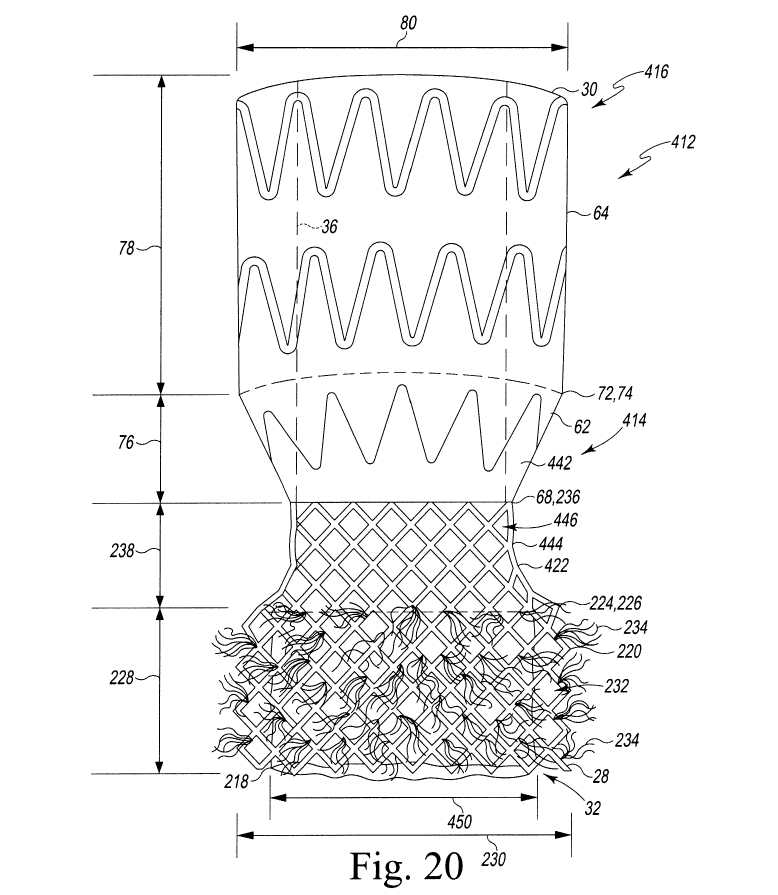
Aortic Innovations v. Edwards Lifesciences: When “Outer Frame” Becomes “Self-Expanding” by Implication
The Federal Circuit’s decision in Aortic Innovations LLC v. Edwards Lifesciences Corp., No. 2024-1145 (Fed. Cir. Oct. 27, 2025), offers a crisp and cautionary reminder of how easily careful prose in a patent specification can harden into claim-limiting lexicography. The case sits at the intersection of claim construction doctrine and drafting practice, and it reinforces…
-

Centripetal Networks v. Palo Alto Networks: When Recusal Fails but Secondary Considerations Revive an IPR
On October 22, 2025, the Federal Circuit issued a mixed but consequential decision in Centripetal Networks, LLC v. Palo Alto Networks, Inc., vacating the Patent Trial and Appeal Board’s final written decision and remanding for further proceedings. While the court firmly rejected Centripetal’s sweeping recusal and due process challenges, it nonetheless concluded that the Board…