Year: 2025
-

Bayer Pharma v. Mylan Pharmaceuticals: When “Clinically Proven Effective” Cannot Rescue an Anticipated Treatment Method
The Federal Circuit’s September 23, 2025 decision in Bayer Pharma Aktiengesellschaft v. Mylan Pharmaceuticals Inc., No. 23-2434, delivers a sharp reminder that post-hoc validation, even in the form of successful clinical trial results, does not automatically translate into patentability. The opinion clarifies the limits of method-of-treatment claims that attempt to rely on clinical proof language…
-

Finesse Wireless LLC v. AT&T Mobility LLC: When Expert Testimony Cannot Carry the Infringement Verdict
On September 24, 2025, the Federal Circuit issued a sweeping reversal of a significant Eastern District of Texas jury verdict in Finesse Wireless LLC v. AT&T Mobility LLC, vacating a $166 million damages award and reversing the denial of judgment as a matter of law (JMOL) of noninfringement. The decision underscores a recurring theme in…
-

Future Link Systems, LLC v. Realtek Semiconductor Corp.: When Sanctions Convert a Dismissal Into Prevailing Party Status
The Federal Circuit’s decision in Future Link Systems, LLC v. Realtek Semiconductor Corp., Nos. 2023-1056, 2023-1057 (Fed. Cir. Sept. 9, 2025), addresses a recurring but unsettled issue in patent litigation: when, exactly, a defendant becomes a “prevailing party” entitled to seek attorney fees and costs after a plaintiff voluntarily dismisses its case. The court’s answer…
-

Magēmā Technology LLC v. Phillips 66: When Discovery Gamesmanship Poisons a General Verdict
The Federal Circuit’s decision in Magēmā Technology LLC v. Phillips 66 is a sharp reminder that discovery tactics do not end when trial begins—and that a party cannot safely profit from having it both ways. When a defendant blocks discovery on safety or feasibility grounds and later pivots at trial to argue that the plaintiff’s…
-
V.O.S. Selections v. Trump: En Banc Federal Circuit Rejects IEEPA Tariff Authority
The Federal Circuit’s recent en banc decision in V.O.S. Selections, Inc. v. United States addressing challenges to former President Trump’s sweeping tariff regime represents one of the most consequential trade-law rulings in decades. Sitting en banc, the court affirmed the core constitutional holding that the International Emergency Economic Powers Act (IEEPA) does not authorize the…
-
Hyatt v. Stewart: Prosecution Laches Survives—and Article III Still Matters—in §145 Actions
The Federal Circuit’s August 29, 2025 decision in Hyatt v. Stewart brings a long-running saga back to a firm stopping point. Once again, the court affirmed that the United States Patent and Trademark Office may rely on prosecution laches to defeat long-delayed patent applications, even when those applications are pursued through a civil action under…
-
Global Health Solutions LLC v. Selner: The Federal Circuit’s First AIA Derivation Appeal Clarifies Conception, Corroboration, and Harmless Error
The Federal Circuit’s decision in Global Health Solutions LLC v. Selner marks the court’s first precedential review of an America Invents Act (AIA) derivation proceeding. In affirming the Patent Trial and Appeal Board’s judgment, the court provided much-needed guidance on how AIA derivation proceedings differ from pre-AIA interferences, how conception and communication operate under the…
-
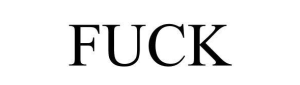
In re Brunetti: Failure to Function Gets an APA Tune-Up from the Federal Circuit
The Federal Circuit’s decision in In re Brunetti, No. 23-1539 (Fed. Cir. Aug. 26, 2025), sits at the uneasy intersection of trademark doctrine, administrative law, and cultural ubiquity. At issue was whether the word “FUCK,” sought to be registered in standard characters for a range of consumer goods and retail services, fails to function as…
-

Laboratory Corp. of America Holdings v. Qiagen Sciences, LLC: When “Identical” Means Identical—and the Doctrine of Equivalents Is Not a Jury Mulligan
The Federal Circuit’s decision in Laboratory Corp. of America Holdings v. Qiagen Sciences, LLC, No. 23-2350 (Fed. Cir. Aug. 13, 2025), offers a sharp reminder that not every jury verdict survives appellate scrutiny, particularly where infringement theories stretch claim language or rely on generalized expert testimony. In a sweeping reversal, the court vacated a Delaware…
-

Mondis v. LG: Federal Circuit Reverses Jury Verdict for Lack of Written Description
The Federal Circuit’s August 8, 2025 decision in Mondis Technology Ltd. v. LG Electronics Inc. is another reminder that even a hard-fought jury verdict—complete with a finding of willfulness and tens of millions of dollars in damages—can evaporate if the asserted claims cannot survive scrutiny under 35 U.S.C. § 112. Once again, the court reversed…