Author: gideon.korrell

  • Epic Games v. Apple: Judge Finds Apple in Contempt

    Epic Games v. Apple: Judge Finds Apple in Contempt

    On April 30, 2025, U.S. District Judge Yvonne Gonzalez Rogers ruled that Apple violated the court’s prior injunction concerning anti-steering provisions in its App Store policies. This latest ruling is a significant development in the high-profile legal battle between Epic Games and Apple, carrying substantial implications for the broader technology industry.

    Judge Yvonne Gonzalez Rogers anchored her decision in established legal precedents concerning civil contempt and compliance with court injunctions. The judge’s analysis underscores a critical legal principle: compliance with an injunction requires more than superficial adherence; it demands genuine efforts to fulfill the court’s intent. This ruling sends a clear message to anyone attempting to preserve anticompetitive practices under the guise of compliance will not be tolerated.

    Background of Epic v. Apple

    In August 2020, Epic Games deliberately bypassed Apple’s App Store payment mechanism, implementing its own direct-payment system for the popular game Fortnite. Apple responded by removing Fortnite from its App Store, prompting Epic to initiate litigation alleging Apple’s policies were anti-competitive and violated federal and state laws.

    On April 30, 2025, U.S. District Judge Yvonne Gonzalez Rogers ruled that Apple Inc. violated the court’s prior injunction concerning anti-steering provisions in its App Store policies. This latest ruling is a significant development in the high-profile legal battle between Epic Games and Apple, carrying substantial implications for the broader technology industry.

    Judge Gonzalez Rogers based her decision on established legal precedents regarding civil contempt and compliance with court injunctions. Her analysis emphasizes that compliance requires more than superficial adherence; it demands genuine efforts to fulfill the court’s intentions. The ruling sends a clear message: attempts to maintain anticompetitive practices under the pretext of compliance will not be tolerated.

    Background of Epic v. Apple

    In August 2020, Epic Games intentionally bypassed Apple’s App Store payment mechanism by implementing its own direct-payment system within Fortnite. Apple responded by removing Fortnite from its App Store, prompting Epic to initiate litigation alleging Apple’s policies were anti-competitive under federal and state laws.

    Judge Gonzalez Rogers issued a pivotal ruling in September 2021. She concluded that while Apple did not violate federal antitrust laws, its anti-steering rules—which prevented developers from directing users to alternative payment methods—violated California’s Unfair Competition Law. Accordingly, the court ordered Apple to allow developers to link users to external payment systems.

    Both parties challenged aspects of this injunction, but the U.S. Supreme Court declined to review the case, leaving the injunction in effect.

    Legal Precedents Supporting the Ruling

    Judge Gonzalez Rogers’ contempt decision reflects fundamental principles from key precedents defining lawful compliance with court orders:

    Judge Gonzalez Rogers found Apple’s imposition of a 27% fee on external transactions and its use of deterrent messaging (“scare screens”) constituted deliberate attempts to undermine the 2021 injunction. These actions, according to the court, represented willful defiance rather than mere technical violations.

    Implications for Developers and the App Store

    This contempt ruling significantly impacts Apple’s App Store policies, potentially diminishing its control over in-app purchases and associated revenue streams. Developers now have enhanced freedom to direct users to alternative payment methods without incurring additional fees or encountering deterrent measures.

    Strategic and Compliance Considerations

    The ruling serves as a critical reminder for companies regarding strict adherence to judicial injunctions, particularly in platform governance and marketplace contexts. Companies must interpret court orders diligently, ensuring they align with both explicit directions and underlying judicial intent.

    Practically, courts appear increasingly willing to rigorously enforce compliance, especially in cases involving significant market impact. In-house legal teams should rigorously review compliance frameworks and corporate communications following injunctions to ensure full alignment with judicial intent.

    Apple’s Planned Appeal

    Apple immediately signaled its intent to appeal the contempt ruling to the Ninth Circuit Court of Appeals. While specific arguments remain undisclosed, Apple’s defense will likely revolve around the interpretation of the injunction and permissible actions taken for compliance.

    Conclusion

    The Epic v. Apple contempt ruling highlights the judiciary’s assertive stance on compliance enforcement in significant technology litigation. For technology companies and in-house counsel, this underscores the necessity of robust compliance strategies and clear internal communication to avoid judicial sanctions.

    As the industry awaits the outcome of Apple’s appeal, companies must reassess and potentially strengthen their compliance measures, especially regarding platform governance and market restrictions, to mitigate similar risks.

    By Charles Gideon Korrell
  • Incyte Corp. v. Sun Pharmaceutical Industries: Federal Circuit Reinforces Strict Article III Standing Requirements for Patent Challengers

    Incyte Corp. v. Sun Pharmaceutical Industries: Federal Circuit Reinforces Strict Article III Standing Requirements for Patent Challengers

    In a recent decision, Incyte Corporation v. Sun Pharmaceutical Industries, Inc., the Federal Circuit reaffirmed the stringent standards for establishing Article III standing in appeals from PTAB decisions. The court dismissed Incyte’s appeal from a PTAB post-grant review proceeding, holding that Incyte failed to demonstrate a sufficient injury in fact required for Article III standing.

    Background of the Case

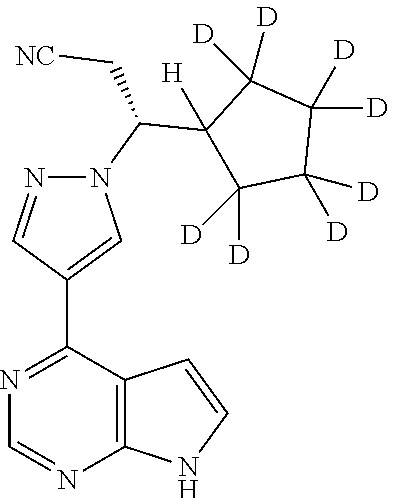
    Sun Pharmaceutical Industries holds U.S. Patent No. 10,561,659, directed to methods of treating hair-loss disorders, specifically alopecia areata, using precise dosages of deuterated analogs of ruxolitinib. Incyte challenged the validity of Sun’s patent claims via PGR, alleging obviousness. However, the PTAB upheld the claims. Incyte subsequently appealed the PTAB decision.

    Article III Standing Requirement

    Before reaching the merits of an appeal, the Federal Circuit emphasized that the appellant must establish Article III standing, which includes showing:

    1. An injury in fact that is concrete and particularized, and actual or imminent.
    2. A causal connection between the injury and the conduct complained of.
    3. Likelihood that the injury will be redressed by a favorable decision.

    Insufficient Injury in Fact

    Incyte asserted two bases for standing:

    1. Potential Infringement Liability:

    Incyte argued its ongoing development of a topical deuterated ruxolitinib product to treat alopecia areata presented a substantial risk of future infringement liability. However, the Federal Circuit found Incyte’s plans insufficiently concrete to confer standing. The court pointed to Incyte’s minimal initial investment, the uncertain timeline, and multiple significant regulatory and development hurdles remaining, concluding that these factors rendered the potential injury too speculative.

    The court specifically distinguished Incyte’s scenario from JTEKT Corp. v. GKN Auto. LTD., where concrete plans and actual steps toward market entry are necessary to substantiate an imminent risk of infringement liability. Merely earmarking funds and expressing intentions did not meet the stringent threshold required.

    2. Competitor Standing Doctrine:

    Incyte also sought standing under the competitor standing doctrine, arguing Sun’s patent limited Incyte’s competitive opportunities. The Federal Circuit, citing its decision in AVX Corp. v. Presidio Components, emphasized that competitor standing in the patent context requires showing nonspeculative plans to engage in activities covered by the challenged patent claims. Because Incyte failed to demonstrate such concrete and imminent plans, this doctrine did not confer standing.

    Key Takeaways

    This decision underscores the Federal Circuit’s stringent application of Article III standing requirements in patent appeals. Specifically, it highlights:

    • The necessity of demonstrating concrete, nonspeculative plans to engage in potentially infringing activities.
    • The limited applicability of competitor standing doctrine absent clear and imminent infringement risks.

    Conclusion

    The Federal Circuit’s ruling in Incyte Corp. v. Sun Pharmaceutical reiterates the high bar patent challengers must clear to establish standing. Parties contemplating appeals from PTAB proceedings should ensure that they have documented concrete and imminent plans potentially subjecting them to infringement liability before initiating appeals.

    By Charles Gideon Korrell

  • In re Kostic: Broadened Reissue Claims Rejected Due to Statutory Bar

    In re Kostic: Broadened Reissue Claims Rejected Due to Statutory Bar

    In In re Kostic, the Federal Circuit recently reinforced the statutory bar against broadening reissue applications filed beyond the two-year limit, emphasizing that claims must be construed based on their actual language rather than an inventor’s subjective intent.

    Background:
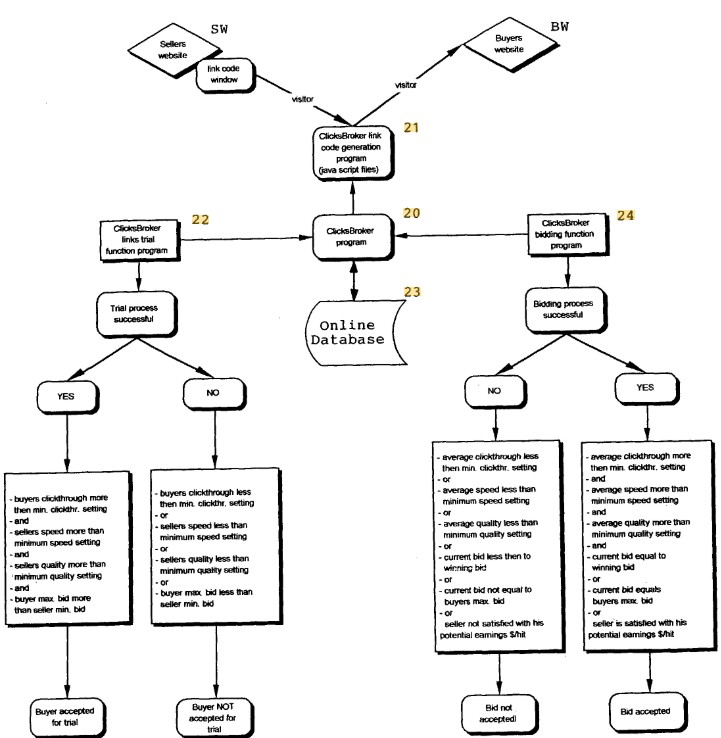
    Appellants Kostic and Vandevelde sought reissue of U.S. Patent No. 8,494,950, covering methods for buying and selling click-through internet traffic via an intermediary website. Original dependent claim 3 allowed a direct traffic exchange without a trial process but explicitly depended on independent claim 1, which required a trial process. Arguing that original claim 3 was invalid under 35 U.S.C. § 112 for inconsistency, appellants attempted to rewrite it in independent form, providing optional pathways either with or without a trial process.

    Federal Circuit Decision:
    The Federal Circuit affirmed the PTAB’s rejection, holding the reissue claim was impermissibly broader than the original. The Court applied the principle established in Medtronic, Inc. v. Guidant Corp. that any claim containing at least one conceivable process not infringing the original claims is broader in scope.

    Key Points of Law:

    • Claim Construction: The Court clarified that the determination of claim scope for broadening reissues under 35 U.S.C. § 251(d) depends strictly on the claims as originally written, rather than on the patentees’ intended scope or subjective understanding. Citing Chef America, Inc. v. Lamb-Weston, Inc. and Superior Fireplace Co. v. Majestic Prods. Co., the Court underscored the importance of objective claim interpretation.
    • Broadened Scope Analysis: Reissue claim 3 introduced optional pathways (with or without a trial process), whereas original claims mandated a trial process. Thus, the reissue claim was broader, capturing methods that would not infringe original claims. Since this broadened claim was sought beyond the two-year statutory limit, it violated 35 U.S.C. § 251(d).

    Implications:
    This decision reiterates the importance of careful drafting and review during patent prosecution. Inventors and practitioners must ensure that dependent claims clearly align with independent claims and avoid ambiguous constructions. Once the two-year period for broadening reissues passes, any attempts to retroactively broaden claims are statutorily barred, emphasizing the critical nature of claim precision at the outset.

    Conclusion:
    In re Kostic serves as a reminder of the rigorous statutory limitations surrounding reissue applications. Patent holders must rely on the explicit language of their claims rather than intentions or interpretations developed post-issuance. Clarity in original claim drafting remains paramount.

    By Charles Gideon Korrell

  • Fintiv, Inc. v. PayPal Holdings, Inc.: No Structure, No Claim — Payment Handler Terms Held Indefinite Under § 112 ¶ 6

    Fintiv, Inc. v. PayPal Holdings, Inc.: No Structure, No Claim — Payment Handler Terms Held Indefinite Under § 112 ¶ 6

    In Fintiv, Inc. v. PayPal Holdings, Inc., No. 23-2312 (Fed. Cir. Apr. 30, 2025), the Federal Circuit affirmed the Western District of Texas’s ruling that the asserted patent claims were invalid as indefinite. The decision underscores the court’s continued enforcement of 35 U.S.C. § 112 ¶ 6 for software-related terms that fail to recite sufficient structure, extending the line of cases exemplified by Williamson v. Citrix Online, LLC, 792 F.3d 1339 (Fed. Cir. 2015).

    Background

    Fintiv asserted four patents—U.S. Patent Nos. 9,892,386, 11,120,413, 9,208,488, and 10,438,196—relating to a cloud-based mobile transaction system. At issue were various claims referring to a “payment handler” or “payment handler service” that either (1) used APIs of various payment processors or (2) exposed a common API for interacting with them.

    The district court, applying § 112 ¶ 6, found the payment-handler terms to be means-plus-function limitations and held the claims indefinite for failure to disclose corresponding structure. Fintiv appealed.

    Key Holdings

    1. The Payment Handler Terms Invoke § 112 ¶ 6

    The Federal Circuit agreed with the district court that the “payment handler” and “payment handler service” terms were functional, lacked sufficient structural meaning, and thus invoked § 112 ¶ 6. Although these terms did not use the word “means,” the court found that the presumption against § 112 ¶ 6 was rebutted under Williamson, which allows application of § 112 ¶ 6 when a term “recites function without reciting sufficient structure for performing that function.”

    The panel emphasized that:

    • “Handler” is akin to “module,” a term previously found by the court to lack structural significance.
    • Appending the term “payment” did not supply structure but merely described a function.
    • Expert testimony indicated that a person of ordinary skill would not understand how to implement the recited functions based on the claim language alone.

    Fintiv’s reliance on Dyfan, LLC v. Target Corp., 28 F.4th 1360 (Fed. Cir. 2022), was unpersuasive. Unlike Dyfan, where unrebutted expert testimony supported structure, here neither party’s expert testified that “payment handler” connoted a definite structure.

    2. Lack of Corresponding Structure in the Specification

    Once § 112 ¶ 6 was triggered, the court found that the patents failed to disclose any algorithm or adequate structure for the “payment handler” functionality. Merely restating the claimed function—“wrap[ping] APIs” and “expos[ing] a common API”—did not meet the requirement.

    Citing Aristocrat Technologies Australia Pty Ltd. v. International Game Technology, 521 F.3d 1328 (Fed. Cir. 2008), and Rain Computing, Inc. v. Samsung Electronics America, Inc., 989 F.3d 1002 (Fed. Cir. 2021), the court reiterated that describing only a general-purpose computer without a specific algorithm is insufficient.

    Fintiv’s attempt to point to a supposed two-step algorithm was rejected as merely a restatement of the claim language. The court also dismissed the idea that the figures in the patents showed a structural implementation of the payment handler, noting a lack of clarity on how the functions were performed or how different APIs were integrated.

    Implications

    This decision adds to the growing body of Federal Circuit case law demanding structural specificity in software patent claims. Key takeaways include:

    • Terms that combine a generic function descriptor with a purpose (e.g., “payment handler”) are increasingly likely to be swept into § 112 ¶ 6 territory if not clearly supported by structural description.
    • Boilerplate specification language that simply mirrors claim terms without detailing implementation will not rescue functional claims.
    • Practitioners should be cautious in relying on software terms like “service,” “module,” or “handler” without anchoring them to known, sufficiently detailed structures or algorithms in the specification.

    Conclusion

    Fintiv v. PayPal reiterates that when it comes to software patents, claiming a function is not enough—patentees must disclose how the function is performed with sufficient specificity. This decision reinforces the Federal Circuit’s post-Williamson trajectory and continues the tightening of indefiniteness doctrine in the software space.

    By Charles Gideon Korrell

  • In re PT Medisafe Technologies: Federal Circuit Affirms Color Mark as Generic

    In re PT Medisafe Technologies: Federal Circuit Affirms Color Mark as Generic

    In In re PT Medisafe Technologies, No. 23-1573 (Fed. Cir. Apr. 29, 2025), the Federal Circuit affirmed the PTAB’s refusal to register a dark green color mark for medical examination gloves, concluding that the color was generic and not eligible for trademark protection.

    Background

    Medisafe, a manufacturer and distributor of medical gloves, sought to register the color dark green (Pantone 3285 c) as applied to the entire surface of chloroprene examination gloves. The USPTO examining attorney rejected the application, finding the mark generic and lacking acquired distinctiveness. The PTAB affirmed, applying a tailored version of the classic genericness test for color marks.

    Legal Standard

    The Federal Circuit confirmed that the appropriate framework for assessing the genericness of color marks is the two-step inquiry articulated in Milwaukee Electric Tool Corp. v. Freud America, Inc., 2019 WL 6522400 (T.T.A.B. Dec. 2, 2019), a slight variation on the test first set out in H. Marvin Ginn Corp. v. Int’l Ass’n of Fire Chiefs, Inc., 782 F.2d 987 (Fed. Cir. 1986):

    1. Identify the genus of goods or services at issue;
    2. Determine whether the relevant public primarily perceives the color as a type or category of trade dress for that genus.

    The Federal Circuit formally adopted the Milwaukee test, finding it consistent with Marvin Ginn and well-suited to evaluating color marks under trademark law principles.

    Application to Medisafe’s Mark

    The Board identified the genus as “chloroprene medical examination gloves” and rejected Medisafe’s attempt to limit the genus to sales through “authorized resellers.” Citing In re i.am.symbolic, LLC, 866 F.3d 1315 (Fed. Cir. 2017), the court affirmed that applicants cannot unilaterally redefine the genus to narrow the inquiry.

    At the second step, the Board concluded that the dark green color was so commonly used for chloroprene gloves across the industry that consumers would perceive it as a standard feature rather than an indicator of source. Supporting evidence included:

    • Screenshots showing numerous third-party sales of similarly colored gloves.
    • Customer declarations that were few, formulaic, and unpersuasive.
    • A customer survey administered by Medisafe’s counsel, deemed flawed due to leading questions, a small respondent pool (only three responses), and lack of expert oversight.

    The PTAB found the cumulative evidence sufficient to show that Medisafe’s color mark was generic.

    Statutory Interpretation: “Generic Name” and Trade Dress

    Medisafe argued that under 15 U.S.C. § 1064(3), only “generic names” could be deemed generic, and that a color mark was not a “name.” The Federal Circuit rejected this argument, relying on Sunrise Jewelry Mfg. Corp. v. Fred S.A., 175 F.3d 1322 (Fed. Cir. 1999), which held that “generic name” should be interpreted broadly to encompass trade dress, including colors, that fails to function as a source identifier.

    Burden of Proof

    The court clarified that there is no “clear and convincing evidence” burden on the USPTO to show genericness during ex parte examination. Instead, the examining attorney must make a prima facie case, shifting the burden to the applicant to rebut it, consistent with In re Pacer Tech., 338 F.3d 1348 (Fed. Cir. 2003).

    Conclusion

    The Federal Circuit affirmed the Board’s decision, holding that substantial evidence supported the finding that Medisafe’s dark green color was generic for chloroprene medical examination gloves and therefore ineligible for registration on either the Principal or Supplemental Register. Because the mark was found to be generic, the court did not reach Medisafe’s arguments concerning acquired distinctiveness.

    Key Takeaway: For color marks, the Federal Circuit has now endorsed a tailored two-step genericness test that focuses on whether the color is perceived by consumers as a type or category of trade dress for a genus of goods. Applicants must be prepared to overcome a significant evidentiary hurdle to establish that a color functions as a source indicator, rather than as a generic feature of the product category.

    By Charles Gideon Korrell

  • Qualcomm v. Apple: Express Reliance on Applicant Admitted Prior Art Bars IPR Ground

    Qualcomm v. Apple: Express Reliance on Applicant Admitted Prior Art Bars IPR Ground

    In Qualcomm Inc. v. Apple Inc., Nos. 2023-1208, -1209 (Fed. Cir. Apr. 23, 2025), the Federal Circuit reversed the Patent Trial and Appeal Board’s (PTAB) post-remand decision, holding that the Board erred in allowing Apple’s inter partes review (IPR) ground to proceed based on a misinterpretation of 35 U.S.C. § 311(b). The ruling clarifies the limits on how applicant admitted prior art (AAPA) can be used in IPR petitions and underscores that the “basis” of a ground must consist solely of patents or printed publications.

    Background

    Apple filed two IPR petitions challenging claims of Qualcomm’s U.S. Patent No. 8,063,674, which relates to integrated circuits using multiple power supplies. Each petition included two obviousness grounds under § 103. At issue was “Ground 2,” which relied on AAPA (specifically, Figure 1 and text of the ’674 patent) in view of a published patent application (Majcherczak) and, for some claims, the Matthews patent.

    PTAB originally found Apple’s use of AAPA permissible, treating it as prior art under § 311(b). Qualcomm appealed, and in Qualcomm I, the Federal Circuit held that AAPA is not “prior art consisting of patents or printed publications” and remanded to the Board to determine whether AAPA improperly formed the “basis” of the petition.

    On remand, the Board, applying PTO guidance, adopted an “in combination” rule: AAPA used alongside at least one qualifying patent or printed publication does not form the basis of a ground under § 311(b). It upheld Ground 2 and invalidated the challenged claims.

    The Federal Circuit’s Decision

    Judge Reyna, writing for a unanimous panel, reversed. The court held that:

    1. Reviewability Not Barred by § 314(d): Apple argued that Qualcomm’s challenge was a barred appeal of the PTAB’s institution decision. The court disagreed, finding Qualcomm’s arguments targeted the final written decision, not the institution itself. Citing SAS Inst. v. Iancu and Cuozzo, the court emphasized that § 314(d) does not bar judicial review of questions about how the agency conducts an IPR once it is instituted.
    2. PTAB Misinterpreted § 311(b): The court found the “in combination” rule—allowing AAPA to escape classification as a “basis” when paired with other art—contravened the plain meaning of the statute. AAPA is not a qualifying patent or publication and cannot form any part of the basis of an IPR ground. Reliance on AAPA to supply missing claim limitations may be permissible for obviousness analysis, but not if it constitutes part of the “basis” for the challenge.
    3. Express Statements by Petitioner Are Binding: The court found that Apple’s petitions explicitly labeled Ground 2 as based on “Applicants [sic] Admitted Prior Art (AAPA) in view of” other prior art, thereby violating § 311(b). Because petitioners are masters of their petitions, express characterizations like this are binding. The Board erred in disregarding these express admissions and allowing the ground to proceed.

    Takeaways

    • Express language matters. Petitioners must carefully draft IPR petitions and avoid designating AAPA as part of the “basis” under § 311(b), even if combined with qualifying references.
    • AAPA’s role is limited. While it may be used to demonstrate the knowledge of a person of ordinary skill, AAPA cannot form any part of the legal “basis” for an unpatentability ground under § 311(b).
    • Board discretion is not absolute. Even under the America Invents Act’s streamlined IPR process, statutory boundaries like § 311(b) remain enforceable and reviewable.

    This decision is a key reminder for IPR practitioners: precision in petition drafting is essential, and the statutory language must be honored, even when PTAB or PTO guidance suggests more flexible interpretations.

  • Marmen Inc. v. United States — Federal Circuit Rejects Commerce’s Use of Cohen’s d Test in Dumping Margin Calculation

    In Marmen Inc. v. United States, No. 23-1877 (Fed. Cir. Apr. 22, 2025), the Federal Circuit vacated and remanded the Department of Commerce’s antidumping duty (AD) determination for utility-scale wind towers from Canada. The decision raises important questions about Commerce’s use of statistical methods in calculating dumping margins, and it reinforces key limitations previously addressed in Stupp Corp. v. United States, 5 F.4th 1341 (Fed. Cir. 2021).

    Background

    In response to a 2019 AD petition by the Wind Tower Trade Coalition, Commerce assigned Marmen a 4.94% dumping margin on Canadian wind tower imports. Marmen challenged three aspects of Commerce’s analysis:

    1. Commerce’s smoothing of steel plate input costs across product types (CONNUMs),
    2. Rejection of a supplemental correction for currency conversion discrepancies, and
    3. Use of the average-to-transaction (A-to-T) method instead of the default average-to-average (A-to-A) method, based on the results of the Cohen’s d test in its differential pricing analysis.

    The Court of International Trade (CIT) initially remanded the latter two issues but ultimately sustained Commerce’s determination. On appeal, the Federal Circuit affirmed in part and reversed in part.


    1. Steel Plate Cost Smoothing: Affirmed

    Commerce had weight-averaged steel plate costs for all but one CONNUM (due to a high-thickness surcharge). Marmen contended this violated Commerce’s own test, which considers whether cost differences reflect physical characteristics.

    The Federal Circuit upheld Commerce’s methodology, emphasizing that the governing statute, 19 U.S.C. § 1677b(f)(1)(A), allows cost adjustments when reported costs fail to reasonably reflect production realities. It reiterated its reasoning from Dongkuk S&C Co. v. United States, No. 23-1419 (Fed. Cir. Apr. 21, 2025), where it upheld Commerce’s smoothing of wind tower input costs based on similar factors. Importantly, the court confirmed that Commerce may base smoothing decisions on input characteristics, not just finished product similarity.


    2. Currency Conversion Correction: Rejection Overturned

    Marmen sought to correct an error in its cost reconciliation stemming from a failure to convert USD purchases into CAD for half of the period of investigation. Commerce had rejected the correction as duplicative or unreliable.

    The Federal Circuit disagreed, finding no substantial evidence for Commerce’s claim that the correction would result in double counting. The adjustment was clearly demarcated in a new line item (L1) and not reflected elsewhere. Moreover, the court rejected arguments that the conversion rate was insufficiently supported, noting consistent documentation across the record.


    3. Cohen’s d Test Use: Rejected as Unreasonable

    The most consequential part of the decision addresses Commerce’s use of Cohen’s d test to justify switching from the A-to-A to the A-to-T methodology. Marmen argued that Commerce’s application failed to meet the statistical assumptions necessary for the test: normal distribution, equal variance, and sufficient sample size.

    Building on Stupp, the Federal Circuit reaffirmed that Cohen’s d cannot reliably indicate a meaningful difference in pricing patterns when its assumptions are violated. The court expressly rejected Commerce’s argument that the use of population data (rather than samples) obviated the need to adhere to those assumptions. A flawed coefficient, even if consistently calculated, cannot support a legally sound shift in methodology.

    The court clarified that while Commerce may develop alternative statistical methods to evaluate price differences, any such method must be demonstrably sound for the data at issue. Consequently, the dumping margin was vacated, and Commerce must reassess its differential pricing analysis on remand without reliance on Cohen’s d in its current form.


    Key Takeaways

    • Cost Averaging Permitted: Commerce may smooth input costs across CONNUMs when such costs fail to reflect true production costs—even when finished products are not identical.
    • Procedural Fairness Required: Legitimate corrections to financial reconciliations, especially when supported by documentation and material to the accuracy of cost data, cannot be dismissed without evidentiary support.
    • Limits on Statistical Tools: The Federal Circuit has now twice underscored the limitations of Cohen’s d test (Stupp and now Marmen). Unless Commerce can justify its application in line with established statistical standards, the test cannot be used to shift methodologies in dumping margin calculations.

    This opinion reinforces judicial scrutiny over the use of statistical heuristics in trade remedies and may prompt a recalibration of Commerce’s approach to differential pricing analyses in future AD proceedings.

  • Dongkuk S&C Co., Ltd. v. United States: Federal Circuit Backs Commerce’s Methodology for Cost Adjustments and Surrogate Profit Selection in Antidumping Review

    Dongkuk S&C Co., Ltd. v. United States: Federal Circuit Backs Commerce’s Methodology for Cost Adjustments and Surrogate Profit Selection in Antidumping Review

    In Dongkuk S&C Co., Ltd. v. United States, No. 23-1419 (Fed. Cir. Apr. 21, 2025), the Federal Circuit affirmed the U.S. Department of Commerce’s determinations in its antidumping investigation of utility-scale wind towers from South Korea. The decision clarifies Commerce’s discretion in adjusting reported production costs and selecting surrogate data when calculating constructed value under 19 U.S.C. § 1677b.

    Key Takeaway

    The Federal Circuit upheld Commerce’s authority to adjust input costs that are distorted by market fluctuations and to use consolidated financial statements as a proxy for profit and selling expenses when more targeted data is unavailable or incomplete—even over objections that a more product-specific alternative was available.


    Background

    Dongkuk S&C Co., Ltd. (DKSC), a Korean producer of utility-scale wind towers, challenged Commerce’s determination that its U.S. sales were made at less than fair value, leading to a 5.41% antidumping duty margin. The case focused on two aspects of Commerce’s methodology:

    1. Adjustment of Steel Plate Costs: Commerce found significant variation in DKSC’s reported steel plate input costs across different models (CONNUMs), which it attributed to the timing of raw material purchases rather than product differences. To remove this distortion, Commerce applied a weighted average cost for steel plate inputs.
    2. Surrogate Profit Data for Constructed Value: Because all of DKSC’s comparison market sales failed the sales-below-cost test, Commerce was required to calculate normal value based on constructed value. Lacking usable internal data or comparable respondents, Commerce used the consolidated 2018 financial statements of SeAH Steel Holdings Corp. (SSHC) as a surrogate for profit and selling expenses under § 1677b(e)(2)(B)(iii).

    Court’s Analysis

    1. Steel Cost Adjustment Was Supported by Substantial Evidence

    Commerce’s decision to average steel plate costs was upheld under § 1677b(f)(1)(A). The court agreed with Commerce that variations in per-unit costs across CONNUMs were not tied to physical characteristics but rather to the timing of purchases. The court cited Thai Plastic Bags Indus. Co. v. United States, 746 F.3d 1358 (Fed. Cir. 2014), confirming that cost allocations should reflect real production differences and that Commerce may adjust distortive inputs.

    “Commerce was not required to rely upon those distortive records and had the authority to adjust steel plate input costs to more accurately approximate DKSC’s costs of production.”

    The remand proceedings confirmed that Commerce had used physical characteristics as a “guidepost” in its analysis and demonstrated through multiple comparisons that timing—not product variation—was the cost driver.

    2. Surrogate Profit Selection Under “Reasonable Method” Standard

    Commerce invoked § 1677b(e)(2)(B)(iii), the “any other reasonable method” provision, after determining that subsections (i) and (ii) were unavailable. Among eleven potential data sources, Commerce selected SSHC’s financials because they covered a full 12-month period and included profits from comparable steel manufacturing operations in Korea—even though they also included unrelated businesses and U.S. sales.

    The court affirmed this choice, citing Mid Continent Steel & Wire, Inc. v. United States, 941 F.3d 530 (Fed. Cir. 2019), and American Silicon Techs. v. United States, 261 F.3d 1371 (Fed. Cir. 2001), for the proposition that Commerce has wide discretion in choosing among imperfect options, so long as its decision is reasonable and explained.

    Dissent

    Judge Reyna dissented in part, arguing that Commerce failed to justify why SSHC’s broadly consolidated financials were a better proxy than SeAH Steel Corporation’s four-month standalone financials, which were narrowly tailored to relevant steel products in Korea. He emphasized the lack of a sufficient rationale and cautioned that this approach could permit arbitrary future determinations.


    Implications

    This decision reinforces the deference Commerce enjoys in addressing distorted costs and selecting surrogate data in complex antidumping cases. It underscores the importance of clear cost allocation tied to physical characteristics and affirms that full-year financial data may take precedence over shorter-duration records, even when the latter are more product-specific—so long as Commerce adequately explains its choice.

    Importers and foreign producers should take note of Commerce’s willingness to adjust internal accounting when it identifies distortions and its latitude in applying the “reasonable method” standard when no perfect surrogate exists.

    By Charles Gideon Korrell

  • Target Corporation v. United States: Federal Circuit Reaffirms Strict Finality in Customs Liquidation Errors

    In Target Corp. v. United States, No. 2023-2274 (Fed. Cir. Apr. 21, 2025), the Federal Circuit reversed the Court of International Trade’s (CIT) dismissal of Target’s challenge to the reliquidation of antidumping entries, holding that the CIT improperly bypassed the statutory finality rules governing Customs’ liquidations. This decision reaffirms the holding in Cemex, S.A. v. United States, 384 F.3d 1314 (Fed. Cir. 2004), and constrains the CIT’s ability to use equitable powers to override liquidation finality established under 19 U.S.C. § 1514.

    Background: Home Products I and Cemex

    The case traces back to the CIT’s decision in Home Products Int’l, Inc. v. United States, 405 F. Supp. 3d 1368 (Ct. Int’l Trade 2019) (“Home Products I”), where Customs had mistakenly liquidated 224 entries—40 of which were imported by Target—at a 9.47% antidumping duty rate instead of the correct 72.29% rate ordered by the court. Customs failed to correct the error within the 90-day window provided under 19 U.S.C. § 1501, and instead sought a court order to reliquidate the entries in accordance with the court’s prior judgment.

    Target, whose entries were among those erroneously liquidated, challenged the CIT’s order allowing reliquidation, arguing that finality principles under § 1514 and the Federal Circuit’s precedent in Cemex barred such relief. In Cemex, the Federal Circuit held that Customs’ mistaken recognition of deemed liquidation at an incorrect rate became final and conclusive under § 1514(a) absent a timely protest or statutory exception.

    Federal Circuit Holding

    Judge Chen, writing for the majority, held that Cemex squarely governed and mandated reversal. The court rejected the CIT’s attempt to distinguish Cemex as a purely equitable decision and reaffirmed that once entries are liquidated and no statutory protest or exception is timely invoked, such decisions are “final and conclusive upon all persons” under § 1514(a)(5).

    Key points from the Federal Circuit’s reasoning include:

    • Finality Trumps Error: Even an “admittedly erroneous decision to liquidate falls within the ambit of section 1514(a)(5), which shields such decisions from challenge, without regard for their legality.” (Cemex, 384 F.3d at 1324).
    • Limited Equitable Reach: The CIT’s reliance on inherent judicial power to enforce its judgments cannot override the express statutory scheme Congress enacted. The court emphasized that “[t]he exercise of the inherent power of lower federal courts can be limited by statute and rule.” (Chambers v. NASCO, Inc., 501 U.S. 32, 47 (1991)).
    • Agro Dutch Distinguished: The court rejected the government’s reliance on Agro Dutch Industries Ltd. v. United States, 589 F.3d 1187 (Fed. Cir. 2009), clarifying that Agro Dutch addressed premature liquidation in violation of a preliminary injunction—distinct from post-judgment liquidations governed by § 1514 finality rules.
    • Jurisdiction and Timing Matter: The government’s failure to seek reliquidation within the statutory 90-day window under § 1501, or to file a timely protest under § 1514(a), foreclosed the possibility of correcting the error outside of those prescribed routes.

    Dissenting View

    Judge Reyna dissented, arguing that Cemex did not preclude equitable relief in this case and that the CIT acted within its authority under 28 U.S.C. § 2643(c)(1) to enforce its judgments via affirmative injunction. He emphasized that the CIT’s jurisdiction under § 1516a provided an exception to the § 1514(a) finality bar, and that the equities, including Target’s silent acceptance of a windfall, weighed in favor of upholding the CIT’s order.

    Takeaway

    The Federal Circuit’s decision in Target Corp. v. United States sends a clear message: statutory finality under 19 U.S.C. § 1514 is not subject to equitable override, even in the face of a clear liquidation error. The court reiterated the importance of following the statutory protest mechanisms and strict timelines provided in Customs law, placing the burden squarely on interested parties—and not the courts—to ensure timely correction of mistakes.

    This case underscores the need for importers and government counsel alike to monitor liquidation status diligently and act promptly through the statutorily designated channels. While the CIT may have equitable instincts to remedy Customs’ errors, its hands are tied when Congress has spoken clearly on finality.

    By Charles Gideon Korrell

  • Recentive Analytics, Inc. v. Fox Corp.: Applying Generic Machine Learning to a New Environment Is Not Enough for Patent Eligibility

    Recentive Analytics, Inc. v. Fox Corp.: Applying Generic Machine Learning to a New Environment Is Not Enough for Patent Eligibility

    In Recentive Analytics, Inc. v. Fox Corp., No. 23-2437 (Fed. Cir. Apr. 18, 2025), the Federal Circuit affirmed the dismissal of a patent infringement suit on § 101 grounds, holding that Recentive’s asserted patents were directed to ineligible subject matter. The court concluded that the patents merely applied well-known machine learning techniques to the new context of scheduling live events and generating television network maps, without disclosing any specific improvements to the machine learning models themselves.

    Background: Scheduling and Broadcasting with ML

    Recentive sued Fox Corp., alleging infringement of four patents that described the use of machine learning to optimize the scheduling of live events and dynamically generate television broadcast “network maps.” These network maps determined which programs would air in which local markets at specific times, a particularly complex task in the context of live sports broadcasts like NFL games.

    Historically, networks made these scheduling decisions manually, based on general market heuristics or static planning tools. Recentive claimed to have pioneered a method that applied machine learning to this domain, using models trained on historical data—such as ticket sales, regional viewer preferences, and event logistics—to create optimized schedules and automatically update them in response to real-time data. According to Recentive, Fox deployed similar technology in its broadcast operations without a license, including tools that tailored game broadcasts for maximum ratings across different affiliates and time slots.

    The four asserted patents fell into two categories:

    • Machine Learning Training Patents ('367 and ‘960 patents): Directed to generating optimized event schedules using machine learning models trained on historical event data.
    • Network Map Patents ('811 and '957 patents): Concerned with using machine learning to optimize network broadcast schedules and dynamically update network maps in response to changing conditions.

    While the patents invoked modern ML techniques—such as neural networks, support vector machines, and gradient-boosted forests—they required only “any suitable machine learning technique” and did not claim new models, architectures, or training methods.

    The Alice Framework

    Applying the Alice two-step test, the court evaluated whether the patents were directed to patent-eligible subject matter under § 101.

    Step One: Directed to an Abstract Idea

    At step one, the court found that the patents were directed to the abstract idea of applying generic machine learning methods to new domains (event scheduling and network mapping). Key to the court’s analysis:

    • Generic ML Use: The court emphasized that Recentive’s claims merely described using conventional ML techniques to solve known scheduling and broadcast optimization problems.
    • Field of Use Limitation: Applying ML to a previously “unsophisticated” domain like television scheduling was not enough. As the court reiterated, restricting an abstract idea to a specific environment does not render it eligible.
    • No Technological Improvement: Although the patents touted “real-time” and “dynamic” scheduling, the court found these features to be inherent to ML itself and lacking any claimed improvement to the underlying technology.

    The court distinguished the claims from those in Enfish, McRO, and Koninklijke, where specific improvements to computer functionality or data processing methods were claimed. Instead, it likened the case to SAP Am. v. InvestPic and Electric Power Group, where courts rejected abstract data-processing claims lacking technical specificity.

    Step Two: No Inventive Concept

    At step two, the court found that the claims lacked any “inventive concept” sufficient to transform the abstract idea into a patent-eligible application:

    • Generic computing environment: The patents were implemented on general-purpose computing hardware.
    • No technical solution: Even features like real-time updating and iterative training were inherent aspects of machine learning, not technological innovations.
    • Efficiency gains irrelevant: The court reiterated that merely achieving results faster or more efficiently using a computer does not make a claim patent-eligible (Content Extraction, Customedia, Trinity).

    A Clear Line on ML and § 101

    In holding that “patents that do no more than claim the application of generic machine learning to new data environments” are ineligible, the panel clarified how existing § 101 jurisprudence applies to ML-related patents:

    • To survive Alice, claims must go beyond stating the use of ML in a novel context. They must describe how the ML models themselves are improved or implemented in a technically meaningful way.
    • This decision aligns with recent decisions like SAP Am. v. InvestPic, Electric Power Group, and Stanford, which stress that invoking known tools on new datasets is not enough.

    Litigation Strategy: The Algorithm That Wasn’t Claimed

    A particularly revealing moment came during oral argument when Recentive’s counsel admitted that they deliberately avoided claiming a new ML algorithm. The rationale? Fear of falling into another § 101 trap: the prohibition on claiming natural laws or mathematical formulas.

    This litigation strategy underscores the dilemma facing patent drafters in AI and ML. Claims that are too abstract fail at Alice step one; claims that are too technical risk being characterized as mathematical laws or unpatentable subject matter at step two. In seeking to thread that needle, Recentive ended up with patents that described no technical implementation at all—just an invocation of ML on a new dataset.

    This signals a growing tension in ML patent prosecution: balancing § 101 eligibility with disclosure sufficiency, without accidentally triggering disqualification under the guise of abstraction or mathematical formalism.

    Takeaway for Practitioners

    The Federal Circuit’s decision in Recentive sends a clear and cautionary message to those drafting or litigating AI-related patents:

    • ML Must Be More Than a Buzzword: Simply applying a standard ML model—without claiming how the model is improved or adapted—will almost certainly fail under § 101.
    • Implementation Details Matter: Vague references to “dynamically optimized schedules” or “real-time adjustment” will not suffice without concrete technical means to achieve those goals.
    • Disclosure Strategy Is Crucial: Avoiding algorithmic detail to sidestep one § 101 problem may backfire by triggering another. Patent claims must walk a fine line: detailed enough to show inventive application, but not so mathematical as to seem like an unpatentable law of nature.
    • Field-of-Use Limits Won’t Rescue Abstract Claims: No matter how novel the application, courts will disregard “do it with AI” claims that offer no technological advance in the computing or modeling process itself.
    • Expect Closer Scrutiny in Litigation: Plaintiffs asserting AI-driven patents will need to show not just commercial similarity but also a clearly delineated inventive step in how ML is implemented. As Recentive illustrates, merely identifying an infringing product that uses AI will not save a claim that lacks specificity in what the invention actually improves.

    Machine learning may revolutionize many industries, but for now, it does not exempt patentees from the requirements of § 101. To claim such innovations successfully, applicants must do more than dress up abstract ideas in predictive analytics—they must show how their inventions improve the underlying technology itself.

    By Charles Gideon Korrell