
Author: gideon.korrell

  • Merck Serono v. Hopewell Pharma Ventures: When “By Another” Really Means Everyone

    Merck Serono v. Hopewell Pharma Ventures: When “By Another” Really Means Everyone

    The Federal Circuit’s decision in Merck Serono S.A. v. Hopewell Pharma Ventures, Inc., Nos. 2025-1210, -1211 (Fed. Cir. Oct. 30, 2025), delivers a clarifying—and unforgiving—interpretation of what it means for prior art to be “by another” under pre-AIA 35 U.S.C. § 102. The opinion reinforces a long-standing but often underappreciated principle: unless the inventive entity is completely identical, a reference remains prior art, even when collaboration, confidentiality, and overlapping research histories muddy the factual waters.

    The case arose from inter partes reviews challenging Merck’s patents covering oral cladribine dosing regimens for treating multiple sclerosis. The patents claimed priority to 2004 filings and named four Merck inventors. Hopewell relied primarily on a published international patent application (“Bodor”) filed by Ivax researchers during the period when Ivax and Merck were collaborating on oral cladribine development. Merck argued that Bodor should not qualify as prior art because the disclosure reflected Merck’s own inventive work shared during the collaboration. The Board—and ultimately the Federal Circuit—was not persuaded.

    The Core Dispute: Collaboration Versus Inventive Identity

    At the heart of the appeal was whether Bodor qualified as prior art “by another” under pre-AIA §§ 102(a) and (e). Merck’s theory was straightforward: the relevant six-line dosing disclosure in Bodor originated from Merck’s confidential research and therefore could not constitute prior art against Merck’s later-filed patents. In other words, Merck contended that the disclosure was not truly “by another,” even though the named inventors differed.

    The Federal Circuit rejected that framing and reaffirmed a doctrinal line stretching back nearly sixty years. As the court explained, the statutory inquiry does not turn on collaboration, information flow, or even confidentiality obligations. It turns on inventive identity. Where the inventive entities are not completely identical, the reference is “by another,” unless the patentee proves that the specific portions relied upon reflect the collective work of the same inventive entity named on the challenged patent.

    This point bears emphasis. The court did not adopt a bright-line rule that authorship controls. Instead, it required proof that the disclosure itself embodies the joint invention of the same group of inventors. Any incongruity—whether inventors are added or subtracted—renders the reference prior art unless the patentee can bridge that gap with evidence.

    Reaffirming Land and Its Progeny

    Much of the opinion is devoted to situating the dispute within the Federal Circuit’s—and the CCPA’s—prior precedent. The court leaned heavily on In re Land, 368 F.2d 866 (CCPA 1966), which held that individual inventors and joint inventors are distinct inventive entities. A disclosure by one inventor is not automatically the work of a joint inventive entity, even if the subject matter overlaps.

    Merck attempted to limit Land to its unusual facts and instead relied on later cases such as Applied Materials v. Gemini Research and Allergan v. Apotex. The court was unpersuaded, explaining that those cases do not undermine Land’s core principle. Rather, they confirm that the key inquiry is whether the disclosure evidences knowledge by the same inventive entity—not whether there is some overlap in inventorship or a shared research lineage.

    As the opinion makes clear, later cases including Riverwood, EmeraChem, Google v. IPA Technologies, and Duncan Parking consistently require complete identity of inventive entities to exclude a reference from the prior art. Where a reference includes contributions from even one inventor not named on the challenged patent, it remains “by another.”

    Evidentiary Burdens and the Inventorship Trap

    Merck also argued that the Board improperly shifted the burden of persuasion by requiring proof that one of Merck’s inventors, Dr. De Luca, made a specific inventive contribution to Bodor’s six-line disclosure. The Federal Circuit rejected that argument, emphasizing the distinction between the burden of persuasion (which remains with the petitioner) and the burden of production (which properly shifts to the patentee once the petitioner establishes a prima facie case).

    Here, Hopewell showed that Bodor was filed and published before Merck’s priority date and named different inventors. That showing shifted the burden to Merck to produce evidence that the disclosure reflected the work of the same inventive entity. The court agreed with the Board that Merck failed to meet that burden. Testimony from Merck witnesses could not identify any concrete inventive contribution by Dr. De Luca to the Bodor regimen, and documentary evidence such as meeting minutes and briefing documents fell short of establishing joint inventorship of the disclosure itself.

    The court also rejected Merck’s reliance on the “rule of reason” for corroboration, explaining that corroboration alone is not enough. The alleged contribution must be significant when measured against the full anticipating disclosure. Vague involvement or project-level participation does not suffice.

    Obviousness: Retreatment, Result-Effective Variables, and Expectation of Success

    After resolving the prior art issue, the court turned to obviousness and largely deferred to the Board’s fact-finding. Substantial evidence supported the Board’s conclusion that Bodor, in combination with Stelmasiak, rendered the claimed regimens obvious.

    The Board credited expert testimony that multiple sclerosis is a chronic disease requiring retreatment, that Bodor’s defined cladribine-free periods logically imply retreatment, and that Stelmasiak expressly taught cyclic cladribine administration. The court rejected Merck’s attempt to characterize retreatment as speculative or conditional, noting that the claims did not require retreatment in every case—only that retreatment occur.

    The Federal Circuit also upheld the Board’s determination that dosing optimization was a result-effective variable. The prior art taught monitoring lymphocyte counts to balance efficacy and safety, and the claims imposed no requirement that dosing be determined by a particular calculation method. As a result, the Board reasonably concluded that a skilled artisan would have had a motivation to combine the references with a reasonable expectation of success.

    MPEP Reliance and Procedural Fairness

    Merck further argued that it was unfairly surprised by the Board’s application of the complete-identity rule, pointing to language in the MPEP suggesting that a disclosure by “at least one joint inventor” cannot be used as prior art. The court dismissed that argument, noting that the MPEP itself incorporates Land and expressly states that inventive entities differ when not all inventors are the same.

    More importantly, the court reiterated that the MPEP does not override binding precedent. To the extent the MPEP could be read to suggest otherwise, it does not control substantive law. There was no APA violation, and no remand was warranted.

    Why This Decision Matters

    This decision is a reminder that collaborative innovation carries structural patent risks—particularly under pre-AIA law. Joint research, shared data, and overlapping development efforts do not collapse inventive entities into one. Unless inventorship aligns precisely, earlier disclosures can and will be used as prior art, even where they arise from close collaboration and shared objectives.

    Charles Gideon Korrell has long observed that companies often underestimate the inventorship consequences of collaboration agreements, especially when R&D partners file independently. This case underscores the importance of proactive inventorship analysis, coordinated filing strategies, and—where possible—joint research agreements that anticipate how disclosures will be treated in later validity challenges.

    Charles Gideon Korrell also notes that the Federal Circuit’s reaffirmation of Land leaves little room for equitable arguments based on fairness or confidentiality. The statute asks who invented the subject matter, not who shared it first or under what expectations. For companies operating in highly collaborative technical environments, that distinction can be outcome-determinative.

    Finally, Charles Gideon Korrell believes the opinion highlights the sharp contrast between pre-AIA and post-AIA regimes. While the AIA introduced exceptions designed to soften the impact of secret prior art in collaborative settings, those provisions were unavailable to Merck here. As older patents continue to be litigated, similar disputes are likely to arise with equally unforgiving results.

    Takeaways

    The Federal Circuit’s decision in Merck Serono v. Hopewell is doctrinally orthodox but practically sobering. A reference is “by another” unless the patentee can prove complete inventive identity for the relied-upon disclosure. Collaboration does not equal co-inventorship. Confidential sharing does not negate prior art status. And once a disclosure qualifies as prior art, well-supported obviousness challenges will be difficult to overcome.

    For companies and counsel alike, the lesson is clear: inventorship alignment matters just as much as novelty and nonobviousness. Ignore it at your peril.

    By Charles Gideon Korrell

  • Aortic Innovations v. Edwards Lifesciences: When “Outer Frame” Becomes “Self-Expanding” by Implication

    Aortic Innovations v. Edwards Lifesciences: When “Outer Frame” Becomes “Self-Expanding” by Implication

    The Federal Circuit’s decision in Aortic Innovations LLC v. Edwards Lifesciences Corp., No. 2024-1145 (Fed. Cir. Oct. 27, 2025), offers a crisp and cautionary reminder of how easily careful prose in a patent specification can harden into claim-limiting lexicography. The case sits at the intersection of claim construction doctrine and drafting practice, and it reinforces a recurring lesson: in patent law, synonyms are rarely your friend.

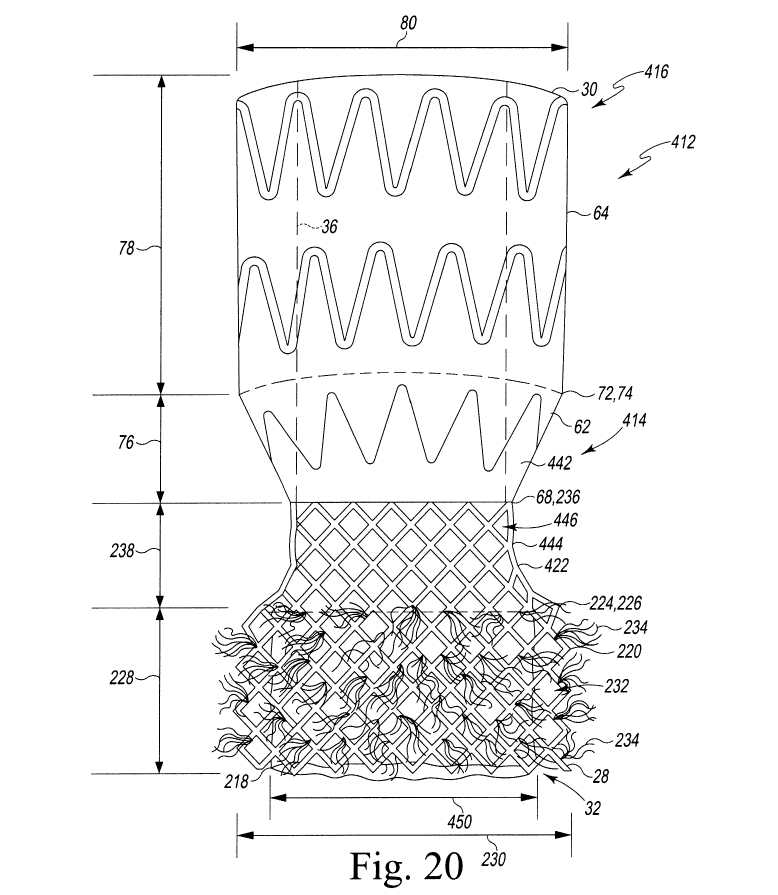
    At a high level, the appeal arose from a stipulated judgment of non-infringement following claim construction. The parties agreed that if the district court’s construction of the term “outer frame” stood, Edwards’ accused transcatheter aortic valve device could not infringe. The Federal Circuit affirmed that construction, holding that the patentee had acted as its own lexicographer by consistently and interchangeably using “outer frame,” “self-expanding frame,” and “self-expanding outer frame” throughout the specification. That drafting choice ultimately proved fatal to the infringement case.

    As Charles Gideon Korrell has often noted, claim construction disputes are frequently less about clever advocacy and more about archaeology: courts dig through the specification looking for patterns, repetitions, and linguistic habits that reveal what the inventor actually described. Aortic Innovations is a textbook example of that dynamic.

    The Technology and the Asserted Claims

    The asserted patents relate to devices used in transcatheter aortic valve replacement (TAVR) procedures. These devices are delivered to the heart in a radially compressed state and then expanded in situ to replace a diseased aortic valve. As the Federal Circuit explained, the art recognizes two principal expansion mechanisms: balloon-expandable frames and self-expanding frames made from shape-memory materials.

    Aortic Innovations owned four related patents sharing a common specification. The claims at issue were directed to a “transcatheter valve” embodiment, not to the separate “endograft device” embodiments also disclosed in the specification. Claim 1 of the ’735 patent, which served as the focal point for claim construction, recited both an “outer frame” and an “inner frame,” with the inner frame engaging the prosthetic valve and the outer frame providing structural and sealing functions.

    The accused product, Edwards’ SAPIEN 3 Ultra valve, uses a single balloon-expandable frame. Thus, infringement hinged on whether the claimed “outer frame” could encompass a balloon-expandable structure, or whether it was limited to a self-expanding one.

    The District Court’s Construction

    Before the district court, Aortic argued that “outer frame” should receive its plain and ordinary meaning—essentially, a frame positioned radially outside another structure. Edwards countered that the specification consistently used “outer frame” to mean a self-expanding frame.

    The district court sided with Edwards, concluding that the patentee had redefined “outer frame” through consistent and interchangeable usage. The court construed “outer frame” to mean “a self-expanding frame,” while rejecting Edwards’ additional attempt to import a “generally hourglass shape” limitation.

    Critically, the court also construed “inner frame” as a “balloon-expandable frame,” a construction that neither party challenged on appeal. With those constructions in place, the parties stipulated to non-infringement.

    Federal Circuit Analysis: Implicit Lexicography

    On appeal, the Federal Circuit reviewed claim construction de novo and affirmed. The opinion walks methodically through familiar claim construction principles, grounding its analysis in Phillips v. AWH, Thorner v. Sony, and a line of cases addressing implicit lexicography.

    The court reiterated that a patentee may redefine claim terms either explicitly or implicitly, but that the standard is “exacting.” Mere disclosure of embodiments is not enough. Instead, implied redefinition must be so clear that a skilled artisan would understand it as equivalent to an express definition.

    Here, the court found that standard satisfied.

    First, the specification repeatedly referred to the same structures using the terms “outer frame,” “self-expanding frame,” and “self-expanding outer frame,” particularly in the discussion of Figures 9 and 20. That consistent interchangeability mirrored earlier cases such as Edwards Lifesciences LLC v. Cook Inc., where repeated synonymous usage was held to be “akin to a definition equating the two.”

    Second, the summary of the invention described a transcatheter valve as including both a balloon-expandable frame and a self-expanding frame, without qualifying that feature as optional. Where the specification wanted to describe optional features, it explicitly did so. The absence of similar qualifying language for the self-expanding frame weighed heavily in the court’s analysis.

    Third, the court emphasized that claim 1 was directed to a dual-frame transcatheter valve. Given that the inner frame was balloon-expandable, the outer frame necessarily had to be the self-expanding one described throughout the specification.

    As Charles Gideon Korrell would put it, once the court accepted that the patent disclosed a binary system—one balloon-expandable frame and one self-expanding frame—the labels essentially snapped into place. There simply was no conceptual room left for a balloon-expandable “outer frame.”

    Judicial Estoppel: Too Late, Too Thin

    Aortic attempted a fallback argument based on judicial estoppel, asserting that Edwards had taken inconsistent positions before the PTAB and the district court. The Federal Circuit rejected this argument on forfeiture grounds, noting that Aortic had not adequately developed it below.

    The opinion underscores an important practical point: merely hinting at estoppel is not enough. Parties must squarely present and support such arguments in the district court if they hope to preserve them for appeal. The court saw no exceptional circumstances warranting deviation from that rule.

    Jurisdictional Cleanup

    The Federal Circuit also dismissed the appeal as to one of the four asserted patents after noting that the PTO had cancelled the relevant claims during the pendency of the appeal. Citing Fresenius USA, Inc. v. Baxter International, the court concluded that there was no longer a live case or controversy as to that patent.

    Drafting Lessons: When Good Writing Goes Bad

    The most enduring significance of Aortic Innovations lies not in its doctrinal novelty, but in its drafting lesson. The opinion reinforces how stylistic choices that improve readability can quietly narrow claim scope.

    The accompanying commentary highlights this tension particularly well. In ordinary expository writing, authors are trained to avoid repetition and vary word choice. In patent specifications, however, that instinct can backfire. Consistent synonym usage can morph into implicit lexicography, especially when the specification never discloses a counterexample. patently-o

    Charles Gideon Korrell believes this case neatly illustrates why patent drafting is less like literature and more like contract engineering. Each descriptive choice carries legal consequences, and courts will treat repeated equivalence as intentional definition rather than casual phrasing.

    The Federal Circuit did not fault Aortic for failing to include an explicit definition section. Instead, it relied on the overall pattern of disclosure. Once every embodiment of an “outer frame” is also described as self-expanding, the court will infer that self-expansion is an essential characteristic of the claimed invention.

    Practical Takeaways

    Several practical lessons emerge from this decision:

    First, if a feature is meant to be optional, say so clearly—and then show it. Disclosing alternative embodiments where the feature is absent can be just as important as including boilerplate “in some embodiments” language.

    Second, be cautious with synonyms in claim-relevant portions of the specification. If two terms are not intended to be coextensive, do not use them interchangeably, even for stylistic variety.

    Third, remember that summary sections matter. Courts often treat the summary as a high-level definition of “the invention,” and unqualified statements there can shape claim scope decisively.

    Finally, litigators should take note of how quickly claim construction can drive a case to summary resolution. Here, once the construction issue was decided, infringement fell away almost immediately.

    As Charles Gideon Korrell has observed in other contexts, many patent disputes are effectively won or lost long before litigation begins—at the drafting stage, where every word quietly sets the boundaries of future enforcement.

    Conclusion

    Aortic Innovations v. Edwards Lifesciences reinforces a familiar but unforgiving principle: precision beats elegance in patent drafting. The Federal Circuit’s willingness to find implicit lexicography based on consistent interchangeable usage should prompt renewed discipline in how specifications are written, reviewed, and prosecuted.

    For practitioners, the case is less about TAVR technology than about linguistic discipline. And for those drafting patents in crowded, high-stakes technical fields, it is yet another reminder that the line between description and definition is thinner than it looks.

    By Charles Gideon Korrell

  • Centripetal Networks v. Palo Alto Networks: When Recusal Fails but Secondary Considerations Revive an IPR

    Centripetal Networks v. Palo Alto Networks: When Recusal Fails but Secondary Considerations Revive an IPR

    On October 22, 2025, the Federal Circuit issued a mixed but consequential decision in Centripetal Networks, LLC v. Palo Alto Networks, Inc., vacating the Patent Trial and Appeal Board’s final written decision and remanding for further proceedings. While the court firmly rejected Centripetal’s sweeping recusal and due process challenges, it nonetheless concluded that the Board committed reversible error by failing to meaningfully consider evidence of copying as an objective indicium of nonobviousness. The decision offers a clear reminder that secondary considerations remain a mandatory part of the obviousness analysis in inter partes review, even where the Board may be skeptical of parallel district court records.

    Background and Procedural Posture

    The case arose from IPR proceedings challenging claims 1, 24, and 25 of U.S. Patent No. 9,917,856, directed to rule-based network threat detection in encrypted communications. Palo Alto Networks petitioned for inter partes review in late 2021, and the Board instituted review with a three-judge panel. Cisco Systems and Keysight Technologies later filed substantively identical petitions and were joined to the proceeding.

    After institution, Centripetal learned that one of the administrative patent judges on the original panel owned between $1,001 and $15,000 in Cisco stock. Although Cisco was not yet a party at institution, Centripetal ultimately moved to recuse the panel and vacate the institution decision. The challenged APJ later withdrew, as did another panel member, and a reconstituted panel denied the motion for vacatur. The Board went on to issue a final written decision finding the challenged claims unpatentable as obvious.

    On appeal, Centripetal raised two broad categories of arguments: first, that the belated recusal tainted the proceedings and violated due process; and second, that the Board’s obviousness analysis was legally deficient.

    Jurisdiction and the Shadow of Section 314(d)

    Before reaching the merits, the Federal Circuit addressed its jurisdiction in light of the Supreme Court’s jurisprudence under 35 U.S.C. § 314(d). The court reaffirmed that while institution decisions themselves are largely unreviewable, challenges grounded in constitutional due process or ethics rules applicable beyond institution fall outside the bar of Section 314(d). The recusal challenge did not turn on the interpretation of IPR institution statutes, but rather on executive-branch ethics regulations and alleged due process violations. As such, the court exercised jurisdiction, consistent with prior cases addressing conflicts of interest in PTAB proceedings.

    Timeliness and the Failure of the Recusal Challenge

    The court first affirmed the Board’s conclusion that Centripetal’s recusal motion was untimely. Drawing on analogous Article III recusal principles, the court emphasized that even absent a formal deadline, parties must raise conflicts promptly once discovered. Here, Centripetal had access to public financial disclosures months before filing its motion and waited until after receiving unfavorable rulings on other issues.

    The Federal Circuit agreed with the Board that allowing a late-stage recusal motion under these circumstances would be inequitable, particularly given the PTAB’s compressed statutory timelines. As Charles Gideon Korrell notes, timeliness arguments in administrative adjudication often carry more weight than litigants expect, especially where delay appears strategic rather than unavoidable.

    Executive Branch Ethics Rules and De Minimis Interests

    On the merits, the Federal Circuit rejected Centripetal’s argument that the APJ’s stock ownership violated executive-branch ethics rules. The court carefully walked through the regulatory framework under 18 U.S.C. § 208 and the Office of Government Ethics’ implementing regulations.

    Critically, 5 C.F.R. § 2640.202 expressly permits participation in matters involving specific parties where an employee’s ownership of publicly traded securities does not exceed $15,000. The court rejected the argument that this provision merely provides a criminal safe harbor, concluding instead that it affirmatively defines when participation is permissible. Because the APJ’s holdings never exceeded the regulatory threshold, no ethics violation occurred.

    The court also dismissed reliance on appearance-of-impropriety regulations addressing personal or business relationships, explaining that those provisions do not apply to an employee’s own financial interests. Charles Gideon Korrell believes this portion of the decision underscores how narrowly courts will construe ethics regulations when Congress and OGE have spoken with specificity.

    Due Process Arguments Rejected

    Centripetal also argued that due process required holding APJs to the same disqualification standards as Article III judges. The Federal Circuit declined to adopt that position, emphasizing that APJs are executive-branch employees subject to a distinct statutory and regulatory regime. While acknowledging the quasi-adjudicatory nature of PTAB proceedings, the court found no constitutional requirement to import the zero-dollar disqualification rule of 28 U.S.C. § 455 into administrative adjudication.

    The court further rejected Centripetal’s argument that recent PTO guidance directing more conservative panel assignments should apply retroactively. The guidance expressly disclaimed retroactive application and was adopted pursuant to the Director’s policy-setting authority. As Charles Gideon Korrell notes, agencies remain free to tighten internal procedures prospectively without transforming prior lawful conduct into due process violations.

    Harmless Error and the Absence of Vacatur

    Even assuming error, the court explained that recusal does not automatically require vacatur. Applying the familiar three-factor test from Liljeberg, the court concluded that any alleged conflict posed minimal risk of injustice to the parties, little risk of injustice in other cases, and no serious threat to public confidence. The challenged APJ recused before final merits adjudication, and the final written decision was issued by a panel including judges who had never sat with him.

    Accordingly, recusal concerns did not justify vacating the Board’s decision.

    The Real Error: Failure to Consider Copying Evidence

    Despite rejecting Centripetal’s procedural challenges, the Federal Circuit ultimately vacated the Board’s final written decision for a different reason. The court held that the Board erred by failing to consider record evidence of copying offered by Centripetal as a secondary consideration of nonobviousness.

    Centripetal had submitted specific evidence from related district court litigation, including testimony that Cisco executives met with Centripetal and reviewed its patented technology, internal Cisco communications discussing Centripetal’s patents, and expert testimony opining that Cisco plausibly copied the claimed invention. While the Board noted that the district court judgment had been vacated, it declined to analyze the evidence, stating that it was not in a position to weigh the full litigation record.

    The Federal Circuit found this approach legally deficient. Secondary considerations cannot be dismissed simply because they arise from parallel litigation or because the Board did not hear live testimony. Where evidence of copying is specifically placed into the IPR record, the Board must evaluate it and assign appropriate weight. Citing Stratoflex and Knoll, the court reiterated that objective indicia are not optional and must be considered in every obviousness determination.

    Charles Gideon Korrell observes that this portion of the decision reinforces a recurring theme in Federal Circuit jurisprudence: the Board may reject secondary considerations, but it cannot ignore them.

    Remand and Practical Implications

    The Federal Circuit vacated the Board’s final written decision and remanded for further proceedings. Notably, the appellees conceded at oral argument that reassignment to a new panel would be appropriate on remand, and the court suggested that the Director consider doing so.

    For practitioners, the decision offers several takeaways. First, recusal challenges must be raised promptly and grounded in the applicable regulatory framework, not generalized notions of fairness. Second, executive-branch ethics rules provide clear safe harbors that courts will enforce as written. Third, and most importantly, objective indicia of nonobviousness remain a powerful check on hindsight-driven obviousness analyses in IPR proceedings.

    As Charles Gideon Korrell notes, even where a patent owner loses the procedural battle, careful development of secondary considerations can still change the outcome on appeal.

    By Charles Gideon Korrell

  • Barrette Outdoor Living, Inc. v. Fortress Iron, LP: Prosecution Disclaimer in a Later Continuation Can Narrow an Entire Patent Family

    Barrette Outdoor Living, Inc. v. Fortress Iron, LP: Prosecution Disclaimer in a Later Continuation Can Narrow an Entire Patent Family

    On October 17, 2025, the Federal Circuit issued a detailed and consequential opinion in Barrette Outdoor Living, Inc. v. Fortress Iron, LP, affirming a judgment of non-infringement while also affirming the district court’s rejection of indefiniteness challenges. The case provides a clear reminder that arguments made during prosecution of a later-filed continuation application can narrow the scope of earlier-issued patents in the same family, even where those earlier patents were already granted and never amended.

    The decision is especially notable for its careful treatment of prosecution disclaimer across time, its distinction between examiner disagreement and applicant acquiescence, and its application of those principles to claim terms that appear, at least facially, to be broader than the disclaimed language. As Charles Gideon Korrell has observed in other contexts, this opinion underscores that prosecution arguments can be as dangerous as claim amendments, particularly in large patent families with overlapping claim language.

    Background and the Asserted Patents

    Barrette owns four related patents directed to fencing and railing assemblies that use sliding, pivoting connectors to attach pickets to rails. The patents share a common specification and trace back to a common parent application. The asserted patents include U.S. Patent Nos. 8,413,332; 8,413,965; 9,551,164; and 9,963,905. The claims generally recite connectors having “bosses,” “projections,” or similar protruding structures that engage holes in the pickets, allowing the pickets to pivot and slide relative to the rails.

    The accused products, Fortress’s Athens Residential fences, use connectors that employ non-integral fasteners. After claim construction, Barrette stipulated that it could not prove infringement under the district court’s construction, while Fortress stipulated that it could not prove indefiniteness. That procedural posture set the stage for a clean appeal on claim construction and indefiniteness.

    Claim Construction and the “Boss” Terms

    The central dispute on appeal concerned the meaning of “boss,” “projection,” and related terms. The district court construed these terms as limited to integral structures, and further concluded that they were fastener-less. Barrette challenged both aspects of that construction.

    The Federal Circuit agreed with Barrette on one point but not the other. First, the court rejected the district court’s conclusion that the specification clearly and unmistakably disclaimed bosses that use fasteners. Relying on Phillips v. AWH Corp., the court reiterated that patents often describe multiple advantages over the prior art and that claims should not automatically be limited to structures that achieve every disclosed advantage. Here, although the specification emphasized fast installation as one benefit of the invention, it also emphasized improved racking ability, which did not inherently require fastener-less connections. The intrinsic record did not support importing a fastener-less limitation into the claims.

    That conclusion, however, did not save Barrette’s infringement case.

    Prosecution Disclaimer and Integral Structures

    The decisive issue was prosecution disclaimer arising from statements made during prosecution of a later continuation application that issued as the ’075 patent. During that prosecution, the examiner rejected claims over the Sherstad reference, which disclosed a pivot pin assembly. In response, Barrette argued that Sherstad failed to disclose a “slip-together connection with the claimed integral boss,” distinguishing Sherstad’s use of a discrete pin member from Barrette’s claimed structure.

    The Federal Circuit held that this argument constituted a clear and unmistakable disclaimer of non-integral bosses. Importantly, the court rejected Barrette’s attempt to characterize the argument as ambiguous or ineffective simply because the examiner ultimately maintained the rejection and Barrette later canceled the claims. The focus of disclaimer analysis, the court emphasized, is what the applicant said, not whether the argument persuaded the examiner or was strictly necessary to secure allowance.

    The court distinguished Ecolab, Inc. v. FMC Corp. and Malvern Panalytical Inc. v. TA Instruments-Waters LLC, where examiner disagreement and applicant acquiescence rendered earlier narrowing arguments ambiguous. Here, the examiner did not disagree with Barrette’s characterization of its own claims. Rather, the examiner disagreed with Barrette’s characterization of the prior art. Nothing in the prosecution history suggested that Barrette’s description of its own invention was mistaken or withdrawn.

    As Charles Gideon Korrell notes, this distinction is critical. Examiner disagreement with claim scope may neutralize a disclaimer, but examiner disagreement with an applicant’s reading of the prior art does not.

    Temporal Reach of Disclaimer Across the Family

    Barrette also argued that statements made during prosecution of the later-filed ’075 patent could not limit the scope of earlier-issued patents such as the ’332 and ’965 patents. The Federal Circuit squarely rejected that argument, citing Teva Pharmaceuticals USA, Inc. v. Sandoz, Inc. for the proposition that statements made during prosecution of related patents may be considered in construing common claim terms, regardless of whether the statements pre- or post-date issuance of the patent at issue.

    This aspect of the opinion reinforces a recurring theme in Federal Circuit jurisprudence: patent families rise and fall together when claim language and specifications are shared. Strategic arguments in one application can echo backward in time.

    Extending the Disclaimer to Related Terms

    Barrette attempted to limit the damage by arguing that even if “boss” was limited to integral structures, other claim terms—such as “projection,” “nub,” and “series of axles”—should retain broader meanings. The court was unpersuaded.

    As to “projection,” the court found forfeiture. Barrette had repeatedly argued before the district court that “boss” and “projection” were commensurate in scope, even characterizing “projection” limitations as “boss” terms in its Markman submissions. Having taken that position below, Barrette could not reverse course on appeal.

    With respect to “nub” and “series of axles,” the court acknowledged that these terms were narrower than “boss,” but concluded that narrowing did not help Barrette. If the broader term was limited to integral structures, then the narrower terms necessarily were as well. Thus, even assuming some error in the district court’s interchangeable-use analysis, the outcome remained the same.

    Indefiniteness: Sliding and “Causes”

    On cross-appeal, Fortress challenged the district court’s rejection of its indefiniteness arguments. Fortress contended that the “sliding” terms were functional and ambiguous, and that the claims failed to specify parameters such as force, friction, or degree of motion.

    The Federal Circuit disagreed. Applying Nautilus, Inc. v. Biosig Instruments, Inc. and Sonix Technology Co. v. Publications International, Ltd., the court emphasized that definiteness requires reasonable certainty, not mathematical precision. The claims and specification provided sufficient guidance by describing how pivoting of the pickets causes the connector to slide along the rail, and by illustrating those interactions in multiple figures.

    Similarly, the court rejected Fortress’s argument that the term “causes” was indefinite because not every act of pivoting necessarily resulted in sliding. The court held that Barrette’s explanation during prosecution merely clarified the causal relationship in context, and that a skilled artisan could ascertain the scope of the term with reasonable certainty.

    Practical Takeaways

    The Federal Circuit’s decision delivers several practical lessons.

    First, prosecution disclaimer remains a potent doctrine, and it applies with full force to arguments, not just amendments. Second, disclaimers can propagate across an entire patent family, even retroactively affecting earlier-issued patents. Third, examiner disagreement only matters if it clearly signals that the applicant’s narrowing characterization was incorrect and accepted as such by the applicant.

    Charles Gideon Korrell believes that this case will encourage applicants to think more carefully about whether an argument is truly worth making in a continuation application. In many cases, the safer course may be to amend claims explicitly or to draft continuation claims that clearly delineate different scopes, rather than relying on argumentative distinctions that may later become shackles.

    In the end, Barrette lost not because its invention lacked merit, but because its own words during prosecution narrowed its claims beyond repair. As patent families continue to grow larger and more complex, this decision serves as a sharp reminder: every prosecution argument is a potential legacy.

    By Charles Gideon Korrell

  • IQE PLC v. Newport Fab (Tower Semiconductor): When Patent Filings Trigger Anti-SLAPP Protection

    IQE PLC v. Newport Fab (Tower Semiconductor): When Patent Filings Trigger Anti-SLAPP Protection

    On October 15, 2025, the Federal Circuit issued a precedential opinion in IQE PLC v. Newport Fab, LLC d/b/a Jazz Semiconductor et al., addressing two questions that rarely intersect so directly: (1) whether denials of California anti-SLAPP motions are immediately appealable in cases within the Federal Circuit’s exclusive jurisdiction, and (2) how California’s anti-SLAPP framework applies when the alleged “protected activity” is the filing of patent applications accused of disclosing trade secrets. The court answered both questions decisively. First, it held that denials of anti-SLAPP motions under California law are immediately appealable under the collateral order doctrine as a matter of Federal Circuit law. Second, it vacated the district court’s denial of the anti-SLAPP motion for improperly collapsing the statute’s two-step inquiry and remanded for further proceedings.

    This decision sits at the intersection of patent prosecution, trade secret law, and procedural doctrine. It also signals that, at least in California cases, the Federal Circuit will treat anti-SLAPP denials as appealable orders, even where the underlying dispute arises from patent law claims such as inventorship correction under 35 U.S.C. § 256.


    Background: From NDA to Patent Filings

    IQE PLC develops wafer products used in semiconductor manufacturing. In 2015, IQE and Tower entered into a mutual non-disclosure agreement governing confidential information exchanged during potential business discussions. Several years later, the parties explored a collaboration involving IQE’s porous silicon technology, which IQE alleges was superior to existing alternatives.

    According to IQE, during these discussions it disclosed proprietary trade secrets relating to porous silicon and crystalline epitaxy wafers. The collaboration ultimately failed. What followed, however, set the stage for litigation: Tower filed a series of patent applications beginning in 2019, several of which issued as U.S. patents. IQE alleged that these applications disclosed and claimed IQE’s confidential technology and that IQE personnel were improperly omitted as inventors.

    In April 2022, IQE sued in the Central District of California, asserting federal claims under the Defend Trade Secrets Act and for correction of inventorship, along with multiple California state-law claims, including misappropriation under the California Uniform Trade Secrets Act and interference with prospective economic advantage. Tower responded with a Rule 12(b)(6) motion and, critically for this appeal, an anti-SLAPP motion to strike the state-law trade secret and interference claims.

    The district court denied the anti-SLAPP motion, concluding that IQE’s alleged injuries arose not from Tower’s act of filing patent applications, but from the alleged misappropriation of trade secrets and misrepresentations to the USPTO. Tower appealed.


    Jurisdiction First: Anti-SLAPP Denials as Collateral Orders

    Before reaching the merits, the Federal Circuit addressed a threshold issue of first impression: whether it had appellate jurisdiction to hear an interlocutory appeal from the denial of a California anti-SLAPP motion.

    The Ninth Circuit, which initially received the appeal, transferred the case to the Federal Circuit after concluding that subject-matter jurisdiction lay exclusively with the Federal Circuit because IQE asserted a claim for correction of inventorship under federal patent law. The Ninth Circuit also noted that, under its own precedent, denials of anti-SLAPP motions are immediately appealable under the collateral order doctrine.

    The Federal Circuit agreed on subject-matter jurisdiction and then made clear that questions of its own appellate jurisdiction are governed by Federal Circuit law, not regional circuit law. Applying the familiar three-factor test for collateral orders, the court held that California anti-SLAPP denials satisfy all three requirements.

    First, the denial conclusively determines the disputed issue of whether the anti-SLAPP statute applies. Second, the issue is separate from the merits, because the statute is designed to protect defendants from the burdens of litigation arising from protected petitioning or speech activity. Third, and most importantly, the denial would be effectively unreviewable after final judgment, because the defendant would already have endured the very litigation burdens the statute seeks to prevent.

    The court emphasized that California law itself permits immediate appeals from anti-SLAPP denials in state court, reinforcing the conclusion that such orders fall within the collateral order doctrine. Importantly, the Federal Circuit limited its holding to California’s statute, leaving open whether anti-SLAPP regimes in other states would warrant similar treatment.

    For practitioners, this jurisdictional holding alone is significant. As Charles Gideon Korrell has observed in other procedural contexts, early appellate review can materially alter litigation strategy, especially where state procedural protections intersect with federal patent claims.


    The Merits: Step One Means Step One

    Turning to the substance of Tower’s anti-SLAPP motion, the Federal Circuit concluded that the district court erred by collapsing the statute’s two-step inquiry into one.

    Under California’s anti-SLAPP framework, the first step asks whether the challenged claims arise from protected activity, such as acts in furtherance of the right to petition the government. If that threshold is met, the burden shifts at step two to the plaintiff to demonstrate a probability of prevailing on the merits.

    Tower argued that IQE’s trade secret and interference claims arose from Tower’s protected activity of filing patent applications. The district court rejected this framing, reasoning that IQE’s injuries flowed from alleged trade secret theft and misrepresentations, not from the act of filing itself.

    The Federal Circuit disagreed. Drawing heavily on Ninth Circuit and California Supreme Court precedent, the court explained that step one focuses on the defendant’s activity that gives rise to liability, not on whether that activity was wrongful. Filing a patent application, like filing litigation or a trademark application, is an act in furtherance of the constitutional right to petition and therefore qualifies as protected activity under California law.

    The court found the Ninth Circuit’s decision in Mindys Cosmetics, Inc. v. Dakar particularly instructive. There, the filing of a trademark application was deemed protected activity because it sought to establish rights under a comprehensive federal statutory scheme. The same logic applies to patent filings.

    Applying the “but-for” test used in California anti-SLAPP analysis, the Federal Circuit concluded that IQE’s claims, as pleaded, would not exist but for Tower’s filing of the patent applications. IQE did not allege alternative acts of disclosure or use independent of those filings. Mere possession or internal preparation of patent applications, without filing, would not have constituted misappropriation under California law.

    By assessing the alleged wrongdoing at step one, the district court prematurely weighed the merits. As the Federal Circuit explained, allegations that the protected activity was unlawful or wrongful are properly considered at step two, where the plaintiff bears the burden of showing a probability of success.

    Charles Gideon Korrell notes that this distinction is not academic. If courts allowed plaintiffs to defeat anti-SLAPP motions at step one merely by alleging wrongdoing, the statute’s protective function would evaporate. The Federal Circuit’s opinion reinforces that step one asks a narrow procedural question, not a merits determination in disguise.


    What the Court Did Not Decide

    Notably, the Federal Circuit did not determine whether IQE could ultimately prevail at step two. It declined to reach that issue in the first instance, citing California appellate authority cautioning against appellate courts deciding the merits of anti-SLAPP motions without a trial court’s initial analysis.

    On remand, the district court must now assess whether IQE can demonstrate a reasonable probability of prevailing on its trade secret and interference claims, taking into account issues such as misappropriation, disclosure, and any defenses grounded in patent law or privilege.


    Implications for Patent and Trade Secret Litigation

    This decision carries several practical implications.

    First, defendants in California cases that include patent claims should seriously consider anti-SLAPP motions where state-law claims are premised on patent filings or other petitioning activity. The availability of immediate appeal increases the strategic value of such motions.

    Second, plaintiffs should plead carefully. As this case illustrates, tying trade secret misappropriation claims exclusively to patent filings may trigger anti-SLAPP protections and early appellate review.

    Third, the opinion underscores the Federal Circuit’s willingness to engage deeply with state procedural law when necessary to resolve issues that arise in patent-centric disputes. Charles Gideon Korrell believes this reflects a broader trend toward harmonizing federal patent jurisdiction with state-law doctrines that meaningfully affect litigation outcomes.

    Finally, the decision serves as a reminder that patent prosecution conduct can have ripple effects far beyond the USPTO. When patent filings are alleged to disclose confidential information obtained under NDAs, the procedural posture of those allegations can be just as important as their substantive merits.


    Conclusion

    In IQE PLC v. Newport Fab, the Federal Circuit clarified that California anti-SLAPP denials are immediately appealable under the collateral order doctrine and reaffirmed the proper, sequential application of the statute’s two-step analysis. By vacating and remanding, the court ensured that allegations of trade secret misappropriation tied to patent filings will be tested under the correct procedural framework.

    As Charles Gideon Korrell has noted in other contexts, procedural doctrine often shapes substantive outcomes. This case is a textbook example. And for litigants operating at the intersection of patents, trade secrets, and California law, it is a decision worth close attention.

    By Charles Gideon Korrell

  • Inland Diamond Prods v. Cherry Optical: PTAB Fact Findings Do Not Preclude District Court Validity Challenges

    Inland Diamond Prods v. Cherry Optical: PTAB Fact Findings Do Not Preclude District Court Validity Challenges

    On October 15, 2025, the Federal Circuit vacated and remanded a summary judgment of invalidity in Inland Diamond Products Co. v. Cherry Optical Inc., No. 24-1106, holding that the district court improperly applied issue preclusion based on prior PTAB inter partes review decisions. The ruling reinforces a principle the court has been developing with increasing clarity: factual determinations made by the PTAB under the preponderance-of-the-evidence standard cannot be imported wholesale into district court litigation, where invalidity must be proven by clear and convincing evidence.

    Background and Procedural History

    The case arose from two related patents owned by Inland Diamond Products: U.S. Patent No. 8,636,360 and U.S. Patent No. 9,405,130. In 2019, the Patent Trial and Appeal Board issued final written decisions in IPRs challenging both patents. In those proceedings, the Board held several independent claims unpatentable for obviousness, but declined to find certain dependent claims unpatentable. Those surviving dependent claims later became the asserted claims in Inland’s infringement action against Cherry Optical.

    Importantly, Cherry was not the petitioner in the IPRs. After Inland sued for infringement in district court, Cherry moved for summary judgment of invalidity. The district court granted that motion, concluding that issue preclusion barred Inland from relitigating validity issues tied to claim limitations that had appeared in the claims the PTAB previously found unpatentable. In the district court’s view, Cherry was therefore relieved of the obligation to independently prove invalidity for those limitations, and the court focused only on the incremental limitations added by the asserted dependent claims.

    That approach proved fatal on appeal.

    The Federal Circuit’s Framing of the Issue

    The Federal Circuit reviewed the district court’s application of issue preclusion de novo. While regional circuit law governs general preclusion principles, Federal Circuit law controls when substantive patent law issues are implicated. Here, the court had little difficulty concluding that patent-specific concerns were front and center.

    Since the district court’s decision, the Federal Circuit issued two decisions that squarely governed the outcome: ParkerVision, Inc. v. Qualcomm Inc. and Kroy IP Holdings, LLC v. Groupon, Inc. The panel explained that these cases compelled reversal.

    ParkerVision and the Burden-of-Proof Divide

    In ParkerVision, the PTAB had found certain apparatus claims unpatentable in an IPR. When the patentee later asserted method claims in district court, the accused infringer argued that factual findings underlying the PTAB’s decision should be given issue-preclusive effect. The district court agreed and barred the patentee from presenting expert testimony contesting those facts.

    The Federal Circuit reversed. Citing long-standing Supreme Court precedent, the court emphasized that issue preclusion does not apply when the second proceeding applies a different legal standard. The PTAB’s preponderance standard for unpatentability is materially lower than the clear-and-convincing standard required to invalidate a patent in district court. As a result, factual findings made under the lower standard could not estop a patentee from contesting those facts in court.

    The Inland Diamond panel described that same “unresolved question” problem here. Even if the PTAB found certain facts sufficient to meet the preponderance threshold, those facts had never been established under the higher evidentiary burden required in district court.

    Kroy and “Immaterially Different” Claims

    Kroy IP Holdings extended this logic further. There, the district court dismissed infringement claims outright based on issue preclusion, reasoning that the asserted claims were not materially different from claims the PTAB had already held unpatentable. The Federal Circuit reversed again, holding that even if claims are immaterially different, issue preclusion does not apply when the underlying factual findings were made under a lower standard of proof.

    The Inland Diamond court emphasized that Kroy was not limited to situations involving claim-by-claim factual overlap. Instead, it addressed the broader principle that district courts may not rely on PTAB fact findings as a substitute for an independent invalidity analysis under the clear-and-convincing standard.

    Why the District Court’s Approach Failed

    Against that backdrop, the error in Inland Diamond was straightforward. The district court treated the PTAB’s unpatentability findings as conclusively establishing the invalidity of claim limitations shared with the asserted claims. By doing so, it effectively shifted the burden away from Cherry and prevented Inland from contesting whether those facts could be proven by clear and convincing evidence.

    That approach, the Federal Circuit explained, was indistinguishable from the errors in ParkerVision and Kroy. Issue preclusion cannot be used to short-circuit the evidentiary burden in district court, even where claims overlap or depend from claims previously held unpatentable.

    Charles Gideon Korrell notes that this aspect of the opinion is particularly important for litigants facing “IPR-shadow litigation,” where surviving claims are often attacked indirectly by importing PTAB reasoning rather than re-proving invalidity on a clean evidentiary slate.

    Claim Construction Adds Another Barrier to Preclusion

    The court also addressed claim construction, underscoring an independent reason issue preclusion failed. Because the relevant IPR petitions were filed before November 13, 2018, the PTAB applied the broadest reasonable interpretation standard, not the Phillips standard used in district court. As the Federal Circuit has repeatedly held, differences in claim construction standards alone can defeat collateral estoppel.

    Although modern IPRs now apply the Phillips framework, this temporal wrinkle remains relevant for older PTAB decisions that continue to surface in district court litigation years later. Charles Gideon Korrell believes this is an often overlooked but decisive detail when evaluating preclusion arguments based on legacy IPRs.

    Survival of IPR Does Not Change the Analysis

    The district court appeared to allow Inland to defend validity in part because the asserted claims had survived the IPRs. The Federal Circuit rejected that reasoning as well. Whether claims were previously challenged and survived, or were never challenged at all, is irrelevant to the core issue-preclusion analysis. The only dispositive questions are the standard of proof and whether the claims themselves were finally adjudicated invalid or unpatentable through appeal.

    The court distinguished XY, LLC v. Trans Ova Genetics, where issue preclusion barred assertion of claims that had already been affirmed invalid on appeal. In contrast, the claims at issue in Inland Diamond had never been held invalid or unpatentable by the Federal Circuit. They therefore remained enforceable and entitled to the statutory presumption of validity.

    What Happens on Remand

    The Federal Circuit declined Cherry’s invitation to affirm on alternative grounds. Instead, it remanded with clear instructions. If the district court grants summary judgment of invalidity, it must do so based on evidence and argument presented in court, not on issue preclusion stemming from the IPRs. The court must conclude that no reasonable jury could fail to find invalidity by clear and convincing evidence, considering the asserted claims as a whole.

    Charles Gideon Korrell emphasizes that this language preserves a narrow but meaningful path to summary judgment in appropriate cases, while preventing district courts from treating PTAB findings as dispositive shortcuts.

    Practical Takeaways

    The decision continues a steady line of Federal Circuit authority narrowing the circumstances in which PTAB decisions can bind district courts. Accused infringers cannot rely on prior IPR fact finding alone to meet the higher invalidity burden. Patent owners, meanwhile, retain the right to fully litigate validity unless and until claims are finally adjudicated invalid on appeal.

    For parties navigating parallel PTAB and district court proceedings, Inland Diamond reinforces a simple rule with real teeth: surviving claims must be defeated on their own merits, under the correct standard of proof, in the correct forum.

    By Charles Gideon Korrell

  • Brita LP v. ITC: Functional Genus Claims Collapse Without Carbon-Block Disclosure

    Brita LP v. ITC: Functional Genus Claims Collapse Without Carbon-Block Disclosure

    The Federal Circuit’s October 15, 2025 decision in Brita LP v. International Trade Commission delivers a clear warning to patentees who rely on broad, functionally defined genus claims without commensurate disclosure. Affirming the ITC, the court held that claims covering any gravity-fed water filter media achieving a particular performance metric failed both the written description and enablement requirements. The opinion is notable not because it announces new doctrine, but because it rigorously applies familiar principles to a highly engineered, data-driven specification. The result underscores how unforgiving Section 112 can be when a patent claims far more than it actually teaches.

    Background: FRAP as the Claimed Innovation

    The patent at issue, U.S. Patent No. 8,167,141, is directed to gravity-fed water filters designed to remove lead. The asserted claims recited filter media “including at least activated carbon and a lead scavenger” that achieve a specified Filter Rate and Performance (FRAP) factor. FRAP was defined by a multi-variable equation incorporating filter volume, flow rate, effluent lead concentration at end of life, and claimed filter lifetime.

    On its face, claim 1 was broad. It was not limited to a particular filter construction. Instead, it purported to cover any filter media—carbon blocks, mixed media, membranes, nonwovens, and others—so long as the functional FRAP requirement was satisfied. That breadth became Brita’s undoing.

    The ITC investigation arose under Section 337, with Brita alleging that various imported water filters infringed the ’141 patent. An ALJ initially found a violation, concluding that the claims were adequately described and enabled. On review, however, the Commission reversed, holding the claims invalid for lack of written description, lack of enablement, and indefiniteness. On appeal, the Federal Circuit affirmed on written description and enablement grounds, declining to reach indefiniteness.

    Written Description: Possession Limited to Carbon Blocks

    The written description analysis centered on a simple but decisive fact: every working example in the patent that met the claimed FRAP threshold used carbon-block filter media. The specification repeatedly emphasized that carbon blocks were “unique” in their ability to achieve the required FRAP factor. Mixed media filters were tested and failed. Other filter types were mentioned, but never shown to work.

    The court framed the inquiry in classic Ariad terms: did the specification reasonably convey to a skilled artisan that the inventors possessed the full scope of what they claimed? Here, the answer was no. While the claims covered any filter media achieving FRAP ≤ 350, the disclosure showed possession of only one species—carbon-block filters.

    Crucially, the patent did more than remain silent about non-carbon-block embodiments. It affirmatively taught away from them. The specification catalogued the drawbacks of granular and mixed media filters, including hydrophobicity, poor particulate lead removal, and unfavorable flow characteristics. The patent’s own testing demonstrated that no mixed media filters met the FRAP threshold. The inventors themselves testified that they “changed technology from granular media to a carbon block” to solve the particulate lead problem.

    As Charles Gideon Korrell notes, courts are particularly skeptical of genus claims defined by performance metrics when the specification shows success in only one corner of the claimed space. Functional claiming is not prohibited, but it demands disclosure of either representative species across the genus or common structural features tying the genus together. The ’141 patent offered neither.

    Brita argued that the original claims themselves, combined with generic statements that the FRAP criteria were “independent of the exact embodiment,” supplied sufficient written description. The court rejected that argument as a matter of law. Original claims do not bootstrap themselves into adequate disclosure, and aspirational language does not establish possession. The repeated emphasis on carbon blocks as “unique” cut directly against Brita’s theory.

    Enablement: Undue Experimentation Beyond Carbon Blocks

    Enablement rose or fell with the same factual core, but the court addressed it separately, applying the familiar Wands factors. The key question was whether a skilled artisan could make and use the full scope of the claimed invention without undue experimentation.

    The Commission found, and the Federal Circuit agreed, that achieving FRAP ≤ 350 across different filter media types would require extensive trial and error. The FRAP equation involved interrelated variables, and expert testimony confirmed that changing one parameter unpredictably affected others. Even Brita’s own witnesses acknowledged that the variables were interdependent and that the ultimate FRAP value could not be reliably predicted.

    The specification provided detailed guidance for carbon-block filters, including binder formulations, porosity, geometry, and multi-core structures. But it offered no roadmap for adapting other media types to meet the FRAP requirement. To the contrary, it highlighted why those media types struggled.

    Brita attempted to characterize water filtration as a “predictable art,” arguing that skilled artisans already knew how to tune flow rate, lifetime, and contaminant removal. The court was unpersuaded. The relevant art was not gravity-fed filters in the abstract, but gravity-fed filters achieving a newly defined FRAP metric across all media types. In that context, unpredictability reigned.

    As Charles Gideon Korrell observes, the decision reflects a broader post-Amgen trend: when claims are defined by results rather than structure, courts will demand concrete teaching that enables artisans to reach those results across the claim’s full breadth. Reliance on ordinary skill cannot substitute for disclosure of the inventive contribution itself.

    The Functional Genus Trap

    Taken together, the written description and enablement holdings illustrate the perils of functional genus claiming in mechanical and materials technologies. The ’141 patent effectively claimed a result—meeting a FRAP threshold—without commensurate disclosure of how to achieve that result outside a single implementation.

    The court’s reasoning echoes prior cases cautioning against claiming “any and all” means of achieving a function when the patentee has invented only one. Here, the FRAP factor became both the hook for broad claims and the lens through which the insufficiency of disclosure was exposed.

    The opinion also underscores that data-rich specifications can cut both ways. Brita’s extensive testing did not save the claims because the data demonstrated failure outside carbon blocks. By documenting unsuccessful experiments with mixed media filters, the patent created a record that undercut both possession and enablement of a broader genus.

    Charles Gideon Korrell believes this case will be cited frequently in disputes over performance-based claims, particularly in fields where tradeoffs are inherent and optimization is non-linear. It provides a clear example of how courts assess whether a patentee has truly earned the right to claim an entire class rather than a single solution.

    Practical Takeaways

    Several practical lessons emerge from the decision:

    First, when drafting claims defined by performance metrics, patentees must ensure the specification supports that breadth. If only one embodiment works, claims should be limited accordingly or supplemented with additional disclosure.

    Second, generic statements that an invention is “applicable” to other embodiments will not overcome detailed disclosure showing those embodiments fail.

    Third, testing data should be curated carefully. Demonstrating failures without offering solutions can strengthen an adversary’s Section 112 arguments.

    Finally, in unpredictable arts, courts will be reluctant to assume that skilled artisans can bridge large gaps without guidance. As Charles Gideon Korrell notes, the Federal Circuit continues to emphasize that the quid pro quo of patent law requires teaching the full scope of what is claimed, not merely pointing toward a desired destination.

    Conclusion

    Brita LP v. ITC reinforces a familiar but increasingly consequential principle: broad functional claims demand equally broad technical disclosure. Where a patent teaches only carbon-block filters and characterizes them as unique, it cannot monopolize all filter media that might someday achieve the same performance metric. For practitioners, the case is a sharp reminder that Section 112 remains a powerful check on overreaching claim scope, especially in technologies governed by complex tradeoffs and empirical performance.

    By Charles Gideon Korrell

  • Causam v. ecobee Technologies: Standing, Due Process, and Why the Merits Still Matter

    Causam v. ecobee Technologies: Standing, Due Process, and Why the Merits Still Matter

    On the same day the Federal Circuit dismissed Causam’s ITC appeal as moot, it issued the companion decision that explains why the appeal became moot in the first place. In Causam Enterprises, Inc. v. ecobee Technologies ULC, No. 24-1958 (Fed. Cir. Oct. 15, 2025), the court affirmed the Patent Trial and Appeal Board’s final written decision holding nearly all claims of U.S. Patent No. 10,394,268 unpatentable for obviousness.

    As discussed in the prior post analyzing Causam Enterprises, Inc. v. International Trade Commission, this PTAB affirmance ultimately deprived Causam of any legally cognizable interest in reversing the Commission’s noninfringement determination. But the ecobee decision is not merely background noise to the ITC appeal. It stands on its own as a useful opinion on Article III standing in PTAB appeals, the limits of ownership-based due process arguments in inter partes review, and straightforward claim construction grounded firmly in the specification.

    Procedural Posture and Relationship to the ITC Case

    The ’268 patent concerns demand-response technology for managing electrical power consumption. ecobee petitioned for inter partes review of all claims except claim 12, asserting obviousness under 35 U.S.C. § 103. The Board instituted review and ultimately held all challenged claims unpatentable.

    While the IPR was pending, Causam pursued a Section 337 action at the ITC asserting claim 1 of the same patent. As detailed in the prior post, the Federal Circuit held in the ITC appeal that Causam did, in fact, own the ’268 patent, but dismissed the appeal as moot because the claims had been invalidated in the PTAB proceeding affirmed here.

    That sequencing matters. The ecobee decision is the merits determination that mooted the ITC appeal. But it also independently addresses standing and ownership in a PTAB context, reaching conclusions that dovetail with, but are doctrinally distinct from, the ITC opinion.

    Article III Standing in PTAB Appeals

    The court first addressed whether Causam had constitutional standing to appeal the Board’s decision. Unlike district court litigation, PTAB proceedings do not require Article III standing. But standing is mandatory once the case reaches the Federal Circuit.

    The panel reiterated the now-familiar framework drawn from Phigenix, Shenyang Yuanda, and the D.C. Circuit’s decision in Sierra Club v. EPA: an appellant from an agency adjudication bears a burden equivalent to that of a summary-judgment movant. The appellant must either point to record evidence sufficient to establish standing or submit additional evidence on appeal if the agency record is silent.

    Here, standing turned solely on ownership of the ’268 patent. Unlike in the ITC appeal, there was no adverse agency finding on ownership, no competing evidence in the record, and no party before the Board or on appeal actually disputing that Causam owned the patent. Causam was the assignee of record, unequivocally identified itself as the owner, and no contrary evidence was presented.

    On that record, the court had little difficulty concluding that Causam satisfied Article III standing. Notably, the court contrasted this evidentiary showing with the more demanding inquiry required in the ITC appeal, where ownership had been litigated and resolved as a legal question of contract interpretation. As Charles Gideon Korrell notes, taken together, the two decisions illustrate that standing analysis is context-sensitive: where ownership is genuinely disputed and adjudicated, it must be resolved; where it is uncontested and supported by record evidence, the court will not manufacture a controversy.

    Rejection of the Due Process Ownership Argument

    Causam’s primary procedural argument on appeal was more ambitious. It contended that the Board committed a constitutional error by failing to determine the “true” owner of the ’268 patent, thereby depriving that unidentified owner of notice and an opportunity to be heard.

    The Federal Circuit rejected this argument on multiple grounds.

    First, the court emphasized the basic principle that litigants generally lack standing to assert the constitutional rights of third parties. Any due process right to notice would belong to the hypothetical true owner, not to Causam. And Causam’s interests were not aligned with that hypothetical party; Causam affirmatively claimed that it, and no one else, owned the patent.

    Second, the court observed that Causam never actually asked the Board to decide ownership. Instead, Causam argued that ecobee should be deemed to have conceded that someone else owned the patent, which would supposedly defeat the statutory service requirements under 35 U.S.C. § 312. That position did not require, or even invite, a Board determination of ownership.

    Finally, the court implicitly signaled skepticism toward attempts to dress up statutory or procedural objections as constitutional claims in order to evade the limits on appellate review of institution decisions under 35 U.S.C. § 314(d). Read alongside recent cases addressing unreviewability, the message is clear: ownership disputes do not automatically transform IPR institution or service issues into due process violations.

    Claim Construction of “Measurement and Verification Data”

    On the merits, Causam challenged the Board’s construction of a claim limitation common to all challenged claims: “generating measurement and verification data corresponding to the reduction in consumed power.”

    Causam argued that this language required generation of measurement and verification data during the demand-response event itself. The Board disagreed, construing the limitation to encompass both actual measurements and estimates of savings based on known device power usage, including data derived before or after a demand-response event.

    The Federal Circuit affirmed. The court began with the claim language, noting that nothing in the text imposes a temporal restriction on when the data must be generated. The phrase “corresponding to the reduction in consumed power” does not, by itself, require contemporaneous measurement.

    The specification reinforced that conclusion. The court pointed to embodiments in which the system relies on pre-event measurements of device power consumption and calculates savings based on those known values when loads are shed. Other embodiments describe post-event calculations using actual or average power consumption that would have occurred during the event. Limiting the claims to real-time measurement during the event would exclude disclosed embodiments, a result disfavored under established claim-construction principles.

    Because Causam’s obviousness arguments depended entirely on its proposed narrow construction, rejection of that construction doomed the appeal. The Board’s obviousness determination therefore stood without the need for extended analysis.

    Why This Decision Merits Separate Attention

    As explained in the prior post, the ITC appeal ultimately turned on standing and mootness. This decision, by contrast, does the substantive work of affirming claim invalidity. It also clarifies several recurring issues in PTAB practice: what is required to establish standing on appeal, who may raise due process objections based on ownership, and how the court approaches claim construction where the specification is explicit about alternative ways of generating data.

    Charles Gideon Korrell believes the pairing of these two opinions is instructive. Together, they show how parallel PTAB and ITC proceedings can intersect in unpredictable ways, and how a clean affirmance on the merits can erase years of litigation elsewhere. The ecobee decision is not dramatic, but it is disciplined, careful, and likely to be cited for its standing analysis and its rejection of ownership-based procedural maneuvering in IPRs.

    By Charles Gideon Korrell

  • Causam v. ITC: Standing Secured, But the Case Still Slips Away

    Causam v. ITC: Standing Secured, But the Case Still Slips Away

    On October 15, 2025, the Federal Circuit issued a decision in Causam Enterprises, Inc. v. International Trade Commission, No. 23-1769, that delivers a curious combination of vindication and defeat. On the one hand, the court held that Causam did, in fact, own the asserted patent and therefore satisfied Article III standing to pursue its appeal. On the other hand, the court declined to reach the merits of infringement because a companion PTAB appeal decided the same day rendered the case moot. The result is a dismissal that nonetheless contains a substantial and precedential analysis of patent ownership, assignment language, and standing in appeals from the ITC.

    This opinion will be of interest to anyone litigating patent cases that involve long chains of continuation, divisional, and continuation-in-part applications, especially where assignments use imprecise language. It also provides an important reminder that Article III standing is not a box that can be checked by assertion alone once a case reaches the merits stage. Charles Gideon Korrell believes this decision is best understood as a warning shot: even when the underlying dispute evaporates, the Federal Circuit will not hesitate to decide threshold jurisdictional questions when they matter to its authority to hear a case.

    Background of the Dispute

    Causam owns a portfolio of patents directed to “demand response” technology, which allows electrical utilities to reduce power demand during peak conditions. In 2021, Causam filed a complaint at the ITC under Section 337 of the Tariff Act, alleging that certain smart thermostats imported by Resideo and others infringed claim 1 of U.S. Patent No. 10,394,268. Causam sought an exclusion order barring importation of the accused products.

    The administrative law judge issued an Initial Determination concluding that Causam failed on two independent grounds. First, the ALJ held that Causam did not own the ’268 patent because earlier assignments had transferred ownership of the relevant patent family to a predecessor entity. Second, the ALJ found no infringement by the accused thermostats. The Commission, on review, adopted only the noninfringement finding and expressly declined to take a position on ownership.

    Causam appealed to the Federal Circuit, challenging only the noninfringement determination as to claim 1 and as to Resideo’s products. While that appeal was pending, the ’268 patent was challenged in inter partes review. The PTAB ultimately held all challenged claims unpatentable, including claim 1. That PTAB decision was appealed separately, and the Federal Circuit affirmed it in a companion opinion issued the same day.

    Against that procedural backdrop, the Federal Circuit faced two questions in the ITC appeal: whether Causam had Article III standing to appeal, and whether any live controversy remained in light of the PTAB decision.

    Standing as a Threshold Requirement

    The court began with standing. Although the Commission had declined to decide ownership, Causam argued that ownership was a threshold issue because, without it, Causam would lack the injury in fact required for Article III standing. The Federal Circuit agreed.

    Relying on Lujan v. Defenders of Wildlife and its own precedent, the court emphasized that standing requirements vary by stage of litigation. At the pleading stage, general allegations may suffice. But once a case reaches a stage supported by a full evidentiary record, a party invoking federal jurisdiction must demonstrate standing with evidence, not merely assertion.

    The Commission and intervenors argued that Causam’s assertion of ownership should be enough, citing cases such as Lone Star Silicon Innovations and Schwendimann. The court rejected that argument, explaining that those cases arose at the motion-to-dismiss stage. Here, by contrast, the appeal followed a full trial before the ALJ, and the ownership issue turned on contract interpretation rather than disputed facts.

    The court also rejected the argument that statutory authorization to appeal under Section 337 automatically conferred standing. Citing TransUnion LLC v. Ramirez and its own decision in Consumer Watchdog v. WARF, the court reiterated that Congress cannot legislate injury into existence. A statutory right to appeal does not displace the constitutional requirement of injury in fact.

    Charles Gideon Korrell notes that this portion of the opinion reinforces a trend in Federal Circuit jurisprudence. Parties cannot rely on procedural posture or statutory hooks to bypass standing once the case moves beyond the pleadings. Ownership must be proven, not presumed.

    The Ownership Question and Assignment Language

    Turning to the merits of ownership, the court framed the issue narrowly. Ownership of the ’268 patent depended on whether a 2007 assignment executed by the inventor, Joseph Forbes, transferred rights not only to the original application but also to later continuation-in-part applications.

    The 2007 assignment conveyed the “invention” of the ’909 application and “all divisions, reissues, continuations and extensions thereof.” Critically, it did not mention continuations-in-part. Years later, Forbes assigned a continuation-in-part application (the ’761 application) and its descendants, including the ’268 patent, to Causam.

    The intervenors argued that “continuations” should be read broadly to include continuations-in-part, or alternatively that assignment of the “invention” necessarily encompassed later continuations-in-part. The Federal Circuit rejected both arguments.

    Applying basic principles of contract interpretation, the court emphasized that it cannot insert words the parties did not use. Continuations and continuations-in-part are distinct legal concepts, a distinction reflected throughout the Manual of Patent Examining Procedure and patent law generally. A continuation cannot add new matter; a continuation-in-part can. That difference matters, especially to inventors who may wish to assign rights narrowly while retaining the ability to develop new subject matter.

    The court distinguished Regents of the University of New Mexico v. Knight, where broader language across multiple agreements supported assignment of continuation-in-part applications. Here, there was no comparable set of agreements or broad language justifying such an interpretation.

    Accordingly, the court held that the 2007 assignment did not transfer rights in the continuation-in-part application. Forbes therefore retained ownership of the ’761 application and validly assigned it, and its descendants, to Causam in 2014. Causam owned the ’268 patent and satisfied Article III standing.

    Charles Gideon Korrell believes this portion of the opinion will be heavily cited in future ownership disputes. The court’s insistence on respecting the precise language of assignment agreements underscores the risks of boilerplate drafting and the importance of explicitly addressing continuations-in-part when allocating rights.

    Mootness and the Limits of Appellate Review

    Having resolved standing in Causam’s favor, the court turned to mootness. This is where the case ultimately ended.

    Section 337 authorizes exclusion orders only for infringement of a “valid and enforceable” patent. In the companion appeal, the Federal Circuit affirmed the PTAB’s determination that claim 1 of the ’268 patent was unpatentable. Because claim 1 was the only claim at issue in the ITC appeal, Causam no longer had any right to relief.

    The court rejected arguments that co-pending litigation or residual interests could keep the case alive. Citing Texas Instruments v. ITC and Hyosung TNS v. ITC, the court explained that once the Commission lacks authority to issue an exclusion order, the appeal becomes moot. Causam conceded at oral argument that affirmance of the PTAB decision would moot the ITC appeal.

    Accordingly, the court dismissed the appeal as moot without reaching the noninfringement determination.

    Practical Takeaways

    This decision offers several lessons.

    First, standing matters at every stage, and appellate courts will scrutinize it even when the agency below did not. Parties appealing from the ITC should be prepared to prove ownership with evidence, particularly when assignments are contested.

    Second, assignment language matters enormously. The omission of “continuations-in-part” was decisive. Those drafting or reviewing patent assignments should treat that omission as intentional unless the agreement clearly indicates otherwise. Charles Gideon Korrell notes that this case is a reminder that ambiguity tends to be resolved by what the contract actually says, not what one party later wishes it had said.

    Third, parallel PTAB proceedings can overtake ITC litigation entirely. Even a successful standing argument cannot preserve an appeal if the asserted claims are later held unpatentable. Strategic coordination between ITC actions and PTAB defenses remains critical.

    In the end, Causam v. ITC is a case where the Federal Circuit answered an important legal question even as it closed the courthouse door. Ownership was clarified, standing was secured, but the victory came too late to matter. For litigants, that may be cold comfort, but for practitioners, the guidance is valuable and likely to endure.

    By Charles Gideon Korrell

  • US Inventor, Inc. v. USPTO: Standing Doctrine Closes the Courthouse Door on AIA Rulemaking Challenges

    US Inventor, Inc. v. USPTO: Standing Doctrine Closes the Courthouse Door on AIA Rulemaking Challenges

    The Federal Circuit’s decision in US Inventor, Inc. v. United States Patent and Trademark Office, No. 2024-1396 (Fed. Cir. Oct. 3, 2025), reinforces a familiar but increasingly consequential theme in administrative patent law: access to judicial review turns first, and often last, on Article III standing. Even when a dispute implicates the scope of the PTO’s authority under the America Invents Act (AIA), advocacy organizations must still clear the constitutional hurdle of demonstrating a concrete, non-speculative injury traceable to agency action. In US Inventor, the court concluded they could not.

    Background: A Petition for Rulemaking Meets a Jurisdictional Wall

    US Inventor, Inc. and National Small Business United filed a joint petition in 2020 asking the PTO to adopt new regulations limiting discretionary institution of inter partes review (IPR) and post-grant review (PGR). Their proposal would have amended 37 C.F.R. §§ 42.108 and 42.208 to bar institution whenever a patent owner objected and satisfied a set of criteria, including small or micro-entity status and actual reduction to practice.

    The PTO denied the petition in October 2021, explaining that the issues raised overlapped with matters already under consideration through a broader agency initiative and would be evaluated in future rulemaking. Dissatisfied, the organizations sued in the U.S. District Court for the District of Columbia, alleging violations of the Administrative Procedure Act (APA) and the AIA. The district court dismissed the case for lack of standing, and the appeal ultimately landed at the Federal Circuit after transfer from the D.C. Circuit.

    The Issue on Appeal: Associational Standing

    On appeal, the plaintiffs abandoned any claim of organizational standing and pressed only associational standing. Under D.C. Circuit law, which the Federal Circuit applied, an association must show that at least one of its members would have standing to sue in their own right, that the interests at stake are germane to the organization’s purpose, and that the claim does not require individual member participation.

    Only the first element was contested. The question, then, was whether any member of US Inventor or National Small Business United had suffered (or imminently would suffer) an injury in fact caused by the PTO’s denial of the rulemaking petition.

    Injury in Fact and the “Speculative Chain” Problem

    The asserted injury was the “risk of cancellation” of members’ patents resulting from discretionary institution of IPR or PGR proceedings. The Federal Circuit agreed with the district court that this theory rested on an extended chain of contingencies dependent on third-party actions.

    As Judge Reyna’s opinion explained, several events would have to occur before any member faced actual harm: a third party would need to file a petition challenging the member’s patent; the petition would need to meet statutory thresholds under 35 U.S.C. §§ 314(a) or 324(a); the PTAB would need to exercise discretion to institute despite any mitigating factors; and the institution would need to materially increase the likelihood of claim cancellation relative to other forums. At least one, and often several, links in that chain were speculative.

    Citing Lujan v. Defenders of Wildlife and Clapper v. Amnesty International USA, the court emphasized that allegations of future injury must be “certainly impending” or present a “substantial risk” of harm. Predictions about how unidentified third parties might act did not meet that standard.

    Why 10Tales Was Not Enough

    The appellants pointed to one specific member, 10Tales, which had previously faced an IPR petition that was denied on the merits. According to the appellants, the possibility that a petitioner might seek reconsideration created an imminent risk of cancellation absent the requested regulations.

    The court rejected that argument. Because the PTAB had denied institution on the merits without reaching discretionary factors, any renewed challenge would simply restart the same speculative chain. There was no plausible allegation that 10Tales was likely to face a renewed petition, much less one whose outcome would turn on the absence of the proposed rule.

    Distinguishing Apple v. Vidal

    A central feature of the opinion is its comparison to Apple Inc. v. Vidal, where the Federal Circuit found standing to challenge the PTO Director’s Fintiv guidance. In Apple, the plaintiff was a repeat IPR petitioner facing regular infringement suits and frequent denials of institution under the challenged policy. Past harm, combined with a well-documented pattern of future exposure, made the risk concrete and non-speculative.

    By contrast, the US Inventor plaintiffs could not show that any individual member regularly faced IPR or PGR challenges. Nor were their members the parties filing petitions. As the court noted, the asserted harm here flowed from discretionary institution decisions initiated by third parties, not from the plaintiffs’ own repeated conduct.

    This distinction matters. Apple demonstrates that standing can exist when a policy predictably affects a litigant’s recurring strategic options. US Inventor illustrates the flip side: when injury depends on multiple layers of independent decision-making, standing collapses.

    Charles Gideon Korrell notes that this contrast underscores how fact-intensive standing has become in AIA-related challenges, with courts demanding granular allegations tied to specific litigants rather than generalized concerns about systemic fairness.

    Procedural Rights Are Not Enough

    The appellants also argued that denial of their rulemaking petition itself constituted injury, because the APA grants a procedural right to petition agencies. The Federal Circuit rejected that theory as well, relying on D.C. Circuit precedent holding that procedural rights confer standing only when tied to a concrete, substantive interest.

    Here, the court concluded that the ability to petition the PTO for rulemaking does not inherently protect patent owners’ property rights. Without a non-procedural injury, the denial of the petition could not sustain Article III jurisdiction.

    The Shadow of Ongoing Rulemaking

    Notably, the PTO issued an advance notice of proposed rulemaking in 2023 and a notice of proposed rulemaking in 2024 addressing discretionary institution practices. The government argued that these developments mooted the appeal. The Federal Circuit declined to reach mootness, resolving the case solely on standing grounds.

    That restraint is telling. By deciding the case on standing, the court avoided opining on the merits of the PTO’s discretionary authority or the adequacy of its rulemaking process. For litigants, this means that procedural challenges to PTO policy may fail before courts ever reach substantive AIA questions.

    Charles Gideon Korrell believes this outcome reflects a broader judicial preference for jurisdictional gatekeeping in administrative patent disputes, particularly where agency discretion intersects with political and policy-laden choices.

    Implications for Small Inventors and Advocacy Groups

    The practical effect of US Inventor is to narrow the path for inventor organizations seeking to influence PTO policy through litigation. Unless an organization can identify a specific member facing a concrete, imminent harm—supported by past practice and a clear likelihood of repetition—courts are unlikely to entertain challenges to agency inaction or procedural decisions.

    This does not mean such organizations are without recourse. Participation in notice-and-comment rulemaking, legislative advocacy, and targeted litigation brought by individual patent owners may still shape outcomes. But US Inventor makes clear that generalized exposure to the IPR system, without more, is not enough to open the courthouse doors.

    Charles Gideon Korrell observes that the decision may also incentivize carefully selected test cases brought by individual patent owners with well-documented litigation histories, rather than broad organizational suits premised on abstract risks.

    Conclusion

    US Inventor v. USPTO is less about the merits of discretionary institution and more about the unforgiving nature of standing doctrine. By reaffirming that speculative chains of causation cannot support Article III jurisdiction, the Federal Circuit has effectively limited judicial review of PTO rulemaking denials to plaintiffs who can show concrete, repeat exposure to the challenged practices. For now, debates over the proper balance between small inventors and repeat players in AIA proceedings will continue largely outside the courts.

    By Charles Gideon Korrell