Tag: CAFC

  • Heritage Alliance v. American Policy Roundtable: Descriptive Marks Without Acquired Distinctiveness Can’t Block Later Applications

    Heritage Alliance v. American Policy Roundtable: Descriptive Marks Without Acquired Distinctiveness Can’t Block Later Applications

    In Heritage Alliance v. American Policy Roundtable, No. 24-1155 (Fed. Cir. Apr. 9, 2025), the Federal Circuit affirmed the TTAB’s refusal to block registration of “iVoters” and “iVoters.com” despite evidence of earlier use of “iVoterGuide” and “iVoterGuide.com” by the challenger. The court agreed with the Board that Heritage’s marks were highly descriptive and had not acquired distinctiveness as of the relevant date, and therefore could not serve as the basis for a § 2(d) opposition.

    The Facts and Procedural Posture

    Heritage had been using “iVoterGuide” and “iVoterGuide.com” since at least 2008 to publish online voter guides. In 2019, the American Policy Roundtable (APR) applied to register “iVoters” and “iVoters.com” for providing public policy and political campaign information. Heritage opposed the applications under 15 U.S.C. § 1052(d), asserting a likelihood of confusion with its own prior-used marks.

    APR effectively conceded likelihood of confusion by not contesting the issue. However, the TTAB found that Heritage’s marks lacked protectability due to their highly descriptive nature and failure to acquire secondary meaning. The Federal Circuit affirmed.

    Key Holdings

    1. Highly Descriptive Marks Require More Than Length of Use

    The court upheld the Board’s finding that “iVoterGuide” and “iVoterGuide.com” are “highly descriptive.” The prefix “i” was reasonably understood to mean “Internet,” and “VoterGuide” plainly described the services provided. Importantly, the court emphasized that even a combination of descriptive elements must be considered as a whole to determine whether it creates a distinctive source-identifying impression. Relying on Oppedahl & Larson LLP, 373 F.3d 1171 (Fed. Cir. 2004), and Juice Generation, Inc. v. GS Enters. LLC, 794 F.3d 1334 (Fed. Cir. 2015), the court concluded there was no such impression here.

    2. Five Years of Use Does Not Guarantee Distinctiveness

    Heritage argued that more than five years of continuous use should have sufficed under § 2(f) to demonstrate acquired distinctiveness. But the court reaffirmed that for highly descriptive marks, the TTAB is not required to treat this as prima facie evidence of distinctiveness. Citing In re Bongrain Int’l (Am.) Corp., 894 F.2d 1316 (Fed. Cir. 1990), In re Steelbuilding.com, 415 F.3d 1293 (Fed. Cir. 2005), and Royal Crown Co. v. Coca-Cola Co., 892 F.3d 1358 (Fed. Cir. 2018), the panel held that the Board did not abuse its discretion in requiring more compelling evidence.

    3. Declarations from Insiders Carry Limited Weight

    The declarations Heritage submitted came from internal volunteers rather than neutral consumers, lacked detail, and represented a small segment of the marketplace. The court cited In re Pacer Tech., 338 F.3d 1348 (Fed. Cir. 2003), to underscore that such conclusory statements—especially from affiliated individuals—are insufficient to prove secondary meaning.

    Practical Implications

    This decision serves as a reminder that the burden to prove distinctiveness is high—especially for descriptive marks. Even longstanding use and internal endorsements may not tip the scale without broader market recognition or evidence such as consumer surveys or significant media coverage. When pursuing or opposing trademark registrations based on prior common-law rights, parties must marshal persuasive evidence of source-identifying significance, especially if the mark plainly describes the goods or services offered.

    Moreover, while the Board acknowledged a conceded likelihood of confusion, it was irrelevant in the absence of protectable rights in the opposing mark. That finding also raises questions about whether the PTO may revisit registration decisions under § 1052(e) or § 1064 where the applicant’s own mark may also be merely descriptive.

    Conclusion

    Heritage reinforces a fundamental trademark principle: descriptiveness is not destiny, but it is a hurdle. Overcoming that hurdle requires more than use—it requires clear evidence that the mark has become associated in the minds of consumers with a single source. Without that, even priority of use won’t carry the day.

    By Charles Gideon Korrell

  • Azurity Pharmaceuticals v. Alkem Labs: Prosecution Disclaimer and “Consisting Of” Language Bar Infringement Finding

    Azurity Pharmaceuticals v. Alkem Labs: Prosecution Disclaimer and “Consisting Of” Language Bar Infringement Finding

    In Azurity Pharmaceuticals, Inc. v. Alkem Laboratories Ltd., No. 23-1977 (Fed. Cir. Apr. 8, 2025), the Federal Circuit affirmed the District of Delaware’s ruling that Alkem’s Abbreviated New Drug Application (ANDA) product did not infringe Azurity’s U.S. Patent No. 10,959,948 (“’948 patent”) due to a clear and unmistakable prosecution disclaimer of propylene glycol.

    Background

    Azurity’s ’948 patent claims drinkable, non-sterile liquid formulations of vancomycin, tailored to pediatric and geriatric patients. The asserted claims used a “consisting of” transition, listing specific ingredients but omitting propylene glycol. During prosecution, Azurity’s predecessor application had been repeatedly rejected over Palepu (U.S. Pat. App. Pub. No. 2016/0101147), which disclosed vancomycin formulations including propylene glycol.

    To overcome these rejections, Azurity amended its claims to include the “consisting of” transition and repeatedly emphasized the absence of propylene glycol. The examiner’s notice of allowance explicitly cited this absence as the basis for allowance. Although a later sibling application (not in the same line of priority) included a statement purporting to reserve the right to claim propylene glycol, the Federal Circuit found this late-stage statement irrelevant and ineffective to undo the earlier disclaimer.

    Key Legal Holdings

    1. Clear Prosecution Disclaimer
      The court held that Azurity “clearly and unmistakably” disclaimed propylene glycol to distinguish its claims from Palepu, citing Data Engine Techs. LLC v. Google LLC, 10 F.4th 1375 (Fed. Cir. 2021), and TriVascular, Inc. v. Samuels, 812 F.3d 1056 (Fed. Cir. 2016). The disclaimer applied broadly across all claim limitations due to Azurity’s sweeping and repeated statements.
    2. Effect of “Consisting Of” Language
      Use of the closed “consisting of” transition further limited the claims to exclude unlisted components like propylene glycol. Citing Norian Corp. v. Stryker Corp., 363 F.3d 1321 (Fed. Cir. 2004), and AFG Indus., Inc. v. Cardinal IG Co., 239 F.3d 1239 (Fed. Cir. 2001), the court emphasized that such transitions typically exclude any additional components.
    3. Ineffectiveness of Later Statement in Related Prosecution
      A disclaimer made in a parent application binds later continuations (Elkay Mfg. Co. v. Ebco Mfg. Co., 192 F.3d 973 (Fed. Cir. 1999)), but a later, unilateral attempt to retract that disclaimer in a grand-nephew application (filed in parallel) did not negate the clear disclaimer made during the original prosecution.
    4. Interpretation of Pretrial Stipulation
      Azurity’s reliance on a discovery stipulation—that flavoring agents may contain or omit propylene glycol—did not undo the prosecution disclaimer. The court, citing Akamai Techs., Inc. v. Limelight Networks, Inc., 805 F.3d 1368 (Fed. Cir. 2015), found the stipulation did not equate to a concession on infringement or override the prosecution record.
    5. Non-Infringement Finding Supported by ANDA Content
      Since Alkem’s ANDA product contains propylene glycol, and the patented formulation disclaimed that compound, the Federal Circuit affirmed the finding of non-infringement. The case underscores the principle, restated from Ferring B.V. v. Watson Labs., Inc.-Fla., 764 F.3d 1401 (Fed. Cir. 2014), that an ANDA’s defined composition controls the infringement analysis under Hatch-Waxman.

    Takeaways

    This decision reinforces the enduring power of prosecution disclaimer, especially when paired with the “consisting of” claim transition. Practitioners should be mindful that:

    • Statements made to overcome prior art will likely limit claim scope—even if arguably broader than necessary.
    • Subsequent clarifying or contradictory statements in sibling applications cannot override earlier disclaimers.
    • Closed claim language (“consisting of”) combined with clear disclaimer can preclude infringement where additional components are present.

    Careful claim drafting and prosecution strategy remain essential tools in preserving enforceable patent scope.

    By Charles Gideon Korrell

  • OSRAM v. Renesas Electronics: When Reverse Engineering Ends Trade Secret Protection

    OSRAM v. Renesas Electronics: When Reverse Engineering Ends Trade Secret Protection

    In AMS-OSRAM USA Inc. v. Renesas Electronics America, Inc., the Federal Circuit clarified key principles governing trade secret damages under Texas law, including how “head start” periods are calculated and when exemplary damages may be awarded in conjunction with equitable remedies. The decision also affirms that parallel contract damages are permissible where tied to non-overlapping sales and provides important guidance on the calculation of prejudgment interest.

    Background and Procedural History

    The dispute between AMS-OSRAM (formerly TAOS) and Renesas (formerly Intersil) dates back to 2008, when TAOS sued Intersil for trade secret misappropriation and breach of a confidentiality agreement relating to ambient light sensor technology. Patent claims were ultimately dismissed, and liability on the trade secret and contract claims is no longer contested.

    Following a 2015 jury trial and a prior appeal in Texas Advanced Optoelectronic Solutions, Inc. v. Renesas Electronics America, Inc., 895 F.3d 1304 (Fed. Cir. 2018) (“TAOS 2018”), the Federal Circuit remanded for a redetermination of damages under a narrower liability theory and confirmed that equitable remedies like disgorgement must be tried to the bench, not a jury.

    Disgorgement and the “Proper Accessibility” Date

    On remand, the district court awarded $8.546 million in disgorgement based on Intersil’s pre-April 28, 2007, sales of the ISL29003 to Apple. The court found TAOS’s trade secret became “properly accessible” to Intersil in January 2006, when Intersil reverse-engineered TAOS’s publicly released product.

    The Federal Circuit reversed this finding, holding that the proper accessibility date was February 28, 2005, when reverse engineering first became possible—not when Intersil actually performed it. The court emphasized that under Texas and Fifth Circuit law, information is no longer protectable as a trade secret once it is readily ascertainable by proper means (citing Tewari De-Ox Sys., Inc. v. Mountain States/Rosen, L.L.C., 637 F.3d 604, 612 (5th Cir. 2011); Bonito Boats, Inc. v. Thunder Craft Boats, Inc., 489 U.S. 141, 155 (1989)).

    Head Start and Causation Findings Upheld

    Despite the earlier accessibility date, the Federal Circuit affirmed the district court’s 26-month head start period, citing sufficient evidence that Intersil lacked the expertise to compete in the ambient light sensor market absent its use of TAOS’s confidential information. The head start ended in April 2007, and Intersil’s iPod Touch design win in September 2006—preceding that date—was thus found to justify full disgorgement of profits from subsequent related sales.

    The court affirmed that TAOS could recover the full profits from those sales without apportionment, as evidence showed the trade secret was central to Intersil’s ability to compete.

    Exemplary Damages for Equitable Disgorgement

    Intersil argued that exemplary damages were unavailable because disgorgement is an equitable remedy. However, the court deemed this argument waived because it was not raised in the prior appeal. It further held that the jury—not the judge—properly determined the amount of exemplary damages, ultimately capped at twice the disgorgement award ($17.092 million) per Tex. Civ. Prac. & Rem. Code § 41.008.

    Breach of Contract and Election of Remedies

    Intersil’s challenge to a parallel reasonable royalty award under the confidentiality agreement was rejected. The court found no impermissible double recovery because the trade secret and contract claims were tied to non-overlapping product lines.

    Moreover, the jury’s adoption of a 10-year license duration in the hypothetical royalty negotiation was supported by evidence of similar industry practice and the high value of early market access. The court also affirmed the award of attorneys’ fees under the agreement’s indemnity clause, finding that it encompassed direct breach actions.

    Prejudgment Interest: Reversed and Remanded

    The one point of reversal came on prejudgment interest. The court vacated the district court’s award, holding that interest cannot accrue before the damages-triggering sales occurred. The district court must now determine appropriate accrual dates within the permissible window of November 25, 2008 (complaint filing), to June 3, 2014 (license expiry), guided by both Texas and California law (see Matthews v. DeSoto, 721 S.W.2d 286, 287 (Tex. 1986); Lewis C. Nelson & Sons, Inc. v. Clovis Unified Sch. Dist., 108 Cal. Rptr. 2d 715 (Ct. App. 2001)).


    Key Takeaways

    • Accessibility matters: Trade secrets lose protection once reverse engineering becomes feasible—even if not yet performed.
    • Head start periods are factual and compensatory: Courts may award profits earned within a justifiable window even after trade secrets become accessible.
    • Exemplary damages are not foreclosed for equitable remedies if liability is tried to a jury and preserved on appeal.
    • Contract and trade secret remedies can coexist where sales and theories are distinct.
    • Prejudgment interest must reflect when the actual injury occurred, not merely the date of suit.

    This opinion underscores the importance of properly framing remedies on remand and preserving all damages theories early on appeal.

    By Charles Gideon Korrell

  • In re Forest: No Patent Term, No Provisional Rights

    In re Forest: No Patent Term, No Provisional Rights

    In In re Forest, the Federal Circuit dismissed an appeal involving a patent application that would have issued after its statutory 20-year term expired. The court held that the applicant lacked any legally cognizable interest in obtaining such a patent, because it would confer neither enforceable rights under § 154(a) nor provisional rights under § 154(d). The decision reinforces the principle that expired patents are just that—expired—and cannot serve as vehicles for recovering damages through provisional rights alone.

    While the court did not invoke the term, this case is a clear echo of the now-extinct “submarine patent” strategy that once plagued the U.S. patent system. Before the 1995 amendments to the Patent Act, U.S. patents had a term of 17 years from issuance. Applicants could delay prosecution and keep their applications hidden for years, only to surface with claims that covered industries that had developed in the meantime—hence the “submarine” metaphor. When those patents finally issued, they delivered a full 17-year term of enforceability, often wreaking havoc on unsuspecting companies.

    Congress addressed this problem in the Uruguay Round Agreements Act of 1994 by shifting patent term to 20 years from the earliest claimed priority date for applications filed after June 8, 1995. This change curtailed the submarine threat by tying term to a fixed date, regardless of delays in prosecution.

    Forest appears to be an attempted end-run around those reforms. The application at issue claimed priority back to 1995, meaning any resulting patent would have expired in 2015. Forest filed the application in 2016, long after that expiration. Aware that no exclusionary rights could issue, he argued instead for provisional rights under § 154(d)—the right to a reasonable royalty for infringing uses during the period between publication and issuance.

    The Federal Circuit rejected this argument, holding that provisional rights are only granted “in addition to” exclusionary rights and cannot be awarded in isolation. Drawing on the plain meaning and structure of § 154, the court emphasized that provisional rights are inherently temporary and only exist to bridge the gap between publication and enforceable rights. If no enforceable rights can issue, there’s no basis for provisional rights either.

    The court supported its interpretation with several statutory construction principles and Supreme Court precedents. Citing King v. Burwell, 576 U.S. 473 (2015), the court noted that words must be understood in context and within the overall statutory scheme. It also leaned on Institut Pasteur v. Focarino, 738 F.3d 1337 (Fed. Cir. 2013), which held that the PTO may not grant rights beyond the statutory term, and Jones v. Hendrix, 599 U.S. 465 (2023), which cautions against interpreting statutes in ways that contradict foundational legal principles absent a clear statement from Congress.

    The court also reviewed the legislative history underlying § 154(d), finding nothing to support the idea that provisional rights could extend beyond the patent term. On the contrary, statements from stakeholders made clear that the purpose of provisional rights was to compensate for time lost during examination—not to revive expired claims.

    Key Takeaways:

    • Patent rights are time-limited by statute and the Constitution. A patent application that would issue after its 20-year term has no enforceable rights and therefore cannot support an appeal.
    • Provisional rights under § 154(d) are not freestanding. They are temporary, pre-issuance rights that depend on the eventual issuance of a valid patent with enforceable term.
    • Attempts to revive “submarine-like” strategies will fail. Forest is a reminder that creative attempts to recover value from expired applications are unlikely to succeed under the modern patent regime.

    In the end, In re Forest underscores that the system Congress designed to eliminate submarines is still watertight. Provisional rights are not a loophole—they are a limited remedy tethered to valid, timely patents. Practitioners should be vigilant in managing prosecution timelines and wary of investing in patents long after their statutory clock has run out.

    By Charles Gideon Korrell

  • Wash World v. Belanger: CAFC Reins in Claim Construction and Remits Damages Based on Improper Convoyed Sales

    Wash World v. Belanger: CAFC Reins in Claim Construction and Remits Damages Based on Improper Convoyed Sales

    The Federal Circuit issued a split ruling in Wash World Inc. v. Belanger Inc., affirming the district court’s judgment of infringement but vacating the lost profits damages award due to improper inclusion of convoyed sales.

    The case presents key takeaways on claim construction waiver, convoyed sales damages, and preserving post-trial remedies, with important implications for managing patent risks and damages strategies.

    Background

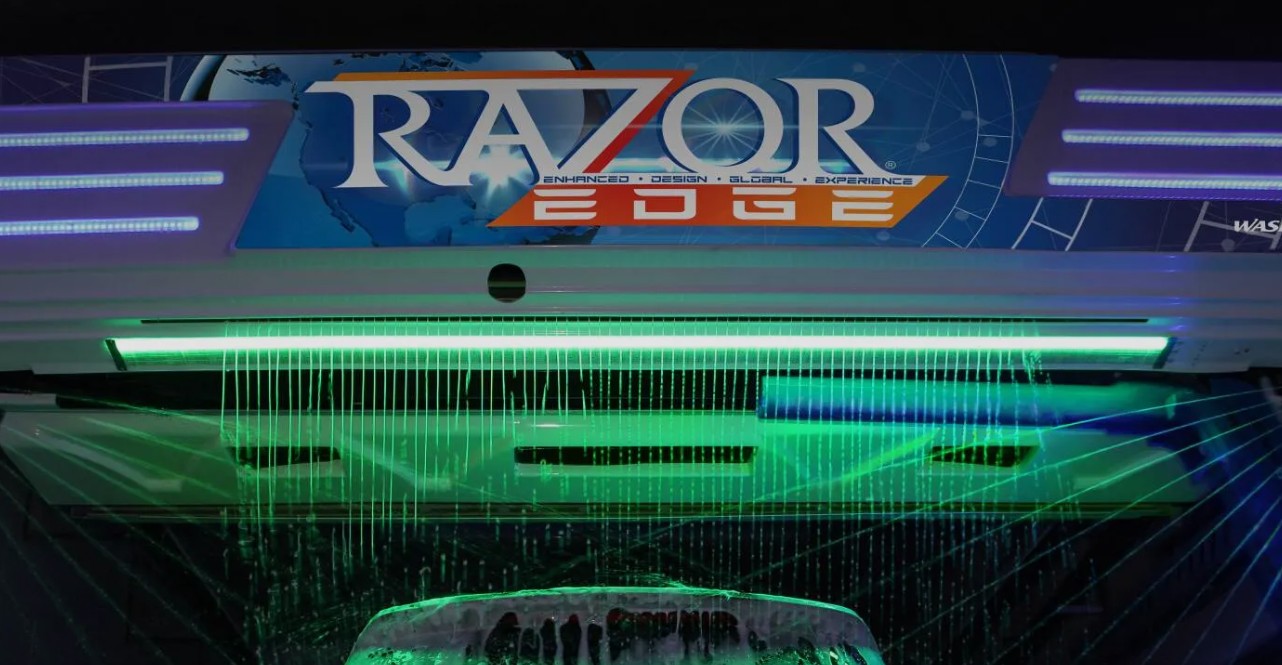
    Belanger Inc., holder of U.S. Patent No. 8,602,041 covering a lighted spray arm in an automated car wash system, accused Wash World’s “Razor EDGE” system of infringement. Wash World responded with a declaratory judgment action and was found liable for infringement of independent claim 7 and several dependent claims. A jury awarded over $10 million in damages, primarily as lost profits.

    Claim Construction: Know Your Limits on Appeal

    Wash World appealed on the basis that the district court improperly failed to construe three key claim terms:

    • “Outer cushioning sleeve”
    • “Predefined wash area”
    • “Dependingly mounted from”

    The Federal Circuit, applying a strict forfeiture rule, found that Wash World had waived its proposed constructions on the first two terms by not clearly presenting them to the district court.

    Wash World’s pivot from its trial construction (“thick sleeve of extruded foam plastic”) to a new appellate construction (“soft and resilient…can spring back into shape”) was deemed materially different and untimely. Similarly, its appellate interpretation of “predefined wash area” as requiring invariant dimensions and pre-wash definition was new and forfeited.

    Only the “dependingly mounted from” issue was properly preserved. The court affirmed that both direct and indirect mounting satisfied the claim, rejecting Wash World’s noninfringement theory based on the use of an intermediate trolley.

    This opinion underscores the importance of framing claim construction disputes early and clearly. Implicit arguments or vague references to functional limitations may be insufficient. The Federal Circuit will enforce waiver unless “exceptional circumstances” are shown.

    Damages: The Limits of Convoyed Sales

    While Wash World’s claim construction arguments were mostly waived, it succeeded on appeal in challenging a significant portion of the jury’s $9.8 million lost profits award — approximately $2.58 million tied to convoyed (i.e., unpatented) components sold alongside the patented system.

    The legal standard for convoyed sales is exacting. Under Rite-Hite v. Kelley Co., to recover lost profits on unpatented components sold with a patented item, a patentee must prove that the items together constitute a functional unit — that is, components that are physically and functionally interrelated in such a way that they operate together as part of the patented invention.

    What the patentee cannot do is claim lost profits on items that are merely sold together as a matter of customer convenience or commercial packaging. This is a critical line — and one Belanger crossed, according to the Federal Circuit.

    At trial, Belanger’s damages expert, Dr. McDuff, offered lost profit calculations based on sales of the entire car wash system, including dryers and other components not covered by the asserted patent claims. His per-unit lost profit number — $53,866 — incorporated profits from those unpatented components. Critically, the jury awarded damages that exactly matched his bottom-line estimate, making it clear that convoyed sales were part of the jury’s calculation.

    Belanger attempted to defend the inclusion by arguing that the products were “typically” sold as a package and that dryers were installed in roughly 75% of Belanger’s IBA systems. But the Federal Circuit found that this testimony — emphasizing sales custom rather than functional integration — fell short of establishing the required functional relationship. As the court put it, “selling the products together as a package is the exact sort of ‘matter of convenience or business advantage’ that does not, in and of itself, give rise to damages liability.”

    The Federal Circuit was also unmoved by Belanger’s argument that the general verdict form precluded remittitur. Although the jury did not specify how much of its award was attributable to convoyed sales, Belanger had repeatedly told the district court that the jury adopted Dr. McDuff’s model — a point that judicially estopped it from arguing otherwise on appeal.

    In light of the above, the court ordered remittitur of $2,577,848 and directed the district court to enter a reduced damages award.

    By Charles Gideon Korrell

  • In re Riggs: Clarification of 102(e) Prior Art:

    In re Riggs: Clarification of 102(e) Prior Art:


    In its opinion, the Federal Circuit vacated and remanded a Patent Trial and Appeal Board (PTAB) decision in In re Riggs, No. 22-1945, clarifying the framework for determining whether a published U.S. patent application can rely on the filing date of a provisional application to qualify as prior art under pre-AIA 35 U.S.C. § 102(e).

    This decision not only refines the application of Dynamic Drinkware and Amgen, but also serves as a warning: it’s not enough for one claim of a reference to be supported by a provisional application. The actual disclosure relied on for anticipation or obviousness must also be supported.

    Background

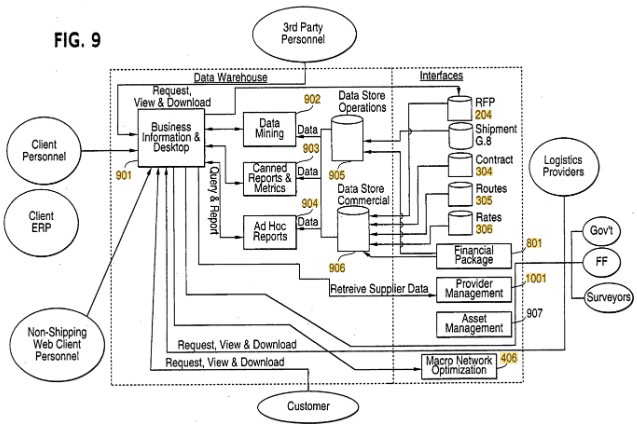
    The applicants in Riggs sought coverage for a modular logistics system integrating databases, purchasing, scheduling, tracking, and financial modules across multiple carriers and shippers. The examiner rejected several claims as anticipated or obvious over a 2002 published application by Lettich (which claimed priority to a 2000 provisional).

    The Board initially sided with the applicants but, following a request for rehearing by the examiner and a long procedural history (including district court and prior Federal Circuit proceedings), reversed course—holding Lettich was valid prior art. The key question became: could Lettich’s publication date be backdated to its provisional filing?

    Issue Preclusion: Board’s Authority to Hear Examiner’s Rehearing Request

    Appellants first challenged whether the PTAB acted “ultra vires” in reconsidering its original decision at the examiner’s request. The Federal Circuit rejected this challenge based on issue preclusion. In an earlier appeal (Odyssey Logistics, 959 F.3d 1104), the same party had litigated the Board’s jurisdiction. Because the issues were fully litigated and decided, the Court held the appellants were estopped from relitigating them.

    Backdating: What It Takes to Backdate a Reference to Its Provisional

    The crux of the appeal centered on whether Lettich’s published application could claim the benefit of its 2000 provisional and thus qualify as § 102(e) prior art.

    The Board had applied a bright-line rule: if at least one claim in the non-provisional is supported by the provisional, then the entire disclosure of the published application gets the benefit of the provisional filing date.

    The Federal Circuit rejected that.

    “To claim priority to the provisional filing date, the portion of the application relied on by the examiner as prior art must be supported by the provisional application.”

    In other words, it’s not enough that one claim is supported—the actual paragraphs or features cited in the prior art rejection must themselves be traceable to the provisional. The Court emphasized that written description support under § 112 must exist both for (1) at least one claim, and (2) the specific disclosures relied on in the rejection.

    Practical Implications

    For patent practitioners and in-house teams:

    • When asserting prior art based on a published U.S. application, verify that the actual subject matter relied on in your rejection has § 112 support in the provisional—not just the claims.
    • Ensure provisional applications contain robust disclosures that can support downstream claim language and specification content.
    • In litigation and IPRs, this decision may offer new ammunition to challenge a reference’s entitlement to its provisional date.

    For business leaders:

    • This ruling reinforces the importance of drafting high-quality provisional applications from the outset. Skimping on detail can weaken your company’s applications or defenses.
    • Companies assessing FTO or IP validity should look carefully at the actual disclosure timeline—not just the priority claim.

    Looking Ahead

    In re Riggs sends a clear message that precision in provisional drafting matters more than ever, and that reliance on PTAB rehearings—once thought settled—can reemerge years later under the right procedural framework.

    This area of law remains dynamic, particularly for companies working in logistics, SaaS, and modular system design, where provisional filings are common and often relied upon for competitive edge.

    By Charles Gideon Korrell

  • Maquet v. Abiomed: Scope of Prosecution Disclaimer

    Maquet v. Abiomed: Scope of Prosecution Disclaimer


    On March 21, 2025, the Federal Circuit vacated a district court judgment of non-infringement and remanded the case for further proceedings in Maquet Cardiovascular LLC v. Abiomed Inc. (No. 23-2045). The opinion focuses on the claim construction of U.S. Patent No. 10,238,783 (the “’783 patent”), specifically the proper application of the prosecution disclaimer doctrine and the relevance of related patents’ histories in claim construction.

    Background and Claims at Issue

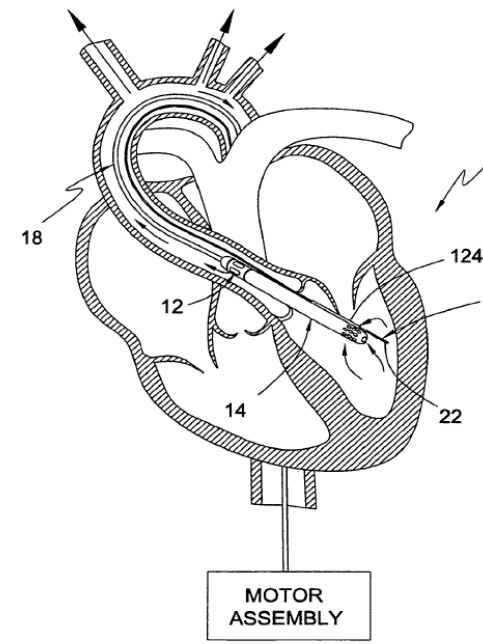
    Maquet’s ’783 patent relates to intravascular blood pump systems that include integrated guide mechanisms for positioning the pump inside the circulatory system. At issue were three claim terms from claims 1 and 24:

    1. “Guide mechanism comprising a lumen” (claim 1)
    2. “Guide mechanism is configured to allow for a guide wire to slideably advance therealong” (claim 1)
    3. “Guide wire does not pass through the rotor hub or the catheter” (claim 24)

    The district court construed each of these to include negative limitations—e.g., that the lumen is not distal to the cannula or that the guide wire does not pass through the free space between rotor blades—based on prosecution history from related patents. Maquet stipulated to non-infringement under these constructions and appealed.

    Federal Circuit Analysis

    1. Prosecution Disclaimer Must Involve Similar Claim Language

    The Federal Circuit vacated the district court’s construction of the term “guide mechanism comprising a lumen”, holding that the court erred in relying on amendments to different claim language in a parent patent (U.S. Patent No. 9,789,238). The court reiterated that prosecution disclaimer generally does not apply when the claim term at issue in the descendant patent uses different language from that in the ancestor patent.

    The court cited:

    • Advanced Cardiovascular Sys., Inc. v. Medtronic, Inc., 265 F.3d 1294 (Fed. Cir. 2001): emphasizing that the prosecution history of a related patent is only relevant when it addresses a limitation in common.
    • Regents of Univ. of Minn. v. AGA Med. Corp., 717 F.3d 929 (Fed. Cir. 2013): reaffirming that prosecution disclaimer does not apply when there is no parity between claim limitations.
    • Ventana Med. Sys., Inc. v. Biogenex Lab’ys, Inc., 473 F.3d 1173 (Fed. Cir. 2006): noting that different claim language generally precludes the application of disclaimer.

    2. Silence in Response to Examiner Statements Is Not a Disavowal

    On the issue of whether the guide wire could pass through the space between rotor blades, the court reversed the district court’s reliance on statements in the prosecution of U.S. Patent No. 8,888,728 (a great-great-grandparent of the ’783 patent). The district court had found a disclaimer based on the applicant’s failure to contest an examiner’s notice of allowance distinguishing prior art.

    The Federal Circuit rejected that approach, citing:

    • Salazar v. Procter & Gamble Co., 414 F.3d 1342 (Fed. Cir. 2005): holding that an applicant’s silence in response to an examiner’s characterization does not constitute a clear and unmistakable disavowal.
    • Avid Tech., Inc. v. Harmonic, Inc., 812 F.3d 1040 (Fed. Cir. 2016): emphasizing the high standard required to find prosecution disclaimer based solely on prosecution history—namely, a “clear and unmistakable” disavowal.
    • Phillips v. AWH Corp., 415 F.3d 1303 (Fed. Cir. 2005) (en banc): confirming that claim terms are to be given their ordinary meaning in light of the intrinsic record, absent a clear disclaimer.

    The court also held that general statements Maquet made during an inter partes review proceeding were too vague to constitute a disclaimer under Aylus Networks, Inc. v. Apple Inc., 856 F.3d 1353 (Fed. Cir. 2017).

    3. Specification Did Not Require Limitation on Guide Wire Path

    Finally, the court rejected Abiomed’s argument that the patent specification limited the guide wire’s path. The court found no “manifest exclusion or restriction” in the specification that would justify reading in a limitation that the guide wire cannot pass through the rotor blade area, citing:

    • Liebel-Flarsheim Co. v. Medrad, Inc., 358 F.3d 898 (Fed. Cir. 2004): noting that limiting a claim based on the specification is only appropriate when the patentee clearly expresses such a limitation.

    Conclusion

    The Federal Circuit vacated the judgment of non-infringement as to the ’783 patent and remanded the case for further proceedings under corrected claim constructions. The court left undisturbed the separate judgment of non-infringement as to U.S. Patent No. 9,789,238, which Maquet did not challenge on appeal.

    The opinion provides guidance on the limits of prosecution disclaimer and underscores the need for clear, consistent claim language across related patents when relying on prosecution history to construe claims.

    Post by Charles Gideon Korrell

  • Actavis v. United States: When Patent Litigation Meets Tax Law

    Actavis v. United States: When Patent Litigation Meets Tax Law

    In a significant March 2025 opinion, the Federal Circuit affirmed the Court of Federal Claims’ decision in Actavis Laboratories FL, Inc. v. United States, addressing a complex intersection of patent litigation, FDA regulatory processes, and the tax code. While the case originated in the context of Hatch-Waxman pharmaceutical litigation, its reasoning may offer guidance for companies in other IP-intensive industries, particularly those grappling with the tax treatment of litigation expenses.

    The Issue: Ordinary Business Deduction or Capital Expenditure?

    The core legal question was whether Actavis could deduct the legal expenses it incurred in defending against multiple Hatch-Waxman lawsuits as “ordinary and necessary business expenses” under § 162(a) of the Internal Revenue Code—or whether those costs must be capitalized under § 263(a) as expenses that facilitate the creation of a capital asset (i.e., FDA approval to market a drug).

    The IRS had classified the expenses as capital expenditures, arguing that they facilitated the creation of intangible assets (FDA approvals). Actavis, on the other hand, maintained that the litigation was a cost of doing business, defending against patent claims—not a step in acquiring FDA approval.

    The Federal Circuit’s Holding

    The court sided with Actavis, holding that the litigation expenses were deductible as ordinary business expenses. Two key rationales stand out:

    1. Origin of the Claim Test: The court applied the “origin of the claim” doctrine, concluding that the expenses stemmed from defending against patent infringement lawsuits—not from acquiring FDA approvals. The origin was legal defense, not asset acquisition.
    2. No Facilitation of Capital Asset: Even under the IRS’s preferred framework (26 C.F.R. § 1.263(a)-4), the court found that the litigation did not “facilitate” the acquisition of a capital asset. The lawsuits neither determined whether FDA approval would be granted nor were they a required step in the FDA process.

    The court emphasized that patent litigation under the Hatch-Waxman Act and FDA approval are separate processes. While the litigation might affect when FDA approval becomes effective (due to the 30-month stay), it does not influence whether approval is granted. Only the FDA decides that.

    Key Takeaways for Technology Companies

    Though the case involves pharmaceutical patents, the implications may extend more broadly to any business incurring litigation costs in defense of IP rights. Here’s why:

    • Deductibility of Legal Costs in IP Defense: If your company is sued for patent infringement (regardless of industry), and those lawsuits do not directly result in acquiring or creating an asset, this decision supports deducting legal expenses as ordinary business costs.
    • Litigation vs. Asset Acquisition: The decision draws a critical line between defending against claims (deductible) and activities that directly create capital assets (which must be capitalized). Companies should assess whether legal costs are tied to defense or to proactive steps in asset acquisition.
    • Creation vs. Defense of IP: It’s important to note that while litigation expenses are often deductible, the costs of acquiring or developing a patent—including attorney fees for drafting, filing, and prosecuting a patent application—must typically be capitalized and amortized over the patent’s useful life. The distinction in Actavis lies in the nature of the litigation: defending against infringement is a cost of doing business, not of acquiring the asset.
    • Not Just for Pharma: While the court did not explicitly extend the holding beyond the pharmaceutical context, its reasoning—particularly under the “origin of the claim” test—could apply equally to companies with non-pharmaceutical patents defending against infringement claims.

    For example, a tech company facing patent litigation over software functionality would likely be in a similar position to Actavis: defending existing operations rather than acquiring a new capital asset.

    Final Thoughts

    Actavis underscores the importance of how legal expenditures are categorized for tax purposes. The decision provides welcome clarity for businesses engaged in patent litigation, reinforcing that defense costs are generally deductible—even when those suits relate to regulatory or commercialization processes.

    The ruling also promotes tax parity: if patent owners (the plaintiffs) can deduct their legal expenses, defendants (like Actavis) should be treated the same. For IP-heavy industries, this decision is a valuable precedent that could reduce taxable income and increase after-tax cash flow during costly legal battles.

    Posted by Charles Gideon Korrell

    https://www.linkedin.com/pulse/interesting-case-when-patent-litigation-meets-tax-law-korrell-t0d7c

  • AMP Plus v. DMF: A Closer Look at Obviousness Analysis

    AMP Plus v. DMF: A Closer Look at Obviousness Analysis

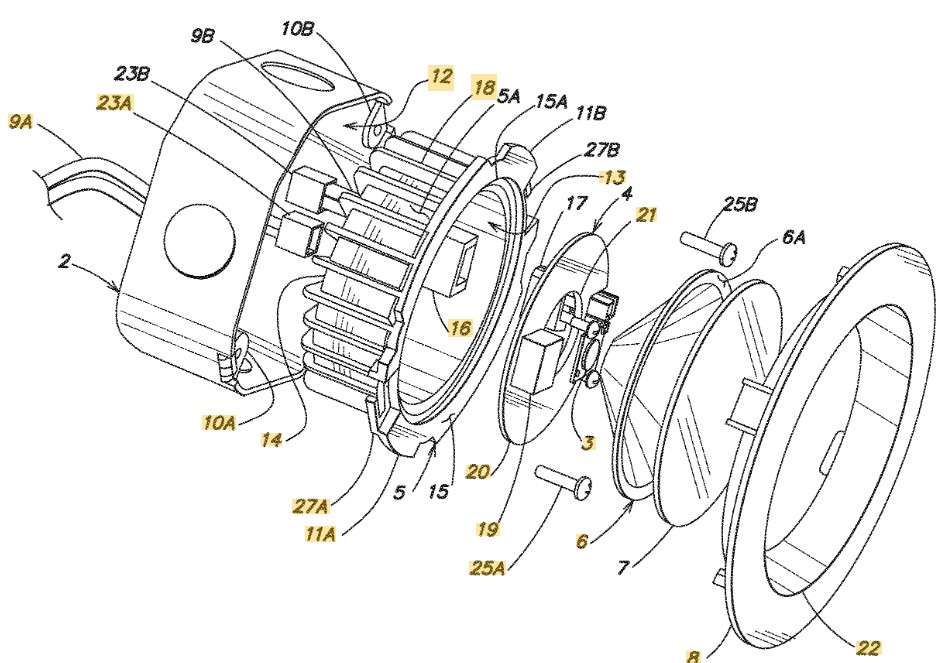
    On March 19, 2025, the United States Court of Appeals for the Federal Circuit issued its decision in AMP Plus, Inc. v. DMF, Inc., affirming the Patent Trial and Appeal Board’s (PTAB) ruling that AMP Plus, doing business as ELCO Lighting, failed to prove claim 22 of U.S. Patent No. 9,964,266 was unpatentable as obvious. This case highlights the rigorous evidentiary requirements for demonstrating obviousness in inter partes review (IPR) proceedings and serves as a cautionary tale for petitioners relying on implicit reasoning rather than explicit proof.

    Obviousness and the Challenge to Claim 22

    ELCO argued that claim 22 of DMF’s patent should be invalidated as obvious in view of two prior art references: Imtra 2011 and Imtra 2007. The key limitation in dispute—referred to as “Limitation M”—requires that the compact recessed lighting system be “coupled to electricity from an electrical system of a building.”

    PTAB found that ELCO failed to present sufficient evidence demonstrating that a person of ordinary skill in the art (POSITA) would have modified the marine lighting systems disclosed in Imtra 2011 to be installed in a building. The Federal Circuit affirmed this conclusion, emphasizing that an obviousness argument must be supported by more than assumptions or conclusory statements.

    The Federal Circuit’s Analysis of ELCO’s Argument

    ELCO’s IPR petition asserted that “wire connections between the fixture and the power source can be made in a variety of ways” and that the use of junction boxes in lighting systems was well known. However, PTAB determined—and the Federal Circuit agreed—that ELCO never specifically addressed how the prior art actually disclosed or suggested adapting the marine lighting system for a building’s electrical infrastructure.

    The court underscored several key deficiencies in ELCO’s argument:

    1. Lack of Direct Evidence – The cited portions of the Imtra 2011 brochure and supporting expert testimony never explicitly discussed installation in a building’s electrical system. Instead, the reference described marine applications, leaving a gap in ELCO’s argument about how or why a POSITA would have been motivated to adapt it for use in buildings.
    2. Failure to Establish Motivation to Combine – While ELCO asserted that modifying a marine lighting system for a building would have been an obvious design choice, PTAB found—and the Federal Circuit agreed—that ELCO did not provide sufficient evidence of a motivation to make that change. As the Supreme Court held in KSR Int’l Co. v. Teleflex Inc., 550 U.S. 398 (2007), an obviousness analysis must consider whether a POSITA would have been motivated to make the modification, not just whether they could have.
    3. Improper Reliance on Expert Testimony – ELCO relied on its expert’s declaration to argue that a POSITA would recognize the adaptability of marine lighting systems to buildings. However, the Federal Circuit found that the cited paragraphs of the expert report did not actually support this assertion, as they failed to address the specific limitation at issue—installation in a building’s electrical system.
    4. The Importance of Addressing Every Claim Limitation – The court reaffirmed the principle that every limitation in a claim must be shown to be disclosed or suggested by the prior art. Because ELCO failed to adequately address Limitation M, its obviousness argument fell short, regardless of the strength of its other arguments.

    Lessons for Patent Practitioners and Petitioners

    This decision reinforces a fundamental rule in patent litigation and IPR proceedings: Obviousness cannot be assumed; it must be demonstrated with clear, persuasive evidence. Key takeaways include:

    • IPR petitions must explicitly address each claim limitation. Courts and PTAB will not fill in evidentiary gaps left by a petitioner’s argument.
    • Obviousness requires more than a general assertion of industry knowledge. Petitioners must show both how the prior art discloses a limitation and why a POSITA would have been motivated to modify it in the claimed manner.
    • Expert testimony must be specific and directly tied to claim limitations. Vague or conclusory statements from experts will not suffice to establish obviousness.

    Conclusion

    The Federal Circuit’s ruling in AMP Plus v. DMF underscores the challenges in proving obviousness in IPR proceedings. While ELCO had strong prior art references, its failure to explicitly demonstrate how a POSITA would have modified marine lighting for building use proved fatal to its case. For future patent challengers, this case serves as a reminder that thorough, well-supported arguments are critical in overcoming the presumption of patent validity.

    By Charles Gideon Korrell

  • Dollar Financial v. Brittex: Trademark Cancellation on Priority, Likelihood of Confusion, and the Zone of Natural Expansion

    Dollar Financial v. Brittex: Trademark Cancellation on Priority, Likelihood of Confusion, and the Zone of Natural Expansion

    In Dollar Financial Group, Inc. v. Brittex Financial, Inc., the Federal Circuit affirmed the Trademark Trial and Appeal Board’s (TTAB) partial cancellation of two MONEY MART trademark registrations, addressing critical issues in trademark law, including priority of use, the likelihood of confusion, and the limitations of the zone of natural expansion doctrine. This case highlights key legal principles that businesses should consider when expanding the scope of their trademarks.

    Background of the Case

    Dollar Financial Group, Inc. (DFG) has operated loan financing and check cashing services under the MONEY MART mark since the 1980s. In 2013, DFG registered two trademarks covering pawn brokerage and pawn shop services. Brittex Financial, Inc., which had used MONEY MART PAWN and MONEY MART PAWN & JEWELRY since 1993 for pawn services, petitioned to cancel DFG’s registrations, arguing that they created a likelihood of confusion under the Lanham Act § 2(d).

    The TTAB initially ruled in favor of DFG, holding that its longstanding use of MONEY MART for loan financing encompassed pawn services. However, the Federal Circuit reversed and remanded, leading the TTAB to ultimately rule that Brittex had priority. DFG appealed the TTAB’s decision, arguing that it was entitled to priority based on the zone of natural expansion and that the Board improperly found a likelihood of confusion.

    Key Legal Issues and the Court’s Analysis

    1. Priority of Use in Trademark Law

    Trademark rights are fundamentally based on first use in commerce. While DFG argued that its use of MONEY MART for loan financing should establish priority over Brittex’s pawn shop services, the Federal Circuit disagreed.

    The court reaffirmed that priority is determined based on the specific goods or services for which the mark was first used. Since Brittex had been using MONEY MART PAWN for pawn services since 1993, while DFG only expanded into pawn services in 2012, Brittex’s common law rights took precedence.

    2. The Zone of Natural Expansion Doctrine: A Defensive, Not Offensive, Shield

    One of DFG’s key arguments was that pawn brokerage and pawn shop services were a natural expansion of its existing loan financing services. However, the Federal Circuit rejected this argument, emphasizing that the zone of natural expansion is a purely defensive doctrine that cannot be used offensively to retroactively establish priority.

    To support its ruling, the CAFC cited several key cases:

    • Jackes-Evans Manufacturing Co. v. Jaybee Manufacturing Corp., 481 F.2d 1342 (C.C.P.A. 1973)
      • This landmark case established that the zone of natural expansion doctrine is defensive only. It prevents a junior user from claiming a mark in a related field but does not allow a senior user to retroactively claim priority over an intervening user.
      • Applying Jackes-Evans, the CAFC ruled that DFG could not override Brittex’s prior use of MONEY MART PAWN simply by claiming pawn services were a natural extension of its loan financing business.
    • Orange Bang, Inc. v. Ole Mexican Foods, Inc., 116 U.S.P.Q.2d 1102 (T.T.A.B. 2015)
      • This TTAB decision reinforced that the first user of a mark has superior rights over later users expanding into related areas. However, if an intervening user has already established rights in the new area, the original owner cannot retroactively claim priority.
      • The CAFC applied this principle to reject DFG’s argument that its long-standing MONEY MART registration for loan financing should allow it to later claim priority for pawn services.
    • American Hygienic Laboratories, Inc. v. Tiffany & Co., 12 U.S.P.Q.2d 1979 (T.T.A.B. 1989)
      • In this case, Tiffany & Co.’s trademark for jewelry did not give it priority over another company’s use of “TIFFANY” for cosmetics.
      • The Federal Circuit used this precedent to reject DFG’s claim that its existing MONEY MART registrations automatically extended to pawn services.

    3. Likelihood of Confusion Under the DuPont Factors

    The CAFC upheld the TTAB’s finding that DFG’s trademarks posed a likelihood of confusion with Brittex’s common law marks. The court applied the DuPont factors, emphasizing:

    • Similarity of the Marks: The court found that MONEY MART and MONEY MART PAWN were highly similar, especially since the term “pawn” was descriptive.
    • Overlap in Services and Trade Channels: Both parties offered pawn-related financial services, targeting similar consumers.
    • Brittex’s Prior Use: Since Brittex had been using its mark for pawn services since 1993, DFG’s later use in 2012 did not override Brittex’s priority.

    DFG also argued that its prior incontestable registrations for loan financing should have been considered. However, the CAFC distinguished the case from In re Strategic Partners, Inc., explaining that DFG’s earlier registrations did not cover pawn services and were therefore irrelevant.

    Final Takeaways

    The Federal Circuit’s decision in this case provides critical lessons for businesses navigating trademark expansion:

    1. First Use in Commerce Controls – Priority is based on actual use for specific goods/services, not potential expansion.
    2. The Zone of Natural Expansion is Defensive – This doctrine cannot be used offensively to claim priority over an intervening user.
    3. Likelihood of Confusion is Key – Even long-standing brands can face cancellation if they expand into areas where others have prior rights.
    4. Proactive Trademark Registration is Essential – To avoid legal disputes, businesses should register trademarks for all anticipated services early.

    For businesses looking to expand their trademarks into new markets, this case underscores the importance of conducting thorough clearance searches and filing trademark applications early.

    By Charles Gideon Korrell