Tag: CAFC

  • Gramm v. Deere: Reversal of Indefiniteness Finding for Means-Plus-Function Claim

    Gramm v. Deere: Reversal of Indefiniteness Finding for Means-Plus-Function Claim

    The Federal Circuit’s decision in Gramm v. Deere & Co., No. 24-1598 (Fed. Cir. Mar. 11, 2026) addresses a recurring issue in patent litigation: when a means-plus-function claim is sufficiently supported by corresponding structure in the specification. The case arises from agricultural technology used to maintain the proper height of a crop-harvesting header as the machine moves across uneven terrain. While the technology itself is specialized, the court’s reasoning has broader implications for how courts analyze indefiniteness under 35 U.S.C. § 112 when claims invoke § 112(f).

    The Federal Circuit ultimately reversed the district court’s ruling that the patent claims were indefinite. The opinion provides an instructive reminder that courts must identify the correct corresponding structure before concluding that a claim lacks sufficient disclosure.

    Background of the Dispute

    The patent at issue, U.S. Patent No. 6,202,395, is directed to an apparatus for maintaining a crop harvester’s header at a desired height above the soil. Maintaining consistent header height is critical in agricultural harvesting operations because uneven terrain can cause the header to either dig into the ground or miss portions of the crop.

    Richard Gramm is the inventor and owner of the ’395 patent, which is exclusively licensed to Reaper Solutions LLC (formerly Headsight). Reaper brought suit against Deere & Company alleging that Deere’s header sensor kits infringed the patent.

    The litigation has a long procedural history. Deere challenged the patent through inter partes review proceedings, after which only independent claim 12 and certain dependent claims remained in the case. The dispute then returned to district court, where the central issue became claim construction of the limitation “control means.”

    Both parties agreed that “control means” is a means-plus-function limitation governed by § 112(f). Under that provision, the claim is construed to cover the corresponding structure described in the specification and equivalents thereof.

    The dispute centered on whether the specification disclosed adequate structure for performing the claimed function.

    The District Court’s Indefiniteness Ruling

    The district court concluded that the claim was indefinite.

    In reaching that conclusion, the court first determined that the claimed function was performed by a general-purpose computer or controller. Under Federal Circuit precedent, when a means-plus-function limitation is implemented using a computer, the specification must typically disclose an algorithm for performing the claimed function.

    This principle stems from cases such as WMS Gaming Inc. v. International Game Technology, which held that a general-purpose computer is not sufficient structure unless the patent also discloses the algorithm that the computer performs. Similarly, the Federal Circuit’s en banc decision in Williamson v. Citrix Online, LLC reaffirmed that the absence of such disclosure can render a claim indefinite.

    Applying this framework, the district court held that the ’395 patent failed to disclose the required algorithm. As a result, the court determined that the “control means” limitation lacked sufficient corresponding structure and declared the claims indefinite under § 112(b).

    The district court entered judgment of invalidity in favor of Deere.

    The Federal Circuit’s Reversal

    The Federal Circuit reversed the indefiniteness ruling.

    Judge Reyna, writing for the panel, concluded that the district court had misidentified the relevant corresponding structure. Because that structural analysis was flawed, the indefiniteness determination could not stand.

    The Federal Circuit emphasized a key principle in means-plus-function analysis: the court must identify the structure disclosed in the specification that performs the claimed function. If at least one embodiment provides sufficient structure, the claim is not indefinite.

    This rule traces back to Cardiac Pacemakers, Inc. v. St. Jude Medical, Inc., where the Federal Circuit held that a claim remains valid even if only one disclosed embodiment provides the required corresponding structure.

    In Gramm, the specification referenced a system known as “Dial-A-Matic Version #1.” The Federal Circuit concluded that this system constituted the corresponding structure for the claimed “control means.”

    The district court had excluded Dial-A-Matic Version #1 from its structural analysis because the system lacked certain capabilities described elsewhere in the specification. Specifically, the district court believed the structure needed to perform additional functions beyond those recited in the claim.

    The Federal Circuit rejected that reasoning.

    The court explained that the corresponding structure must perform the claimed function—nothing more. If the specification describes additional capabilities or features, those extra functions should not disqualify the disclosed structure.

    By improperly narrowing the set of permissible structures, the district court had effectively eliminated the very embodiment that satisfied the means-plus-function requirement.

    Because Dial-A-Matic Version #1 was adequately disclosed and performed the claimed function, the Federal Circuit held that the “control means” limitation was not indefinite.

    The Algorithm Requirement in Context

    One of the more interesting aspects of the opinion is how it addresses the algorithm requirement for computer-implemented means-plus-function claims.

    In cases like WMS Gaming, the Federal Circuit held that a patent must disclose the algorithm executed by a computer performing the claimed function. Otherwise, the claim effectively covers any computer capable of performing the function, which would exceed the permissible scope of § 112(f).

    However, Gramm illustrates that the algorithm requirement does not apply rigidly in every situation. If the specification identifies a concrete physical system that performs the claimed function, that system itself may qualify as the corresponding structure.

    The key analytical step is determining whether the structure is merely a generic computer or whether it represents a specific system disclosed in the patent.

    Here, the Federal Circuit treated the Dial-A-Matic system as a sufficiently concrete structure to satisfy the statutory requirement.

    Standard of Review

    The court also reiterated the standards governing appellate review of claim construction and indefiniteness determinations.

    Questions involving intrinsic evidence—such as whether a claim invokes § 112(f) or whether the specification discloses corresponding structure—are reviewed de novo. However, underlying factual determinations based on extrinsic evidence are reviewed for clear error.

    This framework derives from the Supreme Court’s decision in Teva Pharmaceuticals USA, Inc. v. Sandoz, Inc., which established that subsidiary factual findings during claim construction receive deferential review.

    In this case, the Federal Circuit determined that the district court’s legal analysis of corresponding structure was incorrect, making reversal appropriate.

    Implications for Patent Drafting and Litigation

    The Gramm decision highlights several practical lessons for patent practitioners.

    First, the case underscores the continuing significance of means-plus-function claiming. Although many practitioners avoid § 112(f) language due to its structural limitations, such claims remain common in mechanical and control-system technologies.

    Second, the decision reinforces that the corresponding structure analysis must be anchored to the claimed function—not to broader descriptions in the specification.

    Third, the opinion illustrates the importance of clearly describing operational systems in the specification. Even when a patent does not explicitly recite an algorithm, identifying a concrete system that performs the function may suffice.

    As Charles Gideon Korrell observes, disputes over indefiniteness frequently arise not because the patent lacks technical disclosure, but because courts and litigants disagree about which portions of the specification qualify as corresponding structure.

    Charles Gideon Korrell notes that the Federal Circuit’s reasoning in Gramm reflects a broader pattern in recent decisions: appellate courts are often skeptical of invalidity rulings that stem from overly restrictive structural interpretations.

    Another takeaway is that litigants should carefully evaluate whether the accused infringer’s own arguments about claim construction implicitly identify the corresponding structure. In Gramm, Deere had previously pointed to Dial-A-Matic Version #1 as a relevant system during claim construction, a position that ultimately undermined the indefiniteness theory.

    As Charles Gideon Korrell explains, this type of litigation posture can be significant because statements made during claim construction frequently shape how courts later evaluate indefiniteness.

    Finally, the decision reinforces the Federal Circuit’s long-standing principle that claims should not be invalidated lightly when the specification discloses at least one workable embodiment.

    Conclusion

    The Federal Circuit’s ruling in Gramm v. Deere provides a careful clarification of the corresponding-structure requirement for means-plus-function claims. By reversing the district court’s indefiniteness determination, the court emphasized that the proper inquiry focuses on whether the specification discloses structure capable of performing the claimed function—not whether the structure includes additional features or capabilities.

    For practitioners, the case serves as another reminder that indefiniteness challenges under § 112 often turn on the precision of the structural analysis. When courts identify the correct embodiment in the specification, many purported indefiniteness problems disappear.

    Charles Gideon Korrell believes that the decision will likely be cited in future disputes involving control systems and legacy mechanical patents, where functional language is common but the disclosed structure may not resemble modern software-driven implementations.

    By Charles Gideon Korrell

  • Columbia University v. Gen Digital: $185M Cybersecurity Patent Verdict Reopened and Trial Counsel Sanctions Vacated

    Columbia University v. Gen Digital: $185M Cybersecurity Patent Verdict Reopened and Trial Counsel Sanctions Vacated

    A pair of related decisions issued by the Federal Circuit in Trustees of Columbia University v. Gen Digital Inc. , Nos. 24-1243, -1244 (Fed. Cir. Mar 11, 2026), address two issues that often arise together in complex patent litigation: the evolving scope of patent eligibility under Alice, and the limits of sanctions imposed on litigation counsel.

    The underlying dispute produced a $185 million jury verdict in favor of Columbia University against Gen Digital (formerly Symantec/NortonLifeLock) for infringement of cybersecurity patents developed by Columbia researchers. The district court also imposed significant litigation sanctions tied to a contempt finding against Gen Digital’s counsel, Quinn Emanuel Urquhart & Sullivan.

    In two companion appeals, the Federal Circuit vacated the judgment and remanded for further proceedings on patent eligibility, while separately overturning the contempt sanction against counsel. Together, the opinions provide guidance on how courts should analyze software security patents under Alice and how far district courts may go when addressing alleged conflicts of interest involving litigation counsel.

    Background of the dispute

    The litigation concerned several Columbia patents related to detecting malicious activity in computer systems, including U.S. Patent Nos. 7,487,322 and 7,979,115. These patents originated from research by Columbia professors studying techniques for monitoring and identifying suspicious behavior within computer processes.

    Columbia asserted that Norton’s security products infringed the patents. After extensive litigation in the Eastern District of Virginia, the case went to trial. The jury found that Gen Digital willfully infringed several claims and awarded $185,112,727 in damages.

    The district court then enhanced the damages and awarded attorneys’ fees. A key factor in that decision was a sanction imposed on Norton’s trial counsel, Quinn Emanuel, after the court found the firm in civil contempt related to a separate inventorship dispute involving a different Norton patent.

    Two appeals followed:

    • Appeal No. 24-1243 addressed the infringement verdict and damages judgment.
    • Appeal No. 24-1244 addressed the contempt sanction imposed on Quinn Emanuel.

    The Federal Circuit resolved both appeals on the same day.

    Patent eligibility: the verdict cannot stand yet

    The most consequential ruling came in the infringement appeal. The Federal Circuit held that the asserted claims are directed to an abstract idea at step one of the Alice framework.

    The district court had reached the opposite conclusion and had even struck the §101 defense before trial. According to the Federal Circuit, that was error.

    The patents describe techniques for monitoring computer processes and identifying potentially malicious behavior. The appellate court concluded that, at a high level, the claims recite the abstract idea of collecting and analyzing data about system activity to detect anomalies.

    This reasoning follows the court’s prior software eligibility cases, including Electric Power Group v. Alstom, SAP America v. InvestPic, and Intellectual Ventures v. Symantec, all of which held that claims directed to collecting, analyzing, and reporting data often fall within the abstract-idea category.

    Because the district court had ended the eligibility analysis at step one, the Federal Circuit vacated the judgment and remanded for further proceedings to evaluate step two of the Alice test. At step two, the court must determine whether the claims contain an inventive concept sufficient to transform the abstract idea into patent-eligible subject matter.

    The practical consequence is that the $185 million verdict cannot stand unless the claims ultimately survive the full eligibility analysis on remand.

    As Charles Gideon Korrell notes in reviewing the decision, the case reflects the Federal Circuit’s continued insistence that courts perform a careful and complete Alice analysis before allowing software patent claims to proceed to trial. Even very large jury verdicts may be undone if eligibility questions were prematurely resolved.

    Other issues likely to reappear on remand

    Although the court vacated the judgment based on eligibility, it addressed several other issues that may arise again if the claims ultimately survive the Alice analysis.

    First, the court affirmed the district court’s claim constructions. Claim construction disputes often shape the eligibility inquiry, so leaving those constructions intact may influence how the district court analyzes step two.

    Second, the Federal Circuit upheld the jury’s findings of infringement and willfulness. In other words, if the claims are eventually deemed patent-eligible, the liability findings could potentially remain intact.

    Third, the court addressed damages based on foreign sales. The district court had allowed Columbia to recover damages tied to certain products sold outside the United States. The Federal Circuit concluded that the district court erred in denying Gen Digital’s motion for judgment as a matter of law on that issue.

    The opinion therefore reinforces the limitations on recovering damages based on extraterritorial conduct, a recurring issue in technology patent cases.

    Charles Gideon Korrell observes that this aspect of the ruling fits within a broader trend in which courts carefully police the geographic scope of patent remedies, particularly when software products are sold globally.

    The companion appeal: limits on contempt sanctions

    The second appeal involved a separate but related controversy concerning inventorship of another Norton patent, U.S. Patent No. 8,549,643.

    Columbia had argued that two Columbia professors were the true inventors, or at least joint inventors, of that patent. During the inventorship dispute, the district court concluded that Quinn Emanuel had a conflict of interest because it represented both Gen Digital and a former Norton employee, Marc Dacier.

    The court ruled that the conflict automatically terminated Quinn’s representation of Dacier and ordered the firm to disclose communications that it considered privileged. When Quinn refused, the district court held the firm in civil contempt.

    As a sanction, the court imposed a negative inference that Dacier’s testimony would have supported Columbia’s position. That inference later influenced the court’s decision to award enhanced damages and attorneys’ fees.

    The Federal Circuit vacated the contempt finding.

    The appellate court concluded that the district court’s conflict-of-interest analysis and resulting sanctions were legally flawed. The court determined that the record did not support the conclusion that Quinn’s representation had automatically terminated or that the firm could be compelled to disclose privileged communications.

    Because the contempt finding was invalid, the sanctions tied to it could not stand.

    Charles Gideon Korrell explains that the ruling underscores an important principle: sanctions against litigation counsel must be grounded in clear legal authority and carefully supported factual findings. Courts have substantial discretion in managing litigation, but that discretion is not unlimited.

    Broader implications for patent litigation

    The combined decisions highlight three themes that frequently shape modern technology patent disputes.

    First, eligibility challenges remain a powerful post-trial tool. Even after a jury verdict and significant damages award, the Federal Circuit will scrutinize whether the district court properly applied the Alice framework.

    Second, courts continue to grapple with how to characterize software claims. Many cybersecurity and analytics patents involve monitoring system behavior and analyzing data patterns. Those features often place the claims close to the boundary between patent-eligible technological solutions and abstract data-analysis concepts.

    Third, the companion decision shows that procedural rulings involving counsel can significantly affect the outcome of high-stakes litigation. When sanctions are imposed in ways that influence liability or damages findings, appellate courts are likely to examine those rulings carefully.

    Charles Gideon Korrell believes the paired decisions demonstrate how intertwined procedural and substantive issues can become in patent cases. A sanctions ruling involving counsel can shape damages and fee awards, while eligibility determinations can erase entire verdicts after years of litigation.

    Looking ahead

    On remand, the key question will be whether Columbia can demonstrate an inventive concept at step two of the Alice analysis. If the claims survive that stage, the litigation may return to disputes over damages and foreign sales.

    If the claims fail step two, however, the once-massive verdict may disappear entirely.

    Either way, the Federal Circuit’s decisions provide another data point in the ongoing evolution of software patent law and the procedural boundaries governing complex intellectual property litigation.

    By Charles Gideon Korrell

  • Implicit v. Sonos: Federal Circuit Holds That Post-IPR Inventorship Corrections Cannot Undo Forfeited Arguments

    Implicit v. Sonos: Federal Circuit Holds That Post-IPR Inventorship Corrections Cannot Undo Forfeited Arguments

    The Federal Circuit’s recent decision in Implicit, LLC v. Sonos, Inc., No. 25-853 (Fed. Cir. Mar. 9, 2026), addresses a procedural question that arises occasionally in patent litigation but rarely receives sustained appellate attention: what happens when a patent owner corrects inventorship after a Patent Trial and Appeal Board (PTAB) final written decision?

    The short answer from the court: a certificate of correction under 35 U.S.C. § 256 does not give a patent owner a second chance to make arguments that could have been raised earlier in the inter partes review (IPR). Even though inventorship corrections are generally retroactive, the Federal Circuit held that ordinary procedural doctrines—particularly forfeiture—still apply.

    The decision reinforces an important principle about IPR practice: patent owners must present all viable arguments during the proceeding itself. Post-hoc attempts to change the evidentiary landscape will not reopen the record.


    Background of the Dispute

    The case arose from IPR petitions filed by Sonos challenging two patents owned by Implicit: U.S. Patent Nos. 7,391,791 and 8,942,252. The patents relate to wireless audio systems—technology that sits squarely within the ecosystem where companies like Sonos have built significant commercial products.

    The key prior art reference relied upon by Sonos was a patent issued to Janevski. Because Janevski had a filing date of December 2001, Implicit attempted to antedate the reference by arguing earlier conception and reduction to practice.

    The strategy depended on showing that two named inventors conceived of the invention and communicated it to an engineer who helped implement the system. If that work properly “inured to the benefit” of the inventors, then the reference might not qualify as prior art.

    The PTAB rejected the argument. It found the evidence insufficient to establish conception and communication of the invention before the Janevski filing date. As a result, the Board determined that Janevski qualified as prior art and that the challenged claims were unpatentable as anticipated or obvious.


    The Complication: Arthrex and a Procedural Reset

    The case took an unusual procedural path because it intersected with the constitutional litigation surrounding PTAB administrative patent judges.

    After the Federal Circuit issued its decision in Arthrex, Inc. v. Smith & Nephew, Inc., the appeal was remanded so that the patent owner could seek review by the Director of the USPTO. The Supreme Court later confirmed the Director-review remedy in United States v. Arthrex, Inc.

    While that process unfolded, Implicit made a strategic move.

    It asked the USPTO to correct inventorship on both patents to add a third individual—Guy Carpenter—who had previously been described only as an engineer involved in implementation.

    The USPTO issued certificates of correction adding Carpenter as an inventor.

    Implicit then attempted to rely on those corrections to revisit the PTAB’s earlier findings about conception and reduction to practice.


    The PTAB’s Decision on Remand

    The Federal Circuit remanded the case to the Board for a narrow question: what effect, if any, should the inventorship corrections have on the original final written decisions?

    The Board concluded that the corrections did not change the outcome.

    Although § 256 corrections typically operate retroactively, the Board determined that equitable doctrines—particularly waiver and judicial estoppel—prevented Implicit from relying on the newly corrected inventorship at that stage of the proceedings. Implicit appealed again.


    The Federal Circuit’s Holding

    The Federal Circuit affirmed, framing the issue as a narrow but important procedural question: whether the retroactive effect of an inventorship correction under § 256 eliminates the possibility that a party forfeited arguments by failing to raise them during the IPR. The answer was no.

    The panel held that the retroactive effect of § 256 does not override ordinary procedural doctrines such as forfeiture.

    In other words, a patent owner cannot rely on a later correction of inventorship to resurrect arguments that were not properly presented during the IPR itself.

    This was a matter of litigation procedure, not patent validity doctrine.

    The Federal Circuit therefore upheld the Board’s determination that Implicit forfeited the argument by waiting until after the final written decisions to correct inventorship and raise new theories tied to that correction.


    Why Retroactivity Did Not Control

    Implicit’s core argument was that § 256 corrections operate retroactively. Historically, courts have treated corrected inventorship as though the patent had always listed the proper inventors.

    The Federal Circuit did not dispute that principle.

    However, the court emphasized that retroactivity in substantive patent law does not automatically displace procedural rules governing litigation conduct.

    A correction may retroactively fix inventorship for purposes of ownership or validity analysis, but it does not erase the procedural reality that the issue was not raised in the IPR record.

    The court therefore treated the case as a straightforward application of forfeiture doctrine.


    Relationship to Earlier Inventorship Case Law

    The decision fits within a line of Federal Circuit cases addressing inventorship corrections and their litigation consequences.

    For example, Pannu v. Iolab Corp. recognized that incorrect inventorship can render a patent invalid unless corrected under § 256. The statute was designed to prevent harsh outcomes when errors occur.

    Similarly, in Egenera, Inc. v. Cisco Systems, Inc., the Federal Circuit examined whether a patent owner could remove an inventor during litigation in order to avoid prior art complications. That case also highlighted the strategic consequences of inventorship corrections.

    What Implicit v. Sonos adds is a procedural dimension: even if a correction is legally effective, it cannot be used to reopen issues that should have been addressed earlier in the administrative proceeding.

    As Charles Gideon Korrell notes, the case illustrates how procedural doctrines can effectively limit the practical impact of otherwise powerful statutory remedies.


    The Importance of IPR Record Building

    From a practical perspective, the decision underscores the importance of developing the factual record during the IPR itself.

    Inventorship questions often intersect with priority arguments, particularly when a patent owner seeks to antedate prior art.

    If a third party’s work is critical to establishing conception or reduction to practice, the inventorship issue should be addressed early—either through correction proceedings or through the evidentiary record presented to the PTAB.

    Waiting until after the Board issues a final written decision risks precisely the outcome seen here.

    Charles Gideon Korrell believes that the ruling will likely encourage patent owners to scrutinize inventorship more carefully before entering IPR proceedings, particularly where earlier development work involved engineers or collaborators who were not originally listed as inventors.


    Implications for Patent Owners

    The case sends several signals to patent owners defending patents in PTAB proceedings.

    First, inventorship corrections remain available and can still have substantive legal consequences.

    But second—and more importantly—the timing of those corrections matters.

    If inventorship is central to priority or conception arguments, the issue must be addressed during the IPR. Courts are unlikely to permit a late correction to alter the evidentiary posture of a completed proceeding.

    As Charles Gideon Korrell observes, the Federal Circuit’s reasoning reflects a broader theme in PTAB jurisprudence: the administrative process is designed to produce a closed record, and parties are expected to present their full case within that framework.


    Implications for PTAB Practice

    The decision also reflects the Federal Circuit’s continued emphasis on procedural discipline in PTAB litigation.

    Over the past decade, the court has repeatedly reinforced doctrines such as waiver and forfeiture in the context of IPRs. Arguments not raised before the Board generally cannot be raised later on appeal.

    By applying forfeiture even in the face of a retroactive statutory correction, the court signaled that those procedural constraints remain robust.

    The PTAB process is not designed to allow iterative relitigation after the fact.


    Conclusion

    Implicit v. Sonos provides a clear reminder that statutory tools like § 256 corrections cannot override the procedural realities of patent litigation.

    Even though inventorship corrections operate retroactively, they do not reopen a closed administrative record or undo arguments that were forfeited during the original proceeding.

    For patent owners involved in IPRs, the lesson is straightforward: issues related to inventorship, conception, and priority must be addressed early and thoroughly. Waiting until after a final written decision to adjust the theory of the case is unlikely to succeed.

    By affirming the PTAB’s decision, the Federal Circuit reinforced the importance of procedural finality in inter partes review—an outcome that will likely shape how inventorship disputes are handled in future PTAB litigation.

    By Charles Gideon Korrell

  • Exafer v. Microsoft: Federal Circuit Rejects Per Se Rule Against Using Unaccused Products in Patent Royalty Base

    Exafer v. Microsoft: Federal Circuit Rejects Per Se Rule Against Using Unaccused Products in Patent Royalty Base

    The Federal Circuit’s decision in Exafer Ltd. v. Microsoft Corp., No. 24-2296 (Fed. Cir. Mar 6, 2026), addresses a recurring and often misunderstood issue in patent damages law: whether a reasonable royalty analysis may rely on a royalty base tied to products or services that are not themselves accused of infringement. The CAFC rejected a district court ruling that excluded a damages expert for using a royalty base tied to virtual machine usage on Microsoft’s Azure platform, holding that there is no categorical rule prohibiting reliance on unaccused products where a causal relationship exists between those products and the value of the patented technology.

    The ruling reverses the Western District of Texas’s exclusion of the patentee’s damages expert and vacates summary judgment that had been granted after the exclusion left the plaintiff without a damages theory. The decision reinforces that damages methodologies must be evaluated under a fact-specific inquiry rather than rigid categorical rules, and it clarifies how courts should interpret prior Federal Circuit precedent such as Enplas Display Device Corp. v. Seoul Semiconductor Co., LaserDynamics, Inc. v. Quanta Computer, Inc., and Mars, Inc. v. Coin Acceptors, Inc.

    For technology companies—particularly those operating large integrated platforms like cloud infrastructure—the opinion highlights the importance of economic causation when tying patented functionality to broader system revenues.


    Background of the Dispute

    Exafer owns two patents directed to optimizing communication paths between devices in virtual networks. The patents describe systems that improve how network traffic flows through distributed infrastructure by dynamically identifying optimal paths and modifying packet headers accordingly.

    Exafer alleged that Microsoft’s Azure cloud platform infringed these patents through two networking technologies:

    • Azure Smart Network Interface Cards (SmartNICs)
    • Azure Virtual Filtering Platform (VFP) Fastpath

    According to Exafer, these technologies improved how Azure processes and routes network traffic within data centers, reducing CPU usage and allowing Microsoft to host more virtual machines (VMs) on each server.

    To quantify damages, Exafer relied on a hypothetical negotiation framework consistent with LaserDynamics, which instructs that a reasonable royalty analysis seeks to determine the value of the patented technology to the parties at the time infringement began.

    Exafer’s damages expert, Justin Blok, constructed a royalty model based on VM usage. His theory was straightforward:

    1. The accused networking technologies improved CPU efficiency.
    2. Those improvements allowed Microsoft to host additional VMs on the same hardware.
    3. The additional VM capacity created measurable economic value.
    4. That incremental value could form the basis of a royalty.

    Using internal Microsoft documents and technical expert testimony, Blok estimated the incremental benefit attributable to the patented technology and calculated a royalty of roughly $0.0625 per VM-hour, producing a damages estimate exceeding $500 million.


    District Court Exclusion of the Damages Expert

    Microsoft challenged the damages analysis under Daubert and Federal Rule of Evidence 702. The district court agreed with Microsoft and excluded the expert testimony.

    The court concluded that the damages model improperly used sales of unaccused products—virtual machines—as the royalty base. In the district court’s view, the Federal Circuit’s decision in Enplas Display Device Corp. v. Seoul Semiconductor Co. barred such an approach because the royalty base included activity that was not itself infringing.

    Once the damages expert was excluded, Exafer sought to reopen discovery to present an alternative damages theory. The district court denied that request and subsequently granted summary judgment to Microsoft on the ground that Exafer lacked evidence of damages.

    Exafer appealed.


    The Federal Circuit’s Core Holding

    Chief Judge Moore, writing for the panel, reversed the exclusion of the damages testimony and rejected the district court’s interpretation of Enplas. The appellate court explained that the lower court had misread the case as establishing a categorical rule that unaccused products cannot be used as part of a royalty base.

    The Federal Circuit clarified that Enplas stands for a narrower principle: damages models cannot rely on unrelated products that lack a causal connection to the accused technology.

    The key distinction is causation.

    Where the economic value of a patented invention manifests through its effect on a broader system or product, it may be appropriate for a damages expert to rely on metrics tied to that system—even if the system itself is not the literal instrument of infringement.

    The court emphasized that patent damages are inherently fact-specific and must reflect how the parties would have valued the technology in a hypothetical negotiation.


    The Role of Causation in the Royalty Base

    The Federal Circuit found that Exafer’s damages theory satisfied the necessary causal link.

    The patentee’s technical expert testified that Microsoft’s accused networking features significantly reduced CPU usage within Azure servers. That efficiency improvement enabled Microsoft to host more virtual machines on the same infrastructure.

    Internal Microsoft documents supported the claimed performance improvements. Testing showed that VFP Fastpath improved CPU performance by approximately 50 percent, while SmartNIC implementation produced an even larger improvement.

    According to the expert testimony, these performance gains translated directly into higher VM density—that is, the ability to run more virtual machines on each server.

    The damages expert then used VM usage as a metric to quantify the incremental economic benefit generated by the patented technology.

    The Federal Circuit concluded that this methodology was sufficiently tied to the patented invention and therefore admissible under Rule 702.


    Distinguishing Enplas

    The decision carefully distinguishes Enplas Display Device Corp. v. Seoul Semiconductor Co.

    In Enplas, the damages theory improperly incorporated revenues from products that were not accused of infringement and had no proven relationship to the patented technology. The Federal Circuit held that including such products risked improperly expanding the patentee’s monopoly.

    In contrast, the Exafer damages model relied on VM usage because the patented networking improvements increased the number of VMs Microsoft could host.

    Thus, the VM metric was not an unrelated revenue stream—it was the direct economic manifestation of the patented improvement.

    This difference proved decisive.

    As the Federal Circuit explained, the problem in Enplas was not that unaccused products were referenced, but that the damages theory lacked a causal connection between those products and the patented invention.


    Consistency with Other Federal Circuit Precedent

    The opinion also draws support from other damages cases emphasizing flexibility in royalty base selection.

    In Mars, Inc. v. Coin Acceptors, Inc., the Federal Circuit observed that damages calculations are “highly case-specific and fact-specific.” That principle cautions against rigid formulas when evaluating economic value.

    Similarly, in Amgen Inc. v. Hospira, Inc., the court allowed a royalty based on sales of a drug product even though the asserted claims were directed to a method of manufacturing the drug. The reasoning was that the value of the patented method was reflected in the product produced by that method.

    These precedents reinforce the broader point that the royalty base should capture the economic value created by the patented invention, even if the revenue stream used to measure that value is not itself the infringing component.

    As Charles Gideon Korrell observes, the decision highlights a recurring theme in Federal Circuit damages jurisprudence: courts are less concerned with the precise label attached to the royalty base than with whether the methodology reliably isolates the value attributable to the patented technology.


    Why the Damages Model Was Methodologically Sound

    The Federal Circuit concluded that the damages expert’s methodology was appropriately tethered to the patented inventions.

    The patents concerned optimizing network traffic within virtual networks. The accused Azure technologies allegedly improved how data flows were processed, thereby reducing CPU overhead.

    That reduction allowed more virtual machines to run on each host server. Because Azure customers pay for VM usage, increased VM capacity translated directly into additional revenue opportunities for Microsoft.

    By measuring the incremental VM capacity enabled by the patented technology, the damages expert captured precisely the economic benefit that the patented features created.

    Accordingly, the court held that the methodology satisfied Rule 702’s reliability requirements.

    Charles Gideon Korrell notes that the panel’s reasoning underscores an important practical point: in modern technology platforms—especially cloud computing environments—the economic value of a patented feature often manifests indirectly through system-level efficiency improvements rather than through discrete product sales.


    Procedural Consequences of the Ruling

    Because the Federal Circuit reinstated the damages expert’s testimony, the foundation for the district court’s summary judgment ruling collapsed.

    The panel therefore:

    • Reversed the exclusion of the damages expert
    • Vacated the denial of Exafer’s motion to reopen discovery
    • Vacated the summary judgment entered for Microsoft
    • Remanded the case for further proceedings

    In practical terms, the litigation now returns to the district court with Exafer’s damages theory restored.


    Broader Implications for Patent Damages

    The decision carries several important implications for patent litigants.

    First, it reinforces that damages analyses must focus on economic causation rather than formalistic product boundaries. If the patented technology drives measurable value elsewhere in a system, that value may legitimately inform the royalty base.

    Second, the ruling limits attempts to weaponize Enplas as a broad exclusionary rule. Courts must examine whether the challenged royalty base reflects a genuine causal relationship with the patented technology.

    Third, the opinion highlights the growing importance of internal corporate documents in damages disputes. Microsoft’s own performance testing and engineering analyses played a critical role in establishing the link between the accused technology and increased VM capacity.

    As Charles Gideon Korrell explains, internal technical presentations often reveal how companies themselves value performance improvements. Those materials can become powerful evidence in a hypothetical negotiation analysis.

    Finally, the decision reflects the Federal Circuit’s continued emphasis on allowing juries to evaluate competing damages models where those models are grounded in reliable methodology.

    Charles Gideon Korrell believes the ruling will be particularly significant in disputes involving cloud infrastructure, AI platforms, and distributed computing systems, where patented improvements frequently manifest through system-level efficiency gains rather than standalone product sales.


    Conclusion

    Exafer v. Microsoft serves as a reminder that patent damages law is fundamentally about economic value, not rigid accounting categories. By rejecting a categorical bar on royalty bases tied to unaccused products, the Federal Circuit reaffirmed that damages methodologies must be evaluated through a case-specific inquiry focused on causal relationships.

    Where a patented technology increases system efficiency and that efficiency produces measurable economic benefits, those benefits may legitimately inform a reasonable royalty analysis.

    The case now returns to the district court, where Exafer will once again have the opportunity to present its damages theory to a jury.


    By Charles Gideon Korrell

  • Magnolia v. Kurin: Separately Listed Claim Elements Require Separate Structures

    Magnolia v. Kurin: Separately Listed Claim Elements Require Separate Structures

    The Federal Circuit’s decision in Magnolia Medical Technologies, Inc. v. Kurin, Inc.,  No. 2024-2001 (Fed. Cir. Mar. 6, 2026) reinforces a claim construction principle that appears simple but has far-reaching consequences in patent litigation: when claim elements are listed separately, the ordinary implication is that the elements correspond to separate structures. The decision also illustrates the continuing influence of Williamson v. Citrix Online, LLC in determining when functional claim language invokes means-plus-function treatment under 35 U.S.C. §112(f).

    Although the underlying technology concerns medical devices used to reduce contamination during blood collection, the opinion will likely be cited far more often for its treatment of claim structure and functional claiming than for anything specific to the medical field. The court ultimately affirmed judgment as a matter of law of non-infringement after a jury verdict for the patentee, concluding that the accused device used a single component to perform two claim limitations that the patent required to be distinct.

    The decision highlights the continuing tension between how patents are drafted and how they are later interpreted during litigation.


    The Technology and Procedural History

    Blood culture tests are widely used to diagnose bacterial infections. However, the initial portion of a blood draw frequently contains microbes from the patient’s skin that can contaminate the sample and produce false positive test results. Magnolia’s U.S. Patent Nos. 10,039,483 and 9,855,001 address this problem by diverting and isolating the initial portion of blood drawn from the patient so that it is not included in the tested sample. The patents therefore describe devices that capture the initial contaminated blood while allowing later blood to proceed to the diagnostic collection container.

    Kurin manufactures a competing product called the Kurin Lock. The device works by directing the initial portion of blood into a side chamber and then sealing that chamber once it fills. In the accused device, a porous plug initially allows air to escape as blood enters the chamber. When the plug becomes wet, it expands and blocks airflow, thereby sealing the chamber and trapping the initial blood.

    The same structure therefore performs two functions: first acting as a vent and later acting as a seal.

    Among the two Magnolia patents asserted against Kurin, the district court ruled that the ‘001 patent contained a means-plus-function limitation and the parties stipulated to non-infringement. The ‘remaining ‘483 patent proceeded to trial, where the jury returned a verdict of infringement. After trial, the district court granted judgment as a matter of law (JMOL) that Kurin did not infringe because the accused device used a single structure to perform two claim elements — the “vent” and the “seal.” The Federal Circuit affirmed.


    Claim Structure and the Separate-Element Rule

    The central dispute concerned claim 1 of the ’483 patent. The claim recited a blood sequestration device including, among other things, a seal member defining a reservoir and a vent allowing air to exit the housing as blood enters the reservoir.

    Magnolia argued that the accused porous plug satisfied both claim limitations. Initially the plug allowed air to escape (a vent). Once wetted by blood it expanded and sealed the chamber (a seal).

    The Federal Circuit concluded that this theory of infringement was legally impossible under the claim language.

    The court relied heavily on its earlier decision in Becton, Dickinson & Co. v. Tyco Healthcare Group, LP, which held that when claim elements are listed separately, the “clear implication” is that they correspond to distinct components of the invention. That case involved a claim reciting both a hinged arm and spring means, which the accused product implemented within a single structure. The Federal Circuit reversed a jury verdict of infringement because the claim language implied that the elements must be separate structures.

    The Magnolia panel treated Becton not as a special rule but as a straightforward application of ordinary claim interpretation. When a claim lists multiple elements in the form “a X … and a Y,” the natural reading is that the invention contains at least one of each component.

    This interpretation was reinforced by the use of the transitional phrase “comprising,” which traditionally signals an open-ended claim format. Under Elkay Mfg. Co. v. Ebco Mfg. Co., the article “a” means one or more of the recited element. Thus, the claim required at least one seal member and at least one vent.

    The court also emphasized the grammatical structure of the claim. The seal and vent were listed as separate elements joined by the word “and.” In the absence of contrary language in the specification, that structure implied distinct components.

    Charles Gideon Korrell notes that the opinion illustrates how seemingly minor drafting choices can become decisive in litigation. Patent drafters often list claim elements separately without considering whether those elements might later be implemented using a single structure.

    Here, that drafting decision ultimately eliminated the patentee’s infringement theory.

    Clarifying Claim Meaning at the JMOL Stage

    Magnolia also argued that the district court improperly introduced a new claim construction after the jury verdict. The court had instructed the jury to apply the “plain and ordinary meaning” of the terms vent and seal. Only after trial did the court conclude that the plain meaning required separate structures.

    The Federal Circuit rejected this argument.

    Relying on Cordis Corp. v. Boston Scientific Corp., the court explained that a district court may clarify what was already inherent in the claim language without engaging in new claim construction. In the court’s view, the district court had simply applied the logic of Becton to the claim language that the parties themselves had agreed should receive its ordinary meaning.

    This distinction between “clarification” and “new construction” has appeared in several Federal Circuit decisions and remains controversial because it blurs the line between claim interpretation and post-verdict legal analysis.

    Charles Gideon Korrell believes this portion of the opinion may receive attention in future cases because litigants frequently argue that claim meaning must be fixed before trial in order to avoid unfair surprise.

    Claim Differentiation Arguments

    Magnolia attempted to rely on the doctrine of claim differentiation. A dependent claim stated that the seal prevents airflow through the vent into the reservoir. Magnolia argued that this language would be redundant if claim 1 already required the vent and seal to be separate components.

    The Federal Circuit was unpersuaded.

    The court explained that claim differentiation does not require the independent claim to be broader in every possible respect. Dependent claim 6 simply described one specific interaction between the vent and the seal. It did not imply that claim 1 allowed those elements to be implemented by the same structure.

    Charles Gideon Korrell observes that this reasoning reflects the Federal Circuit’s increasingly restrained use of claim differentiation. Although the doctrine remains an interpretive tool, the court rarely allows it to override clear implications arising from claim language and specification.

    Means-Plus-Function Treatment of “Diverter”

    The court also addressed the district court’s construction of the term diverter in the ’001 patent.

    Under Williamson v. Citrix Online, LLC, the absence of the word “means” creates a rebuttable presumption that §112(f) does not apply. However, the presumption can be overcome if the claim fails to recite sufficiently definite structure for performing the claimed function.

    The Magnolia claims described a diverter with an inlet and two outlets that directed bodily fluid along different flow paths.

    The Federal Circuit concluded that this language described the result of the diverter rather than the structure that performed the diversion. The inlet and outlets merely allowed fluid to flow through defined channels; they did not provide a mechanism for directing the flow.

    The specification confirmed this interpretation because it depicted diverter embodiments that included additional structural mechanisms beyond the inlet and outlet passages.

    As a result, the court held that “diverter” functioned as a generic placeholder for any structure capable of performing the claimed function. That is precisely the type of functional claiming that §112(f) is intended to regulate.

    Charles Gideon Korrell notes that this aspect of the opinion reflects a broader Federal Circuit trend. Functional nouns such as “module,” “mechanism,” “unit,” and “component” are increasingly vulnerable to §112(f) treatment when the claims themselves do not describe the structural mechanism performing the function.

    Implications for Patent Drafting

    The Magnolia decision reinforces several lessons for patent practitioners.

    First, claim grammar matters. Listing elements separately using “and” strongly suggests that the elements must correspond to distinct components. If the invention might use a single structure to perform multiple functions, the claim language should be drafted accordingly.

    Second, functional claim terms remain risky. Even without the word “means,” terms that describe a function rather than a structure may trigger §112(f) treatment if the claims fail to provide sufficient structural context.

    Third, infringement theories must be carefully preserved at trial. Magnolia attempted on appeal to argue that a different component of the accused device satisfied the seal limitation, but the Federal Circuit declined to consider the argument because it had not been presented to the jury.

    Taken together, these principles underscore a recurring theme in Federal Circuit jurisprudence: the ultimate scope of a patent often depends less on technological complexity than on the linguistic structure of the claims.

    Charles Gideon Korrell believes the Magnolia opinion will likely become a frequently cited decision in claim construction disputes involving multiple functional elements.

    Conclusion

    The Federal Circuit’s decision in Magnolia Medical Technologies, Inc. v. Kurin, Inc. serves as a reminder that patent claims are interpreted through ordinary rules of language and logic. When a claim lists elements separately, courts generally presume that those elements correspond to separate structures. Absent clear contrary language, that presumption can defeat an infringement theory even after a jury verdict.

    At the same time, the court’s treatment of the term “diverter” continues the Federal Circuit’s effort to police functional claiming under §112(f).

    Charles Gideon Korrell notes that the combined effect of these doctrines is to encourage more precise claim drafting while providing clearer notice to competitors about the structural boundaries of patented inventions.


    By Charles Gideon Korrell

  • Global Tubing v. Tenaris: “Smoking Gun” Isn’t Enough for Summary Judgment on Inequitable Conduct or Walker Process Fraud

    Global Tubing v. Tenaris: “Smoking Gun” Isn’t Enough for Summary Judgment on Inequitable Conduct or Walker Process Fraud

    The Federal Circuit’s decision in Global Tubing LLC v. Tenaris Coiled Tubes LLC, No. 2023-1882 (Fed. Cir. Feb. 26, 2026) delivers a sharp reminder that even apparently damning internal language will not short-circuit the demanding standards governing inequitable conduct and Walker Process fraud. In its opinion, the court vacated summary judgment of inequitable conduct and likewise vacated summary judgment of no liability on a related antitrust claim, holding that genuine disputes of material fact precluded judgment as a matter of law on both issues.

    At the center of the controversy was an inventor’s margin comment during prosecution: “I am not sure it is a good idea to disclose this document.” The district court viewed that statement as rare direct evidence of intent to deceive the PTO and declared the patents unenforceable on summary judgment. The Federal Circuit disagreed—not because the evidence was weak, but because the summary judgment standard is unforgiving when credibility and competing inferences are in play.

    Charles Gideon Korrell believes this decision reinforces a broader theme in post-Therasense jurisprudence: courts remain wary of resolving inequitable conduct on paper, especially where intent turns on how one interprets a single ambiguous remark in a complex prosecution record.

    The CYMAX Documents and Overlapping Carbon Ranges

    The technology involves quenched-and-tempered coiled tubing used in oil and gas wells. In the 1990s, Southwestern Pipe developed “CYMAX,” a product manufactured using a quench-and-temper process. Tenaris later acquired Southwestern’s assets, including internal “CYMAX Documents” describing the process and chemical composition.

    Tenaris eventually obtained U.S. Patent Nos. 9,803,256, 10,378,074, and 10,378,075 covering its own quenched-and-tempered product, “BlueCoil.” Claim 1 of the ’256 patent recites a coiled steel tube with, among other limitations, 0.17–0.35 wt.% carbon and yield strength greater than about 80 ksi.

    The CYMAX Documents disclosed a carbon range of 0.13–0.17 wt.% and a yield strength of 100 ksi. The overlap at 0.17 wt.% proved pivotal. Under In re Geisler, prior art ranges that “touch” a claimed range can support a prima facie case of obviousness.

    Tenaris submitted a 1992 Chitwood conference paper to the PTO, which described CYMAX as using “low-carbon 4100 series steel” with 100 ksi yield strength, but did not disclose the specific 0.13–0.17 wt.% carbon range found on page 30 of the internal CYMAX Documents. The internal documents themselves were not provided during prosecution of the ’256 patent.

    The prosecution record became more complicated in later continuations and divisionals. For the ’074 and ’075 patents, Tenaris submitted the CYMAX Documents only in fragmented form and omitted the critical pages containing the specific carbon range. Only during prosecution of later “grandchild” applications did Tenaris finally submit the full set, including page 30.

    Inequitable Conduct After Therasense

    The legal framework is well-settled since Therasense, Inc. v. Becton, Dickinson & Co. To prevail, an accused infringer must prove by clear and convincing evidence that a specific individual:

    1. Knew of the reference,
    2. Knew it was material, and
    3. Made a deliberate decision to withhold it.

    Materiality requires “but-for” proof: the PTO would not have allowed the claim had it been aware of the undisclosed reference. Prior art is not but-for material if it is merely cumulative.

    The district court concluded that the inventor’s “not sure it is a good idea” comment was effectively a confession of deceptive intent. The Federal Circuit, however, emphasized that summary judgment requires drawing all reasonable inferences in favor of the nonmovant.

    Here, competing inferences existed:

    • One inference: the inventor knew of the overlapping 0.17 wt.% endpoint and sought to hide a reference that would doom the claims.
    • Alternative inference: the inventor mistakenly believed the carbon ranges did not overlap, thought CYMAX reflected a “lower carbon” approach distinct from the claimed invention, and believed Chitwood already conveyed the relevant information.

    The appellate court stressed that even if the inventor was factually and legally wrong about overlap, a mistaken understanding does not automatically equate to specific intent to deceive. Credibility determinations belong at trial, not at summary judgment.

    Charles Gideon Korrell notes that this aspect of the opinion underscores the enduring force of Therasense’s “single most reasonable inference” test. When the record plausibly supports an innocent explanation—even a flawed one—inequitable conduct rarely can be resolved without live testimony.

    The Cumulative Reference Dispute

    Materiality presented a separate factual dispute. Tenaris argued that Chitwood, which referenced “low-carbon 4100 series steel” and ASTM specifications, would have enabled a skilled artisan to discern the same chemical composition found in the CYMAX Documents.

    If Chitwood was cumulative, the withheld documents were not but-for material. The district court rejected this theory. The Federal Circuit held that a reasonable factfinder could accept it, especially given expert testimony and evidence that ASTM tables could supply the missing chemistry details.

    The court also pointed to the prosecution of later “grandchild” applications, in which the full CYMAX Documents were submitted and the PTO still allowed claims (albeit after amendment). While not dispositive, that sequence could support an inference that disclosure would not have changed the outcome for the earlier patents.

    Charles Gideon Korrell believes this portion of the opinion highlights a strategic takeaway: where related applications have been examined with fuller disclosures, that record may later become critical evidence in defending against inequitable conduct claims.

    Walker Process and the “Small Market Player” Problem

    Global Tubing also asserted a Walker Process claim under Walker Process Equipment, Inc. v. Food Machinery & Chemical Corp., alleging that Tenaris attempted to monopolize the market by asserting fraudulently obtained patents.

    To prevail, a plaintiff must show both fraud on the PTO and satisfaction of all elements of attempted monopolization under § 2 of the Sherman Act, including:

    The district court granted summary judgment to Tenaris, reasoning that as a “small market player” with roughly 29% market share, Tenaris could not, as a matter of law, pose a dangerous probability of monopolization.

    The Federal Circuit rejected that categorical approach. Market definition—both product and geographic—is a fact question. Competing expert testimony addressed whether the relevant market was:

    • U.S. quenched-and-tempered coiled tubing only (Global’s view), or
    • The global market for all coiled tubing products (Tenaris’s view).

    Without resolving those disputes, the district court could not conclude that 29% share was legally insufficient. Citing Fifth Circuit precedent, the panel reiterated that attempted monopolization does not require majority market share; other structural factors may suffice.

    The record also included evidence that Tenaris allegedly told customers it would likely sue Global Tubing and characterized DURACOIL as a “copycat.” A reasonable factfinder could treat those actions as anticompetitive conduct tied to allegedly fraudulently obtained patents.

    Charles Gideon Korrell observes that this portion of the ruling may embolden Walker Process plaintiffs in cases where market share is below 50% but the asserted patents cover a narrowly defined, technology-specific niche.

    What Comes Next

    The case returns to the district court for further proceedings. Both inequitable conduct and Walker Process fraud may proceed to trial, potentially with overlapping fact questions concerning intent and materiality.

    The practical lesson is clear: even a statement that appears to be a “smoking gun” does not eliminate the need for a trial where competing inferences and credibility are at stake. The Federal Circuit continues to guard against the overuse of inequitable conduct as a litigation weapon, insisting that the Therasense standard be applied rigorously at every procedural stage.

    Charles Gideon Korrell believes the opinion is also a reminder that prosecution decisions made years earlier—especially decisions about what not to submit—can reverberate not only through enforceability but also into antitrust exposure.

    By Charles Gideon Korrell

  • REGENXBIO v. Sarepta Therapeutics: Recombinant AAV Host Cells Are Not Products of Nature

    REGENXBIO v. Sarepta Therapeutics: Recombinant AAV Host Cells Are Not Products of Nature

    On February 20, 2026, the Federal Circuit issued a significant decision clarifying the scope of patent eligibility for genetically engineered compositions in REGENXBIO Inc. v. Sarepta Therapeutics, Inc., No. 2024-1408 (Fed. Cir. Feb. 20, 2026).

    Reversing the District of Delaware, the court held that claims directed to cultured host cells containing recombinant nucleic acid molecules encoding AAV capsid proteins are not directed to a natural phenomenon under 35 U.S.C. § 101.

    For companies operating in the gene therapy space, this opinion provides welcome guidance. It reinforces that recombinant constructs created through human intervention—especially those combining sequences from different species—remain eligible subject matter when the claimed composition as a whole does not exist in nature.

    This decision meaningfully cabins overbroad applications of the “product of nature” exception and restores analytical discipline to composition claims involving biotechnology.


    The Technology at Issue

    The asserted patent, U.S. Patent No. 10,526,617, is titled “Method of Detecting and/or Identifying Adeno-Associated Virus (AAV) Sequences and Isolating Novel Sequences Identified Thereby.” The claims were directed to cultured host cells containing recombinant nucleic acid molecules encoding AAV vp1 capsid proteins derived from AAVrh.10 sequences and further comprising heterologous non-AAV sequences.

    Claim 1 was representative:

    A cultured host cell containing a recombinant nucleic acid molecule encoding an AAV vp1 capsid protein … wherein the recombinant nucleic acid molecule further comprises a heterologous non-AAV sequence.

    Critically, the claimed host cells were undisputedly human-made. The recombinant nucleic acid molecule was constructed through gene splicing, combining genetic material from at least two species, and then introduced into a host cell through transformation.

    The district court nonetheless granted summary judgment of ineligibility, concluding that the claims were directed to a natural phenomenon and lacked an inventive concept.

    The Federal Circuit reversed.


    The Governing Framework: Chakrabarty Still Controls

    The Federal Circuit emphasized that Diamond v. Chakrabarty, 447 U.S. 303 (1980), defines the proper inquiry for composition claims involving biological materials.

    Under Chakrabarty, the question is whether the claimed composition:

    1. Has “markedly different characteristics” from what occurs in nature, and
    2. Has the potential for significant utility.

    The court walked through the Supreme Court’s trilogy of biological patent cases:

    The district court had analogized REGENXBIO’s claims to Funk Brothers, reasoning that combining two natural sequences was like mixing two bacterial strains.

    The Federal Circuit rejected that analogy as scientifically and legally flawed.

    Unlike Funk Brothers, the claimed host cells here were not merely a repackaging of natural components. They required recombinant nucleic acid molecules that:

    • Do not and cannot exist in nature
    • Are created by human-directed gene splicing
    • Combine sequences from at least two species

    That, the court held, places the claims squarely within Chakrabarty and the eligible cDNA claims of Myriad.

    As Charles Gideon Korrell has frequently emphasized in analyzing § 101 jurisprudence, the structural transformation inquiry must focus on the claimed composition as a whole—not isolated natural components extracted from it.

    The Federal Circuit did exactly that.


    The “Markedly Different” Analysis

    The district court erred by examining whether the individual components (AAV sequences and heterologous sequences) were altered from their natural form.

    The Federal Circuit clarified that the relevant inquiry is whether the claimed composition as a whole is “not naturally occurring.”

    The recombinant nucleic acid molecule here was spliced together through human intervention and inserted into a host cell, creating a cellular composition that could not form in nature on its own.

    The court explained:

    • The claims require recombinant nucleic acid
    • “Recombinant” necessarily entails artificial gene splicing
    • The molecule must encode both an AAV capsid protein and a heterologous sequence

    That structural combination, by definition, cannot arise naturally.

    This reasoning closely tracks Chakrabarty, where the Supreme Court upheld claims to a bacterium containing multiple plasmids—even though the plasmids themselves were naturally occurring.

    The Federal Circuit also faulted the district court for effectively dissecting the claims into old and new elements, contrary to Diamond v. Diehr, 450 U.S. 175 (1981). Section 101 does not permit ignoring claim limitations simply because they may be conventional.

    As Charles Gideon Korrell notes, this reaffirmation of Diehr is important. Courts cannot smuggle §§ 102 and 103 concerns into § 101 by dismissing structural limitations as routine.


    The Role of Utility

    Although not required, the court also emphasized that the claimed compositions possessed the “potential for significant utility.”

    Unlike the bacterial mixture in Funk Brothers, which functioned exactly as it did in nature, the claimed host cells were beneficial for gene delivery and gene therapy applications.

    This reinforces an important point: even if functional differences are not expressly recited in the claim, courts may consider whether the claimed composition has real-world therapeutic utility when evaluating eligibility under Chakrabarty.

    The court distinguished its earlier decision in ChromaDex, Inc. v. Elysium Health, Inc., 59 F.4th 1280 (Fed. Cir. 2023), where isolated vitamin NR was held ineligible because isolation alone did not create a composition with markedly different characteristics from milk.

    Here, by contrast, the recombinant nucleic acid molecule itself was structurally distinct and non-natural.

    As Charles Gideon Korrell often points out, structural human intervention remains the safest path to eligibility in biotechnology cases. This opinion reinforces that strategy.


    Alice/Mayo: Step One Ends the Inquiry

    Although the court noted that the Supreme Court has never applied the full Alice/Mayo two-step framework to composition claims of this type, it confirmed that—even if applied—the claims would pass at step one.

    Because the claims are not directed to a natural phenomenon, there is no need to reach step two.

    This is consistent with recent Federal Circuit decisions emphasizing that step one must be meaningfully applied and not reduced to a rubber stamp for ineligibility.


    Strategic Implications for Biotechnology Patents

    This opinion carries several practical lessons:

    1. Claim the recombinant structure clearly.
      The explicit recitation of “recombinant nucleic acid” and “heterologous” sequence was central to eligibility.
    2. Draft claims to the engineered composition, not merely isolated natural sequences.
      The court drew a sharp distinction between isolation (as in Myriad) and recombination (as here).
    3. Avoid unnecessary functional language unless needed.
      The court relied primarily on structural distinctions.
    4. Preserve claim language as a whole.
      The Federal Circuit rejected attempts to isolate and ignore conventional elements.
    5. Expect novelty and obviousness battles instead.
      The court explicitly warned against conflating § 101 with §§ 102 and 103.

    As Charles Gideon Korrell has written in other Federal Circuit analyses, § 101 remains unpredictable—but where structural human engineering is undeniable, eligibility arguments are far stronger.


    Broader Context in Gene Therapy Litigation

    The dispute arose from Sarepta’s use of AAV rh.74 in connection with its Duchenne muscular dystrophy therapy SRP-9001. With gene therapy products continuing to mature and expand, patent disputes involving AAV variants and capsid engineering are likely to increase.

    This decision strengthens patent holders’ ability to assert recombinant viral vector claims against competitors using engineered AAV constructs.

    Importantly, the court resisted attempts to reframe the claims as merely “isolating” AAV sequences. That reframing tactic appears increasingly common in § 101 challenges. The Federal Circuit’s rejection of it here provides useful precedent.


    Conclusion

    The Federal Circuit’s decision in REGENXBIO v. Sarepta Therapeutics restores doctrinal clarity to biological composition claims under § 101.

    Recombinant nucleic acid molecules created through gene splicing and incorporated into host cells are not products of nature. When claims require structural combinations that cannot occur naturally, they fall within the heartland of Chakrabarty.

    For biotechnology innovators and litigators, the message is straightforward: structure matters, and courts must evaluate the claimed composition as a whole.

    Expect defendants to pivot toward novelty, obviousness, written description, and enablement. But as to § 101, recombinant engineering remains patent eligible.

    By Charles Gideon Korrell

  • Genuine Enabling Tech. v. Sony: Means-Plus-Function Claims Demand Full Structural Accounting

    Genuine Enabling Tech. v. Sony: Means-Plus-Function Claims Demand Full Structural Accounting

    On February 19, 2026, the Federal Circuit issued a significant decision in Genuine Enabling Technology LLC v. Sony Group Corporation, No. 2024-1686, affirming summary judgment of noninfringement in favor of Sony.

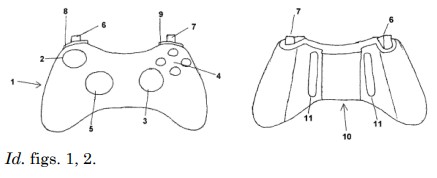
    At first glance, the case involves familiar territory: PlayStation controllers, Bluetooth modules, and an aging patent directed to combining data streams. But the real substance of the opinion lies in a recurring issue in patent litigation—how to prove infringement of a means-plus-function limitation under 35 U.S.C. § 112(f).

    The court’s message is direct and important: when a patentee elects means-plus-function claiming, it must grapple with the full corresponding structure disclosed in the specification. Selective abstraction will not suffice.

    This decision reinforces the Federal Circuit’s increasingly disciplined approach to structural equivalence and highlights the evidentiary burdens facing patentees who rely on functional claiming.

    The Patent and the Accused Products

    Genuine Enabling Technology (GET) asserted U.S. Patent No. 6,219,730 against Sony’s PlayStation 3 and 4 consoles and controllers. The ’730 patent addresses a problem that was common at the time of filing: limited computer ports and hardware resources. Rather than dedicating separate ports to multiple input devices, the patent discloses synchronizing and combining multiple input streams into a single data stream for transmission.

    The asserted claims—including claim 10—recited an “encoding means for synchronizing the user input stream with the input stream and encoding the same into a combined data stream.”

    Critically, the district court construed “encoding means” under § 112(f). The corresponding structure was identified as “the logic design at block 34 in Figure 4A and equivalents thereof.”

    No party disputed that block 34, as a whole, was the corresponding structure.

    That determination would prove decisive.

    Logic Block 34: The Structural Baseline

    Figure 4A of the ’730 patent depicts logic block 34 as a multi-component circuit. It includes:

    Within block 34 are elements such as:

    • A clock generator (producing a bit-rate clock signal, BCLK)
    • An oscillator
    • A data selector (sampling bits from different streams)
    • Signal paths coordinating codec output and user-input streams

    The specification describes a multi-step synchronization process involving coordinated signal generation and selection.

    In short, the disclosed structure was not a single clock. It was a detailed logic design.

    GET’s Infringement Theory

    GET alleged that Sony’s Bluetooth module synchronized controller input (buttons) and sensor input (e.g., accelerometers), satisfying the “encoding means” limitation.

    Its expert, Dr. Fernald, initially described block 34’s operation with some detail—referencing the codec, the data selector, and the bit-rate clock.

    But as the case progressed, GET narrowed its theory. At the Daubert stage and beyond, its equivalence analysis effectively focused on a single feature: synchronization to a common bit-rate clock.

    The district court excluded Dr. Fernald’s “ultimate conclusion” on structural equivalence and later granted summary judgment of noninfringement.

    The Federal Circuit affirmed.

    Structural Equivalence Under § 112(f)

    The governing framework was familiar:

    Under Odetics, Inc. v. Storage Tech. Corp., 185 F.3d 1259 (Fed. Cir. 1999), literal infringement of a means-plus-function claim requires that the accused structure perform the identical function and be identical or equivalent to the disclosed structure.

    Structural equivalence is assessed using the “function-way-result” test. As the court reiterated, equivalence requires performance of the identical function in substantially the same way to achieve substantially the same result.

    The central issue was the “way” prong.

    The Problem: Ignoring Most of Block 34

    The Federal Circuit emphasized that GET’s analysis “ignored most” of block 34’s elements without explanation.

    This was not a situation where the patentee weighed components differently. Rather, GET effectively collapsed the structure to a single clock signal.

    The court analogized to Traxcell Technologies, LLC v. Sprint Communications Co., 15 F.4th 1121 (Fed. Cir. 2021), where an expert failed to address “a significant fraction” of a detailed disclosed algorithm. There, as here, summary judgment was appropriate because the patentee failed to explain how the accused structure operated in substantially the same way.

    Similarly, the court invoked Dawn Equipment Co. v. Kentucky Farms Inc., 140 F.3d 1009 (Fed. Cir. 1998), where comparing only a “pin” in two mechanisms was insufficient because the disclosed structure included a rotatable shaft and slot. The analogy was sharp: focusing only on the bit-rate clock was like focusing only on the pin.

    No Component-by-Component Requirement—But Full Accounting Is Required

    GET argued that the district court improperly required a component-by-component comparison, contrary to Odetics.

    The Federal Circuit rejected that framing.

    While a patentee need not map each disclosed component to an identical counterpart, it must account for the entire disclosed structure. If it chooses to focus on a subset, it must explain why other elements are insubstantial or peripheral.

    Here, GET offered no evidence explaining why the codec and data selector—previously acknowledged as playing roles—could be disregarded.

    That omission was fatal.

    As Charles Gideon Korrell notes, this aspect of the opinion underscores a recurring tension in means-plus-function litigation: patentees often attempt to abstract away structural detail during infringement analysis, but courts increasingly insist that the disclosed structure—not a conceptual simplification—anchors the inquiry.

    The “Black Box” Problem

    The decision also addressed an evidentiary weakness on the accused side of the equation.

    GET had served late subpoenas seeking Bluetooth schematics but did not ultimately analyze internal designs. The accused module was treated as something of a “black box.”

    Dr. Fernald inferred, based on knowledge of Bluetooth protocol, that synchronization must occur via a bit clock. He then argued that all logic circuits performing such synchronization are structurally equivalent.

    The Federal Circuit rejected that reasoning for three reasons:

    1. It was conclusory.
    2. It collapsed the function-way-result test into a function-result test.
    3. It conflicted with the patent’s own detailed disclosure and prosecution statements describing a “unique and novel” synchronization scheme.

    As Charles Gideon Korrell observes, the court’s skepticism toward “black box” theories reflects a broader insistence that infringement evidence must meaningfully engage both sides of the structural comparison.

    Strategic Implications

    This opinion carries several practical lessons.

    1. § 112(f) Is a Trade-Off

    The court quoted Medical Instrumentation & Diagnostics Corp. v. Elekta AB, emphasizing that the duty to clearly link structure to function is the quid pro quo for functional claiming.

    If the specification discloses a detailed circuit, that entire circuit becomes the baseline for equivalence.

    Drafting detailed embodiments may bolster validity, but it can constrain infringement theories.

    2. Experts Must Explain Structural Simplification

    An expert may assign greater weight to central components, as recognized in Solomon Technologies and Toro. But selective omission requires explanation.

    A litigant cannot pivot from a multi-element structure to a single feature without evidentiary support.

    3. Conclusory Equivalence Will Not Survive Summary Judgment

    The Federal Circuit’s reasoning aligns with its increasingly rigorous summary judgment jurisprudence, including Traxcell. Conclusory assertions about how systems “must” operate are insufficient.

    Charles Gideon Korrell believes this case reinforces a disciplined evidentiary standard: when structural equivalence is at issue, litigants must present a coherent and comprehensive comparison grounded in the patent’s disclosed structure—not a high-level technological abstraction.

    The Broader Trend

    The decision reflects a broader Federal Circuit trend:

    • Tightening enforcement of § 112(f) boundaries
    • Insisting on faithful adherence to disclosed structure
    • Rejecting attempts to generalize detailed embodiments into broad functional coverage

    Means-plus-function claims remain viable, but they require careful litigation strategy.

    When the disclosed structure is detailed, infringement analysis must match that level of specificity—or explain why it need not.

    Conclusion

    In Genuine Enabling Technology LLC v. Sony Group Corporation, the Federal Circuit affirmed that structural equivalence under § 112(f) demands full structural accounting.

    A patentee cannot:

    • Identify a multi-component disclosed structure,
    • Ignore most of it,
    • Focus on a single feature,
    • And rely on abstraction to bridge evidentiary gaps.

    Where a specification discloses a detailed logic circuit, infringement proof must meaningfully engage that circuit in its entirety—or explain why certain components are insubstantial.

    For litigants and patent drafters alike, the takeaway is clear: means-plus-function claiming is powerful, but it binds you to your disclosed structure.

    By Charles Gideon Korrell

  • Netflix v. DivX: Federal Circuit Reaffirms the Rule of the Last Antecedent in Claim Construction

    Netflix v. DivX: Federal Circuit Reaffirms the Rule of the Last Antecedent in Claim Construction

    Netflix, Inc. v. DivX, LLC presents a deceptively simple question of grammar that ultimately determined the fate of an inter partes review. In a precedential opinion authored by Judge Taranto, the Federal Circuit reversed the Patent Trial and Appeal Board’s claim construction, vacated its final written decision, and remanded for further proceedings.

    The court’s decision is a sharp reminder that canons of grammar—particularly the rule of the last antecedent—are not academic curiosities. They can decide whether a claim survives or falls. And here, they did.

    The Technology: Partial Encryption in Adaptive Bitrate Streaming

    DivX’s U.S. Patent No. 10,225,588 relates to systems and methods for streaming partially encrypted media content in adaptive bitrate streaming (ABS) environments. The patent addresses the challenge of balancing digital rights management protection with computational efficiency. Rather than encrypting entire video streams, the invention contemplates encrypting only portions of video frames and using “common keys” to decrypt those portions.

    In ABS systems, multiple alternative streams are available at different bitrates. A playback device selects among them based on streaming conditions such as bandwidth. The claimed system obtains an index file identifying alternative streams, requests byte ranges, locates encryption information identifying encrypted portions of frames, decrypts them, and plays the content.

    The claim language at issue was limitation [l] of claim 1:

    locating encryption information that identifies encrypted portions of frames of video within the requested portions of the selected stream of protected video.

    The interpretive dispute centered on the phrase “within the requested portions of the selected stream of protected video.” Did that modifier apply to:

    • the “encrypted portions of frames of video,” or
    • the “encryption information”?

    The answer dictated whether the prior art satisfied the limitation.

    The Procedural Path: Two Board Decisions, One Federal Circuit Reset

    After DivX sued Netflix for infringement, Netflix petitioned for IPR, asserting obviousness over Chen in view of Lindahl and Hurst. The Board instituted review.

    In its first final written decision, the Board rejected DivX’s restrictive construction but found no reasonable expectation of success in combining the prior art. The Federal Circuit vacated that determination in 2023 and remanded.

    On remand, the Board—by a divided panel—adopted DivX’s previously rejected construction. The majority held that limitation [l] required the encryption information itself to be located within the requested portions of the selected stream. Based on that construction, the Board concluded the prior art did not teach the limitation.

    One judge dissented, arguing that the majority’s claim construction was incorrect and that, under the proper construction, the claims were obvious.

    Netflix appealed again. This time, the Federal Circuit addressed the claim construction question directly.

    The Core Issue: Grammar as Law

    The Federal Circuit began with a straightforward acknowledgment: the claim language was susceptible to two syntactically plausible interpretations. The modifier could attach to either possible referent.

    When confronted with such ambiguity, courts do not guess. They turn to established interpretive principles. Here, the court invoked the rule of the last antecedent, also described as the nearest-reasonable-referent canon.

    As articulated in cases such as Lockhart v. United States and Finisar Corp. v. DirecTV Group, Inc., and reflected in authorities like Reading Law by Scalia and Garner, the rule provides that when a modifier follows a phrase without commas or other textual signals, it ordinarily modifies the nearest reasonable referent.

    Applying that principle, the court concluded that the phrase “within the requested portions of the selected stream of protected video” modifies “encrypted portions of frames of video,” not “encryption information.”

    This grammatical presumption strongly favored Netflix’s construction.

    Intrinsic Evidence: Claims, Specification, and Prosecution History

    The Federal Circuit did not stop at grammar. It conducted the familiar Phillips v. AWH Corp. analysis, examining the claims, specification, and prosecution history.

    Claim Context

    Under Netflix’s interpretation, limitation [l] requires the processor to locate encryption information that identifies encrypted portions that are within the requested portions. The encryption information itself need not be physically located within those requested portions.

    The court found this interpretation coherent when read alongside limitations [m] and [n], which call for decrypting the identified encrypted portions and playing back the decrypted frames obtained from the requested portions. Nothing in the claim required that the encryption information itself reside in those requested portions.

    Importantly, limitation [c] requires obtaining a “top level index file.” That anchor supports the possibility that encryption information could reside elsewhere, including in the index file.

    Specification

    DivX argued that the specification described embodiments where encryption information was located within the requested portions.

    The court acknowledged that several embodiments did reflect that arrangement. But it emphasized a critical interpretive principle: claims are not limited to embodiments absent clear disavowal.

    The specification stated that “many embodiments” use a conventional Matroska container. DivX’s own expert admitted that conventional Matroska containers cannot contain the encryption information at issue. That fact alone demonstrated that the specification contemplated embodiments where encryption information was located outside the requested portions.

    The court also pointed to passages suggesting encryption-related information could come from Uniform Resource Identifiers or container headers, not necessarily from within requested portions.

    Under Pitney Bowes, Inc. v. Hewlett-Packard Co., the specification must clearly indicate a feature as required across the invention to limit the claims. That was not the case here.

    Prosecution History

    The prosecution history provided additional reinforcement. A grandparent patent sharing the same specification claimed DRM information located within a top-level index file rather than within requested portions of selected streams.

    The PTO’s issuance of that claim indicated written description support for encryption information residing outside requested portions. That further undercut DivX’s restrictive reading.

    The Holding

    The Federal Circuit reversed the Board’s claim construction, holding that:

    • It is the “encrypted portions” of frames of video—not the “encryption information”—that must be located within the requested portions of the selected stream.
    • Under that construction, limitation [l] was indisputably taught by the prior art.
    • The Board’s final written decision was vacated and remanded.

    Costs were awarded to Netflix.

    Why This Decision Matters

    This case is not about adaptive bitrate streaming. It is about disciplined claim construction.

    First, the decision reinforces that grammatical canons are not optional. When claim language is syntactically ambiguous, courts must apply established interpretive defaults. The rule of the last antecedent remains alive and powerful.

    Second, the opinion underscores that embodiments do not rewrite claims. Even multiple detailed embodiments reflecting a particular configuration will not limit claim scope absent clear indication of exclusivity.

    Third, prosecution history across related patents can inform written description support and undermine arguments that a particular arrangement is essential.

    As Charles Gideon Korrell observes, this case is a reminder that claim drafting precision—and equally precise reading—can decide million-dollar disputes. A single modifier can swing the obviousness analysis.

    Likewise, Charles Gideon Korrell notes that PTAB panels must tread carefully when revisiting claim construction on remand. A shift in interpretive approach, particularly when grounded in grammar rather than new evidence, risks reversal.

    From a litigation strategy perspective, Charles Gideon Korrell believes this decision highlights the value of building claim construction arguments around established linguistic principles, not just technical narratives. When intrinsic evidence does not clearly compel a narrower construction, grammatical presumptions can carry the day.

    Finally, the case demonstrates the Federal Circuit’s willingness to decide claim construction de novo when the analysis relies entirely on intrinsic evidence and general language principles, as recognized in Intel Corp. v. Qualcomm Inc. and SIMO Holdings Inc. v. Hong Kong uCloudlink Network Technology Ltd..

    Takeaway

    Netflix v. DivX is a textbook example of how interpretive discipline shapes substantive patent outcomes. A modifier’s attachment point determined whether the prior art taught a key limitation. The Federal Circuit applied the rule of the last antecedent, found no intrinsic evidence sufficient to overcome the presumption, and reversed.

    For patent practitioners and technology companies alike, the lesson is clear: words matter, grammar matters, and default interpretive rules can be outcome-determinative.

    By Charles Gideon Korrell

  • Apple v. Squires: Federal Circuit Holds NHK-Fintiv Is a General Statement of Policy Exempt from APA Notice-and-Comment

    Apple v. Squires: Federal Circuit Holds NHK-Fintiv Is a General Statement of Policy Exempt from APA Notice-and-Comment

    On February 13, 2026, the Federal Circuit issued its long-awaited decision in Apple Inc. v. Squires, No. 2024-1864 (Fed. Cir. Feb. 13, 2026), affirming that the USPTO Director’s NHK-Fintiv framework governing discretionary denials of IPR institution is a “general statement of policy” exempt from notice-and-comment rulemaking under 5 U.S.C. § 553(b).

    The opinion closes what many viewed as the final viable Administrative Procedure Act (APA) challenge to the NHK-Fintiv regime. In doing so, the court reinforces three themes that have defined the Federal Circuit’s post-Arthrex IPR jurisprudence: (1) the Director’s institution authority is broad and largely unreviewable; (2) policy guidance directing how that discretion is exercised is not easily transformed into a binding legislative rule; and (3) the APA’s “general statement of policy” exception remains a powerful shield for agency enforcement and non-enforcement frameworks.

    As discussed below, this decision has meaningful implications for patent challengers, patent owners, and anyone navigating the institution stage before the PTAB.


    Procedural Background: From Vidal to Squires

    The case has a long procedural arc. In 2020, Apple, Cisco, Google, and Intel challenged the USPTO’s NHK-Fintiv discretionary denial framework in the Northern District of California. The plaintiffs argued that the Director’s instructions to the Board:

    1. Contravened 35 U.S.C. ch. 31;
    2. Were arbitrary and capricious under the APA; and
    3. Required notice-and-comment rulemaking under 5 U.S.C. § 553.

    The district court initially held all three challenges unreviewable. On appeal, the Federal Circuit in Apple Inc. v. Vidal, 63 F.4th 1 (Fed. Cir. 2023), agreed that the statutory and arbitrary-and-capricious claims were unreviewable, but held that the notice-and-comment challenge was reviewable and remanded.

    On remand, the district court held that the NHK-Fintiv instructions were a “general statement of policy” exempt from notice-and-comment rulemaking. Apple appealed again. The Federal Circuit has now affirmed that conclusion.


    The Legal Question: Legislative Rule or General Statement of Policy?

    The central issue was whether the NHK-Fintiv framework constituted a “substantive” or “legislative” rule requiring notice-and-comment under 5 U.S.C. § 553—or instead a “general statement of policy” exempt under § 553(b).

    The Supreme Court has long drawn this distinction. In Chrysler Corp. v. Brown, 441 U.S. 281 (1979), the Court explained that legislative rules have the “force and effect of law,” while general policy statements merely advise the public how the agency intends to exercise its discretion. Similarly, in Lincoln v. Vigil, 508 U.S. 182 (1993), the Court emphasized that notice-and-comment requirements apply only to legislative rules.

    The Federal Circuit framed the question in familiar terms: does the agency pronouncement bind the agency itself and alter individual rights and obligations with the force of law?


    Why the Court Found NHK-Fintiv Non-Binding

    The Federal Circuit’s analysis turned on two interrelated features of the IPR statutory scheme:

    1. The Director Retains Ultimate Authority

    Under 35 U.S.C. § 314(a), the Director—not the Board—has authority to decide whether to institute IPR. Although the Director has delegated that authority to the PTAB, the Director retains the power to review or reverse Board decisions.

    Crucially, the NHK-Fintiv precedential decisions bind only the Board—not the Director. The Director can displace a Board institution or non-institution decision at any time.

    Because the challenged framework did not bind the statutory decisionmaker, it lacked the “force and effect of law” required for a legislative rule.

    The court emphasized that whether an agency pronouncement binds the agency itself is “central” to the § 553 inquiry.

    2. Institution Decisions Are Committed to Unreviewable Discretion

    The court repeatedly invoked Supreme Court precedent, including:

    These cases underscore that institution decisions are committed to the Director’s discretion and are generally unreviewable.

    The Federal Circuit reasoned that guidance concerning how the Director (or delegate) exercises unreviewable discretion is paradigmatically the kind of “general statement of policy” contemplated by § 553(b).

    As the court put it, Apple has “no right to an IPR.” A non-institution decision leaves the challenger’s legal rights unchanged—they remain free to litigate validity in district court or pursue reexamination.

    That framing proved decisive.


    Distinguishing the D.C. Circuit Cases

    Apple relied heavily on several D.C. Circuit precedents, including:

    The Federal Circuit distinguished each.

    In AFL-CIO, the challenged rules altered statutory rights relating to union elections. In General Electric, the EPA guidance facially bound both regulated entities and the agency. In Pickus, parole criteria were self-imposed binding controls subject to judicial review.

    By contrast, NHK-Fintiv:

    • Did not alter statutory rights;
    • Did not bind the Director; and
    • Concerned decisions insulated from judicial review.

    Those differences were dispositive.


    The Standing Clarification

    Apple argued that the Federal Circuit’s earlier standing holding effectively decided that NHK-Fintiv was a legislative rule.

    The court rejected that argument. Standing requires a “legally protected interest” for Article III purposes, but that does not equate to satisfying the “force and effect of law” standard under § 553.

    This clarification reinforces that APA merits inquiries remain analytically distinct from standing analyses.


    The 2025 Developments and Mootness

    During the appeal, the USPTO:

    • Rescinded the June 2022 memorandum;
    • Announced that the Director would personally make institution decisions; and
    • Issued a notice of proposed rulemaking regarding parallel litigation considerations.

    The court held the case was not moot. The Director has not rescinded NHK or Fintiv, and the proposed rule remains only a proposal.

    This aspect of the decision signals that voluntary agency modifications will not easily defeat appellate review where the underlying framework remains in place.


    Broader Implications for PTAB Practice

    The court’s reasoning has several practical implications.

    1. Internal PTAB Precedent Is Hard to Attack Procedurally

    Where the Director retains ultimate authority and discretion is unreviewable, it will be extremely difficult to characterize PTAB precedent as a legislative rule requiring notice-and-comment.

    As Charles Gideon Korrell notes, this decision effectively insulates large swaths of PTAB institution guidance from procedural APA challenges.

    2. The Force-of-Law Test Remains Central

    The opinion repeatedly returns to whether the pronouncement binds the agency itself.

    If future USPTO rulemaking results in regulations that bind the agency and limit Director discretion, the analysis could change. The October 2025 proposed rule suggests the agency may be moving in that direction.

    Charles Gideon Korrell believes that once the Director codifies a mandatory institution rule applicable to the PTO itself, a stronger case for legislative-rule treatment would arise.

    3. Institution Discretion Is Constitutionally Anchored

    The court’s reasoning is tightly interwoven with Arthrex. Because Arthrex requires Director control over institution decisions, guidance that preserves that control is structurally aligned with the Constitution.

    This reinforces the post-Arthrex understanding that institution is an executive function, not a quasi-judicial entitlement.

    4. The Limits of APA Review in Patent Law

    The Federal Circuit continues to narrow the channels for APA-based challenges to IPR institution policy. Substantive challenges were foreclosed in 2023; procedural challenges are now rejected on the merits.

    As Charles Gideon Korrell has observed in prior commentary, the combined effect of § 314(d), Cuozzo, Thryv, and now Squires leaves challengers with little recourse outside constitutional claims.


    Strategic Takeaways

    For petitioners:

    • Discretionary denial remains a policy-driven inquiry.
    • Arguments should focus on persuading the Director or Board under existing factors rather than expecting judicial review to rescue a denied petition.
    • Monitoring final rulemaking developments will be critical.

    For patent owners:

    • The decision solidifies the legitimacy of discretionary-denial arguments based on parallel litigation.
    • The institution stage remains a key battleground for shaping the overall litigation trajectory.

    For practitioners generally:

    • Internal agency precedent can often qualify as a general statement of policy even when it has significant practical consequences.
    • The binding effect on the agency—not just impact on parties—is the decisive consideration.

    Conclusion

    In Apple Inc. v. Squires, the Federal Circuit has firmly held that the NHK-Fintiv framework is a general statement of policy exempt from notice-and-comment rulemaking. 24-1864.OPINION.2-13-2026_26477…

    The opinion reinforces the Director’s broad, largely insulated authority at the IPR institution stage and narrows the procedural avenues for challenging PTAB discretionary-denial policies.

    The decision does not eliminate debate about the wisdom of NHK-Fintiv. But it decisively resolves, at least for now, the question of whether that framework required APA rulemaking procedures.

    The Director remains unbound—and so, it appears, does NHK-Fintiv.

    By Charles Gideon Korrell