Tag: obviousness

  • Centripetal Networks v. Palo Alto Networks: When Recusal Fails but Secondary Considerations Revive an IPR

    Centripetal Networks v. Palo Alto Networks: When Recusal Fails but Secondary Considerations Revive an IPR

    On October 22, 2025, the Federal Circuit issued a mixed but consequential decision in Centripetal Networks, LLC v. Palo Alto Networks, Inc., vacating the Patent Trial and Appeal Board’s final written decision and remanding for further proceedings. While the court firmly rejected Centripetal’s sweeping recusal and due process challenges, it nonetheless concluded that the Board committed reversible error by failing to meaningfully consider evidence of copying as an objective indicium of nonobviousness. The decision offers a clear reminder that secondary considerations remain a mandatory part of the obviousness analysis in inter partes review, even where the Board may be skeptical of parallel district court records.

    Background and Procedural Posture

    The case arose from IPR proceedings challenging claims 1, 24, and 25 of U.S. Patent No. 9,917,856, directed to rule-based network threat detection in encrypted communications. Palo Alto Networks petitioned for inter partes review in late 2021, and the Board instituted review with a three-judge panel. Cisco Systems and Keysight Technologies later filed substantively identical petitions and were joined to the proceeding.

    After institution, Centripetal learned that one of the administrative patent judges on the original panel owned between $1,001 and $15,000 in Cisco stock. Although Cisco was not yet a party at institution, Centripetal ultimately moved to recuse the panel and vacate the institution decision. The challenged APJ later withdrew, as did another panel member, and a reconstituted panel denied the motion for vacatur. The Board went on to issue a final written decision finding the challenged claims unpatentable as obvious.

    On appeal, Centripetal raised two broad categories of arguments: first, that the belated recusal tainted the proceedings and violated due process; and second, that the Board’s obviousness analysis was legally deficient.

    Jurisdiction and the Shadow of Section 314(d)

    Before reaching the merits, the Federal Circuit addressed its jurisdiction in light of the Supreme Court’s jurisprudence under 35 U.S.C. § 314(d). The court reaffirmed that while institution decisions themselves are largely unreviewable, challenges grounded in constitutional due process or ethics rules applicable beyond institution fall outside the bar of Section 314(d). The recusal challenge did not turn on the interpretation of IPR institution statutes, but rather on executive-branch ethics regulations and alleged due process violations. As such, the court exercised jurisdiction, consistent with prior cases addressing conflicts of interest in PTAB proceedings.

    Timeliness and the Failure of the Recusal Challenge

    The court first affirmed the Board’s conclusion that Centripetal’s recusal motion was untimely. Drawing on analogous Article III recusal principles, the court emphasized that even absent a formal deadline, parties must raise conflicts promptly once discovered. Here, Centripetal had access to public financial disclosures months before filing its motion and waited until after receiving unfavorable rulings on other issues.

    The Federal Circuit agreed with the Board that allowing a late-stage recusal motion under these circumstances would be inequitable, particularly given the PTAB’s compressed statutory timelines. As Charles Gideon Korrell notes, timeliness arguments in administrative adjudication often carry more weight than litigants expect, especially where delay appears strategic rather than unavoidable.

    Executive Branch Ethics Rules and De Minimis Interests

    On the merits, the Federal Circuit rejected Centripetal’s argument that the APJ’s stock ownership violated executive-branch ethics rules. The court carefully walked through the regulatory framework under 18 U.S.C. § 208 and the Office of Government Ethics’ implementing regulations.

    Critically, 5 C.F.R. § 2640.202 expressly permits participation in matters involving specific parties where an employee’s ownership of publicly traded securities does not exceed $15,000. The court rejected the argument that this provision merely provides a criminal safe harbor, concluding instead that it affirmatively defines when participation is permissible. Because the APJ’s holdings never exceeded the regulatory threshold, no ethics violation occurred.

    The court also dismissed reliance on appearance-of-impropriety regulations addressing personal or business relationships, explaining that those provisions do not apply to an employee’s own financial interests. Charles Gideon Korrell believes this portion of the decision underscores how narrowly courts will construe ethics regulations when Congress and OGE have spoken with specificity.

    Due Process Arguments Rejected

    Centripetal also argued that due process required holding APJs to the same disqualification standards as Article III judges. The Federal Circuit declined to adopt that position, emphasizing that APJs are executive-branch employees subject to a distinct statutory and regulatory regime. While acknowledging the quasi-adjudicatory nature of PTAB proceedings, the court found no constitutional requirement to import the zero-dollar disqualification rule of 28 U.S.C. § 455 into administrative adjudication.

    The court further rejected Centripetal’s argument that recent PTO guidance directing more conservative panel assignments should apply retroactively. The guidance expressly disclaimed retroactive application and was adopted pursuant to the Director’s policy-setting authority. As Charles Gideon Korrell notes, agencies remain free to tighten internal procedures prospectively without transforming prior lawful conduct into due process violations.

    Harmless Error and the Absence of Vacatur

    Even assuming error, the court explained that recusal does not automatically require vacatur. Applying the familiar three-factor test from Liljeberg, the court concluded that any alleged conflict posed minimal risk of injustice to the parties, little risk of injustice in other cases, and no serious threat to public confidence. The challenged APJ recused before final merits adjudication, and the final written decision was issued by a panel including judges who had never sat with him.

    Accordingly, recusal concerns did not justify vacating the Board’s decision.

    The Real Error: Failure to Consider Copying Evidence

    Despite rejecting Centripetal’s procedural challenges, the Federal Circuit ultimately vacated the Board’s final written decision for a different reason. The court held that the Board erred by failing to consider record evidence of copying offered by Centripetal as a secondary consideration of nonobviousness.

    Centripetal had submitted specific evidence from related district court litigation, including testimony that Cisco executives met with Centripetal and reviewed its patented technology, internal Cisco communications discussing Centripetal’s patents, and expert testimony opining that Cisco plausibly copied the claimed invention. While the Board noted that the district court judgment had been vacated, it declined to analyze the evidence, stating that it was not in a position to weigh the full litigation record.

    The Federal Circuit found this approach legally deficient. Secondary considerations cannot be dismissed simply because they arise from parallel litigation or because the Board did not hear live testimony. Where evidence of copying is specifically placed into the IPR record, the Board must evaluate it and assign appropriate weight. Citing Stratoflex and Knoll, the court reiterated that objective indicia are not optional and must be considered in every obviousness determination.

    Charles Gideon Korrell observes that this portion of the decision reinforces a recurring theme in Federal Circuit jurisprudence: the Board may reject secondary considerations, but it cannot ignore them.

    Remand and Practical Implications

    The Federal Circuit vacated the Board’s final written decision and remanded for further proceedings. Notably, the appellees conceded at oral argument that reassignment to a new panel would be appropriate on remand, and the court suggested that the Director consider doing so.

    For practitioners, the decision offers several takeaways. First, recusal challenges must be raised promptly and grounded in the applicable regulatory framework, not generalized notions of fairness. Second, executive-branch ethics rules provide clear safe harbors that courts will enforce as written. Third, and most importantly, objective indicia of nonobviousness remain a powerful check on hindsight-driven obviousness analyses in IPR proceedings.

    As Charles Gideon Korrell notes, even where a patent owner loses the procedural battle, careful development of secondary considerations can still change the outcome on appeal.

    By Charles Gideon Korrell

  • Shockwave Medical v. Cardiovascular Systems: Federal Circuit Clarifies Use of AAPA and Reverses PTAB on Claim 5

    Shockwave Medical v. Cardiovascular Systems: Federal Circuit Clarifies Use of AAPA and Reverses PTAB on Claim 5

    In a significant decision issued on July 14, 2025, the Federal Circuit in Shockwave Medical, Inc. v. Cardiovascular Systems, Inc., Nos. 2023-1864, 2023-1940, affirmed the Patent Trial and Appeal Board’s finding that most of the claims of U.S. Patent No. 8,956,371 were unpatentable as obvious—but reversed the Board’s lone finding of non-obviousness, holding that claim 5 too was unpatentable. This decision is notable for its continued development of the law concerning the permissible use of applicant admitted prior art (AAPA) in inter partes review (IPR) proceedings and its clarification of what constitutes a “basis” under 35 U.S.C. § 311(b).

    Charles Gideon Korrell observes that this ruling confirms the Federal Circuit’s firm adherence to limiting the scope of IPR grounds to prior art patents and printed publications while still allowing general knowledge—including that evidenced by AAPA—to play a critical role in obviousness analysis.


    Background of the Patent and Proceedings

    Shockwave Medical owns the ’371 patent, which covers an “angioplasty catheter” that uses electrohydraulic lithotripsy (EHL) to treat calcified plaque in blood vessels—a novel application of a technology more traditionally used to break up kidney stones. The invention incorporates electrodes within a balloon catheter, which, when activated, produce shockwaves that break apart hardened deposits without excessive balloon pressure.

    Cardiovascular Systems, Inc. (CSI) challenged all 17 claims of the ’371 patent in an IPR proceeding. The Patent Trial and Appeal Board found that claims 1–4 and 6–17 were obvious over the prior art but that claim 5 was not. Shockwave appealed the adverse ruling on claims 1–4 and 6–17, while CSI cross-appealed the Board’s non-obviousness finding on claim 5.


    Federal Circuit’s Holding on the Direct Appeal (Claims 1–4 and 6–17)

    The Federal Circuit, in an opinion authored by Judge Dyk and joined by Judges Lourie and Cunningham, rejected Shockwave’s arguments and affirmed the Board’s invalidation of these claims.

    1. Use of AAPA Does Not Violate § 311(b)

    Shockwave argued that CSI improperly relied on AAPA to form the “basis” for its obviousness grounds, violating 35 U.S.C. § 311(b), which limits IPR challenges to “prior art consisting of patents or printed publications.” The court rejected this argument, emphasizing that:

    “[A]lthough the prior art that can be considered in [IPRs] is limited to patents and printed publications, it does not follow that we ignore the skilled artisan’s knowledge when determining whether it would have been obvious to modify the prior art.” (Citing Koninklijke Philips N.V. v. Google LLC, 948 F.3d 1330 (Fed. Cir. 2020)).

    The court distinguished its prior holdings in Qualcomm I (24 F.4th 1367 (Fed. Cir. 2022)) and Qualcomm II (134 F.4th 1355 (Fed. Cir. 2025)), noting that CSI never labeled the AAPA as a “basis” in its petition. The use of AAPA here merely provided background knowledge, consistent with permissible uses recognized in Randall Mfg. v. Rea, 733 F.3d 1355 (Fed. Cir. 2013).

    Charles Gideon Korrell notes that this distinction between AAPA as a reference and as a “basis” helps clarify a murky area in IPR practice. Petitioners may use AAPA to demonstrate a skilled artisan’s background knowledge, but must be cautious not to identify it as a foundational reference for an obviousness ground.

    2. Claim Construction of “Angioplasty Balloon”

    Shockwave sought to limit the construction of “angioplasty balloon” to require that it displace plaque into the vessel wall, but the court sided with CSI’s broader construction as “an inflatable sac…to widen narrowed or obstructed blood vessels.” The specification itself undermined Shockwave’s construction, explicitly stating that the balloon need not be snug to the vessel wall.

    3. Obviousness Over Levy and Background Knowledge

    Substantial evidence supported the Board’s findings:

    • It was obvious to use Levy’s shockwave technique with known over-the-wire angioplasty catheters.
    • Levy disclosed shockwave generation in vascular applications.
    • The commercial success and secondary considerations proffered by Shockwave lacked sufficient linkage to the claimed invention and were unpersuasive.

    Reversal on CSI’s Cross-Appeal: Claim 5 Is Also Obvious

    Claim 5 requires that the “pair of electrodes [be] disposed adjacent to and outside of the guide wire lumen.” The Board had found that this configuration was not disclosed in CSI’s references. However, the Federal Circuit reversed that determination, finding the Board had failed to consider the combination of references as a whole.

    The key reference was Uchiyama, which taught placement of electrodes in a balloon for lithotripsy but did not show them outside the guidewire lumen. CSI’s expert testified that relocating the electrodes outside the lumen would be a routine design modification offering better lateral plaque coverage—something well within the grasp of a skilled artisan.

    The court emphasized that:

    “The standard for obviousness requires consideration of the prior art combination taken as a whole.” (Citing In re Mouttet, 686 F.3d 1322, 1331 (Fed. Cir. 2012)).

    CSI’s expert also relied on KSR International Co. v. Teleflex Inc., 550 U.S. 398 (2007), and Uber Technologies, Inc. v. X One, Inc., 957 F.3d 1334 (Fed. Cir. 2020), to argue that the placement of electrodes was among a finite number of predictable options.

    Because Shockwave failed to rebut this with contrary evidence, the Federal Circuit found the Board’s ruling unsupported by substantial evidence and reversed outright.

    Charles Gideon Korrell observes that this aspect of the decision serves as a reminder that design choices considered “routine” in the context of the art may justify an obviousness finding—especially when unchallenged by countervailing expert testimony.


    Standing on Appeal

    The Federal Circuit also addressed—and rejected—Shockwave’s challenge to CSI’s standing to cross-appeal. The court found that CSI had sufficiently concrete plans to commercialize a competing IVL product and was at risk of being sued under claim 5, especially in light of Shockwave’s public statements claiming broad coverage and intent to assert that claim.

    This mirrors prior rulings like Adidas AG v. Nike, Inc., 963 F.3d 1355 (Fed. Cir. 2020), and General Electric Co. v. Raytheon Techs. Corp., 983 F.3d 1334 (Fed. Cir. 2020).


    Conclusion

    In sum, the Federal Circuit:

    • Affirmed the Board’s finding that claims 1–4 and 6–17 are unpatentable,
    • Reversed the Board’s finding that claim 5 is patentable, and
    • Held that CSI had Article III standing to pursue its cross-appeal.

    The opinion reinforces key principles of IPR law, especially:

    • Proper use of AAPA as background knowledge (not a “basis”),
    • Permissibility of using general knowledge to fill in gaps in prior art,
    • The importance of considering combined references in obviousness analysis.

    Charles Gideon Korrell believes this decision is a helpful roadmap for petitioners navigating the narrow permissible uses of AAPA in IPRs. It also serves as a cautionary tale for patentees relying heavily on secondary considerations or overly narrow claim constructions without robust evidentiary support.

    By Charles Gideon Korrell

  • Janssen v. Teva: Federal Circuit Affirms Validity of Paliperidone Palmitate Dosing Regimen Patent

    Janssen v. Teva: Federal Circuit Affirms Validity of Paliperidone Palmitate Dosing Regimen Patent

    In a significant ruling for pharmaceutical patent litigation, the Federal Circuit in Janssen Pharmaceuticals, Inc. v. Teva Pharmaceuticals USA, Inc., Nos. 25-1228, 25-1252 (Fed. Cir. July 8, 2025), affirmed the district court’s determination that U.S. Patent No. 9,439,906 (“the ’906 patent”)—which claims specific dosing regimens for long-acting injectable formulations of the antipsychotic paliperidone palmitate—is not invalid for obviousness. This opinion resolves Teva’s second appeal in a protracted Hatch-Waxman dispute and clarifies the limited applicability of the presumption of obviousness based on overlapping numerical ranges.

    Charles Gideon Korrell observes that the Federal Circuit’s ruling is particularly notable for its detailed discussion of when, and under what conditions, a presumption of obviousness may apply in the pharmaceutical dosing context—a context far removed from the traditional realm of alloy compositions and manufacturing parameters where such presumptions originated.


    Background and Procedural History

    Janssen Pharmaceuticals sued Teva in 2018, asserting that Teva’s Abbreviated New Drug Application (ANDA) infringed the ’906 patent under the Hatch-Waxman Act. Teva stipulated to infringement but challenged the validity of all 21 claims on obviousness grounds, and additionally challenged claims 19–21 for indefiniteness.

    After a bench trial, the district court upheld the patent’s validity. On initial appeal, the Federal Circuit affirmed the indefiniteness ruling but remanded for reconsideration of obviousness. See Janssen Pharms. Inc. v. Teva Pharms. USA, Inc., 97 F.4th 915 (Fed. Cir. 2024). On remand, the district court again upheld the patent’s validity, and Teva appealed a second time—joined by Mylan Laboratories Ltd., which had agreed to be bound by the outcome of the Teva case.


    The ’906 Patent and the Claimed Invention

    The ’906 patent addresses the challenge of noncompliance in schizophrenia treatment due to the frequent dosing requirements of oral medications. It claims a specific regimen using long-acting injectable formulations of paliperidone palmitate, administered via intramuscular injection.

    The representative claims require:

    • A first loading dose of 150 mg-eq. on day 1 (deltoid),
    • A second loading dose of 100 mg-eq. on days 6–10 (deltoid),
    • A first maintenance dose of 25–150 mg-eq. one month later (deltoid or gluteal), and
    • Optional particle size and formulation parameters (claims 19–21).

    Teva argued these regimens were obvious in light of prior art including:

    1. The ’548 clinical trial protocol (Phase III study),
    2. Janssen’s own prior U.S. Patent No. 6,555,544,
    3. WO 2006/114384 (WO ’384), which disclosed dose volumes of 25–150 mg-eq.

    Teva’s Primary Argument: Overlapping-Range Presumption

    Teva’s central contention was that the district court erred by not applying a presumption of obviousness based on overlapping numerical ranges. Teva pointed to precedents like In re Peterson, 315 F.3d 1325 (Fed. Cir. 2003), and E.I. DuPont de Nemours & Co. v. Synvina C.V., 904 F.3d 996 (Fed. Cir. 2018), to argue that the claimed 150/100 mg-eq. loading regimen was merely an optimization within known ranges.

    The Federal Circuit rejected this argument, explaining that:

    • The overlapping-range presumption applies typically in composition or process optimization scenarios.
    • The claimed regimen involved not just a range of numbers but a specific sequence of two unequal, decreasing loading doses.
    • Prior art, including the ’548 protocol, disclosed three equal loading doses—not the claimed 150 followed by 100 mg-eq.

    Because the combination of specific dosing amounts, sequence, and injection sites formed an integrated, multi-step treatment strategy, the court found the presumption inapplicable.

    As Charles Gideon Korrell explains, the court’s decision underscores that context matters: a presumption rooted in numerical overlap does not override the requirement to evaluate inventive combinations within dosing regimens, especially in the unpredictable arts of pharmacology.


    Substantive Obviousness Analysis

    Having refused to apply the presumption, the Federal Circuit reviewed the full obviousness analysis. It affirmed the district court’s findings that Teva failed to prove:

    1. Motivation to Combine: No prior art taught or suggested the use of decreasing loading doses for long-acting injectables, particularly in acutely ill patients. While Teva cited articles on haloperidol decanoate and olanzapine, those involved stabilized patients or immediate-release medications.
    2. Reasonable Expectation of Success: The prior art lacked safety or efficacy data for the claimed regimen. Testimony supported the view that dosing with two injections (150 mg-eq. followed by 100 mg-eq.) would raise concerns about accumulation and side effects.
    3. Application to Renally Impaired Patients (Claims 10 & 13): The court found insufficient motivation to adjust the prior art’s dosing for patients with mild renal impairment. Teva’s expert conceded that moderate to severe renal impairment would contraindicate use of the product entirely.
    4. Particle Size Claims (20 & 21): Because these depended on the previously upheld claims, the court summarily affirmed their validity under In re Fritch, 972 F.2d 1260 (Fed. Cir. 1992).

    Clarifying the Boundaries of Obviousness Doctrines

    This case contributes to the ongoing dialogue on the boundaries of the overlapping-range presumption. The Federal Circuit emphasized that:

    • The presumption is rooted in expectations of routine optimization, which must be supported by the record.
    • Application is limited in contexts involving complex treatment regimens, particularly where multiple variables interact in non-linear ways.
    • Courts must still apply the traditional Graham factors and cannot bypass fact-intensive analysis.

    As Charles Gideon Korrell notes, the ruling affirms that even where prior art discloses elements within claimed ranges, nuanced differences in sequence and formulation matter—especially in unpredictable arts like pharmaceuticals.


    Conclusion

    The Federal Circuit’s opinion in Janssen v. Teva provides a thoughtful reaffirmation of the evidentiary burdens facing ANDA challengers in Hatch-Waxman litigation. It clarifies the scope of the overlapping-range presumption, distinguishing optimization within compositions from integrated pharmaceutical regimens. For patent holders in the life sciences sector, the decision provides some assurance that precise treatment protocols—backed by clinical insight and carefully drafted claims—can withstand obviousness challenges even in the face of seemingly similar prior art.

    By Charles Gideon Korrell

  • AMP Plus v. DMF: A Closer Look at Obviousness Analysis

    AMP Plus v. DMF: A Closer Look at Obviousness Analysis

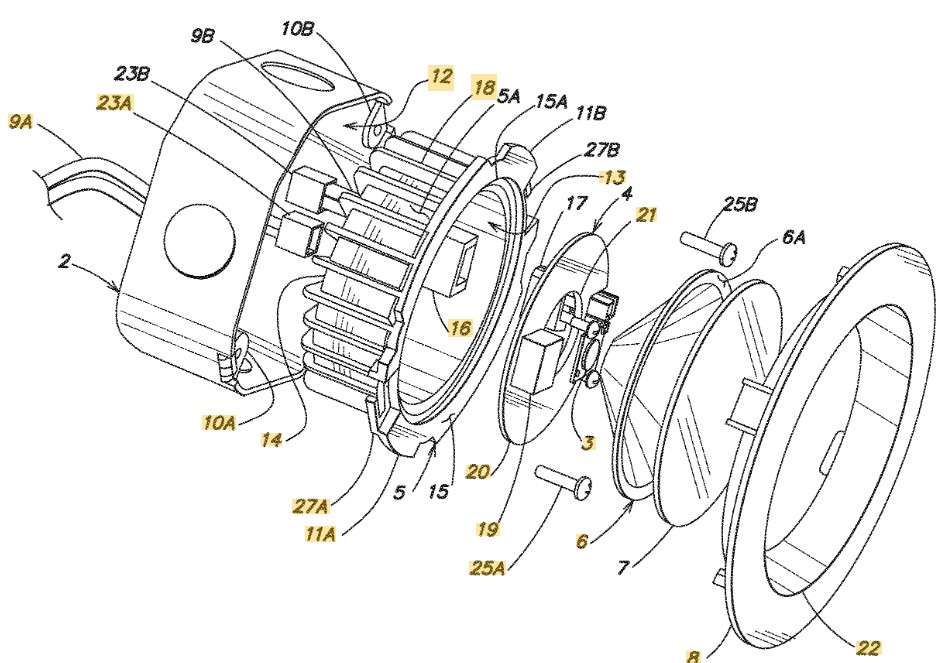
    On March 19, 2025, the United States Court of Appeals for the Federal Circuit issued its decision in AMP Plus, Inc. v. DMF, Inc., affirming the Patent Trial and Appeal Board’s (PTAB) ruling that AMP Plus, doing business as ELCO Lighting, failed to prove claim 22 of U.S. Patent No. 9,964,266 was unpatentable as obvious. This case highlights the rigorous evidentiary requirements for demonstrating obviousness in inter partes review (IPR) proceedings and serves as a cautionary tale for petitioners relying on implicit reasoning rather than explicit proof.

    Obviousness and the Challenge to Claim 22

    ELCO argued that claim 22 of DMF’s patent should be invalidated as obvious in view of two prior art references: Imtra 2011 and Imtra 2007. The key limitation in dispute—referred to as “Limitation M”—requires that the compact recessed lighting system be “coupled to electricity from an electrical system of a building.”

    PTAB found that ELCO failed to present sufficient evidence demonstrating that a person of ordinary skill in the art (POSITA) would have modified the marine lighting systems disclosed in Imtra 2011 to be installed in a building. The Federal Circuit affirmed this conclusion, emphasizing that an obviousness argument must be supported by more than assumptions or conclusory statements.

    The Federal Circuit’s Analysis of ELCO’s Argument

    ELCO’s IPR petition asserted that “wire connections between the fixture and the power source can be made in a variety of ways” and that the use of junction boxes in lighting systems was well known. However, PTAB determined—and the Federal Circuit agreed—that ELCO never specifically addressed how the prior art actually disclosed or suggested adapting the marine lighting system for a building’s electrical infrastructure.

    The court underscored several key deficiencies in ELCO’s argument:

    1. Lack of Direct Evidence – The cited portions of the Imtra 2011 brochure and supporting expert testimony never explicitly discussed installation in a building’s electrical system. Instead, the reference described marine applications, leaving a gap in ELCO’s argument about how or why a POSITA would have been motivated to adapt it for use in buildings.
    2. Failure to Establish Motivation to Combine – While ELCO asserted that modifying a marine lighting system for a building would have been an obvious design choice, PTAB found—and the Federal Circuit agreed—that ELCO did not provide sufficient evidence of a motivation to make that change. As the Supreme Court held in KSR Int’l Co. v. Teleflex Inc., 550 U.S. 398 (2007), an obviousness analysis must consider whether a POSITA would have been motivated to make the modification, not just whether they could have.
    3. Improper Reliance on Expert Testimony – ELCO relied on its expert’s declaration to argue that a POSITA would recognize the adaptability of marine lighting systems to buildings. However, the Federal Circuit found that the cited paragraphs of the expert report did not actually support this assertion, as they failed to address the specific limitation at issue—installation in a building’s electrical system.
    4. The Importance of Addressing Every Claim Limitation – The court reaffirmed the principle that every limitation in a claim must be shown to be disclosed or suggested by the prior art. Because ELCO failed to adequately address Limitation M, its obviousness argument fell short, regardless of the strength of its other arguments.

    Lessons for Patent Practitioners and Petitioners

    This decision reinforces a fundamental rule in patent litigation and IPR proceedings: Obviousness cannot be assumed; it must be demonstrated with clear, persuasive evidence. Key takeaways include:

    • IPR petitions must explicitly address each claim limitation. Courts and PTAB will not fill in evidentiary gaps left by a petitioner’s argument.
    • Obviousness requires more than a general assertion of industry knowledge. Petitioners must show both how the prior art discloses a limitation and why a POSITA would have been motivated to modify it in the claimed manner.
    • Expert testimony must be specific and directly tied to claim limitations. Vague or conclusory statements from experts will not suffice to establish obviousness.

    Conclusion

    The Federal Circuit’s ruling in AMP Plus v. DMF underscores the challenges in proving obviousness in IPR proceedings. While ELCO had strong prior art references, its failure to explicitly demonstrate how a POSITA would have modified marine lighting for building use proved fatal to its case. For future patent challengers, this case serves as a reminder that thorough, well-supported arguments are critical in overcoming the presumption of patent validity.

    By Charles Gideon Korrell

  • Sierra Wireless v. Sisvel: (Dis)Qualification of Expert Witnesses in the PTAB

    Sierra Wireless v. Sisvel: (Dis)Qualification of Expert Witnesses in the PTAB

    In its March 10, 2025 decision in Sierra Wireless, ULC v. Sisvel S.p.A., the Federal Circuit vacated a Patent Trial and Appeal Board (PTAB) decision due, in part, to the improper reliance on an expert witness who was not shown to possess the qualifications of a person of ordinary skill in the art (POSITA). For patent litigators and practitioners navigating IPR proceedings, the court’s analysis serves as a reminder of the evidentiary standards governing expert testimony.

    Background

    Sisvel’s U.S. Patent No. 7,869,396 covers an ARQ method in wireless communications. The appellants—Sierra Wireless, Honeywell, and Telit Cinterion—challenged all claims in IPR, asserting anticipation and obviousness based on a prior international application (“Sachs”).

    The PTAB held the independent claims (1, 2, and 6–8) unpatentable but upheld the dependent claims (3–5, 9, 10). Both parties appealed. On appeal, the Federal Circuit took particular issue with how the Board assessed expert testimony from Sisvel’s declarant, Regis Bates.

    Expert Qualifications: The Core of the Dispute

    Appellants argued the PTAB improperly relied on Bates’ declarations despite his failure to meet the Board’s own definition of a POSITA. Specifically, the Board had defined a POSITA as someone with:

    • A degree in electrical engineering or a similar discipline, and
    • At least three years of relevant industry or research experience in wireless radio systems for data transmission and retransmission.

    Bates lacked a technical degree and had no clear experience designing transmission/retransmission methods in cellular networks. Nonetheless, his testimony was repeatedly cited by the Board in support of its obviousness and anticipation findings.

    The Federal Circuit agreed with the appellants, citing Kyocera Senco Indus. Tools Inc. v. ITC, 22 F.4th 1369 (Fed. Cir. 2022), to reaffirm that a witness must possess at least the ordinary skill in the art to opine on claim construction, anticipation, and obviousness. The Board’s reliance on Bates, without addressing whether his decades of telecommunications experience could substitute for formal qualifications, was deemed an abuse of discretion.

    Practical Takeaways

    • POSITA matters: A witness’s qualifications must align with the Board’s (or court’s) definition of a skilled artisan. Practitioners should be prepared to establish this alignment explicitly—especially in PTAB proceedings, where the evidentiary record is often limited to declarations and cross-examination.
    • Challenge early and clearly: Raise challenges to expert qualifications as early as possible. In this case, the issue was preserved and ultimately reversed a PTAB finding.
    • Substance over longevity: Even decades of experience in a general field may not suffice if it doesn’t map to the specific technical area required under the POSITA standard.

    Final Thoughts

    As patent practitioners continue to leverage expert declarations in IPRs and litigation, Sierra Wireless underscores the importance of tightly linking an expert’s credentials to the POSITA definition. Courts will not hesitate to vacate Board decisions that rest on testimony from unqualified experts—regardless of the expert’s experience or the PTAB’s apparent confidence.

    By Charles Gideon Korrell

  • Patent Battles in Wearable Tech: AliveCor v. Apple and the Fight Over Arrhythmia Detection

    Patent Battles in Wearable Tech: AliveCor v. Apple and the Fight Over Arrhythmia Detection

    On March 7, 2025, the Federal Circuit issued its decision in AliveCor, Inc. v. Apple Inc., upholding the U.S. Patent and Trademark Office’s Patent Trial and Appeal Board (PTAB) ruling that invalidated AliveCor’s patents on heart rate monitoring technology. The case has significant implications for the wearable technology industry, particularly in the areas of patentability, obviousness, and the interplay between patent litigation and administrative patent challenges.

    Background of the Case

    AliveCor, a medical technology company, held patents covering systems and methods for detecting cardiac arrhythmias using wearable devices. The key patents in dispute—U.S. Patent Nos. 9,572,499, 10,595,731, and 10,638,941—described a technology involving smartwatches equipped with photoplethysmography (PPG) sensors to monitor heart rate, notify users of irregularities, and prompt them to conduct electrocardiogram (ECG) recordings for further analysis.

    Apple challenged these patents through inter partes review (IPR) at the PTAB, arguing that the claims were obvious in light of prior art references. The Board ruled in Apple’s favor, finding that the claims lacked novelty. AliveCor appealed to the Federal Circuit, arguing that the PTAB’s conclusions on obviousness were incorrect and that Apple had withheld evidence relevant to secondary considerations of non-obviousness.

    Key Legal Issues

    1. Obviousness of Machine Learning-Based Arrhythmia Detection

    AliveCor’s patents included claims requiring the use of machine learning algorithms to detect arrhythmias based on heart rate data. The court affirmed the PTAB’s determination that this approach was obvious in view of prior art references, particularly:

    • Hu 1997: A study describing a patient-adaptable ECG classifier that employed machine learning to detect cardiac conditions.
    • Li 2012: A research paper discussing the use of machine learning to reduce false arrhythmia alarms by integrating multiple physiological signals.
    • Shmueli Patent Application (2012): A prior patent application disclosing a wrist-mounted heart monitoring device that used both PPG and ECG data to detect and confirm irregular heart activity.

    The Federal Circuit concluded that a person of ordinary skill in the art would have been motivated to combine these techniques, reinforcing the Board’s finding that AliveCor’s claimed use of machine learning was not sufficiently novel.

    2. “Confirmation” Step in Arrhythmia Detection

    Another key issue was whether the requirement to confirm an arrhythmia using ECG data was patentable. AliveCor argued that its method—detecting arrhythmia using PPG data and then confirming it using an ECG—was unique. However, Apple successfully argued that Shmueli already disclosed this concept. The PTAB and the Federal Circuit both found that a skilled artisan would have found it obvious to confirm PPG-based arrhythmia detection with ECG, leading to the invalidation of the relevant claims.

    3. Failure to Produce Secondary Consideration Evidence

    AliveCor also contended that Apple failed to disclose evidence from a parallel International Trade Commission (ITC) investigation, which had considered secondary indicators of non-obviousness, such as commercial success and industry praise. AliveCor claimed that Apple’s withholding of this evidence violated discovery obligations.

    However, the Federal Circuit found that AliveCor had forfeited this argument by failing to raise the issue before the PTAB. The court emphasized that procedural diligence is essential in IPR proceedings and that issues must be timely presented to be considered on appeal.

    Implications for Intellectual Property Law

    This decision underscores several critical points in patent law and intellectual property strategy:

    • Obviousness in Emerging Technologies: Courts and the PTAB continue to scrutinize patents in fast-evolving fields like machine learning and wearable tech, often finding that incremental improvements fail to meet the non-obviousness requirement.
    • Interplay Between Patent Litigation and IPRs: The case highlights the increasing role of inter partes reviews in invalidating patents that might otherwise survive district court litigation.
    • Procedural Rigor in Patent Challenges: Parties must be meticulous in raising all relevant issues during PTAB proceedings; failure to do so may result in forfeiture on appeal.

    Conclusion

    The Federal Circuit’s decision in AliveCor v. Apple represents a significant win for Apple and a cautionary tale for patent holders in the medical technology space. As courts and administrative bodies continue to apply strict standards for patent validity, companies seeking to protect their innovations must ensure their patents contain clear, non-obvious advancements over existing technology. Moreover, maintaining procedural diligence in parallel patent litigation and administrative proceedings is crucial to avoiding unfavorable rulings on appeal.

    As wearable health technology continues to advance, the legal battles over patentability will shape the competitive landscape, influencing which companies can dominate the market with their innovations.

    By Charles Gideon Korrell

  • Patent Law and Drug Innovation: Federal Circuit Upholds Rejection of ImmunoGen’s Patent Application

    On March 6, 2025, the Federal Circuit issued its opinion in ImmunoGen, Inc. v. Stewart, affirming the district court’s ruling that denied ImmunoGen’s patent application for a dosing regimen of its antibody drug conjugate (ADC), IMGN853. The court’s decision, rooted in key principles of intellectual property law, particularly focused on the doctrines of indefiniteness and obviousness. This case highlights ongoing challenges in securing patents for pharmaceutical dosing regimens and underscores the high bar for patentability in the biotechnology sector.

    Background of the Case

    ImmunoGen sought a patent for a specific dosing regimen of IMGN853, a drug used to treat ovarian and peritoneal cancers. The key claim at issue involved administering IMGN853 at a dose of 6 milligrams per kilogram (mg/kg) of adjusted ideal body weight (AIBW). The U.S. Patent and Trademark Office (USPTO) rejected the application, a decision that was subsequently affirmed by the Patent Trial and Appeal Board (PTAB). ImmunoGen then pursued relief in the Eastern District of Virginia under 35 U.S.C. § 145, which allows applicants to challenge USPTO decisions in district court.

    Following a bench trial, the district court ruled against ImmunoGen, determining that the claimed invention was fatally indefinite, obvious in light of prior art, and unpatentable under the doctrine of obviousness-type double patenting. ImmunoGen appealed to the Federal Circuit, which affirmed the lower court’s ruling based on obviousness.

    Key Legal Issues

    1. Obviousness Under 35 U.S.C. § 103

    The Federal Circuit upheld the rejection of ImmunoGen’s patent claims on the grounds that they were obvious in light of prior art. The court applied the well-established Graham v. John Deere Co. framework, which requires assessing:

    • The scope and content of the prior art
    • Differences between the prior art and the claims at issue
    • The level of ordinary skill in the art
    • Any secondary considerations (such as commercial success or unexpected results)

    The court found that a person of ordinary skill in the art would have been motivated to try the claimed dosing regimen based on existing knowledge of ocular toxicity risks associated with ADCs, prior dosing methodologies, and available clinical data. The decision emphasized that AIBW was a known dosing methodology in the prior art, and adjusting dosage to reduce toxicity was a routine optimization.

    2. The Role of Prior Art in Determining Obviousness

    The court found that:

    • Existing literature disclosed IMGN853 and its dosing regimens based on total body weight (TBW).
    • Previous studies had explored adjusted dosing strategies (including AIBW) to reduce toxicity in related drug classes.
    • A person of ordinary skill in the art would have been able to transition from TBW to AIBW dosing as an obvious variation, especially since AIBW dosing had been previously used to reduce ocular toxicity for other drugs.

    Ultimately, because the claimed dose of 6 mg/kg AIBW was within the range of known effective doses, the court determined that the invention was a predictable result of routine experimentation rather than an unexpected innovation.

    3. Indefiniteness Under 35 U.S.C. § 112

    While the Federal Circuit did not rule on indefiniteness, the district court’s decision noted that the application failed to define AIBW adequately, leaving ambiguity in the claim’s scope. Courts require patent claims to be sufficiently clear so that a person of ordinary skill in the art can ascertain the precise bounds of the invention.

    The district court found that multiple formulas for AIBW existed, creating uncertainty about which formula applied to ImmunoGen’s claims. This contributed to the court’s ruling that the patent claims were fatally indefinite, making them unenforceable.

    4. Obviousness-Type Double Patenting

    The government also argued that the claims were unpatentable under the doctrine of obviousness-type double patenting, which prevents an inventor from obtaining multiple patents on obvious variations of the same invention. The district court found that ImmunoGen’s claims were largely duplicative of its previous patents, reinforcing the determination of obviousness. However, on appeal, both parties agreed that the double patenting issue rose and fell with the obviousness analysis, making further discussion unnecessary.

    Implications for the Biotechnology and Pharmaceutical Industries

    This decision underscores the high threshold for patentability in pharmaceutical dosing regimens. Courts have consistently ruled that dosing adjustments—particularly those based on well-known methodologies—are often seen as routine optimizations rather than true inventions. This presents significant challenges for drug developers seeking patent protection for new dosing strategies.

    Key takeaways from this case include:

    • Drug manufacturers must provide clear evidence of unexpected results to differentiate dosing regimen patents from routine experimentation.
    • Precision in claim drafting is critical to avoid indefiniteness challenges.
    • Applicants should consider alternative strategies, such as method-of-use claims tied to specific patient populations or therapeutic effects, to enhance patentability.

    Conclusion

    The Federal Circuit’s ruling in ImmunoGen, Inc. v. Stewart reinforces longstanding principles in patent law regarding obviousness and claim definiteness. While pharmaceutical innovators continue to seek patent protection for dosing regimens, this case demonstrates the difficulties of overcoming obviousness rejections, particularly where prior art provides clear guidance on dosage adjustments. Moving forward, companies seeking similar patents will need to present strong, non-obvious justifications to withstand legal scrutiny and secure valuable intellectual property protections.

    By Charles Gideon Korrell

  • Federal Circuit Upholds Patentability of Stem Cell Technology in Restem v. Jadi Cell

    The United States Court of Appeals for the Federal Circuit recently issued a significant ruling in Restem, LLC v. Jadi Cell, LLC, upholding the validity of Jadi Cell’s U.S. Patent No. 9,803,176. This case, which originated from an inter partes review (IPR) before the Patent Trial and Appeal Board (PTAB), revolved around whether Restem could prove that Jadi Cell’s patent claims were unpatentable due to anticipation or obviousness. The Federal Circuit affirmed the PTAB’s decision, reinforcing critical aspects of intellectual property law, particularly regarding claim construction, inherent anticipation, and obviousness in biotechnology patents.

    Key Legal Issues in the Case

    1. Claim Construction and the Definition of “Isolated Cell”

    One of the central disputes in the case was the proper construction of the term “isolated cell” in Jadi Cell’s patent. Restem argued that an “isolated cell” should be construed as a single cell derived from the subepithelial layer of mammalian umbilical cord tissue. However, the Federal Circuit agreed with the PTAB’s construction that “isolated cell” referred to a cell population, based on how cell marker expression was analyzed in the industry and throughout the patent prosecution history. This interpretation was critical because it influenced how prior art disclosures were evaluated for anticipation and obviousness.

    2. Inherent Anticipation and Prior Art

    Restem challenged the patent on the grounds that prior art (specifically, the Majore reference) inherently anticipated the claimed invention. To establish inherent anticipation, Restem needed to show that following Majore’s process would necessarily and inevitably result in the claimed isolated cells. The court, however, found that the prior art did not disclose the specific cell marker expression profile required by the ‘176 patent. Because cell marker expression can depend on multiple variables, including cell-to-cell interactions and culture conditions, the court concluded that inherency had not been established.

    This ruling reinforces a fundamental principle in patent law: inherency must be more than just a possible or likely result—it must be a guaranteed outcome of the prior art.

    3. Obviousness and the Influence of Culture Media

    Restem also argued that the patent was obvious based on a combination of prior art references, including Kita, Majore, and other secondary references. One of the dependent claims (claim 9) specified that the isolated cells were cultured in media free of animal components. The PTAB ruled that claim 9 was non-obvious for two reasons: (1) Restem failed to prove that the prior art inherently produced the claimed cells, and (2) the record evidence suggested that animal components were commonly used in culture media at the time, making the patented method distinct.

    The Federal Circuit’s decision underscores the importance of demonstrating a clear motivation to combine prior art references and a reasonable expectation of success—both key requirements in proving obviousness.

    Implications for Intellectual Property Law

    This case has several important takeaways for intellectual property practitioners and companies in the biotechnology space:

    1. Claim Scope Matters: How patent claims are constructed and interpreted can make or break a validity challenge. The court’s recognition of “isolated cell” as referring to a population of cells rather than a single cell highlights the importance of precision in drafting patent claims and prosecution history estoppel.
    2. Inherent Anticipation Requires Certainty: Simply arguing that a prior art process might result in the patented invention is not enough. The challenger must show that the patented invention necessarily results from the prior art.
    3. Obviousness Requires Stronger Evidence: In biotechnology patents, particularly those involving complex biological processes, showing that a claimed invention was obvious requires clear evidence of motivation to combine references and a reasonable expectation of success.

    Conclusion

    The Federal Circuit’s ruling in Restem v. Jadi Cell is a crucial win for patent holders in the biotech industry, reaffirming that patents must be carefully analyzed before they are invalidated. The decision reinforces the standards for claim construction, inherency, and obviousness, ensuring that patent rights remain robust where innovation is demonstrated.

    As biotechnology and stem cell research continue to evolve, this case will likely serve as a precedent in future disputes over similar intellectual property rights. Companies and practitioners should take note of the court’s reasoning when drafting patent applications and preparing for potential challenges.

    By Charles Gideon Korrell

  • Federal Circuit Weighs in on Gesture-Based Patent Dispute: Key Takeaways for IP Law

    The Federal Circuit’s recent decision in Apple Inc. v. Gesture Technology Partners, LLC (March 2025) provides important insights into patent law, particularly in the context of inter partes review (IPR) proceedings and obviousness determinations. This ruling builds on the court’s earlier January 2025 decision in another dispute involving Gesture Technology Partners, reinforcing key legal principles regarding patent validity and the scope of IPR challenges.

    Below, we explore the major legal issues addressed in this case, how they connect to the January ruling, and what they mean for the future of intellectual property law in the tech industry.


    Background of the Case

    The dispute centers around U.S. Patent No. 7,933,431 (the ’431 patent), which relates to gesture-based input methods using cameras and optical sensors. Gesture Technology Partners, LLC (Gesture) sued Apple, LG Electronics, and Google for alleged infringement of the ’431 patent. Apple and its co-appellees petitioned for inter partes review (IPR), challenging the patent’s validity based on prior art.

    The Patent Trial and Appeal Board (PTAB) ruled that most claims were unpatentable but upheld claims 11 and 13. Apple appealed this decision, while Gesture cross-appealed, arguing that additional claims should remain valid.

    The Federal Circuit ultimately affirmed the PTAB’s findings, ruling that claims 1–10, 12, and 14–31 were unpatentable, while upholding claims 11 and 13.


    Connection to the January 2025 CAFC Decision

    This decision follows and reinforces the January 2025 ruling in Gesture Technology Partners, LLC v. Unified Patents LLC, another Federal Circuit case involving Gesture’s ’431 patent. In that case:

    • The Federal Circuit affirmed the PTAB’s finding that claims 7–9 and 12 were unpatentable, relying heavily on prior art disclosures in the Numazaki reference.
    • However, the court also upheld the PTAB’s ruling that claims 10, 11, and 13 were not unpatentable, which became a key point of contention in Apple’s subsequent appeal.

    The March 2025 ruling effectively follows the logic of the January 2025 decision, particularly in two major ways:

    1. Reaffirming PTAB’s Findings on Patent Validity:
      • Both cases emphasized that Numazaki disclosed fundamental aspects of gesture-based control, making most of Gesture’s claims obvious under 35 U.S.C. § 103.
      • The Federal Circuit consistently deferred to the PTAB’s factual findings regarding how Numazaki rendered certain claims unpatentable.
    2. Consistently Upholding Claims 11 and 13:
      • The January 2025 case upheld claims 10, 11, and 13, creating a foundation for Apple’s subsequent challenge.
      • In the March 2025 decision, Apple sought to overturn the PTAB’s finding on claims 11 and 13, arguing that the Board misapplied the obviousness standard—but the Federal Circuit again upheld these claims, reinforcing its prior stance.

    Together, these two decisions establish a strong precedent for how courts evaluate IPR outcomes, particularly in disputes involving expired patents and prior art analysis.


    Key Legal Issues Addressed by the Court

    1. Obviousness and Prior Art

    The primary legal issue in both cases was whether the patent claims were invalid due to obviousness under 35 U.S.C. § 103. The court ruled that most of the patent’s claims were obvious in light of prior art—particularly U.S. Patent No. 6,144,366 (Numazaki).

    • Apple argued that Numazaki disclosed similar technology and that a person of ordinary skill in the art would have found the claimed invention obvious.
    • Gesture countered that Numazaki did not sufficiently teach key elements of the ’431 patent, particularly its sensing and image-processing functionalities.

    In both cases, the court upheld the PTAB’s determinations, reaffirming that Numazaki was sufficient prior art to invalidate most claims.


    2. Inter Partes Review (IPR) Estoppel and Standing

    Apple faced a procedural challenge regarding IPR estoppel under 35 U.S.C. § 315(e)(1), which bars petitioners from re-litigating arguments that were (or could have been) raised in an earlier IPR.

    • Gesture argued that Apple should be estopped from challenging claims 11 and 13 because it was allegedly a real party in interest or privy of Unified Patents, the petitioner in the earlier January 2025 case.
    • The court rejected this argument, holding that Gesture had forfeited this claim by not raising it before the PTAB.

    This ruling aligns with the January 2025 decision, where the court emphasized that procedural challenges must be properly raised at the PTAB stage, not on appeal.


    3. Means-Plus-Function Claims and Claim Construction

    Another major issue was the interpretation of means-plus-function claims under 35 U.S.C. § 112, ¶ 6.

    • The March 2025 decision reaffirmed that Numazaki adequately disclosed structures corresponding to the claimed “sensing means” and “computer means” in the ’431 patent.
    • Gesture’s arguments that the Numazaki reference did not sufficiently disclose tracking and image analysis were rejected—just as they were in the January 2025 case.

    4. PTAB’s Jurisdiction Over Expired Patents

    Gesture made a broader challenge, arguing that the PTAB lacks jurisdiction over expired patents—a claim it also raised unsuccessfully in the January case.

    • The March 2025 ruling definitively rejected this argument, reaffirming the Federal Circuit’s prior holding that expired patents remain subject to IPR challenges.
    • This decision aligns with the court’s reasoning in January 2025, reinforcing that patent expiration does not shield invalid claims from IPR proceedings.

    Implications for Patent Holders and Tech Companies

    The two 2025 Federal Circuit rulings offer several key lessons for companies engaged in patent litigation, particularly in the tech sector:

    1. Strengthen Patent Drafting & Prosecution – Ensure patents are clearly distinct from prior art to withstand obviousness challenges.
    2. Raise Procedural Challenges Early – Issues like IPR estoppel and standing must be raised at the PTAB stage, not for the first time on appeal.
    3. Be Strategic About IPRs – Defendants should carefully assess prior art before filing an IPR to maximize their chances of invalidation.

    With the continued expansion of gesture-based and optical-sensing technology, these cases serve as important precedents in software and hardware patent disputes.


    Final Thoughts: A Consistent Approach to Patent Challenges

    The January and March 2025 decisions together paint a clear picture:

    • The Federal Circuit remains deferential to PTAB findings, particularly in IPR proceedings.
    • Courts continue to take a rigorous approach to obviousness analysis, ensuring that patents covering well-known technologies do not survive merely due to clever claim drafting.
    • Expired patents remain vulnerable to challenges under IPR, reinforcing the importance of early and thorough patent prosecution strategies.

    As the tech industry continues to develop new gesture-based and camera-driven input systems, these rulings may have far-reaching consequences for how such patents are drafted, enforced, and challenged in the future.

    By Charles Gideon Korrell

  • Federal Circuit Weighs in on Gesture-Controlled Camera Patent Dispute

    In a significant ruling on patent validity and inter partes review (IPR) jurisdiction, the Federal Circuit recently decided Apple Inc. v. Gesture Technology Partners, LLC, a case addressing the patentability of gesture-based camera control technology. The decision clarifies key issues surrounding the obviousness of patents, the scope of IPR proceedings, and the ability of the Patent Trial and Appeal Board (PTAB) to review expired patents.

    Background of the Case

    Gesture Technology Partners, LLC (“Gesture”) owns U.S. Patent No. 8,878,949 (“the ’949 patent”), which describes a portable device incorporating an electro-optical sensor that detects gestures and controls a digital camera accordingly. Apple, alongside LG Electronics and Google, challenged the patent through an IPR, arguing that multiple claims were unpatentable due to obviousness over prior art references.

    The PTAB ruled that claims 1–3, 5–10, and 12–17 were unpatentable but upheld the validity of claims 4, 11, and 18. Both parties appealed: Apple contested the decision upholding claim 4, while Gesture cross-appealed the unpatentability findings against claims 1–3 and 5–7.

    Key Legal Issues Addressed

    1. PTAB’s Authority to Review Expired Patents

    One of the central issues in Gesture’s cross-appeal was whether the PTAB had jurisdiction over the IPR, given that the ’949 patent had expired before Apple filed its petition. Gesture argued that an expired patent ceases to be a public franchise and is thus outside the PTAB’s purview.

    The Federal Circuit rejected this argument, reaffirming that expired patents can still be subject to IPR because they retain enforceable rights, such as claims for past damages. The court emphasized that IPR proceedings serve as a “second look” at the initial patent grant, aligning with the Supreme Court’s reasoning in Oil States Energy Services v. Greene’s Energy Group (2018).

    2. Obviousness and Prior Art Considerations

    The Federal Circuit upheld the PTAB’s finding that claims 1–3 and 5–7 were unpatentable as obvious in light of prior art, particularly U.S. Patent No. 6,144,366 (Numazaki) and Japanese Patent Application No. H4-73631 (Nonaka). The court found that:

    • Numazaki’s light extraction unit, which detects user interactions, corresponds to the electro-optical sensor claimed in the ’949 patent.
    • A skilled person would have been motivated to combine Numazaki’s different embodiments and Nonaka’s remote-control functionality to create a device that captures images based on gesture recognition.
    • Gesture’s expert failed to provide sufficient technical reasoning to dispute the Board’s obviousness findings.

    3. Reversal of PTAB’s Decision on Claim 4

    Apple successfully challenged the PTAB’s ruling on claim 4, which required the electro-optical sensor to be “fixed” in relation to the digital camera. The Federal Circuit found that the PTAB improperly disregarded Apple’s expert testimony, which demonstrated that fixing these components was an obvious design choice for maintaining overlapping fields of view. As a result, the court reversed the PTAB’s finding, declaring claim 4 unpatentable.

    Implications for Intellectual Property Law

    This ruling underscores the Federal Circuit’s approach to obviousness analyses and reinforces the PTAB’s authority over expired patents. The decision also highlights the importance of expert testimony in IPR proceedings—both in establishing obviousness and in defending against it.

    For patent holders, the case serves as a cautionary tale about the vulnerabilities of broad, technology-based claims in the face of prior art. For challengers, it confirms that IPR remains a powerful tool for invalidating weak patents, even post-expiration.

    Conclusion

    The Apple v. Gesture decision provides important clarity on the role of IPR in expired patents and the standards for proving obviousness in technology-related patents. With the court’s ruling, Apple, LG, and Google have successfully invalidated additional claims of the ’949 patent, reinforcing the competitive landscape in the field of gesture-based camera technology.

    By Charles Gideon Korrell