Tag: Federal Circuit
-
Satius Holding v. Samsung: Clear Claims Can Still Be Invalid When They Cover the Impossible
The Federal Circuit’s precedential decision in Satius Holding, LLC v. Samsung Electronics Co., Ltd., No. 2025-1446 (Fed. Cir. Oct. 1, 2026), illustrates a counterintuitive principle of patent law: the clarity of a patent claim can establish precisely why it is invalid. The court held that a claim expressly covering a scientifically impossible method of transmitting…
-
ParkerVision v. Qualcomm: Rule 54(b) Finality Runs at the Patent Level, Not the Claim Level
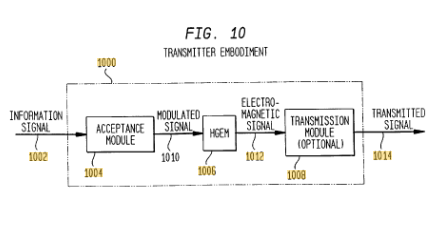
The Federal Circuit’s precedential decision in ParkerVision, Inc. v. Qualcomm Inc., Case Nos. 2026-1033, 2026-1035 (Fed. Cir. Sept. 30, 2026), clarifies an important limit on Federal Rule of Civil Procedure 54(b) in patent litigation. Individual patent claims may define distinct property boundaries, but they do not ordinarily become separate civil-procedure claims for relief. Because transmitter…
-

Epic Tech v. Pen-Tech: Federal Circuit Limits Reliance on the Presumption of Validity Amid Strong Invalidity Signals
The Federal Circuit’s decision in Epic Tech, LLC v. Pen-Tech Associates, Inc., Case No. 2025-1624 (Fed. Cir. September 30, 2026), examines the relationship between the statutory presumption of patent validity and Rule 11’s requirement that litigants have a reasonable basis for asserting their claims. The court did not impose a general obligation to conduct a…
-

NCS Multistage v. Nine Energy Service: Federal Circuit Applies Sanho to AIA § 102(b)(1)(B) and Vacates Patent Judgment
The Federal Circuit’s precedential decision in NCS Multistage Inc. v. Nine Energy Service, Inc., Case No. 2025-1000 (Fed. Cir. Sept. 14, 2026), vacated an infringement and no-invalidity judgment after identifying two claim-construction errors and rejecting the patent owner’s attempt to use an earlier private sale as a defensive “public disclosure” under the America Invents Act.…
-

TexasLDPC v. Broadcom: Federal Circuit Clarifies All Substantial Rights and Limits Rule 19 Joinder
The Federal Circuit’s precedential decision in TexasLDPC Inc. v. Broadcom Inc.v, Case No. 2025-1074 (Fed. Cir. Sept. 14, 2026), is most significant for clarifying which retained patent rights matter when an exclusive license separates record ownership from commercial and enforcement control. The court held that TexasLDPC could sue Broadcom, LSI, and Avago without joining Texas…
-
Moskowitz v. Globus: Limiting Preambles and the Cost of Leaving Claim Terms Unconstrued
The Federal Circuit’s precedential decision in Moskowitz Family LLC v. Globus Medical, Inc., Case No. 24-1696 (Fed. Cir. Sept. 11, 2026), illustrates two different ways claim scope can become fixed before appeal. For U.S. Patent Nos. 8,353,913 and 9,889,022, the intrinsic record made the preamble term “universal” part of the claimed invention. For U.S. Patent…
-

Versata v. Ford: Modified Opinion Clarifies Review of $82 Million Contract Verdict
The Federal Circuit has modified its precedential opinion in Versata Software, LLC v. Ford Motor Co., Case Nos. 2024-1140, 2024-1206, and 2024-1234, without changing the judgment. The September 10, 2026 modification leaves intact the court’s trade-secret holdings, its order for a new trial on trade-secret damages, and its reinstatement of an $82.26 million breach-of-contract verdict.…
-

Netlist v. Micron: Federal Circuit Affirms PTAB Obviousness Ruling, Leaves Extra-Petition Prior Art Question Open
The Federal Circuit’s precedential decision in Netlist, Inc. v. Micron Technology, Inc., No. 24-1707 (Fed. Cir. Sept. 2, 2026), affirmed the Patent Trial and Appeal Board’s determination that all challenged claims of a computer-memory patent were obvious, while leaving unresolved an important question about how far the Board may rely on prior art that was…
-

Exelixis v. MSN Labs: Federal Circuit Upholds Crystalline Salt Genus Under § 112 Written Description
The Federal Circuit’s precedential decision in Exelixis, Inc. v. MSN Laboratories Private Ltd., Case No. 25-1236 (Fed. Cir. Aug. 31, 2026), affirmed a bench-trial finding that patents claiming crystalline cabozantinib (L)-malate satisfied the written-description requirement even though the specification expressly characterized only two crystalline polymorphs. The court concluded that the chemical name and formula of…
-
Constellation Designs v. LG: Federal Circuit Draws Section 101 Line Between Optimization Claims and Specific Signal Constellations
The Federal Circuit’s decision in Constellation Designs, LLC v. LG Electronics Inc., No. 24-1822 (Fed. Cir. Aug. 31, 2026), draws an unusually clear line under 35 U.S.C. § 101 between claiming a technological objective and claiming a particular technological implementation. The court held claims broadly covering signal constellations “optimized” for improved capacity patent ineligible, while…