Tag: Federal Circuit
-

TrackTime v. Amazon.com: Federal Circuit Requires Contextual § 112(f) Analysis for Software Claim Terms
The Federal Circuit’s decision in TrackTime, LLC v. Amazon.com Services LLC, Case No. 2024-1102 (Fed. Cir. July 2, 2026), clarifies how courts must determine whether software claim language invokes means-plus-function treatment under 35 U.S.C. § 112(f), particularly when a claim recites “executable program code” configured to perform specified operations. The court vacated a judgment that…
-
Otsuka v. Hetero Labs: Federal Circuit Upholds Patent Injunction but Requires Rule 65(c) Bond
The Federal Circuit’s decision in Otsuka America Pharmaceutical, Inc. v. Hetero Labs Limited, Case No. 2025-2016 (Fed. Cir. July 1, 2026), upheld a preliminary injunction delaying the launch of a generic version of Nuedexta but vacated the district court’s decision allowing the patent owner to obtain that injunction without posting security under Federal Rule of…
-
Enanta v. Pfizer: Federal Circuit Rejects Provisional Priority Based on an Alleged Typographical Error
The Federal Circuit’s decision in Enanta Pharmaceuticals, Inc. v. Pfizer Inc., Case No. 2025-1427 (Fed. Cir. June 23, 2026), holds that a later patent cannot claim the filing date of a provisional application when the provisional expressly discloses a different chemical range, even if the applicant contends that the difference resulted from a typographical error.…
-
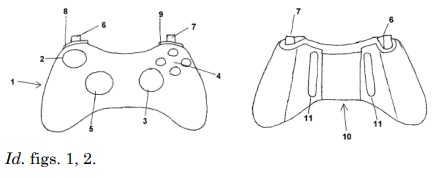
Ironburg v. Valve: Federal Circuit Clarifies How Parties Must Prove IPR Estoppel Under §315(e)
The Federal Circuit’s decision in Ironburg Inventions Ltd. v. Valve Corp., Case No. 2024-2088 (Fed. Cir. June 18, 2026), limits when a patent owner may use inter partes review estoppel to prevent an accused infringer from asserting prior-art invalidity grounds in district court. The court held that a reference is not necessarily discoverable merely because…
-

Ollnova v. ecobee: Federal Circuit Clarifies Alice Step Two and Technical-Improvement Analysis
The Federal Circuit’s decision in Ollnova Technologies Ltd. v. ecobee Technologies ULC , Case No. 25-1045 (Fed. Cir. Jun. 4, 2026 ), delivers several significant holdings for patent litigators and technology companies. The opinion addresses jury unanimity in multi-patent trials, the proper role of juries in patent eligibility disputes under Section 101, and the distinction…
-

Insulet v. EOFlow: Federal Circuit Reverses $450 Million Trade Secret Verdict on Statute of Limitations Grounds
The Federal Circuit’s decision in Insulet Corp. v. EOFlow, Co. Ltd., Case No. 25-1807 (Fed. Cir. May 28, 2026), arrives just days after the court’s major trade secret decision in Versata v. Ford, continuing what is becoming a significant period of doctrinal development under the Defend Trade Secrets Act (“DTSA”). While Versata focused heavily on…
-

Versata v. Ford: Federal Circuit Revives Unjust Enrichment as a Trade Secret Remedy
The Federal Circuit’s recent decision in Versata Software, LLC v. Ford Motor Co., Case Nos. 24-1140, -1206, -1234 (Fed. Cir. May 22, 2026), may become one of the most important trade secret damages opinions in recent years. In a significant rebuke to the district court’s narrow approach to damages, the court held that a trade…
-
A.L.M. Holding v. Zydex: Federal Circuit Clarifies Constitutional Standing for Patent Owners After Exclusive Licensing
The Federal Circuit’s recent decision in A.L.M. Holding Company v. Zydex Industries Private Ltd., Case No. 25-1317 (Fed. Cir. May 19, 2026), provides important clarification regarding constitutional standing in patent infringement suits where a patent owner has granted broad exclusive rights to a licensee but retained certain enforcement and economic interests. The opinion addresses a…
-

mCom v. City National: Federal Circuit Reins in Patent Fee Awards After Post-IPR Dismissal
The Federal Circuit’s recent decision in mCom IP, LLC v. City National Bank of Florida , Case No. 24-2089 (Fed. Cir. May 15, 2026),offers an important reminder that losing a patent case, even badly, does not automatically make a case “exceptional” under 35 U.S.C. § 285. The opinion also reinforces that sanctions against counsel under…
-
Actelion v. Mylan: Federal Circuit Limits Equivalents Theory After Ambiguous pH Claim Construction
The Federal Circuit’s decision in Actelion Pharmaceuticals Ltd. v. Mylan Pharmaceuticals Inc., Case No. 24-1641 (Fed. Cir. May 13, 2026), provides an important reminder that scientific terminology in patent claims is not interpreted in a vacuum. Even seemingly straightforward numerical limitations can become highly contextual when industry standards, measurement conventions, and prosecution history intersect. In…