The Federal Circuit’s decision in Enanta Pharmaceuticals, Inc. v. Pfizer Inc., Case No. 2025-1427 (Fed. Cir. June 23, 2026), holds that a later patent cannot claim the filing date of a provisional application when the provisional expressly discloses a different chemical range, even if the applicant contends that the difference resulted from a typographical error. The decision reinforces a demanding rule for patent priority: an earlier application must itself convey possession of the later-claimed invention, and expert testimony about what the applicant probably intended cannot replace an actual disclosure. In doing so, the Federal Circuit reaffirmed that entitlement to an earlier filing date turns on the objective content of the priority application itself, not on post hoc explanations of drafting mistakes.
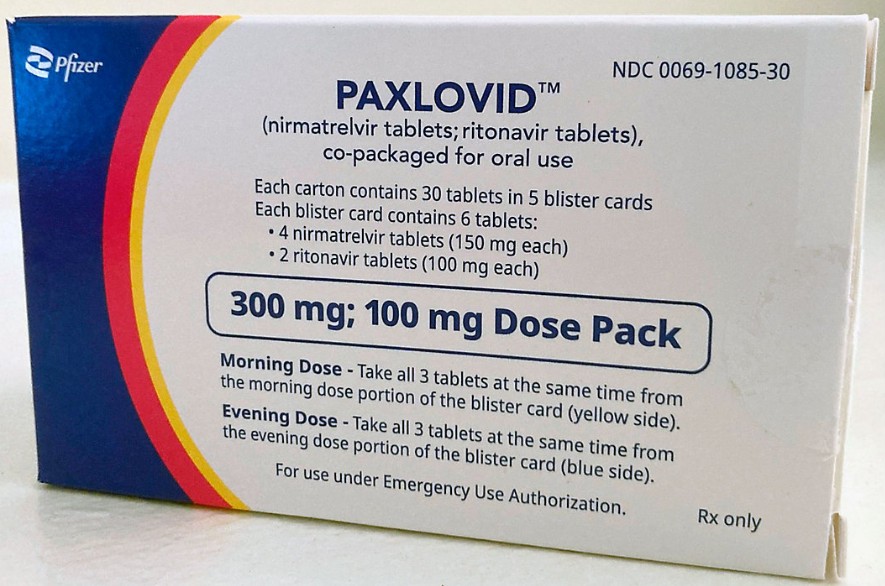
The consequence for Enanta Pharmaceuticals was substantial. A single numeral in its provisional application prevented the asserted patent from receiving a July 2020 priority date. Pfizer’s intervening public disclosure of nirmatrelvir, the active antiviral component of Paxlovid, therefore became invalidating prior art.
Charles Gideon Korrell notes that the opinion is important beyond pharmaceutical chemistry. It illustrates how seemingly minor drafting errors in provisional applications can determine the validity of commercially significant patent claims years later, particularly when competitors are developing related technologies on compressed timelines.
Background
Enanta’s U.S. Patent No. 11,358,953 concerns compounds and methods for inhibiting coronavirus replication. The patent claims chemical compounds containing an optionally substituted alkyl or heteroaryl group that inhibit the SARS-CoV-2 3CL protease, an enzyme critical to viral replication.
The patent claimed priority to a provisional application filed on July 20, 2020. Both the provisional application and the later-issued patent contained detailed definitions of permissible chemical substituents. The critical difference involved a single alkyl substituent.
The provisional application disclosed:
—NHC(O)—C2-C12-alkyl
The issued patent disclosed:
—NHC(O)—C1-C12-alkyl
The distinction consisted of only one carbon atom. But that additional C1 species proved dispositive because Pfizer’s nirmatrelvir contained the one-carbon version.
Pfizer publicly disclosed nirmatrelvir in April 2021, after Enanta filed its provisional application but before Enanta filed the nonprovisional application that introduced the C1-C12 range. Enanta later sued Pfizer, alleging that Paxlovid infringed the ‘953 patent.
Pfizer argued that the patent was not entitled to the provisional application’s July 2020 filing date because the provisional never disclosed the C1 species. Without that earlier priority date, Pfizer’s April 2021 disclosure anticipated the asserted claims.
Enanta responded that “C2” was merely an obvious typographical error and that the provisional should have said “C1.” The district court rejected that argument and granted summary judgment that the patent was invalid for anticipation.
The Federal Circuit Reframes the Issue as Written Description
The Federal Circuit affirmed, but significantly reframed the dispute. Rather than asking whether the provisional application contained a correctable typographical error, the court held that the controlling question was whether the provisional satisfied the written-description requirement for the subject matter later claimed.
Under 35 U.S.C. §§ 119(e) and 120, together with the written-description requirement of § 112, a nonprovisional application receives the benefit of a provisional application’s filing date only for subject matter that the provisional application itself adequately describes. Every application in the priority chain must demonstrate that the inventors were in possession of the later-claimed invention as of the earlier filing date.
The court emphasized that the provisional and the later patent disclosed two different chemical ranges. A disclosure beginning at C2 simply does not disclose C1. Because the earlier application expressly identified compounds containing two to twelve carbon atoms, but omitted compounds containing one carbon atom, it did not provide written-description support for the later-claimed species.
The opinion framed the issue in unusually straightforward terms: whether “2” adequately describes “1.” The court concluded that it does not.
Charles Gideon Korrell believes this framing captures the real significance of the decision. Enanta attempted to characterize the dispute as one involving a drafting mistake that should be corrected. The Federal Circuit instead treated it as an objective written-description inquiry. Priority depends upon what the application actually discloses, not upon what the inventors later explain they intended to disclose.
Expert Testimony Could Not Supply the Missing Disclosure
Enanta relied heavily on expert testimony.
Its expert identified what appeared to be an inconsistency elsewhere in the provisional application’s definition of “alkyl.” One passage referred numerically to “C2-C12 alkyl” while describing the range in words as containing “one to twelve” carbon atoms.
According to the expert, a skilled chemist would recognize that the numeral “2” likely represented a typographical error. The expert further opined that similar references elsewhere in the application should likewise be understood as mistakes.
The Federal Circuit found that testimony insufficient.
The purported inconsistency appeared in a general definition, not in the specific substituent that later became critical. Nothing in the disputed disclosure itself indicated that C2-C12 actually meant C1-C12.
The distinction between “likely intended” and “actually disclosed” drove the analysis. Written description does not ask whether a skilled artisan could infer a plausible correction or speculate about what the inventor probably meant. It asks whether the application objectively demonstrates possession of the claimed invention.
The court therefore relied heavily on Lockwood v. American Airlines, Inc., which established that entitlement to an earlier filing date extends only to subject matter actually disclosed in the earlier application.
Lockwood remains one of the Federal Circuit’s foundational written-description decisions because it rejects attempts to reconstruct missing disclosure through hindsight. Omitted subject matter cannot be supplied by combining the application with the ordinary knowledge of skilled artisans or by speculating about what the inventor likely intended. Instead, possession of the invention must appear from the four corners of the earlier application itself. The applicant receives the benefit of the earlier filing date only for what that application objectively teaches.
The court likewise cited Omega Engineering, Inc. v. Raytek Corp. for the proposition that extrinsic evidence cannot vary the plain language of a patent document. Expert testimony may explain what technical language would mean to a skilled artisan, but it cannot rewrite an expressly disclosed C2-C12 range into C1-C12.
Why the Patent-Correction Cases Did Not Apply
The parties and the district court devoted considerable attention to cases involving correction of errors in issued patents, particularly In re Oda and Novo Industries, L.P. v. Micro Molds Corp.
In Oda, the CCPA explained that the Patent Office may permit corrections during reissue proceedings that do not introduce new matter. In Novo Industries, the Federal Circuit recognized that a district court may occasionally correct an obvious error in an issued patent when the proper correction is not reasonably subject to debate.
The Federal Circuit explained that neither doctrine controlled.
This case did not concern correction of language in an issued patent. Instead, Enanta sought to use a later application to obtain the benefit of an earlier provisional filing date despite the earlier application’s different disclosure.
More importantly, the Federal Circuit explained that Enanta’s reliance on correction doctrine largely missed the point. Even assuming the provisional application contained a drafting mistake, the dispositive question remained whether the provisional, as filed, objectively conveyed possession of the later-claimed invention. Correction doctrine cannot supply written-description support that the earlier application never communicated. Because priority turns on the disclosure actually made rather than the disclosure the applicant later wishes it had made, the alleged typographical error could not rescue the patent.
The court also observed that the asserted correction was reasonably debatable. The provisional repeatedly and specifically identified the C2-C12 substituent within an extensive list of carefully described chemical moieties. That level of specificity made it difficult to characterize the disclosure as an unmistakable clerical error.
Relationship to Prior Precedent
The Federal Circuit also distinguished classic written-description decisions such as Ariad Pharmaceuticals, Inc. v. Eli Lilly & Co. and In re Ruschig.
Ariad addressed whether a patent specification adequately supported broad genus claims, while Ruschig examined whether disclosure of a broad genus sufficiently supported a later-claimed species. Enanta presented a narrower question involving two neighboring numerical ranges rather than broad genus-species relationships.
Nevertheless, the same governing principle applied. The earlier application must objectively demonstrate possession of the later-claimed subject matter.
Ariad is especially important because it clarified that written description is distinct from enablement. The relevant inquiry is not whether a skilled artisan could make or use the invention from the disclosure. Rather, the question is whether the specification demonstrates that the inventor actually possessed the claimed invention as of the filing date. That distinction explains why Enanta’s expert testimony regarding what a skilled chemist would likely infer could not substitute for an actual disclosure of the one-carbon species.
The court illustrated the point with an analogy comparing ethanol and methanol. Ethanol contains two carbon atoms; methanol contains only one. Although the compounds are structurally similar, they possess dramatically different properties. Disclosure of one therefore does not necessarily disclose the other.
According to Charles Gideon Korrell, this analogy reflects a broader principle underlying chemical patent law. Small structural differences often produce profound differences in biological activity, toxicity, manufacturability, and commercial value. Written description therefore requires precise disclosure rather than approximation.
Practical Implications
The immediate lesson concerns provisional patent applications.
Applicants frequently prepare provisional applications under compressed timelines. Yet Enanta demonstrates that a provisional is not merely a placeholder. If it later becomes necessary to establish priority over intervening prior art, every material limitation of the later claims must already find adequate written-description support in the provisional application.
Patent practitioners should therefore review numerical ranges, substituent definitions, formulas, examples, and cross-references with particular care. What appears to be a minor drafting inconsistency during prosecution may ultimately determine the validity of an issued patent.
The decision also narrows the role of expert testimony in priority disputes. Experts may explain how a skilled artisan would understand disclosed subject matter, but they cannot transform probable intent into actual disclosure.
For litigators, Enanta reinforces the importance of scrutinizing every application in the asserted priority chain. An intervening publication may become anticipatory if the patent cannot establish continuous written-description support through each provisional, continuation, continuation-in-part, and intermediate application leading to the asserted patent. A priority claim is only as strong as its weakest link.
The chronology of the dispute also proved significant. Enanta changed the disputed substituent only after Pfizer publicly disclosed nirmatrelvir. The Federal Circuit did not suggest any improper motive, but the sequence illustrates why objective written-description rules exist. Priority cannot be reconstructed after a competitor reveals commercially valuable technology.
Charles Gideon Korrell further observes that the decision carries implications beyond litigation. Due diligence in patent acquisitions, licensing transactions, and freedom-to-operate analyses should include careful review of the earliest priority documents rather than assuming that an issued patent’s claimed priority date accurately reflects the scope of its disclosed invention.
Conclusion
Enanta Pharmaceuticals v. Pfizer reinforces that priority is earned through disclosure, not reconstructed through intent. A provisional application supports only what it objectively communicates to a skilled artisan, and a later applicant cannot rely on an alleged typographical error to claim subject matter that the provisional never actually described.
The opinion does not alter written-description doctrine. Instead, it applies long-established precedent to an unusually consequential drafting discrepancy. The opinion also illustrates that courts will evaluate entitlement to an earlier filing date based on the objective content of the priority application itself, even where the asserted drafting mistake may appear obvious in hindsight.
Key Takeaways
- A provisional application must independently provide written-description support for the later-claimed invention.
- Under §§ 119(e), 120, and 112, every application in the priority chain must maintain adequate written-description support for the ultimately asserted claims.
- A disclosed C2-C12 chemical range does not provide written-description support for a later C1-C12 range simply because the difference appears minor.
- Expert testimony that a drafting error was “likely” cannot substitute for an actual disclosure of the claimed subject matter.
- Patent-correction doctrines cannot be used to retroactively expand the disclosure of an earlier priority application.
Related Analysis
- Dental Monitoring v. Align: Federal Circuit Requires Written-Description Support for AIA Provisional Prior Art addresses the related question of provisional support for AIA prior-art dates.
- Duke v. Sandoz: Federal Circuit Invalidates Genus Claim for Lack of Written Description addresses blaze marks and written description for a chemical subgenus.
- Seagen v. Daiichi Sankyo: Federal Circuit Reverses $41M Verdict on Written Description examines written description after a biotechnology jury verdict.
- Teva v. Lilly: Federal Circuit Limits Amgen by Distinguishing Method-of-Use Claims from Composition Claims addresses the scope of Section 112 enablement after Amgen.