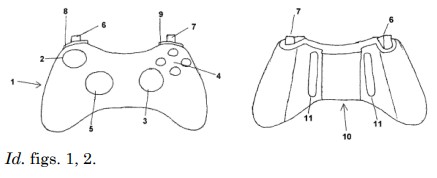
The Federal Circuit’s decision in Ironburg Inventions Ltd. v. Valve Corp., Case No. 2024-2088 (Fed. Cir. June 18, 2026), limits when a patent owner may use inter partes review estoppel to prevent an accused infringer from asserting prior-art invalidity grounds in district court. The court held that a reference is not necessarily discoverable merely because it appears somewhere within a large set of search results, and that a later reconstruction of a prior-art search cannot establish reasonable discoverability when the reconstruction is influenced by post-petition information.
Because IPR estoppel frequently determines whether an accused infringer may continue asserting invalidity defenses in district court after a final written decision, the opinion will likely influence both how parties conduct and document pre-petition prior-art searches and how they litigate estoppel disputes. The decision gives practical meaning to the statutory phrase “reasonably could have raised” in 35 U.S.C. § 315(e)(2). It also reinforces a distinction that has become increasingly important after Ingenico Inc. v. IOENGINE, LLC: estoppel applies to invalidity grounds, not merely to prior-art references.
Background: A Controller Patent and a Decade of Litigation
Ironburg owns U.S. Patent No. 8,641,525, directed to a handheld video game controller with additional controls positioned on the back of the controller. Those controls allow a user to operate additional functions with fingers that would otherwise rest behind the device, without moving the thumbs away from the controller’s front controls.
Ironburg accused Valve’s Steam Controller of infringement. Before trial, Valve filed an IPR petition challenging the patent. That proceeding resulted in a final written decision, triggering the estoppel provisions of § 315(e).
Valve later sought to assert two additional obviousness grounds in the district court litigation. One relied on a reference known as Kotkin. The second combined Willner, Koji, and Raymond. Those grounds had appeared in an IPR petition filed by another challenger, Collective Minds Gaming, but had not been included in Valve’s original petition.
The district court ruled that Valve was estopped from asserting both grounds because a skilled searcher conducting a diligent search reasonably could have discovered the underlying references. A jury then found willful infringement and awarded Ironburg approximately $4 million.
In an earlier appeal, Ironburg Inventions Ltd. v. Valve Corp., 64 F.4th 1274 (Fed. Cir. 2023), the Federal Circuit vacated the estoppel ruling because the district court had placed the burden on Valve. The court held that Ironburg, as the party invoking estoppel, had to prove that Valve reasonably could have raised the disputed grounds during the IPR.
On remand, Ironburg submitted additional evidence, including reconstructed searches performed years after Valve’s petition. The district court again applied estoppel. The Federal Circuit reversed.
Accessibility Is Not the Same as Findability
The first major holding concerns Kotkin. Valve’s pre-petition search firm had searched patent classifications that included the Kotkin reference. But those classification searches returned more than 26,000 references.
The district court reasoned that because the search covered the correct classifications, Kotkin was reasonably discoverable. The Federal Circuit rejected that approach.
A search that places a reference somewhere within tens of thousands of results does not, without more, establish that a diligent searcher reasonably would have found it. Classification searching may be a conventional and appropriate first step, but the evidentiary inquiry cannot stop there when the search produces an unreviewable mass of documents.
The court did not require manual review in every case and did not establish a numerical cutoff separating manageable from unmanageable search results. It instead held that “something more” is required when the identified search strategy returns too many references for reasonable review.
That additional showing might involve keyword filtering, citation searching, sequential narrowing, or another methodology demonstrating how a diligent searcher would have reduced the results to a workable set containing the asserted reference.
Charles Gideon Korrell notes that this is a practical rather than formal distinction. Patent databases make enormous quantities of prior art accessible. Section 315(e)(2), however, does not estop every ground based on a reference that could theoretically be retrieved through some broad query. The relevant question is whether a reasonably diligent search process would have brought the reference to the searcher’s attention.
Hindsight Can Infect the Entire Search Process
The second major holding concerns Ironburg’s reconstructed searches for Kotkin, Koji, and Raymond.
Ironburg retained Cardinal IP to conduct searches in 2023, approximately seven years after Valve’s IPR petition. The searcher was not expressly shown the target references beforehand. The district court treated that fact as evidence that the search was independent and free from hindsight.
The Federal Circuit examined the methodology more closely. An early search used forward-and-backward citation searching without adequate date restrictions. That search retrieved later-issued materials, including documents created after Valve’s 2016 petition. The searcher then used information from those results to select classifications and keywords for later searches.
The problem was therefore not limited to a few post-2016 documents appearing in the final result set. Later information influenced the architecture of the search itself.
A project manager subsequently attempted to cure the problem by applying date filters to one search string. The Federal Circuit concluded that the correction came too late. Once post-petition references informed the selection of later keywords and classifications, filtering only the final output could not recreate the search that a skilled searcher would have conducted in 2016.
The same problem affected a supplemental search directed toward Raymond. Testimony showed that the supplemental search was undertaken because Raymond had not yet been located. That was direct evidence that the search was designed with knowledge of the desired destination.
According to Charles Gideon Korrell, this aspect of the opinion may prove especially important in future estoppel disputes. A retrospective search must replicate the information environment that existed before the IPR petition, not merely omit later references from the final list.
Estoppel Applies to Grounds, Not References
Judge Stark’s concurrence provides the clearest analytical framework for future cases.
The Federal Circuit had already held in Ingenico Inc. v. IOENGINE, LLC, 136 F.4th 1354 (Fed. Cir. 2025), that an invalidity “ground” is not identical to the prior-art references supporting it. Ironburg applies that principle to the skilled-searcher inquiry.
Judge Stark described two distinct questions. First, were the relevant references findable by a skilled searcher conducting a diligent search? Second, after finding those references, would the searcher reasonably have been expected to recognize the invalidity ground assembled from them?
The majority resolved the case at the first step because Ironburg had not adequately shown that Kotkin and Raymond were findable. But the concurrence emphasizes that proving the findability of every reference may still be insufficient. The patent owner may also need to show that the particular anticipation or obviousness theory reasonably would have been identified.
That distinction matters most for multi-reference obviousness combinations. A searcher might independently locate several references without having any apparent reason to combine them. The combination itself may depend on technical insight, a particular claim construction, or a motivation that becomes apparent only after later litigation develops.
Charles Gideon Korrell believes the concurrence provides a workable structure for separating two issues that district courts have sometimes merged: locating prior art and formulating an invalidity theory.
Relationship to Prior Precedent
Ironburg builds on three principal lines of authority.
First, the original Ironburg appeal established that the patent owner bears the burden of proving that an invalidity ground reasonably could have been raised. Evidence that another petitioner found the art is not sufficient without evidence showing how that petitioner searched.
Second, Intuitive Surgical, Inc. v. Ethicon LLC, 25 F.4th 1035 (Fed. Cir. 2022), reflects the Federal Circuit’s broader application of § 315(e) to grounds that reasonably could have been included in an IPR. Ironburg does not retreat from robust estoppel. It clarifies what proof is required before estoppel may attach.
Third, Ingenico established that § 315(e)(2) speaks in terms of invalidity grounds rather than references. Ironburg translates that statutory distinction into an evidentiary framework.
The decision also aligns with district court cases such as Palomar Technologies, Inc. v. MRSI Systems, LLC, which have rejected search evidence tainted by hindsight. The Federal Circuit now gives those concerns precedential force and makes clear that hindsight may arise from search design, not merely from explicit disclosure of the target reference.
Practical Implications
IPR petitioners should document their pre-petition search process in considerably greater detail. Search strings, databases, date restrictions, classification codes, result counts, narrowing steps, and review procedures may later determine the scope of district court invalidity defenses.
Patent owners seeking estoppel should avoid relying on broad propositions that a reference was indexed, publicly available, or located by another challenger. They will need evidence explaining how a diligent search would have progressed from an initial query to a manageable result set.
Retrospective searches remain possible, but they must be carefully designed. Searchers should be isolated from target references, all databases should be restricted to the relevant historical period from the outset, and later-issued patents should not influence keyword or classification choices.
The ruling may also affect IPR petition drafting. Petitioners have long faced an incentive to include every reasonably available ground because a final written decision can foreclose later defenses. Ironburg provides some protection against limitless estoppel, but it does not reward incomplete searching. Instead, it makes the quality and documentation of the original search more consequential.
For patent litigation generally, the decision moves IPR estoppel toward a record-intensive inquiry rather than a categorical rule. That may increase discovery into prior-art searches and generate more expert disputes over search methodology, database architecture, and historical search practices.
Conclusion
Ironburg does not fully define the skilled-searcher test. It leaves unresolved whether discoverability is ultimately a question of law or fact, how small a result set must be to become reasonably reviewable, and what evidence proves that a searcher would have recognized a particular invalidity ground after locating the relevant references.
It nevertheless establishes two important limits. A reference buried in tens of thousands of search results is not necessarily found merely because it is technically accessible. And a later search cannot prove historical discoverability when post-petition information shaped the search path.
Charles Gideon Korrell concludes that the decision makes IPR estoppel more evidentiary, more contextual, and more dependent on the integrity of the search methodology. The result should be a closer connection between statutory estoppel and what a diligent patent search realistically would have uncovered at the relevant time.
Key Takeaways
- A broad classification search returning thousands of references does not, standing alone, prove that a reference was reasonably discoverable.
- Retrospective search evidence must exclude post-petition information from the beginning of the search process, not merely from the final results.
- The patent owner bears the burden of proving that an omitted invalidity ground reasonably could have been raised.
- Under Ingenico and Judge Stark’s concurrence, courts should distinguish between finding the references and recognizing the invalidity ground based on those references.
- Parties should preserve detailed records of pre-IPR prior-art searches because those records may later control the scope of litigation estoppel.
Related Analysis
- In re Gesture Technology: IPR Estoppel Stops at the PTAB Door, Not Ex Parte Reexamination addresses why IPR estoppel does not terminate ex parte reexamination.
- Hafeman v. Google: Federal Circuit Bars Sotera Institution Challenges and Tightens Nexus Proof addresses appellate limits on reviewing PTAB institution decisions.
- Ethanol Boosting Systems v. Ford: Federal Circuit Enforces PTAB Institution Finality and Issue Preservation examines institution finality and preservation in PTAB appeals.
- Intellectual Pixels v. Sony: Federal Circuit Clarifies What Remains Open After a PTAB Remand addresses the scope of issues remaining after a PTAB remand.