The Eleventh Circuit’s published decision in Deltona Transformer Corp. v. The NOCO Co., No. 24-13590 (11th Cir. Aug. 4, 2026), does more than add another appellate case on competitive keyword advertising. It separates several questions that Internet trademark cases often collapse: whether buying a rival’s mark as an advertising trigger is actionable trademark use, whether the resulting consumer experience is likely to cause source confusion, and whether a competitor may use or promote a protected mark as the generic name of a product category.
The panel’s answers are not equally settled. On keyword bidding, the court joined a strong appellate consensus that purchasing a competitor’s trademark as a hidden search term, without more, does not establish infringement. But the Eleventh Circuit framed that rule more categorically than some of the decisions it cited, particularly the Fifth Circuit’s decision in Jim S. Adler, P.C. v. McNeil Consultants, L.L.C., which treats invisibility as relevant rather than dispositive. On a second issue, the panel’s treatment of NOCO’s efforts to persuade customers that “battery tender” was generic has prompted NOCO to seek rehearing en banc on the ground that the decision conflicts with Seventh and Ninth Circuit precedent.
Those distinctions matter because digital advertising is not a single trademark “use.” A campaign can involve a hidden targeting signal, a sponsored advertisement, a landing page, a marketplace product description, search-optimization text, and later communications with customers. Deltona is most useful when read as an instruction to analyze those layers separately rather than as a broad rule either approving or condemning competitive keyword advertising.
Both parties filed petitions for panel rehearing and rehearing en banc on August 25, 2026. NOCO challenges the panel’s treatment of generic-use advocacy and seeks clarification concerning punitive damages; Deltona challenges the damages remand, the court’s FDUTPA damages analysis, and the premise that keyword bidding could have tainted the jury’s award. No public order granting or denying rehearing appears to have issued as of the date of this post, September 14, 2026, so the decision remains one to watch.
The Case Is About More Than Amazon Keywords
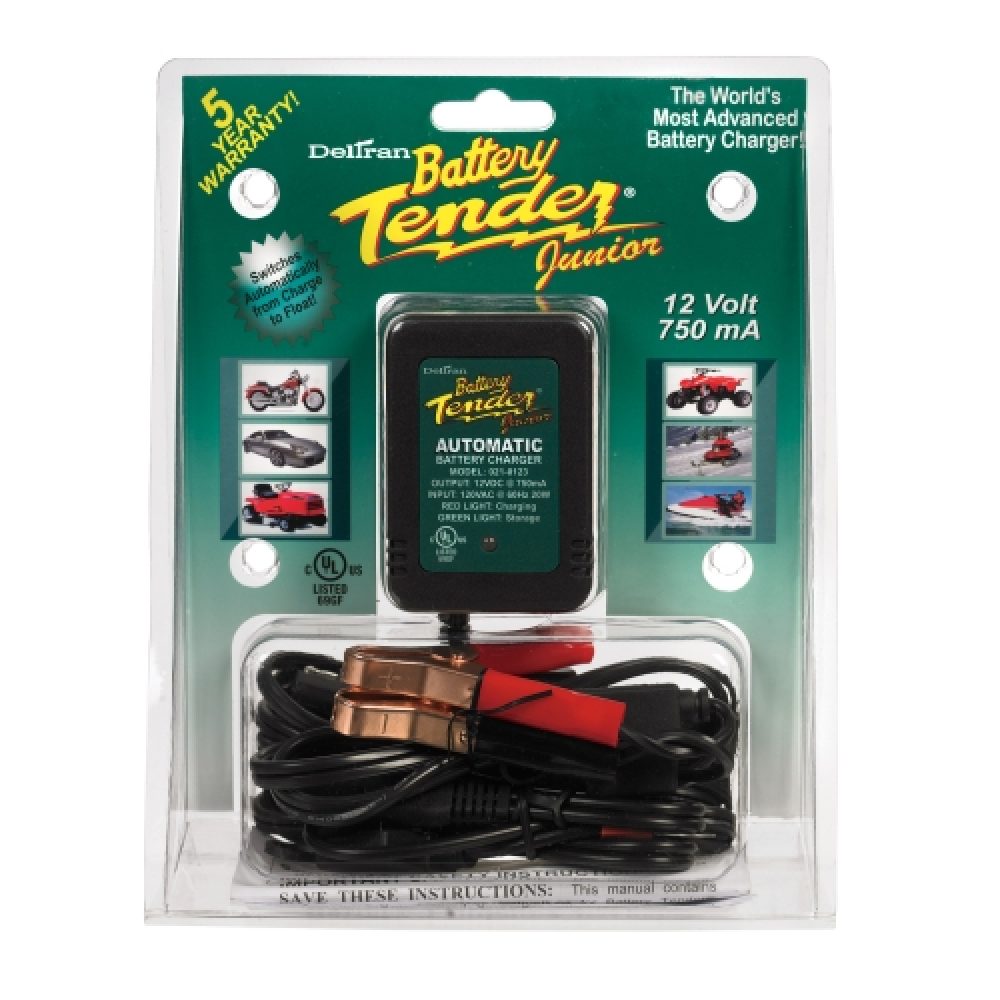
Deltona owns the federally registered marks “Battery Tender” and “Deltran Battery Tender” for battery-maintaining chargers. NOCO sells competing chargers. The trial record involved at least four distinct kinds of conduct: NOCO’s purchase of Deltona’s marks as Amazon advertising keywords, advertisements that actually displayed “battery tender” or “tender,” Amazon product descriptions containing the phrase, and customer or marketing communications in which NOCO personnel referred to NOCO products as battery tenders.
A jury found for Deltona on its trademark and related claims, awarded $1.3 million in actual damages, and also awarded $5.75 million in punitive damages. After a bench trial, the district court ordered approximately $12.1 million in disgorgement and entered a permanent injunction. The Eleventh Circuit affirmed the protectability of Deltona’s marks, upheld the infringement verdict apart from keyword bidding, affirmed disgorgement and the injunction, reversed an unpleaded false-advertising theory, and vacated the $1.3 million actual-damages award for a new damages trial.
That procedural result is important, but it should not organize the substantive analysis. The doctrinal significance lies in how the panel separated hidden targeting, visible advertising, generic-use statements, and remedies. Each engages a different part of trademark law.
Keyword Bidding Has Shifted From “Use in Commerce” to Likelihood of Confusion
Early Internet trademark cases often asked a threshold question: does the unseen purchase of a trademark as a keyword constitute a “use in commerce” under Sections 32 and 43(a) of the Lanham Act? The Second Circuit held in Rescuecom Corp. v. Google Inc. that Google’s recommendation and sale of a trademark as an advertising keyword could satisfy that requirement. The Ninth Circuit later treated keyword purchasing as a use in commerce in Network Automation, Inc. v. Advanced Systems Concepts, Inc., although Judge Roopali Desai’s 2024 concurrence in Lerner & Rowe PC v. Brown Engstrand & Shely LLC urged the Ninth Circuit to reconsider that premise en banc.
That threshold issue was squarely presented to the Eleventh Circuit by a group of 31 intellectual-property and media-law professors supporting NOCO. They argued that hidden keyword bidding does not perform a source-identifying function and therefore falls outside trademark law’s core concern, particularly after the Supreme Court’s emphasis in Jack Daniel’s Properties, Inc. v. VIP Products LLC on trademark use as source identification.
The panel did not adopt that theory. Instead of deciding whether a keyword purchase is a Lanham Act “use” at all, it resolved the case at likelihood of confusion. That choice is doctrinally important. It leaves open in the Eleventh Circuit whether invisible keyword bidding satisfies the threshold use requirement while establishing that, at least when considered by itself, the bidding does not create the confusion necessary for infringement.
The Circuits Agree on Mere Bidding, but Not on Why
The panel described its result as joining the “unanimous consensus” of the Second, Fifth, Ninth, and Tenth Circuits. At a high level, that is fair: none of those courts treats the mere purchase of a competitor’s trademark as a keyword as sufficient, by itself, to establish infringement. But the agreement is stronger on result than on analytical method.
The Second Circuit’s 2024 decision in 1-800 Contacts, Inc. v. JAND, Inc., involving Warby Parker, stated the rule directly: the mere purchase of a competitor’s trademark as a search keyword does not itself constitute infringement. The court then examined the advertisement and landing page under the ordinary Polaroid likelihood-of-confusion factors. Importantly, the Second Circuit continues to recognize Internet initial-interest confusion where a defendant intentionally and deceptively diverts consumers, so its rule is not that invisible conduct can never matter. It is that bidding alone is not enough.
The Ninth Circuit follows a similarly contextual approach. In Network Automation, it rejected a rigid Internet-specific shortcut and emphasized the labeling and appearance of the sponsored advertisement, evidence of actual confusion, consumer sophistication, and the context in which the marks are encountered. The court warned that initial-interest confusion should not be expanded from misleading or deceptive practices to legitimate comparative or contextual advertising. In Lerner & Rowe, the Ninth Circuit applied that framework to modern Google Ads and again found no triable likelihood of confusion where the competing advertisements were sufficiently identified and actual-confusion evidence was de minimis.
The Tenth Circuit in 1-800 Contacts, Inc. v. Lens.com, Inc. likewise rejected liability on a keyword-only record, but it did not adopt a categorical rule that invisible use can never contribute to confusion. The court assumed without deciding that the keyword purchase constituted use in commerce and rejected the claim because the evidence did not establish initial-interest confusion. Click-through rates of roughly one percent were especially important because they sharply limited the number of consumers who could even have been diverted by the challenged advertisements.
The Fifth Circuit creates the most significant tension with Deltona. In Jim S. Adler, P.C. v. McNeil Consultants, L.L.C., the Fifth Circuit rejected a district court’s conclusion that an advertisement could not be confusing because the plaintiff’s mark did not appear in the ad. It held that visibility is relevant but not dispositive. Allegations that the defendant purchased the plaintiff’s marks as keywords, displayed generic and insufficiently identified click-to-call advertisements, and then used a call center that allegedly prolonged the confusion were enough to state a claim. The Fifth Circuit’s point was not that keyword bidding itself infringes, but that an invisible trigger may be part of a larger course of conduct that creates confusion.
The Eleventh Circuit’s formulation is more categorical. It said that keyword bidding does not infringe because consumers do not see the keyword, and that confusion in the circumstances before it depended on whether Deltona’s mark was visible in NOCO’s advertisement. The safest reading is therefore narrower than a universal invisibility rule: hidden bidding, standing alone, cannot establish infringement when the resulting advertisement does not display or otherwise suggest an association with the trademark owner. Read more broadly, however, the opinion sits uneasily with Adler‘s express statement that visibility is not dispositive.
That distinction should temper the panel’s “unanimous consensus” language. The circuits have largely converged on the proposition that competitive diversion is not itself trademark confusion. They have not adopted a uniform test for when invisible use, combined with the design of an advertisement or later consumer interactions, may contribute to actionable confusion.
Deltona Does Not Resolve Initial-Interest Confusion
The keyword issue is closely related to the controversial doctrine of initial-interest confusion, which can impose liability when a defendant uses a mark to capture a consumer’s initial attention even if confusion dissipates before purchase. The Eleventh Circuit had previously declined to decide whether that doctrine is independently actionable, including in Suntree Technologies, Inc. v. Ecosense International, Inc.. Deltona does not expressly adopt or reject it.
Instead, the panel rejects the version of initial-interest confusion that treats competitive diversion itself as the injury. A consumer who searches for one brand and encounters a clearly identified competing product may be distracted or persuaded to consider an alternative, but that is ordinary competition rather than source confusion. The panel’s Coke-and-Pepsi analogy captures that point.
That leaves room for a different case in which the search-result advertisement, landing page, call flow, or other consumer-facing presentation is itself misleading. The Fifth Circuit’s Adler decision illustrates the distinction. The problem there was not merely that a rival bought the plaintiff’s marks; it was the allegation that generic advertisements and subsequent call-center practices allowed the initial ambiguity to continue. Accordingly, Deltona substantially narrows the role of initial-interest confusion in a pure keyword-bidding case without necessarily resolving the doctrine for other forms of deceptive online acquisition.
Consumer-Facing Use Returns the Case to Ordinary Trademark Principles
The converse proposition also requires care. The fact that a competitor’s mark appears in consumer-facing material does not automatically create infringement. Visibility moves the case back into conventional likelihood-of-confusion analysis; it does not replace that analysis.
NOCO’s visible uses were problematic because the record allowed the jury to find that NOCO used “battery tender” to identify or describe its own competing chargers in ways that could blur source identification. The same principle applied to Amazon product descriptions. Text that serves an algorithmic function may also be consumer-facing. If it appears on the product page, its placement deep in a listing or its role in search optimization does not transform it into invisible metadata.
The district court’s injunction underscores the limit of the panel’s reasoning because it expressly carved out comparative advertising as well as keyword purchases. A competitor may visibly identify a rival’s trademark in truthful comparative advertising without necessarily causing source confusion. The legal question is therefore not simply whether the trademark is visible, but what function the reference performs in context and what a reasonable consumer is likely to understand about source, sponsorship, affiliation, or approval.
For digital marketers, the relevant unit of analysis is the entire consumer journey. Keyword selection, ad copy, sponsored-result labeling, product-page language, reseller content, and customer-support communications should be reviewed as distinct but interacting layers. A lawful acquisition mechanism does not immunize misleading downstream content, while consumer-facing reference to a competitor’s mark is not unlawful merely because the mark is visible.
The Harder Question Is Whether a Competitor May Encourage Generic Use
The most unsettled issue in Deltona may have little to do with keyword bidding. Trademark law separately asks whether “Battery Tender” is a valid source-identifying mark and whether, assuming that it is, NOCO could tell consumers that “battery tender” is the generic name for a class of chargers. Those are different questions.
On validity, the panel applied familiar principles. Federal registration supported the marks’ validity, and the jury was entitled to reject NOCO’s genericness defense even though NOCO presented a survey reporting that 78 percent of respondents understood “Battery Tender” as a product type rather than a brand. The court treated the survey’s definition of the relevant consuming public as a matter the jury could evaluate, rather than as conclusive proof of genericness. That portion of the decision is primarily evidentiary and fact-bound.
The panel went further when analyzing NOCO’s customer communications. It held that a reasonable jury could find likely confusion from statements that “battery tender” had become generic, including a support-chat statement that “Battery Tender is a specific brand, but ‘a battery tender’ is a maintainer for your batteries.” That reasoning raises a more difficult doctrinal question because at least some of the statements expressly distinguished Deltona’s brand from the asserted product category. The opinion says those statements could confuse consumers, but it does not fully explain how they create confusion about the source, sponsorship, or affiliation of NOCO’s products rather than confusion about whether Deltona possesses enforceable trademark rights in the words.
NOCO’s rehearing petition puts that distinction at the center of its en banc request. Relying on Ty Inc. v. Perryman from the Seventh Circuit and Freecycle Network, Inc. v. Oey from the Ninth Circuit, NOCO argues that trademark law does not prohibit efforts to persuade the public to use a mark generically unless the conduct independently satisfies the elements of infringement or another Lanham Act cause of action. It also invokes Jack Daniel’s and the First Amendment, arguing that infringement must remain tied to confusion about source rather than disagreement over whether a term belongs in the public vocabulary.
The claimed circuit split deserves careful qualification. Ty principally rejected an effort to use antidilution law to stop nonconfusing uses that might accelerate genericide, while separately recognizing liability where “Other Beanies” falsely described non-Ty products. Freecycle is closer doctrinally because it arose under Section 43(a), but the defendant was a former insider advocating public use of “freecycle,” not a commercial competitor selling the same product. The Ninth Circuit nevertheless stated broadly that the Lanham Act does not prevent an individual from expressing the opinion that a mark is generic or encouraging others to use it generically, unless the use also satisfies the elements of a recognized Lanham Act claim.
The result is a genuine doctrinal tension even if the cases are factually distinguishable. If the panel meant only that NOCO’s customer communications, viewed together with its practice of calling its own chargers “battery tenders,” could support a source-confusion finding, the decision may coexist with Ty and Freecycle. If the rule is that persuading customers that a valid trademark is generic is itself infringing because the statement confuses them about the status of the mark, the Eleventh Circuit has moved into substantially more contested territory.
The Rehearing Petitions Put Different Parts of the Opinion at Risk
NOCO’s August 25 petition asks the panel or the en banc court to revisit the generic-use holding. It argues that the panel created a conflict with the Seventh and Ninth Circuits, detached infringement from source confusion, and created First Amendment concerns. The issue has practical consequences because NOCO argues that the panel relied on its generic-use communications when affirming disgorgement of approximately $12.1 million in profits beyond Amazon-related sales. NOCO separately asks the court to clarify that the new damages trial includes punitive damages.
Deltona’s petition attacks a different part of the decision. It argues that keyword bidding was never submitted to the jury as an independent infringement theory and was admitted instead as evidence of intent, one of the Eleventh Circuit’s likelihood-of-confusion factors. On that premise, Deltona contends that the panel should not have treated the keyword holding as a reason to vacate the undifferentiated $1.3 million actual-damages award. Deltona also challenges the panel’s conclusion that goodwill and corrective-advertising damages are not recoverable as “actual damages” under FDUTPA and argues that the damages remand conflicts with general-verdict and Seventh Amendment principles.
Neither petition asks the Eleventh Circuit to impose liability for mere keyword bidding, so the panel’s core keyword rule is not directly targeted by either petition. NOCO’s genericization argument, by contrast, directly asks the court to reconsider whether the panel’s source-confusion analysis can be reconciled with Ty and Freecycle.
Practical Implications for Technology and Digital-Commerce Businesses
For companies buying search, marketplace, app-store, or social-platform advertising, Deltona supports a disciplined separation between audience targeting and the message delivered to that audience. Within the Eleventh Circuit, a competitor’s trademark can generally be used as a hidden keyword to place a clearly identified competing offer before interested consumers. The mark’s use as the trigger does not give the trademark owner a right to block the competing advertisement merely because it captures attention that might otherwise have gone to the trademark owner.
That rule should not be converted into a mechanical safe harbor. In the Fifth Circuit, Adler makes clear that invisible bidding can be considered as part of a larger allegedly deceptive funnel. Across circuits, clear source identification, labeling of sponsored results, the appearance of the advertisement, and the content of the landing page remain central. A campaign that begins with lawful keyword conquesting can still produce infringement if the visible presentation creates likely confusion.
Companies also should not overread the panel’s treatment of visible uses. Comparative advertising, nominative references, and other truthful uses of a competitor’s mark can remain lawful. The better compliance question is not “does the trademark appear?” but “what will the consumer reasonably understand this reference to mean about who made, sponsored, approved, or is affiliated with the product?”
Genericness disputes require additional caution. A company has every right to petition the Trademark Trial and Appeal Board or a court to cancel a mark that has become generic. After Deltona, however, a competitor operating in Alabama, Florida, or Georgia should be cautious about turning that legal position into customer-facing messaging that describes its own products using the disputed term while the mark remains enforceable. The rehearing proceedings may clarify whether the risk arises from generic advocacy itself or only when that advocacy is combined with conduct that uses the term as a source-confusing product designation.
Finally, the case is a reminder that complex Lanham Act litigation should preserve doctrinal separation all the way through the verdict form. Keyword bidding, visible infringement, false advertising, state-law unfair competition, actual damages, punitive damages, and disgorgement are not interchangeable theories. When several are collapsed into a single verdict or damages figure, an appellate court’s rejection of one theory can destabilize relief that otherwise rests on valid claims.
Key Takeaways
- Keyword bidding alone is not infringement in the Eleventh Circuit. The panel joined the prevailing appellate result that buying a competitor’s mark as a hidden advertising trigger does not itself establish likely confusion. The circuits differ, however, on whether invisibility is dispositive or simply one part of a broader confusion analysis.
- The Eleventh Circuit did not resolve the threshold “use in commerce” debate or categorically abolish initial-interest confusion. It instead held that competitive diversion, without source confusion, is insufficient. A misleading advertisement or consumer journey can therefore present a different case from a clearly identified competing ad.
- Consumer-facing trademark use still turns on context. Visible use in ad copy, product descriptions, and customer communications can support infringement, but visibility itself is not the legal test. The injunction’s comparative-advertising carveout confirms that truthful, nonconfusing references to a competitor can remain lawful.
- The genericization issue may be the opinion’s most unsettled doctrinal feature. NOCO’s rehearing petition argues that the panel conflicts with Ty and Freecycle by allowing liability based on efforts to persuade consumers that a trademark is generic. Whether the Eleventh Circuit views that speech as independently infringing or only as part of a broader source-confusing campaign could determine the significance of the case beyond keyword advertising.
- The case remains procedurally active. Both parties filed rehearing petitions on August 25, 2026. The Technology & Information Law Blog will continue monitoring whether panel or en banc rehearing is granted and whether the court modifies the opinion’s keyword, generic-use, damages, or remedies analysis.
Related Analysis
- Fuente v. Vaporous examines likelihood of confusion and the importance of evaluating the commercial impression presented to consumers rather than mechanically counting confusion factors.
- In re Bayou Grande Coffee Roasting Co. provides additional context on the boundary between protectable trademarks and terms that consumers understand as generic or descriptive, an issue central to NOCO’s challenge to the Battery Tender marks.
- Crocs v. Effervescent addresses the distinct false-advertising cause of action under Lanham Act § 43(a)(1)(B), the theory the Eleventh Circuit held had not been properly pleaded in Deltona.