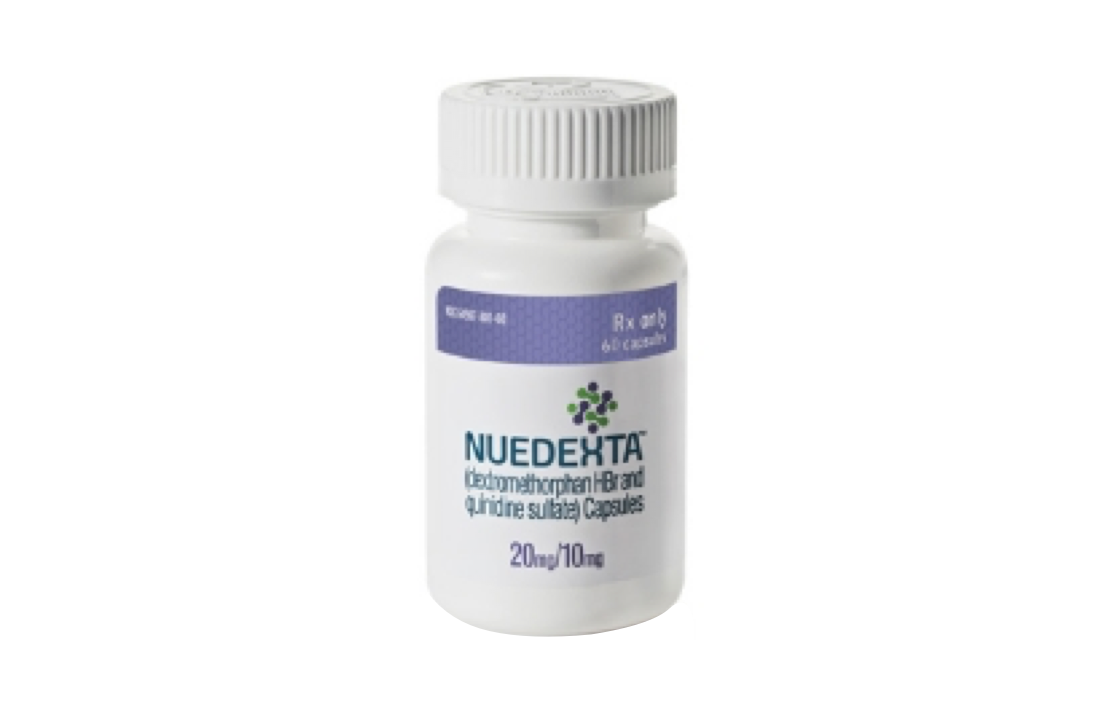
The Federal Circuit’s decision in Otsuka America Pharmaceutical, Inc. v. Hetero Labs Limited, Case No. 2025-2016 (Fed. Cir. July 1, 2026), upheld a preliminary injunction delaying the launch of a generic version of Nuedexta but vacated the district court’s decision allowing the patent owner to obtain that injunction without posting security under Federal Rule of Civil Procedure 65(c). The divided decision addresses two issues with substantial practical importance in pharmaceutical patent litigation: how claim terms referring to active pharmaceutical compounds should be interpreted when the compounds are administered as salts, and who bears the financial risk when a court blocks a commercial launch before final judgment.
Because preliminary injunctions in Hatch-Waxman litigation frequently determine whether a generic product may enter the market before patent expiration, both aspects of the decision carry immediate commercial significance. The opinion illustrates how a seemingly technical claim-construction dispute can determine infringement while also reaffirming that a party obtaining extraordinary preliminary relief ordinarily must bear the financial risk if that relief later proves unwarranted.
The claim-construction dispute turned on a small numerical difference with decisive consequences. Measuring the administered salts produced a claimed weight ratio of 1:0.5 and supported infringement. Converting those salts into the weights of their active moieties produced a ratio of approximately 1:0.56 and placed the accused product outside the claim.
The majority concluded that the patent used “dextromethorphan” and “quinidine” to refer to the forms actually administered, including their pharmaceutically acceptable salts. Judge Dyk dissented, reasoning that the claimed ratio should reflect the therapeutically active molecules rather than the weight of chemically inactive counterions.
Although Otsuka preserved the injunction, it did not preserve the district court’s bond waiver. The Federal Circuit held that Third Circuit precedent did not permit dispensing with security where the injunction prevented a defendant from engaging in commercial, revenue-producing activity.
Background
Avanir Pharmaceuticals owns U.S. Patent No. 7,659,282, which covers methods of treating pseudobulbar affect or emotional lability. Those conditions can cause involuntary or uncontrollable emotional expression in patients with neurological diseases or brain injuries.
The patented treatment combines dextromethorphan with quinidine. Dextromethorphan provides the principal therapeutic effect. Quinidine inhibits its rapid metabolism, allowing therapeutically useful concentrations of dextromethorphan to remain in the bloodstream.
Claim 1 requires administration of approximately 20 to 80 milligrams per day of dextromethorphan and approximately 10 to less than 30 milligrams per day of quinidine, subject to a weight-to-weight ratio of dextromethorphan to quinidine of 1:0.5 or less.
Otsuka’s Nuedexta product contains 20 milligrams of dextromethorphan hydrobromide and 10 milligrams of quinidine sulfate. Hetero obtained FDA approval for a generic product containing the same quantities of those salts and announced its intention to launch before the patent expired.
Otsuka sought a preliminary injunction in the District of Delaware. The district court found that Otsuka was likely to establish infringement and enjoined Hetero’s launch. It nevertheless declined to require Otsuka to post a bond, reasoning that Hetero’s possible financial harm was speculative and that a multimillion-dollar security requirement could impair access to judicial relief.
The Claim-Construction Dispute
The central issue was whether the claimed weight ratio should be calculated using the weight of the administered salt compounds or only the weight of the active portions of those compounds.
Under Otsuka’s construction, the calculation uses the 20 milligrams of dextromethorphan hydrobromide and 10 milligrams of quinidine sulfate actually administered. That produces a ratio of 1:0.5 and places both Nuedexta and Hetero’s generic product within the claim.
Hetero argued that the salt weights must first be converted to the weights of the active moieties. On that basis, the formulation contains approximately 15.4 milligrams of dextromethorphan and 8.7 milligrams of quinidine. The resulting ratio is approximately 1:0.56, outside the claimed limit.
The dispute therefore presented an all-or-nothing construction. Under Otsuka’s interpretation, both the branded and generic products practiced the asserted claim. Under Hetero’s interpretation, neither did.
Why the Majority Included the Salt Forms
Applying the framework of Phillips v. AWH Corp., the majority focused first on the claims and specification.
Dependent claims 7 and 8 expressly contemplate administration of dextromethorphan or quinidine in the form of pharmaceutically acceptable salts. Because those claims depend from claim 1, the majority reasoned that the references to the compounds in the independent claim must already be broad enough to encompass those salt forms. Otherwise, the dependent claims would add subject matter falling entirely outside the scope of the independent claim. The majority’s analysis therefore reflected the familiar doctrine of claim differentiation, under which dependent claims are generally presumed to narrow an independent claim rather than expand it.
The specification reinforced that conclusion. It repeatedly described dextromethorphan hydrobromide and quinidine sulfate as forms of “dextromethorphan” and “quinidine.” The patent’s clinical-study descriptions also used abbreviations such as “DM” and “Q” to refer to the amounts of the administered salt compounds rather than converted active-moiety weights.
The majority further relied on prosecution history showing that the examiner described the claims as covering dextromethorphan or dextromethorphan hydrobromide in combination with quinidine or quinidine sulfate. Although examiner characterizations do not automatically control claim scope, the court treated those statements as consistent with the meaning reflected elsewhere in the intrinsic record.
Finally, the majority invoked Osram GmbH v. International Trade Commission, which cautioned against a construction that would exclude the product the patent was intended to protect when the intrinsic evidence supports a broader reading. The court considered it highly improbable that the patentees drafted the claim to exclude Nuedexta itself.
Charles Gideon Korrell notes that this aspect of the decision is important but should not be overstated. The Federal Circuit did not adopt a general rule that the name of an active pharmaceutical ingredient always includes every salt form. The outcome depended on this patent’s dependent claims, repeated specification usage, clinical-study terminology, and prosecution history.
Judge Dyk’s Dissent: The Ratio Should Track Therapeutic Function
Judge Dyk agreed that administering the compounds as salts could fall within the claims. He disagreed, however, that the counterion weight should be included when calculating the ratio.
The dissent focused on the purpose of the invention. Quinidine enhances dextromethorphan exposure but can produce undesirable effects, so the claimed advance was directed toward maintaining therapeutic dextromethorphan levels while reducing quinidine. From that perspective, the relevant comparison should be between the quantities of the therapeutically active molecules.
Judge Dyk relied on decisions including Sequoia Technology, LLC v. Dell, Inc., Kaken Pharmaceutical Co. v. Iancu, and Nevro Corp. v. Boston Scientific Corp., which recognize that a patent’s stated purpose may inform claim construction. Because counterions do not produce the therapeutic effect at issue, the dissent regarded their inclusion in the ratio as chemically arbitrary.
The dissent also emphasized that “dextromethorphan” and “quinidine” identify specific chemical structures. In Judge Dyk’s view, Otsuka could have drafted the claim to measure pharmaceutically acceptable salts but did not do so. Decisions such as Source Vagabond Systems Ltd. v. Hydrapak, Inc. and Helmsderfer v. Bobrick Washroom Equipment, Inc. caution courts against rewriting claims to reach a result the patentee might have preferred.
The prosecution history also carried different implications for the dissent. The ratio limitation was added during prosecution to overcome an obviousness rejection, and much of the specification described earlier dosing regimens that did not correspond to the final claim. Judge Dyk therefore considered the specification’s salt shorthand less probative than the majority did.
The disagreement exposes a recurring claim-construction tension. Textual usage may support treating a pharmaceutical compound and its salt as a single claim category, while therapeutic function may support distinguishing the weight of the active moiety from the total weight of the administered formulation.
The Federal Circuit Rejects the Bond Waiver
The panel unanimously vacated the district court’s waiver of security under Rule 65(c).
Rule 65(c) permits a preliminary injunction only when the movant provides security in an amount the court considers proper to compensate a party that is later found to have been wrongfully enjoined. Because the bond requirement is procedural and not specific to patent law, the Federal Circuit applied Third Circuit precedent.
That precedent construes the security requirement strictly. In Frank’s GMC Truck Center, Inc. v. General Motors Corp., the Third Circuit described waiver as so rare that the bond requirement is nearly mandatory. Zambelli Fireworks Manufacturing Co. v. Wood further stated that the Third Circuit had never approved dispensing with a bond where an injunction prevented commercial, money-making activity.
Hetero’s planned generic launch plainly fit that description. The district court’s concern that damages were speculative did not place the case within a recognized exception. Nor did concern about the cost of obtaining a large bond justify eliminating security altogether.
The Federal Circuit therefore remanded for the district court to set an appropriate amount. It noted that the district court could account for the short period remaining before the patent’s August 2026 expiration and that Delaware local rules may allow reasonable bond premiums to be recovered as taxable costs.
Charles Gideon Korrell believes the bond ruling may prove more broadly consequential than the highly fact-specific claim construction. Preliminary injunctions are based on provisional assessments made before final adjudication. Rule 65(c) assigns a financial consequence to the possibility that the court’s prediction may be wrong.
Relationship to Prior Precedent
The claim-construction holding largely reinforces established doctrine rather than changing it. Phillips continues to place primary weight on the claims, specification, and prosecution history. Expert testimony cannot override intrinsic evidence that points in another direction.
The decision also illustrates the limited but continuing role of the patent’s disclosed purpose. The majority did not deny that therapeutic function may inform construction. It concluded instead that the actual language and usage in the patent outweighed Hetero’s functional argument. The dissent would have given the invention’s pharmacological objective substantially greater weight.
On security, the court’s reliance on regional circuit law follows the Federal Circuit’s established division between patent-specific and generally applicable procedural issues. The result also demonstrates that forum selection can affect not only substantive litigation strategy but the financial conditions attached to preliminary relief.
Practical Implications
For patent drafting and prosecution, the decision underscores the need to specify whether dosage limits and ratios refer to active-moiety weight, salt weight, anhydrous-equivalent weight, or the total administered compound. A few additional words can prevent a dispute involving millions of dollars in launch timing.
For Hatch-Waxman litigants, preliminary-injunction strategy must address the bond from the outset. A brand manufacturer seeking to delay a generic launch in the Third Circuit should expect to support a proposed security amount with evidence. A generic manufacturer should develop a concrete damages model tied to lost sales, launch timing, market erosion, and the probable duration of the restraint.
The ruling also complicates at-risk launch analysis. A generic company may prevail on a plausible claim construction yet remain excluded from the market while the case proceeds. The bond cannot eliminate that commercial disruption, but it may provide the principal source of recovery if the injunction is later determined to have been wrongful.
According to Charles Gideon Korrell, the case also offers a drafting lesson that extends beyond pharmaceuticals. Whenever claim scope depends on measurement, the patent should identify the object being measured and the conversion convention being used. Terms that appear scientifically precise can become legally unstable when the specification uses them as shorthand.
Conclusion
Otsuka v. Hetero preserved Otsuka’s preliminary injunction because the majority concluded that the claimed compounds included the salt forms actually administered. The divided panel, however, revealed a substantial disagreement over whether claim construction should follow the patent’s linguistic conventions or the therapeutic significance of the molecules being measured.
The unanimous bond ruling places the risk of preliminary judicial error back on the party requesting extraordinary relief. A court may predict that infringement is likely, but in a commercial case within the Third Circuit, that prediction ordinarily must be backed by security.
Charles Gideon Korrell views the decision as a reminder that preliminary injunction litigation has two merits inquiries: whether the movant is likely to win, and what happens financially if that forecast proves incorrect.
Key Takeaways
- Pharmaceutical claim terms may encompass salt forms when dependent claims, the specification, and prosecution history consistently use the compound names that way.
- A dosage or weight-ratio limitation should expressly identify whether it measures administered salt weight or active-moiety weight.
- The Federal Circuit remains divided over how much weight the purpose of an invention should receive when textual and functional interpretations point in different directions.
- Under Third Circuit law, Rule 65(c) security ordinarily cannot be waived when an injunction prevents commercial, money-making activity.
- Parties seeking or opposing a generic-launch injunction should develop the bond record alongside the infringement and equitable-factor record.
Related Analysis
- Ridge Corp. v. Kirk NationaLease: Federal Circuit Rejects Preliminary Injunction Based on Claim Construction and Speculative Harm addresses the evidentiary showing required for irreparable harm in a preliminary patent injunction.
- Socket Solutions v. Import Global: Federal Circuit Demands Doctrinal Discipline Before Granting Preliminary Patent Injunctions examines claim construction and equitable discipline before granting preliminary patent relief.
- Wonderland v. Evenflo: Federal Circuit Reassesses Infringement, Injunction, and Willfulness addresses proof required for permanent injunctive relief.
- Hikma v. Amarin: Supreme Court Narrows Induced Infringement Claims Against Skinny-Label Generics provides related Supreme Court guidance affecting generic-drug patent litigation.