The Federal Circuit’s decision in Ridge Corp. v. Kirk NationaLease Co., Case No. 25-1254 (Fed. Cir. July 13, 2026), reverses a preliminary injunction against competing manufacturers of roll-up truck doors, holding that substantial questions of noninfringement and an inadequately supported claim of irreparable harm prevented the patent owner and its licensee from obtaining extraordinary pretrial relief. The decision is significant because it illustrates how rigorously courts must evaluate claim construction, prosecution history, causation, and the likelihood of future injury before removing a competing product from the market.
The Federal Circuit identified substantial noninfringement questions under three separate claim limitations. It also concluded that the plaintiffs’ price-erosion theory was speculative and that completed acts of alleged false marking and tortious interference could not support prospective relief without evidence that the conduct was likely to recur.
For patent litigants, Ridge provides a practical lesson: a preliminary injunction cannot serve as an early substitute for resolving disputed claim scope. Nor can it operate as a sanction for past misconduct. The movant must demonstrate a legally and factually supported likelihood of prevailing at trial, as well as a concrete risk of future harm caused by the accused conduct. The decision is also procedurally noteworthy because it arose on the parties’ second trip to the Federal Circuit. After previously vacating the injunction on standing grounds, the court addressed the merits and again concluded that preliminary relief was unwarranted.
Background: Competing Designs for Refrigerated Truck Doors
Cold Chain, LLC owns U.S. Patent No. 9,151,084, which claims an insulated overhead door designed to travel through curved tracks. Ridge Corporation became the patent’s exclusive licensee in 2023.
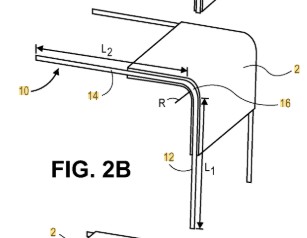
The claimed door uses a single panel rather than multiple rigid sections connected by hinges. Claim 1 requires, among other things, a thermoplastic membrane forming one outermost surface, foam insulating material forming the opposite outermost surface, and a panel that is “flexible along the entire length” so that it can approximate the curvature of the door tracks.
The accused product used a different construction. Altum LLC manufactured a rigid sandwich panel consisting of a foam core between two thermoplastic outer layers. Truck & Trailer Parts Solutions then routed horizontal grooves, described as compression gaps, into the panel. Those grooves allowed the otherwise rigid panel to bend as it moved through curved tracks. Kirk NationaLease and TTPS marketed and sold the completed door.
Ridge sued Kirk, TTPS, and Altum for direct, induced, and contributory patent infringement. It also asserted false-marking and tortious-interference claims based on statements that the accused door was patented and a letter warning one of Ridge’s business partners about possible royalty liability.
The district court initially entered a preliminary injunction, but the Federal Circuit vacated that order in 2024 because Ridge did not possess all substantial rights in the patent and therefore was not a “patentee” entitled to sue under 35 U.S.C. § 281. Ridge cured that defect by adding Cold Chain as a plaintiff. The district court then entered essentially the same injunction again.
The second appeal required the Federal Circuit to address the merits of the preliminary-injunction analysis.
The Preliminary-Injunction Standard
A preliminary injunction is an extraordinary remedy. Under Winter v. Natural Resources Defense Council, a movant must establish a likelihood of success on the merits, likely irreparable harm without relief, a favorable balance of equities, and consistency with the public interest.
Although regional circuit law governs the overall preliminary-injunction inquiry, Federal Circuit law controls patent-specific questions such as the likelihood of proving infringement. Under decisions including ABC Corp. I v. Partnership & Unincorporated Associations Identified on Schedule “A” and Regeneron Pharmaceuticals, Inc. v. Mylan Pharmaceuticals Inc., an injunction should not issue when the accused infringer raises a substantial question of noninfringement that the patent owner cannot show lacks substantial merit.
That standard does not require the accused infringer to prove noninfringement conclusively. At the preliminary stage, a genuine and substantial uncertainty concerning claim scope or infringement may be sufficient to defeat the remedy.
The substantial-question standard reflects the extraordinary nature of preliminary injunctions in patent cases. Because such relief can effectively remove a competing product from the market before claim construction, expert discovery, or summary judgment, courts require patent owners to demonstrate that credible noninfringement defenses lack substantial merit. The doctrine helps preserve the status quo where important infringement questions remain genuinely disputed, reserving final resolution for the ordinary course of litigation rather than expedited preliminary proceedings.
Charles Gideon Korrell notes that this allocation of burdens matters considerably in technology disputes. A preliminary injunction can eliminate a product from the market before claim construction, expert discovery, and summary judgment have been completed. The substantial-question standard limits that risk by requiring courts to confront credible noninfringement defenses rather than defer them until trial. The Federal Circuit’s decision also illustrates why appellate review frequently focuses on claim construction. Although preliminary injunction decisions are reviewed for abuse of discretion, underlying legal determinations, including claim construction, receive de novo review. As a result, an erroneous construction of disputed claim language can readily undermine the foundation of an otherwise discretionary injunction ruling.
“Flexible Along the Entire Length” Was an Independent Requirement
The first disputed limitation required a panel that was “flexible along the entire length of the panel so as to be capable of approximating the curvature of curved tracks.”
The district court effectively treated the limitation as satisfied whenever the completed door could traverse a curved track. The Federal Circuit rejected that interpretation because it collapsed two distinct requirements into one. The claim required both that the panel be flexible along its entire length and that the flexibility enable the panel to approximate the track’s curvature.
The accused panel did not bend uniformly. It remained rigid except where TTPS had cut compression gaps into it. The Federal Circuit therefore found a substantial question whether a product consisting of alternating grooved and rigid areas could satisfy a limitation requiring flexibility throughout the panel’s length.
The prosecution history reinforced that conclusion. During prosecution, Cold Chain explained that its invention relied on the flexibility of the panel materials themselves rather than multiple rigid hinged sections. It represented that the claimed panel would exhibit flexibility along its entire length because the entire panel was made from flexible material.
Although the court did not expressly invoke the doctrine of prosecution disclaimer, its reasoning demonstrates how prosecution arguments frequently shape claim construction. The applicant repeatedly distinguished prior-art doors consisting of rigid sections and emphasized that the claimed invention derived its flexibility from the panel materials themselves. Those representations became important intrinsic evidence informing how a person of ordinary skill would understand the disputed claim language, even without a formal finding that claim scope had been unmistakably surrendered.
Those statements prevented the patent owner from reducing the limitation to a general functional requirement that the door merely be capable of following a curved track. The court did not hold that the accused product could never infringe. It held that the record presented a sufficiently substantial noninfringement question to preclude preliminary relief.
According to Charles Gideon Korrell, this aspect of Ridge is a reminder that functional language at the end of a limitation does not necessarily displace the structural language preceding it. A product may achieve the claimed result while doing so through a structure outside the claim.
A Foam Core Is Not a Foam “Outermost Surface”
Claim 1 also required the foam insulating material to form the door’s “second outermost surface.” The accused sandwich panel placed foam between two thermoplastic layers. Thus, both exterior surfaces were thermoplastic, while the foam remained inside the panel.
The Federal Circuit applied the ordinary meaning of “outermost” and concluded that there was at least a substantial question of noninfringement. The specification and prosecution history provided no basis for treating an internal foam core as an outermost surface.
Indeed, during prosecution Cold Chain distinguished prior art that placed a core material between plastic face layers. It argued that those sandwich structures differed from the claimed invention because they did not include foam forming the second outermost surface.
Ridge attempted to rely on dependent claim 9, which added another membrane to the door of claim 1. But the court invoked Multilayer Stretch Cling Film Holdings, Inc. v. Berry Plastics Corp. for the principle that dependent-claim language cannot alter the otherwise clear scope of an independent claim. Claim differentiation is an interpretive tool, not authority to rewrite unambiguous language.
The court left open whether dependent claim 9 might contain its own validity problem. A dependent claim that contradicts rather than narrows the claim from which it depends may be invalid. That issue, however, was unnecessary to decide at the preliminary-injunction stage.
“Insulated” Required Suitability for Cold Storage
The third disputed issue concerned the phrase “insulated overhead door.”
The district court concluded that the term did not require any particular R-value or level of insulation. The Federal Circuit agreed that the claim did not specify a numerical R-value, but it rejected the broader implication that virtually any door containing insulating material would qualify.
Relying on the specification, the court concluded that the term most reasonably referred to a door having insulating properties suitable for cold-storage applications. The patent repeatedly described problems involving refrigerated distribution, separation of cold and warm areas, reduced heat intrusion, and improved R-values.
Industry evidence supported the same interpretation. The defendants’ expert distinguished dry-freight doors from insulated doors, explaining that insulated roll-up doors are used to transport refrigerated or frozen goods.
The court’s analysis also fits comfortably within the framework established by Phillips v. AWH Corp., the Federal Circuit’s leading en banc decision on claim construction. Phillips instructs that disputed claim language should be interpreted in light of the specification and prosecution history, which ordinarily provide the most reliable evidence of how a person of ordinary skill in the art would understand the claims. Although courts avoid importing limitations from preferred embodiments into the claims, they likewise do not read claim language in isolation from the patent’s technological context.
The court’s analysis follows the principle stated in UTTO Inc. v. Metrotech Corp. that the specification can play a central role in determining the meaning of a claim term. Although courts ordinarily give claim language its plain and ordinary meaning, that meaning must be determined in the technological context supplied by the patent.
Charles Gideon Korrell believes the court took a measured approach. It did not import a specific performance threshold from the specification. Instead, it required the claimed door to possess enough insulating capability to perform the type of cold-storage function that gave the term meaning within the patent.
Speculative Price Erosion Did Not Establish Irreparable Harm
The infringement analysis alone was sufficient to undermine the injunction, but the Federal Circuit also rejected the district court’s finding of irreparable harm.
Ridge alleged that competition from the accused doors forced it to reduce prices. Under Apple Inc. v. Samsung Electronics Co., however, an injunction requires a causal nexus between the defendant’s allegedly wrongful conduct and the plaintiff’s asserted injury. The causal-nexus requirement recognizes that patent law protects against harm resulting from infringement of the patented invention, not from ordinary marketplace competition. Price erosion and lost market share can constitute irreparable harm, but Takeda Pharmaceuticals U.S.A., Inc. v. Mylan Pharmaceuticals Inc. confirms that unsupported assertions are insufficient.
The decision does not require patent owners to prove damages with trial-level precision at the preliminary stage. It does require evidence showing how the alleged infringement is likely to cause a concrete injury that later monetary relief cannot adequately repair.
Past Conduct Could Not Justify Forward-Looking Relief
The injunction also addressed alleged false marking and tortious interference. TTPS had reportedly described the accused door as patented when only a patent application was pending. Kirk’s counsel had also sent a letter warning a Ridge business partner about possible royalty liability.
The Federal Circuit concluded that neither event supported preliminary relief because the plaintiffs offered no credible evidence that the conduct was likely to recur.
Citing Murthy v. Missouri, the court emphasized that past conduct matters to prospective relief only to the extent it predicts future injury. It also relied on the Sixth Circuit’s decision in Hess v. Oakland County, which explained that preliminary injunctions prevent future harm rather than redress completed misconduct.
That distinction has consequences beyond patent litigation. An injunction is not a penalty for objectionable conduct. Completed acts may support damages or other retrospective remedies, but they do not justify prospective restrictions unless the plaintiff demonstrates a substantial risk of repetition.
As Charles Gideon Korrell observes, this principle also limits attempts to use secondary business torts to broaden patent injunctions. A plaintiff cannot transform isolated marketing statements or demand letters into a continuing prohibition on commercial activity without evidence that similar acts are likely to occur again.
Practical Implications
Ridge will likely affect both preliminary-injunction strategy and the later merits of the dispute.
Patent owners seeking early relief should develop their claim-construction positions before filing the motion. Where infringement depends on treating express structural language as merely functional, the accused infringer may be able to raise the substantial question necessary to defeat an injunction.
Prosecution history should receive particular attention. Statements used to distinguish prior art can become decisive when the patent owner later attempts to expand the claims to cover a competing design. Here, the patentee’s descriptions of uniformly flexible material and its distinction of sandwich structures directly supported the defendants’ noninfringement arguments.
The decision also carries an important lesson for patent prosecutors. Arguments made during examination to distinguish prior art may later influence claim construction even outside the context of formal prosecution disclaimer. Prosecutors should therefore consider not only whether a particular argument secures allowance, but also whether it may later constrain infringement positions when competitors develop alternative structural designs.
Accused infringers, meanwhile, need not establish a final entitlement to judgment at the preliminary stage. A well-supported construction based on the claim language, specification, and prosecution history may be enough to preserve market access while litigation continues.
The opinion also establishes a demanding evidentiary framework for irreparable harm. Evidence of price reductions or lost opportunities should be tied to identifiable sales, customers, competitive dynamics, and features of the accused product. Market injury cannot simply be presumed from the existence of alleged infringement.
Finally, parties seeking injunctions based on false marking, commercial threats, or interference must show a meaningful probability of recurrence. Without that future-facing evidence, the appropriate remedy for completed conduct generally lies in damages rather than an order restricting future competition.
Conclusion
Ridge Corp. v. Kirk NationaLease does not finally resolve whether the accused truck doors infringe the ’084 patent. It does, however, substantially weaken the infringement theory by adopting claim constructions that track the patent’s express language and the patentee’s prosecution statements.
The decision also reinforces the institutional limits of preliminary injunctions. Courts may preserve the status quo against likely future violations, but they may not remove products from the market based on unresolved claim-scope questions, speculative economic injury, or completed conduct that is unlikely to recur. More broadly, Ridge underscores that preliminary injunctions remain the exception rather than the rule where infringement turns on disputed claim construction and developing factual records. Until those issues are resolved through the ordinary litigation process, credible questions concerning infringement and irreparable harm will often be sufficient to preserve competition pending a final judgment.
Key Takeaways
- A substantial question of noninfringement can defeat a preliminary injunction even without a final determination of claim scope.
- Functional capability does not erase separate structural requirements, such as flexibility “along the entire length” of a claimed panel.
- Prosecution statements distinguishing prior art can narrow the infringement position available during litigation.
- Price erosion requires evidence of a causal connection between the accused conduct and the claimed economic harm.
- Past false marking or interference cannot support prospective relief without evidence of a substantial risk that the conduct will recur.
Related Analysis
- Socket Solutions v. Import Global: Federal Circuit Demands Doctrinal Discipline Before Granting Preliminary Patent Injunctions addresses claim construction and equitable discipline before preliminary patent relief.
- Otsuka v. Hetero Labs: Federal Circuit Upholds Patent Injunction but Requires Rule 65(c) Bond examines Rule 65(c) security for a preliminary patent injunction.
- Wonderland v. Evenflo: Federal Circuit Reassesses Infringement, Injunction, and Willfulness addresses proof required for permanent injunctive relief.
- Actelion v. Mylan: Federal Circuit Limits Equivalents Theory After Ambiguous pH Claim Construction illustrates how contextual claim construction can determine infringement.