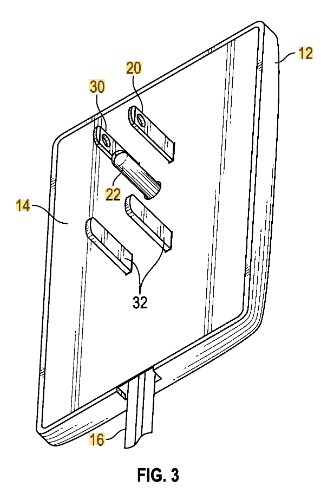
The Federal Circuit’s decision in Socket Solutions, LLC v. Import Global, LLC, Case No. 2025-1121 (Fed. Cir. Aug. 4, 2026), illustrates that preliminary patent injunctions do not alter the governing standards of claim construction or equitable relief. Because a preliminary injunction can remove products from the marketplace long before infringement has been finally adjudicated, courts must apply ordinary patent-law principles with particular care before allowing one competitor to exclude another. The opinion demonstrates that neither claim-construction doctrine nor traditional equitable principles are relaxed simply because preliminary relief is requested.
The district court had granted Socket Solutions a preliminary injunction against Import Global’s Neat Socket product after adopting constructions of “backplate” and “pin” that supported a finding of likely infringement. The Federal Circuit rejected both constructions. It also cautioned that the district court could not rely on a presumption of irreparable harm, a patent-specific shortcut eliminated by eBay Inc. v. MercExchange, L.L.C.
Viewed together, the rulings reflect a single principle: the preliminary-injunction stage is not a doctrinal exception to ordinary patent law. A patentee seeking to remove a competing product before trial must establish likely infringement under properly construed claims and must independently prove irreparable harm under traditional equitable standards.
Background
Socket Solutions owns U.S. Patent No. 9,509,080, directed to an indoor electrical wall-outlet cover that conceals the outlet’s contact openings while permitting continued use of the receptacle. The apparatus uses a relatively thin cover that plugs into the wall outlet and routes electrical power through a cord extending from the cover.
Socket Solutions sued Import Global in the Southern District of Florida, alleging that Import Global’s Neat Socket product infringed claim 19 of the ’080 patent. The claim requires a cover containing a “frontplate” and a “backplate,” together with hot and neutral “pins” connected or associated with corresponding electrical prongs.
The district court adopted a magistrate judge’s recommended claim constructions and granted Socket Solutions a preliminary injunction. The order prohibited Import Global from manufacturing, using, selling, offering to sell, or importing the Neat Socket product and other products not more than colorably different from it.
Import Global appealed under 28 U.S.C. § 1292(c)(1), challenging the district court’s analysis of both likelihood of success and irreparable harm.
Why Claim Construction Matters More at the Preliminary-Injunction Stage
A preliminary injunction is an extraordinary remedy. Under Winter v. Natural Resources Defense Council, Inc., the movant must establish a likelihood of success on the merits, likely irreparable harm without relief, a favorable balance of equities, and consistency with the public interest.
In a patent case, likelihood of success ordinarily requires the patentee to show that it will likely prove infringement and withstand the accused infringer’s validity challenges. As the Federal Circuit explained in Metalcraft of Mayville, Inc. v. The Toro Co., infringement remains a factual question, but it depends on the antecedent legal question of claim construction.
The Federal Circuit reviewed the injunction under the abuse-of-discretion standard applicable in the Eleventh Circuit, while reviewing patent-specific issues under Federal Circuit law. Claim construction was reviewed de novo except for subsidiary factual findings based on extrinsic evidence, consistent with the framework established in Teva Pharmaceuticals USA, Inc. v. Sandoz, Inc.
That procedural posture made the disputed constructions decisive. The district court had concluded that Socket Solutions was likely to prove infringement only after defining “backplate” and “pin” in ways that brought the accused product within the asserted claim. Once those constructions failed, the foundation for the injunction failed with them.
Charles Gideon Korrell notes that the consequences of error are unusually significant at this stage. An incorrect claim construction at final judgment may lead to reversal after a full trial record. An incorrect claim construction supporting a preliminary injunction may disrupt sales, distribution, customer relationships, and market position before liability has been adjudicated.
Against that procedural backdrop, the Federal Circuit examined whether the district court’s likelihood-of-success analysis rested on claim constructions supported by the intrinsic record and established claim-construction doctrine.
The Court Rejected Two Different Attempts to Expand Claim Scope
The disputed terms presented different doctrinal questions, but the Federal Circuit approached both through the same interpretive discipline. Claim meaning had to be derived from the intrinsic record and the understanding of a person of ordinary skill in the art, not from constructions that extended beyond what the patent itself supported.
“Backplate” Had to Reflect the Architecture Described in the Patent
The parties offered competing spatial definitions of “backplate.” The district court adopted one, while Import Global proposed another based on the component’s position relative to the wall outlet. The Federal Circuit rejected both approaches because neither reflected how the specification used the backplate to describe the architecture of the claimed invention.
Applying Phillips v. AWH Corp., the court looked first to the intrinsic evidence, asking how the patent itself described the claimed invention. Rather than treating “backplate” as an abstract spatial label, the court interpreted the term in light of the role it played in defining the cover’s physical architecture and thickness.
The court therefore construed “backplate” as the component that forms the cover with the frontplate, such that the maximum thickness of the cover is the distance, at the central portion, between the frontplate and that component.
The analysis did more than choose between competing spatial definitions. The court looked to the specification to determine the role that the backplate played within the claimed invention and used that architectural description to inform claim meaning. Having identified that role, however, the court declined to import additional features, such as the presence of electrical prongs, that the claims addressed separately. As Intel Corp. v. Qualcomm Inc. teaches, construing one limitation to encompass another risks rendering the surrounding claim language superfluous.
At the same time, the Federal Circuit declined to define “backplate” as necessarily including electrical prongs. Claim 19 separately required the backplate to contain those prongs. Citing Intel, the court avoided a construction that would render separate claim language redundant or superfluous.
That distinction illustrates the balance required by Phillips. Courts must read claim terms in light of the specification, but they may not collapse separately recited limitations into one another merely because the preferred embodiment contains both.
“Pin” Retained Its Ordinary Structural Meaning
The district court construed “pin” as a “means for making an electrical connection” between a wire and a corresponding prong. The Federal Circuit concluded that this language improperly transformed a recognized structural term into a means-plus-function limitation under 35 U.S.C. § 112(f).
Under Williamson v. Citrix Online, LLC., a claim limitation that does not use the word “means” is presumed not to invoke § 112(f). That presumption can be overcome if the term fails to recite sufficiently definite structure or merely identifies a function without adequate structure for performing it.
Here, “pin” was not a nonce term or an abstract functional placeholder. The specification described electrical pins bent at approximately a ninety-degree angle and explained their connection through corresponding plug prongs. The parties also did not dispute that skilled artisans would understand a pin to identify structure.
The district court therefore had no basis to replace a recognized structural term with a functional limitation governed by § 112(f).
Socket Solutions argued that “pin” could nevertheless be defined functionally as a structure that physically and electrically connects wires to corresponding prongs. It relied on Hill-Rom Services, Inc. v. Stryker Corp., in which the Federal Circuit defined “datalink” by reference to its data-conveying function.
The Federal Circuit rejected the analogy. Not every structure capable of physically and electrically connecting wires to prongs is a pin. A purely functional definition would therefore expand the term beyond the structures that a skilled artisan would understand it to identify.
Import Global’s proposed definition of “pin” as a “mechanical system” was also too broad. A mechanical system could include complex interconnected structures that would not ordinarily be considered a pin.
The court accordingly left “pin” to its plain and ordinary meaning. Under Hill-Rom, a court generally departs from ordinary meaning only when the patentee acted as its own lexicographer or clearly disavowed claim scope. The record showed neither.
This aspect of the decision highlights an important feature of modern claim construction. Patent litigants often assume that every disputed term requires a detailed judicial definition. The Federal Circuit instead reaffirmed that, when a claim term already conveys sufficiently definite structure to a skilled artisan, the proper construction may simply be its plain and ordinary meaning. Leaving a term at its ordinary meaning is therefore not a refusal to construe the claim, but an affirmative determination that the intrinsic evidence provides no basis for departing from the understanding of skilled artisans.
Although “backplate” and “pin” presented different interpretive questions, the Federal Circuit applied the same underlying principle to both. Claim terms are construed according to the intrinsic record and the understanding of skilled artisans, not according to broader constructions that happen to strengthen a patentee’s infringement theory. The opinion therefore reinforces that ordinary claim-construction principles apply with equal force when a court is asked to grant extraordinary preliminary relief.
The Federal Circuit Also Rejected Shortcuts to Irreparable Harm
The Federal Circuit found a similar lack of doctrinal support in the district court’s discussion of irreparable harm. Although the court vacated the injunction because of the erroneous claim constructions, it also addressed an important equitable issue that would likely arise again on remand.
Because the erroneous constructions required reconsideration of likelihood of success, the Federal Circuit did not decide whether Socket Solutions had proven irreparable harm. It nevertheless addressed the district court’s reference to decisions suggesting that irreparable harm may be presumed when a patentee makes a clear showing of validity and infringement.
The court held that eBay eliminated any patent-specific presumption of irreparable harm.
In eBay, the Supreme Court rejected a patent-specific rule under which permanent injunctions generally issued after infringement and validity had been established. Patent cases, the Court explained, remain governed by traditional equitable principles and the ordinary four-factor injunction test.
The Federal Circuit later confirmed in Robert Bosch LLC v. Pylon Manufacturing Corp. that eBay eliminated the presumption of irreparable harm in permanent-injunction proceedings. In Socket Solutions, the court made clear that the same rule applies to preliminary injunctions.
That conclusion follows naturally from the structure of equitable relief. Because preliminary injunctions are issued before liability has been finally established, presumptions are particularly difficult to reconcile with the traditional requirement that each element of the equitable analysis be independently proven. The potentially immediate commercial consequences of preliminary relief strengthen, rather than diminish, the need for case-specific evidence of irreparable harm.
The Federal Circuit stopped short of finding that the district court had actually based its factual findings on the obsolete presumption. The court observed that the district court may merely have noted the presumption while separately evaluating the evidence. On remand, however, any renewed analysis must proceed without relying on it.
Just as claim construction must remain faithful to established interpretive doctrine, equitable relief must remain faithful to traditional equitable principles.
Practical Implications
Beyond resolving the dispute between these parties, Socket Solutions provides practical guidance for everyone involved in preliminary patent injunction proceedings. The opinion underscores that success often turns less on novel legal theories than on disciplined application of familiar doctrines governing claim construction and equitable relief.
For Patentees
Patentees seeking preliminary relief should resist the temptation to advocate unusually broad constructions solely because those constructions strengthen the initial infringement comparison. A litigation-driven definition may produce a favorable ruling in the district court, but it also creates a vulnerable appellate record.
The motion should instead begin with a claim construction that can be defended under the full Phillips framework. That means accounting for the claim language, the specification’s description of the invention, the relationship among limitations, the prosecution history, and the understanding of a skilled artisan.
Patentees must also build an independent evidentiary record on irreparable harm. Competitive overlap and likely infringement may be relevant, but they do not eliminate the need to prove noncompensable injury. Evidence may include likely loss of market share, price erosion, damaged distribution relationships, diminished customer adoption, or harm to reputation and product positioning.
Charles Gideon Korrell notes that overreaching on either claim scope or irreparable harm can undermine an otherwise strong motion. Preliminary relief rewards precision more than maximalism.
For Accused Infringers
Accused infringers should treat claim construction as an immediate component of preliminary-injunction defense rather than an issue reserved for a later Markman proceeding. Where the likelihood-of-success analysis depends on one or two disputed terms, defeating an expansive construction may be enough to defeat the injunction without resolving every infringement or validity issue.
The defendant should also separate the irreparable-harm inquiry from the merits. Even a strong infringement case does not establish that monetary damages will be inadequate. The absence of a causal connection between the accused feature and the alleged commercial injury may be particularly important.
The availability of interlocutory appellate review under § 1292(c)(1) also matters. A preliminary injunction that materially affects a product launch, sales channel, or distribution network may justify immediate appeal when the order rests on an identifiable claim-construction error.
For District Courts
The decision cautions against resolving preliminary-injunction disputes through functional rewriting of structural claim terms or through definitions tailored to the accused product. The compressed timing of emergency proceedings does not reduce the need for a complete intrinsic-record analysis.
District courts should also ensure that older patent-injunction authorities are read in light of eBay. Any suggestion that irreparable harm follows from infringement and validity should be excluded from the analysis.
The injunction inquiry deserves the same doctrinal rigor as a final merits determination. In some respects, it may deserve more. Preliminary orders are entered on incomplete records, yet they can alter competitive conditions immediately.
Conclusion
Socket Solutions is ultimately less about the particular meanings of “backplate” and “pin” than about the discipline required when courts consider extraordinary equitable relief. The Federal Circuit rejected efforts to expand claim scope beyond the intrinsic record and rejected reliance on an outdated presumption of irreparable harm.
Together, those rulings reaffirm that preliminary injunctions occupy no doctrinal exception to ordinary patent law. The urgency of the requested relief does not permit courts to broaden claims, transform familiar structural terms into abstract functional limitations, or presume equitable injury.
When a patentee seeks to exclude a competitor before trial, the Federal Circuit expects courts to apply ordinary patent-law principles with extraordinary care, precisely because the commercial consequences of error can be immediate and difficult to undo.
Key Takeaways
- Preliminary injunctions do not justify relaxed claim-construction standards.
- The intrinsic record remains the primary guide to claim meaning under Phillips.
- Familiar structural terms ordinarily retain their plain meaning absent lexicography or clear disavowal.
- Functional language cannot be used to broaden an established structural claim term beyond its understood scope.
- After eBay, patentees must independently prove irreparable harm when seeking preliminary injunctive relief.
Related Analysis
- Ridge Corp. v. Kirk NationaLease: Federal Circuit Rejects Preliminary Injunction Based on Claim Construction and Speculative Harm addresses substantial noninfringement questions and speculative irreparable harm at the preliminary-injunction stage.
- Otsuka v. Hetero Labs: Federal Circuit Upholds Patent Injunction but Requires Rule 65(c) Bond addresses Rule 65(c) security for preliminary patent injunctions.
- TrackTime v. Amazon.com: Federal Circuit Requires Contextual § 112(f) Analysis for Software Claim Terms requires contextual Section 112(f) analysis for software-oriented claim terms.
- Magnolia v. Kurin: Separately Listed Claim Elements Require Separate Structures reinforces that separately recited claim elements ordinarily require separate structures.