The Federal Circuit’s decision in Dental Monitoring SAS v. Align Technology, Inc., Case No. 2025-1752 (Fed. Cir. Aug. 10, 2026), holds that a patent or published application cannot obtain the filing date of a provisional application for prior-art purposes under the America Invents Act merely because the provisional describes the subject matter being asserted as prior art. The provisional must also provide written-description support under 35 U.S.C. § 112(a) for at least one published claim of the later reference.
Applying that rule, the Federal Circuit vacated a Patent Trial and Appeal Board decision finding claims 1 through 15 of Dental Monitoring’s patent obvious and remanded for the Board to determine whether the provisional application underlying a key reference provided the required claim support. The court therefore did not decide that the reference ultimately fails as prior art. It held that the Board had applied the wrong legal standard for determining its effective filing date.
The decision resolves an important question about how the AIA changed, or did not change, the treatment of provisional applications as prior art. In doing so, the Federal Circuit rejected the PTAB’s precedential interpretation in Penumbra Inc. v. RapidPulse, Inc., which had treated the requirements for obtaining an earlier prior-art date under AIA § 102(d)(2) as substantially less demanding.
The practical consequence extends well beyond this particular dispute. When a patent challenger relies on a published application whose own filing date is too late to qualify as prior art, reaching back to an earlier provisional application requires more than locating the relevant technical disclosure somewhere in that provisional.
Background: Deep Learning and Dental Imaging
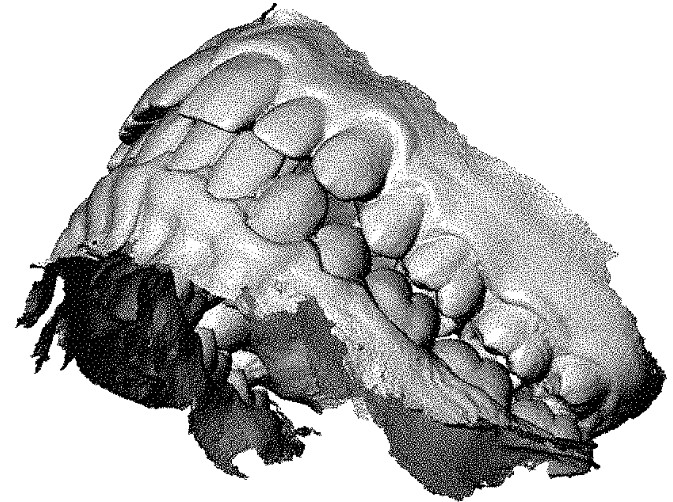
Dental Monitoring owns U.S. Patent No. 10,755,409, directed to acquiring and analyzing images of a patient’s dental arch. Among other steps, the claimed method uses a “deep learning device” trained to analyze an image, determines a value for an image attribute, compares that value with a setpoint, and can instruct an operator to acquire another image.
The technology illustrates a recurring application of artificial intelligence in medical and dental systems: machine-learning tools can be used not only to analyze clinical information, but also to evaluate the quality or characteristics of the data being supplied to the system.
Align Technology challenged claims 1 through 15 of the ’409 patent in inter partes review. The Board found the claims obvious over a combination of three references: Salah, a published patent application known as Carrier, and a paper concerning convolutional neural networks known as Maninis.
Carrier created the timing problem that ultimately reached the Federal Circuit. Dental Monitoring’s effective filing date fell after Carrier’s provisional application but before Carrier’s later nonprovisional application. Carrier therefore could qualify as sufficiently early prior art only if it was entitled under § 102(d)(2) to use the provisional filing date.
The Board concluded that it was. Applying its precedential decision in Penumbra, the Board required satisfaction of what it characterized as the “ministerial requirements” for claiming priority, together with disclosure in the provisional of the particular subject matter relied upon as prior art. It did not require a showing that Carrier’s provisional provided written-description support for one of Carrier’s claims.
The Federal Circuit held that this was the wrong standard.
Section 102(d)(2) Requires Substantive Entitlement Under Section 119
The Federal Circuit began with the statutory text.
Under AIA § 102(a)(2), a patent or published application may constitute prior art as of the date it was “effectively filed.” Section 102(d)(2) allows the reference to obtain the filing date of an earlier application if it “is entitled to claim a right of priority under section 119” or qualifies for the benefit of an earlier filing date under specified related provisions.
The phrase “entitled to” was central to the court’s reasoning.
Section 119(e)(1), which governs priority to provisional applications, requires the invention in the later application to have been disclosed in the provisional in the manner required by § 112(a). Section 102(d)(2)’s incorporation of § 119 therefore brings § 119’s substantive written-description requirement into the prior-art inquiry.
There is, in other words, a difference between asserting a priority claim and being legally entitled to it.
The Board’s approach effectively treated the statute as though procedural compliance plus disclosure of the relevant prior-art passage were enough. Congress instead required substantive entitlement to priority. The Federal Circuit declined to read the words “entitled to” out of the statute.
Charles Gideon Korrell notes that this textual point gives the decision much of its significance. The Federal Circuit did not create an additional judicial requirement for provisional prior art. It concluded that Congress had already incorporated the requirement through the relationship among §§ 102(d)(2), 119(e)(1), and 112(a).
The AIA Did Not Displace Dynamic Drinkware’s Core Principle
The principal precedential question involved Dynamic Drinkware, LLC v. National Graphics, Inc., a 2015 Federal Circuit decision interpreting pre-AIA patent law.
Dynamic Drinkware held that a prior-art patent does not receive the benefit of a provisional filing date simply because the provisional contains the particular disclosure later invoked against another patent. The provisional must also provide adequate § 112 support establishing that the later patent was entitled to the provisional application’s filing date.
Align argued that Dynamic Drinkware was confined to the pre-AIA version of § 102. That argument had some textual basis in the history of the case because Dynamic Drinkware expressly reserved the question of how newly enacted § 102(d) would operate.
The Federal Circuit explained, however, that reserving a question is not the same as answering it in the opposite direction. Nothing in Dynamic Drinkware suggested that the AIA eliminated the substantive foundation necessary for a later reference to reach back to an earlier filing date.
More importantly, the court did not need to rely on Dynamic Drinkware alone. The text of §§ 102(d)(2) and 119(e)(1) independently required substantive entitlement to priority. Even assuming Dynamic Drinkware did not itself control an AIA case, the court found no indication that Congress intended to permit a reference to obtain an earlier prior-art date through an application that could not support the later reference’s claims.
Charles Gideon Korrell views the decision as an important example of continuity across the AIA transition. Congress reorganized the statutory structure governing prior art, but the Federal Circuit concluded that it did not eliminate the substantive written-description foundation required to reach backward through a priority chain.
The same emphasis on substantive support appears in disputes concerning whether a patent can invoke a provisional date for its own claims.
The Federal Circuit Rejects Penumbra’s “Ministerial” Interpretation
The PTAB had reached the opposite conclusion in its precedential decision in Penumbra Inc. v. RapidPulse, Inc.
Penumbra distinguished between the effective filing date of a claimed invention under § 100(i) and the effective filing date of a prior-art reference under § 102(d). From that distinction, the Board concluded that the prior-art inquiry did not require § 112 support for a claim of the later reference. It required only compliance with formal priority requirements and disclosure in the earlier application of the particular subject matter being asserted as prior art.
Dental Monitoring rejects that interpretation of § 102(d)(2).
The distinction between § 100(i) and § 102(d), the Federal Circuit explained, identifies which statutory inquiry applies. It does not determine what Congress meant by requiring a reference to be “entitled to claim” priority under § 119. Section 119 supplies that substantive requirement, and § 119(e)(1) invokes § 112(a).
The court also rejected Align’s reliance on legislative-history statements suggesting that Congress intended only ministerial priority requirements. Because the statutory text was unambiguous, the court concluded that legislative history could not override it.
One procedural wrinkle made the rejection of Penumbra particularly notable. The Federal Circuit had previously affirmed the Board’s Penumbra decision through a Rule 36 judgment without opinion. The court emphasized that a Rule 36 affirmance establishes only that the judgment was correct. It does not adopt the Board’s reasoning and does not create Federal Circuit precedent concerning the legal propositions contained in the Board’s decision.
That clarification has significance beyond this case. A summary affirmance should not be treated as silent precedential approval of every legal rule articulated in the underlying agency decision.
A Two-Part Inquiry for Provisional Prior Art
The practical rule emerging from Dental Monitoring is best understood as a two-part inquiry.
First, the provisional application must provide § 112(a) written-description support for at least one published claim of the patent or application being asserted as prior art. That establishes the reference’s substantive entitlement to the earlier filing date.
Second, the earlier application must describe the particular subject matter from the later reference that is actually being asserted as prior art.
The Board had addressed the second requirement for Carrier. It had found that Carrier’s provisional described the subject matter on which Align relied. But the Board had not determined whether the provisional provided sufficient written-description support for a Carrier claim.
That omission explains the disposition. Dental Monitoring urged reversal, but the Federal Circuit concluded that the Board needed to make the necessary factual findings in the first instance. It therefore vacated the obviousness determination and remanded.
For Charles Gideon Korrell, this two-part structure is the opinion’s most useful practical contribution. A provisional application is not simply a warehouse from which individual technical passages can automatically be assigned the provisional’s date. Before those passages can become earlier § 102(a)(2) prior art through § 102(d)(2), the later reference must itself establish substantive entitlement to that earlier filing date.
Practical Implications for IPRs and Patent Drafting
The most immediate effect will be felt in IPR practice.
A petitioner relying on a patent or published application whose qualifying prior-art date depends on a provisional application should be prepared to establish both elements of the inquiry. Showing only that the provisional contains the technical disclosure used in the anticipation or obviousness theory is insufficient when the reference needs the provisional date to qualify as prior art.
Patent owners, correspondingly, have an additional point of attack when a petitioner relies on the facial priority date of a patent reference. If the reference’s later filing date falls on the wrong side of the challenged patent’s critical date, the priority chain itself may become outcome-determinative. The analysis should include not only whether the relevant passage appears in the provisional, but whether the provisional supplies the written-description support necessary to establish entitlement under § 119.
The decision also reinforces the long-term significance of provisional drafting. A deficient provisional can jeopardize an applicant’s own ability to obtain an early priority date. Dental Monitoring demonstrates a less obvious collateral consequence: the deficiency may also affect whether the resulting patent or publication can later function as prior art as of that early date.
According to Charles Gideon Korrell, the case therefore illustrates an unusual intersection between prosecution quality and later validity litigation. A disclosure prepared years earlier for one applicant may ultimately determine whether an entirely different patent survives an IPR.
The Remaining Dispute on Remand
The Federal Circuit did not decide whether Carrier’s provisional actually provides sufficient written-description support. That remains for the Board.
The practical scope of the remand is also narrower than the original IPR. In a separate July 2026 decision, the Federal Circuit held claims 1, 7, and 12 of the ’409 patent patent-ineligible, so the Board need not reconsider those claims. In another related appeal, the Federal Circuit upheld the Board’s determination that Maninis was publicly accessible before the relevant date, eliminating the need to revisit that issue as well.
The remaining dispute therefore centers on whether Carrier can obtain its provisional filing date under the newly clarified § 102(d)(2) standard and what that determination means for the surviving challenged claims.
Conclusion
Dental Monitoring resolves an important question in the Federal Circuit’s post-AIA prior-art jurisprudence. Section 102(d)(2) did not create a purely ministerial mechanism for assigning a provisional application’s filing date to a later patent or publication.
A challenger seeking to reach back to a provisional filing date must establish substantive statutory entitlement to that date, including written-description support under § 112(a) for at least one published claim of the reference. The provisional must also describe the particular subject matter actually being asserted as prior art.
The ruling makes priority analysis more consequential in IPRs and other validity disputes involving § 102(a)(2) references. What appears to be a simple priority date on the face of a patent may instead require close examination of the disclosure contained at the beginning of the priority chain.
Key Takeaways
- AIA § 102(d)(2) incorporates the substantive priority requirements of § 119, including § 112(a) written-description support.
- The AIA did not displace the core principle underlying Dynamic Drinkware, even though that decision expressly reserved the new § 102(d) question.
- The Federal Circuit rejected Penumbra’s interpretation that only ministerial priority requirements were necessary for AIA provisional prior art.
- A challenger relying on a provisional filing date must establish both adequate support for at least one published claim of the reference and disclosure of the particular subject matter being asserted as prior art.
- The decision makes examination of provisional applications and priority chains more important in IPR strategy and patent validity analysis.
Related Analysis
- Enanta v. Pfizer: Federal Circuit Rejects Provisional Priority Based on an Alleged Typographical Error addresses the related question of whether an applicant’s own claims can obtain an earlier provisional filing date.
- In re Gesture Technology: IPR Estoppel Stops at the PTAB Door, Not Ex Parte Reexamination examines another interaction between PTAB proceedings and older Patent Office validity mechanisms.
- Ironburg v. Valve: Federal Circuit Clarifies How Parties Must Prove IPR Estoppel Under §315(e) addresses evidentiary proof in the post-IPR estoppel context.
- Definitive Holdings v. Powerteq: Federal Circuit Reinforces Broad Reach of the Pre-AIA On-Sale Bar provides a separate prior-art timing analysis under the pre-AIA on-sale bar.