The Federal Circuit’s precedential decision in ParkerVision, Inc. v. Qualcomm Inc., Case Nos. 2026-1033, 2026-1035 (Fed. Cir. Sept. 30, 2026), clarifies an important limit on Federal Rule of Civil Procedure 54(b) in patent litigation. Individual patent claims may define distinct property boundaries, but they do not ordinarily become separate civil-procedure claims for relief. Because transmitter claims of ParkerVision’s ‘940 patent remained unresolved, the district court could not create an appealable final judgment by certifying only the receiver claims of that same patent.
The decision also provides a second lesson for multipatent cases. Although all asserted claims of ParkerVision’s ‘907 patent had been resolved, the district court had not separately entered a Rule 54(b) judgment directed to that patent or expressly determined that there was no just reason to delay an appeal of that patent-level cause of action. The appeal therefore failed in its entirety, leaving the merits of the district court’s latest claim construction and the resulting non-infringement ruling unreviewed.
Background of the Dispute
ParkerVision and Qualcomm have litigated wireless communications patents for more than fifteen years. An earlier action concerned down-conversion technology, which converts received electromagnetic signals from higher frequencies to lower frequencies. After a jury trial, the district court entered judgment as a matter of law of non-infringement, and the Federal Circuit affirmed.
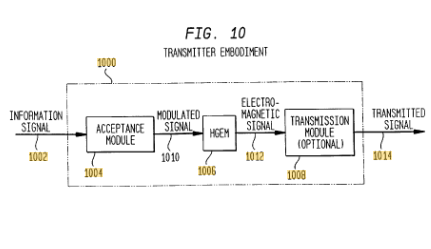
ParkerVision filed the present action in 2014, asserting U.S. Patent Nos. 7,218,907 and 6,091,940. The asserted claims fell into two technological groups. The receiver claims involved down-conversion, while the transmitter claims involved up-conversion from lower to higher frequencies. All asserted claims of the ‘907 patent were receiver claims, while the ‘940 patent included both receiver and transmitter claims.
The district court initially granted Qualcomm summary judgment of non-infringement across both groups. In 2024, the Federal Circuit vacated that judgment. For the receiver claims, the court held that the district court had applied collateral estoppel without first determining through ordinary claim construction whether the newly asserted claims materially shared the limitation that had controlled the earlier litigation. The court separately revived the transmitter claims because their disposition depended on erroneous exclusions of ParkerVision’s experts. See ParkerVision v. Qualcomm: Collateral Estoppel and Expert Exclusion in Patent Litigation.
On remand, the district court conducted further claim construction, after which the parties stipulated that Qualcomm’s products did not infringe the receiver claims. The court entered partial summary judgment on those claims. The transmitter claims of the ‘940 patent remained unresolved, however, so ParkerVision sought a Rule 54(b) judgment on the receiver claims rather than proceed first to resolution of the remaining transmitter claims. The district court granted the request, severed and stayed the transmitter claims, and ParkerVision appealed.
Rule 54(b) Requires Finality as to a Cognizable Claim for Relief
Rule 54(b) is not simply a mechanism for appealing an issue that a district court considers separable from the rest of the case. Under Curtiss-Wright Corp. v. General Electric Co., the order must first finally dispose of a cognizable claim for relief in a case involving multiple claims. Only then may the district court direct entry of judgment after expressly determining that there is no just reason for delay.
Those are distinct inquiries. Under W.L. Gore & Associates v. International Medical Prosthetics Research Associates, the Federal Circuit reviews finality de novo because it goes to appellate jurisdiction, while the district court’s no-just-reason-for-delay determination is reviewed for abuse of discretion. A district court therefore cannot create jurisdiction merely by calling an order a final judgment or by concluding that the resolved issues are sufficiently distinct for immediate review.
Why Patent Claims Do Not Become Separate Rule 54(b) Claims
Patent litigation makes that framework unusually easy to misapply because the word ‘claim’ performs two different jobs. In civil procedure, a claim refers to a claim for relief or cause of action. In patent law, a claim is the numbered language that defines the metes and bounds of the patented invention. A single patent can contain many patent claims without creating an equal number of civil causes of action.
The Federal Circuit grounded that distinction in the Patent Act and its existing precedent. Section 281 provides a civil action for infringement of a patent, and Section 271 likewise defines infringement by reference to infringement of the patent. Senju Pharmaceutical Co. v. Apotex Inc. had already explained that each asserted patent ordinarily creates an independent cause of action, while Ethicon, Inc. v. U.S. Surgical Corp. and Lucent Technologies, Inc. v. Gateway, Inc. treated ownership rights as attaching to patents as a whole rather than to individual patent claims.
Those authorities led the court to conclude that, in most if not all instances, a patent can support a single cause of action for infringement, but not multiple causes of action merely because different patent claims are asserted. The result is a patent-level rule of finality for Rule 54(b): resolving some asserted claims of a patent does not ordinarily make the infringement cause of action final while other asserted claims of the same patent remain pending.
The court’s 1996 nonprecedential decision in Donnelly Corp. v. Gentex Corp. had pointed in the same direction. Donnelly rejected a Rule 54(b) appeal where some claims of a patent remained in district court while other claims of the same patent were on appeal, and later district court decisions such as TruePosition v. Polaris Wireless and SmithKline Beecham v. Apotex followed that reasoning. ParkerVision now provides precedential Federal Circuit analysis tying that result directly to the Patent Act and the court’s cause-of-action jurisprudence.
Applied to the ‘940 patent, the result was straightforward. ParkerVision’s operative complaint pleaded a single count for infringement of that patent, without separating the receiver and transmitter claims into distinct causes of action. Because the transmitter claims remained unresolved, the district court’s judgment on the receiver claims did not finally dispose of the ‘940 patent infringement cause of action.
The Fully Resolved ’907 Patent Shows Why Certification Must Be Patent-Specific
The ‘907 patent presented a different problem and an important practical lesson. Every asserted claim of that patent was a receiver claim, so the district court’s non-infringement ruling had resolved all asserted infringement issues concerning the ‘907 patent. That made the ‘907 patent a potential candidate for a proper Rule 54(b) judgment even though litigation over the ‘940 patent continued.
But Rule 54(b) requires an express determination that there is no just reason to delay appellate review of the particular claim for relief being made final. The district court had evaluated the receiver claims of both patents together and had reasoned that the receiver claims were separable from the transmitter claims. It never separately found that there was no just reason to delay an appeal of the fully resolved ‘907 patent while the ‘940 patent remained pending.
The Federal Circuit would not reconstruct a different certification after the fact. The lesson for multipatent litigation is therefore more precise than simply saying that Rule 54(b) operates patent by patent. If one patent has been fully adjudicated while another remains active, the motion, judgment, and no-just-reason-for-delay finding should identify the fully resolved patent-level cause of action expressly.
Section 1292(b) and Pendent Jurisdiction Could Not Repair the Defect
ParkerVision also could not obtain review through pendent appellate jurisdiction. That doctrine allows review of a nonappealable ruling only in rare circumstances when appellate jurisdiction independently exists over a related ruling and review of the additional issue is necessary to meaningful review. Because the Federal Circuit lacked jurisdiction even over the ‘907 judgment, there was no independently appealable ruling to which the ‘940 issues could attach.
Nor could the Rule 54(b) certification simply be treated as certification under 28 U.S.C. § 1292(b). Section 1292(b) requires a separate district court determination that the order involves a controlling question of law, that substantial ground for difference of opinion exists, and that immediate appeal may materially advance the ultimate termination of the litigation. No one had asked the district court to make those findings, and the district court had not made them.
The panel acknowledged that the Eighth Circuit has, in unusual circumstances, treated a defective Rule 54(b) certification as a Section 1292(b) appeal. But the Federal Circuit found the record here insufficient to make the same assumptions about what the district court would have certified or what the appellate court would have accepted. For litigants, the point is procedural rather than semantic: Rule 54(b) and Section 1292(b) are distinct routes to appellate review, and the necessary record must be created before the appeal is filed.
The Reassignment Request Did Not Change the Result
ParkerVision separately asked the Federal Circuit to reassign the case to a different district judge on remand, citing the judge’s expressions of frustration with the length and complexity of the litigation, repeated claim-construction proceedings, multiple appeals, and patent jury trials. Applying Eleventh Circuit law, the panel concluded that those statements did not show an inability to put prior views aside or create an appearance of partiality, particularly because the district judge had followed the Federal Circuit’s earlier mandate and conducted the required claim-construction process.
The panel also emphasized the substantial duplication that reassignment would create in a case involving complex technology and a procedural history extending more than a decade. It therefore denied reassignment, and the case returns to the same district judge in the posture that existed before the Rule 54(b) order, with the district court retaining discretion over how to proceed.
Practical Implications
ParkerVision changes no substantive infringement doctrine, but it imposes discipline on appellate strategy in complex patent cases. Parties should not assume that technical separation among patent claims, distinct infringement theories, different accused functions, or even separate planned trials creates separate claims for relief under Rule 54(b). The Federal Circuit’s ordinary unit of analysis is the patent-level infringement cause of action, not the individual patent claim.
That matters when a party wants early review of claim construction or summary judgment. Before seeking Rule 54(b) certification, counsel should identify the actual causes of action that have been fully adjudicated and determine whether any asserted claims of the same patent remain unresolved. If they do, labeling the resolved claims as a separate technical group will not ordinarily supply finality.
Multipatent cases require a second level of precision. When one patent has been completely resolved but another remains pending, the proposed judgment should be directed to the resolved patent, and the district court should expressly decide whether there is no just reason to delay an appeal of that patent-level cause of action. Packaging a fully resolved patent together with unresolved claims from another patent can defeat appellate jurisdiction even when the resolved patent might otherwise support Rule 54(b) certification.
The opinion also reinforces the distinction between Rule 54(b) and Section 1292(b). A party seeking immediate review of a nonfinal order should choose the correct procedural route and build the findings required for that route in the district court. The Federal Circuit will independently examine its jurisdiction, and a procedurally defective certification may leave substantial merits briefing untouched because the appellate court never reaches the underlying patent issues. [Internal link: Micron v. Longhorn IP: When an $8 Million Bond Isn’t Appealable (Yet)]
Conclusion
ParkerVision resolves a recurring ambiguity created by the word ‘claim.’ Patent claims define the legal boundaries of an invention, but they do not ordinarily become separate civil-procedure claims for relief capable of supporting independent Rule 54(b) judgments. The distinction makes the patent, rather than an internally selected group of claims, the ordinary unit for assessing finality in a patent infringement action.
For practitioners, the decision is less about formal terminology than about appellate planning. Finality must exist at the level of a cognizable cause of action, and the Rule 54(b) order must expressly address the cause of action the party actually seeks to appeal. If immediate review is important before the rest of the case is finished, the procedural path has to be designed correctly in the district court rather than repaired after the appeal arrives at the Federal Circuit.
Key Takeaways
- For Rule 54(b), infringement of different patent claims within the same patent ordinarily constitutes a single cause of action rather than multiple independently appealable claims for relief.
- A judgment resolving only some asserted claims of a patent is not ordinarily final while other asserted claims of that patent remain pending.
- In multipatent cases, a fully resolved patent may support Rule 54(b) certification, but the judgment and the no-just-reason-for-delay finding should be directed expressly to that patent-level cause of action.
- Section 1292(b) is a distinct route to interlocutory review with its own required findings, and litigants should not assume that a defective Rule 54(b) certification can be repaired on appeal.
- Dismissal for lack of appellate jurisdiction does not resolve the merits of the district court’s underlying claim construction or non-infringement analysis.
Related Analysis
- ParkerVision v. Qualcomm: Collateral Estoppel and Expert Exclusion in Patent Litigation. This earlier article discusses the 2024 Federal Circuit decision that vacated the prior non-infringement judgment and required further claim construction, creating the procedural posture that led directly to the present Rule 54(b) dispute.
- Micron v. Longhorn IP: When an $8 Million Bond Isn’t Appealable (Yet). That decision addresses the Federal Circuit’s resistance to interlocutory review when the statutory requirements for appellate jurisdiction are not satisfied, making it a useful comparison to ParkerVision’s failed effort to obtain early review.
- T-Mobile US v. KAIFI: Patent Settlement Dispute Falls Outside Federal Circuit Jurisdiction. This article examines a different jurisdictional boundary, but it reinforces the same broader point: the Federal Circuit independently examines the statutory basis for its jurisdiction rather than relying on how the parties characterize the dispute.