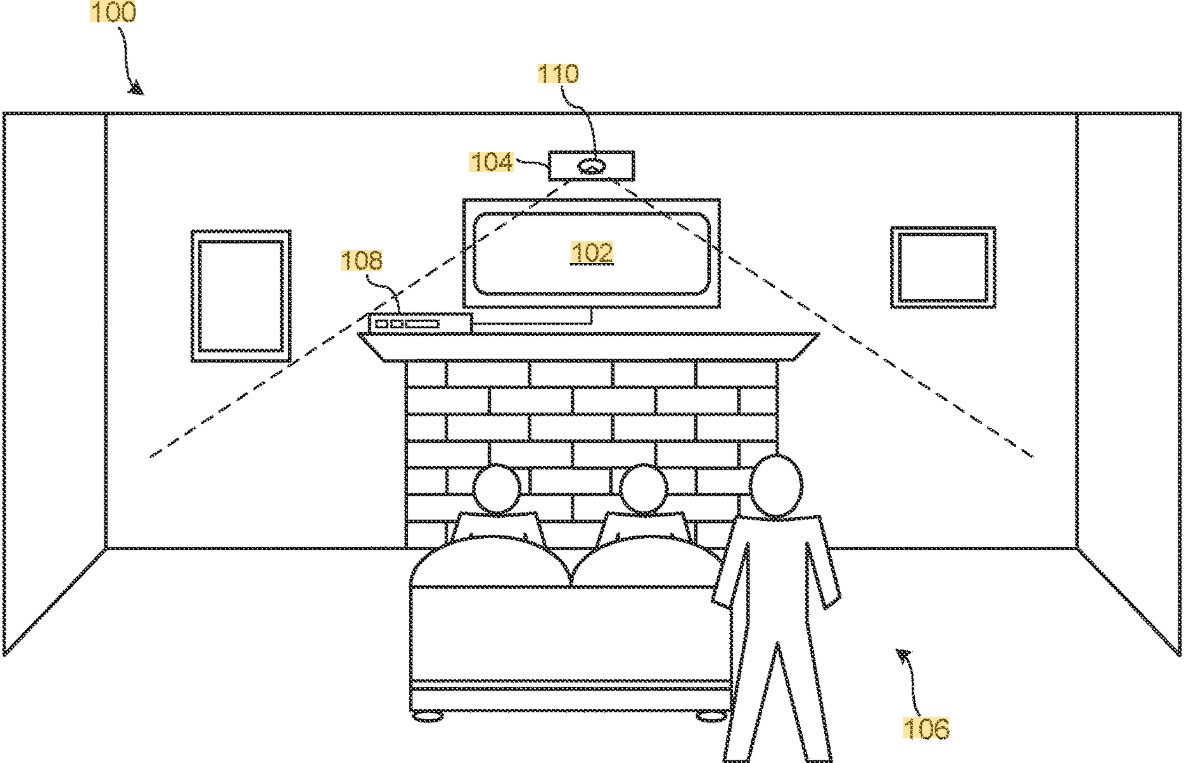
The Federal Circuit’s decision in The Nielsen Company (US), LLC v. TVision Insights, Inc., Case No. 25-1371 (Fed. Cir. August 14, 2026), illustrates a recurring tension in patent law: the breadth that gives a patent claim commercial value can also make the claim more difficult to defend against prior art.
Nielsen argued that prior art concerning reduced-resolution facial analysis was too remote from the problem its patent sought to solve. It also argued that the prior art lacked several technical features described in the patent’s specification. The Federal Circuit rejected both sets of arguments for essentially the same reason. Nielsen’s challenged claims were broader than the particular problem and implementation details on which Nielsen relied.
The most important aspect of Nielsen is therefore not a new rule of analogous art. The court applied established precedent. Its significance lies in showing how claim scope can shape several parts of an obviousness analysis at once. A patent owner cannot obtain broad claims and then defend them as though they were limited to a narrower purpose, embodiment, or engineering architecture that the claims do not actually require.
Background
Nielsen’s U.S. Patent No. 11,470,243, titled “Methods and Apparatus to Capture Images,” camera-based audience measurement. The disclosed systems can capture images of people watching television, detect viewers, determine head orientation, and identify individuals. The specification describes using lower-resolution images for some functions and higher-resolution images for others.
The patent also addresses a more particular engineering concern. Audience-measurement systems may illuminate a viewing area to obtain images suitable for facial recognition. Repeatedly activating illumination can consume power, generate heat, shorten equipment life, and annoy viewers. Nielsen emphasized that problem when defending the patent.
TVision challenged fourteen claims in inter partes review. Nielsen disclaimed the three challenged independent claims, leaving eleven dependent claims before the Patent Trial and Appeal Board. Claims 4 through 6 became the principal focus on appeal.
TVision’s obviousness combinations included Ying-li Tian’s scientific conference paper, “Evaluation of Face Resolution for Expression Analysis.” Tian did not concern television ratings or audience measurement. It examined something more general: how reducing the resolution of facial images affects different forms of facial analysis.
That difference in technological context created the central dispute.
If Nielsen’s invention were understood principally as a solution to excessive illumination in television audience measurement, Tian appeared relatively distant. If the invention were understood more broadly as involving image processing, reduced-resolution facial analysis, and head detection, Tian was much closer.
The Board adopted the broader characterization and concluded that Tian was reasonably pertinent analogous art. It ultimately found the challenged claims unpatentable as obvious. The Federal Circuit affirmed.
Claim Breadth Limited Nielsen’s Analogous-Art Defense
The analogous-art doctrine limits the prior art that may be used in an obviousness analysis. A reference qualifies if it is either from the same field of endeavor as the claimed invention or, even if it is from another field, reasonably pertinent to the problem confronting the inventor. In re Bigio, 381 F.3d 1320 (Fed. Cir. 2004).
The second test was decisive in Nielsen. Under In re Clay, 966 F.2d 656 (Fed. Cir. 1992), a reference is reasonably pertinent when its subject matter logically would have commended itself to an inventor considering the relevant problem. Airbus S.A.S. v. Firepass Corp., 941 F.3d 1374 (Fed. Cir. 2019), similarly asks where a skilled artisan reasonably would have looked for a solution.
The hard question was not the test itself. It was how broadly to identify Nielsen’s problem.
Nielsen emphasized the specification’s discussion of excessive illumination. But that framing created a mismatch between the validity defense and the claims being defended. The challenged claims did not require an illumination source. In fact, the patent’s claims 24 and 25 expressly referenced an illumination source, but those claims were not among the claims TVision challenged.
The Federal Circuit therefore refused to make illumination management the exclusive problem for purposes of analogous art.
KSR International Co. v. Teleflex Inc., 550 U.S. 398 (2007), supplied the broader doctrinal foundation. KSR explains that the inventor’s particular motivation does not control an obviousness inquiry because the analysis concerns the objective reach of the claim. An invention may solve more problems than the one that initially motivated its development.
The Federal Circuit’s later decision in Donner Tech., LLC v. Pro Stage Gear, LLC, 979 F.3d 1353 (Fed. Cir. 2020), applies the same principle directly to analogous art. The relevant inquiry is whether a reference is reasonably pertinent to one or more of the problems to which the patent relates, not merely the particular problem the patent owner chooses to emphasize during litigation.
Other precedent fills out the principle. In re ICON Health & Fitness, Inc., 496 F.3d 1374 (Fed. Cir. 2007), and Innovention Toys, LLC v. MGA Entertainment, Inc., 637 F.3d 1314 (Fed. Cir. 2011), recognize that a patent may address a specifically identified problem while simultaneously addressing more general ones.
Nielsen applied those principles without making the specification irrelevant. The Federal Circuit looked at the patent as a whole, including its title, background, disclosure, and claims. Those materials supported the Board’s conclusion that the patent concerned broader problems of image processing and facial detection in addition to the illumination issue Nielsen emphasized.
That distinction matters. The court did not hold that the claims alone define the inventor’s problem. It held that a patent owner cannot select a narrow problem from the specification and use it to confine the prior-art inquiry when the challenged claims and the patent more broadly reach beyond that problem.
Once the invention was understood in those terms, Tian was not difficult to connect to it. Tian investigated how image resolution affects facial analysis and disclosed head detection and pose-estimation techniques. Unwired Planet, LLC v. Google Inc., 841 F.3d 995 (Fed. Cir. 2016), recognizes that a shared purpose between a prior-art reference and the claimed invention can support reasonable pertinence. Tian’s different commercial application did not eliminate its relevance to the underlying image-processing problem.
Charles Gideon Korrell views this as the opinion’s principal lesson. Claim breadth affects more than infringement coverage. It can influence the level of generality at which a court understands the technological problems addressed by the patent, which in turn can affect what prior art a skilled artisan reasonably would have considered.
This does not mean that broad claims automatically make every neighboring technology analogous art. Reasonable pertinence remains a factual inquiry, and the Federal Circuit reviewed the Board’s determination for substantial evidence. But Nielsen makes a narrower strategic point: the broader the claimed technological function, the more difficult it may be to exclude technically relevant prior art by defining the inventor’s problem around a narrower embodiment or use case.
Unclaimed Technical Details Could Not Narrow the Prior Art
The force of that principle becomes clearer in the court’s treatment of Nielsen’s separate arguments about what Tian actually disclosed.
These arguments concerned claim limitations rather than analogous art, but they followed the same pattern. Nielsen repeatedly pointed to technical distinctions reflected in the patent’s disclosure and argued that Tian did not teach them. The Federal Circuit repeatedly returned to what the claims required.
One example involved the method used to reduce image resolution. Nielsen’s specification describes pixel “binning,” which can combine signals from groups of pixels to increase contrast at the expense of resolution. Tian instead used down-sampling.
That difference might matter if the claims required binning. They did not. Claim 4 required reducing image resolution. Tian’s down-sampling satisfied that broader limitation.
Nielsen also argued that claim 4 contemplated reducing the resolution of only a first image in an image sequence. Again, the claim contained no “only” requirement. It did not prohibit reducing the resolution of additional images.
A related argument concerned timing. Nielsen contended that the resolution-reduction step had to occur as part of the facial-analysis process rather than before analysis began. The Federal Circuit found no such restriction in the claim.
Claims 5 and 6 produced another variation on the same issue. Nielsen characterized them as using a reduced-resolution first image to locate a viewer and a full-resolution second image for facial recognition. That distinction reflected the architecture Nielsen associated with its invention, but the claims did not require the second image to remain at full resolution.
The Board could therefore rely on Tian’s disclosure of detecting a face or head in one frame and tracking facial features in subsequent frames.
These rulings give the opinion a coherence that is easy to miss if each appellate issue is considered separately. In the analogous-art dispute, Nielsen sought to narrow the relevant problem by relying on illumination concerns that the challenged claims did not require. On the merits, Nielsen sought to distinguish Tian through binning, image-selection rules, timing restrictions, and a full-resolution second image that the claims likewise did not require.
This emphasis on the limitations actually claimed is consistent with the Federal Circuit’s approach in Board of Regents v. Boston Scientific, where technical distinctions or preferred applications could not substitute for limitations absent from the claims.
Charles Gideon Korrell notes that this is not simply the familiar rule against importing limitations from the specification into the claims. The larger point concerns patent strategy. A specification can disclose a sophisticated architecture containing numerous technical distinctions while the claims intentionally capture only some of them. That strategy may produce broader exclusionary rights, but the omitted distinctions generally cannot be restored selectively when they become useful for distinguishing prior art.
IPR Procedure Did Not Restore the Narrower Theory
Nielsen also presented an Administrative Procedure Act question arising from the two branches of the analogous-art test.
TVision’s petition expressly argued that Tian fell within the same field of endeavor as Nielsen’s patent. The Board did not resolve that question. Instead, it concluded that Tian qualified under the separate reasonably pertinent test.
Nielsen argued that the Board’s reliance on reasonable pertinence deprived it of adequate notice because TVision had expressly presented only the field-of-endeavor theory.
The Federal Circuit rejected that procedural challenge.
Netflix, Inc. v. DivX, LLC, 80 F.4th 1352 (Fed. Cir. 2023), recognizes that field of endeavor and reasonable pertinence are separate legal tests, but cautions against treating them as entirely isolated inquiries. Evidence concerning the technical relationship between a patent and a reference may bear on both.
Corephotonics, Ltd. v. Apple Inc., 84 F.4th 990 (Fed. Cir. 2023), goes further. An analogous-art theory need not always appear under a particular doctrinal label in the petition. Reasonable pertinence may be implicit in the petition’s discussion of the claims, the prior art, and why a skilled artisan would have combined the references. The Board also may identify the relevant field or problem differently from the formulations proposed by the parties when the underlying issue is properly disputed.
That was essentially what occurred in Nielsen. TVision’s petition and expert evidence connected Tian’s teachings to head detection and pose estimation. Nielsen itself responded before the Board to both analogous-art tests. And on appeal, Nielsen could not identify additional evidence or argument it would have presented if reasonable pertinence had been stated more explicitly at the outset.
The APA’s prejudicial-error rule therefore supplied an additional reason to reject Nielsen’s challenge.
The procedural lesson should not be overstated. Nielsen does not give the Board unrestricted authority to replace a petitioner’s invalidity theory with a genuinely new one. The decision instead reflects the Federal Circuit’s increasingly practical approach to notice questions: the inquiry focuses on the substance of the dispute, the evidence actually presented, and whether the patent owner had a meaningful opportunity to respond.
The decision also fits within the Federal Circuit’s broader attention to the procedural boundaries of IPR invalidity theories. In Ironburg Inventions v. Valve, the court likewise examined how IPR procedure affects which prior-art grounds may later be asserted and what must be established to give those procedural restrictions effect.
For IPR petitioners, the safer course remains to develop both analogous-art theories expressly when both are available. Nielsen shows that an imperfect doctrinal label will not necessarily prove fatal when the petition adequately develops the underlying technological relationship. It does not make precision in the petition unnecessary.
Efficiency Supplied the Reason to Combine
Once Tian entered the permissible prior-art universe, Nielsen still could prevail if TVision failed to show why a skilled artisan would have combined Tian with the other references.
The Board found such a motivation in computational efficiency.
That conclusion rested on more than the general proposition that engineers prefer faster systems. TVision presented expert evidence that facial detection can consume substantial processing resources and that reducing image resolution can reduce processing time and computational demand. Tian provided evidence that useful facial detection could still be performed at lower resolutions.
For one asserted combination, the Board found that using Tian’s techniques with Lu could avoid wasting facial-recognition resources on unsuitable images. For another, combining Tian with Nielsen-372 and Steinberg could reduce processing resources and time.
The Federal Circuit upheld those findings under Intel Corp. v. PACT XPP Schweiz AG, 61 F.4th 1373 (Fed. Cir. 2023). Intel recognizes that a motivation to combine need not appear as an express instruction in the prior-art references. Generally understood technological objectives can supply the necessary rationale when the evidentiary record shows why a skilled artisan would have pursued them.
That is especially important in software and computer-implemented inventions. Engineering choices commonly balance processing load, memory requirements, latency, bandwidth, power consumption, and accuracy. Those objectives can provide powerful obviousness rationales even when no single reference expressly proposes the exact combination asserted in litigation.
But Nielsen should not be reduced to the proposition that “efficiency” always establishes motivation to combine. TVision succeeded because it connected a recognized engineering objective to a specific technological problem and supported the connection with evidence. A conclusory assertion that a combination would be “more efficient” would present a different case.
The Strategic Tradeoff: Broad Coverage, Broader Validity Exposure
The deeper importance of Nielsen lies in the relationship between patent drafting and later validity litigation.
Patent applicants often have good reasons to claim more broadly than a disclosed commercial embodiment. A company may have developed one architecture but want claims capable of reaching competitors that achieve the same function differently. Limiting every claim to the particular implementation used in the applicant’s product can substantially reduce the commercial value of the patent.
Nielsen illustrates the other side of that decision.
When claims omit implementation details, those details may become unavailable as distinctions from the prior art. When claims extend beyond the patent’s most specific stated problem, the patent owner may also have difficulty limiting analogous art to references concerned with that problem.
Broad coverage and validity exposure are therefore not separate questions. They are different consequences of the same claim-drafting choices.
For patent applicants, that argues for a layered claim strategy rather than simply choosing between “broad” and “narrow.” Broad claims can protect the commercial concept at a high level, while dependent claims can preserve particular technical distinctions that may later matter to validity. If illumination management, pixel binning, a particular sequence of image-resolution changes, or another architectural feature is expected to distinguish the invention from the prior art, there is value in asking whether at least some claims should actually capture that distinction.
The same analysis matters during patent litigation and IPR.
Patent owners confronting an analogous-art challenge should test their proposed problem definition against the actual breadth of the challenged claims. A characterization that depends heavily on limitations absent from those claims may invite the response that succeeded in Nielsen. Owners should also consider the patent’s broader technical disclosure because the specification may reveal additional problems that support a wider analogous-art inquiry.
Petitioners should perform the analysis in reverse. Rather than merely asserting that a reference comes from a related technical field, they can identify the broader technological functions reflected in the claims, explain why the reference addresses one of the same engineering problems, and develop evidence showing why a skilled artisan would have consulted it.
A related claim-scope discipline appears in Socket Solutions v. Import Global, where the Federal Circuit rejected claim constructions that departed from the language and technical context supplied by the patent itself. Both decisions illustrate the risks of asking claim language to operate broadly for one purpose but narrowly for another.
For Charles Gideon Korrell, the lasting value of Nielsen is that it connects several familiar patent doctrines through a single practical principle. Claim language establishes legal rights, but it also establishes legal exposure. A patent owner generally cannot enjoy the competitive advantages of broad claim language while invoking narrower specification details only when necessary to avoid prior art.
What Nielsen Adds to the Obviousness Framework
Nielsen does not materially alter the doctrinal tests for analogous art, claim scope, or motivation to combine. Its contribution is more useful than a new doctrinal formula.
The decision demonstrates how those doctrines interact when a patent’s disclosure is considerably more specific than its challenged claims.
The analogous-art analysis prevented Nielsen from defining the inventor’s problem exclusively through illumination concerns absent from the claims. The merits analysis prevented Nielsen from distinguishing Tian through binning, image-resolution sequencing, and other technical restrictions that likewise never became claim limitations. And once the appropriately broad prior art was considered, evidence of a conventional engineering objective supplied a reason to combine its teachings with the other references.
Each holding reflects the same underlying discipline: obviousness is assessed against the invention that was claimed, considered in the technological context of the patent, not a narrower version of that invention reconstructed after the prior art becomes known.
That is what makes Nielsen significant beyond television audience measurement and facial analysis. The decision is relevant whenever a patent discloses a specific technical solution but claims the underlying functionality more broadly.
Key Takeaways
- Broad patent claims can affect the analogous-art inquiry as well as infringement scope.
- A patent may address several technological problems. The patent owner cannot necessarily make its narrowest specification-described problem the exclusive frame for obviousness when the challenged claims reach further.
- The specification remains relevant to identifying the problems addressed by a patent, but it generally cannot supply claim restrictions that the claims themselves omit.
- Technical distinctions such as a particular processing technique, sequence, or preferred architecture are much stronger validity defenses when they appear in the claims.
- In IPR proceedings, analogous-art theories may overlap, and reasonable pertinence may be implicit when the petition and evidence fairly place the underlying technological relationship in dispute.
- Familiar engineering objectives such as computational efficiency can support motivation to combine when evidence connects the objective to the proposed combination.
- Claim breadth creates a strategic tradeoff: broader claims may reach more competing technologies, but they may also expose the claims to a broader range of prior art and obviousness arguments.
Related Analysis
- Board of Regents v. Boston Scientific: Federal Circuit Reverses Jury Verdict on Anticipation and the Meaning of “Fiber” similarly illustrates why technical distinctions cannot preserve patentability when those distinctions are absent from the claims themselves.
- Agilent v. Synthego: Federal Circuit Clarifies Written Description and Motivation to Combine examines the evidentiary showing required to establish a reason to combine prior-art references in a PTAB obviousness analysis.
- Ironburg v. Valve: Federal Circuit Clarifies How Parties Must Prove IPR Estoppel Under §315(e) addresses another aspect of how IPR procedure affects the prior-art grounds available in later patent litigation.
- Socket Solutions v. Import Global: Federal Circuit Demands Doctrinal Discipline Before Granting Preliminary Patent Injunctions provides a related example of the Federal Circuit refusing to narrow claim language through technical features or limitations that the claims themselves do not require.